
Introduction
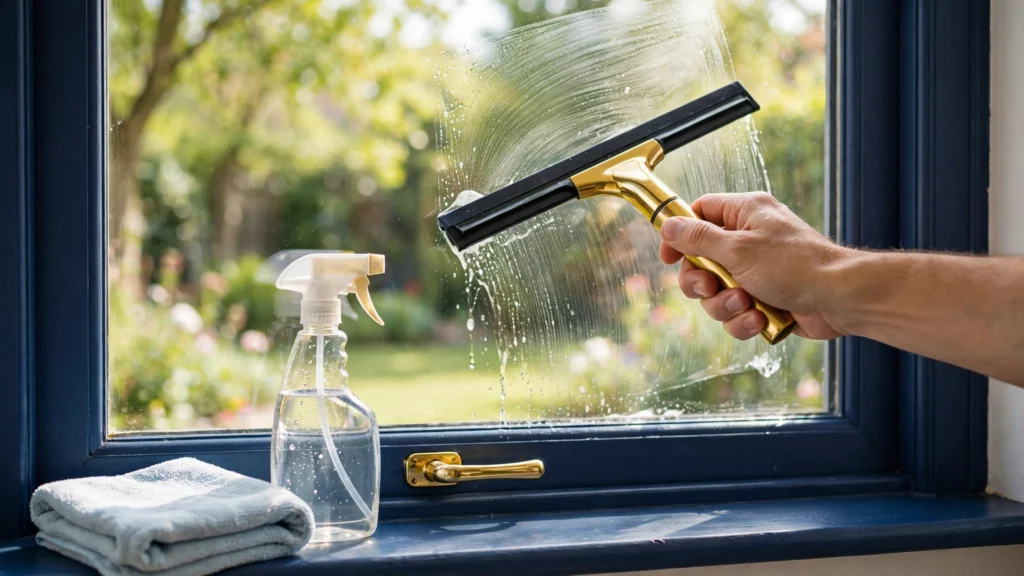
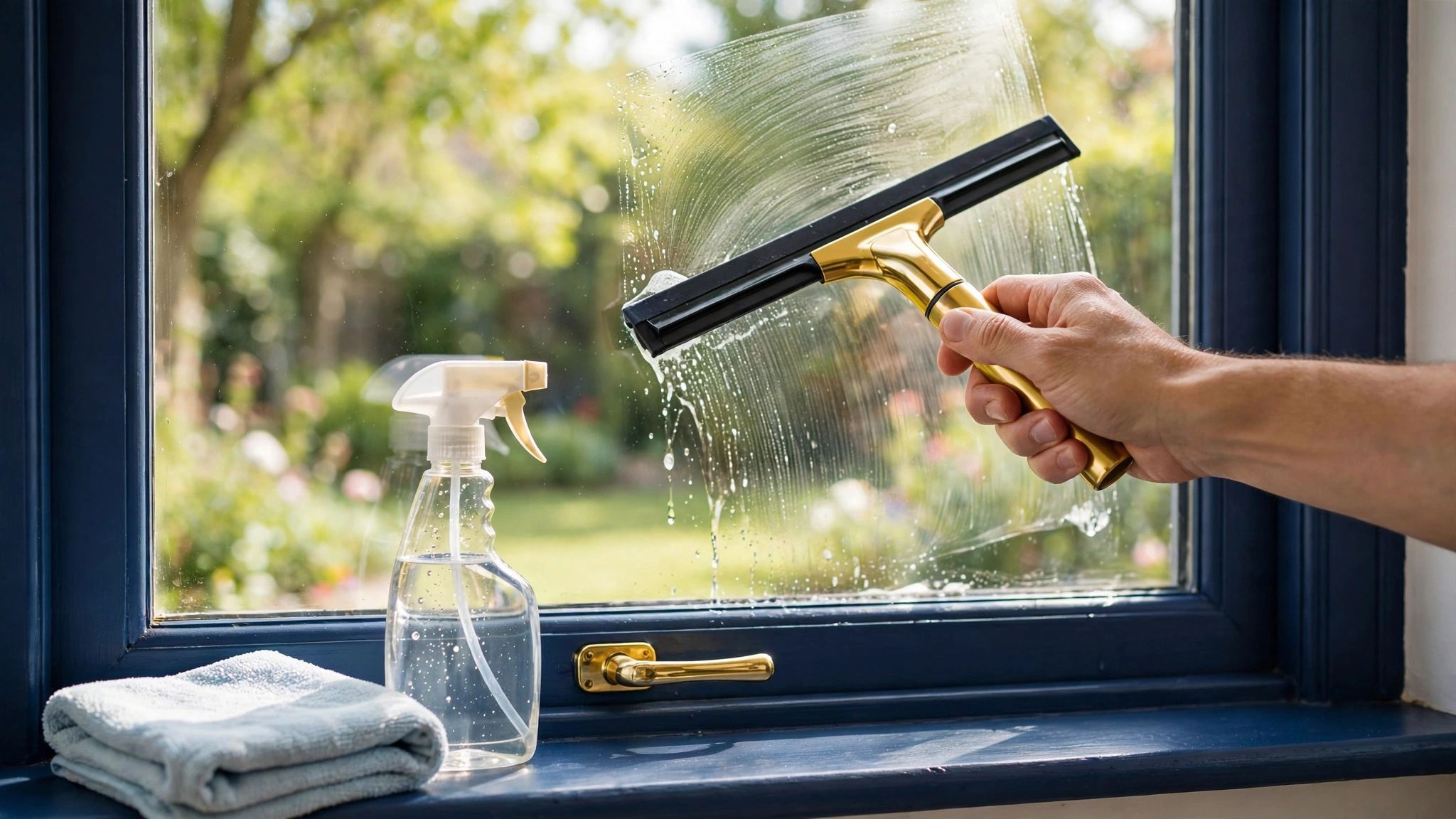
Window cleaning gives clear glass with no haze, no streaks, and no residue, and window cleaning needs 4 parts: a dry dusting pass, a wash with a mild solution, a squeegee or cloth pass that removes the solution, and a dry edge wipe that catches the last drops.
Window cleaning covers glass, frames, tracks, screens, and sills, and window cleaning fails most often from 3 causes: solution that dries in direct sunlight, dirty cloths that spread residue, and hard water minerals that stay on glass. Window cleaning uses a mild homemade solution and runs in a fixed order: dust first, wash second, remove solution third, dry edges last. This guide covers tools, solutions, steps, hard water fixes, screens, and timing.
- Dust before wet work: dust, tracks, and screens come first, because grit on wet glass scratches glass.
- Clean in shade: a cloudy day or shaded time keeps solution wet long enough to remove solution with no dried marks.
- Use a light solution: equal parts distilled water and white vinegar, or a few drops of dish soap in water.
- Wipe the blade each pass: a dry blade after each stroke stops dirty water running back onto clean glass.
- Dry edges last: edges and corners hold the drops that form the marks most people see.
- Check from 2 angles: look from the left, then the right, with a horizontal stroke on one side and a vertical stroke on the other.
What Is Window Cleaning?
Window cleaning is the removal of dust, grease, fingerprints, pollen, and mineral deposits from glass, frames, tracks, and screens so light passes through glass with no haze or marks. Window cleaning uses water, a cleaning solution, a washer, a squeegee or cloth, and a dry edge wipe, and window cleaning works best on a cloudy day or in shade.
Window cleaning differs from a quick glass wipe, because a quick wipe moves surface dust and leaves grease and minerals in place. Window cleaning covers 5 parts: the glass pane, the frame, the sill, the track, and the screen. Coated glass, tinted film, and low-emissivity coatings need a mild solution and a test on a small corner first. For more home care guides in the same category, browse the Home Improvement guides on this site.
Why Do Windows Get Streaks?
Windows get streaks when cleaning solution dries on glass before removal, when a dirty cloth spreads residue across glass, or when hard water minerals stay on glass after water evaporates. Windows get streaks most often in direct sunlight, with too much solution on glass, or with a cloth washed in fabric softener.
Direct sunlight heats glass and dries solution in seconds, and dried solution leaves a thin film that shows as lines in low sun. A cloudy day, early morning, or late afternoon slows drying and gives time to remove solution in full. Too much solution runs down after the squeegee pass and dries as drip lines, so a light mist or a wrung-out washer suits glass best. A cloth that holds old cleaner or fabric softener residue spreads a film across clean glass, so keep one fresh cloth for washing, one for drying, and one for edge work.
What Tools Do You Need for Window Cleaning?
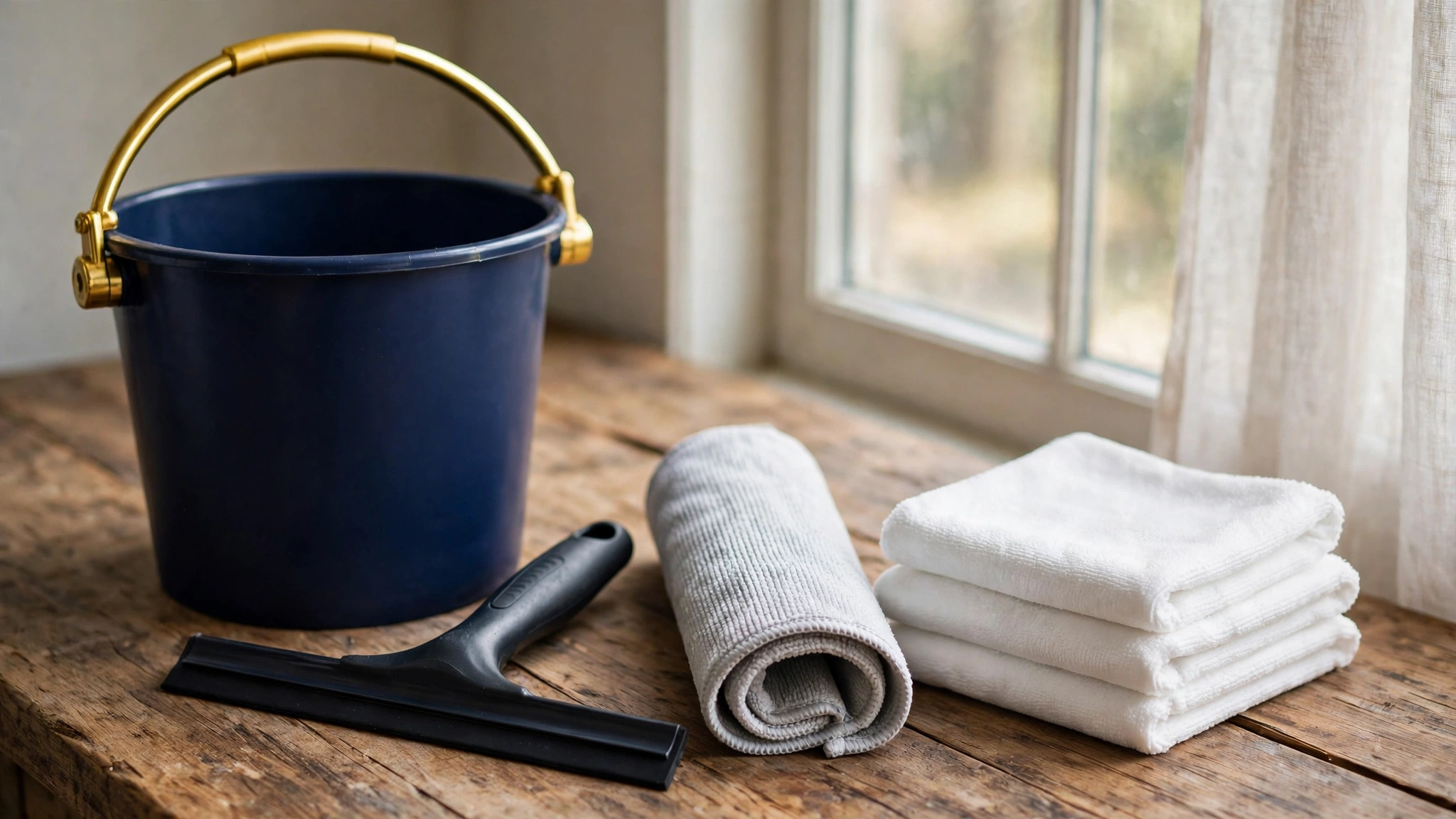
Window cleaning needs 7 tools: a bucket, a washer or sponge, a squeegee, 3 clean microfiber cloths, a spray bottle, a soft brush, and a step stool or extension pole for high glass. Window cleaning needs no costly kit, and window cleaning works with household tools that stay clean and dry between uses.
A squeegee blade must sit straight and smooth, with no nicks or tears, because a nicked blade leaves a line on every pass. A 25 to 30 centimetre blade suits most home windows, and a 35 to 45 centimetre blade suits wide panes. Microfiber cloths trap dust and liquid with no lint, and microfiber cloths need a wash with fragrance-free detergent and no fabric softener.
What Is the Best Homemade Window Cleaning Solution?
The best homemade window cleaning solution is equal parts distilled water and white vinegar in a spray bottle, with no dish soap for light dirt. The best homemade solution for greasy glass adds one drop of dish soap per 500 millilitres of mix, and the best homemade solution leaves no sticky film on glass.
White vinegar holds acetic acid, and acetic acid dissolves grease film, soap scum, and light mineral deposits on glass. Traditional vinegars for human consumption vary from 4.5% to 7% acidity (Source: Wikipedia, 2026). Never mix vinegar with bleach or hydrogen peroxide, keep vinegar off natural stone sills and unsealed wood, and wipe vinegar off rubber seals fast. A squeegee is a tool with a flat, smooth rubber blade that removes liquid from a flat surface, and the modern single-blade window cleaning squeegee was patented by Ettore Steccone in 1936 (Source: Wikipedia, 2026). The history of the squeegee shows why the single rubber blade became the standard tool for window work.
How Do You Clean Windows Step by Step?
To clean windows step by step, dust frames, tracks, and screens first, wash glass from top to bottom second, squeegee glass in overlapping strokes third, and dry edges and sills last. To clean windows step by step, work one window at a time, because solution that sits on glass dries and forms marks.
Follow these steps for each window:
- Vacuum tracks and frames with a brush head.
- Brush dust and cobwebs off the frame and sill.
- Remove the screen and set it aside for washing.
- Spray a light mist on the glass.
- Wash the full pane from top to bottom.
- Squeegee the glass in overlapping strokes.
- Wipe the blade dry after each stroke.
- Dry edges and corners with a dry cloth.
- Wipe the frame and sill dry, refit the screen.
- Check the glass from the left and right.
Start at the top and work down, wash the full pane in one pass, and overlap each squeegee stroke by 2 to 3 centimetres. Use horizontal strokes outside and vertical strokes inside to show which side needs work. In my own home, the kitchen window stayed hazy after 3 cleans until I stopped cleaning in midday sun and stopped reusing one drying cloth for 4 windows in a row.
Squeegee vs Cloth: Which Method Gives a Streak-Free Finish?
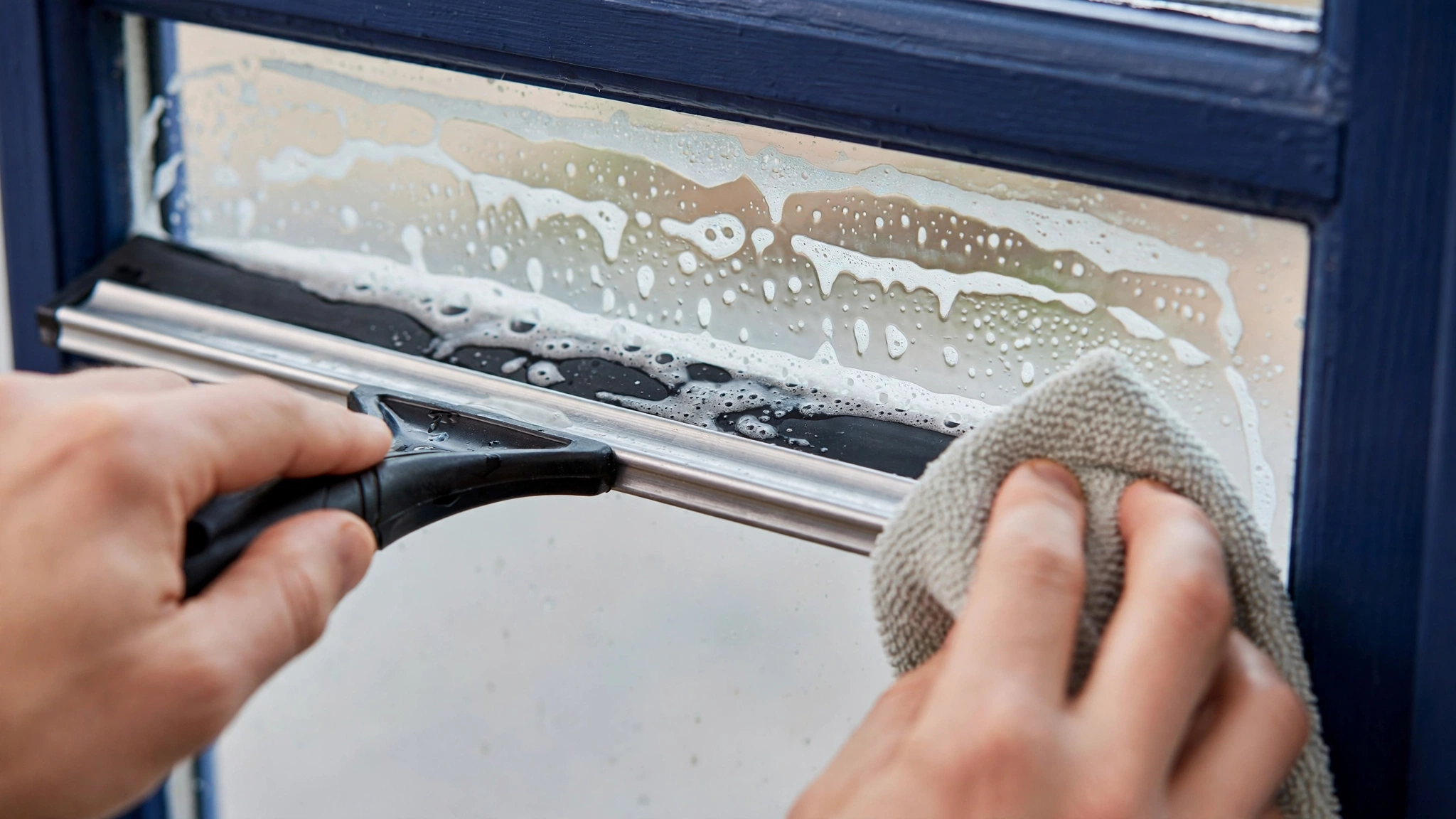
A squeegee gives the most streak-free finish on large and exterior glass, and a cloth gives the most streak-free finish on small and interior glass. A squeegee removes solution in one pass with no lint, and a cloth suits glass where water control matters more than speed.
A squeegee clears a large area fast and leaves no fibres, and a squeegee needs a straight blade and a dry wipe after each stroke. A cloth holds a light mist with no drips on floors or walls, and a cloth needs frequent folding to a clean side, because a damp cloth spreads solution instead of removing solution.
| Feature | Squeegee | Cloth |
|---|---|---|
| Best glass | Large, exterior panes | Small, interior panes |
| Speed | Fast, one pass | Slower, several wipes |
| Lint risk | None | Low with microfiber |
| Water control | Lower | Higher |
| Pick it for | Full exterior clean | Quick interior clean |
For another home upkeep guide that pairs with glass care, read Drain Cleaning: Best Methods for Clear Pipes.
How Do You Clean Hard Water Spots and Stubborn Marks?
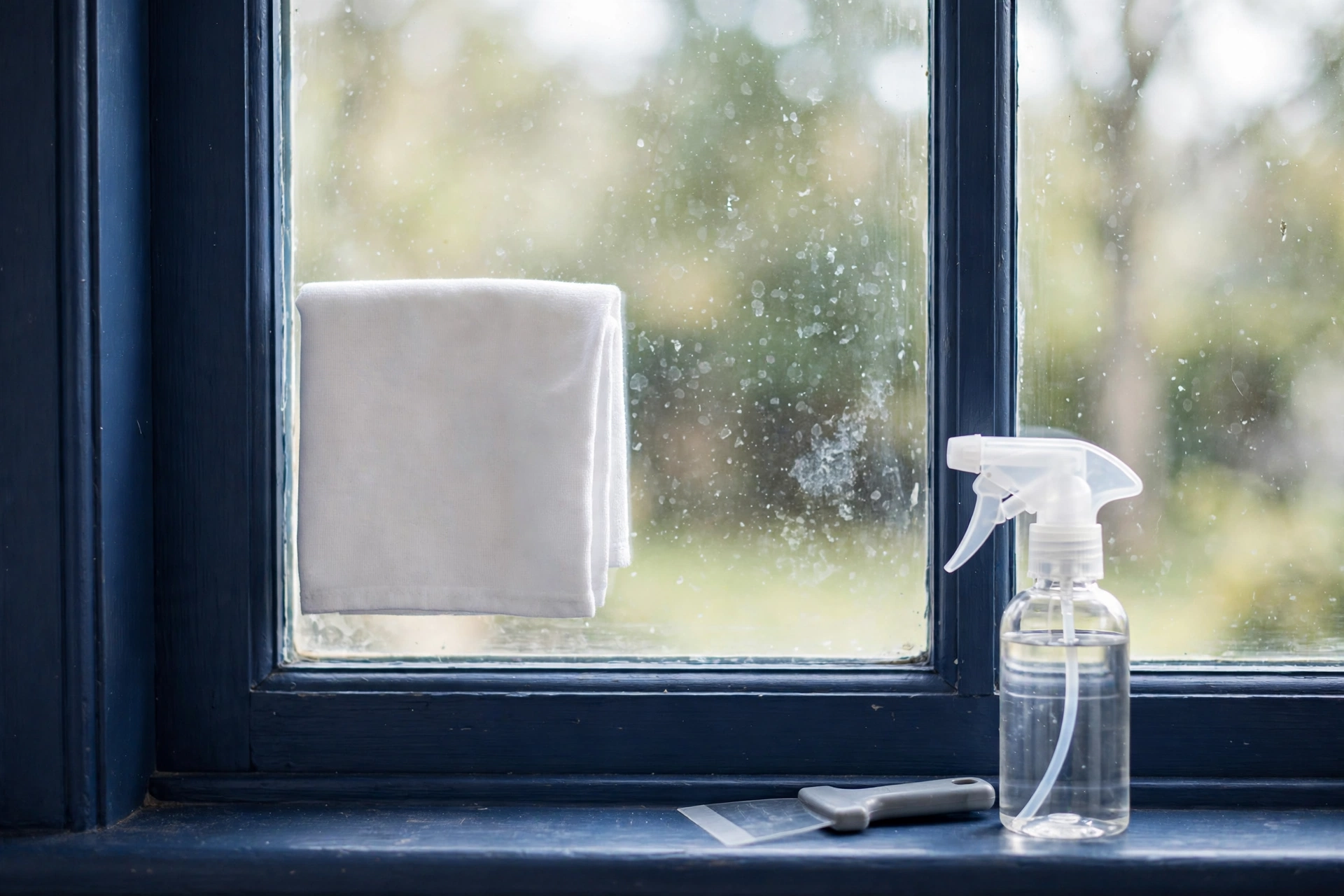
To clean hard water spots, soak the spot with a 1:1 mix of distilled water and white vinegar for 5 minutes, wipe the spot with a soft cloth, and rinse with distilled water. To clean hard water spots, never use a steel scourer or an abrasive pad, because abrasive pads scratch glass.
Hard water spots form when tap water or sprinkler water dries on glass, and minerals build in layers with each new wetting. Press a vinegar-soaked cloth on the spot, keep the cloth wet for 5 minutes, wipe in small circles, and rinse with distilled water. Repeat the soak once for a spot that stays, and stop after 2 soaks, because a spot that stays may be etching under the glass surface, and etching needs a professional glass check. The properties of acetic acid explain why diluted vinegar dissolves mineral deposits and grease film on glass with no sticky residue left behind.
How Do You Clean High Windows and Window Screens Safely?
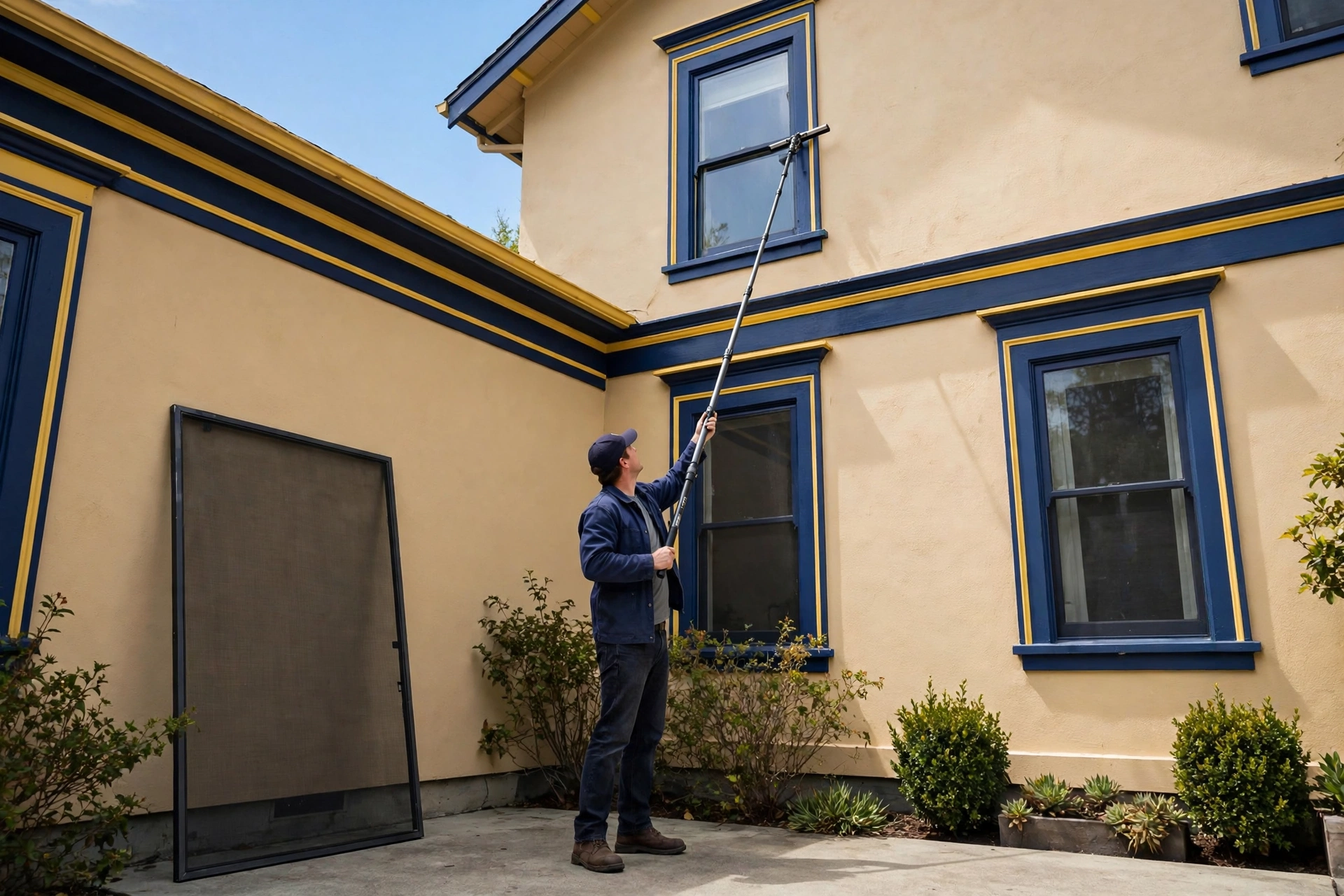
To clean high windows safely, use an extension pole with a washer and squeegee from the ground, keep feet on a flat surface, and never lean out of a window or stand on a chair. High exterior glass above 2 storeys suits a professional crew with the right reach tools.
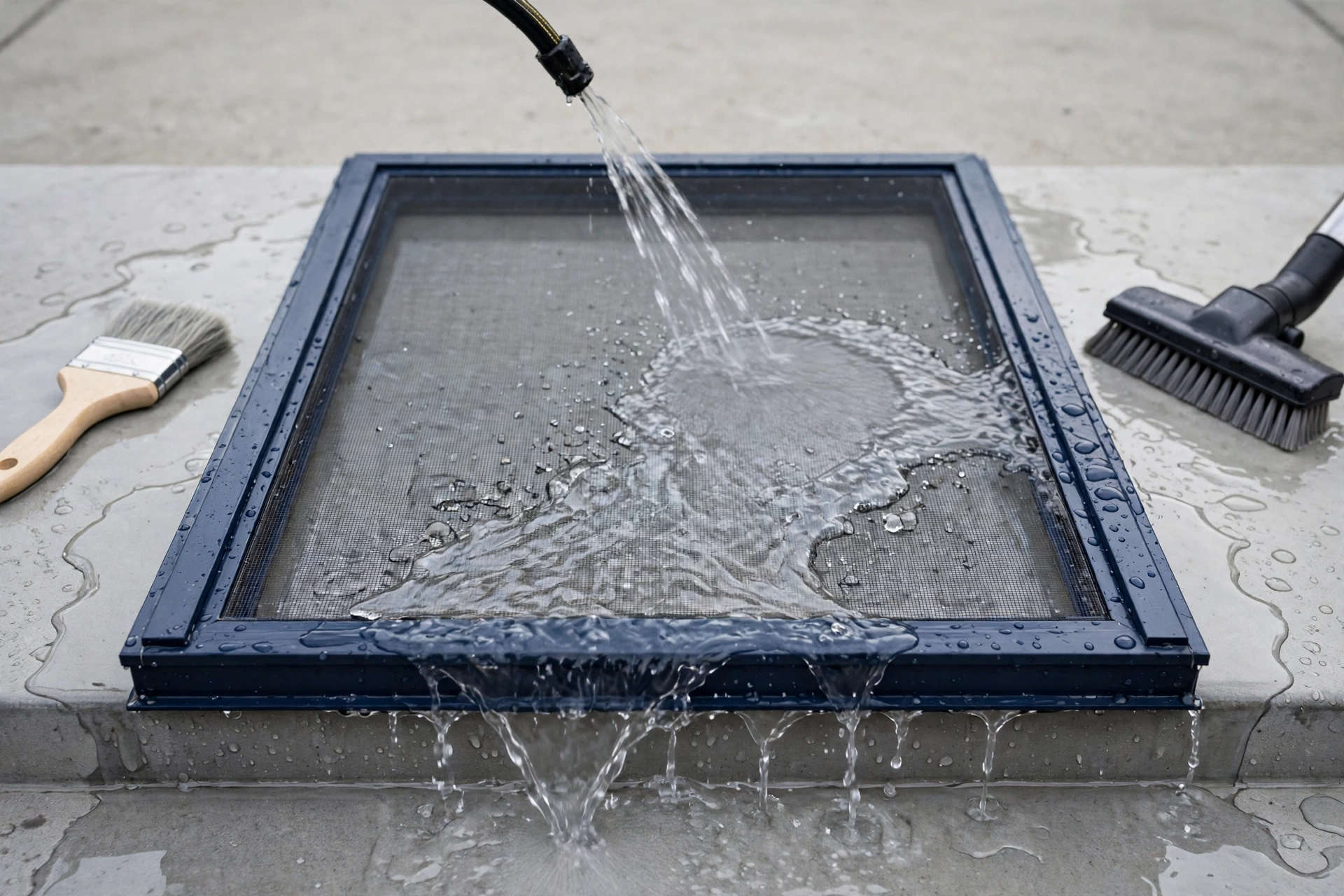
An extension pole keeps feet on the ground. Wash the glass in short sections, squeegee each section before the solution dries, and rinse the washer head often. A ladder suits a single-storey window with a flat, firm base, and a ladder needs 3 points of contact at all times. Set the ladder at a 75-degree angle, never stand on the top 2 rungs, and never work on a ladder in wind or rain. Remove the screen, rinse the screen with a hose on a low setting, wash the screen with warm water and dish soap, and dry the screen upright in shade before refitting. Clean the track and drain holes while the screen dries, because blocked drain holes flood the track and stain the sill.
How Often Should You Clean Windows?
Clean exterior windows 2 to 4 times per year, clean interior windows every 1 to 2 months, and clean kitchen and bathroom glass monthly, because kitchen grease and bathroom steam build film faster than dust builds on other glass. Clean windows after pollen season, after a storm, and after nearby building work.
Exterior windows in a coastal or roadside home need the 4-times-per-year end of the range, and interior panes people touch most need monthly attention: patio doors, low panes, and kitchen windows. A full clean every 2 to 3 months suits most homes, with a 5-minute touch-up between full cleans. Skip window cleaning in freezing weather and high wind. Voice of Wave covers home guides like this one for everyday household jobs.
When Should You Hire a Professional for Window Cleaning?
Hire a professional for window cleaning when glass sits above 2 storeys, when glass needs a ladder on uneven ground, when hard water etching stays after 2 vinegar soaks, or when a window unit shows fog between panes. Hire a professional when the job needs pure-water poles or glass restoration tools that a home kit lacks.
Fog between panes signals a failed seal in a double-glazed unit, and fog between panes needs a glass unit repair or replacement, not a surface clean. Ask 3 questions before work starts: what method fits the glass type, what water type the crew uses for the final rinse, and how the crew reaches high glass. Ask for a written quote that names the window count and the screen and track scope. Book a professional clean once or twice per year for high or hard glass, and keep low glass on a home routine between visits.
Conclusion
Window cleaning gives streak-free glass through a fixed order: dust first, wash second, remove solution third, and dry edges last. Window cleaning works best in shade, with distilled water, with a dry blade after each stroke, and with a check from 2 angles.
A bucket, a washer, a squeegee, clean cloths, and a vinegar mix cover most home glass, and a monthly touch-up plus a seasonal full clean keeps tracks, screens, and frames in good order.
Explore the latest articles on the Voice of Wave blog for more home improvement guides.
FAQs
How do I clean windows without streaks?
Clean windows without streaks by working in shade, using a light solution, and removing solution fully with a squeegee or a clean microfiber cloth. Dust frames and tracks first, wash glass from top to bottom, wipe the squeegee blade after each stroke, and dry edges and corners last with a dry cloth.
Can I use vinegar on all windows?
No, vinegar suits plain glass and mirrors, and vinegar needs a test on coated, tinted, and low-emissivity glass before full use. Vinegar suits most home windows at a 1:1 or 1:3 mix with distilled water, and vinegar must stay off natural stone sills, unsealed wood, and rubber seals for long contact.
What is the best cloth for window cleaning?
The best cloth for window cleaning is a clean microfiber cloth washed with fragrance-free detergent and no fabric softener. Microfiber cloths trap dust and liquid with no lint, and microfiber cloths need frequent folding to a clean side, with a fresh cloth for washing, drying, and edge work.
How do I remove hard water spots from windows?
Remove hard water spots by soaking the spot with a 1:1 mix of distilled water and white vinegar for 5 minutes, wiping gently, and rinsing with distilled water. Repeat the soak once when the spot stays, and stop after 2 soaks, because a spot that stays may be etching that needs a professional glass check.
How often should I clean outside windows?
Clean outside windows 2 to 4 times per year, with more cleans for coastal, roadside, and pollen-heavy homes. Clean outside windows after pollen season, after storms, and after building work, and clean kitchen and bathroom glass monthly, because grease and steam build film faster than dust.
Is it safe to clean high windows myself?
Yes, high windows are safe to clean from the ground with an extension pole, and high windows above 2 storeys suit a professional crew. Never lean out of a window, never stand on a chair, and use a ladder only on flat, firm ground with a second person at the base and 3 points of contact.