
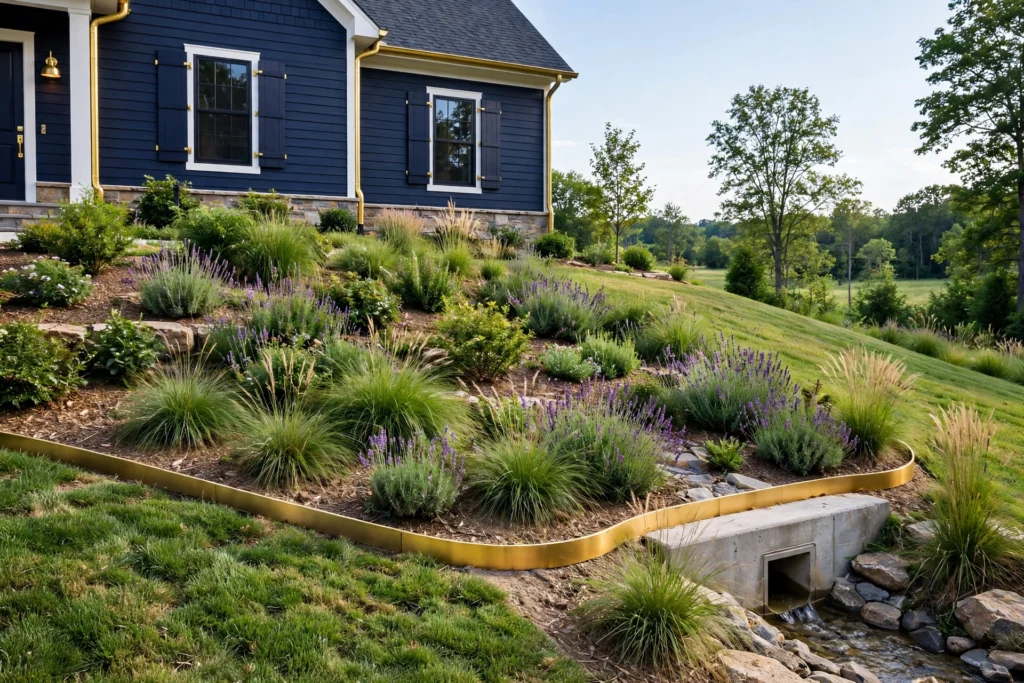
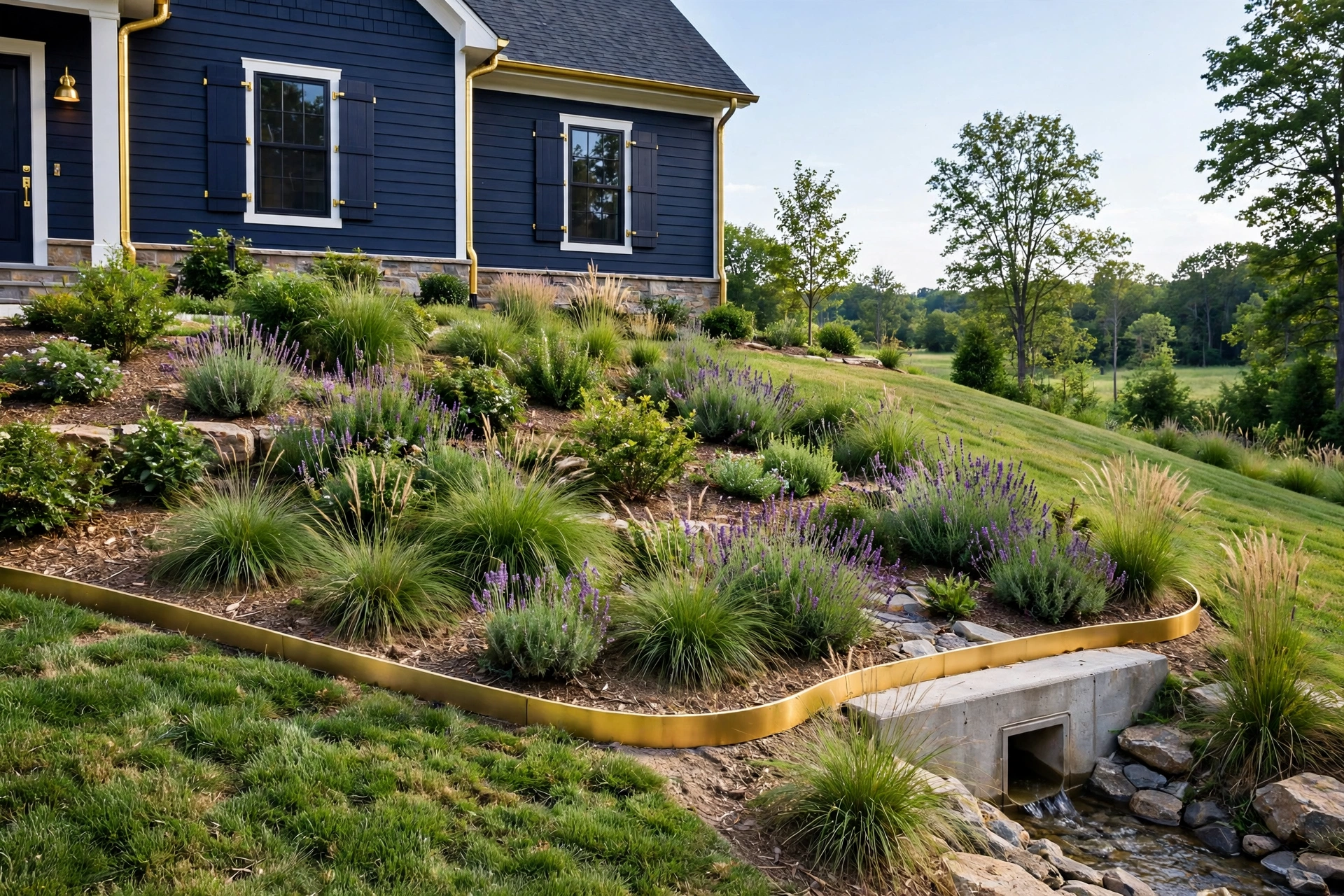
Introduction
Yard grading and drainage is the shaping of ground slope and the routing of water so rain and roof runoff move away from a house, instead of pooling near walls, paths, and low spots in a yard and to protect soil and walls from standing water.
Yard grading sets the surface slope. Drainage adds channels, pipes, and outlets that carry water the slope alone cannot move. Together, yard grading and drainage protect foundations, keep yards usable after rain, and limit soil loss and damp entry.
This guide covers the meaning of yard grading and drainage, slope checks, the slope a yard needs, signs of poor grading, a step by step fix order, a comparison of drainage systems, routine care, and when a professional check is the right step. Home Improvement readers can also browse the Home Improvement guides for related house care topics.
Key Takeaways
- Measure slope first: slope data decides whether grading, a channel, or a pipe is the right fix.
- Keep water moving away: ground near a house must fall away from the walls, not toward the walls.
- Find the water source: roof runoff, surface flow, and subsurface water need different fixes.
- Match the system to the problem: swales move surface water, French drains collect subsurface water.
- Recheck after rain: dated measurements show whether a fix holds.
Table of Contents
- What Is Yard Grading and Drainage?
- How Do You Check the Slope Around a House?
- What Yard Slope Does a Yard Need?
- What Are the Signs of Poor Yard Grading and Drainage?
- How Do You Fix Yard Grading Step by Step?
- Which Drainage System Fits Each Yard Problem?
- How Do You Maintain Yard Grading and Drainage?
- When Should You Call a Professional?
- Frequently Asked Questions
- Conclusion
What Is Yard Grading and Drainage?
Yard grading and drainage is the control of ground height and water flow in a yard, where grading shapes the soil surface and drainage routes water through channels, pipes, and outlets to a safe discharge point where water can leave the yard.
Grading is the cut and fill work that raises low ground and lowers high ground. Drainage is the set of features that collect and carry water after grading sets the main slope. Yard grading and drainage work as one system, because a pipe cannot replace a slope that sends water toward a house.
Yard grading has 3 parts: the slope near the house, the slope across the open yard, and the discharge point where water leaves the yard. The slope near the house carries the highest risk, because water that pools at a wall can enter joints and cracks. The open yard slope moves sheet flow over grass and soil during rain. The discharge point must sit lower than the yard.
Drainage features include swales, French drains, downspout extensions, catch basins, dry wells, and rain gardens, and each feature fits a different water path.
How Do You Check the Slope Around a House?
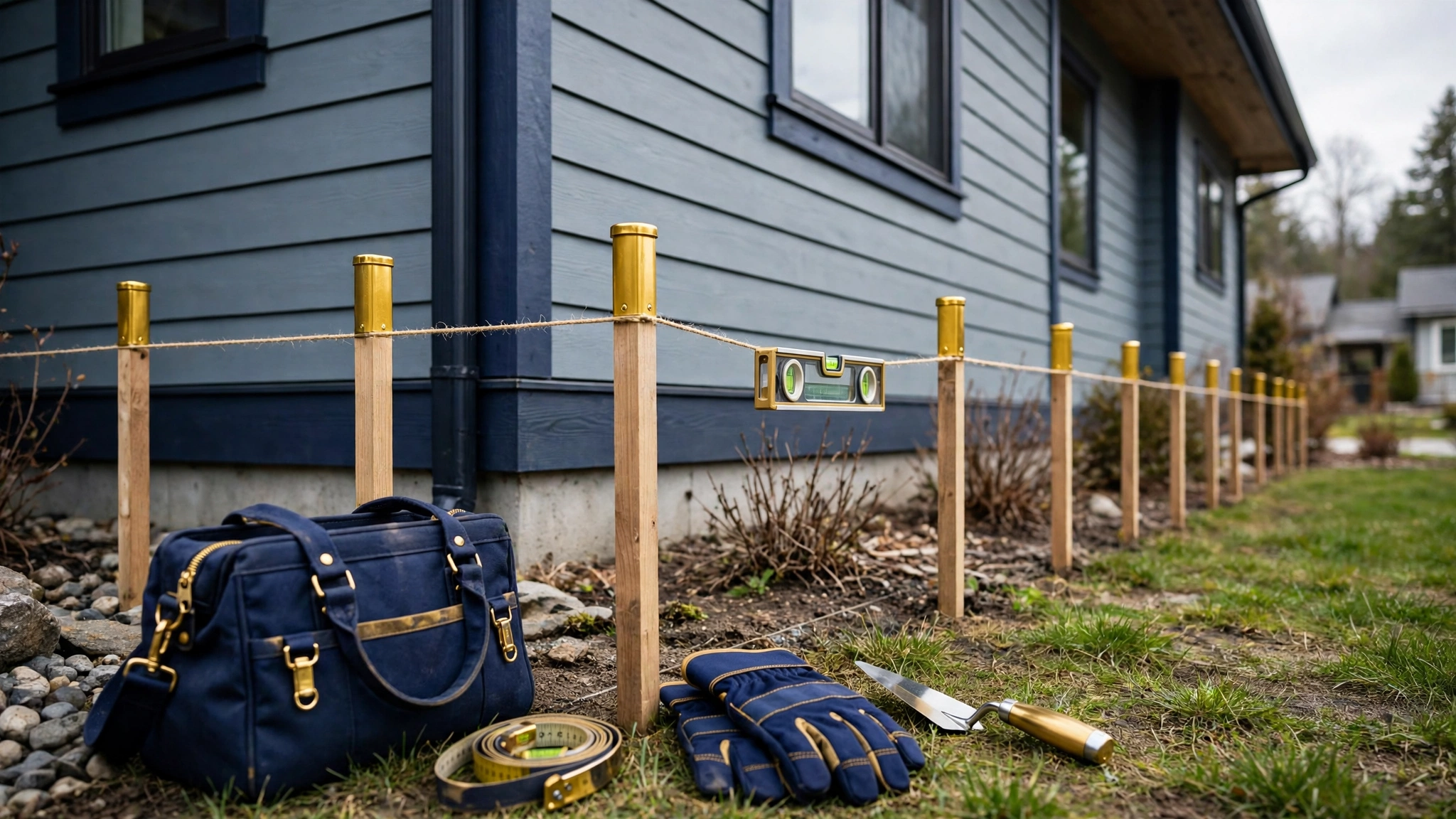
To check the slope around a house, set one stake at the wall and one stake 10 feet out, tie a level string between the stakes, and measure the drop from the string to the ground at each stake, because the difference shows the slope over that 10 foot run.
A level string gives a straight reference line, and the gap at each stake shows whether the ground falls away from the house.
Check during dry weather, then repeat after rain. Walk the yard during rain, note where water stands and flows, and mark each wet spot with a dated photo. A dated photo record helps a contractor or engineer see the pattern without waiting for rain.
Use 2 stakes, string, a line level, and a tape measure. Tie the string at the same height on each stake, level the string, and measure the gap at each stake. A larger gap at the outer stake means the ground falls away from the house. A smaller gap means negative grading, where water flows toward the house.
What Yard Slope Does a Yard Need?
A yard needs positive drainage, which means the ground falls away from the house for at least the first 10 feet, with a fall of 6 inches over that 10 foot run near the house and a gentler fall of 2 percent across the open yard.
Positive drainage is a slope that moves water away from a structure. The 6 inch fall gives water enough speed to leave the wall zone. The 2 percent fall equals about 2.5 inches over 10 feet.
Yard slope has 2 zones. The wall zone covers the first 10 feet and needs the steeper fall. The open yard zone needs steady fall toward a swale, a street gutter, or another approved outlet.
A slope below the target lets water stand near walls. A slope far above the target on bare soil can cut channels during heavy rain. When a lot is flat, grading alone cannot solve the problem, and a drain system or a pump outlet may be needed.
What Are the Signs of Poor Yard Grading and Drainage?
The signs of poor yard grading and drainage are standing water near walls after rain, soggy ground that stays wet for days, soil loss in channels, damp basement walls, and cracks or sticking doors tied to soil movement near a house.
Standing water near a wall is the clearest sign, because the wall zone must drain first. Soggy ground points to a grade dip or a blocked outlet.
Check 5 sign groups: water, soil, plants, hard surfaces, and the house. Water signs include puddles that last more than 24 hours after rain. Soil signs include exposed roots and mulch washed into piles. Plant signs include grass that dies in one wet patch. Hard surface signs include patios that tilt toward the house. House signs include damp stains at floor and wall joints and new cracks near doors and windows.
One sign alone rarely names the cause. Standing water plus a downspout that ends at the wall points to roof water as the source. Standing water in the middle of a yard with no downspout nearby points to a grade dip or a high water table. In my own yard checks, the wettest line after rain usually traced a path edge or a short downspout, and that line showed the source before digging started.
How Do You Fix Yard Grading Step by Step?
To fix yard grading, measure the slope, find the water source, clear the roof water path, reshape the soil in thin compacted layers, and recheck the slope after rain, because each step removes one cause before the next step adds soil or a drain.
The order matters. Soil added over an unmeasured slope can hide a dip. A drain added before roof water is routed can overload from one downspout. A fix that skips the recheck can look finished while water still pools.
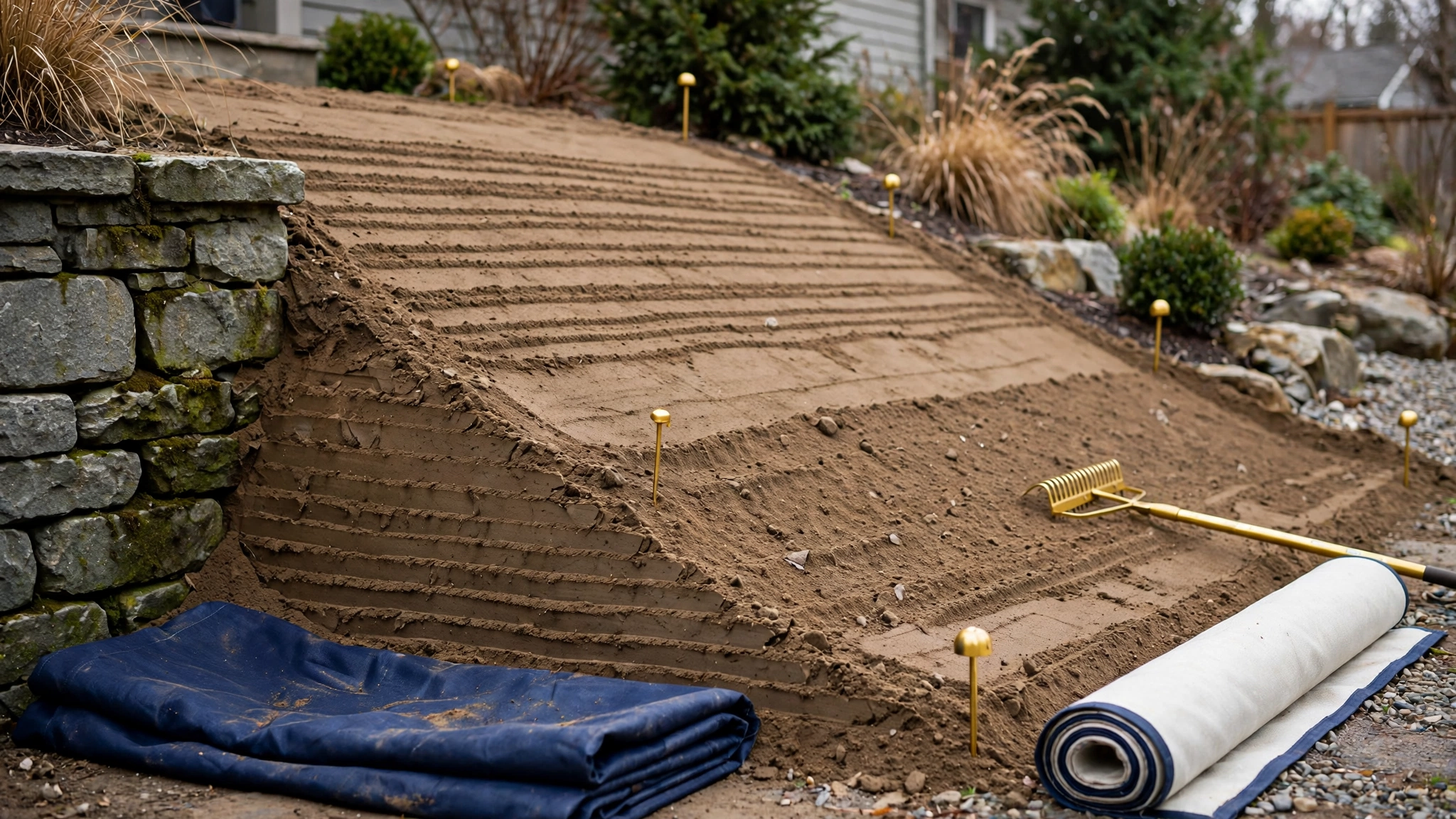
Follow 6 steps: measure slope on each side, trace water sources during rain, extend downspouts at least 6 feet from the wall, clear debris blocking flow, add fill in 2 to 3 inch compacted layers to reach 6 inches over 10 feet, then seed bare soil and recheck after rain.
Call the utility marking service before digging, because buried lines sit under many yards. Keep soil away from siding and keep several inches of foundation wall visible above finished soil.
Which Drainage System Fits Each Yard Problem?
The drainage system that fits a yard problem depends on the water path: a swale fits surface flow, a French drain fits subsurface water, a downspout extension fits roof water, and a catch basin fits a concentrated flow point, because each system collects water from a different place.
A yard with surface pooling needs a surface fix first. A yard with soggy soil and no surface puddle may need a subsurface fix.
French drain for subsurface water
A French drain fits subsurface water when soil stays soggy after surface water has a clear path away, because the perforated pipe collects water inside the soil and carries the water to a lower outlet that stays clear of paths and walls.
The trench needs a steady fall, filter fabric, and an open outlet. French drain systems use gravel and a perforated pipe to redirect surface water and groundwater away from an area.
Swale drainage for surface water
Swale drainage fits surface water when sheet flow crosses a yard toward a house or a low pocket, because the shallow channel intercepts the flow and guides the flow to a safe outlet and holds soil with grass or stone cover.
A swale needs a fall of at least 2 percent, grass or stone cover, and an outlet lower than the swale start.
Downspout extension for roof water
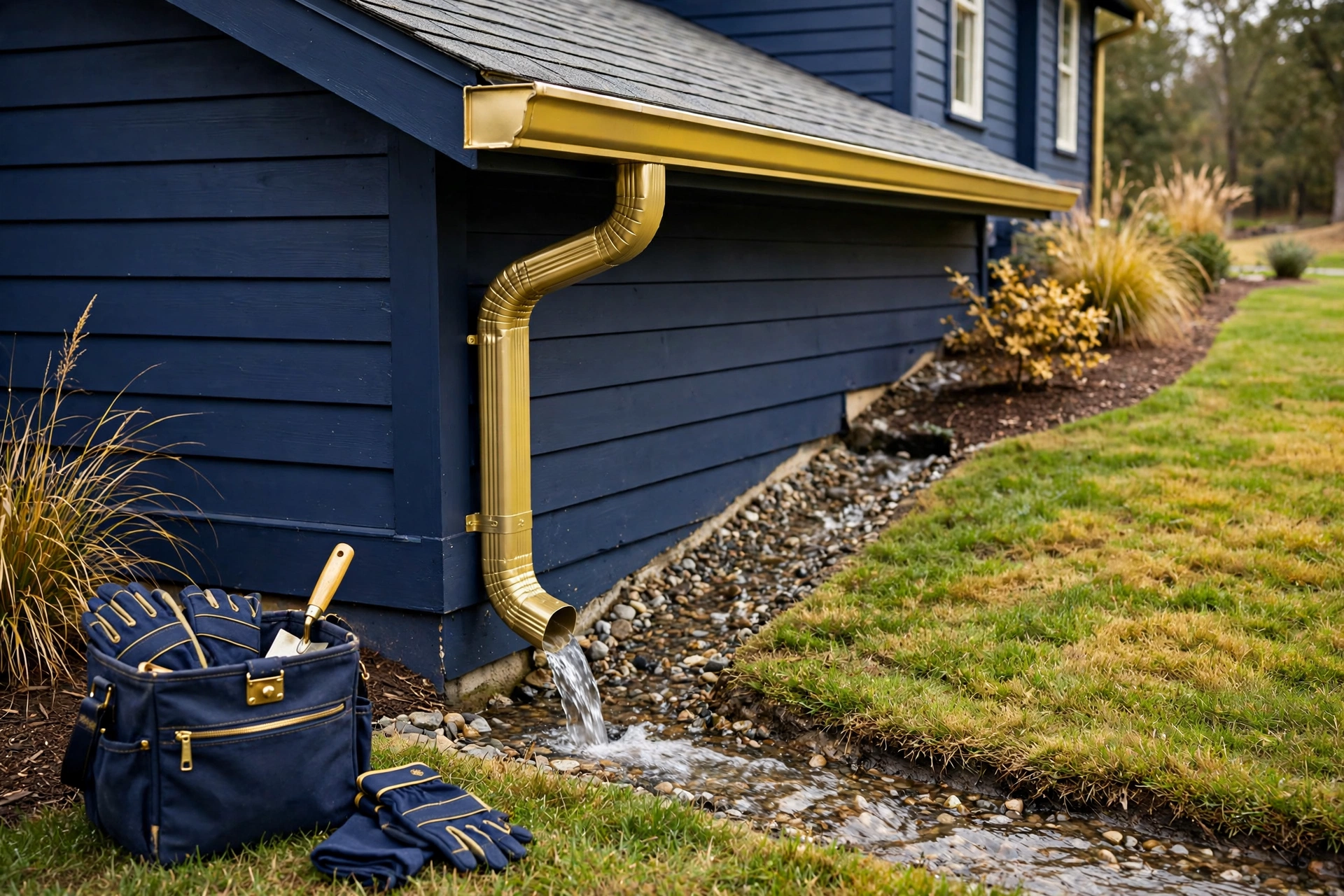
A downspout extension fits roof water when a downspout ends at the wall or in the wall zone, because the extension moves a large volume of roof water past the graded soil near the house to an outlet at least 6 feet from the wall.
Bury the pipe with a steady fall and a clear outlet away from paths.
For cracks and wall movement tied to poor drainage, read how foundation damage starts and what to check first in the foundation damage guide.
| Problem | Best first fix | Second system when needed |
|---|---|---|
| Water pools at a wall | Regrade the wall zone, extend downspouts | French drain when soil stays soggy |
| Sheet flow crosses a yard | Build a swale to an approved outlet | Catch basin at a patio low point |
| Soggy soil, no puddle | French drain with a clear outlet | Surface grading for a low pocket |

How Do You Maintain Yard Grading and Drainage?
To maintain yard grading and drainage, clean gutters and outlets twice a year, clear swale channels after storms, check slope readings once a year, and recheck wet spots after heavy rain, because debris and soil movement undo a correct grade over time.
Gutters that clog spill roof water at the wall. Outlets that clog back water into pipes. Swale channels that fill with mulch lose depth and send water sideways.
Use a seasonal routine: in spring, clear gutters and photograph wet spots; in summer, reseed bare patches; in autumn, clear leaves from grates and swales; in winter, watch outlets for ice.
Surface runoff is the flow of water over ground when rain falls faster than soil can absorb the rain, and that flow explains why a clean outlet matters as much as a correct slope: a blocked outlet lets water stand in a graded yard. Read the surface runoff overview for the water cycle terms behind that flow.
When Should You Call a Professional?
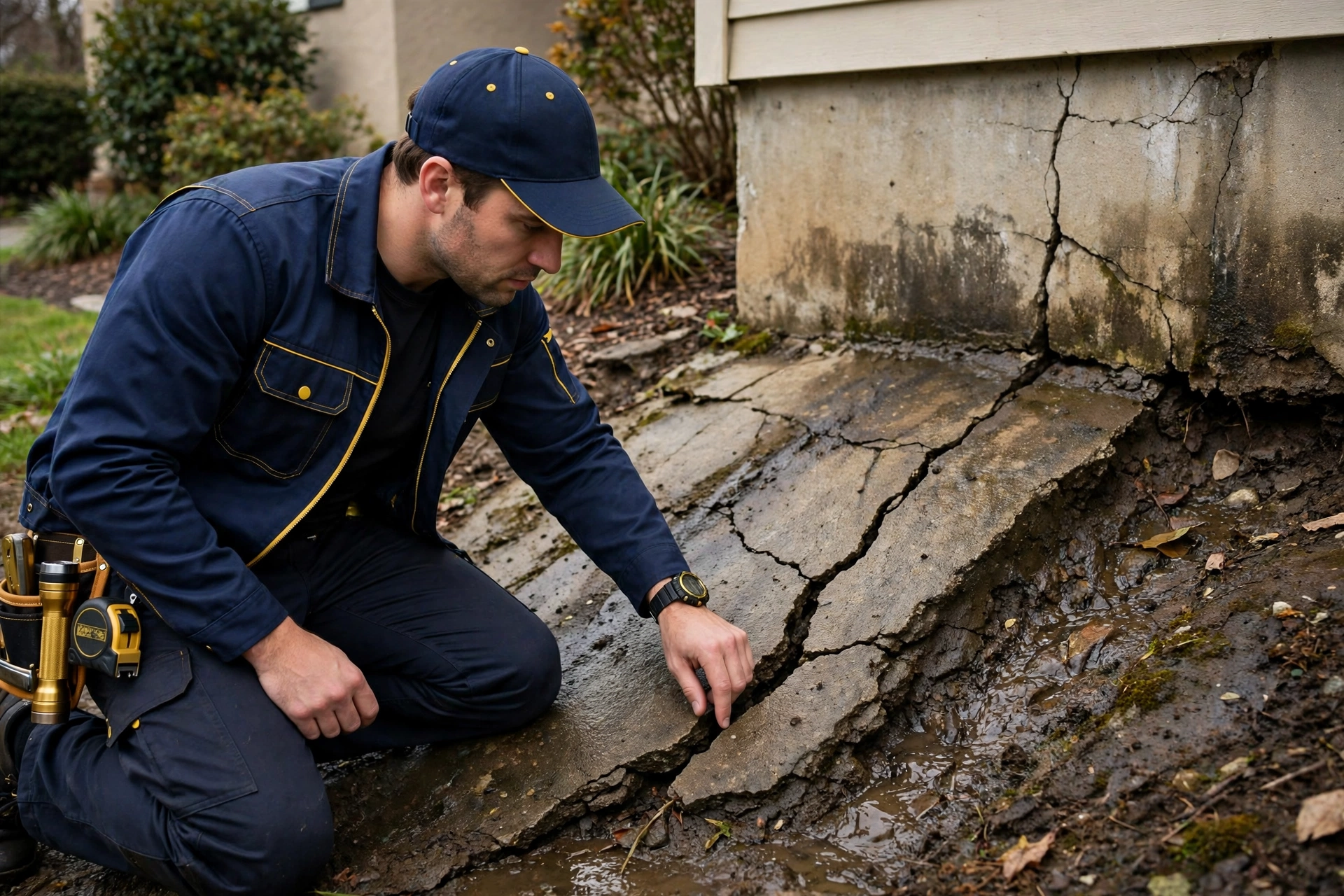
Call a professional when cracks grow, walls bow, floors slope, water enters a basement during ordinary rain, or no downhill outlet exists for graded water, because those signs point to structural movement or a drainage design problem beyond a simple soil fix.
A structural engineer names the cause of movement and states the repair in a written report. A drainage contractor designs outlets, pump systems, and retaining structures. A surveyor maps lot levels when a boundary or street rule limits where water may go.
Ask 3 questions before hiring: what caused the water problem, what fix matches that cause, and what happens when the fix waits 6 months. Get the answer in writing with the method, the outlet point, and the warranty terms. Check local rules before sending water to a street, a storm drain, or a neighbor lot, because many towns limit discharge points and require permits for pipe work.
The Voice of Wave home page lists current guides across home care and other everyday topics.
Conclusion
Yard grading and drainage works when slope measurement comes first, roof water leaves the wall zone, soil falls away from the house, and each drain system matches the water path it must carry and outlets stay clear through the seasons. Yard grading sets the slope. Drainage channels, pipes, and outlets carry water the slope cannot move alone. Yard grading and drainage protects walls, keeps yards usable after rain, and limits soil loss when each part of the system has a clear outlet.
Start with stakes and a string, trace the water source during rain, fix roof water and wall zone slope, then add a swale, a French drain, or a catch basin only when the problem calls for that system. When cracks grow, walls bow, or no outlet exists, bring in a professional before soil work starts.
For more guides on home care and everyday topics, visit the Voice of Wave blog hub:
Read the latest articles on the Voice of Wave blog
Frequently Asked Questions
What is yard grading?
Yard grading is the shaping of ground slope so water flows away from a house. Grading raises low ground near walls, lowers high ground that blocks flow, and sets a steady fall toward an outlet. Correct grading keeps water out of wall joints and keeps yards usable after rain.
How much slope does a yard need away from a house?
A yard needs a fall of 6 inches over the first 10 feet from the house. Beyond that wall zone, a fall of 2 percent suits open grass areas and paths. A 2 percent fall equals about 2.5 inches over 10 feet. Both zones need a check, because a flat pocket beyond the wall zone still holds water.
What is the difference between grading and drainage?
Grading shapes the soil surface to set the slope, while drainage adds channels, pipes, and outlets that carry water. Grading handles surface flow first, and drainage handles water that grading alone cannot move. Most problem yards need grading first, then a drain system only when a water path remains.
Can a French drain fix a yard that slopes toward a house?
No, a French drain alone cannot fix a yard that slopes toward a house. Grading must first reverse the slope so surface water leaves the wall zone. A French drain then helps when soil stays soggy after grading, because the pipe collects subsurface water and carries the water to an outlet.
How do I know if my yard has a drainage problem?
A yard has a drainage problem when water pools near walls, ground stays soggy for days after rain, soil washes into channels, or damp stains appear at floor and wall joints. Check during rain, mark wet spots with dated photos, and measure slope with stakes and string. A pattern across dates names the cause.
How often should I check yard grading and drainage?
Check yard grading and drainage once a year, plus after heavy rain and each season change. Clean gutters and outlets twice a year, clear swale channels after storms, and recheck slope readings when a wet spot returns. Dated checks show whether a fix holds or needs adjustment over time.