
Introduction
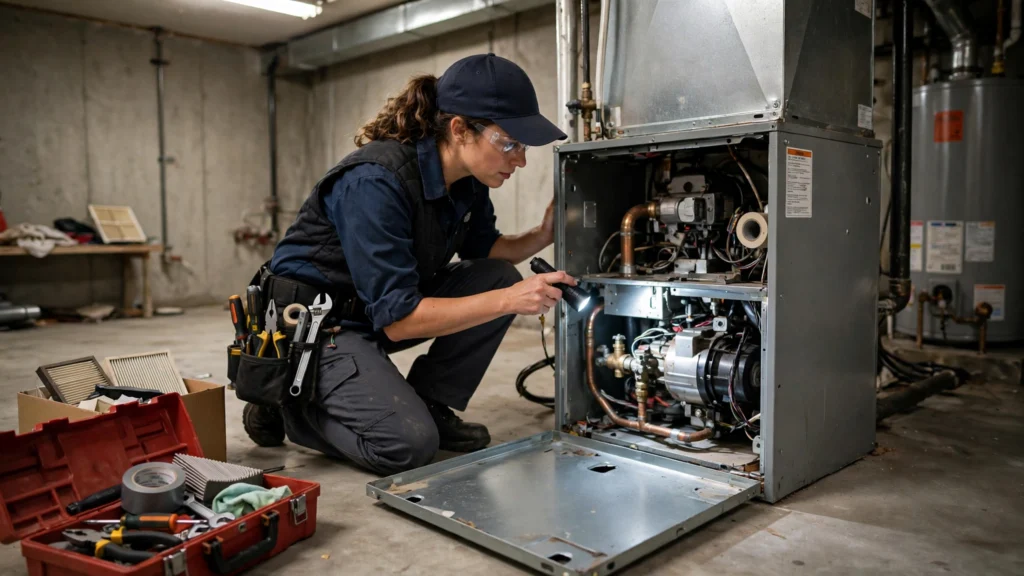
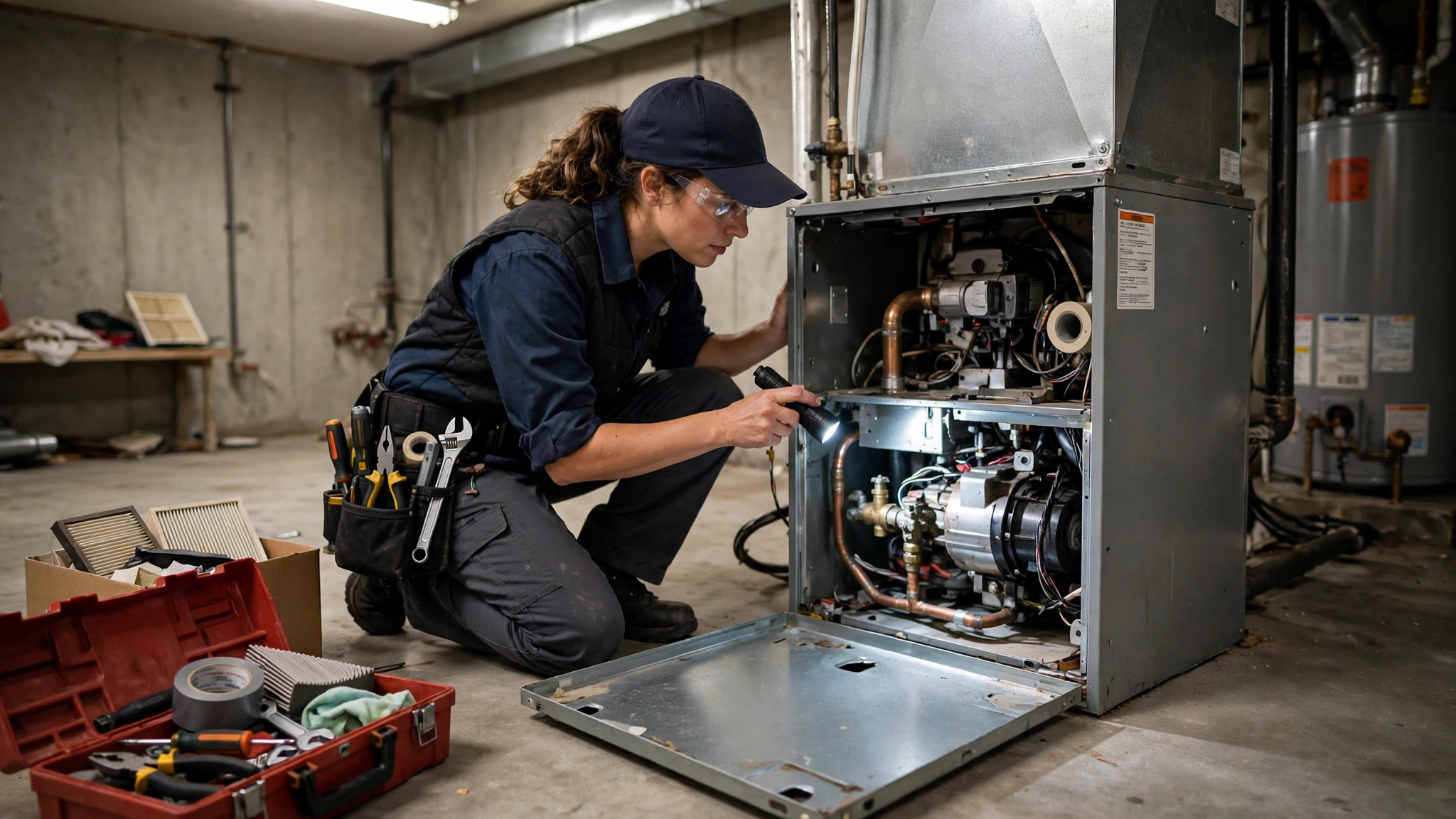
Heating system repair is the diagnosis and fixing of a furnace, boiler, heat pump, or electric heating system that stops heating, heats weakly, cycles too often, or trips safety controls, and heating system repair starts with safe checks on the thermostat, power, airflow, and fuel supply before any part is tested or replaced. This guide covers the 4 main system types, symptom matching, a safe troubleshooting order, furnace and boiler fixes, heat pump winter checks, repair costs, a repair or replace decision rule, and a seasonal care calendar. Heating system repair covers 5 core jobs: finding the fault, testing controls and safety devices, cleaning or replacing failed parts, checking airflow and heat output, and testing the full heating cycle. Readers can browse the Home Improvement guides for related house care topics on the same site.
Key Takeaways
- Check the thermostat, power, filter, and vents first, since those 4 checks solve many no-heat calls.
- Never open gas, refrigerant, or sealed electrical parts, since those jobs belong to a licensed technician.
- A boiler pressure reading near 12 to 15 psi cold is normal for many homes, and a fast pressure drop points to a leak.
- Compare repair cost with system age and replacement cost before approving a major part replacement.
- Book one professional heating inspection each year, in autumn, before cold weather arrives.
Table of Contents
- What Is Heating System Repair?
- What Are the 4 Main Types of Home Heating Systems?
- Why Is My Heating System Not Heating?
- How Do You Troubleshoot a Heating System Safely?
- How Do You Repair Common Furnace Problems?
- How Do You Repair Common Boiler Problems?
- What Should You Check on a Heat Pump in Winter?
- How Much Does Heating System Repair Cost?
- When Should You Repair a Heating System Instead of Replacing It?
- How Do You Keep a Heating System Working After a Repair?
- Conclusion
- Frequently Asked Questions
What Is Heating System Repair?
Heating system repair is the work of finding why a heating system fails, fixing or replacing the failed part, and testing the system until heat output, airflow, and safety controls return to normal operation, through cold weather, with heat output checked in every room. Heating system repair differs from routine maintenance, since maintenance prevents faults and repair restores a system after a fault appears. A repair visit has 4 stages: symptom notes, visual and control checks, part testing, and a full cycle test. A good repair report names the failed part and cost.
Heating system repair covers controls, ignition, airflow, water circulation, and heat transfer. Controls include the thermostat, control board, and safety switches. Ignition includes igniters and flame sensors on fuel systems. Airflow includes filters, blowers, and ducts. Water circulation includes circulator pumps and radiators on boiler systems.
What Are the 4 Main Types of Home Heating Systems?
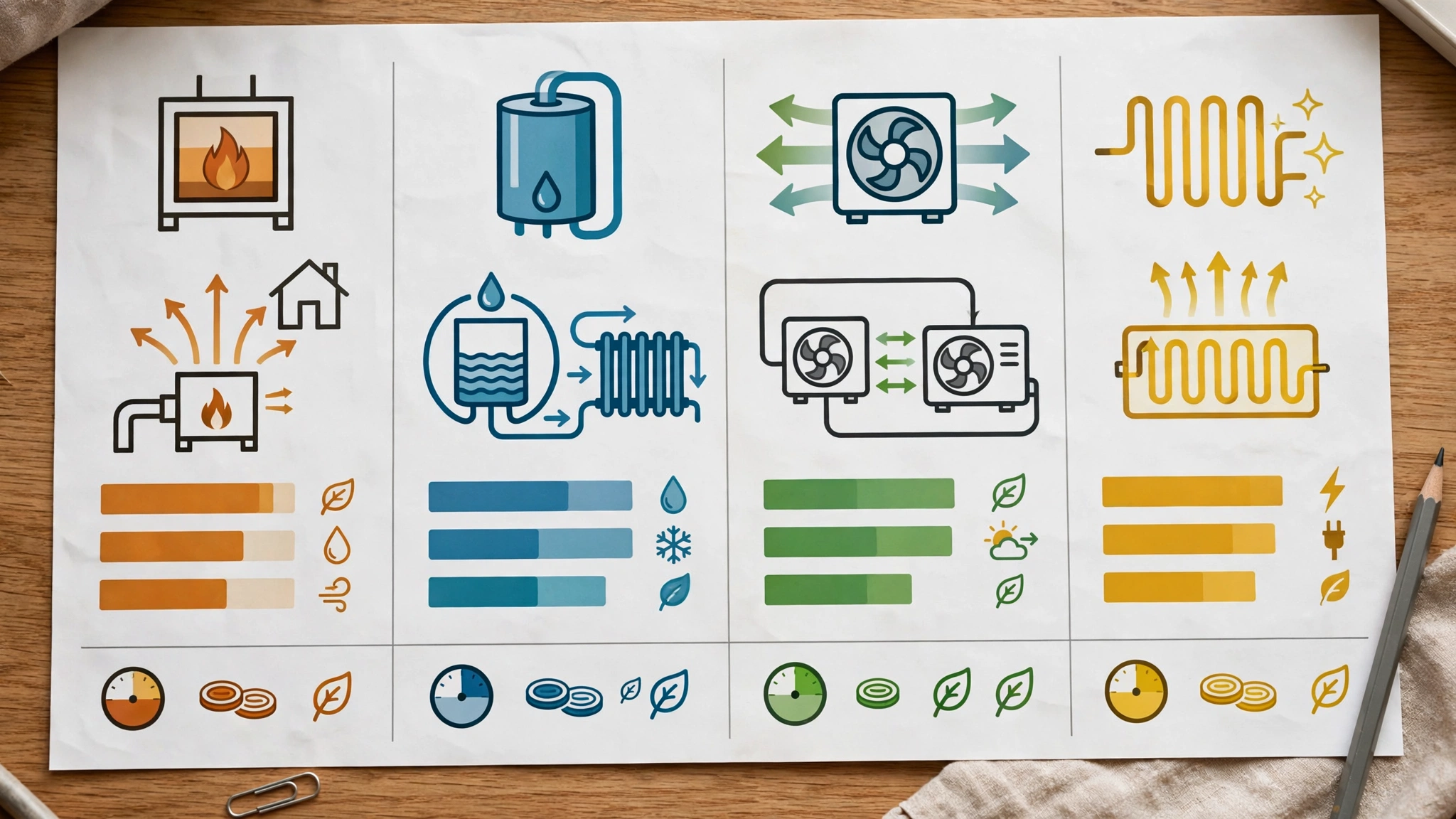
The 4 main types of home heating systems are gas or oil furnaces, boilers, heat pumps, and electric resistance systems, and the 4 types differ in fuel, heat delivery, and the parts that fail most often, in fuel type, heat delivery method, and maintenance needs. A furnace heats air and moves heated air through ducts. A boiler heats water and moves heated water through pipes to radiators or underfloor tubing. A heat pump moves heat from outside air or ground into a home through refrigerant. An electric resistance system turns electricity into heat in baseboards, wall heaters, or an electric furnace.
| System | Heat delivery | Common failed parts | Best first checks |
|---|---|---|---|
| Furnace | Heated air through ducts | Igniter, flame sensor, blower motor | Thermostat, filter, breaker, gas supply |
| Boiler | Heated water through pipes | Circulator pump, zone valve, expansion tank | Pressure gauge, pump sound, radiator valves |
| Heat pump | Refrigerant heat transfer | Compressor, reversing valve, outdoor fan | Thermostat mode, filter, outdoor unit ice |
| Electric resistance | Direct electric heat | Thermostat, heating element, sequencer | Breaker, thermostat setting, element power |
A home with ducts suits a furnace or a ducted heat pump, while a home with radiators suits a boiler. The system type decides the safe checks, since a boiler check starts at the pressure gauge and a furnace check starts at the filter. Central heating systems use one heat source for several rooms, and the central heating system guide explains how furnaces, boilers, and distribution pipes work together.
Why Is My Heating System Not Heating?
A heating system stops heating when the thermostat, power, airflow, fuel supply, ignition, circulation, or a safety control fails, and the symptom pattern points to the failed area before any part is replaced, so note the exact symptom before calling a technician. No response at all points to thermostat power, a tripped breaker, or a switched off service switch. A running blower with cold air points to ignition, fuel, or heat transfer failure. Weak heat in some rooms points to blocked vents, duct leaks, or closed radiator valves. Short cycling points to overheating from low airflow or a faulty safety control.
| Symptom | Likely cause | First safe action |
|---|---|---|
| No response, blank thermostat | Dead batteries, no power, tripped breaker | Replace batteries, check breaker once, call a technician if power is present and nothing starts |
| Blower runs, air stays cold | Ignition failure, gas supply fault, low refrigerant | Check filter and thermostat, then call a technician |
| Some rooms stay cold | Blocked vents, closed radiator valves, duct leak | Open vents and valves, check visible ducts, call a technician for duct or zone faults |
| Short cycling | Clogged filter, overheating, faulty limit switch | Replace the filter, open vents, call a technician if cycling continues |
| Banging or rattling | Loose panel, duct expansion, failing motor bearing | Switch off, check loose panels only, call a technician for motor noise |
| Burning smell | Dust on first use, electrical fault, overheated motor | Switch off at the breaker for a strong smell, call a technician at once |
| Water near a boiler | Leaking valve, failed relief valve, high pressure | Switch off, note the pressure gauge, call a technician, do not drain the system |
A practical first-hand observation helps here: note the exact symptom, start time, and any sound or smell change, since those notes cut diagnosis time.
How Do You Troubleshoot a Heating System Safely?
To troubleshoot a heating system safely, work in order through thermostat, power, airflow, fuel, and visible controls, and stop at gas, refrigerant, and sealed electrical parts, and keep a written note of each check result for the technician on the visit. The order matters, since a skipped thermostat check can lead to a needless part replacement. Carbon monoxide is colorless and odorless, so a working carbon monoxide detector belongs near sleeping areas, with batteries tested each month.
- Set the thermostat to heat and raise the target 5 degrees above room temperature.
- Replace thermostat batteries if the screen is blank, dim, or unresponsive.
- Check the service switch at the indoor unit and the breaker panel, and reset a tripped breaker only once.
- Replace a clogged filter and open all supply vents and return grilles.
- Check the fuel supply: gas valve position, oil tank level, or electric breaker state.
- Look for leaks, ice on coils, and blocked vents.
- Press a reset button only once, if the system manual allows a reset, and note any fault code.
- Stop DIY work if a breaker trips again or a gas smell appears.
For a related home care routine that shares filter and airflow habits, read the Air Conditioner Maintenance Guide for a seasonal checklist that pairs with heating care.
How Do You Repair Common Furnace Problems?
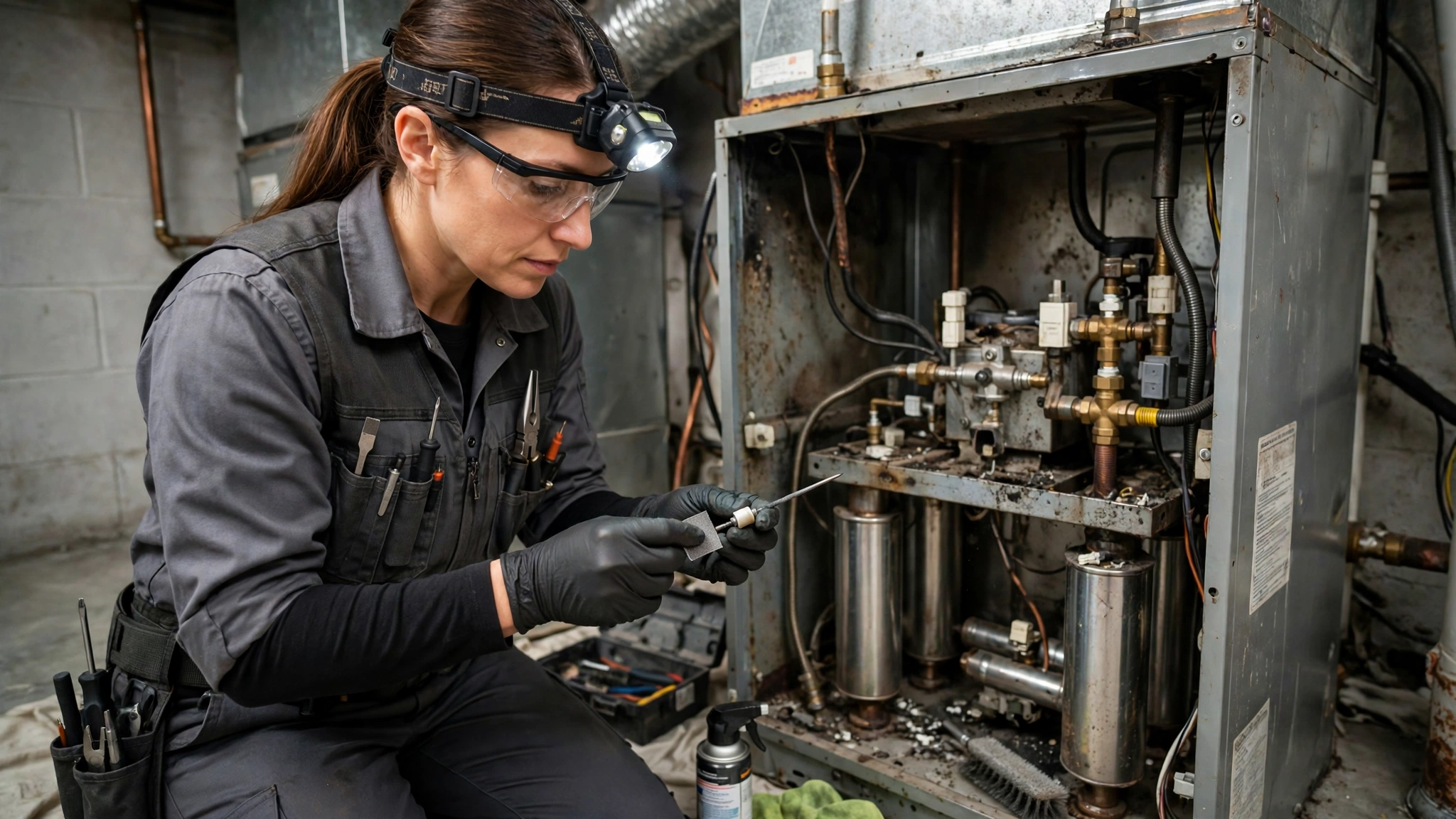
To repair common furnace problems, match the fault to the ignition sequence, then clean or replace the failed ignition or airflow part, and test a full heating cycle, and never bypass a safety control to force heat in any home. A gas furnace follows a fixed start order: thermostat call, inducer motor start, pressure switch close, igniter heat, gas valve open, flame sensor proof, and blower start. A break at any step stops heat, and the step where the sequence stops names the fault area. A furnace that starts and stops within minutes often has a dirty flame sensor, a clogged filter, or a tripped high limit switch from low airflow.
Common furnace fixes include filter replacement, flame sensor cleaning after power off, igniter replacement, and thermostat replacement. Flame sensor cleaning suits a careful homeowner only when the manual shows the sensor location. Igniter, gas valve, control board, and heat exchanger work belongs to a technician. A cracked heat exchanger is a stop work fault: switch the system off, ventilate, and call a technician at once.
How Do You Repair Common Boiler Problems?
To repair common boiler problems, check system pressure, circulation, and zone control in order, since most boiler faults sit in those 3 areas, and stop work at once for leaks near electrical parts or relief valve discharge during any check. A cold boiler pressure reading near 12 to 15 psi suits many two storey homes, and a reading near zero points to a water loss or a failed fill valve. A boiler that runs while radiators stay cold often has a failed circulator pump, a closed zone valve, or trapped air in radiators. Bleeding a radiator suits a homeowner: open the bleed valve with a radiator key until water runs steady, then close the valve and recheck pressure.
Boiler fixes include topping up pressure, bleeding radiators, and replacing a failed circulator pump or expansion tank. Expansion tank failure shows as fast pressure rise and relief valve discharge. Relief valve discharge, pressure above 30 psi, or water near electrical parts means stop work and call a technician.
What Should You Check on a Heat Pump in Winter?
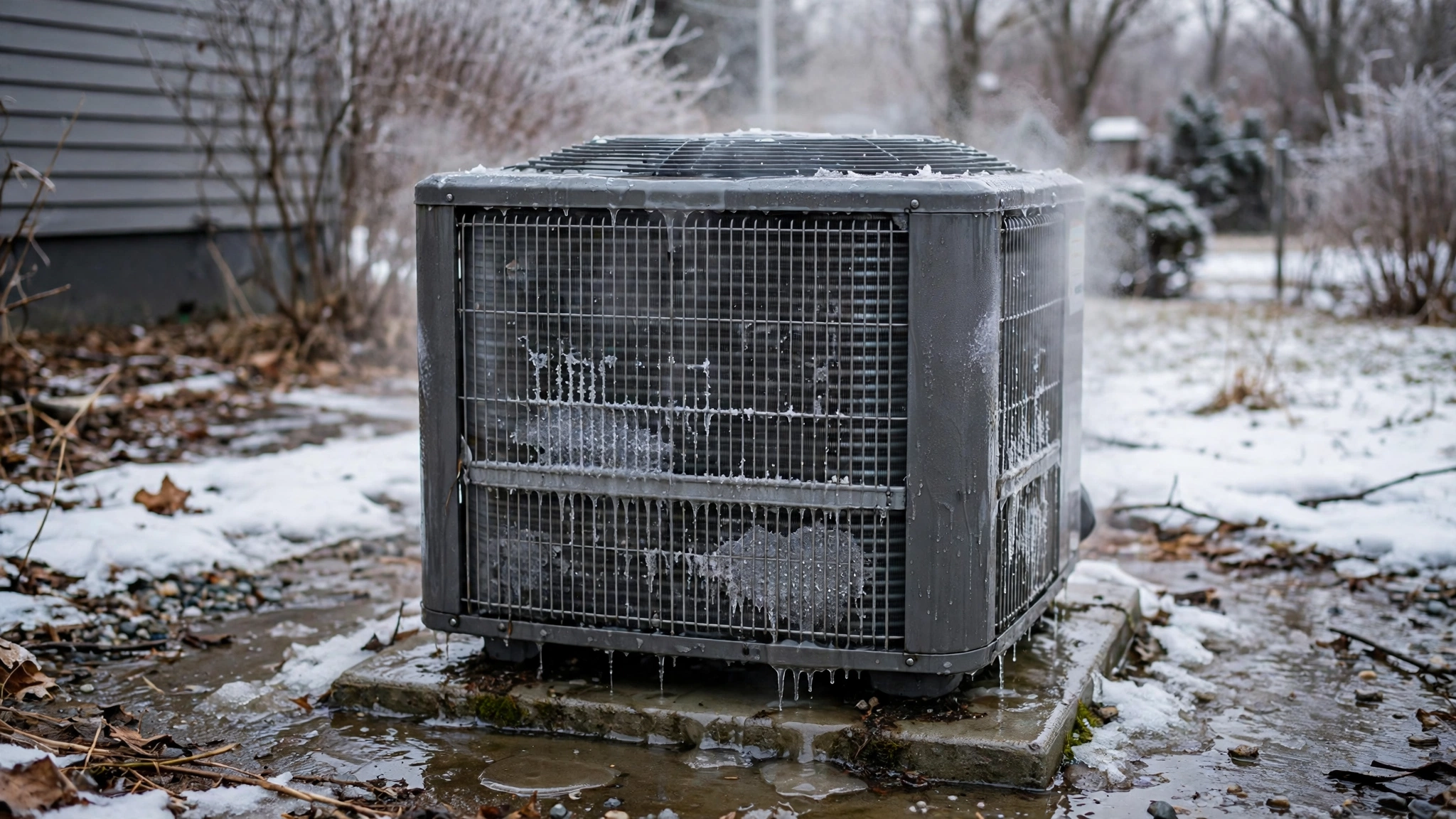
To check a heat pump in winter, confirm heating mode, clear ice and debris from the outdoor unit, and learn the difference between a normal defrost cycle and a real fault, and clear snow and debris from the outdoor unit first. A heat pump moves heat from outdoor air into a home, so cold outdoor air still holds heat for transfer, and the outdoor coil frosts during cold damp weather. A defrost cycle melts that frost: the outdoor fan stops, steam may rise, and the system may blow cooler air for a few minutes, then normal heating returns. Frequent defrost cycles, thick ice that never clears, or auxiliary heat running nonstop points to a fault.
Heat pump winter checks include heating mode, a clean filter, and 2 feet of clear space around the outdoor unit. Never chip ice off a coil with a sharp tool, since fins bend and refrigerant lines break. Auxiliary heat costs more to run than heat pump mode, so a thermostat stuck on emergency heat needs a setting fix. The heat pump operation guide explains how refrigerant moves heat between outdoor and indoor coils.
How Much Does Heating System Repair Cost?
Heating system repair costs vary by system type, failed part, and labor rates, and minor fixes cost far less than major part replacements, so get a written quote with parts and labor listed before approving work in every case first. National ranges reported by United States repair guides in 2026 put furnace repair at $150 to $1,200, heat pump repair at $250 to $2,000, and boiler repair at $300 to $1,500 (Source: Livinator, 2026). Minor fixes such as a thermostat, igniter, or flame sensor sit at the low end, while blower motors, gas valves, and control boards sit in the middle, and heat exchangers, compressors, and reversing valves sit at the high end. A diagnostic fee often applies, and many firms credit that fee toward an approved repair.
| Repair | Typical range | Notes |
|---|---|---|
| Thermostat replacement | $150 to $300 | Basic models cost less than smart models |
| Igniter or flame sensor | $150 to $350 | Common furnace no-heat fix |
| Blower or inducer motor | $400 to $1,000 | Labor varies with access and motor type |
| Control board or gas valve | $400 to $1,200 | Technician only, gas and electrical safety |
| Circulator pump | $300 to $800 | Common boiler no-heat fix |
| Heat exchanger or compressor | $1,500 to $5,000 | Compare with replacement cost first |
Ask for a written quote before work starts, with parts, labor, diagnostic fee, and warranty terms listed as separate lines. A single total quote hides part cost and blocks comparison. Keep the paid invoice and service report, since annual service records support warranty claims. Voice of Wave covers home care guides in the same plain style.
When Should You Repair a Heating System Instead of Replacing It?
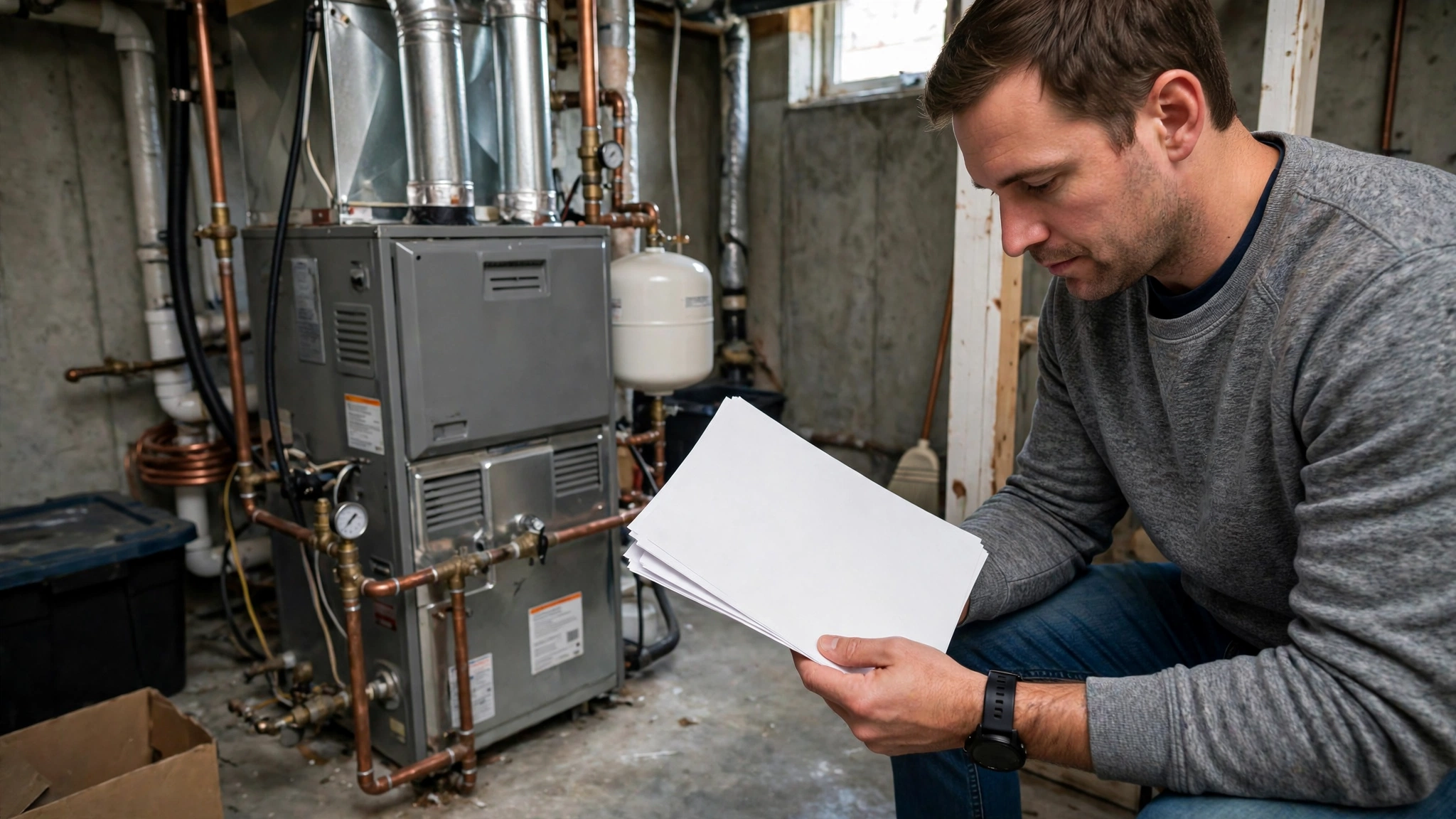
You should repair a heating system when the system is under 15 years old, the repair costs less than half the replacement cost, and faults are rare, and you should replace a system when age, repeat faults, and efficiency loss stack together. A single failed igniter on a 7 year old furnace is a clear repair. A cracked heat exchanger, a failed compressor on a 18 year old system, or a third major repair in 2 years points to replacement. Replacement also suits a system with rising energy bills, uneven room temperatures, and parts that are hard to find.
| Situation | Repair or replace | Reason |
|---|---|---|
| System under 10 years, first major fault | Repair | Long service life remains after the fix |
| Repair cost under half of replacement cost | Repair | The fix buys years at a lower cash cost |
| System over 15 years with repeat faults | Replace | Repeat labor costs erase repair savings |
| Cracked heat exchanger or failed compressor | Replace in most cases | Safety risk or high part cost, plus age |
| Parts no longer available | Replace | Future repairs cannot be completed |
A replacement quote should list system size, efficiency rating, venting changes, and disposal of the old unit. An oversized system short cycles and wastes energy, so size should follow a heat load calculation. Compare 2 or 3 written quotes, and check parts and labor warranty length.
How Do You Keep a Heating System Working After a Repair?
To keep a heating system working after a repair, follow a seasonal calendar of filter changes, visual checks, and one annual professional inspection, and file each service report with invoices and warranty papers for the next diagnosis visit and sale. Filter changes belong on a 1 to 3 month rhythm during heating season, with monthly checks in homes with pets, dust, or heavy use. Vent and radiator checks belong in autumn. A professional inspection belongs in autumn, 2 to 4 weeks before regular heating starts, so any repair happens before peak demand.
| Season | Task | Who handles it |
|---|---|---|
| Autumn | Professional inspection, new filter, vent and radiator check | Technician inspection, homeowner filter and vents |
| Winter | Monthly filter check, clear snow from outdoor unit, watch for new noises | Homeowner |
| Spring | Final filter change, outdoor unit clean, service report filed | Homeowner |
| Summer | Heat pump cooling check, plan autumn inspection date | Homeowner, technician for heat pump service |
Renters should report no-heat faults to a landlord at once and keep a written record of the report date, since repair responsibility in rented homes usually sits with the landlord. After each repair, run a full heating cycle, check every room for heat, and note the result on the service report.
Conclusion
Heating system repair starts with safe checks, matches symptoms to the failed area, and ends with a full cycle test and a written record. Heating system repair covers furnace ignition and airflow, boiler pressure and circulation, and heat pump defrost and auxiliary heat behavior. The 4 checks that solve many calls are thermostat, power, filter, and vents. Compare repair cost with system age and replacement cost before approving a major part, and keep the service report for the next visit. With a seasonal calendar and one annual inspection, a repaired heating system holds steady heat through cold weather.
Explore more home care guides on the Voice of Wave blog for heating, cooling, and household maintenance topics.
Frequently Asked Questions
How much does heating system repair cost?
Heating system repair costs vary by system and part. United States repair guides in 2026 report furnace repair at $150 to $1,200, heat pump repair at $250 to $2,000, and boiler repair at $300 to $1,500. Minor parts sit low, major parts sit high.
Can I repair a heating system myself?
Yes, for safe homeowner jobs only. Homeowners can check the thermostat, replace batteries, reset a breaker once, replace filters, open vents, and bleed radiators. Gas, refrigerant, sealed electrical, and heat exchanger work belongs to a licensed technician. Stop at that boundary.
Why does my furnace keep turning on and off?
Short cycling often comes from a clogged filter, blocked vents, overheating, or a faulty limit switch. Replace the filter, open vents, and check the thermostat setting. Call a technician if short cycling continues after those checks. Do not keep resetting the system.
Why is my boiler pressure dropping?
Boiler pressure drops when water leaves the system through a leak, a failed fill valve, or a faulty expansion tank. Check visible pipes and radiators for leaks, note the gauge reading, and call a technician if pressure keeps falling after a top up.
Is ice on my heat pump normal in winter?
Yes, light frost is normal during cold damp weather. A defrost cycle melts frost, then normal heating returns. Thick ice that never clears, frequent defrost cycles, or auxiliary heat running nonstop points to a fault needing a technician. Call early, since ice damage grows fast.
When should I replace my heating system instead of repairing it?
Replace a system when it is over 15 years old, repair costs exceed half the replacement cost, or major faults repeat. A cracked heat exchanger, a failed compressor, or parts that are no longer available also points to replacement. Get written quotes before deciding.