
Introduction
A healthy lawn with fresh sod starts with prepared soil, grass matched to the local climate, and steady water for the first month, because sod roots must grow from the cut sod layer into the soil below before the lawn can support normal use. Fresh sod is pre-grown grass sold in rolls or slabs, and it gives a finished lawn on installation day instead of the weeks seed needs. This guide covers what fresh sod is, sod versus seed, grass choice, soil prep, laying steps, watering, mowing and feeding, and common problems and fixes. A healthy lawn with fresh sod needs soil testing, firm soil contact, and a watering plan that keeps the sod layer moist while roots grow down.
Key Takeaways
- Test soil first: pH and nutrient results decide which amendments the soil needs.
- Match grass to climate: cool-season grass fits cold winters, warm-season grass fits hot summers, and a wrong match thins fast.
- Lay sod the day it arrives: stacked sod dries out fast, so same day laying protects roots.
- Water short and often at first: shallow sod roots need frequent light watering until roots grow down.
- Wait to mow and feed: mow after roots hold, feed after 30 to 60 days.
Table of Contents
- What Is Fresh Sod?
- Sod vs Seed: Which Option Fits Your Yard?
- How Do You Pick the Right Grass for Fresh Sod?
- How Do You Prepare Soil for Fresh Sod?
- How Do You Lay Fresh Sod Step by Step?
- How Much Water Does Fresh Sod Need?
- When Can You Mow and Feed Fresh Sod?
- What Problems Can Fresh Sod Develop?
- How Do You Maintain a Healthy Lawn With Fresh Sod After the First Month?
- Frequently Asked Questions
- Conclusion
What Is Fresh Sod?
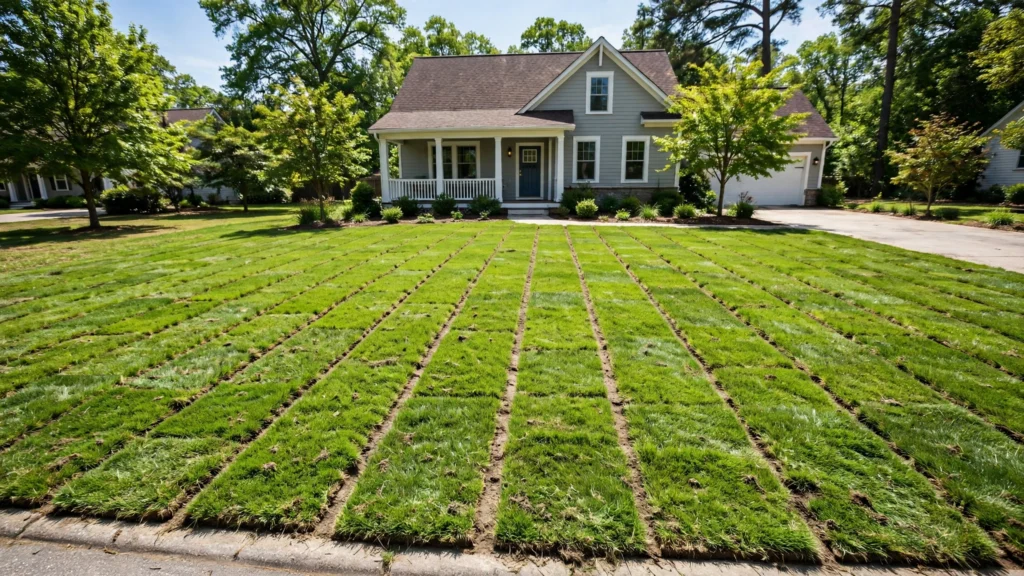
Fresh sod is pre-grown grass that a turf farm cuts from the field with a thin layer of soil and roots attached, then sells in rolls or slabs for fast lawn installation on the same day it arrives and gives instant cover. Sod farms grow grass for 12 to 18 months before harvest, so each piece arrives as a dense, mature plant mat. Cut roots are short, so grass must grow new roots into yard soil after laying. Sod is the upper layer of turf harvested for transplanting, and turf farms cut it in squares or rolls for transport.
Fresh sod suits bare yards, patchy lawns, erosion prone slopes, new homes, and small repairs, because one slab replaces a dead patch without waiting for seed. The main limit is cost: sod costs more per square foot than seed, plus delivery. Sod also needs fast handling, because stacked sod heats up and dries out within a day.
Home Improvement readers can browse the Home Improvement guides for related house and yard care topics.
Sod vs Seed: Which Option Fits Your Yard?
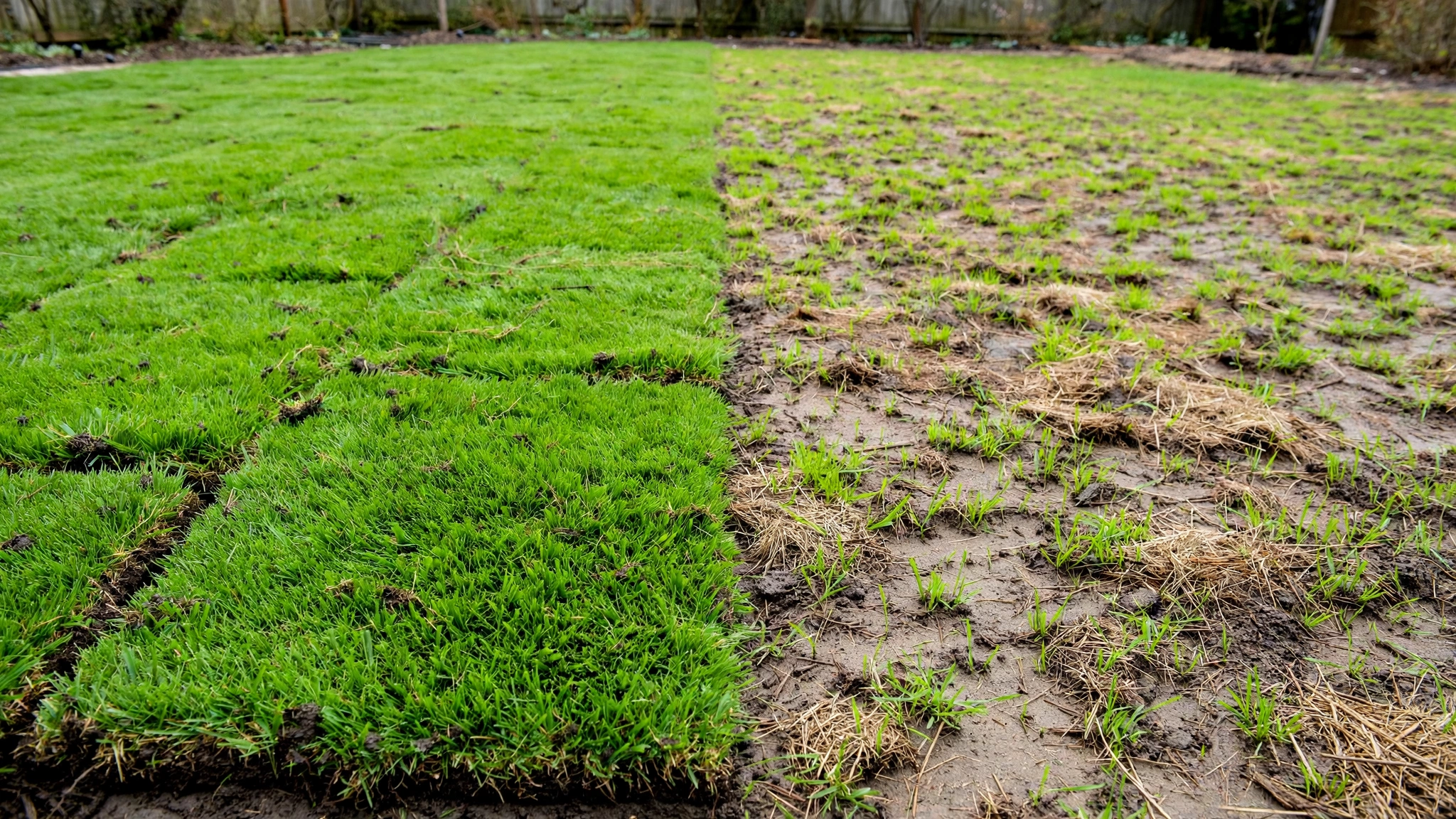
Sod fits a yard that needs a finished lawn at once, while seed fits a yard where budget matters more than speed, because sod arrives mature and seed needs weeks of steady watering to germinate and fill in the yard completely. Sod gives full cover on installation day and blocks weeds from day one. Seed costs far less and offers more grass types, but it needs steady watering for weeks, and bare soil can wash away before grass fills in.
| Factor | Fresh sod | Grass seed |
|---|---|---|
| Time to a finished lawn | 1 day for cover, 2 to 4 weeks to root | 6 to 12 weeks to fill in |
| Cost per square foot | Higher, plus delivery | Lower, no delivery needed |
| Weed pressure at start | Low, dense mat blocks weeds | Higher, bare soil invites weeds |
| Erosion control | Strong at once | Weak until grass fills in |
| Grass type choice | Limited to farm stock | Wide range of types and blends |
How Do You Pick the Right Grass for Fresh Sod?
To pick the right grass for fresh sod, match the grass type to winter cold, summer heat, sun hours, and foot traffic, because grass that fits the climate roots fast and grass that fights the climate thins out within weeks. Cool-season grasses grow best at 60 to 75 degrees Fahrenheit and suit northern yards with cold winters. Warm-season grasses grow best above 80 degrees Fahrenheit and suit southern yards with hot summers. Yards in the middle band, called the transition zone, suit tall fescue blends that handle both heat and cold better than pure types.
Kentucky bluegrass gives a dense, soft lawn in cool climates and fills bare spots through underground stems. Tall fescue gives deep roots and shade tolerance for transition zone yards. Perennial ryegrass suits quick repairs and high traffic areas. Bermudagrass gives a tough, sun loving lawn in warm climates and recovers fast from wear. Zoysiagrass gives a dense, slow growing lawn that needs less mowing. St. Augustinegrass gives dense cover in warm coastal yards and tolerates shade better than bermudagrass. Centipedegrass gives a low maintenance lawn in acidic southern soils.
Check sun hours before ordering. Bermudagrass needs full sun and fails in shade, while fine fescues and St. Augustinegrass handle shade better than most types. For yards with dogs, pick bermudagrass, zoysiagrass, or tall fescue, because those types recover from wear faster than bluegrass or centipedegrass. For slopes, pick bermudagrass or zoysiagrass, because dense cover holds soil against rain wash.
How Do You Prepare Soil for Fresh Sod?
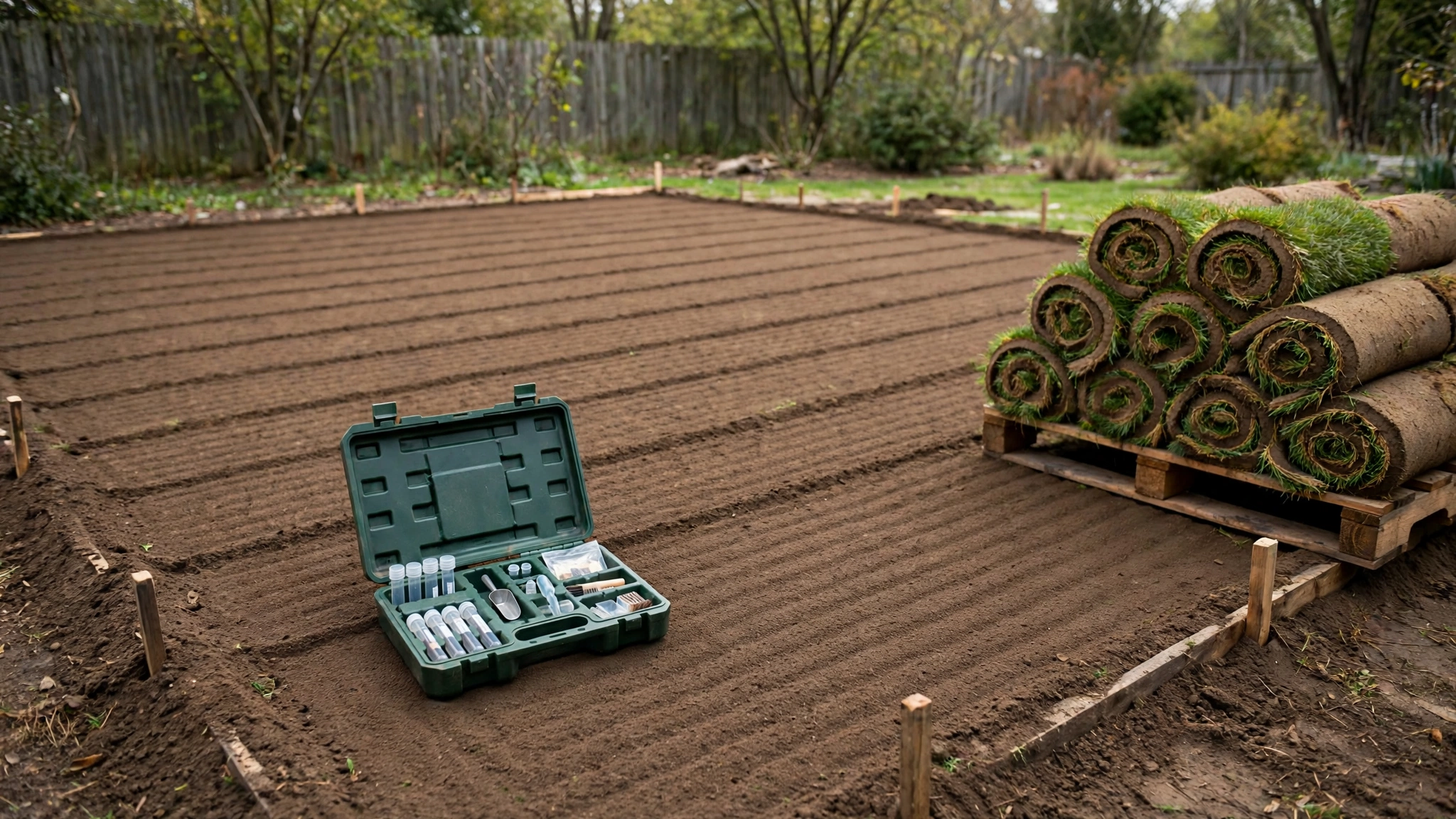
To prepare soil for fresh sod, test the soil, clear old grass and weeds, loosen the top 4 to 6 inches, level the ground, and set the grade so water drains away from the house, because roots cannot grow into compacted, weedy, or poorly drained soil. Soil testing comes first. A lab test or home kit reports pH and nutrient levels, and most grasses grow best at soil pH 6.0 to 7.0. Below 6.0, lime raises pH toward the target range. Above 7.0, sulfur lowers pH toward the target range. Low phosphorus or potassium calls for a starter fertilizer with those nutrients at laying time.
Clear the area next. Remove old grass, weeds, rocks, roots, and debris, because old plants compete with sod for water and nutrients. A sod cutter strips old grass on large yards, while a shovel handles small areas. Till to 4 to 6 inches to break compaction, then rake out stones and roots. Mix compost into clay soil for drainage and into sandy soil for water holding. Level the ground, fill low spots that would hold puddles, and keep finished soil about 1 inch below paths, because sod adds about 1 inch of height.
Set the grade so water flows away from the house: ground near a house must fall away from the walls for at least the first 10 feet. For slope and drainage checks before sod work, read the Yard Grading and Drainage Guide.
How Do You Lay Fresh Sod Step by Step?
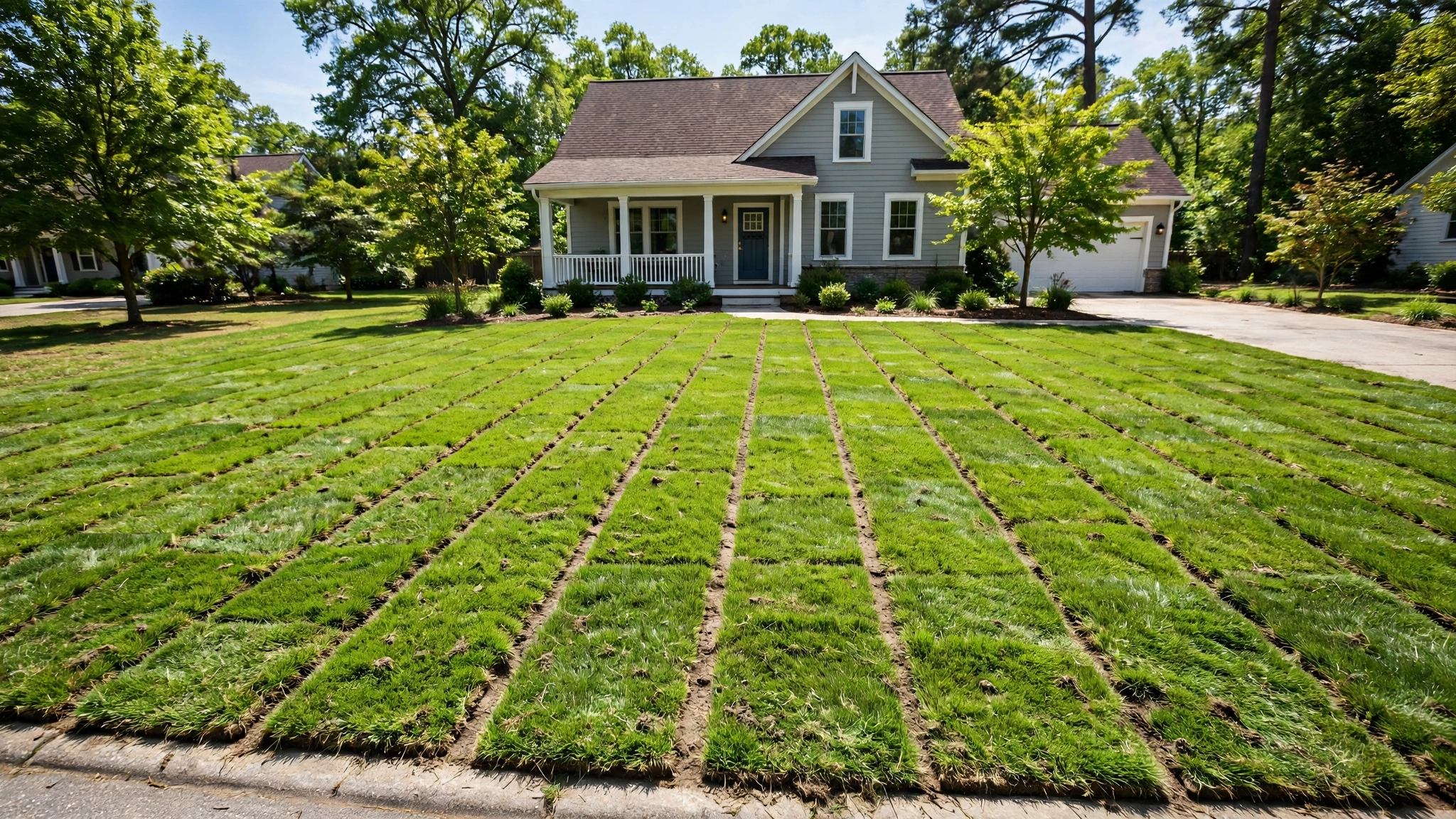
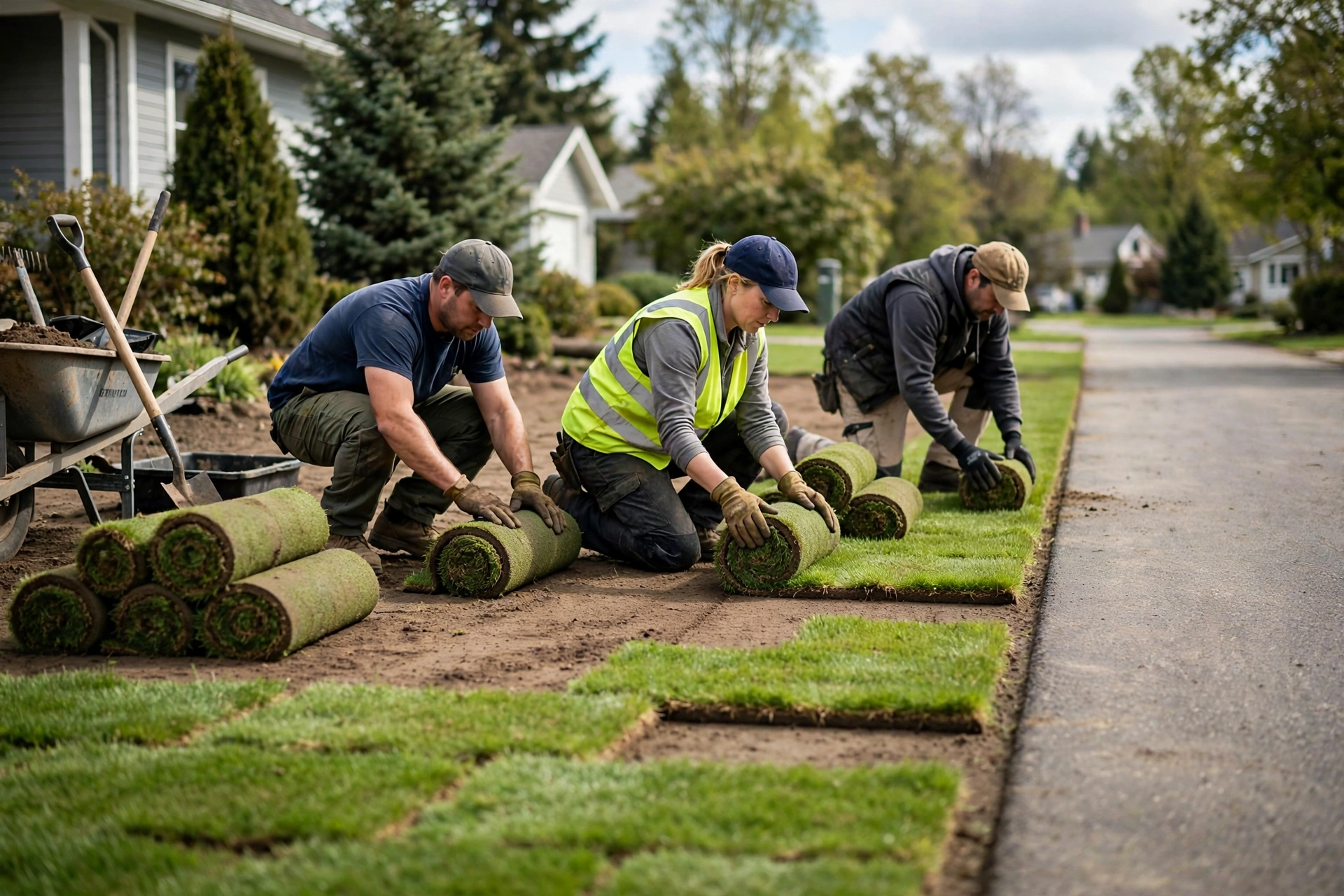
To lay fresh sod, dampen the soil, start along a straight edge, butt pieces tight without gaps, stagger seams like brickwork, trim around obstacles, roll the lawn, and water at once, because firm soil contact and instant water decide whether roots grow down or dry out. Order sod only after measuring. Measure each lawn rectangle, multiply length by width for square feet, add the sections, then add 5 to 10 percent extra for cutting waste. A standard pallet covers about 400 to 500 square feet, so divide the total by 450 for a rough pallet count. Schedule morning delivery and lay sod the same day it arrives.
Follow 8 steps:
- Water prepared soil lightly so the surface is damp, not muddy.
- Lay the first row along the longest straight edge, such as a driveway.
- Butt each piece tight against the last piece, with no gaps or overlap.
- Stagger seams in each new row so joints do not line up.
- Cut pieces with a sharp knife to fit around trees, beds, and sprinkler heads.
- Press each piece down so roots touch soil with no air pockets.
- Roll the whole lawn with a water filled roller to firm the contact.
- Water the full lawn at once until sod and the top 3 to 4 inches of soil are wet.
Work from planks on fresh sod, do not stretch pieces to fill gaps, and fill small gaps at once with soil or sod offcuts, because open seams dry out and invite weeds.
How Much Water Does Fresh Sod Need?
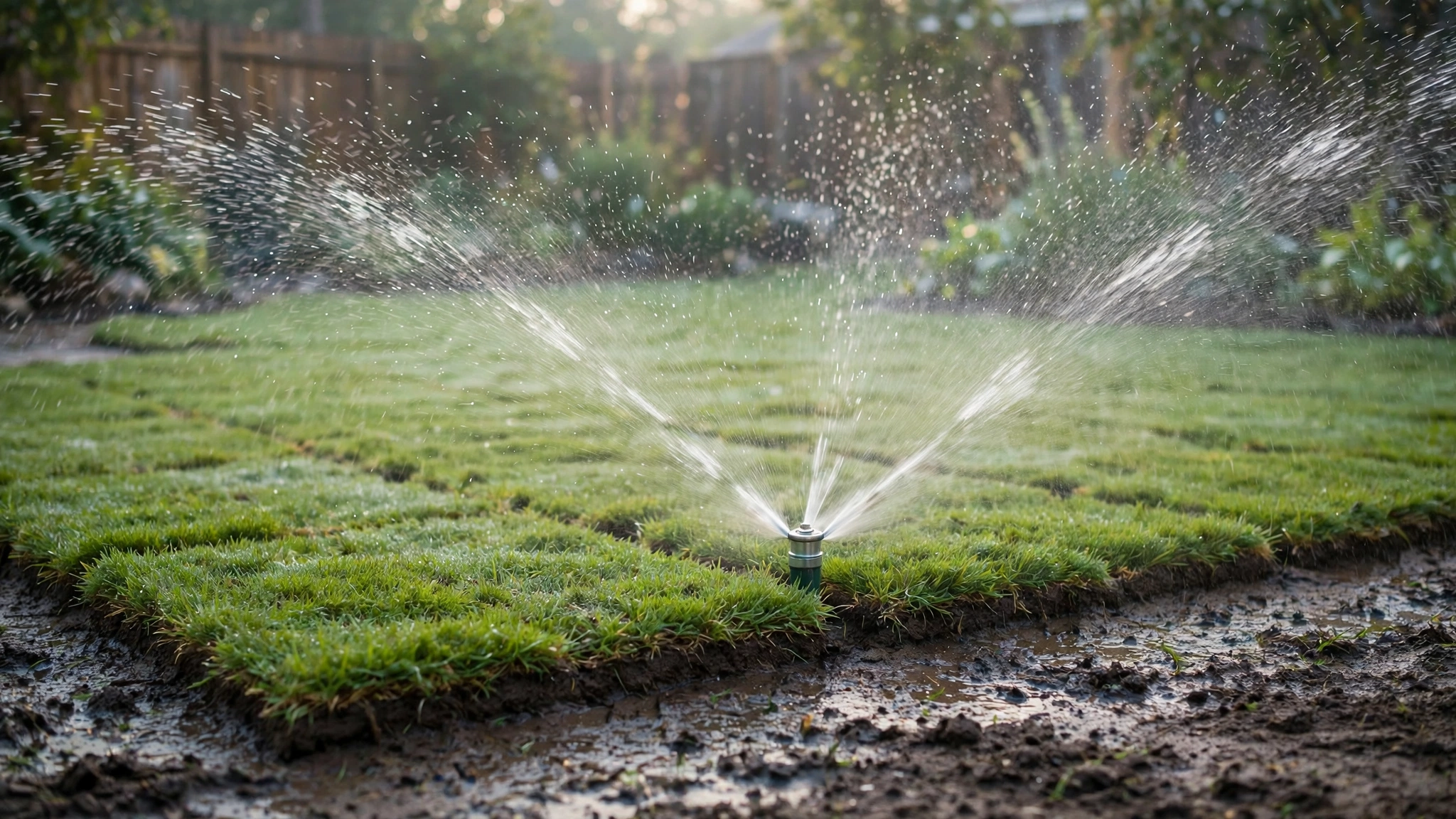
Fresh sod needs short, frequent watering for the first 2 weeks, then deeper and less frequent watering as roots grow down, because cut sod roots sit in a thin layer and cannot reach deep soil water below the sod yet. Water within 30 minutes of laying when possible, soaking the sod and the top 3 to 4 inches of soil below it. The University of Florida IFAS Extension guide recommends several short waterings a day for the first 7 to 10 days, then once a day for the next 7 to 10 days, then 2 to 3 times a week (Source: University of Florida IFAS Extension, 2026). LawnStarter advises a 40 to 60 minute soak on installation day, then twice daily watering for 2 weeks (Source: LawnStarter, 2026).
| Phase | Frequency | Target |
|---|---|---|
| Installation day | Water at once, then 2 to 3 short sessions | Sod and top soil wet |
| Days 2 to 14 | 2 to 4 times daily | Top 1 inch of soil stays moist |
| Weeks 3 to 4 | Every 2 to 3 days, deeper sessions | 1 to 1.5 inches of water per week |
| Month 2 onward | 1 to 2 deep sessions per week | 1 to 1.5 inches of water per week |
Avoid watering late at night, because wet grass overnight invites fungus. Water in the morning and early afternoon so blades dry before dark. Check moisture with a screwdriver: easy entry to 4 to 6 inches means moisture is adequate. Check rooting after 7 to 10 days by lifting a corner gently: white roots below mean the sod is anchoring. In cool weather, water less often, and in hot weather, water more often, because cool soil holds moisture longer and heat dries the thin sod layer fast.
When Can You Mow and Feed Fresh Sod?
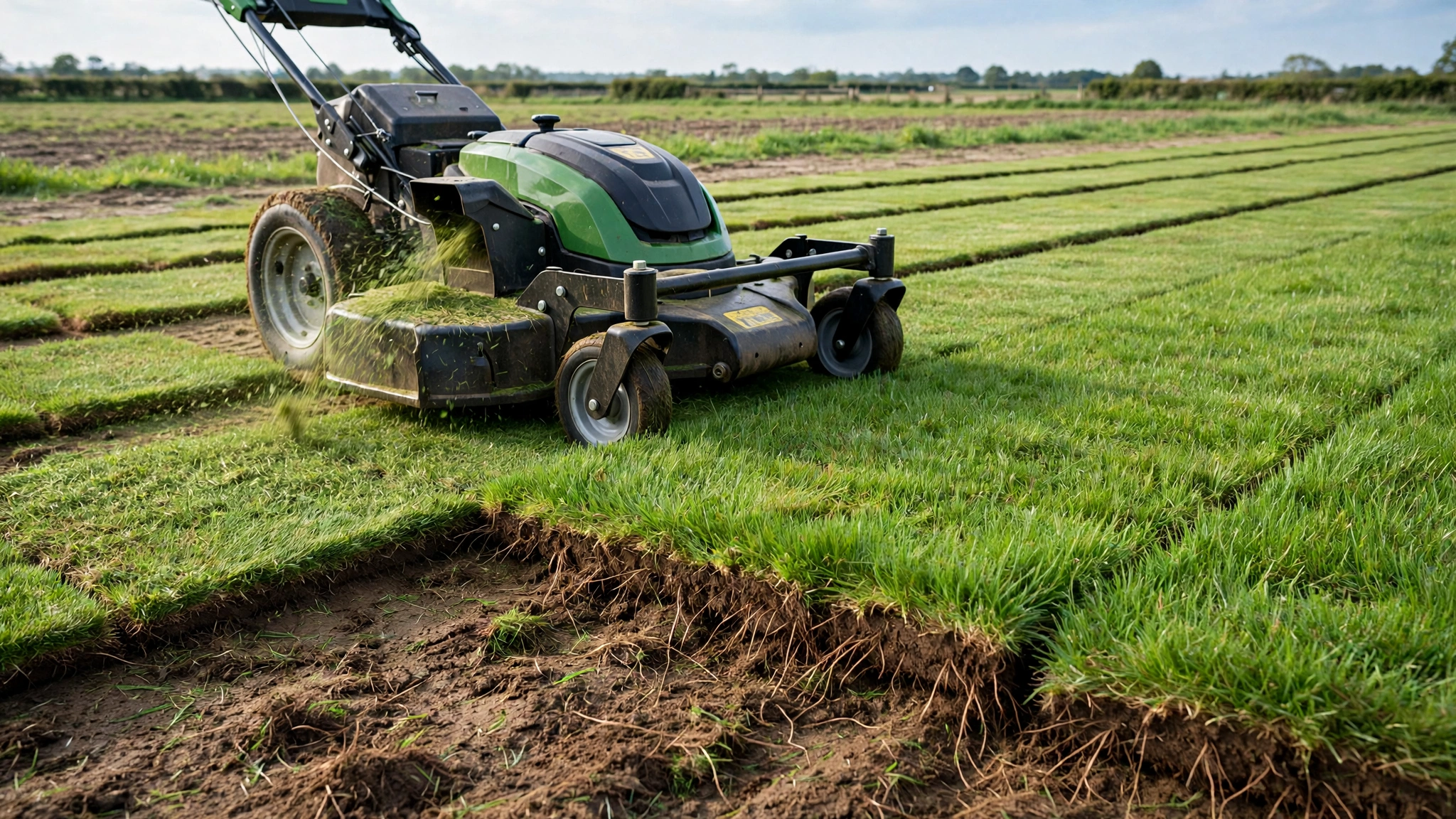
You can mow fresh sod after roots hold firm, usually 14 to 21 days after laying, and you can feed fresh sod after 30 to 60 days, because mowing loose sod tears roots and early fertilizer can burn young roots. Test rooting before the first mow: tug a corner gently, and mow only when the piece resists and stays fixed. Mow at the highest setting for the first cut, and cut no more than one third of blade height at once. Keep blades sharp, because dull blades tear grass and open wounds for disease.
Wait 30 to 60 days before fertilizing, because most sod arrives fertilized from the farm and extra nitrogen can leach past young roots (Source: University of Florida IFAS Extension, 2026). At 30 to 60 days, apply a balanced lawn fertilizer at the label rate, then water it in. Avoid weed control products for the first 4 weeks, because herbicides stress young roots. After 4 mowings, spot weed control becomes safe for most products, but read the label for the exact wait time.
What Problems Can Fresh Sod Develop?
Fresh sod problems come from water errors, poor soil contact, and early traffic, and each problem has a clear fix when caught in the first 2 weeks, before roots fail and whole pieces die across the lawn and need replacement. Brown patches mean dry spots or gaps where sod dried out. Fix brown patches by checking sprinkler coverage, watering by hand, and pressing lifted edges back into soil contact. Sod that lifts easily after 10 days means roots have not anchored, often from underwatering or air pockets below. Fix lifted sod by watering deeply, rolling again, and keeping traffic off it for another week.
Fungus shows as rings, slimy patches, or grey mold after night watering or soggy soil. Fix fungus by watering in mornings, cutting back frequency, and letting the surface dry between sessions. Weeds in seams mean gaps or thin edges. Fix seam weeds by filling gaps with soil and pulling weeds by hand, and wait until roots hold before any weed product. Insect damage shows as thinning patches with grubs or chinch bugs below. Check soil under a lifted patch, then use a labeled lawn insect product only after roots hold.
When sod looks stressed, check moisture with a screwdriver, rooting with a corner lift, and sprinkler coverage with cans on the lawn, then fix the water fault first and wait 7 days before judging recovery. Green edges with a brown middle usually mean a sprinkler gap, not disease. Browning in full sheets usually means a watering or soil contact fault across the whole area. In my own yard work, the driest pieces after a missed watering day were always along sunny path edges, and those pieces greened up first once hand watering started.
How Do You Maintain a Healthy Lawn With Fresh Sod After the First Month?
To maintain fresh sod after the first month, water deeply 1 to 2 times per week, mow weekly at the right height for the grass type, feed on a seasonal schedule, and watch for weeds, because deep watering and correct mowing height build the deep roots that carry a lawn through heat and drought. Established sod needs 1 to 1.5 inches of water per week from rain plus irrigation. Deep sessions beat daily light watering, because deep water pulls roots down and light water keeps roots shallow. Mow cool-season grass at 3 to 4 inches and warm-season grass at 1.5 to 3 inches, and never cut more than one third of blade height at once.
Feed 3 to 4 times per year: spring feeding wakes growth, summer feeding supports heat tolerance, and autumn feeding builds roots for winter. Aerate once a year after the first year, because aeration opens soil for air, water, and nutrients.
Voice of Wave covers home care, yard care, and everyday guides for general readers, with new practical guides each week.
Conclusion
A healthy lawn with fresh sod comes from soil testing, grass matched to climate, same day laying, firm soil contact, short frequent watering for 2 weeks, and patience before mowing and feeding. Each step protects the next: tested soil feeds roots, correct grass fits the climate, tight seams block weeds, and steady water grows roots down. Skip one step and the lawn shows it within weeks as brown patches, lifted pieces, or thin cover. Follow all steps and new sod becomes a dense, durable surface within 2 months.
For more guides on home care and everyday topics, visit the Voice of Wave blog hub:
Read the latest articles on the Voice of Wave blog
Frequently Asked Questions
How long does it take for fresh sod to root?
Fresh sod roots in 2 to 4 weeks under steady watering, with light anchoring in 7 to 14 days. Test rooting by lifting a corner gently: resistance means roots are growing into the soil below. Full root depth and normal traffic tolerance take about 2 months. Cool weather slows rooting, while warm soil speeds rooting.
Can you walk on fresh sod?
No, keep foot traffic off fresh sod for the first 10 to 14 days, because walking shifts pieces and breaks young roots. Light foot traffic becomes safe after the sod passes the tug test and resists lifting. Heavy play, pets running, and furniture must wait until roots hold firm, usually after 3 to 4 weeks.
How often should you water fresh sod in the first week?
Water fresh sod 2 to 4 times daily in the first week, with short sessions that keep the top 1 inch of soil moist. Water in the morning and afternoon, not at night, so blades dry before dark. On installation day, soak sod and the top 3 to 4 inches of soil fully before starting the daily routine.
What is the best time of year to lay sod?
Spring and early autumn are the best times to lay sod for most grass types, because mild temperatures and steady rain support rooting. Cool-season grass roots best in early autumn, while warm-season grass roots best in late spring. Summer laying works with extra watering, and winter laying works only where soil stays unfrozen.
How much sod do I need for my yard?
Measure each lawn section in feet, multiply length by width for square feet, add all sections, then add 5 to 10 percent extra for cutting waste. Divide the total by 450 for a rough pallet count, since one pallet covers about 400 to 500 square feet. Confirm the pallet coverage with the sod farm before ordering.
Sod vs seed: which is cheaper?
Seed is cheaper than sod, because seed costs far less per square foot and needs no delivery. Sod costs more up front but gives instant cover, fewer weeds, and faster use. For large yards on a tight budget, seed wins on cost. For small yards, slopes, and fast deadlines, sod wins on speed and erosion control.