
Last updated: October 2026
Written by Michael Brooks for Voice of Wave
Introduction
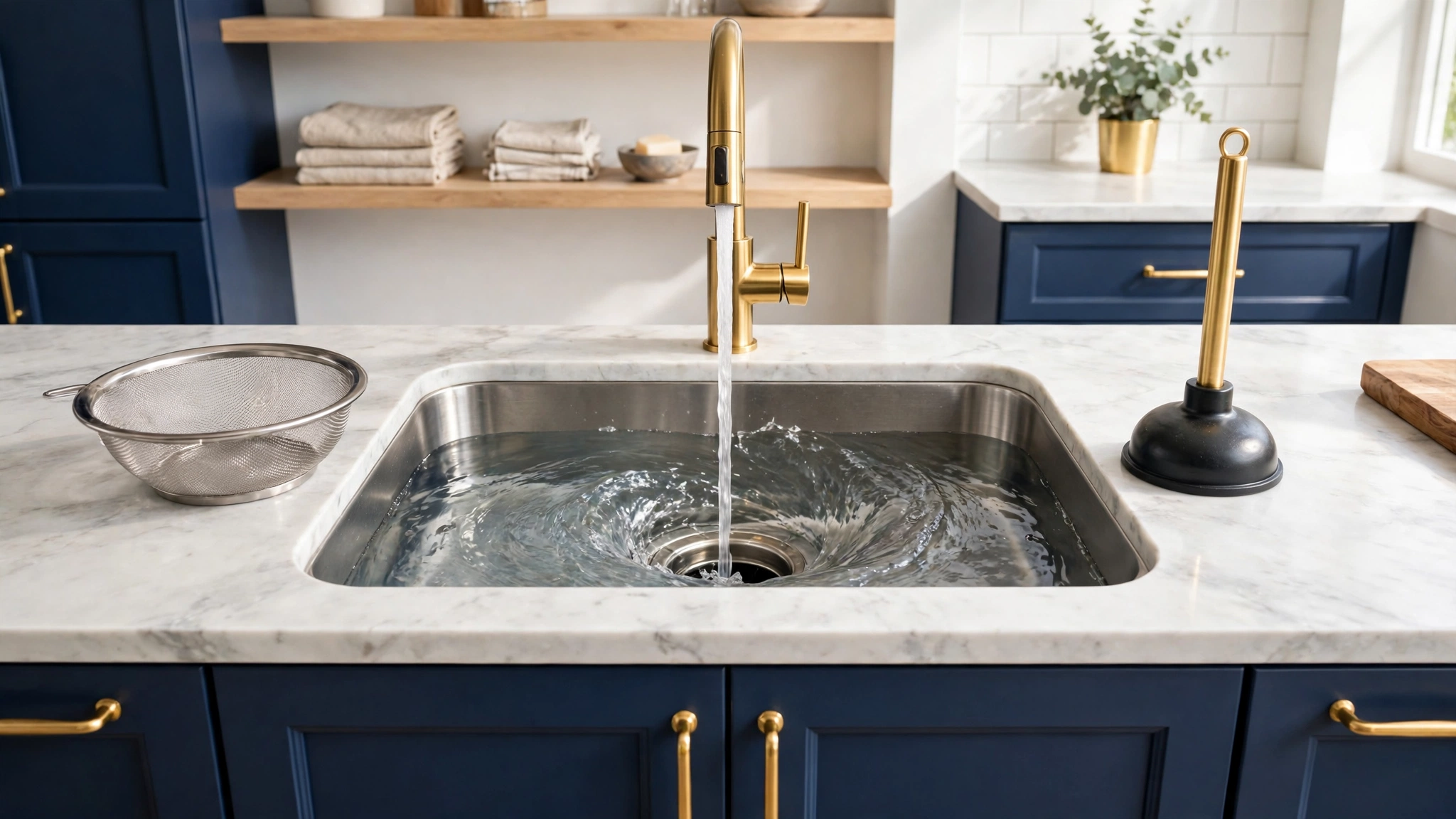
Drain cleaning is the process of clearing grease, hair, soap scum, food waste, mineral scale and tree roots from household pipes so water drains at full speed. The best method depends on the clog: a plunger clears shallow clogs, a drain snake clears deeper clogs, and hydro jetting clears grease and roots from main lines.
Drain cleaning covers 5 methods: plunger, baking soda and vinegar flush, drain snake, enzyme cleaner and hydro jetting. Drain cleaning causes split into kitchen grease, bathroom hair and soap scum, and main line roots and scale. Drain cleaning steps run from diagnosis to tool choice to prevention, and the guide ends with clear rules for calling a professional.
Key Takeaways
- Match the method to the clog: a plunger clears shallow clogs, a snake clears deeper clogs, and hydro jetting clears grease and roots.
- Diagnose first: one slow fixture means a fixture clog, and several fixtures backing up at once means a main line problem.
- Skip chemical cleaners: caustic cleaners corrode pipes and harm fixtures, and enzyme cleaners suit maintenance only.
- Check pipe material: hydro jetting needs sound pipes, and a camera inspection comes first on old lines.
- Prevent the next clog: a strainer, a monthly hot water flush and a grease rule keep drains clear between cleanings.
Table of Contents
- What Is Drain Cleaning?
- What Causes Most Drain Clogs?
- What Are the Best Methods for Drain Cleaning?
- How Do You Clean a Drain With a Plunger?
- How Do You Use a Drain Snake?
- What Is Hydro Jetting and When Does It Work Best?
- Are Chemical Drain Cleaners Safe for Pipes?
- How Do You Keep Drains Clear Between Cleanings?
- When Should You Call a Professional for Drain Cleaning?
- Conclusion
- FAQs
What Is Drain Cleaning?
Drain cleaning is the clearing of buildup and blockages from fixture drains, branch lines and main sewer lines using manual tools, mechanical tools or pressurized water. Drain cleaning covers sinks, tubs, showers, toilets and floor drains, and drain cleaning differs from a repair because drain cleaning restores flow while a repair replaces damaged pipe.
Fixture drains serve one sink, tub or toilet. Branch lines join several fixtures and carry waste to the main line. The main line carries all household waste to the street sewer or septic tank. A clog at fixture level affects one fixture. A clog at branch or main level affects several fixtures at once.
Drain cleaning tools match the level: manual plungers and hand augers, motorized snakes and cable machines, and pressurized water jetters. A drain trap is the curved pipe section under a fixture, and the trap holds a water seal that blocks sewer gas from entering the home. The design of drain traps and pipe layouts shows why traps collect hair and debris first, and why trap cleaning fixes many slow drains.
What Causes Most Drain Clogs?
Most drain clogs come from 4 causes: kitchen grease and food waste, bathroom hair and soap scum, foreign objects flushed or washed down drains, and main line tree roots and mineral scale. Kitchen drains clog from grease, bathroom drains clog from hair, and main lines clog from roots and scale.
Kitchen clogs start with grease. Hot grease flows down the drain as a liquid, cools inside the pipe, and coats the pipe wall as a solid layer. Food scraps, coffee grounds and starchy paste stick to that grease layer, and the layer narrows the pipe until water drains slowly.
Bathroom clogs start with hair and soap scum. Hair catches on the drain stopper, the trap and rough pipe joints, and soap scum binds the hair into a mat.
Main line clogs start outside the fixture. Tree roots enter sewer lines through joints and small cracks, and roots grow into a net that catches paper and waste. Mineral scale narrows old cast iron and galvanized lines. Flushed wipes, cotton products and toys cause sudden full blockages. For more home maintenance guides in this area, browse the Home Improvement guides on this site.
What Are the Best Methods for Drain Cleaning?
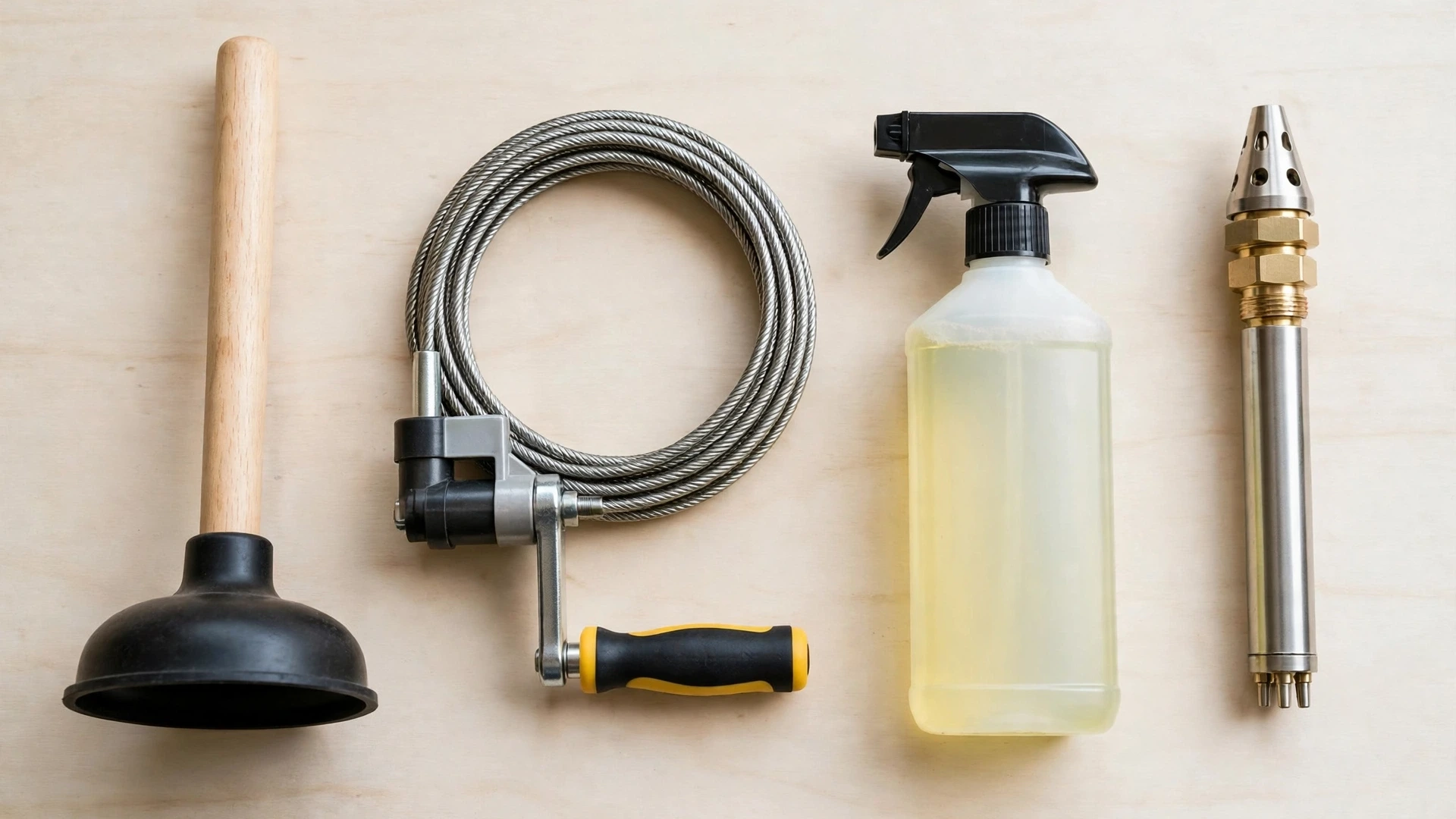
The best methods for drain cleaning are a plunger for shallow clogs, a drain snake for deeper clogs, an enzyme cleaner for routine maintenance, and hydro jetting for grease, scale and roots in main lines. The best method for drain cleaning depends on clog depth, clog material and pipe condition.
| Method | Best for | How it works | Limits |
|---|---|---|---|
| Plunger | Shallow fixture clogs | Pressure and suction move the clog | Fails on deep or hard clogs |
| Baking soda and vinegar | Light buildup and odor | Fizz loosens light organic film | Fails on solid clogs |
| Drain snake | Hair and debris clogs | Rotating cable breaks up or hooks the clog | Leaves grease and scale on walls |
| Enzyme cleaner | Routine maintenance | Bacteria digest organic matter slowly | Slow, fails on grease, scale and roots |
| Hydro jetting | Grease, scale, roots, main lines | High-pressure water scours the full pipe wall | Needs sound pipes, needs a professional |
Start with the gentlest method that fits the clog. A slow sink with no standing water suits a plunger or a trap cleaning. A tub that drains slowly after every shower suits a snake, because hair sits below the stopper. A kitchen line that clogs every few months suits hydro jetting, because grease coats the full pipe wall. A main line with several backed-up fixtures suits a camera inspection first, then jetting or repair.
How Do You Clean a Drain With a Plunger?
To clean a drain with a plunger, cover the overflow opening, place the plunger cup flat over the drain, and push and pull with firm, even strokes for 15 to 20 seconds, then lift the cup and check flow. To clean a drain with a plunger, water must cover the cup, because water carries the pressure to the clog.
Pick the right plunger. A cup plunger suits sinks and tubs. A flange plunger suits toilets, because the flange seals the toilet outlet.
Follow these steps for a sink or tub:
- Remove the stopper and clear visible hair and debris by hand.
- Plug the overflow hole with a damp rag to hold pressure in the pipe.
- Run enough water to cover the plunger cup by 2 to 3 centimetres.
- Place the cup flat over the drain and press down to seal the rim.
- Push and pull with firm, even strokes for 15 to 20 seconds.
- Lift the cup on an upstroke and check whether water drains fast.
- Repeat the cycle 2 to 3 times when flow improves but stays slow.
For a toilet, press down slowly first to avoid splashing, then plunge with short, strong strokes and pull up sharply. Pulling breaks the clog apart better than pushing, because pushing can pack the clog deeper into the trap. Stop plunging when water rises near the rim, and wait for the level to drop before the next round.
For another kitchen upkeep guide, read how to get rid of ants in the kitchen.
How Do You Use a Drain Snake?
To use a drain snake, feed the cable slowly into the drain, rotate the handle when the cable meets resistance, and pull the cable back to remove the clog material. To use a drain snake, work the cable in short sections, because forcing a long length at once kinks the cable and scratches the pipe.
A hand auger suits sink and tub drains, and a hand auger reaches 5 to 8 metres. A drum machine suits longer branch lines, and a drum machine needs care on old pipes. A closet auger suits toilets, because a closet auger has a guard sleeve that protects porcelain from scratches. Never use a standard snake in a toilet, because a standard snake scratches the bowl.
Follow these steps for a sink or tub snake:
- Remove the stopper and clean the trap opening by hand first.
- Feed 30 to 60 centimetres of cable into the drain before cranking.
- Turn the handle clockwise while feeding the cable forward slowly.
- Stop feeding when the cable meets firm resistance at the clog.
- Crank and push in short bursts to break up or hook the clog.
- Pull the cable back slowly and clean debris off the cable head.
- Flush with hot water and check flow before refitting the stopper.
Soft resistance that gives way means a hair or paper clog, and hard resistance that holds means scale, a hard object or a pipe joint. A cable that stops at the same depth on repeat runs means a fixed obstruction, and a fixed obstruction needs a camera inspection.
What Is Hydro Jetting and When Does It Work Best?
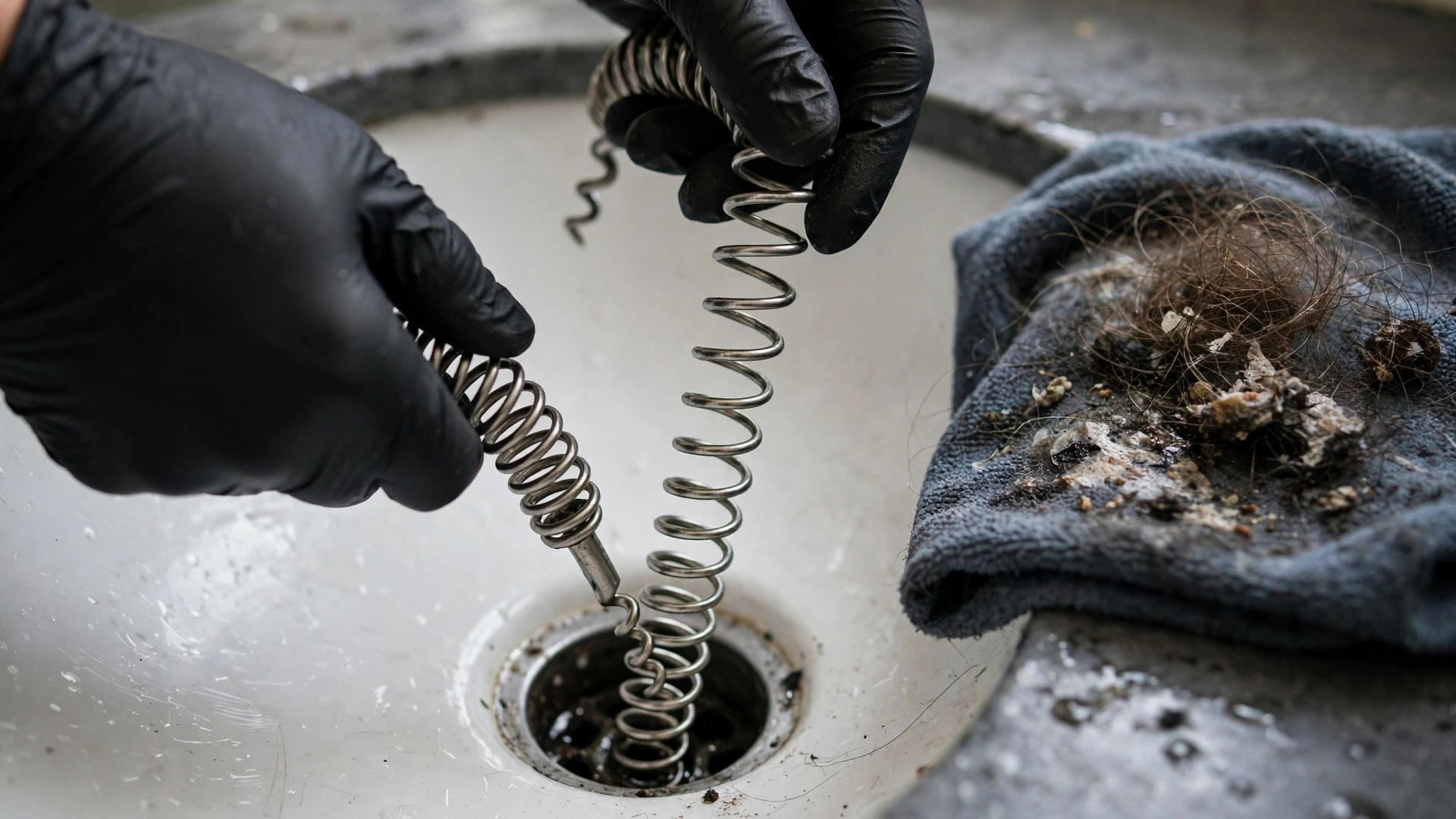
Hydro jetting is the cleaning of drain pipes with high-pressure water sent through a specialized nozzle that scours grease, scale, sludge and roots off the full pipe wall. Hydro jetting works best for recurring clogs, grease-coated kitchen lines, root-filled sewer lines and main lines with heavy buildup.
Hydro jetting uses water at 1,500 to 4,000 PSI, with the pressure matched to pipe material and pipe condition (Source: A1 Best Plumbing, 2026). A jetter nozzle sprays water forward to cut the blockage and backward to pull the hose through the pipe and flush debris downstream. Jetting cleans the full pipe diameter, while snaking opens only a path through the clog. Jetting results often last 1 to 2 years on chronic lines, while snaking results on chronic lines last weeks to months (Source: Bob’s Emergency Plumbing, 2026).
| Feature | Drain snaking | Hydro jetting |
|---|---|---|
| How it works | Rotating cable bores through the clog | High-pressure water scours the pipe wall |
| Best for | Single, localized clogs | Grease, scale, sludge, recurring clogs, main lines |
| Pipe wall after | Buildup largely remains | Buildup removed, diameter restored |
| Tree roots | Cuts some, roots regrow fast | Cuts back cleaner with root nozzles |
| Pipe condition needed | Works on most pipes | Sound pipes, camera inspection first on old lines |
| Cost | Lower | Higher |
Jetting needs a camera inspection first on old, clay or damaged lines, because high-pressure water in a cracked line can break the pipe further. Jetting suits a line that clogs every few months, a kitchen line with years of grease, and a main line with root intrusion. Jetting does not suit a collapsed pipe, a broken joint or a line with standing structural damage, and those cases need repair, not cleaning.
Are Chemical Drain Cleaners Safe for Pipes?
No, chemical drain cleaners are not safe for pipes, because caustic and acid cleaners corrode metal pipes, soften plastic fittings, damage porcelain and release heat and fumes during use. Chemical drain cleaners suit no routine use, and chemical drain cleaners fail on most solid clogs.
Caustic cleaners use sodium hydroxide or potassium hydroxide to dissolve organic matter. Acid cleaners use sulfuric acid or hydrochloric acid for the same job. Both types generate heat inside the pipe, and heat plus chemical attack weakens joints, gaskets and fixture finishes. Old cast iron and galvanized pipes corrode fastest. Plastic traps and fittings soften under repeated doses. A cleaner that sits in a fully blocked pipe never reaches the clog, and the chemical pool stays in the fixture until a plumber removes it by hand.
Enzyme cleaners use bacteria that digest hair, soap scum and food residue over hours or days. Enzyme cleaners suit monthly maintenance on slow drains, and enzyme cleaners harm no pipe material. Enzyme cleaners fail on standing clogs, grease layers, scale and roots, because bacteria digest only light organic matter. Use enzyme cleaners as prevention, not as a rescue tool.
How Do You Keep Drains Clear Between Cleanings?
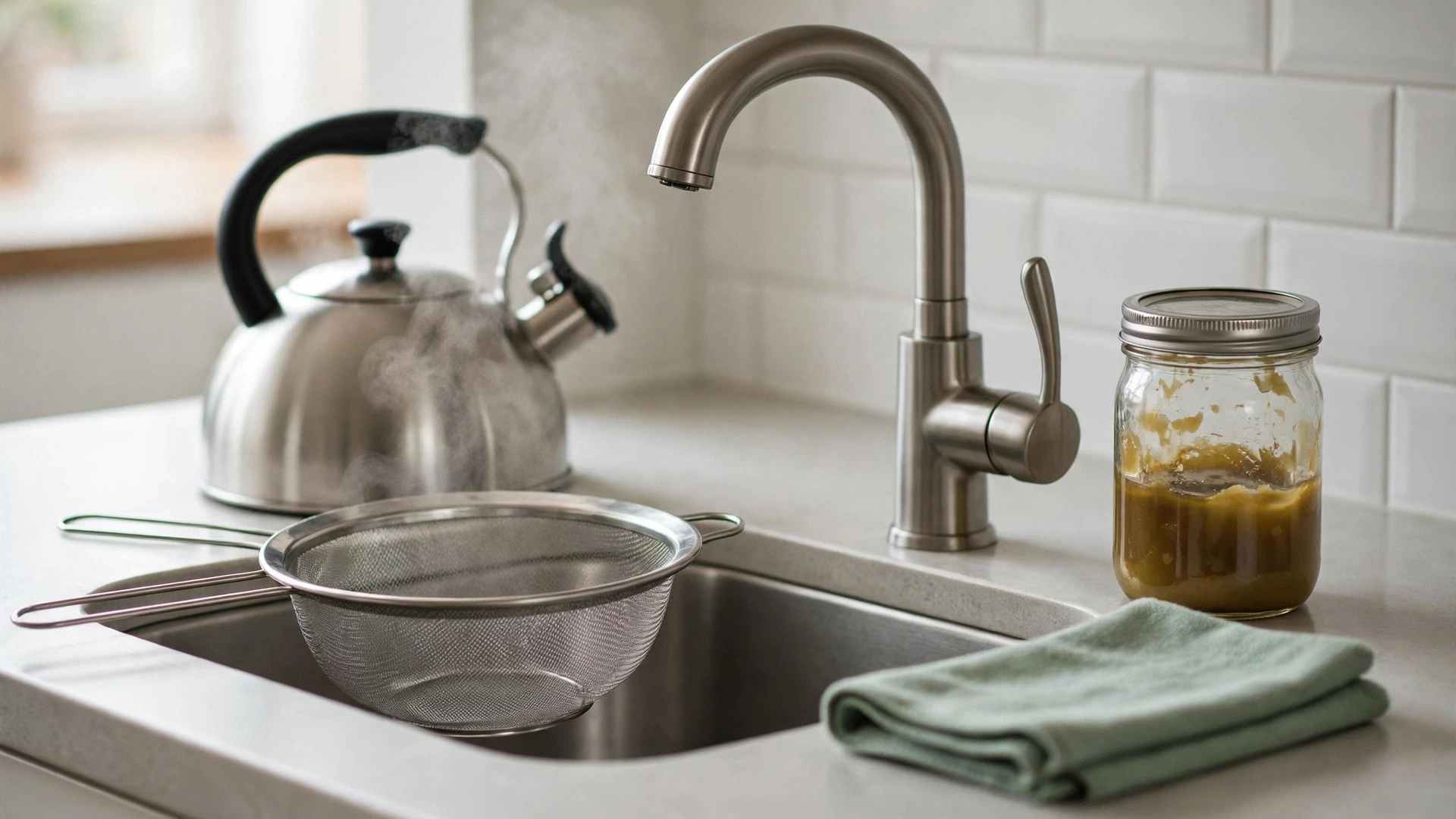
To keep drains clear between cleanings, fit a mesh strainer on every sink and tub, keep grease out of the kitchen drain, flush drains with hot water each month, and clean stoppers and traps each quarter. To keep drains clear between cleanings, prevention must run on a schedule, because clogs form slowly from daily habits.
Run this monthly routine:
- Fit mesh strainers on kitchen sinks, bathroom sinks and tubs.
- Empty strainers into the trash, never back into the drain.
- Flush each drain with a full kettle of hot water once a month.
- Wipe grease from pans with a paper towel before washing.
- Pour cooled cooking grease into a sealed container for the trash.
Run this quarterly routine:
- Remove and scrub stoppers, strainers and drain covers.
- Clean the trap opening by hand on slow fixtures.
- Run an enzyme cleaner overnight on kitchen and bathroom drains.
- Check under sinks for drips, damp spots and drain odors.
In my own home, the kitchen sink slowed every few weeks until a mesh strainer and a weekly hot water flush became part of the routine, and the slow drain stopped returning after that change.
When Should You Call a Professional for Drain Cleaning?
Call a professional for drain cleaning when several fixtures back up at once, when sewage appears in a tub or floor drain, when a clog returns within weeks of clearing, or when a snake meets fixed resistance at the same depth. Call a professional for drain cleaning when the problem sits in the main line, because main line work needs camera inspection and jetting equipment.
Several backed-up fixtures signal a main line blockage. A toilet that gurgles when the washer drains signals a vent or main line restriction. Sewage in a low fixture signals a main line backup that needs same-day help. Water damage, damp walls near drain lines and persistent sewer odor signal a leak or break, not a simple clog.
Ask the professional 3 questions before work starts: what caused the clog, what method fits the pipe material, and whether a camera inspection comes first. Ask for the camera footage or a written summary after the job, because footage shows roots, scale, breaks and offsets that decide the next step. A quote should name the method and price, and a jetting job should include a camera check after cleaning.
Conclusion
Drain cleaning works best as a matched method, not a single product: a plunger for shallow clogs, a snake for deeper clogs, enzyme cleaners for maintenance, and hydro jetting for grease, scale and roots. Drain cleaning starts with diagnosis: one slow fixture means a fixture clog, and several backed-up fixtures mean a main line problem. Drain cleaning avoids chemical cleaners, checks pipe material before jetting, and runs on a monthly and quarterly prevention routine. Voice of Wave covers practical home guides of this kind, and the methods in this guide give every homeowner a clear order: diagnose, pick the gentlest fitting tool, and call a professional when the main line or a fixed obstruction is involved.
Explore the latest articles on the Voice of Wave blog for more home improvement guides.
Frequently Asked Questions
What is the best drain cleaning method for a kitchen sink?
The best drain cleaning method for a kitchen sink is a plunger for a fresh slow drain, a drain snake for a recurring clog, and hydro jetting for a grease-coated line that clogs every few months. Start with the plunger, move to the snake when plunging fails, and book jetting when grease coats the full pipe wall.
Can baking soda and vinegar clear a clogged drain?
No, baking soda and vinegar cannot clear a solid clogged drain, because the fizz loosens only light organic film and odor near the drain opening. Baking soda and vinegar suit monthly freshening and light maintenance, and a standing clog needs a plunger, a snake or a professional method instead.
Is hydro jetting safe for old pipes?
Hydro jetting is safe for old pipes only when a camera inspection confirms the pipes are sound, because high-pressure water can break cracked, collapsed or fragile lines. A camera inspection comes first on clay, cast iron and damaged lines, and jetting pressure gets matched to the pipe material and condition.
How often should drains be cleaned?
Drains need a monthly hot water flush, a quarterly stopper and trap cleaning, and a professional cleaning when clogs return within weeks or several fixtures back up at once. Homes with heavy kitchen use, long hair or old pipes need the quarterly routine most, because buildup forms faster in those homes.
Why do multiple drains back up at the same time?
Multiple drains back up at the same time because the blockage sits in a shared branch line or the main sewer line, not in one fixture. A main line blockage stops waste from every fixture at once, and sewage may appear in the lowest fixture first, such as a tub or floor drain.
When should I call a professional for drain cleaning?
Call a professional for drain cleaning when several fixtures back up at once, when sewage appears in any fixture, when a clog returns within weeks, or when a snake meets fixed resistance. Main line problems, root intrusion and suspected pipe damage all need camera inspection and professional equipment.