
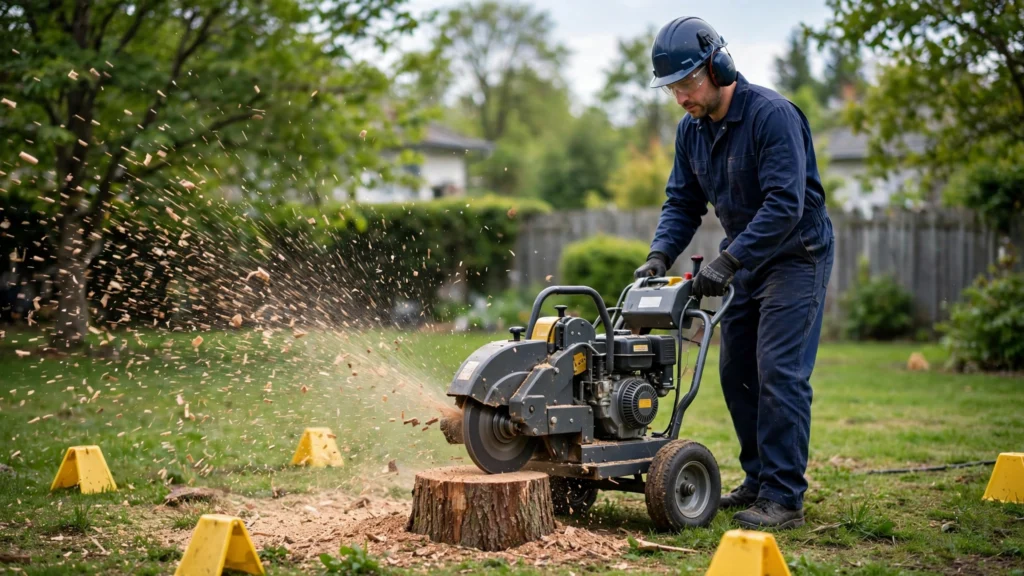
Stump grinding removes a tree stump to below ground level and leaves the roots in place to decay. A rotating cutter wheel chips the stump and surface roots into wood chips, usually 6 to 12 inches below the soil surface. The result is a level spot ready for topsoil, grass seed, or a garden bed.
Stump grinding suits most yards after tree removal. Stump grinding costs less than full removal, takes less time on site, and disturbs less soil. Stump grinding also clears a mowing obstacle and a trip hazard. The work needs a utility check, a clear work area, and a plan for depth, chips, and backfill. This guide covers the process, depth, cost, safety checks, rental choice, and aftercare in plain steps.
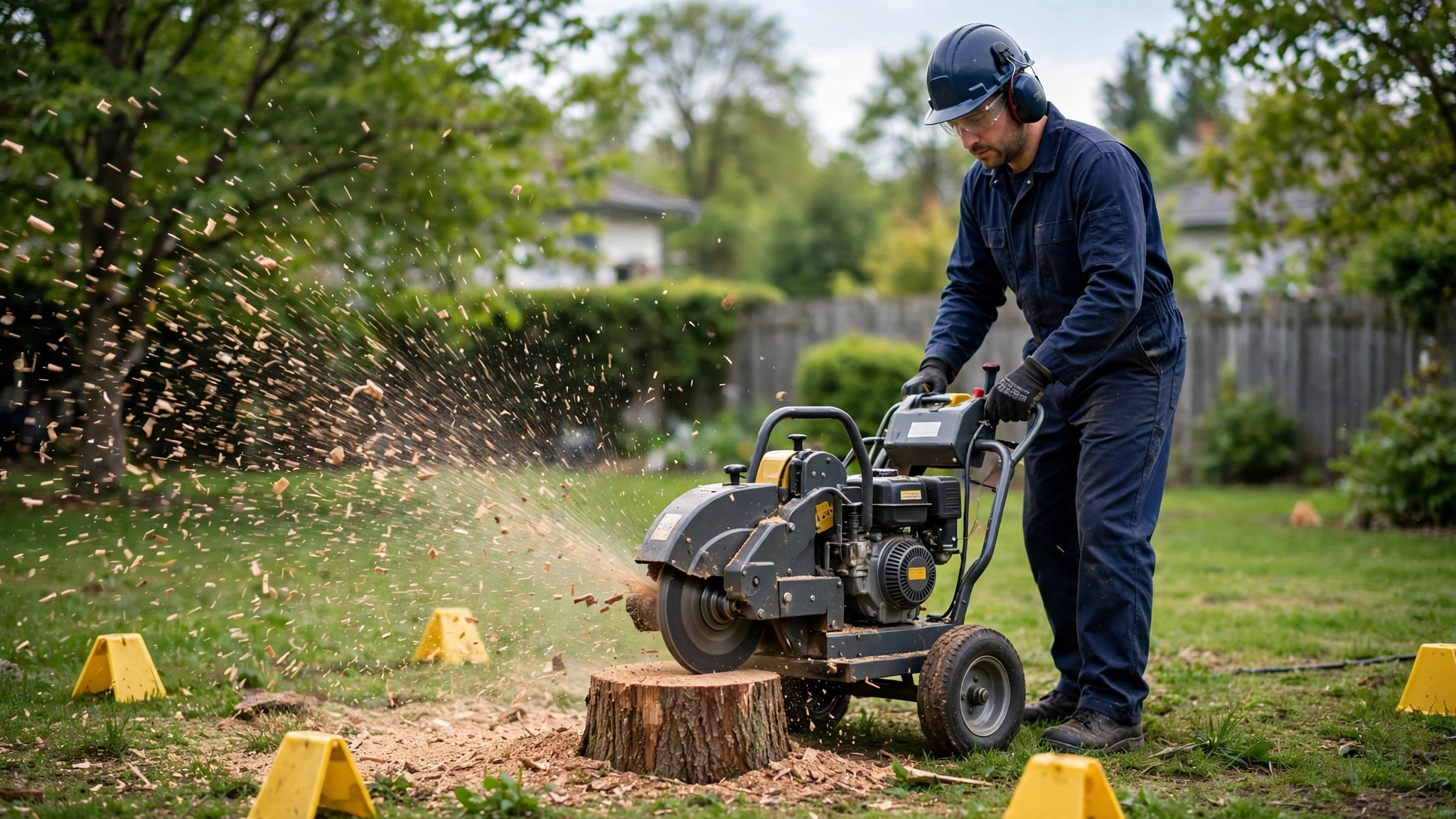
- Stump grinding chips the stump below ground level and leaves the deeper roots to decay in place.
- A standard depth is 6 to 12 inches below the soil surface, with deeper grinding for beds, new trees, and hard surfaces.
- Professional stump grinding cost $170 to $500 per stump in 2026, with an average near $320 (Source: Angi, 2026).
- Remove most chips, add topsoil, and expect settling before seeding or planting.
What Is Stump Grinding?
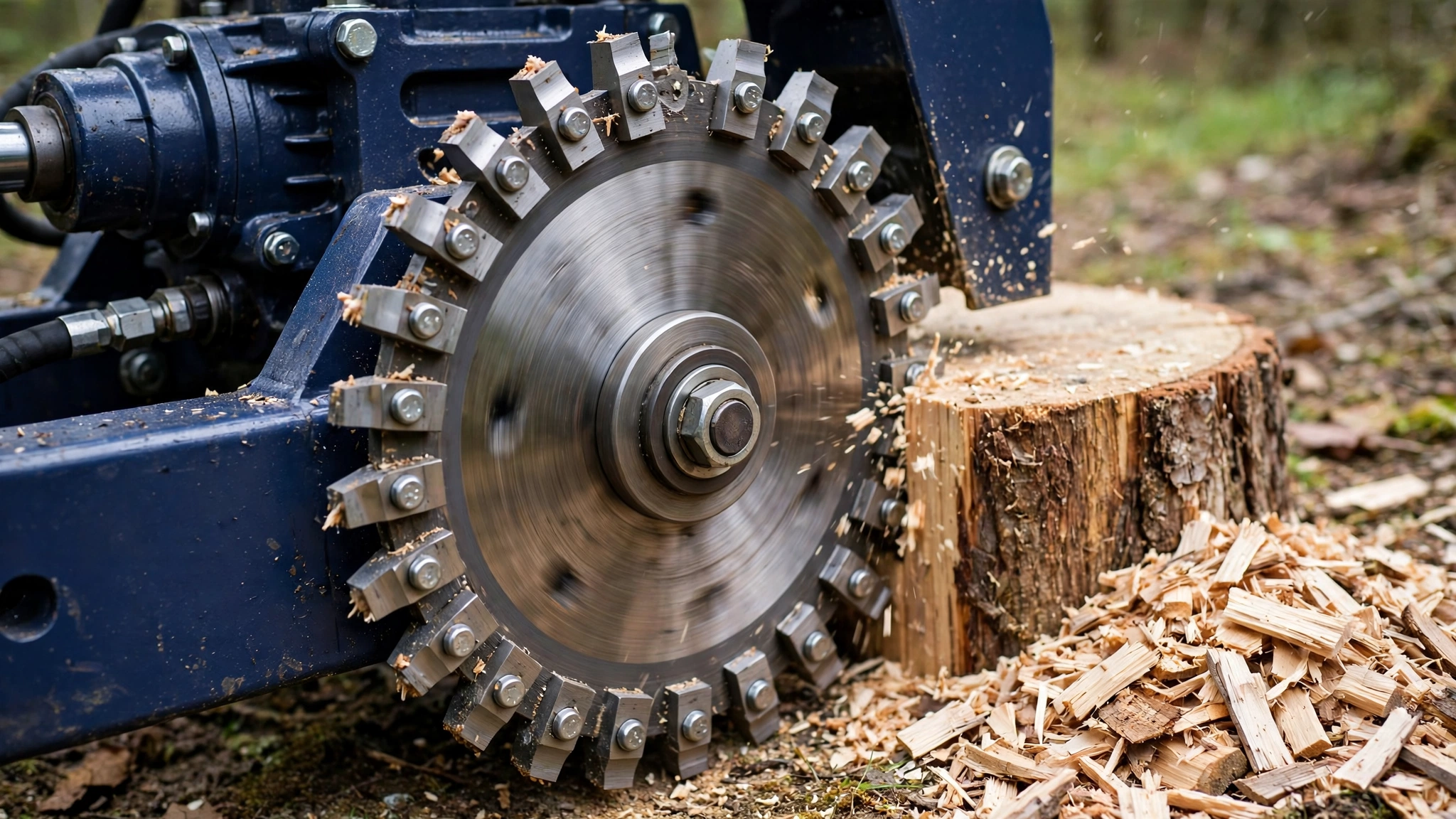
Stump grinding is the chipping of a tree stump below ground level, while the roots stay in the soil and decay over time. A stump grinder uses a rotating wheel fitted with carbide teeth. The wheel moves side to side and down in passes, and each pass removes wood until the stump sits below the soil surface.
A tree stump is the trunk left after felling, plus the root system under the soil. Stump grinding removes the visible stump and the upper roots within reach of the wheel, and does not dig out the root ball. The deeper roots stay buried and decay over several years.
For related yard and house projects, browse the Home Improvement guides.
Some tree species send up new shoots from roots or from the stump edge after cutting. Willow, poplar, cottonwood, elm, silver maple, black locust, and tree of heaven sit in that group. Grinding below ground level stops most regrowth, and root sprouts need cutting at ground level each time they appear.
Stump grinding removes the stump, not the root system.
How Does Stump Grinding Work Step by Step?
To grind a stump, the operator clears the area, checks for buried lines, positions the grinder, and chips the stump down in passes. The wheel starts at one edge and sweeps across the stump. The operator lowers the wheel a few inches at a time.
The machine matters. Rotating cutter wheel machines use a cutter wheel with fixed carbide teeth, moved by hydraulic cylinders. Hand-guided grinders suit small stumps. Track and riding grinders suit large stumps, slopes, and tight gates.
Follow these 7 steps:
- Mark the stump, measure the diameter, and note surface roots.
- Call 811 and mark private lines such as sprinklers.
- Clear rocks, metal, toys, and hoses from the work area.
- Set barriers, keep people and pets clear, and wear protective gear.
- Grind the stump in shallow passes to the agreed depth.
- Grind surface roots inside the agreed area.
- Rake chips, level the hole, and add topsoil.
Time on site runs from 15 minutes to 2 hours for most stumps (Source: Angi, 2026). A large hardwood stump or a stump with rocks in the root zone takes longer.
Stump Grinding vs Stump Removal: Which Option Fits Your Yard?
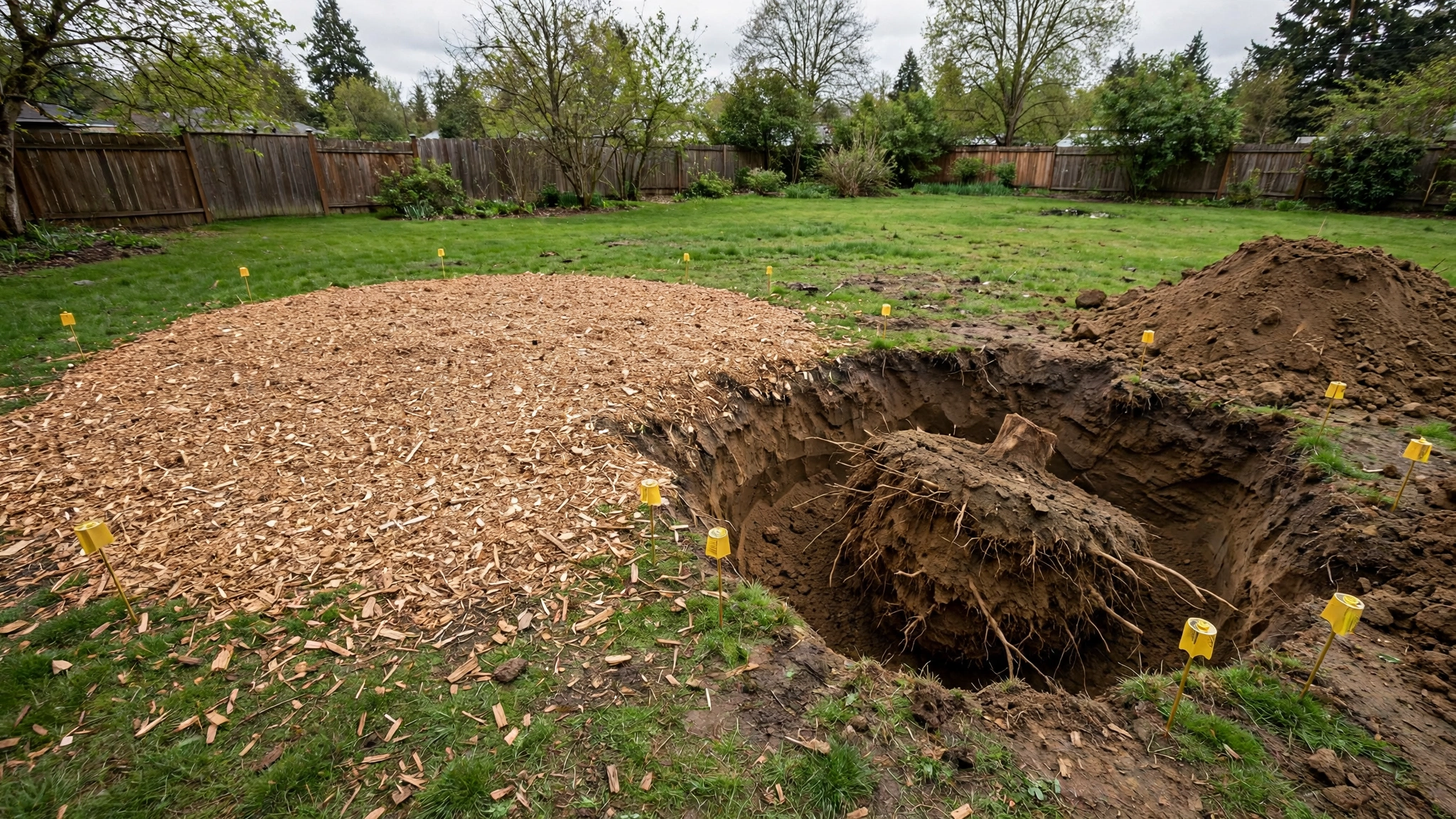
Stump grinding fits most yards, and full stump removal fits building work, exact-spot replanting, and persistent sprouting species. Stump grinding chips the stump below ground and leaves roots to decay. Stump removal digs out the stump and the main root ball and leaves a large hole.
| Factor | Stump grinding | Full stump removal |
|---|---|---|
| Method | Cutter wheel chips wood into chips | Digging and pulling out stump and root ball |
| Depth | 6 to 12 inches below ground | 12 to 24 inches plus main roots |
| Roots left behind | Yes, deeper roots stay and decay | Main roots removed |
| Time on site | 15 minutes to 2 hours | Half a day or more |
| Cost range | $100 to $400 per stump | $300 to $1,000 or more per stump |
Use grinding for lawns, beds, paths, and appearance. Use removal for a foundation, a driveway, a patio base, a pool, a retaining wall, or a utility trench, and when a new tree must go in the exact same spot at once.
Before removal work starts, read Tree Safety: Complete Guide for Homeowners for ground checks and warning signs.
How Deep Should Stump Grinding Go?
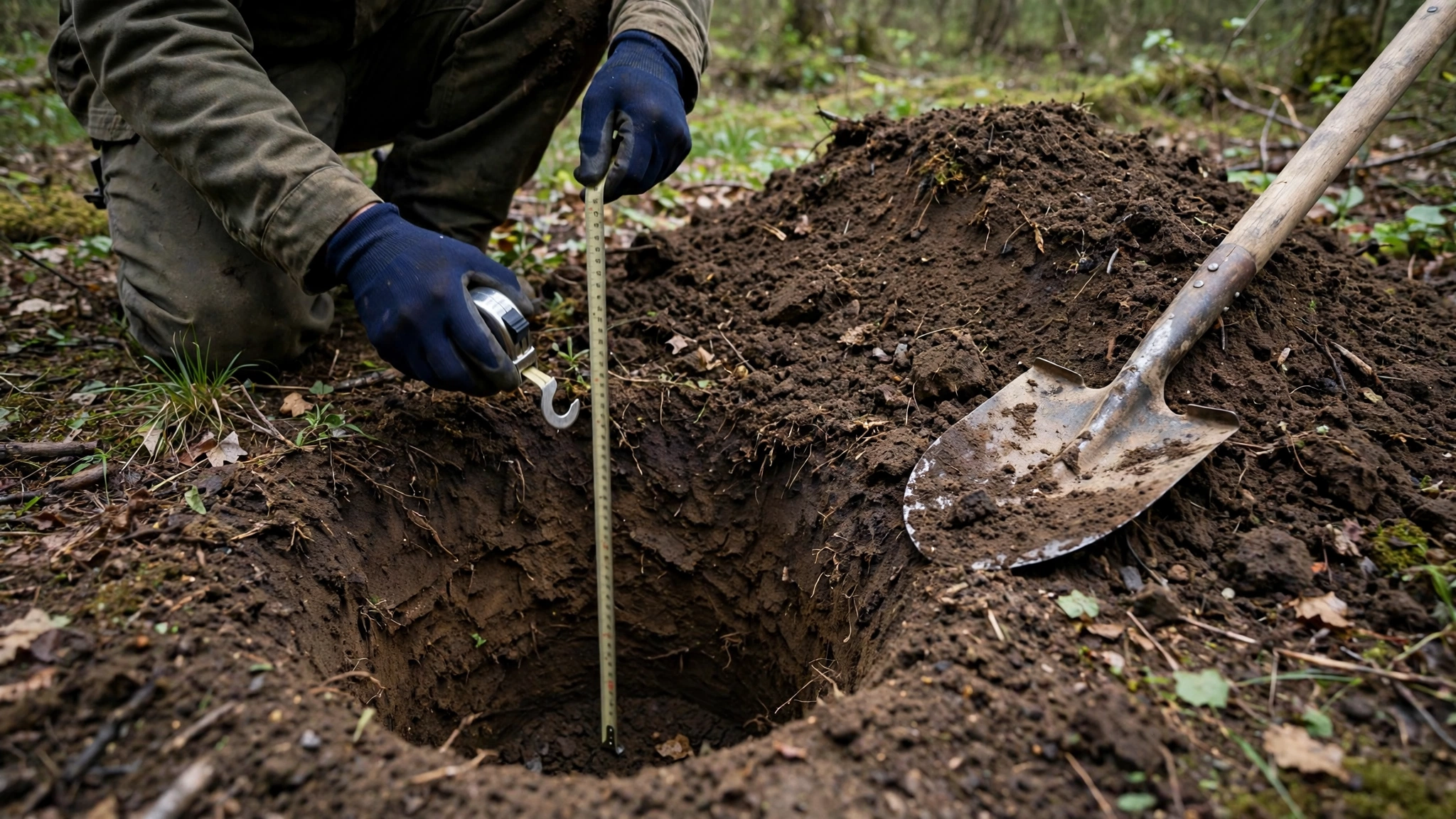
Grind 6 to 12 inches below the soil surface for most yards, and grind deeper when the end use needs more soil depth. Shallow grinding suits grass. Deeper grinding suits shrubs, new trees, and hard surfaces that must not settle.
| End use after grinding | Grinding depth | Reason |
|---|---|---|
| Lawn or grass seed | 4 to 6 inches below grade | Shallow soil cover |
| Garden bed or shrubs | 8 to 12 inches below grade | More soil volume |
| New tree in the same area | 10 to 12 inches or more | Less old wood |
| Patio, walkway, or driveway base | 12 inches or more | Less settling |
| Foundation or building work | Full removal preferred | Buried wood weakens support |
Ask for the depth in writing before work starts. State the number and the end use.
Depth also changes sprout risk. Cut stumps can resprout from the stump edge or from roots in some species, and how cut stumps can resprout explains the regrowth habit behind that risk. Include surface roots when sprouting species are present.
How Much Does Stump Grinding Cost?
Professional stump grinding cost $170 to $500 per stump in 2026, with an average near $320, and most firms price by stump diameter with a minimum charge (Source: Angi, 2026). Several stumps on one visit cost less per stump, because travel and setup spread across more work.
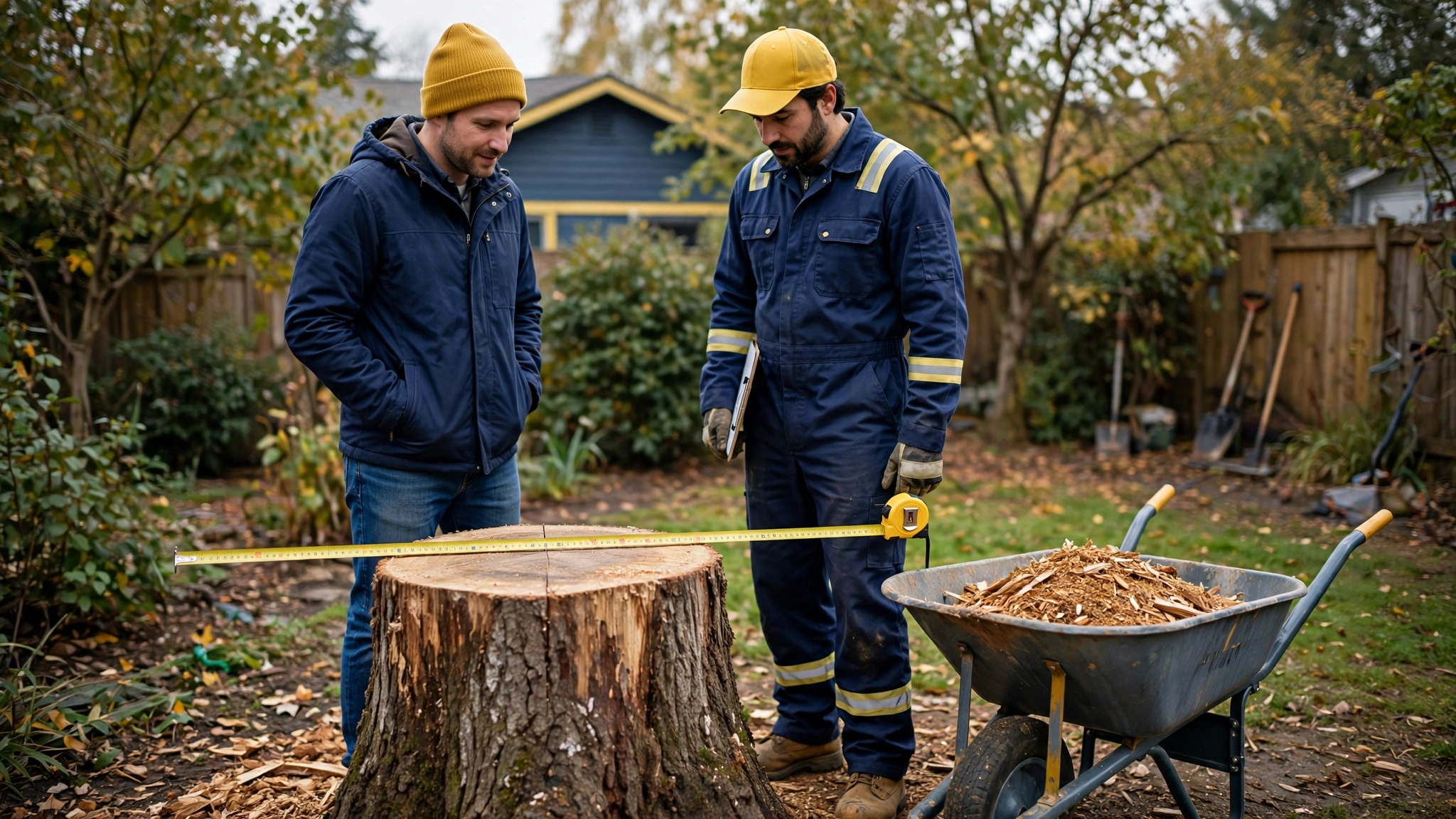
Per-inch pricing runs near $3 to $5 per inch of stump diameter (Source: Kansas City Tree Care, 2026). Measure straight across the widest part at ground level, and include root flare above the grass. A 24 inch stump gives $72 to $120 in grinding time, so the minimum charge often sets the final price for one small stump.
These 6 factors push the price up:
- Access: Narrow gates, slopes, and soft ground slow machine movement.
- Diameter: Wider stumps need more passes and more time.
- Species and age: Fresh hardwood grinds slower than soft wood.
- Surface roots: Roots across a lawn need separate grinding time.
- Rocks and buried metal: Wire, nails, and stones wear teeth.
- Cleanup: Chip hauling, topsoil, and seeding add cost.
Get 3 written quotes for a large job, and compare the same scope in each quote. Ask each firm to list diameter, depth, chip handling, topsoil, and total price.
Should You Rent a Stump Grinder or Hire a Professional?
Hire a professional for one or two stumps, and rent a grinder only when several stumps, open access, and safe handling line up. Rental cost $190 to $270 per day in 2026 (Source: Angi, 2026). The daily rate is not the full rental total.
Rental adds trailer hire or transport, fuel, and teeth charges for damage. A rental grinder weighs hundreds of pounds and needs a vehicle with the right hitch and load rating. First-time operators grind slowly and risk tooth damage on rocks.
| Choice | Best when | Main risk |
|---|---|---|
| Hire a professional | 1 to 2 stumps, tight access, hardwood | Higher price for a very small job |
| Rent a grinder | 4 or more stumps, open flat yard, prior skill | Injury, tooth damage, transport cost |
Safety gear decides part of the rental choice. Rental work needs eye protection, hearing protection, gloves, sturdy boots, long trousers, and a face shield. Loose clothing and untied hair stay clear of the wheel. Renters must read the machine manual and check the kill switch before the first cut. Homeowners who want plain yard and house guidance can read more practical guides at Voice of Wave.
What Safety Checks Come Before Stump Grinding?
Call 811 before stump grinding, mark private lines, clear the work area, and keep people and pets out of the chip throw zone. The 811 service is free in the United States, and utility firms mark public lines with paint or flags. Check private lines separately: 811 marking does not cover sprinkler lines, invisible fences, septic lines, or propane lines.
Run these 6 checks before the machine starts:
- Call 811 several business days ahead and wait for the marked lines.
- Mark sprinkler heads, invisible fence wire, and private pipes.
- Walk the root zone for rocks, stakes, wire, and buried concrete.
- Check the stump for nails, bolts, and old fence hardware.
- Set a barrier at least 20 feet out and keep children and pets inside.
- Confirm the machine route to the gate.
Chips fly fast and far. A grinder throws chips, soil, and small stones in an arc, and a chip in an eye causes a serious injury. Bystanders stand behind the barrier, never beside the wheel. The operator stops the wheel before raking chips or checking depth. Work waits for daylight and firm ground.
What Happens After Stump Grinding?
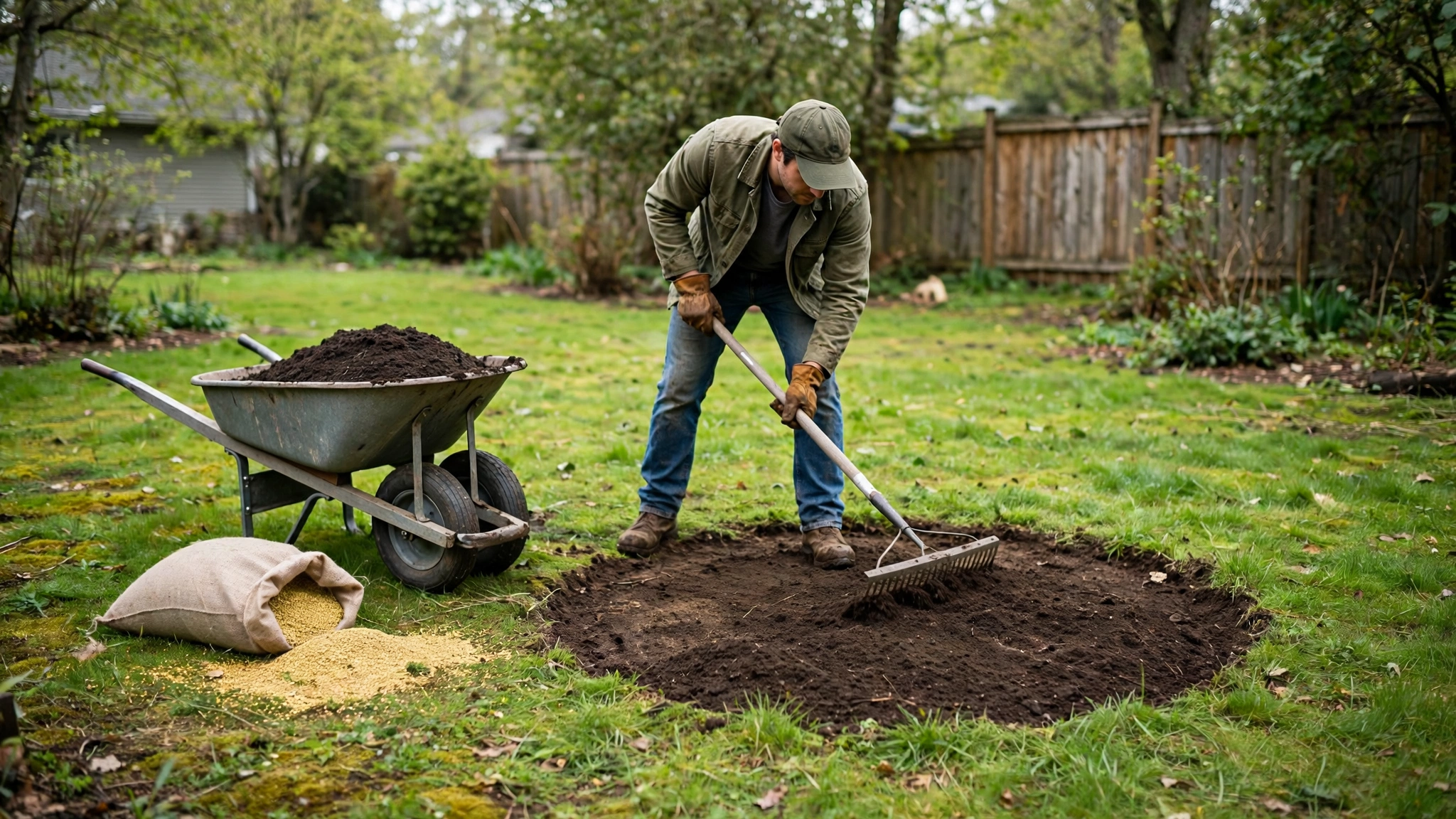
After stump grinding, remove most chips from the hole, add topsoil, level the spot, and wait for settling before seeding or planting. The hole holds a mound of chips mixed with soil, roughly the volume of the stump. Chips left in the hole settle as wood decays.
Use chips as mulch on paths or in beds, a few inches deep and pulled back from plant stems. Do not use chips from a diseased tree as mulch near healthy trees of the same species.
Follow these 5 aftercare steps:
- Rake chips out of the hole and keep some for mulch.
- Fill the hole with topsoil and tamp the soil in layers.
- Level the soil slightly above the lawn line.
- Water the fill, check the level after rain, and top up topsoil.
- Seed or sod the spot, and shift a new tree to one side.
In my own yard, the filled spot settled after rain and needed a second layer of topsoil before seed took hold. Settling is normal, and a second top-up beats a permanent dip. Plant a new tree offset from the old stump.
When Is Stump Grinding the Wrong Choice?
Stump grinding is the wrong choice when building work, a utility trench, or exact-spot replanting needs the root ball gone. Grinding leaves buried wood, and buried wood settles. A patio slab, a driveway base, or a foundation over buried wood sinks as roots decay.
Stump grinding also fails when access blocks the machine. A stump behind a locked gate, inside a walled bed, under a low deck, or fused to concrete needs hand digging or partial removal first.
Persistent sprouting species change the choice. A willow, poplar, or tree of heaven stump that keeps sending up shoots after grinding needs root treatment or full removal. Repeated cutting weakens sprouts over time. A stump with honey fungus or root disease needs advice before chips spread.
Other options fill the gaps. Chemical stump removers speed decay over months. Hand digging suits a small stump under 12 inches across. Burning suits rural sites with a burn permit and no drought ban. Leaving a stump to rot suits a wild corner with no mowing and no building plan.
How Do You Choose a Stump Grinding Service?
Choose a stump grinding service on insurance, written scope, depth, chip handling, and a clear total price. A firm with no insurance leaves the homeowner exposed when a chip breaks glass or a wheel hits a line. Ask for proof of insurance before booking.
Ask these 6 questions before you book:
- What depth will you grind, and does the price include surface roots?
- How did you measure the stump, and what is the total price?
- Who calls 811, and who marks private lines?
- What happens to the chips, and is topsoil included?
- What machine will you bring, and does it fit my gate?
- What is the cleanup scope, and when will the crew arrive?
Red flags end a quote fast. A firm that quotes by phone with no diameter, no depth, and no site questions guesses the price. A firm that demands full payment before work or refuses insurance proof creates risk. A firm that promises same-day grinding with no utility check skips a safety step.
Compare quotes on the same scope, and record the scope in writing. A written scope lists stump count, diameter, depth, chip handling, topsoil, cleanup, and total price. Book the firm with the clearest scope.
Conclusion
Stump grinding is a fast, low-disturbance way to clear a stump, and stump grinding works best with the right depth, a utility check, and a chip and topsoil plan. Stump grinding chips the stump 6 to 12 inches below ground, leaves deeper roots to decay, and frees the spot for grass, a bed, or a path.
Stump grinding needs the right choice at the start. Grind for lawns, beds, and appearance. Remove the full stump and root ball for building work, trenches, and exact-spot replanting. Rent a grinder only for several stumps with open access, and hire a professional for one or two stumps or tight access. Call 811, clear rocks and metal, and agree depth and chip handling in writing. After grinding, remove most chips, add topsoil, allow settling, and top up the soil before seeding. Voice of Wave covers home topics for general readers who want plain steps and honest costs.
Read more home guides on the Voice of Wave blog.
Frequently Asked Questions
How deep does stump grinding go?
Stump grinding usually goes 6 to 12 inches below the soil surface, and the right depth depends on the end use. Lawn needs 4 to 6 inches, garden beds need 8 to 12 inches, and hard surfaces need 12 inches or more. Ask for the depth number in writing before work starts.
Does stump grinding remove the roots?
No, stump grinding does not remove the deeper roots. Stump grinding removes the visible stump and surface roots, and the deeper roots stay buried and decay over several years. Full stump removal is the only method that takes the main root ball out of the ground.
How much does stump grinding cost?
Professional stump grinding cost $170 to $500 per stump in 2026, with an average near $320 (Source: Angi, 2026). Most firms price by diameter at $3 to $5 per inch, with a minimum charge. Access, hardwood, surface roots, and cleanup push the price up.
Can you plant grass right after stump grinding?
Yes, you can plant grass after stump grinding, once most chips are removed and topsoil fills the hole. Rake chips out, add topsoil, level the spot slightly high, and allow settling after rain. Seed or sod the spot after the level holds, and top up soil if a dip forms.
Can you plant a new tree where a stump was ground?
You can plant a new tree near a ground stump, but planting a few feet to one side works better. Old roots and chips in the exact spot settle and tie up nitrogen as they decay. Remove chips from the planting hole, use clean topsoil, and grind deeper when the new tree must sit close.
Is stump grinding safe near a house?
Stump grinding can be safe near a house when the crew works slowly, stays clear of concrete and foundations, and checks for buried lines first. Call 811 before work, mark private lines, and keep the wheel off concrete edges. A stump fused to a footing or hard against a wall may need hand digging instead.