
Introduction
Home water treatment is the set of filters, softeners, and disinfection devices that improve tap water at a single faucet or at every tap in a home, and the right setup starts with a water test, then matches treatment to the contaminants the test finds. Home water treatment covers 6 main system types (sediment filters, carbon filters, water softeners, reverse osmosis systems, ultraviolet disinfection units, and distillers), 2 coverage choices (whole-house and point-of-use), and 4 core steps (test, match, size, maintain). Homeowners use home water treatment for better taste, less scale on fixtures and appliances, and lower exposure to lead, chlorine byproducts, and microbes. This guide covers testing, each system type, sizing, costs, installation, maintenance, and fixes for common problems.
- Test first, buy second. A lab test or a city water report decides the system, not a sales claim.
- Filters, softeners, and purifiers solve different problems. A filter removes particles and taste compounds, a softener removes hardness minerals, and reverse osmosis removes dissolved solids.
- Whole-house systems treat every tap, point-of-use systems treat one tap. Many homes pair both.
- Check NSF/ANSI certification for the exact contaminant you want removed. A general filter claim proves nothing about lead or PFAS.
- Budget for filters, salt, and service, not just the purchase price. Running costs decide the real price over 5 years.
What Is Home Water Treatment?
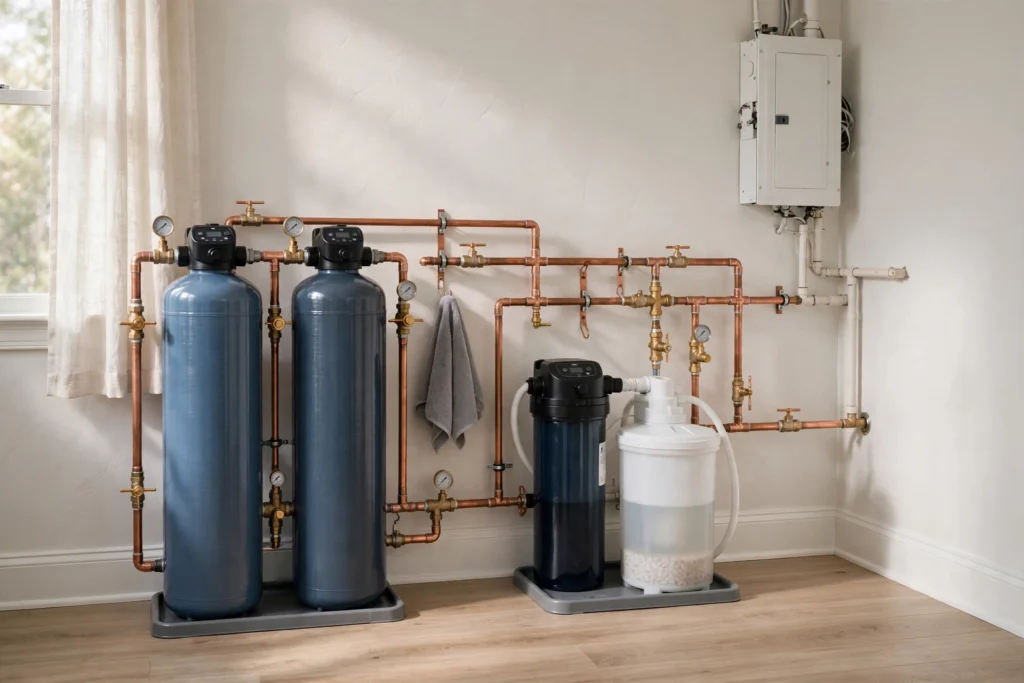
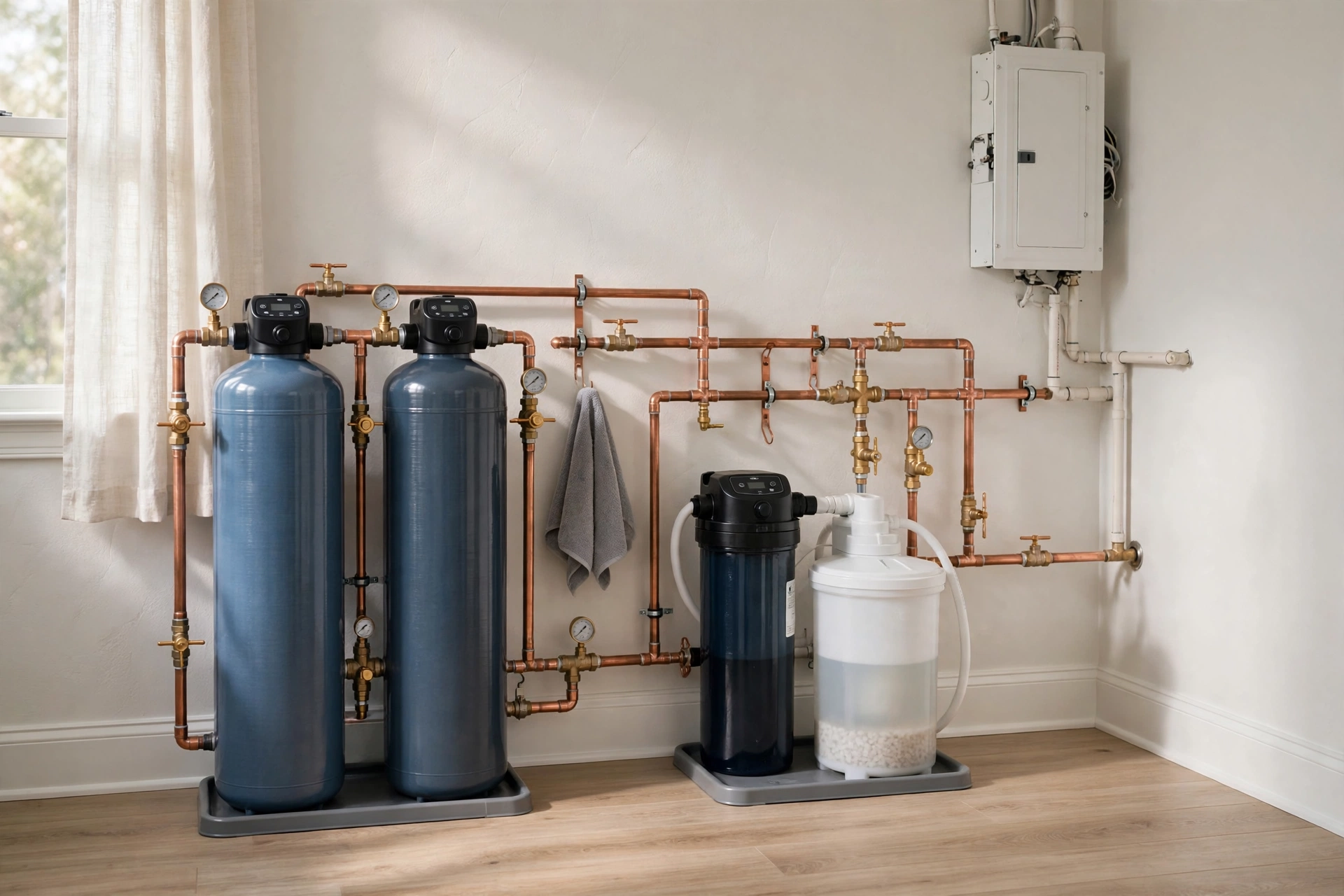
Home water treatment is the treatment of drinking and household water inside a home with filters, softeners, or disinfection units, and home water treatment works by passing water through media or membranes that trap, exchange, or kill the target problem. Home water treatment differs from city treatment in one way: city plants treat water to a public standard at the plant, while home water treatment polishes that water again at the tap or treats private well water that no plant touches. Home water treatment serves 3 jobs: remove particles and chemicals that affect taste and safety, remove hardness minerals that form scale, and kill or block microbes in well water. A home water treatment setup can be as small as a pitcher filter or as large as a whole-house train of tanks, and the setup size follows the test results, not the size of the catalog.
What Contaminants Does Home Water Treatment Remove?
Home water treatment removes 5 contaminant groups: particles, chemicals, hardness minerals, dissolved solids, and microbes, and no single home device removes all 5 groups at once. Particles include sand, rust, silt, and sediment that cloud water and wear fixtures. Chemicals include chlorine, chloramine, pesticides, volatile organic compounds (VOCs), and per- and polyfluoroalkyl substances (PFAS) that affect taste, odor, and safety. Hardness minerals are calcium and magnesium, and dissolved solids include lead, arsenic, nitrate, fluoride, and salts. Microbes include bacteria, viruses, and parasites such as Giardia and Cryptosporidium. Water purification methods use physical, chemical, and biological steps to cut these groups, and home systems borrow the same steps at small scale. Match the device to the group: carbon filters cut chlorine and many VOCs, softeners cut calcium and magnesium, reverse osmosis cuts dissolved solids, and ultraviolet (UV) light kills microbes without chemicals.
How Do You Test Your Home Water?
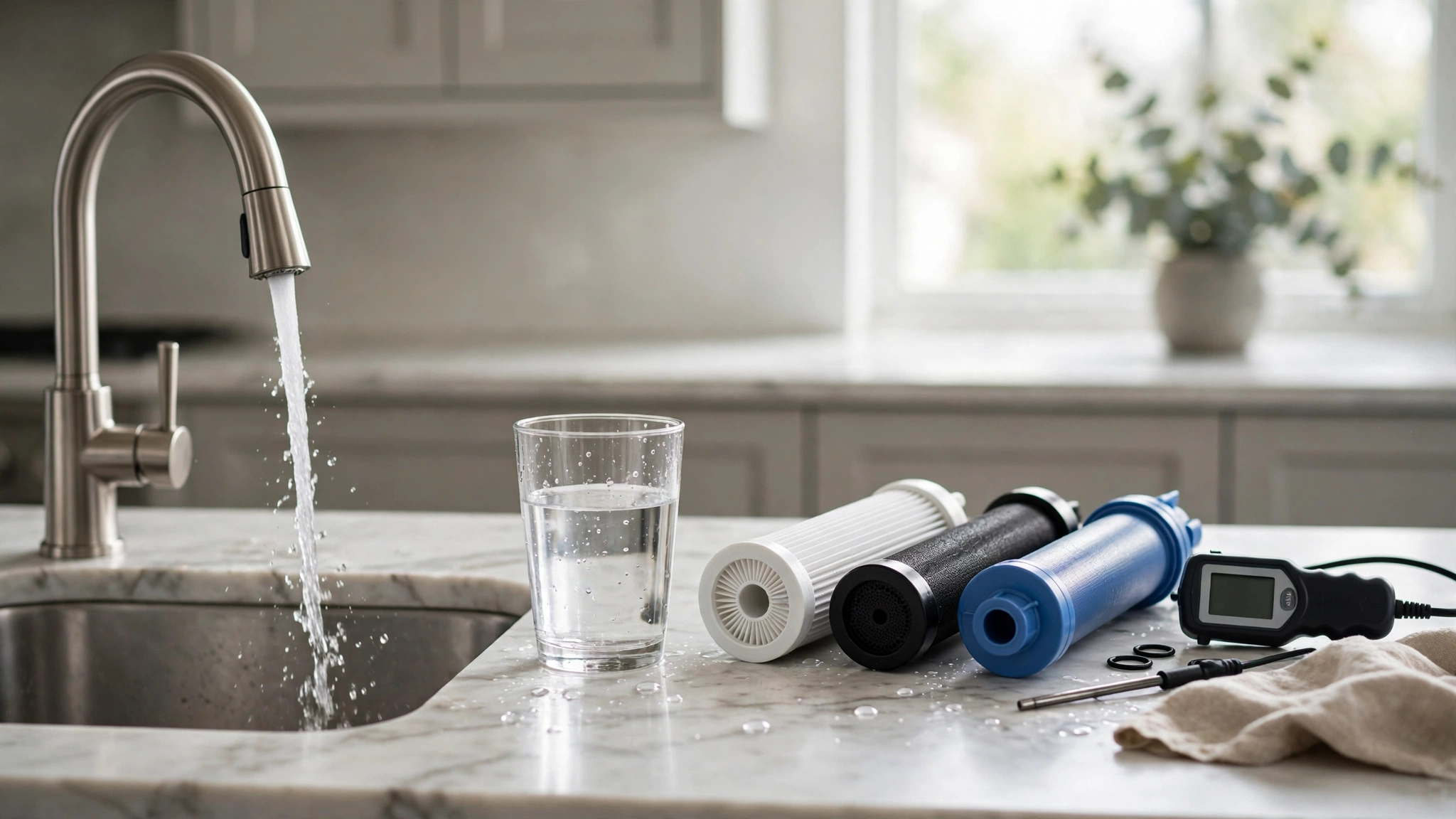
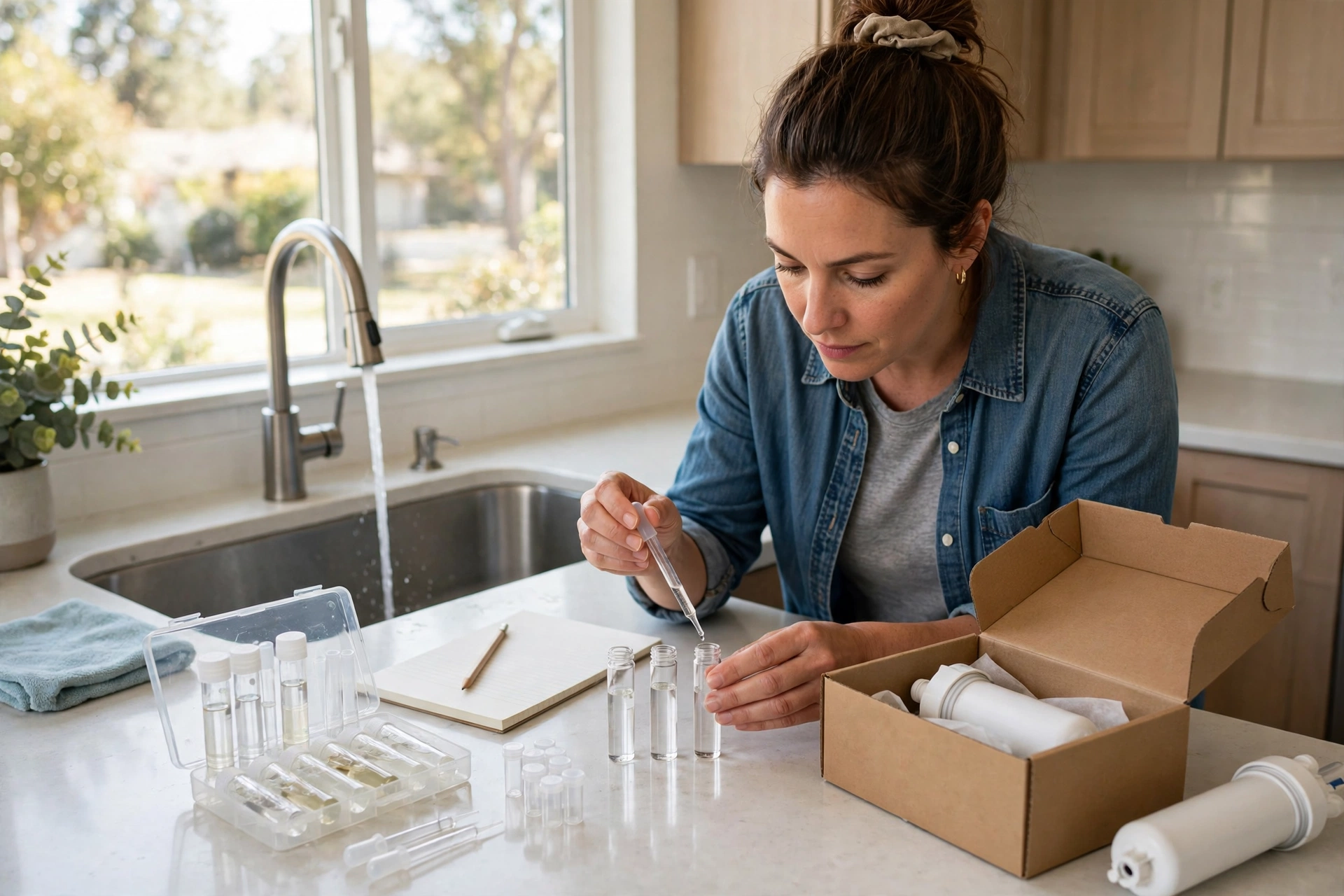
To test your home water, order a certified lab test for well water, or read your city water quality report plus a home test strip for city water, and test before buying any system. City water customers can request the annual Consumer Confidence Report from the water supplier, and that report lists regulated contaminants found in the supply during the prior year. Well owners need a lab test, since no supplier report exists for a private well, and a lab test should cover bacteria, nitrate, lead, arsenic, iron, manganese, hardness, pH, and total dissolved solids (TDS). Home test strips and handheld TDS meters give fast screening numbers for hardness, chlorine, pH, and TDS, but strips cannot prove lead or PFAS levels, and only a lab result supports a health-based purchase. Retest well water once a year, and retest city water after plumbing work, a boil advisory, or a change in taste, color, or odor. Keep the lab report with the system manual, since filter and softener settings follow the numbers on that report.
What Are the 6 Main Types of Home Water Treatment Systems?
The 6 main types of home water treatment systems are sediment filters, carbon filters, water softeners, reverse osmosis systems, UV disinfection units, and distillers, and each type targets a different contaminant group. Sediment filters trap sand, rust, and silt, and sediment filters sit first in most multi-stage setups to protect finer filters behind them. Carbon filters use activated carbon to adsorb chlorine, chloramine, VOCs, and odor compounds, and carbon filters improve taste more than any other single stage. Water softeners use ion exchange to remove calcium and magnesium, and softeners protect water heaters, dishwashers, and fixtures from scale. Reverse osmosis systems push water through a semi-permeable membrane that rejects dissolved solids, and reverse osmosis gives the purest drinking water of the 6 types. UV disinfection units shine ultraviolet light on water to kill bacteria and viruses, and UV units suit well water with microbe risk. Distillers boil water and condense the steam, and distillers remove dissolved solids and microbes but run slowly and use power.
| System type | Removes best | Removes poorly | Typical spot |
|---|---|---|---|
| Sediment filter | Sand, rust, silt | Dissolved chemicals, microbes | First stage, whole-house or under-sink |
| Carbon filter | Chlorine, odor, many VOCs | Hardness, dissolved salts, microbes | Whole-house tank or under-sink cartridge |
| Water softener | Calcium, magnesium | Lead, PFAS, microbes | Main line, whole-house |
| Reverse osmosis | Dissolved solids, lead, nitrate, PFAS | Whole-house flow (too slow) | Under-sink drinking tap |
| UV disinfection | Bacteria, viruses | Chemicals, hardness, particles | After filtration, well-water line |
| Distiller | Dissolved solids, microbes | Speed, whole-house volume | Countertop, small batches |
Browse the Home Improvement guides on Voice of Wave for related home care topics that pair with water system upkeep.
Whole-House vs Point-of-Use: Which Coverage Fits Your Home?
Whole-house coverage fits homes that want treated water at every tap, and point-of-use coverage fits homes that want treated water only for drinking and cooking, and many homes pair a whole-house filter with a point-of-use reverse osmosis tap. Whole-house systems, also called point-of-entry (POE) systems, sit on the main water line where water enters the home, and whole-house systems treat showers, laundry, dishwashers, and every faucet. Point-of-use (POU) systems sit at one fixture, usually the kitchen sink, and point-of-use systems give the highest purity where water is drunk. Pick whole-house coverage when hardness, sediment, or chlorine affects showers, laundry, and appliances. Pick point-of-use coverage when taste and drinking-water purity are the only complaints and the budget is small. Pair both when hard water damages appliances and lead or PFAS worries affect drinking water, since a softener cannot remove lead and a kitchen reverse osmosis unit cannot protect a water heater.

How Does a Water Softener Work?
A water softener works by ion exchange: hard water flows over resin beads that swap calcium and magnesium ions for sodium or potassium ions, and the softener recharges the beads with a salt brine when the beads fill up. A salt-based softener holds 2 tanks: a resin tank full of beads and a brine tank full of salt and water. Hard water enters the resin tank, calcium and magnesium stick to the beads, and softened water leaves the tank for the home. When the beads reach capacity, the softener runs a regeneration cycle: brine washes over the beads, hardness minerals flush to drain, and the beads reset for the next cycle. Salt-free conditioners differ from softeners in one key way: conditioners change the crystal form of hardness minerals so scale sticks less, but conditioners leave calcium and magnesium in the water, so conditioners do not produce truly soft water. Pick a salt-based softener when test results show hard water and scale damage, and pick a conditioner only when salt discharge rules or low maintenance matter more than full softening.
How Does Reverse Osmosis Work?
Reverse osmosis works by pushing water under pressure through a semi-permeable membrane that lets water molecules pass and blocks dissolved solids, and reverse osmosis removes lead, nitrate, arsenic, fluoride, salts, and many PFAS compounds from drinking water. A home reverse osmosis system runs 4 stages in order: a sediment pre-filter, a carbon pre-filter, the reverse osmosis membrane, and a carbon post-filter that polishes taste. Reverse osmosis technology uses pressure to overcome osmotic pressure, and home units need adequate feed pressure, usually above 40 pounds per square inch (psi), to produce water at a useful rate. Reverse osmosis wastes water: a typical home unit sends 3 to 4 gallons to drain for each gallon of purified water, so a permeate pump or a high-efficiency membrane cuts waste for homes on metered water. Reverse osmosis water tastes flat to some drinkers because minerals are gone, so a remineralization cartridge adds calcium and magnesium back after the membrane. Change pre-filters every 6 to 12 months, and change the membrane every 2 to 3 years, or sooner when TDS readings after the membrane rise.
How Do You Choose the Right System in 7 Steps?
To choose the right home water treatment system, follow 7 steps in order: test the water, list the target contaminants, pick the coverage, match the technology, size the flow, check certification, and total the 5-year cost. Skipping the test step causes the most common buying error: a softener bought for a lead problem, or a carbon filter bought for hard water, and neither device fixes the wrong problem. Use this sequence for every purchase:
- Test the water with a lab test or a supplier report.
- List each contaminant above its safe or nuisance level.
- Pick whole-house coverage, point-of-use coverage, or both.
- Match one technology to each listed contaminant.
- Size flow from bathroom count and peak simultaneous use.
- Check NSF/ANSI certification for each listed contaminant.
- Total purchase price, filters, salt, water waste, and service.
For sizing, count bathrooms and simultaneous uses: a 1 to 2 bathroom home with 2 to 3 residents usually needs 8 to 12 gallons per minute (gpm) of whole-house flow, while a 3 to 5 bathroom home with 4 to 6 residents usually needs 12 to 18 gpm, and an undersized system drops pressure when showers, laundry, and the dishwasher run together. Renters can skip plumbing work with 3 options: a pitcher filter, a faucet-mount filter, or a countertop reverse osmosis unit, and renters should keep the landlord’s written approval for any unit that connects to a faucet thread. I once watched a neighbor buy a softener for a chlorine taste problem, and the softener changed nothing about taste, since softeners do not remove chlorine, so the test-first rule comes from real, avoidable waste.
For a related home water routine that covers testing and filter care beside treatment, read the Voice of Wave guide to pool care: Pool Filter Maintenance: Complete Guide.
How Much Does Home Water Treatment Cost?
Home water treatment costs range from under 50 dollars for a pitcher filter to several thousand dollars for a whole-house softener plus reverse osmosis setup, and running costs add 100 to 400 dollars per year for filters, salt, and service. Use the table below as a planning range, since local labor rates and water conditions move real quotes.
| Setup | Purchase range | Yearly running cost | Best fit |
|---|---|---|---|
| Pitcher or faucet filter | 20 to 100 dollars | 30 to 80 dollars | Renters, taste only |
| Under-sink carbon filter | 100 to 400 dollars | 50 to 120 dollars | Drinking and cooking taste |
| Under-sink reverse osmosis | 200 to 600 dollars | 80 to 150 dollars | Lead, nitrate, PFAS at one tap |
| Whole-house carbon filter | 800 to 2,500 dollars | 100 to 250 dollars | Chlorine and sediment at every tap |
| Salt-based softener | 1,000 to 3,000 dollars | 100 to 300 dollars | Hard water and scale |
| Softener plus reverse osmosis | 2,000 to 5,000 dollars | 200 to 400 dollars | Hard water plus drinking purity |
| UV disinfection add-on | 300 to 900 dollars | 80 to 150 dollars | Well-water microbe risk |
Total the 5-year cost before buying: multiply the yearly running cost by 5, add the purchase price, and compare that total across options, since a cheap unit with costly cartridges often costs more than a pricier unit with long-life media. Ask every quote to list filter change intervals, salt use per regeneration, drain water ratio for reverse osmosis, and warranty length on tanks and valves, since those 4 numbers drive the 5-year total.
How Do You Install and Maintain a Home Water Treatment System?
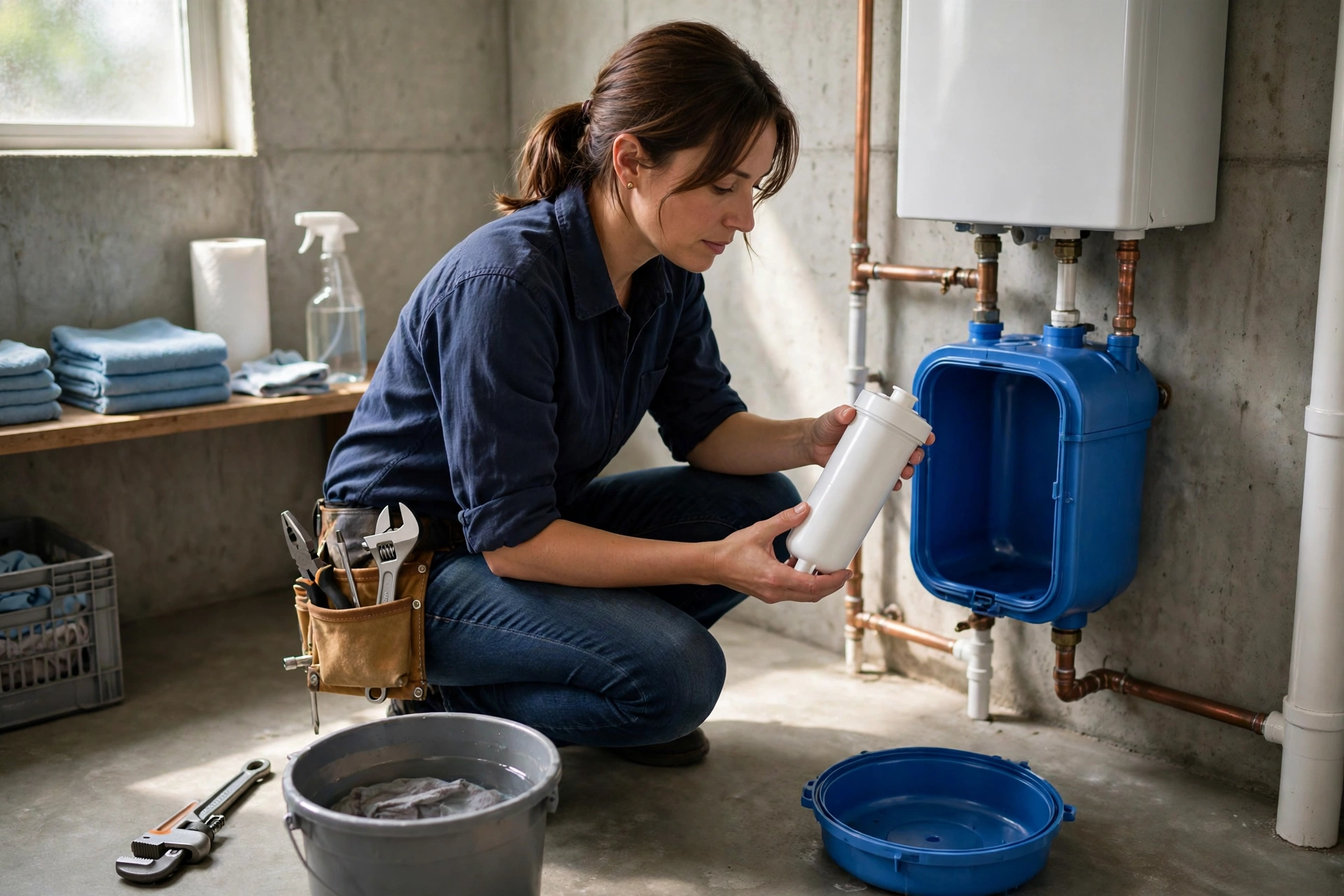
To install and maintain a home water treatment system, place the unit per the manual, set it from the test results, and follow a fixed calendar of filter changes, salt checks, and sanitizing. Under-sink carbon and reverse osmosis units suit confident DIY installers with basic plumbing tools, while whole-house softeners, main-line filters, and UV units suit licensed plumbers, since main-line mistakes flood a home. After install, flush new carbon filters per the manual until rinse water runs clear, check every joint for leaks during the first 24 hours, and record the install date plus the first filter change date on the tank or manual. Follow this maintenance calendar:
- Every month: check softener salt level, check for leaks, note pressure changes.
- Every 6 to 12 months: change carbon pre-filters and under-sink cartridges.
- Every year: retest well water, sanitize the system per the manual, check UV lamp age.
- Every 12 months: change the UV lamp, since lamps lose killing power before they burn out.
- Every 2 to 3 years: change the reverse osmosis membrane when TDS rises.
- Every 5 to 10 years: inspect softener resin and tank parts for wear.
Never ignore a pressure drop, since a clogged pre-filter causes most pressure complaints, and never run a UV unit with an expired lamp, since an old lamp looks lit while killing far fewer microbes. Boiling stays the fallback during a boil advisory or a system failure: the Centers for Disease Control and Prevention (CDC) advises a rolling boil for 1 minute, or 3 minutes above 6,500 feet, then cooling before use (Source: CDC, 2025). The CDC also notes that over 2 billion people worldwide lack access to clean drinking water, which frames home treatment as a household safety step, not a luxury upgrade (Source: CDC, 2025).
Common Home Water Treatment Problems and Fixes
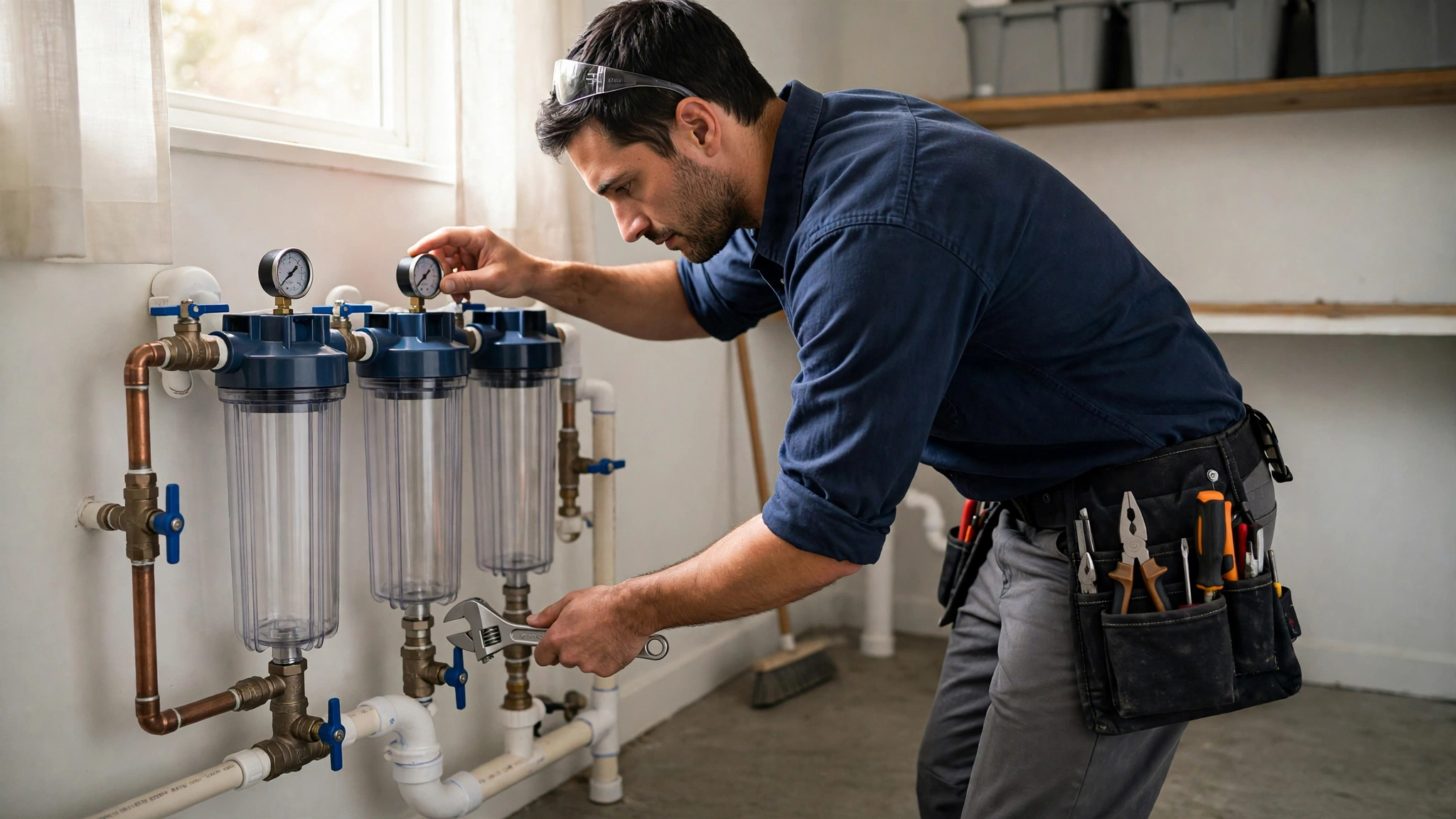
Common home water treatment problems trace to 6 causes: clogged filters, wrong technology, expired lamps, empty salt, fouled membranes, and missed sanitizing, and each cause has a direct fix. Use the table below before calling a technician, since most fixes take under 30 minutes.
| Symptom | Likely cause | Fix |
|---|---|---|
| Low pressure at all taps | Clogged sediment pre-filter | Change the pre-filter, then recheck pressure |
| Chlorine taste returns | Exhausted carbon cartridge | Change the carbon cartridge on schedule |
| White scale returns | Softener out of salt or stuck valve | Refill salt, run a manual regeneration, check the valve |
| Salty taste in softened water | Over-softening or brine draw fault | Check settings, inspect the brine line and injector |
| Slow reverse osmosis flow | Fouled membrane or low feed pressure | Change pre-filters, check pressure, then change the membrane |
| Slimy or musty taste | Biofilm from missed sanitizing | Sanitize per the manual, change cartridges |
| UV alarm sounds | Lamp age or sleeve fouling | Change the lamp, clean the quartz sleeve |
When a fix fails twice, call a water treatment professional with the lab report in hand, since repeat failures signal a sizing error or a contaminant the current technology cannot remove.
Conclusion
Home water treatment works when the test picks the technology: test the water, match one device to each problem, size flow for peak use, check certification for each contaminant, and keep the maintenance calendar. Home water treatment gives better taste through carbon filtration, less scale through softening, purer drinking water through reverse osmosis, and microbe control through UV light, and no single device covers all 4 jobs. Start this week by ordering a lab test or reading the supplier report, then use the 7-step sequence and the 5-year cost table to pick a setup that fits the home, the budget, and the water. Voice of Wave covers practical home guides like this one for everyday household systems.
Explore more home guides: Read the latest articles on Voice of Wave blog for fresh ideas, insights, and stories that matter.
Frequently Asked Questions
Do I need home water treatment if my city water meets standards?
No, city water that meets standards is safe to drink, but home water treatment still helps taste, odor, and scale problems that standards do not cover. City standards set safety limits, not taste targets, so chlorine taste and hard water remain legal and common. Buy treatment for a measured problem, not for fear of the tap.
Does a water softener purify drinking water?
No, a water softener does not purify drinking water, since softeners remove calcium and magnesium only and leave lead, PFAS, nitrate, and microbes in place. Softened water protects pipes and appliances, but drinking purity needs filtration or reverse osmosis. Pair a softener with a drinking-water filter when both problems exist.
Is reverse osmosis water safe to drink every day?
Yes, reverse osmosis water is safe to drink every day, since reverse osmosis removes dissolved contaminants and the body gains minerals mainly from food, not water. Some drinkers add a remineralization cartridge for taste, and that cartridge is optional, not a health requirement. Keep pre-filters fresh so the membrane lasts.
How often should I change water filters?
Change carbon cartridges and pre-filters every 6 to 12 months, and change reverse osmosis membranes every 2 to 3 years, or sooner when flow drops or TDS rises. Real intervals follow use and water quality, so a high-sediment well shortens cartridge life. Mark change dates on the filter housing to avoid guessing.
Can renters use home water treatment without plumbing changes?
Yes, renters can use pitcher filters, faucet-mount filters, and countertop reverse osmosis units without plumbing changes. These options need no drilling and no pipe cuts, and renters remove them at move-out. Get written landlord approval for any unit that threads onto a faucet.
Does home water treatment remove PFAS?
Some home water treatment removes PFAS, but only units certified for PFAS reduction under the relevant NSF/ANSI standard, usually reverse osmosis or specific carbon systems, qualify. A general carbon filter claim does not prove PFAS removal, so check the certification sheet for PFAS by name. Retest after install when PFAS drove the purchase.
What is the first step before buying any water treatment system?
The first step is a water test: a certified lab test for well water, or the supplier quality report plus a home screening test for city water. The test names the contaminants, and the contaminant list picks the technology. Buying before testing risks paying for the wrong device.