
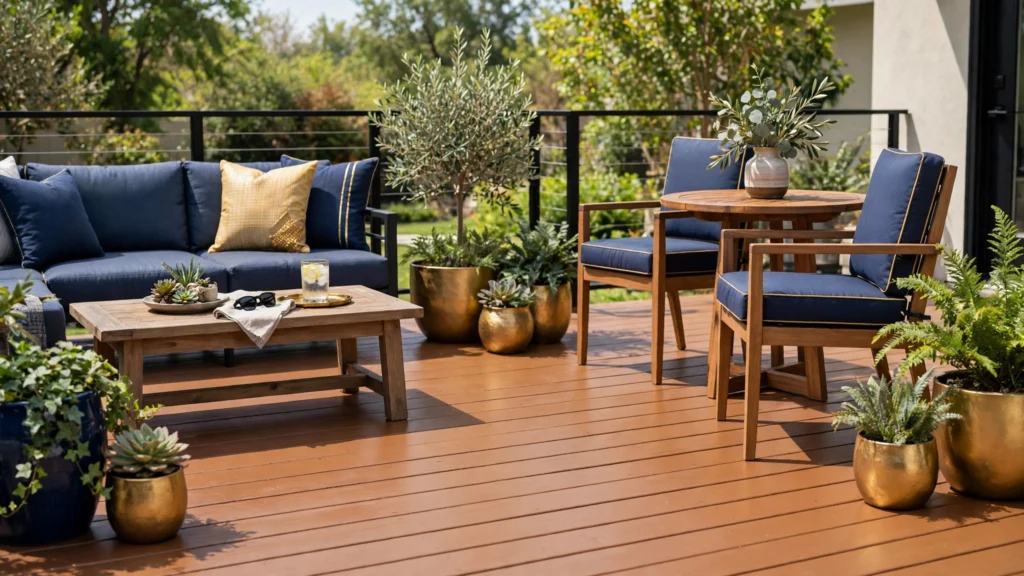
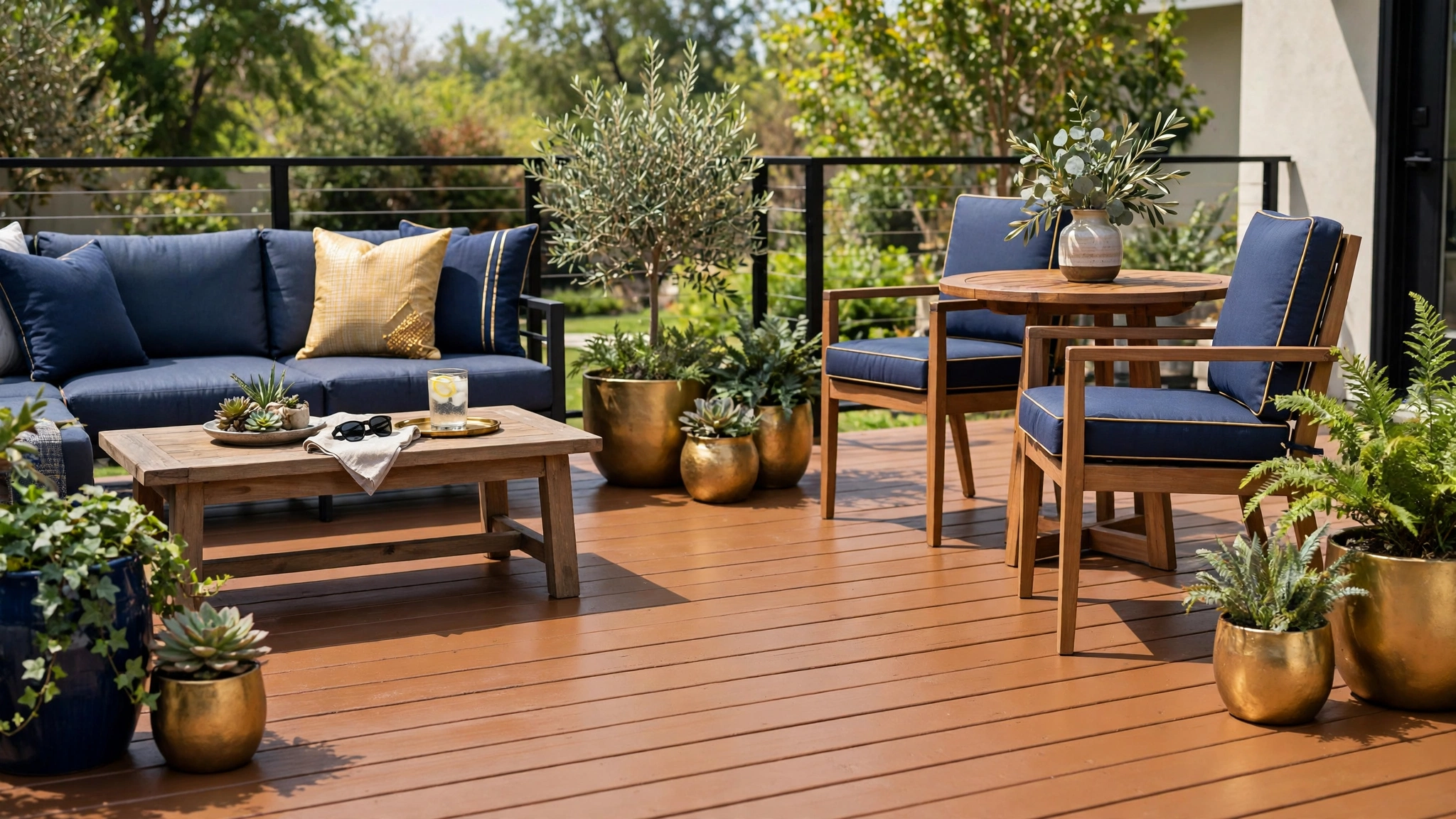
Deck painting is the process of cleaning, repairing, sanding, priming and coating a wood deck with exterior paint to protect the boards and change the colour. A full deck painting job starts with inspection and cleaning, then moves to repair, sanding, priming and two topcoats for a smooth, weather resistant finish.
This guide covers what deck painting is, the best timing, full preparation, stripping decisions, paint and primer choice, application steps, common mistakes and maintenance. Deck painting suits old grey decks, new bare wood after a weathering wait, and decks where stain no longer covers wear. The main parts are the boards, rails, steps and frame, and the main steps are inspection, cleaning, repair, sanding, priming, painting and upkeep. Deck painting also gives a tired outdoor space a fresh look without a rebuild.
- Preparation controls the result: clean, dry, smooth wood holds paint, and dirty or damp wood sheds paint.
- Paint a deck in mild, dry weather, in shade or on a cool surface, with no rain in the forecast.
- Use exterior deck paint and a matching exterior primer, and apply two thin topcoats, not one thick coat.
- Strip paint only when the old coat peels, cracks or lifts; paint over a firm, well bonded coat.
- Inspect each spring, wash each year, and touch up worn spots before peeling spreads.
What Is Deck Painting?
Deck painting is the application of a thick, opaque exterior coating to deck boards, rails and steps to seal the wood, block sun and water, and give a solid colour finish. Deck painting differs from staining because paint sits on the surface as a film, while stain soaks into the wood and leaves the grain visible.
A deck is a flat outdoor surface joined to a house, built from boards over joists, beams and posts. Deck painting covers the full walking surface plus rails, steps, posts and board edges, because water enters at edges and end grain first.
Deck painting suits wood decks in fair structural shape with a worn finish. Deck painting does not fix rot, loose framing or a failed ledger board, and those problems need repair before any coating. For more outdoor home projects, browse the Home Improvement guides on Voice of Wave.
When Is the Best Time to Paint a Deck?
Paint a deck in late spring or early fall on a dry, mild day, with air temperature between 50 and 90 degrees Fahrenheit, low humidity, and no rain forecast for 48 hours. Paint in shade or on a cool surface, because hot sun dries paint too fast and leaves lap marks and weak adhesion.
Temperature, humidity, sun and rain all shape the finish. Paint needs time to flow, level and bond, and fast drying traps brush marks and roller texture.
| Season | Suitability for deck painting | Reason |
|---|---|---|
| Late spring | Good | Mild days, long daylight, wood dries after winter |
| Summer | Good in shade | Heat and direct sun cause fast drying and lap marks |
| Early fall | Good | Mild days, lower sun, coating cures before cold weather |
| Winter | Poor | Cold air, frost and rain block drying and curing |
New wood needs a waiting period before painting, because mill glaze and surface resins block adhesion. Many paint makers advise waiting weeks to months for new pressure treated wood to dry, and the product label gives the exact wait for that product. Test dryness with a water sprinkle: water that beads shows a sealed surface, and water that soaks in shows open wood ready to coat.
How Do You Prepare a Deck for Painting?
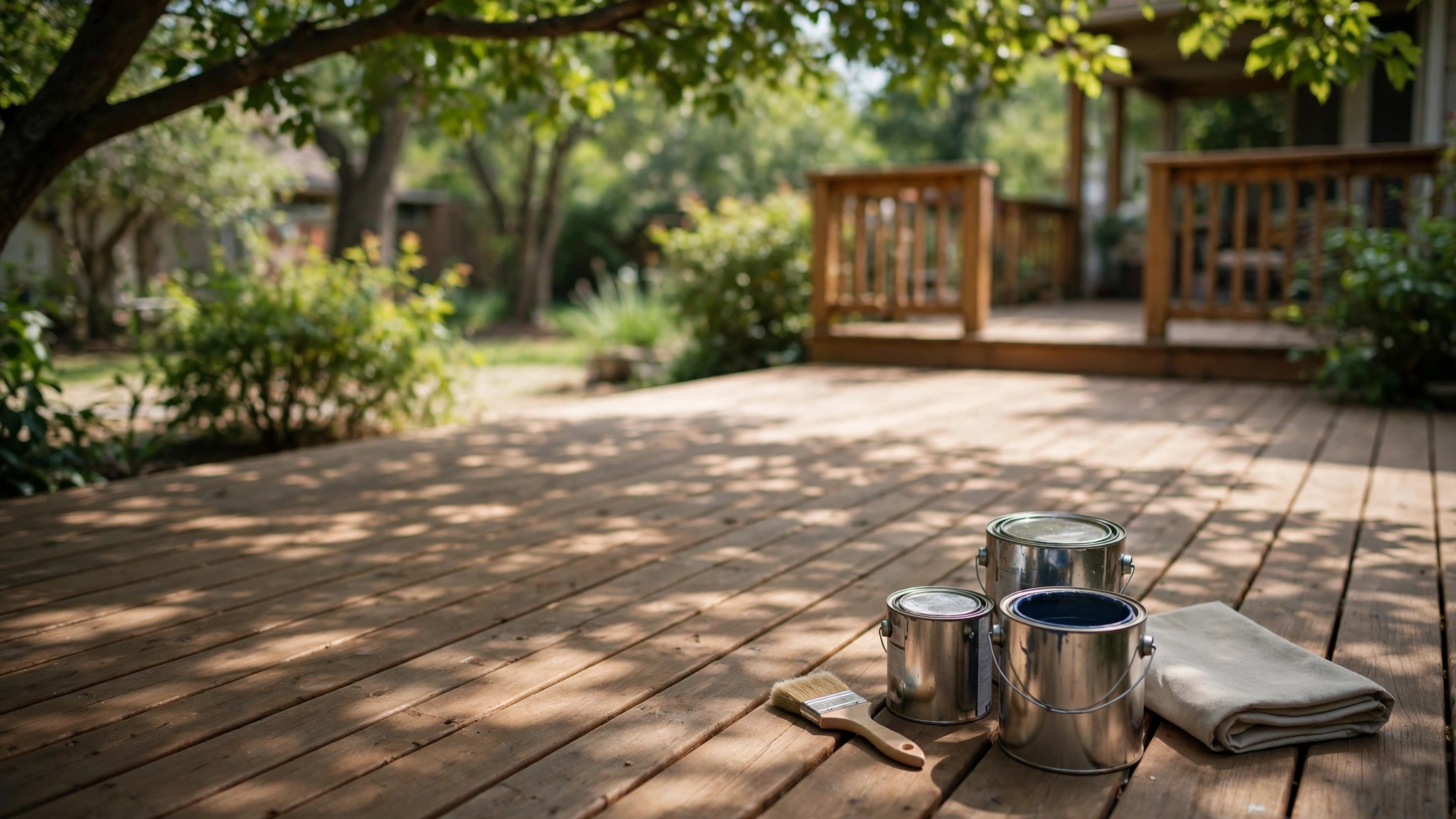
To prepare a deck for painting, clear the deck, inspect and repair boards and fasteners, clean with a deck cleaner, remove loose paint, sand the surface smooth, rinse off dust, and let the wood dry fully. Preparation controls adhesion, and paint applied to dirty, damp or peeling wood peels early.
Start with inspection. Walk the deck slowly, press soft spots with a screwdriver, and mark rot, cracks, cupping and splinters with chalk. Replace rotted boards with matching boards, and swap popped nails for deck screws, because raised nails tear rollers and break the film. Tighten loose boards, rails and steps, and check the ledger board where the deck meets the house for rot, gaps or wall staining. Ledger damage is a safety problem, and a professional should assess ledger rot before painting starts.
Cleaning comes next. Sweep loose dirt and leaves, then wash with a deck cleaner mixed per the label, scrub with a stiff brush along the grain, and rinse with clean water. A pressure washer helps at low pressure with a wide fan nozzle, but high pressure gouges wood fibres and raises fuzz that shows through paint. Outdoor deck structures face rain, sun and foot traffic, so grime, mildew and algae build in shaded spots and must come off before coating. Homes built before 1978 need a lead paint test before scraping or sanding old paint, because disturbing lead paint creates a health risk.
- Clear furniture, planters, rugs and grills from the deck.
- Inspect boards, fasteners, rails, steps and the ledger board.
- Replace rotted boards and swap popped nails for deck screws.
- Clean with deck cleaner, scrub along the grain, then rinse.
- Scrape loose paint and sand rough spots with 80 grit paper.
- Sweep and rinse all sanding dust from boards and gaps.
- Let the wood dry fully before priming or painting.
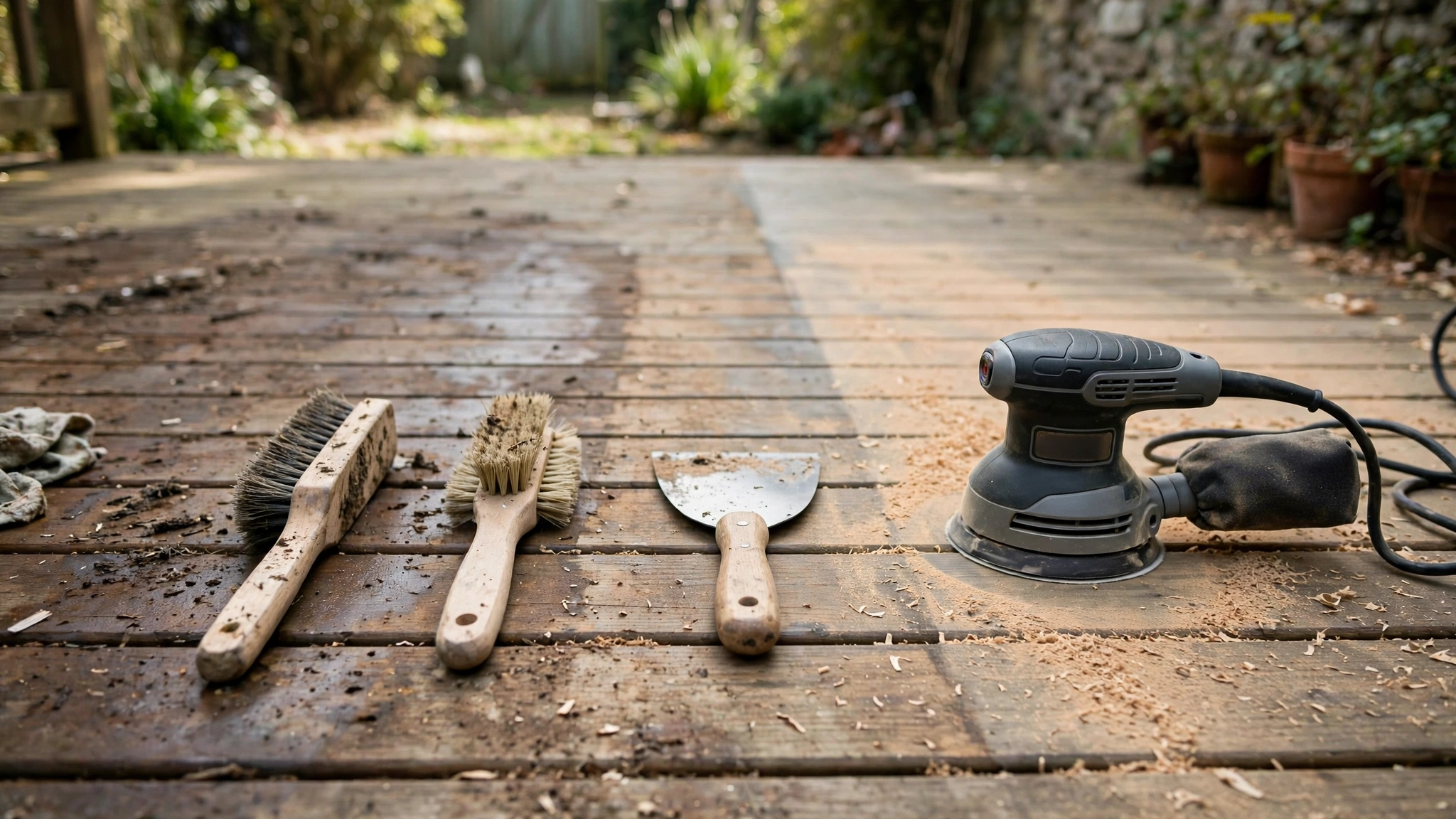
Tools for deck painting include a broom, a stiff brush, a scraper, a wire brush, a random orbit sander, 80 grit sandpaper, a sanding sponge for rails, a paint tray, a roller with an extension pole, an angled brush for gaps and rails, painter tape, drop cloths, gloves and eye protection. Sand with the grain, never across it, because cross grain scratches show through paint. Feather the edges of old paint so the new coat meets a smooth slope, not a sharp step.
Should You Strip Old Paint or Paint Over It?
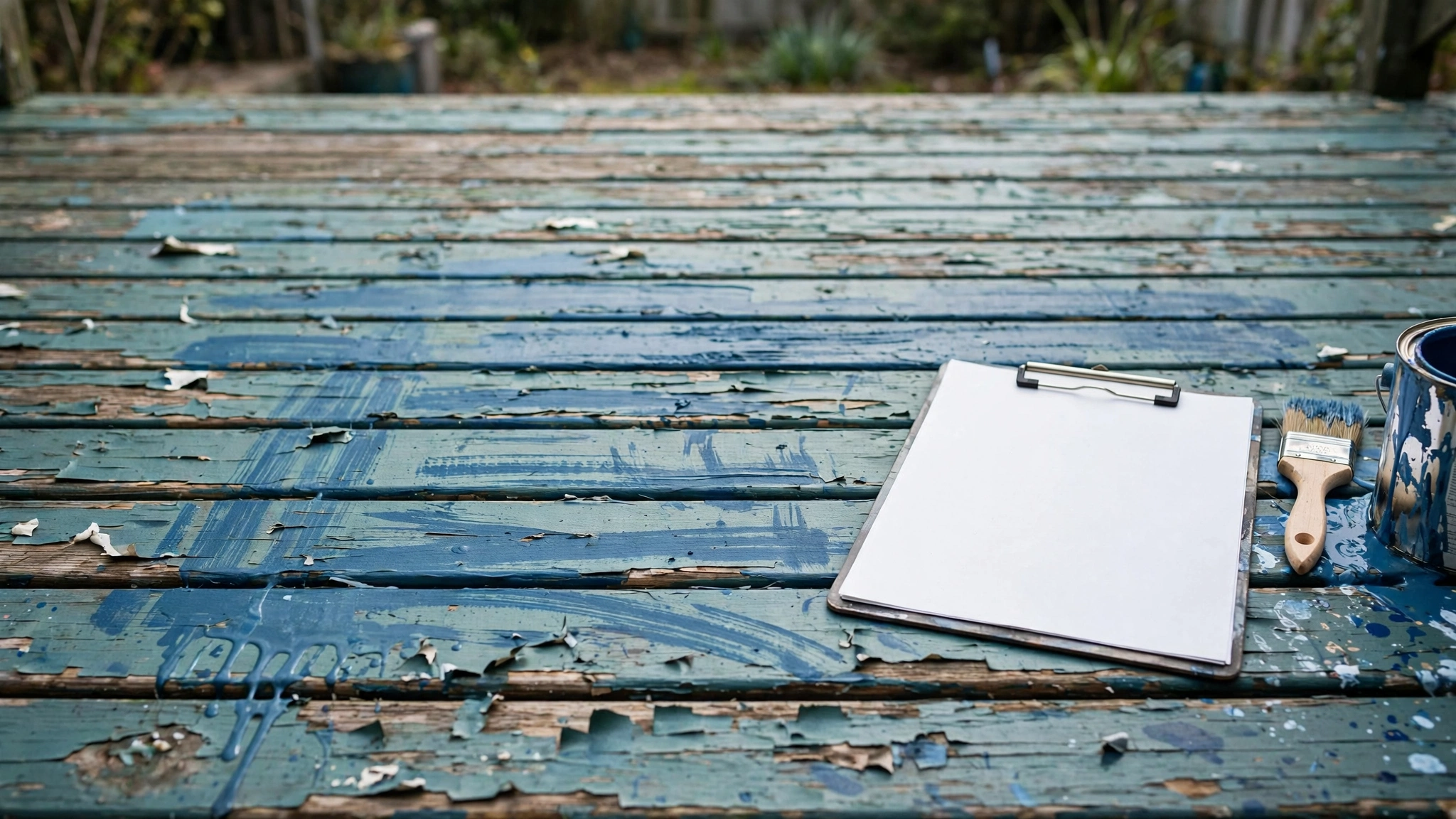
No, do not strip sound paint from a deck, because a firm, well bonded coat gives a sound base for primer and new paint. Strip paint only when the old coat peels, cracks, blisters or lifts in sheets, because new paint over loose paint lifts with the old layer.
Run two quick tests before deciding. Press painter tape firmly onto the old coat, pull it off fast, and check for paint on the tape: paint on the tape shows weak bonding. Push a scraper under an edge at a low angle: sound paint stays firm, and failing paint lifts in flakes or sheets. Strip failing paint down to firm wood or a firm coat, because spot fixes over a failing coat fail first.
Stripping methods depend on how much paint fails. A scraper and a wire brush suit small peeling patches. A sander suits larger areas and feathers edges at the same time. A chemical stripper suits thick, layered coats, and the label gives dwell time, safety gear and cleanup rules.
What Paint and Primer Should You Choose?
Choose a high quality exterior acrylic deck paint and a matching exterior wood primer for most wood decks, because acrylic paint flexes with wood movement, resists sun and water, and cleans up with water. Use a stain blocking primer for light colours over cedar or redwood, because tannins can bleed through light paint.
Paint choice starts with the deck material and the finish goal. Acrylic, or water based, deck paint suits most wood decks: the film flexes as boards expand and shrink, the colour holds well in sun, and cleanup uses water. Oil based, or alkyd, paint gives a hard film and strong adhesion on some woods, but cleanup uses solvents, drying takes longer, and the film can grow brittle with age.
| Coating | How it works | Best use | Recoat pattern |
|---|---|---|---|
| Solid deck paint | Thick opaque film on the surface | Hiding wear, grey wood and colour change | Two thin coats over primer |
| Solid stain | Heavy tint that covers like paint | Near paint coverage with stain handling | Two coats, check label for primer need |
| Semi transparent stain | Colour plus visible grain | Good wood with light wear | Recoat when colour fades |
| Transparent stain or sealer | Clear or light tint, grain fully visible | New, sound wood | Recoat every 1 to 3 years |
Primer choice matters as much as paint choice. Primer seals porous wood, blocks tannin bleed, and gives topcoats a uniform base, so colour looks even across new boards and old paint. Use one full primer coat on bare wood, repaired patches and stripped areas, and spot prime only where old paint is missing. How paint forms a film explains the binder and pigment mix that hardens into a protective layer after the liquid carrier leaves the surface.
Related reading: learn how to fix boards first in Deck Repair and Maintenance.
How Do You Apply Primer and Paint to a Deck?
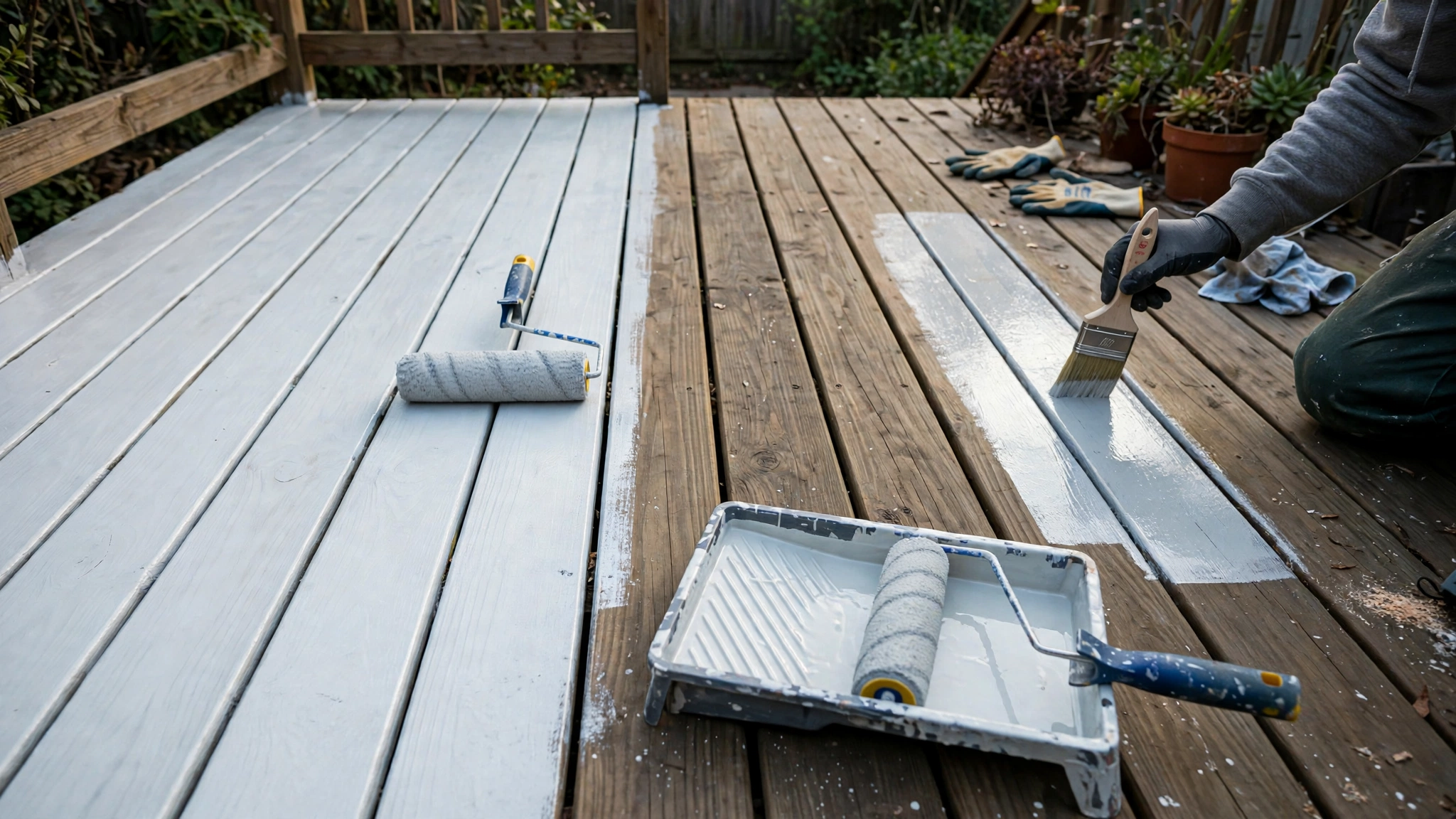
To apply primer and paint to a deck, brush primer into gaps and edges, roll primer over boards, let primer dry per the label, then roll two thin topcoats with the grain, brushing each coat into gaps. Work two or three boards at a time, keep a wet edge, and start far from the exit.
Set up before opening a can. Tape off house siding, posts and steps that stay unpainted, lay drop cloths under rails and steps, and stir paint well, because pigment settles and unstirred paint gives uneven colour. Start with rails, posts and steps, then move to the floor boards, because drips from rails land on unpainted boards and get rolled out later. Brush primer and paint into board gaps first, then roll the flat surface, because rollers skip gaps and leave bare wood lines.
- Brush primer into gaps, edges, rails and board ends.
- Roll primer over boards with the grain in full lengths.
- Let primer dry per the label, then check for missed spots.
- Brush the first topcoat into gaps, rails and board ends.
- Roll the first topcoat over two or three boards at a time.
- Let the first coat dry per the label before the second coat.
- Roll the second topcoat the same way for full coverage.
Keep a wet edge by rolling into the wet edge of the last section, never into a dry edge, because a dry edge leaves a visible lap line. Load the roller well without dripping, roll in long strokes with the grain, and back brush each section lightly to push paint into gaps and even the film. Follow the label for dry time, recoat time and cure time, because those three stages differ.
Deck Painting Mistakes to Avoid
Deck painting mistakes cause the exact failures readers want to avoid, so each mistake below links to the failure it creates and the fix that prevents it.
- Painting damp wood causes blistering and peeling, so wait for full drying and run the water test.
- Painting over loose paint causes new paint to lift in sheets, so scrape and sand failing coats first.
- Skipping primer on bare wood causes uneven colour and weak adhesion, so prime bare patches fully.
- Applying one thick coat causes runs, slow curing and cracking, so apply two thin coats.
- Painting in hot sun causes lap marks and poor bonding, so paint in shade on a cool surface.
- Painting in rain or before rain causes washout and soft film, so check a 48 hour dry forecast.
- Leaving dust after sanding causes weak bonding, so sweep and rinse dust before coating.
- Ignoring board gaps causes bare wood lines and water entry, so brush gaps before rolling.
In my own test patch, paint rolled over a dusty board peeled in strips within weeks, while the brushed clean board next to it stayed firm. Fix drips while the coat is wet, because dry drips need sanding and spot priming.
How Long Does Deck Paint Last, and How Do You Maintain It?
Deck paint lasts several years on a well prepared wood deck, with solid deck paint lasting 10 years or more in good conditions (Source: Sensible Digs, 2026). Sun, rain, foot traffic and standing water shorten that life, so inspect the deck each spring and touch up worn spots early.
Touch up a worn spot by cleaning, light sanding, spot priming bare wood, and applying two thin coats feathered into the sound coat. Recoat the full deck when peeling spreads, colour fades across large areas, or water soaks into boards instead of beading.
Yearly care keeps paint sound. Sweep weekly in leaf season, wash each year with a deck cleaner and a stiff brush, and clear board gaps so water drains instead of pooling. Move planters, rugs and grills to new spots through the year, because trapped moisture under a fixed object rots boards and lifts paint.
Conclusion
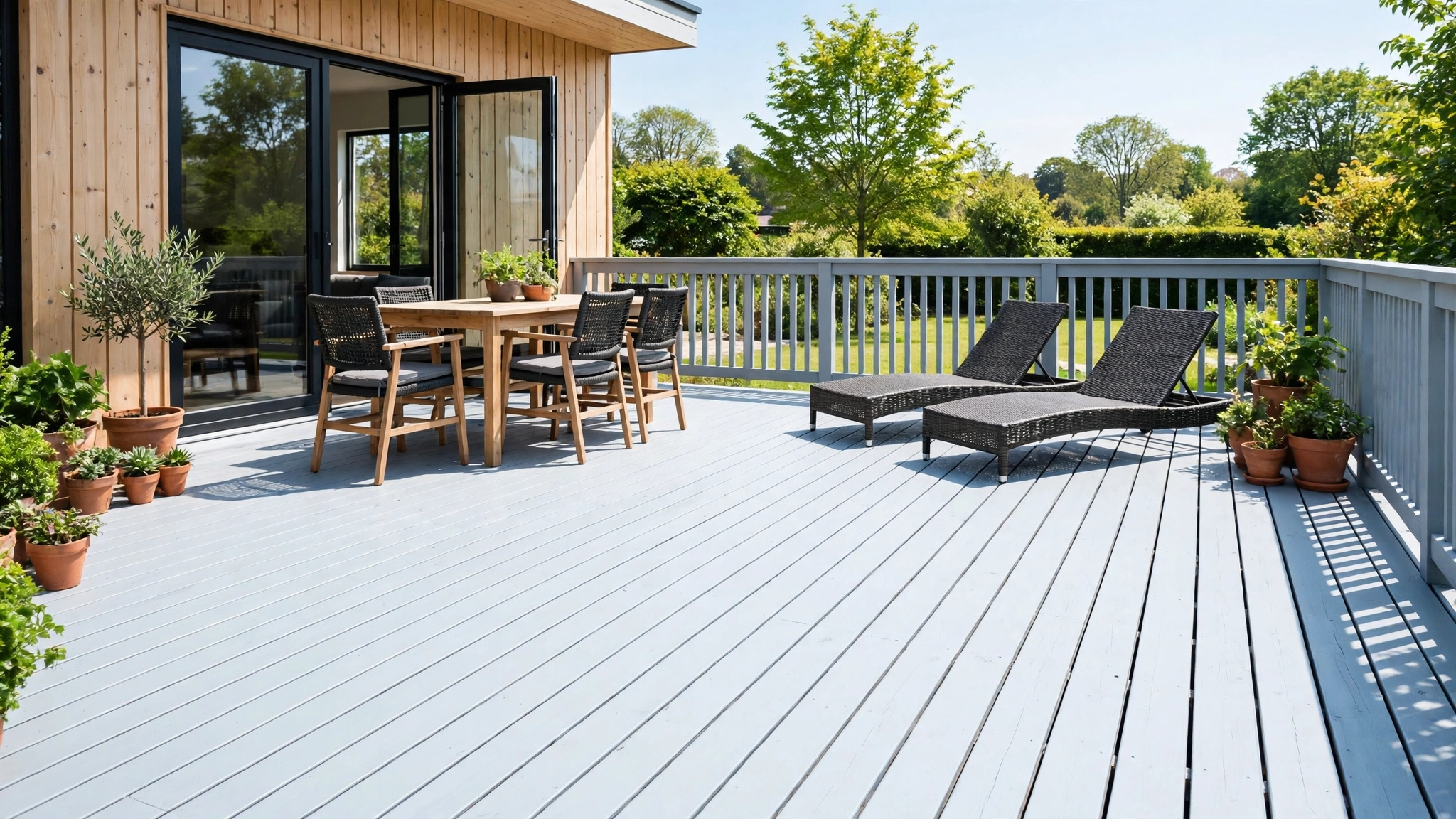
Deck painting rewards preparation: inspect and repair the deck, clean and sand the wood, let the deck dry fully, prime bare wood, and apply two thin topcoats with the grain. Deck painting gives old wood a solid colour, a sealed surface and a fresh outdoor space, and yearly washing plus early touch ups keep that finish sound for years. Voice of Wave publishes practical home guides like this one for everyday projects.
Continue reading: browse the latest articles for more home maintenance guides.
Frequently Asked Questions
Can I paint over old deck paint?
Yes, paint over old deck paint when the old coat is firm, well bonded and free of peeling, cracking and blistering. Clean the deck, scuff sand the surface, spot prime bare patches, and apply two thin topcoats. Strip paint that peels, cracks or lifts, because new paint over loose paint lifts with the old layer.
How long should a deck dry before painting?
A deck should dry fully before painting, with no damp boards, damp gaps or damp end grain left from washing or rain. Drying time varies with sun, wind and humidity, and shaded decks take longer than sunny decks. Run the water test and check gaps and shaded spots, because damp wood traps moisture under paint and causes blistering.
Do I need primer before deck paint?
Yes, use primer on bare wood, repaired patches and stripped areas before deck paint, because primer seals porous wood and gives topcoats a uniform base. Spot prime only where old paint is missing on a sound coat. Use a stain blocking primer for light colours over cedar or redwood, because tannins can bleed through light paint.
What temperature is best for painting a deck?
Paint a deck when air temperature sits between 50 and 90 degrees Fahrenheit, with low humidity and no rain forecast for 48 hours (Source: Sensible Digs, 2026). Paint on a cool surface in shade when possible, because hot sun dries paint too fast and leaves lap marks. Stop work if cold air, frost or rain threatens the drying coat.
Can I paint a composite deck?
No, do not paint most composite decks unless the deck maker guidance allows painting for that exact product. Composite boards have slick, capped surfaces that resist paint bonding, and paint may void a warranty. Wash composite decks with soap and water per the maker guidance, and test a hidden spot first if painting is allowed.
How many coats of paint does a deck need?
A deck needs one full primer coat on bare wood plus two thin topcoats for full coverage and a sound film. Brush each coat into gaps and board ends, then roll the flat boards with the grain. Two thin coats beat one thick coat, because thick coats run, cure slowly and crack with wood movement.