

Last updated: October 2026
Written by Michael Brooks for Voice of Wave.
Deck repair and maintenance is the ongoing cycle of inspecting, cleaning, repairing and sealing an outdoor deck to keep it safe and extend its life. Repairs fix damaged boards, loose fasteners and worn railings. Maintenance cleans the surface and renews the protective finish. The full cycle repeats every one to three years, depending on the deck material and the local climate.
Regular care makes a deck last years longer and cost far less than a rebuild. Most of the work is beginner-friendly, and each section answers one question. The guide covers the repair process in order, common problems with fixes, a wood versus composite comparison, 2026 costs, the repair-or-replace decision and a seasonal schedule.
- Inspect your deck every spring and fall for rot, loose boards, popped fasteners and wobbly railings.
- Clean before you repair: dirt hides damage and stops sealers and stains from bonding.
- Fix structure before surface: joists, the ledger board and posts matter more than top boards.
- Seal wood decks every 1 to 3 years; composite decks need washing, not sealing.
- Most board and fastener repairs are DIY-friendly; call a professional for ledger, joist or post damage.
What Is Deck Repair and Maintenance?
Deck repair and maintenance is the cycle of inspection, cleaning, repair and surface protection that keeps an outdoor deck safe and extends its service life. Repair fixes what is broken: rotted boards, loose screws and damaged railings. Maintenance prevents new damage by washing off grime and renewing the sealer or stain.
Repair is corrective and maintenance is preventive. Scheduled maintenance cuts the number of repairs, and early repairs cost a fraction of a structural rebuild.
Decks are load-bearing outdoor structures, and both softwood and hardwood decks need finishing after installation with oil or varnish to prevent weathering, mold, algae and wood-boring insects (see this overview of deck construction on Wikipedia). That finish wears off, which makes deck repair and maintenance a cycle. For more exterior projects, browse the Home Improvement guides on Voice of Wave.
How Often Should You Inspect and Maintain a Deck?
Inspect your deck twice a year, in spring and fall, and run a full maintenance cycle every one to three years depending on the material. Pressure-treated wood needs cleaning plus a new coat of sealer or stain every 1 to 3 years. Composite and PVC decks need only washing and inspection.
| Deck material | Inspect | Deep clean | Seal or stain |
|---|---|---|---|
| Pressure-treated wood | Twice a year | Every year | Every 1 to 3 years |
| Cedar or redwood | Twice a year | Every year | Every 1 to 3 years |
| Composite | Twice a year | Every year | Never; wash only |
| PVC | Once a year | Every year | Never; wash only |
Full sun, humid air and heavy tree cover shorten the cycle.
How Do You Inspect a Deck for Damage?
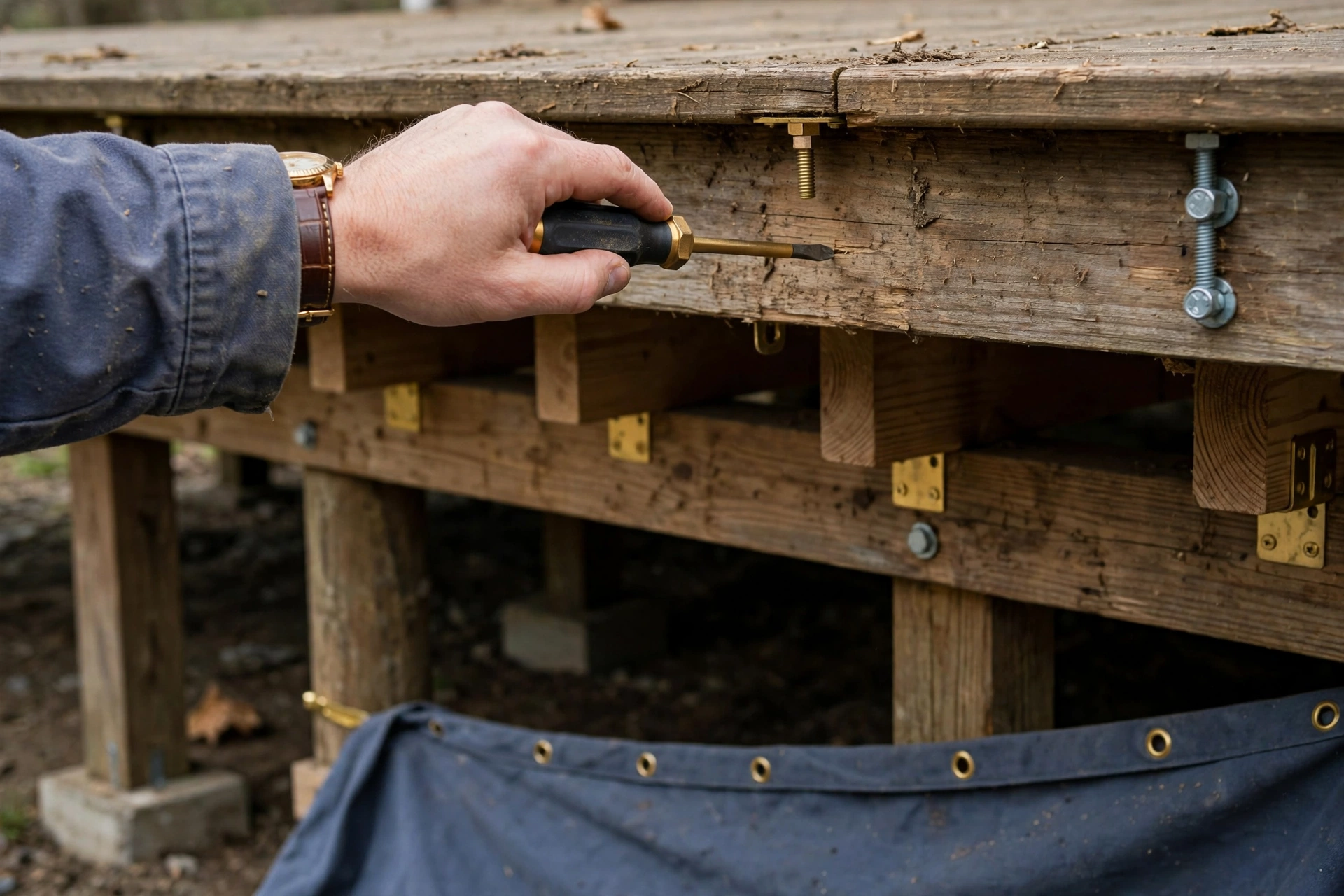
Inspect a deck by walking it slowly and checking every layer from the surface boards down to the footings. Start with boards and fasteners, then railings and stairs, then the ledger board where the deck meets the house, and finish underneath with joists, beams and posts.
- Boards: look for soft spots, cracks, cupping and splinters.
- Rot test: press a screwdriver into soft spots; easy entry means rot.
- Fasteners: mark popped nails and loose screws for replacement.
- Railings: push each railing; wobble means loose posts or hardware.
- Stairs: check treads, stringers and handrails for wear and cracks.
- Ledger board: look for rot and missing flashing at the house wall.
- Joists and beams: check underneath for sagging, soft wood and insect tunnels.
- Joist hangers: look for rust, bent metal and loose nails.
- Posts and footings: check post bottoms for ground-contact rot.
- Guardrail code check: residential rails are commonly 36 inches (910 mm) or 42 inches (1,070 mm) high and must resist about 200 pounds per square foot (Source: Wikipedia “Deck (building)”, 2026, summarizing US building codes).
Mark problems with chalk or tape and photograph the worst spots for material shopping or a contractor quote.
The Complete Deck Repair and Maintenance Process
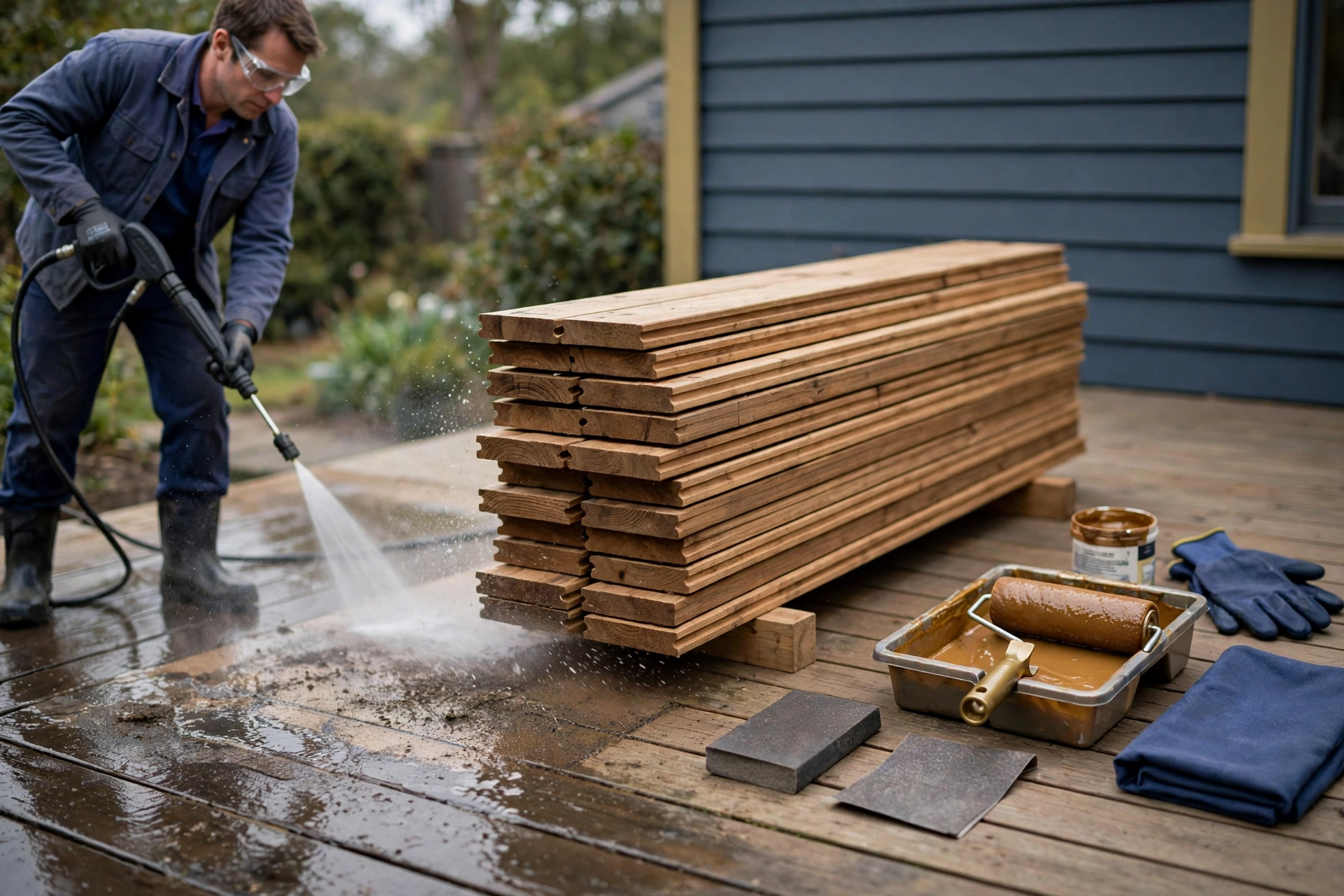
The complete deck repair and maintenance process has five steps in order: clear and clean the deck, repair boards and fasteners, sand rough spots, apply sealer or stain, and finish with a safety check. Never seal a dirty or damaged deck, because sealer locks in grime and hides rot.
Step 1: Clear and clean
Clean before you repair: dirt hides damage and stops finish from bonding. Clear the deck, wash with a deck cleaner or oxygen-bleach solution and a stiff brush with the grain, then rinse and let it dry fully. Pressure washing suits wood only at low pressure with a wide fan nozzle. Cleaning rules change by surface: see our guide to cleaning house exteriors safely for method-by-method advice.
Step 2: Repair boards and fasteners
Replace rotted boards with matching material and dimensions. Swap popped nails for deck screws, pull warped boards down with fresh screws, and pre-drill near board ends to prevent splitting. On my own deck, the first boards to rot were under a planter that never moved; planters and rugs now rotate so no spot stays wet all year.
Step 3: Sand
Sand splinters with 80-grit paper, always with the grain, and sweep up all dust before sealing.
Step 4: Seal or stain
Apply in the right weather: 50 to 90°F, no rain for 24 hours, wood fully dry (Source: JourneyMan HQ deck maintenance guide, 2026). Sprinkle water on the boards first: beading means the old finish works; soaking in means recoat. Apply two thin coats, not one thick coat.
Deck Sealer vs Deck Stain: Which Product Fits?
| Product | What it does | Recoat cycle |
|---|---|---|
| Clear sealer | Blocks water, keeps the natural wood look | Every 1 to 2 years |
| Transparent stain | Light tint plus water and UV protection | Every 2 to 3 years |
| Semi-transparent stain | Clear color, hides mild graying | Every 2 to 3 years |
| Solid stain | Covers like paint, maximum UV protection | Every 3 to 5 years |
Step 5: Final safety check
Retest every railing, stair and fastener, clear the gaps between boards for drainage, and return furniture after the finish cures per the product label.
What Are the Most Common Deck Problems and How Do You Fix Them?
The most common deck problems are rotted boards, popped or rusted fasteners, splinters and cracks, wobbly railings, and ledger board rot. Boards and fasteners are straightforward DIY fixes. Railing and ledger problems are safety issues that may need a professional.
| Problem | Warning signs | Fix | DIY or pro |
|---|---|---|---|
| Rotted boards | Soft, dark wood; screwdriver sinks in | Replace the board | DIY |
| Popped nails or loose screws | Raised heads, squeaking boards | Replace nails with deck screws | DIY |
| Splinters and surface cracks | Rough patches, raised grain | Sand with 80-grit; replace if deep | DIY |
| Wobbly railings | Movement when pushed | Tighten or replace posts and hardware | DIY or pro |
| Ledger board rot | Staining on house wall, gap at house | Reflash or replace the ledger | Pro |
| Sagging joists | Bounce or dips when walking | Sister a new joist or replace | Pro |
Treat ledger damage as a safety issue. The ledger bolts the deck to the house, and its failure can bring down the whole structure; if you see rot, a gap or wall staining, call a professional.
Wood vs Composite: Which Maintenance Routine Does Your Deck Need?
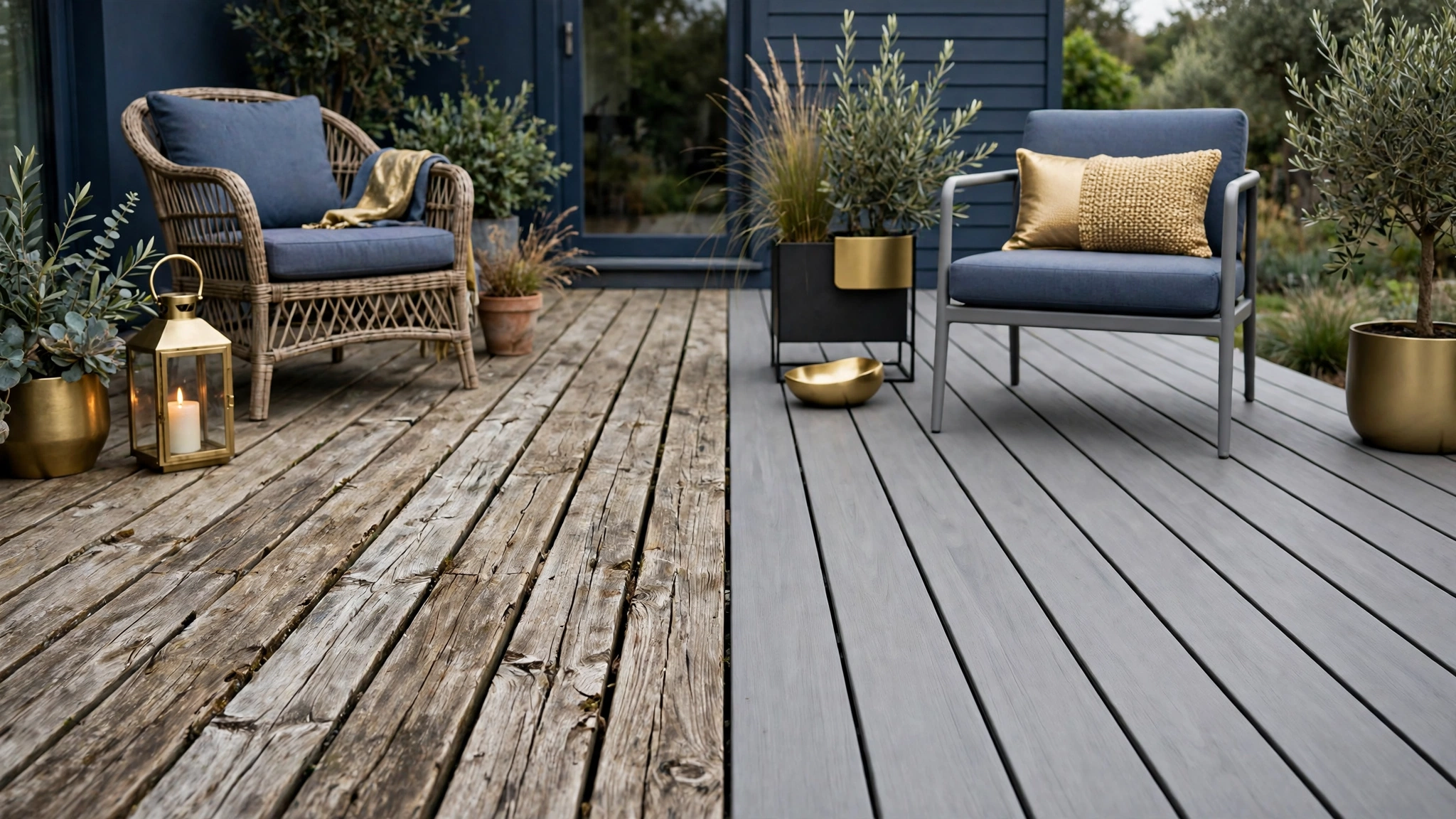
Wood decks need sealing or staining every 1 to 3 years and last 10 to 15 years with proper care; composite decks need only regular washing and last 25 to 30 years (Sources: Busy Builders Iowa, 2026; Opple House, 2026). Pressure-treated lumber is the most common wood choice; its rot resistance comes from preservatives driven deep into the wood under pressure (see these pressure-treatment methods for outdoor lumber on Wikipedia).
| Feature | Pressure-treated wood | Cedar or redwood | Composite or PVC |
|---|---|---|---|
| Seal or stain cycle | Every 1 to 3 years | Every 1 to 3 years | Never; wash only |
| Typical lifespan | 10 to 15 years (Source: Busy Builders Iowa, 2026) | 15 to 20 years (Source: Hooked Home, 2026) | 25 to 30 years (Source: Opple House, 2026) |
| Rot and insect resistance | Good while sealed | Good natural resistance | Excellent by design |
| Splinters | Common with age | Occasional | Rare |
| Upkeep cost | Higher | Higher | Lower |
Composite is low maintenance, not maintenance-free: mold can grow in damp shade. Wash it with soap and water per the manufacturer’s guidance.
How Much Does Deck Repair Cost in 2026?
Typical 2026 deck repair costs run from $0.30 per square foot for popped fasteners to $500 to $1,500 for a full stain and seal. Board replacement costs $10 to $35 per square foot, and post replacement costs $500 to $1,500 per post (Source: Mr. Task deck cost guide, 2026).
| Repair | Typical 2026 cost | Notes |
|---|---|---|
| Popped nails or screws | $0.30 per sq ft | Cheapest repair; usually DIY |
| Individual board replacement | $10 to $35 per sq ft | Materials plus labor |
| Railing repair | $150 to $5,000 | From loose hardware to full replacement |
| Stain and seal | $500 to $1,500 | For a sound structure needing a refresh |
| Joist hanger replacement | $200 to $500 per hanger | Structural safety repair |
| Post replacement | $500 to $1,500 per post | Includes footing inspection |
| Permits | $100 to $500 | Required by most cities for structural work |
DIY removes the labor portion, the largest share of most repair bills. Budget 10 to 15 percent above the estimate for rot found after opening a section.
Should You Repair or Replace Your Deck?
Repair your deck when damage is limited to surface boards, fasteners and finish. Replace it when the structure is failing, the deck is near the end of its lifespan, or repair costs pass half the price of a new deck.
- Repair if the frame is sound, rot is limited to a few boards, and the deck is under two-thirds of its expected lifespan.
- Repair if all fixes cost well under half the price of a comparable new deck.
- Replace if the ledger, multiple joists or several posts are rotted or failing.
- Replace if the deck is past its expected lifespan and problems keep returning.
- Consider a different material if you are tired of the sealing cycle.
What Does a Year-Round Deck Maintenance Schedule Look Like?
A year-round deck maintenance schedule splits the work by season: deep clean and inspect in spring, light checks in summer, repairs plus sealer or stain in fall, and snow control in winter. Spreading the work keeps each session short and easy.
| Season | Tasks |
|---|---|
| Spring | Full inspection with the 10-point checklist; deep clean; plan repairs; test the finish with the water test |
| Summer | Sweep weekly; clean spills quickly; move planters and rugs to new spots; check for mildew in shade |
| Fall | Complete repairs; sand and apply sealer or stain before cold weather; clear leaves from board gaps |
| Winter | Remove snow with a plastic shovel; avoid metal shovels and harsh de-icers on wood; check for ice dams near the ledger |
Fall is the best season for the big push: temperatures suit sealers and stains, and the coating cures before winter.
Conclusion
Deck repair and maintenance is a simple habit: inspect twice a year, clean before you fix, repair structure before surface, and renew the finish on schedule. A wood deck kept on this cycle reaches the top of its lifespan range, and a composite deck stays clean with little more than soap and water. Voice of Wave publishes practical home guides like this one every week.
Continue reading: browse the latest articles for more maintenance guides.
Frequently Asked Questions
How often should I seal my wood deck?
Seal or stain a wood deck every 1 to 3 years, depending on sun exposure and climate. Decks in full sun or humid regions need the short end of that range. Run the water test each spring: sprinkle water on the boards, and reseal when it soaks in.
Can I repair rotted deck boards myself?
Yes, if the rot is limited to surface boards. Cut out the damaged board, buy a matching board, and fasten it with deck screws, pre-drilling near the ends to prevent splitting. Call a professional if rot reaches joists, beams, posts or the ledger board.
How much does it cost to repair a deck in 2026?
Most 2026 repairs run from a few dollars to a few thousand: popped fasteners cost about $0.30 per square foot, board replacement runs $10 to $35 per square foot, and a full stain and seal runs $500 to $1,500 (Source: Mr. Task deck cost guide, 2026).
What is the difference between deck sealer and deck stain?
A sealer is a clear coating that blocks water while keeping the natural wood look. A stain adds color plus protection: transparent stains tint lightly, semi-transparent stains add clear color, and solid stains cover like paint. Sealers need recoating every 1 to 2 years; stains last 2 to 5 years.
When should I replace my deck instead of repairing it?
Replace the deck when the ledger board, multiple joists or several posts are rotted, when the deck is past its expected lifespan, or when repair quotes pass half the cost of a new deck. Repeated problems after repairs are the clearest signal the structure is done.