
Introduction
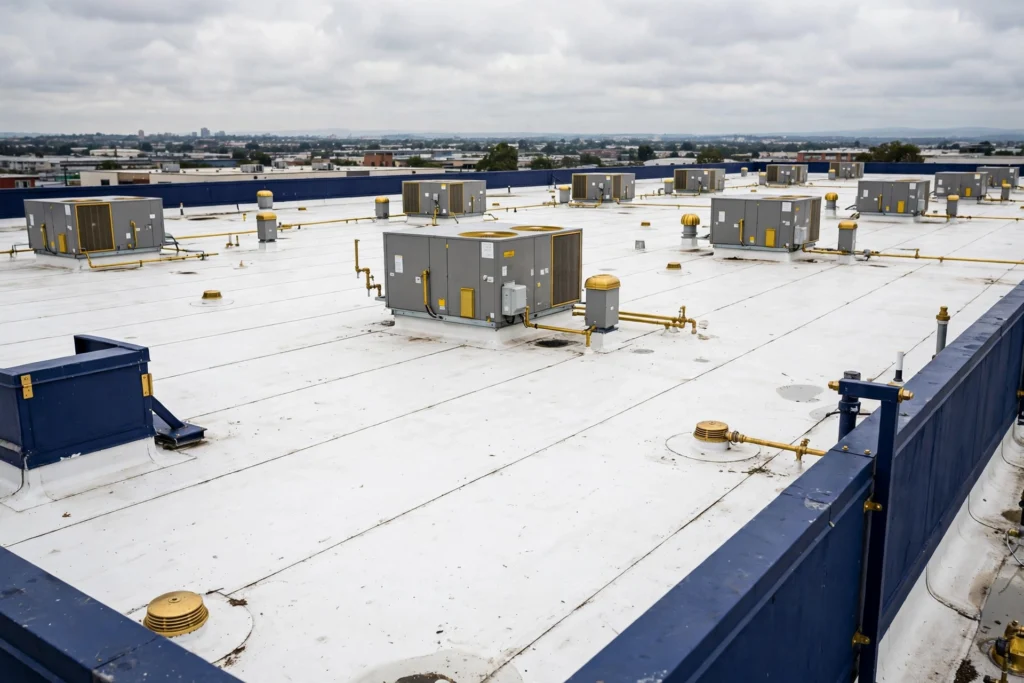
Commercial roofing is the design, installation, and maintenance of roof systems for offices, warehouses, retail stores, schools, and factories, and most commercial roofs use flat or low-slope designs with single-ply membranes, metal panels, or built-up layers that protect large buildings from water, heat, and wind damage.
Commercial roofing differs from home roofing in scale, slope, and materials: a commercial roof often covers 10,000 square feet or more, sits nearly flat so heating and cooling units can mount on top, and uses membranes or metal panels instead of shingles. This guide covers systems, 2026 costs and lifespans, selection, installation, maintenance, contractor vetting, and a 2026 investment verdict. It also explains how to vet a contractor and read a warranty, so owners can compare bids on equal terms.
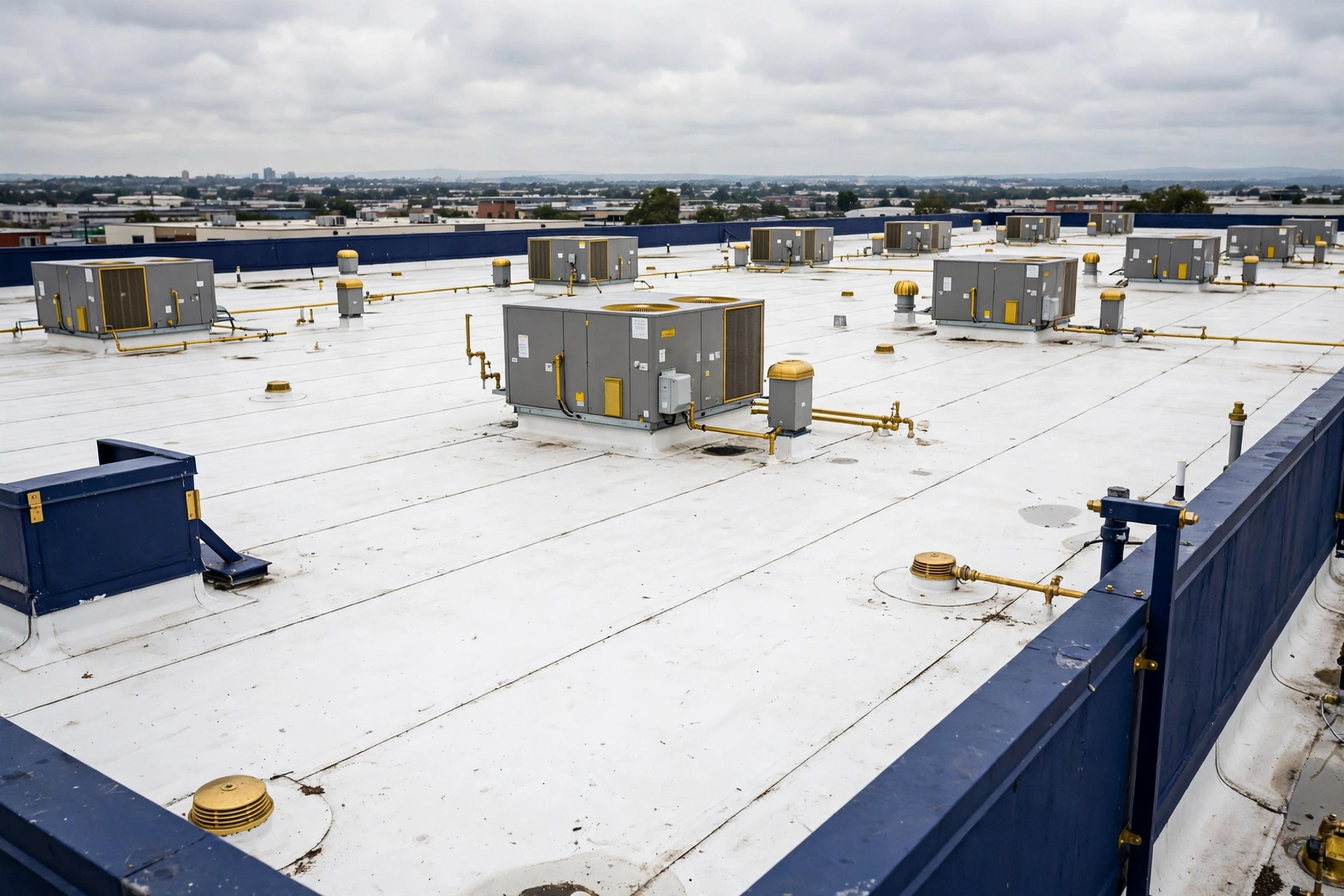
- Commercial roofing covers flat or low-slope roofs on offices, warehouses, retail stores, schools, and factories.
- TPO, EPDM, PVC, modified bitumen, built-up roofing, and standing seam metal are the 6 main commercial roofing systems.
- 2026 installed costs run from about $4.50 to $16.00 per square foot, based on Commercial Roof Guide (2026) national data.
- Two inspections per year plus checks after storms keep most commercial roofing warranties valid.
- Metal lasts longest at 40 to 70 years, while single-ply membranes last 20 to 35 years with steady maintenance.
What Is Commercial Roofing?
Commercial roofing is roofing work for non-residential buildings such as offices, warehouses, retail stores, schools, hospitals, and factories, and commercial roofing systems use flat or low-slope designs, membrane or metal surfaces, drainage plans, insulation layers, and flashing details built for large roof areas.
A commercial roof is a system of layers, not a single surface: structural deck, vapor barrier, insulation, cover board, membrane or metal panels, flashing at walls and curbs, and drains or scuppers that move water off the roof.
Slope defines commercial roofing more than any other feature. A flat roof{:target=”_blank” rel=”noopener noreferrer”} is a roof which is almost level, and the National Roofing Contractors Association (NRCA) defines a low-slope roof as a roof with a slope of 3 in 12 or less. Low slope lets owners place heating, ventilation, and air conditioning units, vents, and solar panels on the roof.
Browse more building guides in the Home Improvement category for repair, renovation, and maintenance topics.
Commercial roofing also carries code and safety duties that home roofing rarely faces: fire ratings, wind uplift ratings, energy code insulation minimums, and safe access rules. A practical observation from walking commercial roofs: ponding water near a drain tells more about roof condition than the membrane brand, since standing water stresses seams, adds load, and hides small splits.
What Are the Main Types of Commercial Roofing Systems?
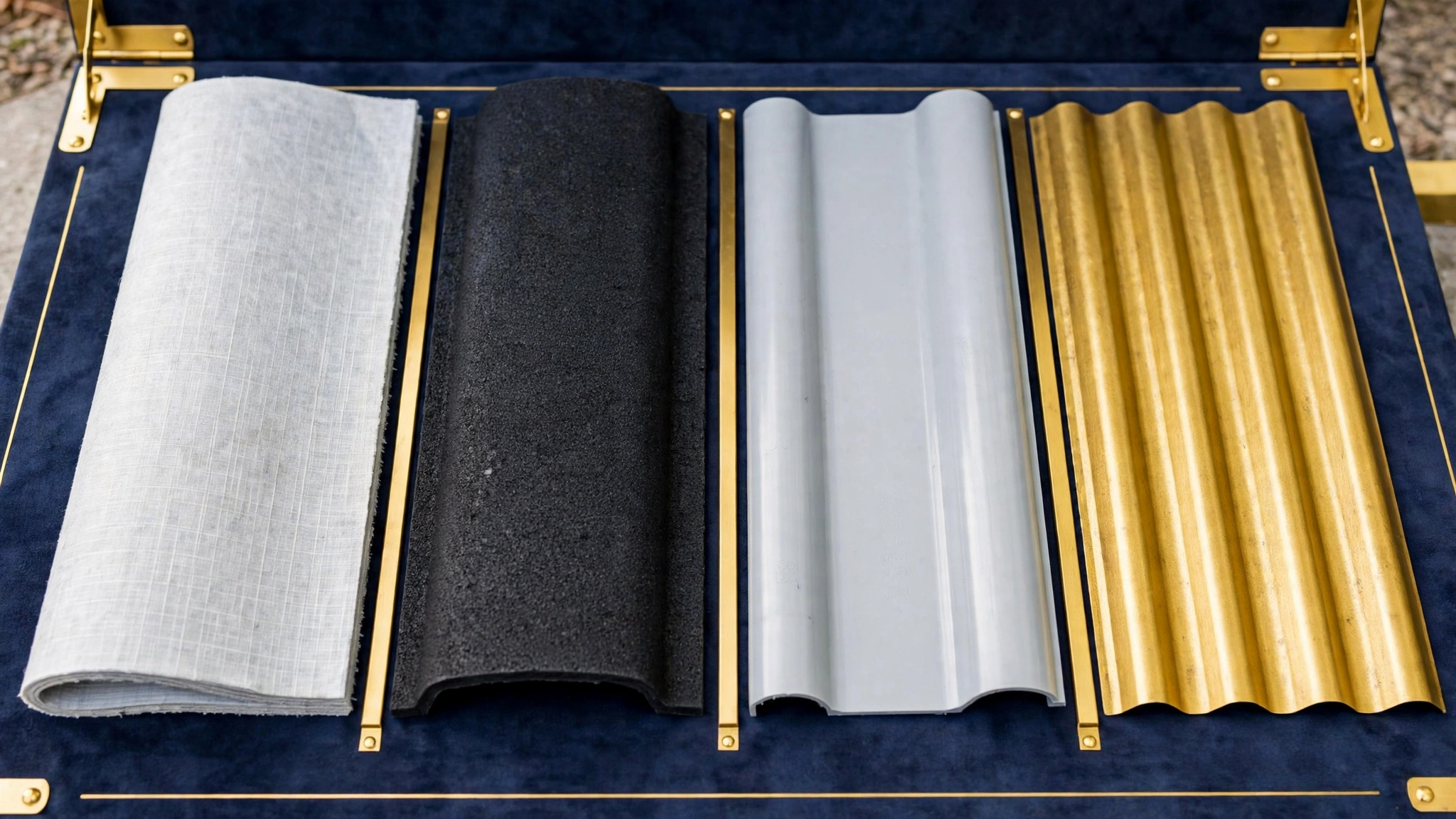
The main types of commercial roofing systems are TPO, EPDM, PVC, modified bitumen, built-up roofing, and standing seam metal, and each system suits a different mix of budget, climate, roof traffic, and chemical exposure, so the choice starts with building use rather than price alone.
TPO (Thermoplastic Polyolefin) is a single-ply membrane with heat-welded seams and a white reflective surface. TPO leads the market for general commercial buildings, since the reflective surface cuts cooling loads and welded seams form a strong watertight bond, and it suits offices, retail stores, and warehouses in warm and mixed climates.
EPDM (Ethylene Propylene Diene Monomer) is a synthetic rubber membrane with a track record of more than 50 years in commercial use. EPDM rubber{:target=”_blank” rel=”noopener noreferrer”} is a type of synthetic rubber used in many applications, and on roofs it offers strong cold-weather flexibility at a low upfront cost. EPDM suits budget projects and cold climates, and it comes in black or white sheets.
PVC (Polyvinyl Chloride) is a single-ply membrane with strong resistance to chemicals, grease, and fire. PVC suits restaurants, hospitals, and food plants where kitchen exhaust or chemical exposure would break down other membranes, and it costs more than TPO or EPDM with welded seams matching TPO for watertight performance.
Modified bitumen is a multi-layer asphalt membrane with a mineral or smooth cap sheet that handles foot traffic better than most single-ply membranes. Built-up roofing (BUR) stacks alternating layers of bitumen and reinforcing felt into a thick, redundant membrane, while standing seam metal uses interlocking steel or aluminum panels with concealed fasteners and leads all commercial systems on lifespan.
| System | 2026 installed cost per sq ft | Lifespan | Best for |
|---|---|---|---|
| TPO (60 mil) | $5.50 to $8.50 | 20 to 30 years | General commercial, energy efficiency |
| EPDM (60 mil) | $4.50 to $7.50 | 20 to 30 years | Budget projects, cold climates |
| PVC (60 mil) | $6.50 to $10.00 | 25 to 35 years | Restaurants, chemical exposure |
| Modified bitumen | $5.00 to $8.50 | 15 to 25 years | Walkable roofs, easy repairs |
| Built-up roofing (BUR) | $4.00 to $8.00 | 20 to 30 years | Multi-ply redundancy |
| Standing seam metal | $9.00 to $16.00 | 40 to 70 years | Long-term value, appearance |
Cost and lifespan figures come from Commercial Roof Guide (2026) national averages for projects of 10,000 to 25,000 square feet.
How Much Does Commercial Roofing Cost in 2026?
Commercial roofing costs in 2026 run from $4.50 to $16.00 per square foot installed across the 6 main systems, and a typical 10,000 square foot roof costs $45,000 to $160,000 before tear-off, deck repair, and code upgrades, based on Commercial Roof Guide (2026) national averages.
Per-square-foot rates hide the full budget: tear-off, deck repair, added insulation to meet current energy code, new flashing, drains, and crane or access charges can add 20 to 40 percent to a base quote. A 10,000 square foot TPO roof runs $55,000 to $85,000 for the system alone, and the same roof in standing seam metal runs $90,000 to $160,000.
Roof size, height, access, and rooftop unit count move a project inside its range: projects over 20,000 square feet often qualify for volume discounts of 10 to 15 percent, based on Commercial Roof Guide (2026) data.
Total cost of ownership changes the ranking: metal costs nearly double TPO upfront, yet metal needs no re-roofing inside a 40 to 70 year life, while a membrane roof needs one full replacement in the same span. Owners holding a building for 30 years or more must compare two membrane cycles against one metal cycle, plus maintenance costs, before picking the cheapest bid.
How Do You Choose the Right Commercial Roofing System?
You choose the right commercial roofing system by matching building use, climate, roof traffic, and holding period to one system, then confirming the pick against drainage, insulation, and warranty terms, because the cheapest membrane fails fast when it faces the wrong exposure.
Run this selection method in order:
- Name the building use: office, warehouse, retail, restaurant, school, or factory.
- Name the climate load: heat, cold, snow, hail, high wind, or heavy rain.
- Name the roof traffic: service crews only, regular foot traffic, or rooftop equipment work.
- Name the chemical exposure: kitchen grease, exhaust fumes, or none.
- Name the holding period: under 10 years, 10 to 25 years, or over 25 years.
- Match the answers to one system from the comparison table.
- Confirm drainage, insulation, and warranty terms with the contractor in writing.
Climate narrows the field fast: hot climates favor white TPO or PVC for reflectivity, cold climates favor EPDM for low-temperature flexibility, hail regions favor membranes at 60 mil or more or standing seam metal with a Class 4 impact rating, and restaurants and food plants need PVC, since grease breaks down TPO and EPDM over time.
For the home side of roofing decisions, read Roof Replacement: Complete Homeowner’s Guide 2026.
How Is a Commercial Roof Installed?
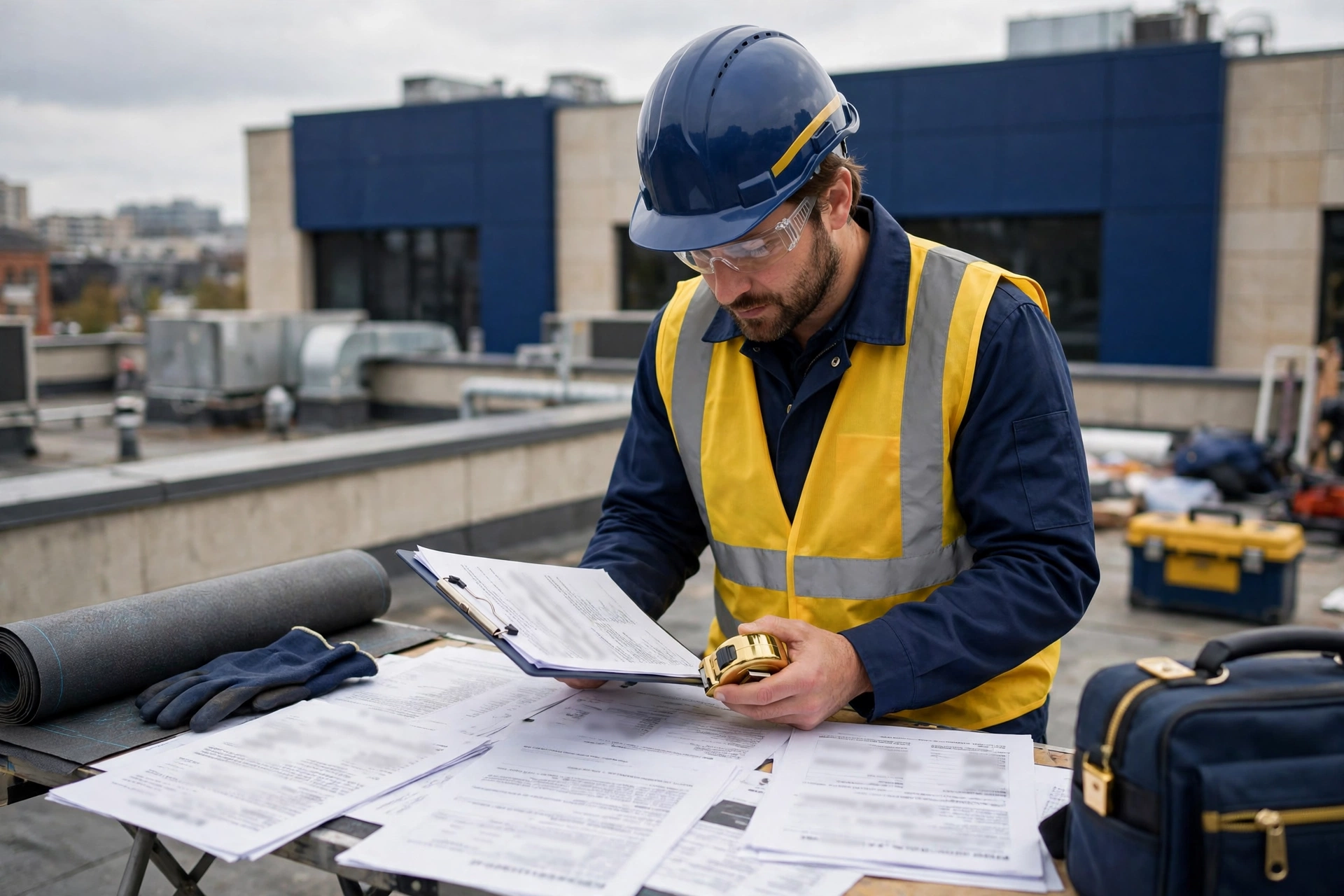
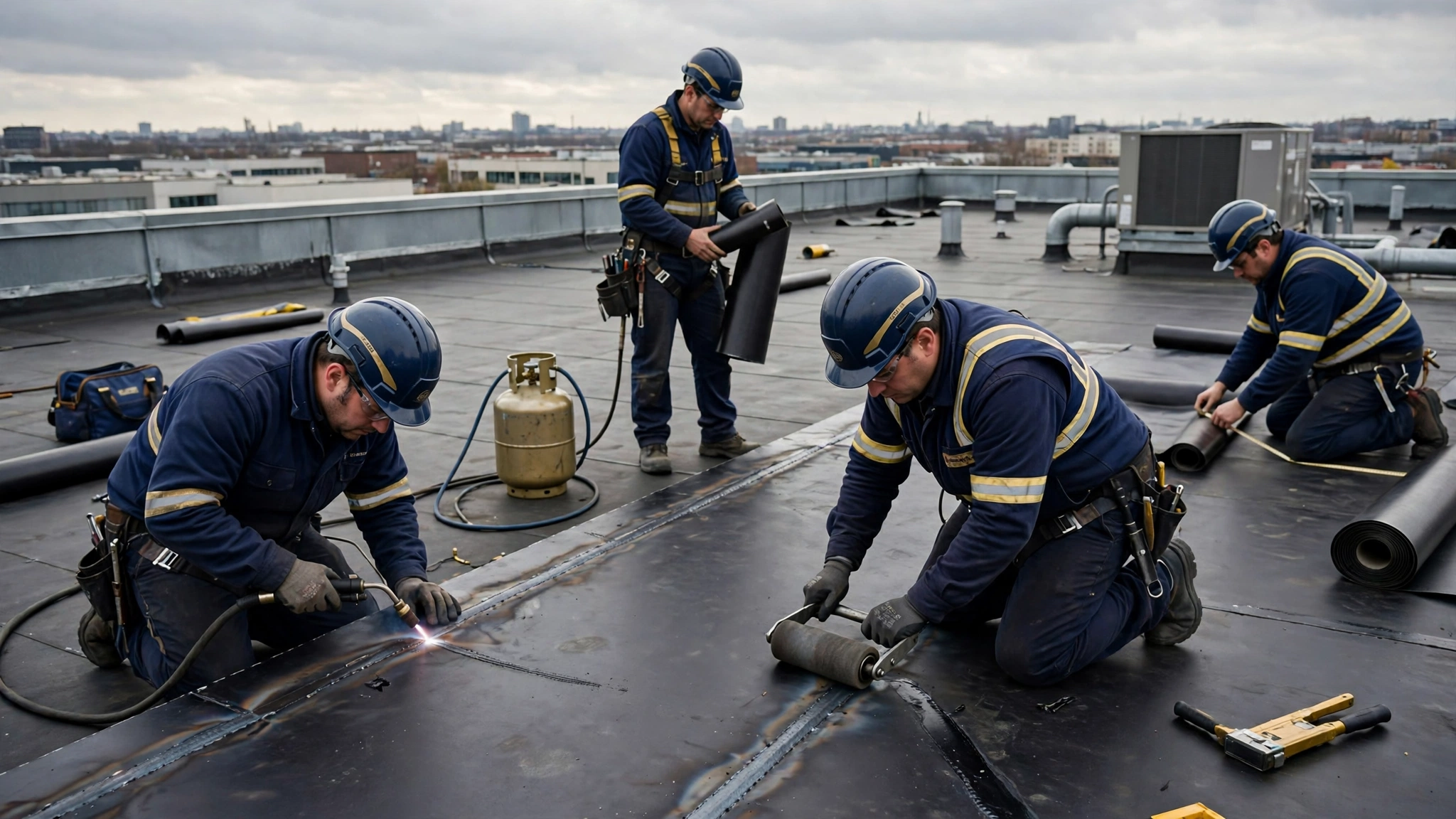
A commercial roof is installed in 7 stages: inspection and measurement, tear-off or preparation, deck repair, insulation and vapor barrier, membrane or panel installation, flashing and drainage, and final inspection with warranty paperwork, and each stage needs an owner checkpoint before the crew moves on.
Stage 1 is inspection and measurement: the contractor measures the roof, takes core cuts to check existing layers and moisture, and scans for wet insulation when the scope allows. Stage 2 is tear-off or preparation, where old roofing comes off down to the deck, or the existing roof is cleaned and primed for a recover job. Stage 3 is deck repair, where rotted or rusted deck sections get replaced at a per-sheet price stated in the contract before work starts.
Stage 4 sets insulation and the vapor barrier, with insulation boards laid in staggered joints. Stage 5 installs the membrane or panels: TPO, PVC, and EPDM sheets get adhered, mechanically fastened, or ballasted, with seams heat-welded or taped, while metal panels get fastened with concealed clips. Stage 6 covers flashing and drainage, sealing every wall, curb, vent, and drain. Stage 7 is final inspection: the contractor walks the roof with the owner, checks seams and flashing, tests drains, and hands over warranty papers.
A commercial roof install takes one to four weeks for most 10,000 to 25,000 square foot roofs, and the contract must state daily watertight requirements and a rain plan.
What Does Commercial Roof Maintenance Include?
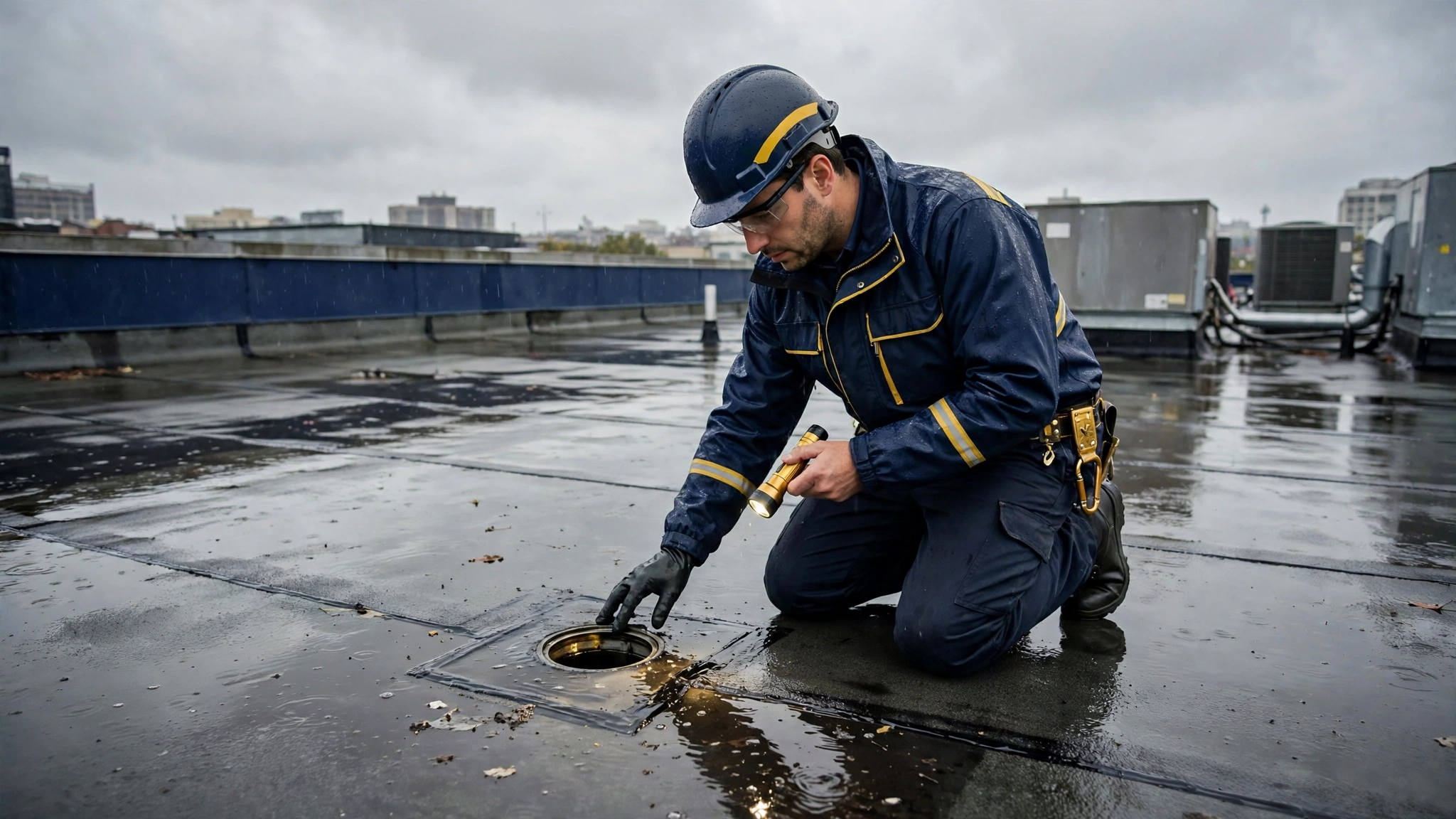
Commercial roof maintenance includes two professional inspections per year, checks after every major storm, drain and debris clearing, seam and flashing checks, and written records of every visit, and this routine keeps manufacturer warranties valid while catching small splits before they become leaks.
NRCA guidance cited by Commercial Roof Guide (2026) states that neglected maintenance is the single largest factor in premature roof failure, and biannual inspections can add 5 to 10 years to a commercial roof life.
A maintenance visit covers 6 tasks:
- Clear drains, scuppers, gutters, and roof debris.
- Check seams, laps, and flashing for splits, lifting, or punctures.
- Check ponding areas and mark spots where water stands past 48 hours.
- Check rooftop units, curbs, and pipe boots for cracked sealant.
- Check walkway pads and traffic paths for membrane wear.
- Photograph each defect, record the repair, and file the report.
Owners can run 3 checks without climbing on the roof: ceiling stains on the top floor, water marks near rooftop unit curbs inside, and overflowing gutters or scuppers during rain, and any of the 3 means a professional visit within days, not months.
Commercial Roofing vs Residential Roofing
Commercial roofing differs from residential roofing in slope, materials, scale, drainage, and access, and the table below sets the two side by side so owners moving between building types can reset their expectations before budgeting, since a commercial quote and a home quote measure different scopes.
| Feature | Commercial roofing | Residential roofing |
|---|---|---|
| Typical slope | Flat or low-slope, 3 in 12 or less | Pitched, often 4 in 12 or more |
| Main materials | TPO, EPDM, PVC, modified bitumen, BUR, metal panels | Asphalt shingles, tile, slate, metal shingles |
| Typical size | 10,000 square feet or more | 1,500 to 3,500 square feet |
| Drainage | Internal drains, scuppers, tapered insulation | Gutters and downspouts at eaves |
| Rooftop equipment | HVAC units, vents, solar arrays on the roof | Rare, usually vents and chimneys only |
| Maintenance | Contract program, two inspections per year | Homeowner checks, inspection every few years |
| Lifespan range | 15 to 70 years by system | 15 to 100 years by material |
How Do You Hire a Commercial Roofing Contractor?
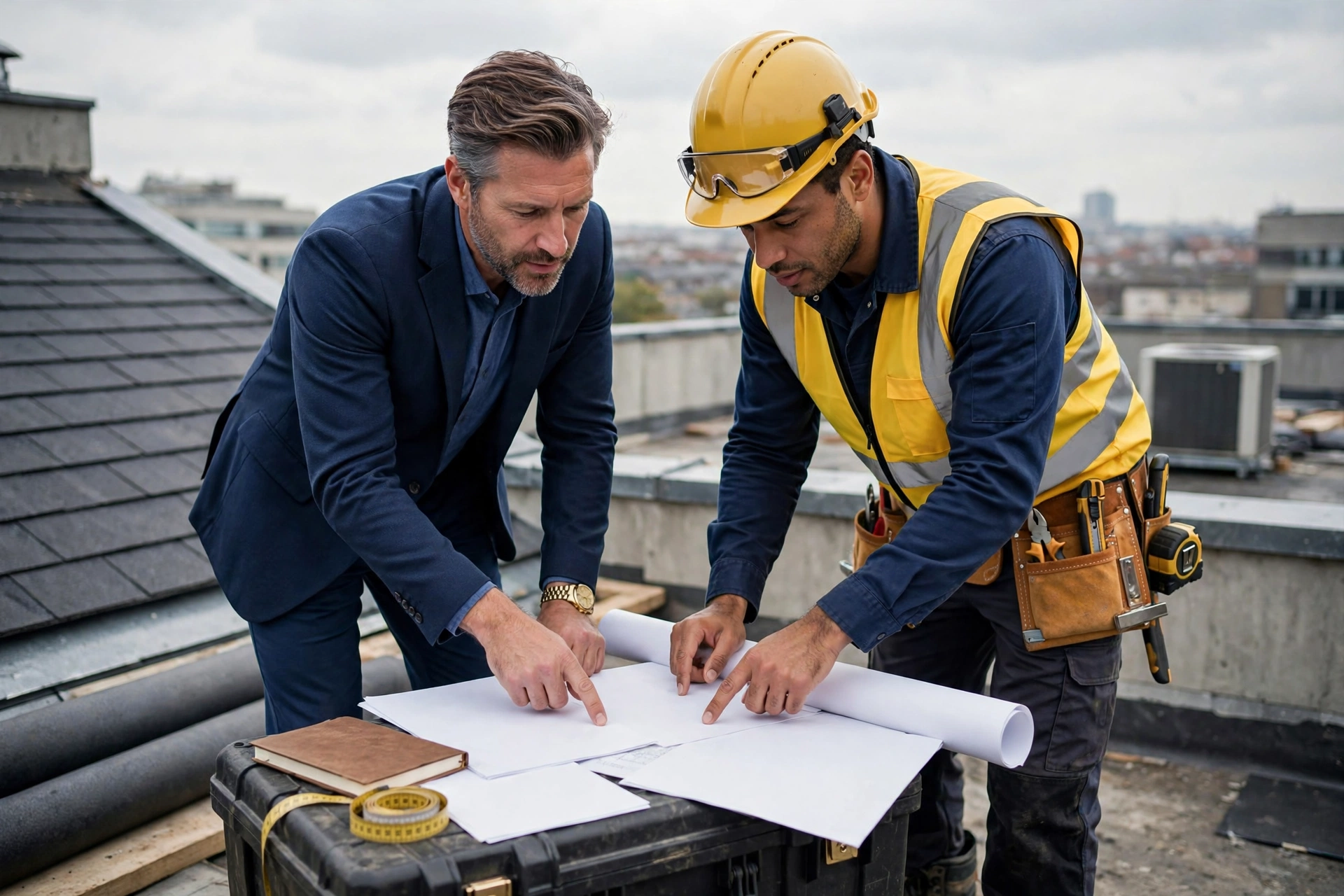
You hire a commercial roofing contractor by collecting 3 itemized bids, verifying license and insurance directly, checking recent commercial references, and signing a contract that names materials, scope, schedule, and warranty terms, because the contractor decides the install quality more than the membrane brand does.
Request 5 documents from every bidder: a state license number, liability and workers compensation insurance certificates, manufacturer certification for the proposed system, and 3 recent commercial references with matching building types. Verify the license on the state licensing board site, and request insurance certificates from the insurer directly.
Red flags that mean walking away:
- A deposit of 25 percent or more before work begins.
- A bid with no material brand, membrane thickness, or insulation type named.
- No square footage, no drain plan, and no warranty terms in writing.
- Pressure to sign the same day, or a price that drops sharply on the spot.
- No local office, no recent commercial photos, and no verifiable references.
Green flags mirror the red flags: a local office, photo records of nearby commercial jobs, itemized scope with brand names and thicknesses, milestone payments tied to completed stages, and a workmanship warranty of 5 years or more in writing. A No Dollar Limit (NDL) warranty from the membrane maker adds a second layer, covering material and sometimes labor for 15 to 30 years, based on Commercial Roof Guide (2026) data, and NDL terms require a certified installer plus documented maintenance.
Is Commercial Roofing Worth the Investment in 2026?
Yes, commercial roofing is worth the investment in 2026 for owners who plan to hold or lease a building, because a sound roof protects inventory, tenants, and equipment, cuts energy costs with reflective membranes or added insulation, and preserves resale value, if the system matches the building and maintenance stays on schedule.
The case for investing rests on 3 points: a leaking roof damages stock, electronics, and tenant space, and one major leak can cost more than a year of maintenance; reflective TPO or PVC plus code-level insulation cuts cooling loads in warm climates; and a documented roof with a transferable warranty raises buyer confidence at sale time.
The case against overspending rests on 2 points: a premium metal roof wastes capital on a building slated for sale within 5 years, since the buyer pays for remaining life, not for the full system cost, and a recover or coating job wastes money on a roof with wet insulation or a failed deck, since the new surface hides rot that keeps spreading. Match the spend to the holding period and the deck condition, and the investment pays back.
Conclusion
Commercial roofing rewards owners who pick the system by building use and climate, budget the full scope beyond the membrane rate, and keep two inspections per year on the calendar, and the commercial roofing decision that lasts is the one made from measurements and written terms, not from the lowest bid alone.
Start with the selection method in this guide, get 3 itemized bids with named materials and warranty terms, and file every inspection report with the warranty papers. Voice of Wave covers home improvement topics with the same check-first approach.
Explore more practical guides on the Voice of Wave blog.
Frequently Asked Questions
What is commercial roofing?
Commercial roofing is roofing work for non-residential buildings such as offices, warehouses, retail stores, schools, and factories. Commercial roofing systems use flat or low-slope designs with membranes or metal panels, plus drainage, insulation, and flashing built for large roof areas.
How much does commercial roofing cost?
Commercial roofing costs $4.50 to $16.00 per square foot installed in 2026, based on Commercial Roof Guide (2026) national averages. A 10,000 square foot roof costs $45,000 to $160,000 before tear-off, deck repair, and code upgrades, which can add 20 to 40 percent.
How long does a commercial roof last?
A commercial roof lasts 15 to 70 years by system. TPO and EPDM last 20 to 30 years, PVC lasts 25 to 35 years, modified bitumen lasts 15 to 25 years, built-up roofing lasts 20 to 30 years, and standing seam metal lasts 40 to 70 years with steady maintenance.
What is the best commercial roofing system?
The best commercial roofing system depends on building use, climate, and holding period. TPO suits general commercial buildings, EPDM suits cold climates and tight budgets, PVC suits restaurants and chemical exposure, and metal suits owners holding a building for over 25 years.
How often should a commercial roof be inspected?
A commercial roof needs two professional inspections per year, in spring and fall, plus checks after every major storm. NRCA guidance cited by Commercial Roof Guide (2026) links neglected maintenance to premature failure, and biannual inspections can add 5 to 10 years of life.
Can a commercial roof be repaired instead of replaced?
Yes, a commercial roof can be repaired when damage stays local, the membrane has useful life left, and the deck and insulation test dry. Replacement wins when leaks repeat, damage covers large areas, insulation tests wet, or repair costs approach a third of a replacement quote.