
Introduction
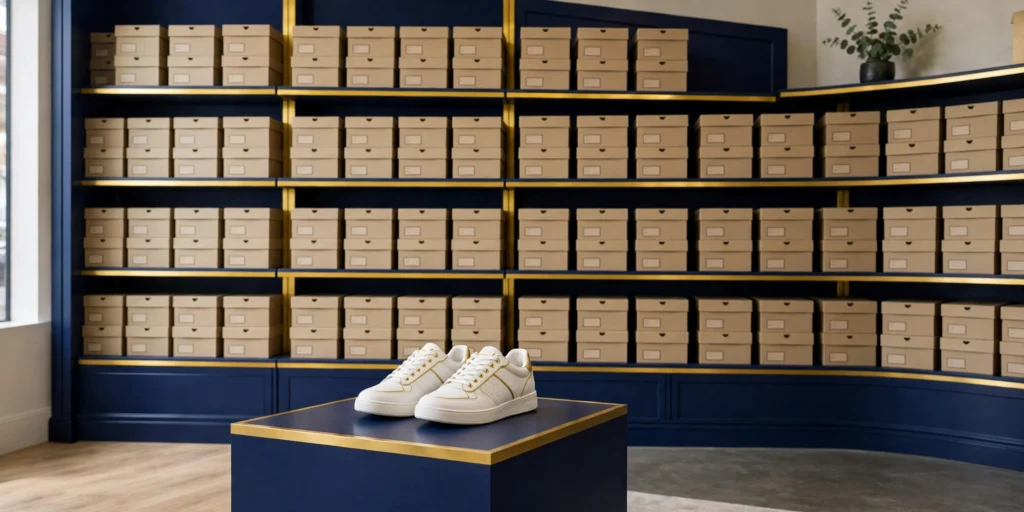
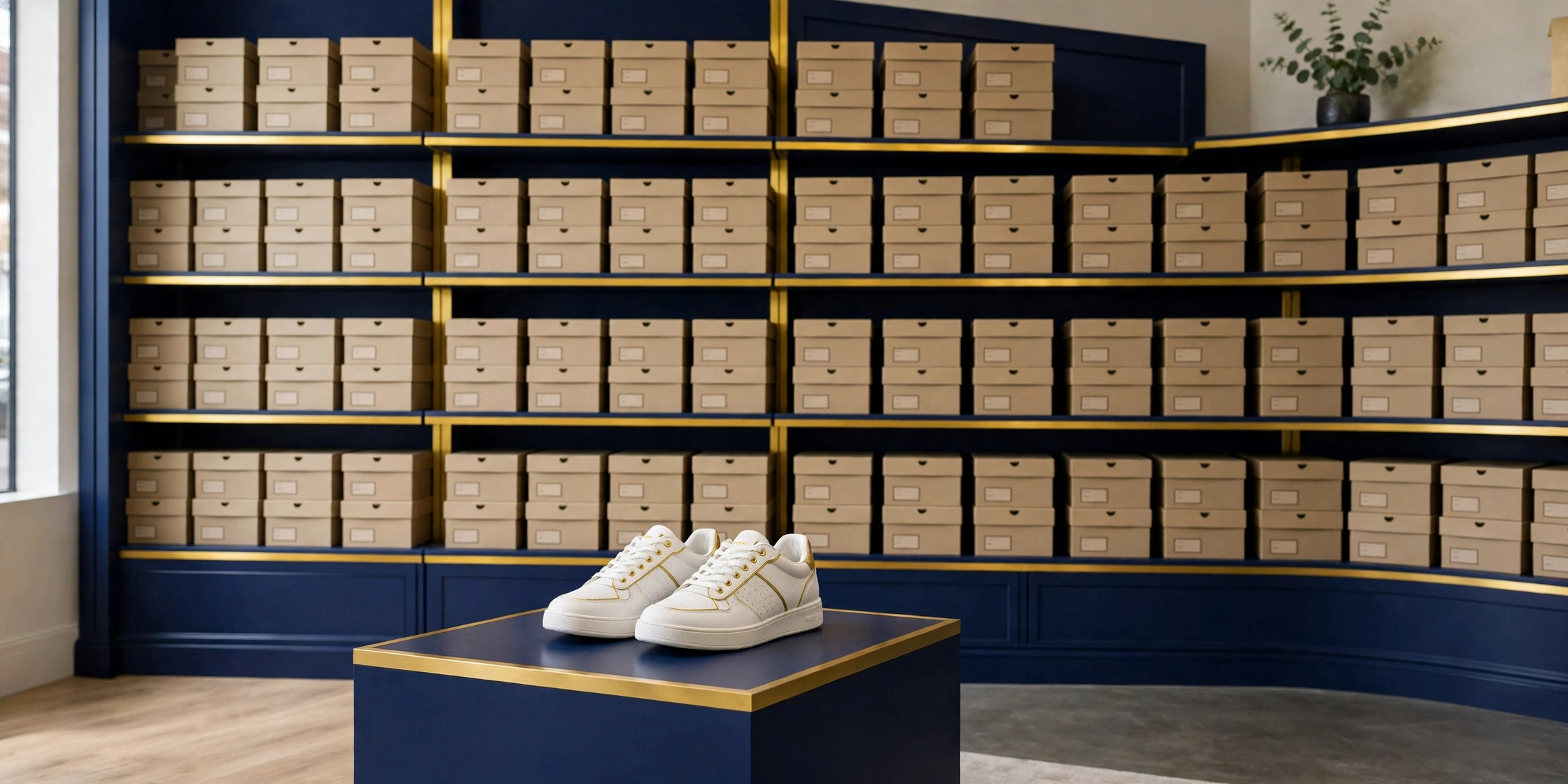
Sneaker investing is the purchase of limited edition sneakers at retail or resale prices to sell later for more than the purchase cost, after fees. A collection holds value when pairs stay deadstock, authenticated, and well stored. Start with a budget, a focus, and a record, and buy only pairs with resale demand you can verify.
Sneaker investing works through scarcity, culture, and condition. Limited runs draw buyers, platforms set visible prices, and condition decides the sale price. Benefits include gains outside stocks, clear prices, diversification, and resale income. Parts include research, buying, authentication, storage, tracking, and timed selling. This guide covers the market, first buys, buying routes, authentication, storage, risks, tracking, and investing versus wearing.
- Buy deadstock pairs with verified demand, and keep box, tags, receipt, and extra laces.
- Price each pair after fees, shipping, and tax, and set a walk-away price first.
- Authenticate before payment, and use platform verification on resale buys.
- Store hold pairs cool, dark, and dry, and separate wear pairs.
- Cap one-model exposure, log each pair, and sell on fixed signals.
What Is Sneaker Investing?
Sneaker investing is the purchase of limited edition sneakers with resale demand, held in deadstock condition, and sold later through a resale platform or a verified buyer. Sneaker investing differs from sneaker collecting because the buy decision turns on resale price, fees, and timing, not on wear alone.
Sneaker investing treats each pair as a priced asset with a buy price, hold cost, and target sale price. A deadstock pair has never been worn, tried on, or re-laced, and deadstock status supports the highest resale price for most models. Prices come from bids, asks, and completed sales. The history of sneaker collecting shows the hobby grew from 1980s basketball and hip hop in New York City. A practical observation: a boxed pair with tissue paper holds its shape better than a pair left loose on a shelf.
Is Sneaker Investing Profitable?
Yes, sneaker investing can be profitable on selected pairs, and no, most pairs do not gain value, so profit depends on model choice, buy price, condition, fees, and sell timing. A buyer who buys at retail, keeps pairs deadstock, and sells into real demand keeps the best chance of a gain.
The global sneakers market was valued at USD 104.5 billion in 2025 (Source: Grand View Research, 2025). The secondhand sneakers market was valued at USD 7.5 billion in 2025, forecast to reach USD 13.22 billion by 2034 at 6.5% compound annual growth (Source: Dataintelo, 2025). Nike and Air Jordan made up 59% of recorded footwear resale in September 2026, from 686,697 sales (Source: SneakerPulse, 2026), and the same source recorded 25,551,373 resale sales on GOAT and StockX since October 2024, worth $4.18 billion (Source: SneakerPulse, 2026). Profit is sale price minus purchase cost, fees, shipping, and tax: a USD 200 pair sold for USD 300 does not yield USD 100 after 12% fees and shipping. Record the break-even price before listing.
How Does the Sneaker Resale Market Work?
The sneaker resale market works through bids, asks, and completed sales on resale platforms, with platform verification between seller and buyer on most authenticated sales. A bid is a buyer offer for one size, an ask is a seller price for one size, and a sale happens when a bid meets an ask.
Retail drops create the first price. Brands release limited sneakers through apps, raffles, and stores, and demand above supply pushes resale prices above retail within hours for strong releases. Read at least 90 days of completed sales by model, colorway, and size before setting a price. The table sets out fees reported in June 2026, so re-check the live fee page before listing.
| Platform | Sale type | Seller fee reported, June 2026 | Authentication | Best use |
|---|---|---|---|---|
| StockX | Bid/ask, new only | 9% to 7% + 3% | Yes | Price history |
| GOAT | Fixed/bid, new + used | 9.5% to 15% + fee | Yes | New and used |
| eBay | Auction/fixed | 13.6% under USD 150, 8% over | Eligible pairs | Pricing control |
| Flight Club | Consignment | 9.5% + USD 5 | Yes | Hands-off |
| Stadium Goods | Consignment | 20% + 1% | Yes | Curated selling |
Fees were reported by Complex in June 2026 (Source: Complex, 2026). Treat the table as a snapshot and confirm the live rate before listing. Browse the Lifestyle section for more guides on collections, buying habits, and home storage that pair with a sneaker plan.

Which Sneakers Should Beginners Buy First?
Beginners should buy first pairs from proven lines with long price histories, in common sizes, at or near retail, and in colorways with steady completed sales. Beginners should avoid obscure models, very large buys of one release, and pairs with no 90-day sale history.
Proven lines give price data, demand, and authentication references. The Air Jordan line is a Nike basketball and sportswear line, first produced for Michael Jordan in 1984 and released to the public on 1 April 1985. Air Jordan 1, Nike Dunk, Nike Air Force 1, adidas Samba, and New Balance retro runners carry long sale histories. A colorway is the color combination on a pair. A general release (GR) is a standard colorway made in large numbers, and GR pairs rarely gain value, so buy GR pairs to wear. Use three slots: one retro high-top, one low-top runner, one collaboration. Buy one pair per slot, in a common size, with no pair taking more than half the first budget.
How to start sneaker investing with a small budget
To start sneaker investing with a small budget, set a monthly cap, buy one pair at a time, and spend the first month on research and price tracking before the first paid buy. Track five models for 30 days and buy only at or below the target buy price.
How Do You Buy at Retail and on Resale Platforms?
To buy at retail, enter official raffles and app drops, use one account per person, and pay at the retail price on a win. To buy on resale, use an authenticated platform, read completed sales, and set a maximum price that leaves room for fees on exit.
Check apps and raffle pages weekly, and enter only releases on the buy list. Use one account per person. On a win, pay at once, keep the confirmation, and photograph the pair on arrival. On resale, read the median sale price for the exact model, colorway, and size, check the lowest ask, and bid below it when time allows. Ask for box, tag, stitching, and sole photos before payment, and prefer platform verification.
- Add the release to a calendar with the retail price and entry window.
- Enter the raffle or drop, and record the entry in the tracking log.
- On a win, pay at once and save the order confirmation and receipt.
- Photograph the box, tags, and pair on arrival, before any wear.
- Log the buy price, fees, date, and break-even sale price at once.
How Do You Authenticate Sneakers Before You Pay?
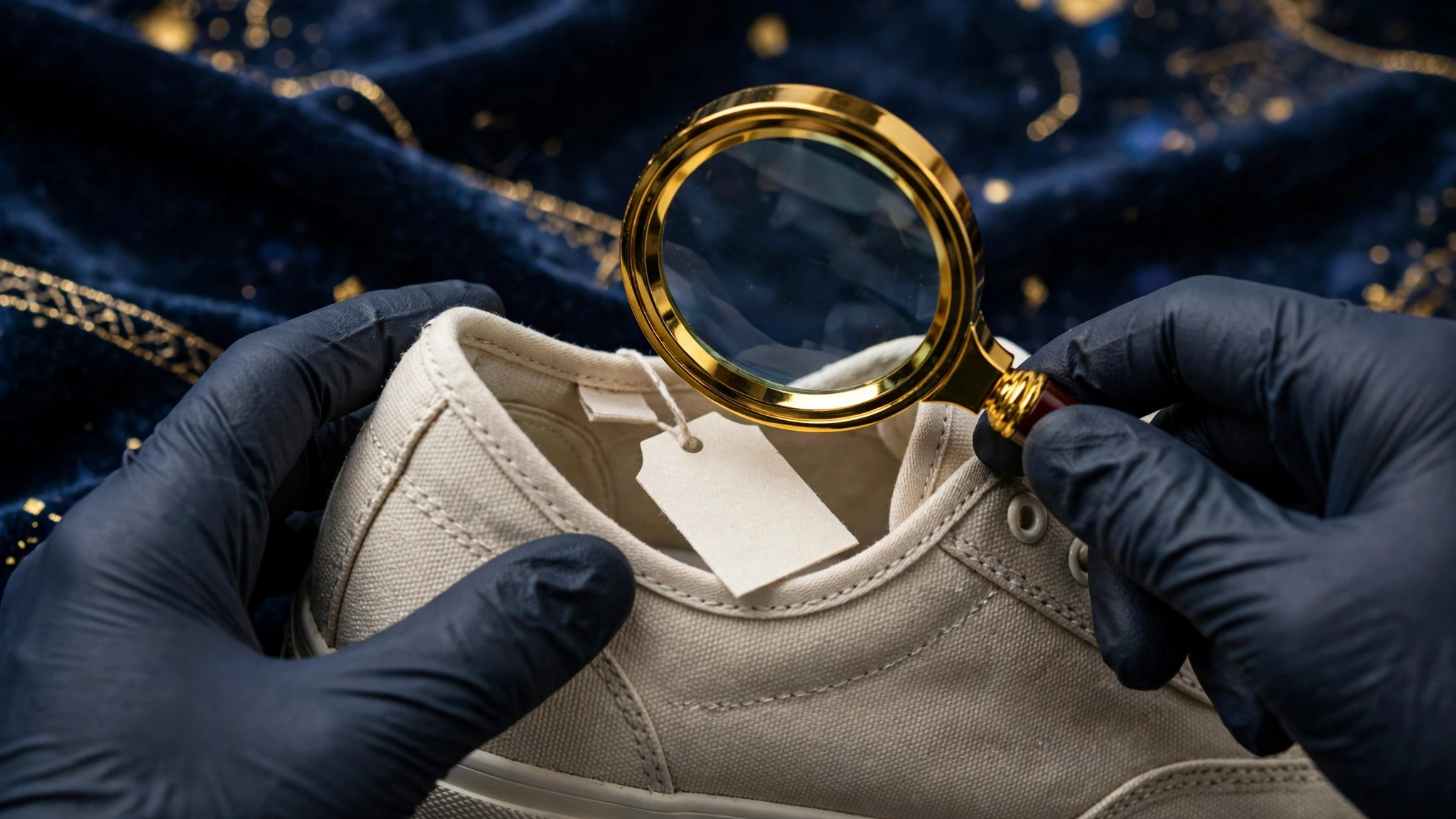
Authenticate sneakers before you pay by checking the box label, size tag, stitching, materials, sole, and seller history together, and by using platform verification on resale buys. No single check proves a pair is genuine, and strong fakes pass one or two checks with ease.
Read the model, colorway code, size, and barcode on the box label, and match each line to release data. Inside the shoe, check size, style code, and factory code for font weight, spacing, and alignment against verified photos. Genuine pairs show even stitching and matching thread; fakes show uneven length and loose threads. Check materials and sole against release photos. Check seller history, return terms, and payment protection, and walk away when a seller refuses clear photos. Platform verification inspects the pair before delivery, and a failed check returns the pair. Keep the receipt with the pair.
For authentication checks that pair with sneaker checks, read our guide to How to Spot a Fake Designer Hoodie.
How Do You Store Sneakers to Protect Resale Value?
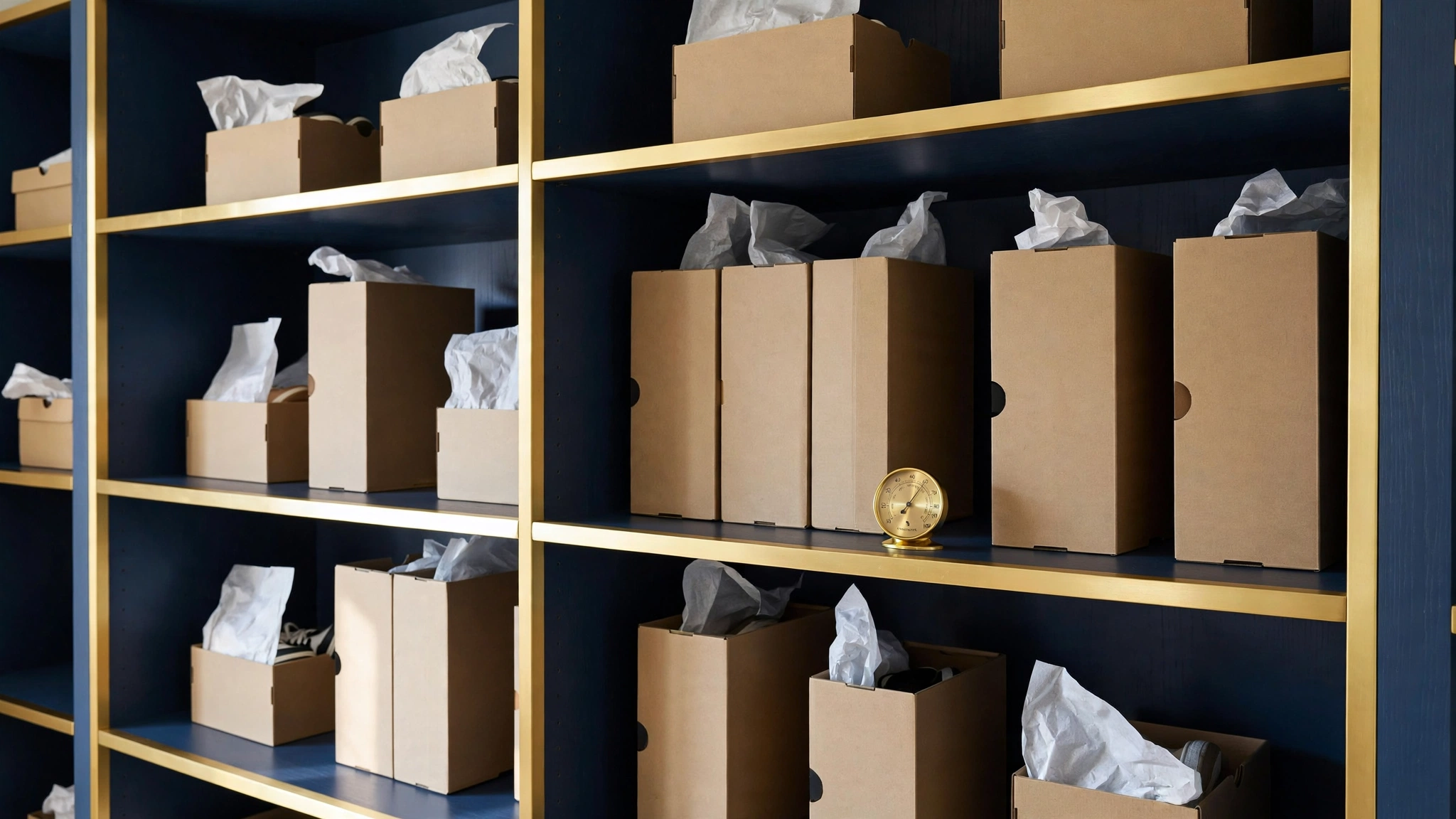
Store sneakers to protect resale value by keeping hold pairs deadstock, in their original boxes, in a cool, dark, dry room, with tissue paper holding the shape and laces kept loose. Store wear pairs apart from hold pairs, so daily wear never touches the investment stock.
On arrival, handle hold pairs with clean hands, return tissue paper to each shoe, keep laces loose, and keep extra laces, hangtags, and the readable box label in place. Stack boxes upright, heavier boxes at the bottom, labels facing out. Sunlight yellows soles, heat weakens glue, and damp air feeds mould, so a closet in a lived-in room beats an attic or garage. Inspect hold pairs every three months for yellowing, glue lift, creasing, odour, and box damage, and move a damaged pair to the front of the sell list. Rotate wear pairs.
How to store sneakers to protect resale value in small spaces
To store sneakers in small spaces, use stackable clear boxes for wear pairs, keep hold pairs in original boxes on one shelf, and label each box with model, colorway, size, and buy date. Keep the shelf dark and dry with air gaps, and never store pairs in sealed plastic bags for months.
What Are the Risks of Sneaker Investing?
Sneaker investing carries price risk, counterfeit risk, storage risk, liquidity risk, and tax risk, and a buyer must price each risk before the first buy. Sneaker investing offers no dividend, no regulator protection, and no promise that a pair sells at a target price.
Trends shift fast, restocks cut premiums, and a model above retail in one season can sit below retail in the next. U.S. Customs and Border Protection seized nearly 79 million counterfeit items worth over USD 7.3 billion in fiscal year 2025 (Source: U.S. Customs and Border Protection, 2025). Niche sizes can sit unsold for months, and tied-up money cannot fund the next drop. Resale profits can count as taxable income, so keep buy, sale, fee, and shipping records, and seek tax advice for local rules. Set a maximum loss per pair, and never fund a buy with rent or bill money.
How Do You Track a Collection and Decide When to Sell?
Track a collection with one log row per pair, and sell when a fixed signal fires: target price reached, restock announced, trend fading, storage damage found, or funds needed for a stronger release. A log turns a shelf of pairs into a priced portfolio with clear buy, hold, and sell rules.
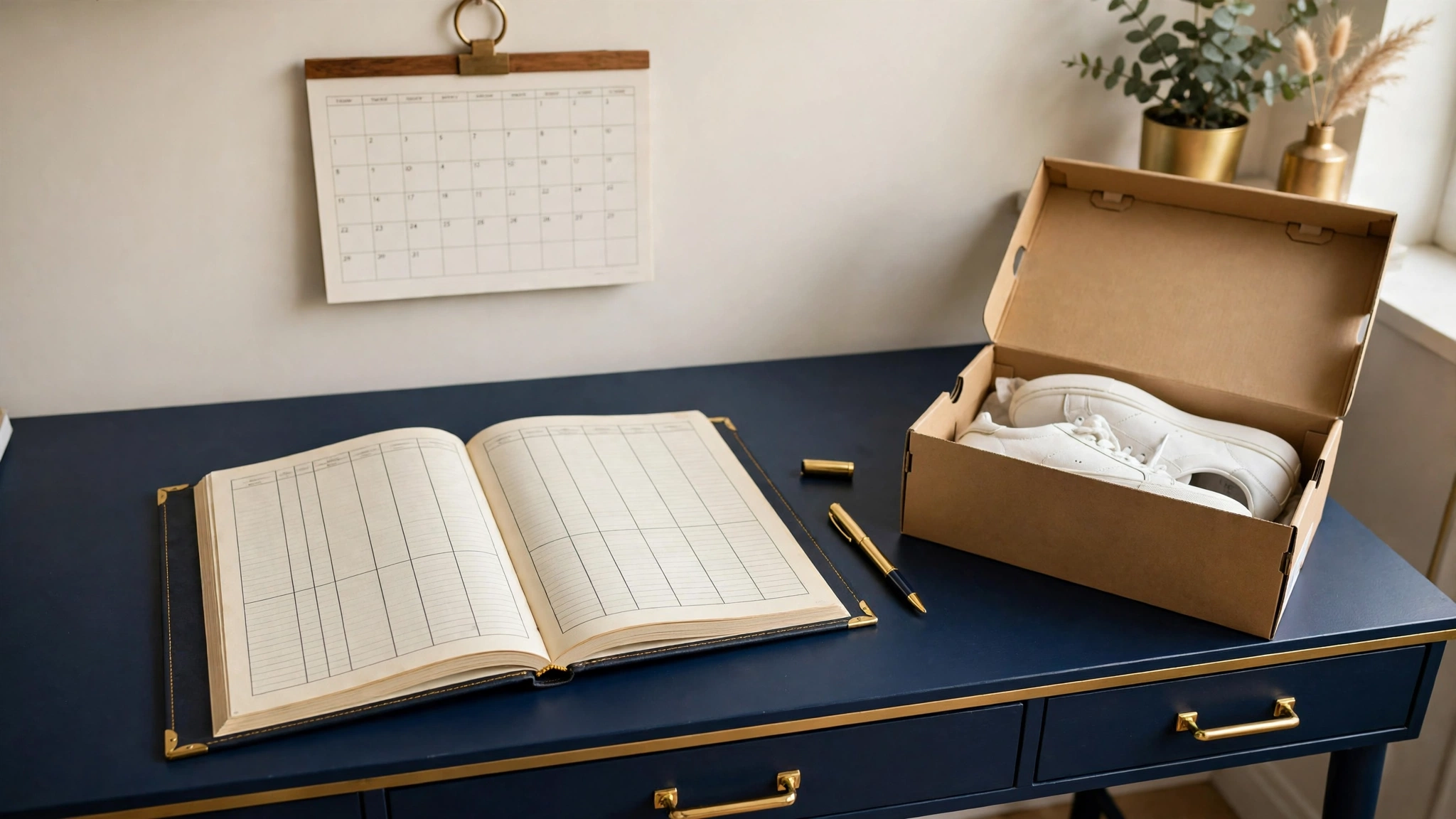
A log needs 10 fields: model, colorway, size, buy date, buy price, fees and shipping, break-even price, target price, condition notes, and sell date with final price. Update the log on buy day, each inspection, and sale day. Check prices weekly and flag a pair when the median falls for three straight weeks. Sell signals stay fixed before the buy: target price, restock announcement, falling median, storage damage, or funds needed for a stronger release. Review each pair at 24 months, and cap one model at one third of collection value. Voice of Wave covers lifestyle buying guides with the same record-first approach.
| Log field | What to record | Why the field matters |
|---|---|---|
| Model and colorway | Exact model name and color code | Price history keys off the exact pair |
| Size | Local scale and box scale | Size decides buyer pool and sale speed |
| Buy price and fees | Price, fees, shipping, tax | Break-even price comes from this row |
| Condition notes | Deadstock status, box state, dates | Condition decides the final sale grade |
| Sell price and date | Final price, fees, payout date | Real returns come from closed sales only |
Sneaker Investing vs Collecting for Wear: Which Path Fits You?
Sneaker investing fits a buyer who wants priced returns and accepts record keeping, waiting, and resale work, while collecting for wear fits a buyer who wants daily use and comfort. Many buyers run both paths, with wear pairs and hold pairs on separate shelves and in separate records.
The table sets the paths side by side, so a buyer can pick one path per pair.
| Factor | Sneaker investing (hold pairs) | Collecting for wear (wear pairs) |
|---|---|---|
| Buy goal | Resale gain after fees | Daily use and comfort |
| Condition rule | Deadstock, boxed, documented | Wear at once, comfort first |
| Budget rule | Capped per pair, capped per model | Capped per month, fit first |
| Time cost | Price tracking, inspections, listings | Cleaning and rotation only |
| Main risk | Price fall, fakes, slow sale | Wear damage, fit issues |
| Exit rule | Fixed sell signals in the log | Keep, gift, or donate when worn out |
A buyer who mixes the paths on one pair loses both ways. Decide before payment and keep shelves apart.
Conclusion
Sneaker investing rewards a buyer who buys proven pairs at the right price, keeps pairs deadstock and documented, and sells on fixed signals after fees. A collection holds value when each pair has a buy price, a break-even price, a target price, and a sell rule written down before the buy.
Start with three pairs, one proven slot at a time, and learn the full cycle before scaling the budget. Read completed sales, authenticate before payment, store hold pairs apart, and log every buy, inspection, and sale. Sneaker investing stays a side pursuit with capped money and clear rules.
Read more lifestyle buying, collecting, and care guides on the Voice of Wave blog.
Frequently Asked Questions
Is sneaker investing a good investment for beginners?
Yes, sneaker investing can work for beginners who start small, buy proven models, and track every cost. Beginners should buy one pair at a time, stay near retail prices, and learn authentication and storage before scaling. Beginners should avoid large buys, obscure models, and pairs with no sale history.
How much money do you need to start sneaker investing?
You need a small starter budget that covers one pair, fees, and storage, and the exact sum depends on the target model and local prices. A starter budget of one pair keeps risk low while a beginner learns the full buy, store, and sell cycle. Set a monthly cap, and never fund a buy with money needed for bills.
Do all limited edition sneakers increase in value?
No, most limited edition sneakers do not increase in value, and only selected models with real demand, scarcity, and clean condition gain value. Restocks, fading trends, and weak colorways cut resale prices fast. Check 90 days of completed sales for the exact model, colorway, and size before you buy.
How can you tell if sneakers are fake before buying?
Check the box label, size tag, stitching, materials, sole, and seller history together, and compare each check against verified photos of the exact release. Use platform verification on resale buys, ask for clear photos before payment, and walk away when a seller refuses photos or proof of purchase. No single check proves a pair is genuine.
Should you wear sneakers you plan to resell?
No, you should not wear sneakers you plan to resell at a premium, since wear cuts condition grade and sale price at once. Keep hold pairs deadstock in the original box with tags and receipt, and buy a separate pair to wear for daily use. Decide the path before payment, and record the path in the log.
When is the best time to sell sneakers?
The best time to sell sneakers is when a fixed signal fires: the target price is reached, demand peaks before a restock, or three weekly price checks show a falling median. Sell before a restock announcement for the same colorway, since restocks cut resale premiums. Set the signal before the buy, and act on the signal without delay.
Do you pay tax on sneaker resale profits?
Resale profits can count as taxable income, and the rules depend on location, sale frequency, and total profit. Keep buy prices, sale prices, fee receipts, and shipping receipts for every pair, and seek tax advice for the rules that apply in your location. Record keeping protects a seller at tax time and proves real returns.