
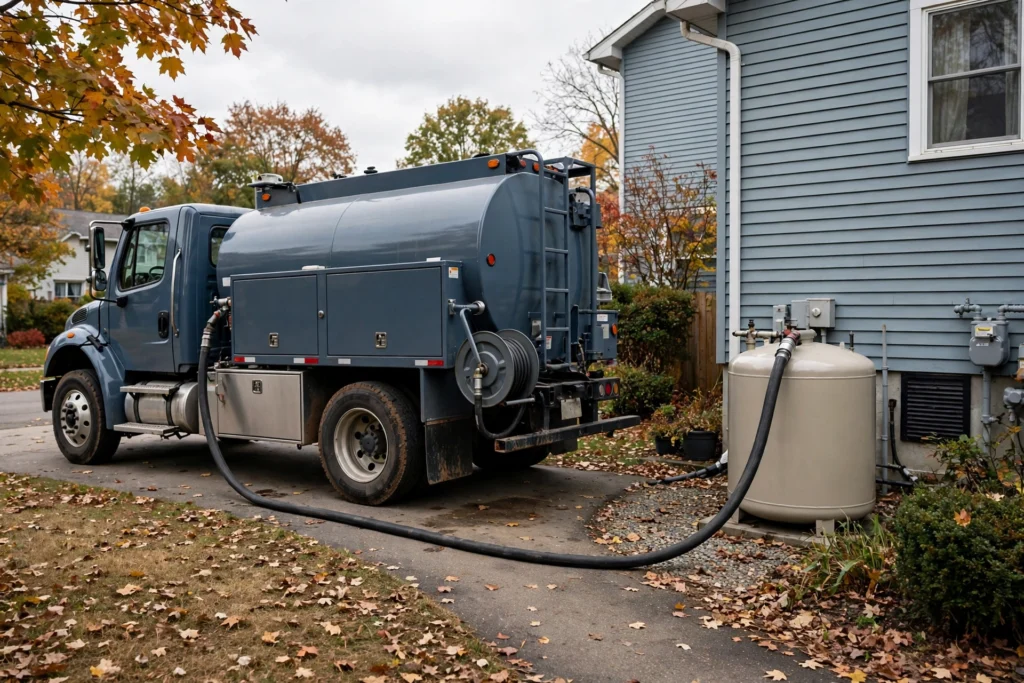
Heating oil delivery keeps homes warm through winter, and understanding how ordering, pricing, and delivery work helps homeowners avoid running out, overpaying, or facing a cold house on a busy day. Whether a home uses automatic delivery or will-call ordering, the process follows a clear pattern: check the tank gauge, place an order, prepare a clear path, and review the delivery ticket. This guide explains how heating oil delivery works, the difference between automatic and will-call plans, what affects price, and how to prepare for a smooth visit.
Key Takeaways
- Heating oil delivery brings fuel by truck to a home storage tank, usually in 100 to 300 gallon loads.
- Automatic delivery schedules fills based on usage and weather, while will-call requires the homeowner to order.
- Check the gauge at 1/4 tank and order before it drops below that level.
- Price varies with market rates, volume, delivery area, and plan type.
- Clear access, a readable gauge, and a working fill pipe make delivery faster and safer.
Table of Contents
- How Heating Oil Delivery Works
- Automatic vs. Will-Call Delivery
- How to Order Heating Oil
- Heating Oil Delivery Cost
- How to Read a Delivery Ticket
- Preparing for a Delivery Visit
- Safety and Maintenance Tips
- Frequently Asked Questions
How Heating Oil Delivery Works
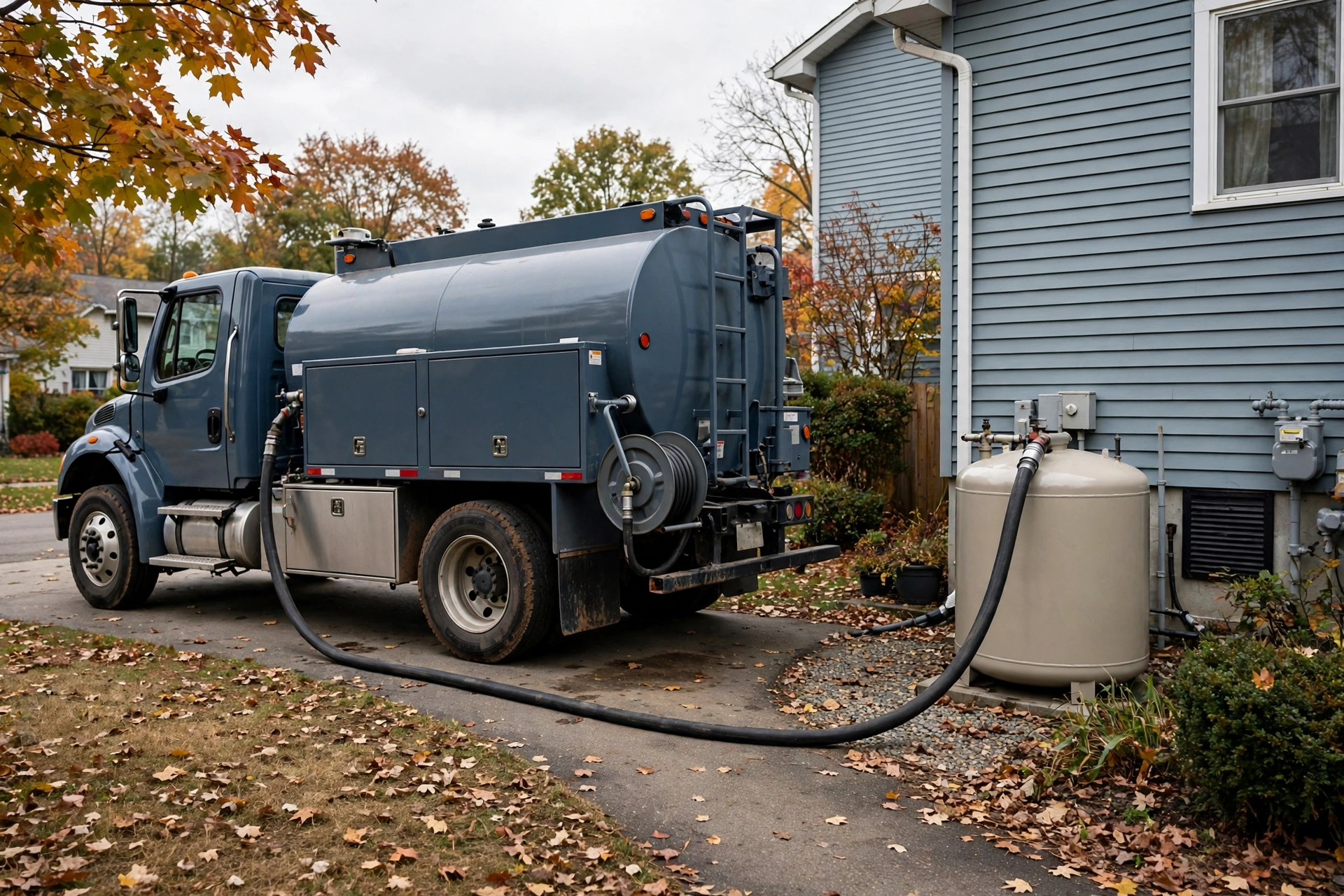
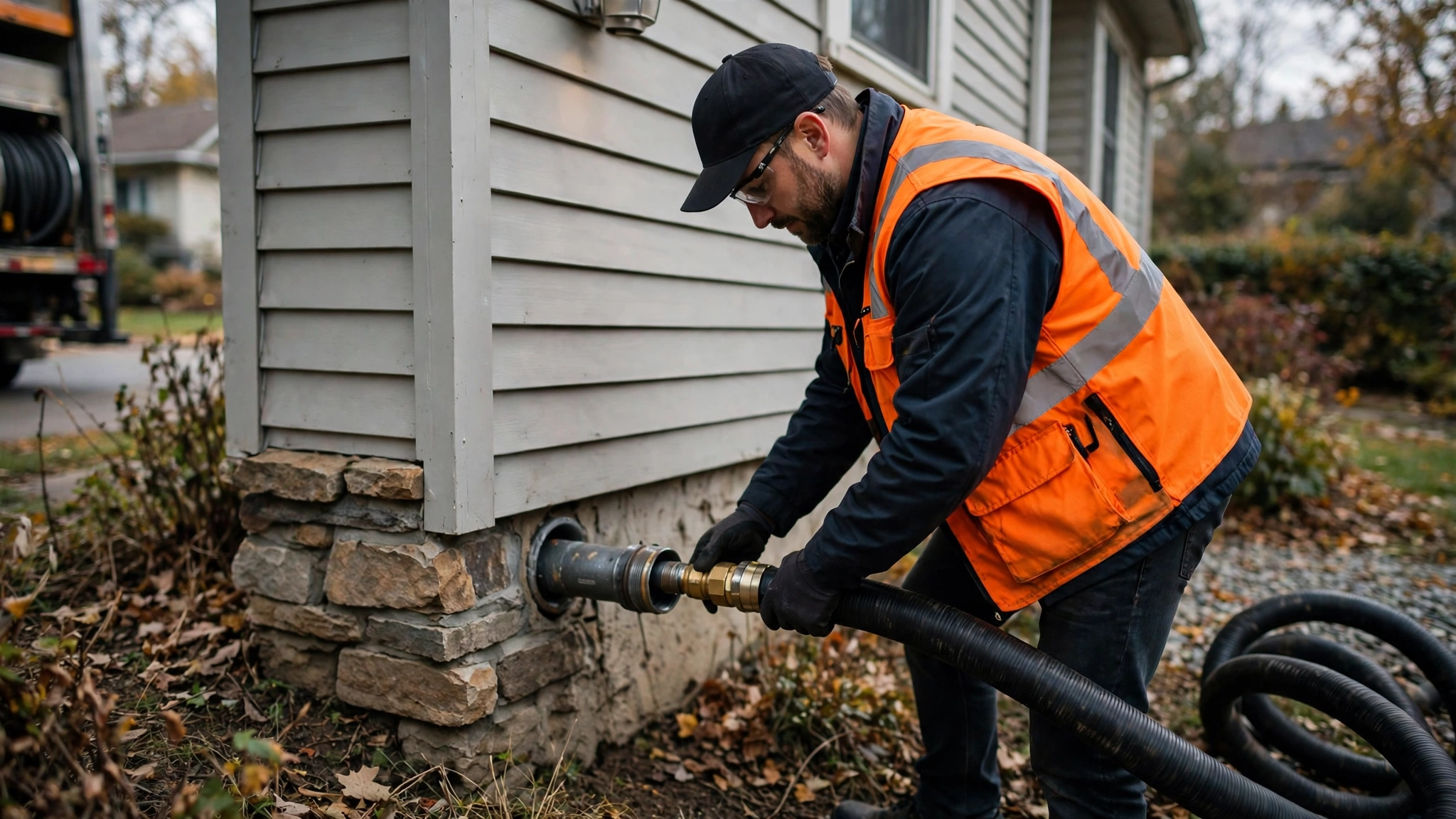
Heating oil delivery works when a supplier sends a tank truck to a home, connects a hose to the outdoor fill pipe, and pumps oil into the storage tank until the ordered amount is delivered or the tank is full. Most home tanks hold 275 gallons, and most deliveries range from 100 to 275 gallons, depending on the gauge reading and the order size. The driver checks the tank gauge, confirms the fill pipe and vent, and monitors the delivery to avoid overfilling. After delivery, the driver leaves a ticket showing gallons delivered, price per gallon, and total charge.
Delivery usually takes 15 to 30 minutes, depending on tank size, hose length, and access. In cold weather, suppliers prioritize customers who are low or out of oil, and they may run extended hours during cold snaps. Homeowners should keep the supplier’s phone number handy and know their account number, tank size, and fill pipe location before calling.
Automatic vs. Will-Call Delivery
Automatic delivery schedules oil fills based on past usage, tank size, and degree days, while will-call delivery requires the homeowner to monitor the gauge and place each order. Automatic delivery is convenient, because the supplier tracks usage and delivers before the tank runs low, which reduces the risk of a run-out. Will-call delivery gives more control over timing and supplier choice, but it requires regular gauge checks and ordering at the right time, especially in winter.
Automatic plans often include a price cap, a budget plan, or a service contract, while will-call customers usually pay the market price on the day of delivery. Automatic delivery may require a minimum annual usage or a service agreement, and some suppliers charge a fee for will-call or emergency deliveries. Homeowners who travel, who have irregular usage, or who want to avoid gauge checks often prefer automatic delivery, while homeowners who compare prices each time often prefer will-call.
How to Order Heating Oil
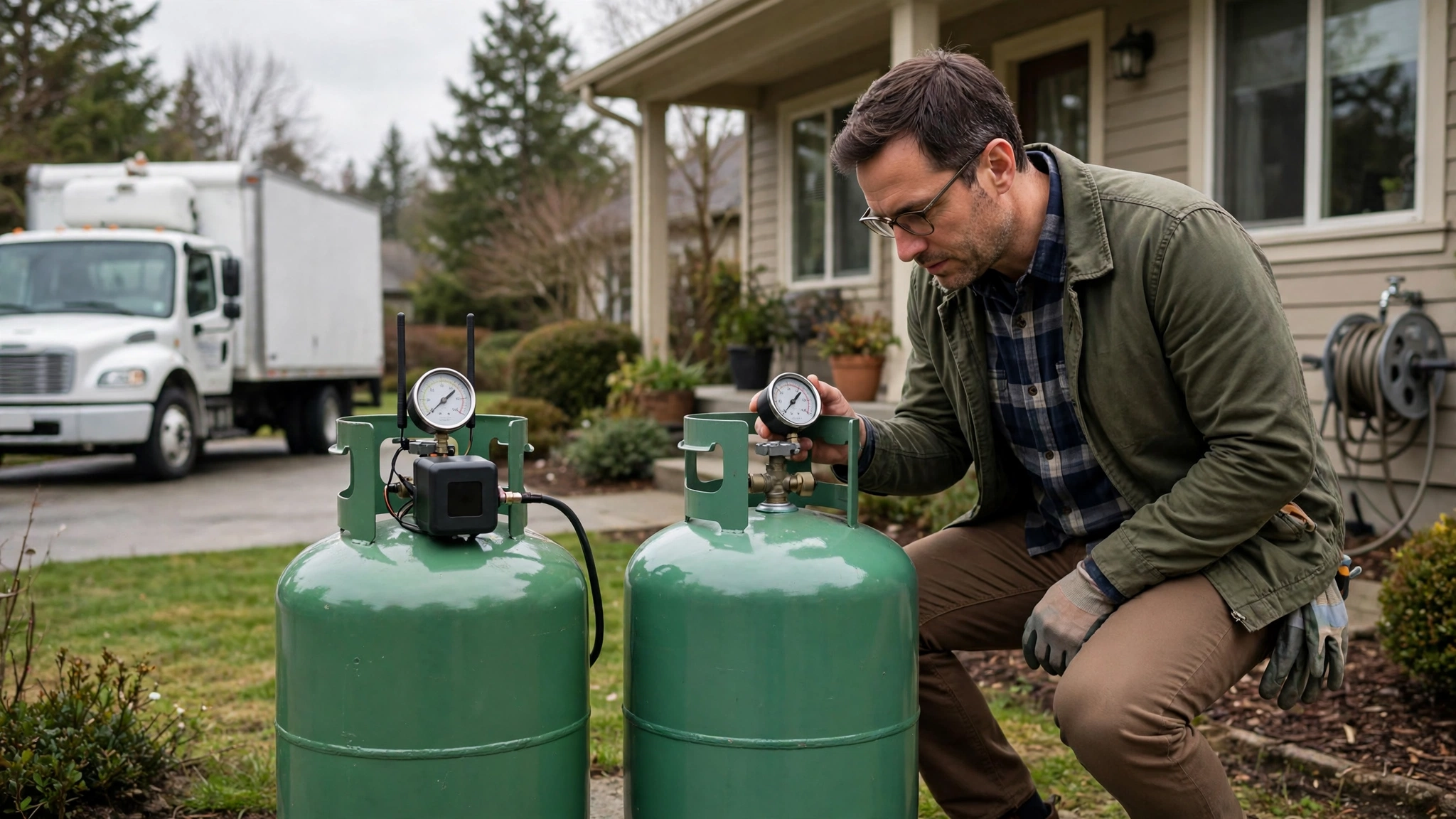
To order heating oil, check the tank gauge, note the current level, call or order online from a supplier, and confirm the delivery date, price, and minimum order amount. Most suppliers require a minimum order of 100 to 150 gallons, and some offer discounts for larger fills or for ordering during off-peak months. When ordering, give the delivery address, tank location, fill pipe access notes, and any gate codes or parking instructions.
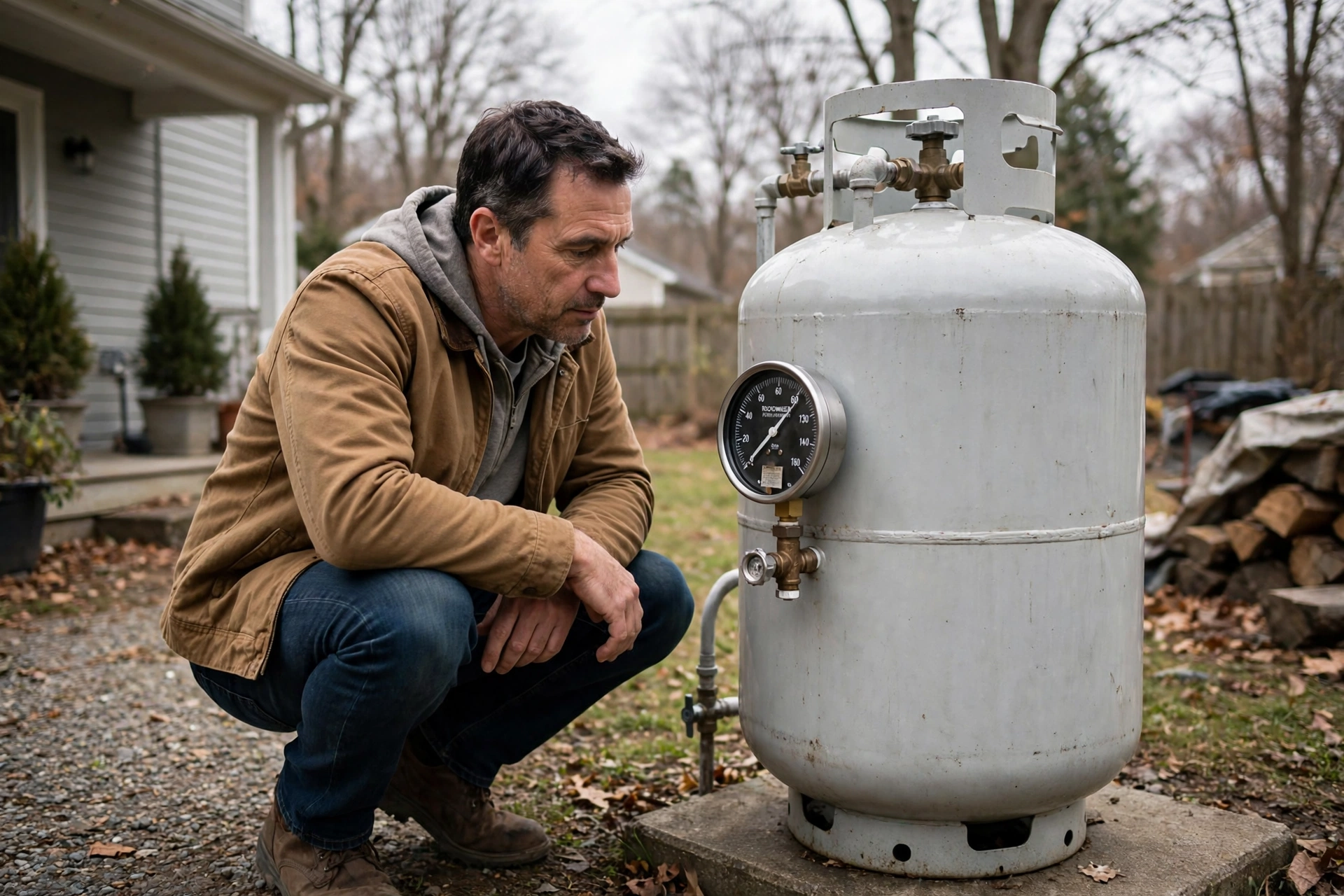
Order when the gauge reads 1/4 tank, not when it nears empty, because suppliers need lead time and winter demand can delay deliveries. A 275-gallon tank at 1/4 holds about 69 gallons, which may last 1 to 2 weeks in cold weather depending on home size and heating use. Ordering early also avoids emergency fees and the risk of a run-out, which can require priming the burner and a service visit.
Heating Oil Delivery Cost
Heating oil delivery cost depends on the market price per gallon, the number of gallons delivered, delivery fees, and any plan discounts or surcharges. Market prices change with crude oil prices, refining costs, and seasonal demand, and they are usually highest in mid-winter. A typical home delivery of 150 gallons at $3.50 per gallon costs $525 before taxes and fees, but prices vary by region and supplier. Some suppliers offer price caps, pre-buy plans, or budget billing to smooth costs over the year.
To compare suppliers, ask for the price per gallon on the delivery day, any delivery or service fees, the minimum order, and whether the price is locked or floating. Also ask about payment options, such as payment on delivery, monthly budget plans, or fuel assistance programs. Keeping records of past deliveries helps homeowners spot price trends and plan orders for lower-price months when possible.
How to Read a Delivery Ticket
A delivery ticket shows the delivery date, gallons delivered, price per gallon, total charge, tank gauge readings before and after, and the driver and vehicle details. Check that the gallons match the gauge change, that the price matches the quoted price, and that the total is calculated correctly. Keep tickets for at least a year, because they help track usage, compare prices, and resolve billing questions.

If a ticket shows a delivery when the homeowner was away, check the gauge and compare it with the previous ticket. If the numbers do not match, call the supplier promptly with the ticket number and gauge photos. Most suppliers will review the meter, the route log, and the gauge readings to resolve a discrepancy.
Preparing for a Delivery Visit
Prepare for a delivery visit by clearing a path to the fill pipe, unlocking gates, moving vehicles, and making sure the fill pipe and vent are visible and accessible. The driver needs room for the truck, a clear hose path, and safe footing, especially in snow or ice. Mark the fill pipe if it is hidden by plants or snow, and keep pets indoors during delivery.
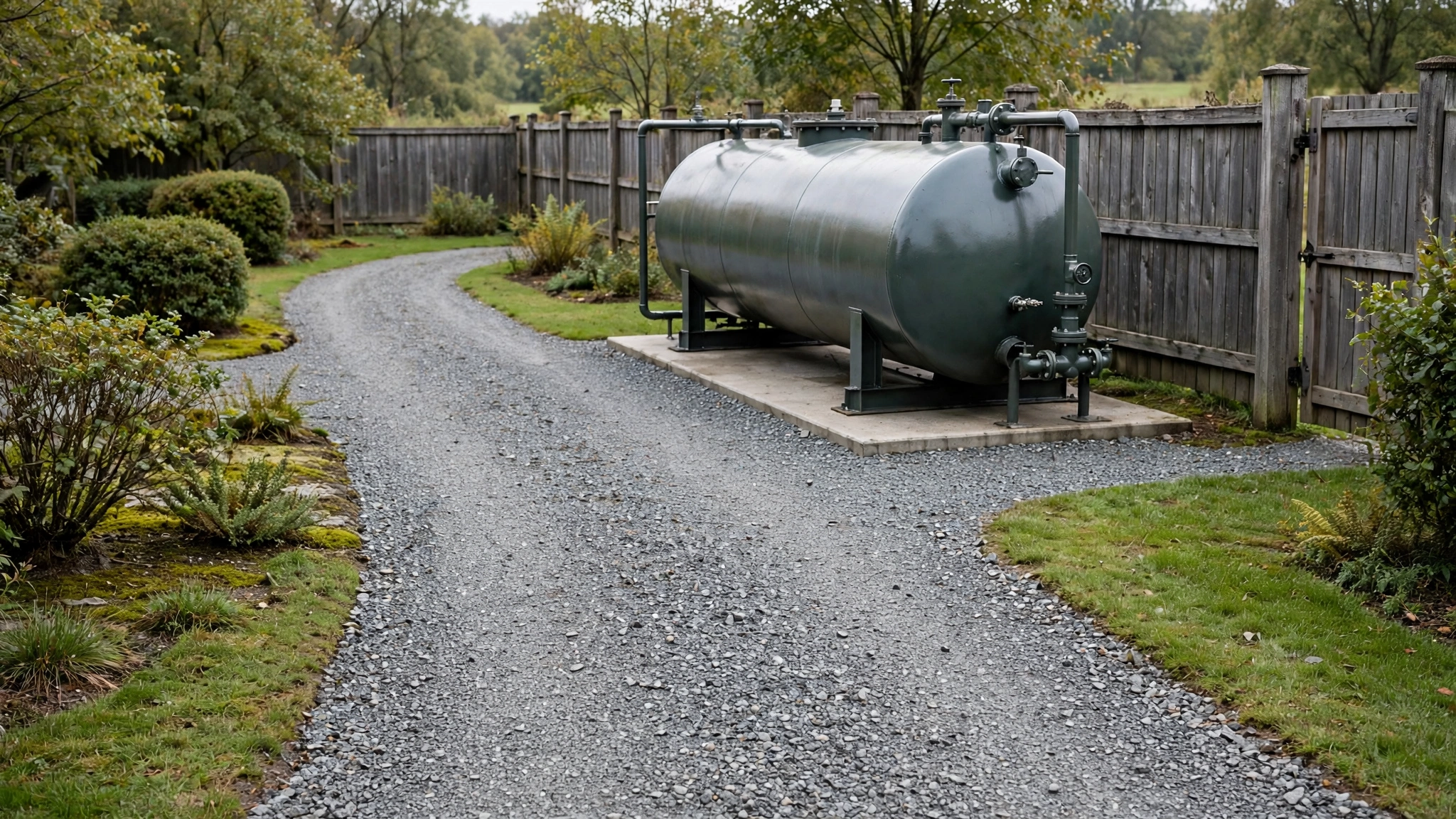
Also check that the tank gauge works, that the vent is not blocked, and that the tank area is free of clutter. If the tank is indoors, make sure the fill pipe outside is marked and the basement path is clear. A well-prepared visit takes less time, reduces spill risk, and helps the driver deliver the full order safely.
Safety and Maintenance Tips
Heating oil safety tips include keeping the tank inspected, watching for leaks, stains, or odors, and scheduling annual burner service. A tank should be inspected for rust, dents, and weeping seams, and older tanks, especially those over 20 years old, should be checked more often. If an oil smell is strong, if there is a visible leak, or if the burner shuts off repeatedly, call a technician promptly and ventilate the area.
Annual burner service improves efficiency, reduces soot, and catches problems before winter. Homeowners should also test carbon monoxide detectors, keep the area around the tank clear, and never store flammable materials near the burner or tank. For more home guides, visit the Voice of Wave blog.
Conclusion
Heating oil delivery is simple when homeowners understand the basics: check the gauge at 1/4 tank, choose automatic or will-call based on lifestyle and price, order early in winter, prepare a clear path, and review each delivery ticket. Price, plan type, and supplier service all affect the total cost, but the biggest savings come from avoiding run-outs, emergency fees, and inefficient burner use. With a clear plan and regular maintenance, heating oil delivery stays reliable, safe, and predictable all winter.
Frequently Asked Questions
How much heating oil should I order?
Order when the gauge reads 1/4 tank, and most suppliers require a minimum of 100 to 150 gallons. For a 275-gallon tank, a typical order is 150 to 200 gallons, depending on usage and season.
What is the difference between automatic and will-call delivery?
Automatic delivery schedules fills based on usage and weather, so the homeowner does not need to monitor the gauge. Will-call delivery requires the homeowner to check the gauge and place each order, which gives more price control but more responsibility.
How long does a heating oil delivery take?
A heating oil delivery usually takes 15 to 30 minutes, depending on tank size, hose length, and access to the fill pipe. The driver checks the gauge, connects the hose, pumps the oil, and leaves a delivery ticket.
What happens if I run out of heating oil?
If a home runs out of heating oil, the burner shuts off, the home cools, and pipes can freeze in cold weather. The supplier must deliver oil and a technician may need to prime the burner and restart the system, which can add service fees.
How can I lower my heating oil costs?
Lower heating oil costs by ordering larger fills, comparing supplier prices, using a price cap or budget plan, improving insulation, servicing the burner annually, and keeping the thermostat at a steady, efficient setting.
Is heating oil delivery safe?
Heating oil delivery is safe when the tank, fill pipe, and vent are maintained, the delivery path is clear, and the driver follows standard procedures. Homeowners should watch for leaks, odors, or tank damage and schedule regular inspections.