
Introduction
You can spot fake designer hoodie offers by checking the neck tag, the wash tag, fabric weight, stitching, logo work, packaging, and seller history together, because no single check proves authenticity on its own and strong fakes pass one or two checks with ease.
A fake designer hoodie is a copy that carries a brand mark without permission from the brand owner. This guide answers how to tell if a hoodie is fake with plain inspection and clear photos. It defines the term, gives a 30-second check, explains tag, fabric, logo, and packaging checks, shows how to check a seller and a release, compares fake and authentic traits in one table, and sets out steps for a buyer who already holds a suspected fake.
Key Takeaways
- Use tag, fabric, stitching, logo, packaging, and seller checks together.
- Tag checks catch the most fakes, through font weight, spacing, and stitch breaks.
- Fabric weight and ribbing recovery separate heavy fleece from thin copies.
- Release history checks catch colorways and collaborations a brand never made.
- When 3 or more checks fail, do not pay, and start a return at once.
Table of Contents
- What Is a Fake Designer Hoodie?
- How Can You Spot a Fake Designer Hoodie in 30 Seconds?
- What Do the Neck Tag and Wash Tag Reveal?
- How Do Fabric, Weight, and Stitching Reveal a Fake?
- How Do Logos, Prints, and Embroidery Reveal a Fake?
- What Do Packaging, Codes, and QR Checks Reveal?
- How Do You Check the Seller Before You Pay?
- What Is the Difference Between a Fake and an Authentic Designer Hoodie?
- What Should You Do If You Already Bought a Suspected Fake?
- Conclusion
What Is a Fake Designer Hoodie?
A fake designer hoodie is a hoodie that carries a registered brand mark without permission from the brand owner, and the legal test turns on the mark, not on the general look. A counterfeit goods listing uses a mark that matches a registered mark, or a mark so close that a buyer reads it as the same mark.
Global trade in counterfeit goods reached about USD 467 billion in 2021, equal to 2.3 percent of global imports (Source: OECD and EUIPO, 2025), and clothing, footwear, and leather goods made up 62 percent of seized goods (Source: OECD and EUIPO, 2025). U.S. Customs and Border Protection (CBP) seized nearly 79 million counterfeit items in fiscal year 2025, worth more than USD 7.3 billion, and clothing ranked among the most seized categories (Source: CBP, 2025). A study cited by Just Style in 2022 found 36.2 percent of counterfeit products tested failed United States safety standards (Source: Just Style, 2022). These counterfeit hoodie signs cost buyers money, quality, and safety.
How Can You Spot a Fake Designer Hoodie in 30 Seconds?
You can spot a fake designer hoodie in 30 seconds with 5 fast checks: neck tag, wash tag, fabric weight, main logo, and price. The fixed order matters. A hoodie that passes all 5 checks still needs the full checks that follow.
Read the brand name letter by letter and check spacing, font weight, and wash tag sharpness. Hold the hoodie, judge the weight, press the fleece, and check that the inner face feels dense and soft. Check logo position and size, compare the price with retail, and treat a steep discount as a warning sign. A practical observation from handling hoodies in stores: a genuine heavy fleece hoodie announces its weight at once, while a thin copy feels light and the hood flops flat. Photos hide weight, so ask for tag photos before payment and weigh the hoodie on arrival.
For fashion context that pairs with a checked hoodie, browse the Fashion section for style and care guides on this site.
What Do the Neck Tag and Wash Tag Reveal?
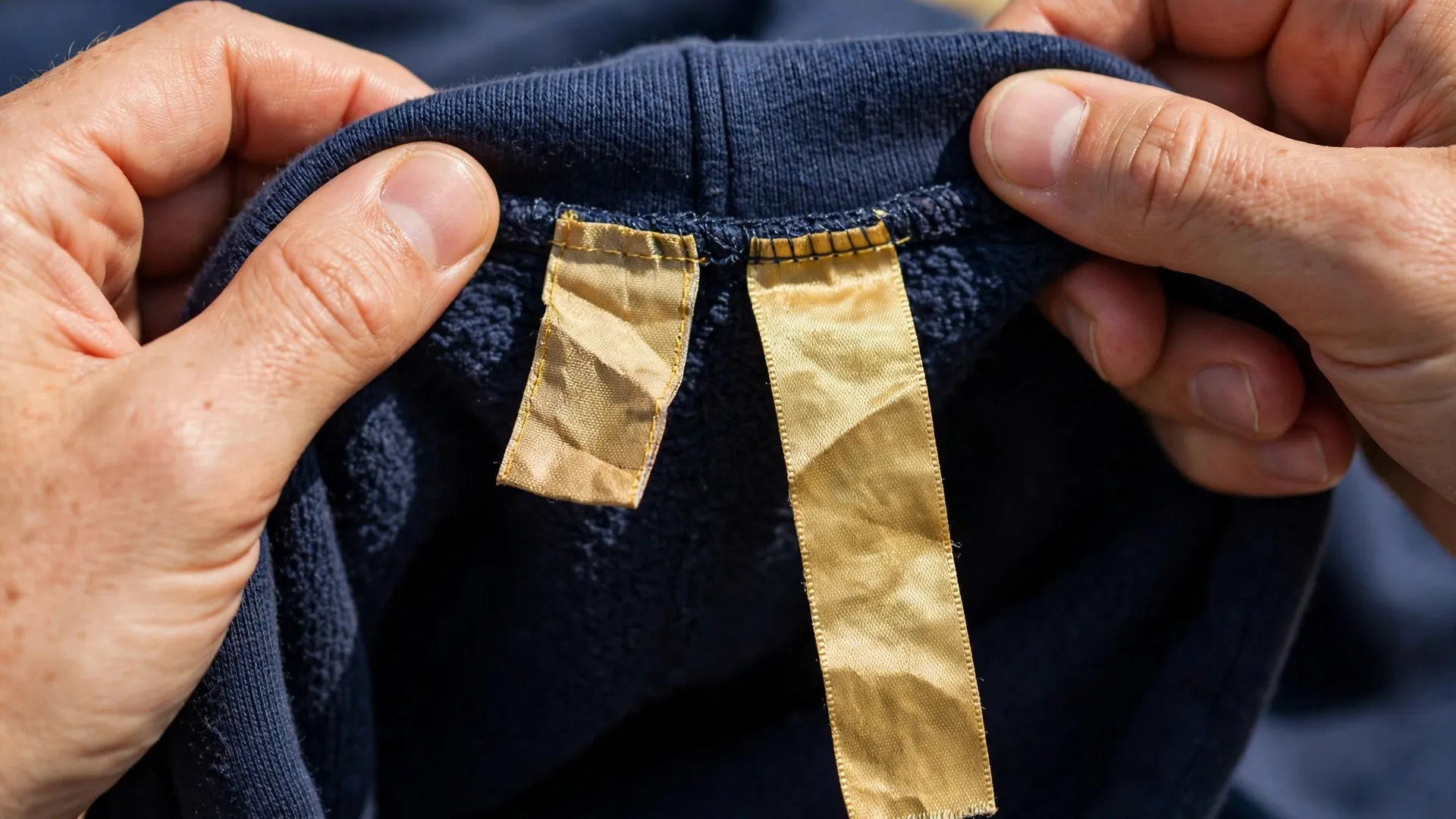
The neck tag and wash tag reveal the most about a designer hoodie, because font weight, spacing, stitch breaks, and care text stay hard to copy with full consistency. To check hoodie tags and stitching, compare each tag against release photos for the exact style and year.
Check the brand name for even spacing, even font weight, and clean edges. Check size and origin text for the same weight, because fakes often print the main name well and the small lines with a different weight. Run a finger over a raised label and check that letters feel raised or pressed. Check stitching and material: woven tags feel soft and firm, rubber tags feel soft and grippy, and papery tags point to a copy.
The wash tag is the long label near the waist seam. Check that font weight stays the same on the front and rear, that fiber content matches the fabric, and that the top stitching shows the small break genuine tags often show. Ask for photos before payment: the neck tag, the wash tag front and rear, and the stitching where each tag meets the garment.
How Do Fabric, Weight, and Stitching Reveal a Fake?
Fabric, weight, and stitching reveal a fake through 4 tests: lift, press, stitch count, and ribbing, and each test needs only hands, eyes, and good light. Treat fabric checks as arrival checks and keep tags on until they pass.
One guide reports a genuine heavy fleece pullover weighs about 1.5 to 2.5 pounds, while many fakes weigh 1.1 pounds or less (Source: Nifty, 2026). Weight alone never proves authenticity, because fleece weight changes by season. Press the fleece and check that the inner face feels dense and plush and springs back. A copy feels slick or papery, flattens with no spring, and may carry a chemical smell from cheap dyes.
Count stitches per inch on a straight seam and check that the count stays even. Genuine hoodies use tight, even stitching with matching thread and double stitching at stress joins. Fakes show uneven length, loose threads, and skipped stitches. Check armpit seams, pocket joins, and hems first. Stretch a cuff and check that ribbing snaps back at once; copy ribbing stays stretched or bags at the wrist.
How Do Logos, Prints, and Embroidery Reveal a Fake?
Logos, prints, and embroidery reveal a fake when position, size, letter shape, or stitch pattern drifts from the release photos. Open the release photos for the exact colorway and compare the hoodie side by side.
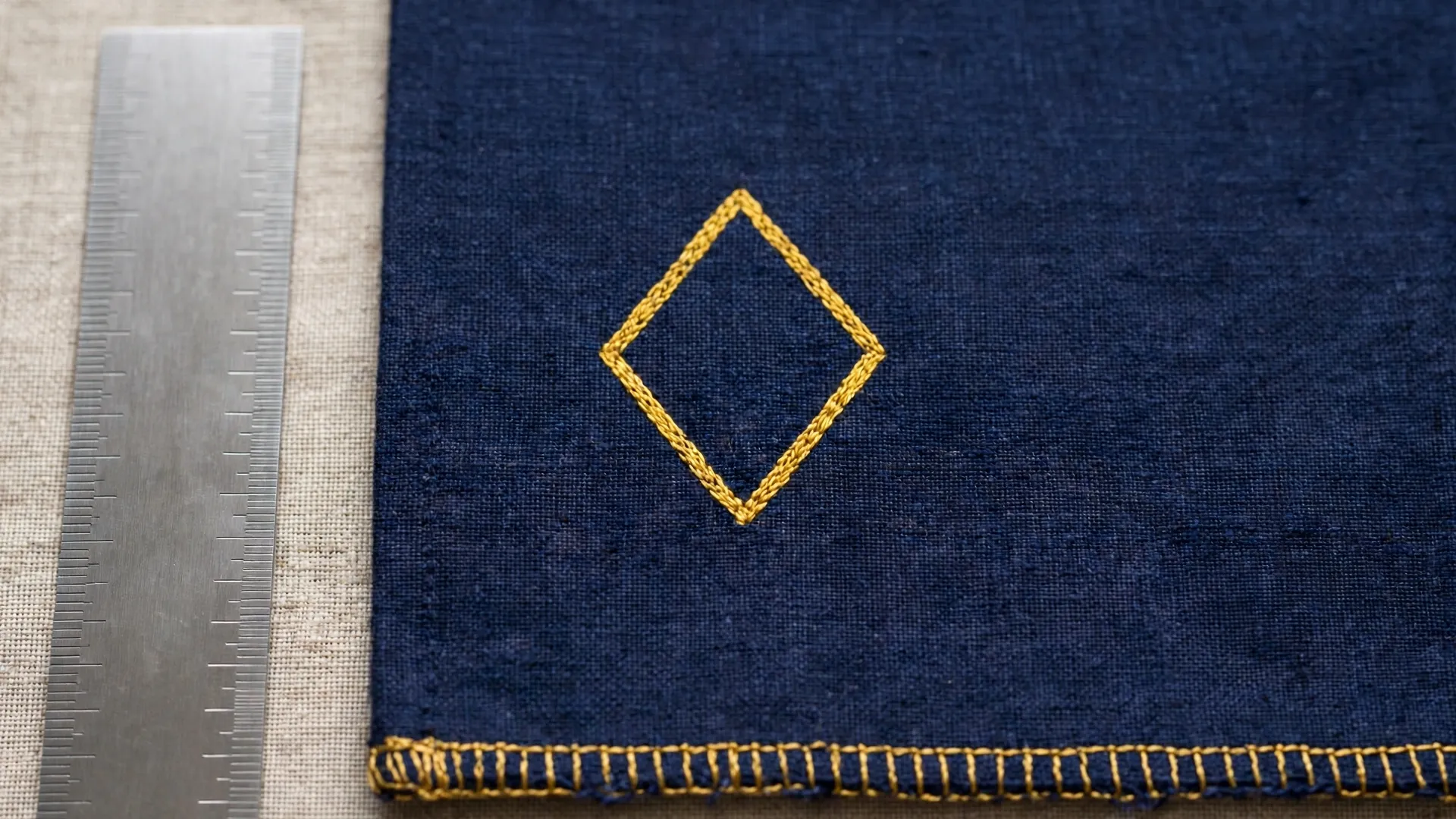
Measure logo distance from the chest center, shoulder seam, and hem, and compare each distance with the release photos. Check that the logo sits level with the same clear space on all sides. Read each letter for shape, height, and spacing, and check that font weight stays even. Look for the tail that drops under the baseline and the gap between letters that touch in a fake. Check edges under good light and feel for a raised matte finish with no cracking when the fabric stretches.
Turn the hoodie inside out: genuine embroidery shows a dense, even reverse, while a copy shows a thin outline with gaps and loose threads. Check for the cross-stitch pattern some brands use, against single-line stitching on many copies. A hooded sweatshirt design with a pullover style uses a kangaroo pocket and a drawstring, and the drawstring, pocket, and hood must match the release photos. Check that drawstrings stay flat, tips match, and the hood holds its shape.
What Do Packaging, Codes, and QR Checks Reveal?
Packaging, codes, and QR checks reveal a fake when the bag, box, hang tag, code, or QR link drifts from the release standard, but packaging alone never proves authenticity. Weigh packaging with tag, fabric, and logo checks.
Look for an opaque branded bag or box with clean printing and correct spelling, and check the hang tag with the same font and spacing rules as the neck tag. A clear unbranded bag, spelling errors, or blurry printing counts as a warning sign, and 2 or more together count as a failed check. Read batch codes and scan QR codes, and check that a QR link opens the official brand site with the correct domain. A code that opens a blank page or a lookalike domain fails, and a code that opens the right page still needs tag and fabric checks. Ask for the original receipt and keep it with the listing screenshots and delivery photos.
How Do You Check the Seller Before You Pay?
Check the seller before you pay with 7 checks: release, seller type, price, photos, return terms, payment method, and contact detail, and pay only when all 7 pass. Designer hoodie authentication starts with release history.
- Confirm the release existed in the colorway, size, and year the seller claims.
- Confirm the seller is an authorized retailer or a reseller with a clear sales history.
- Confirm the price fits the retail price or a known sale price for the release.
- Confirm the seller sends clear photos of the neck tag, wash tag, and seams.
- Confirm the return terms allow a return when authenticity checks fail.
- Confirm the payment method gives buyer protection for a dispute.
- Confirm the seller lists a real name, address, and working contact detail.
Open the brand site for the exact style and check that the colorway existed, the collaboration was real, and the graphic and material match the release photos. A hoodie in a color the brand never made is not a rare variant. Read reviews for detail, compare the price with retail, and treat a price far under retail outside a known sale as a warning sign. Ask for the 4 tag photos, a seam close-up, and full photos in natural light. Read return terms in full, pay with buyer protection, and keep screenshots, messages, and the receipt together.
Voice of Wave covers fashion buying guides with the same inspection-first approach, and the seller checks in this guide follow that approach for every designer purchase.
What Is the Difference Between a Fake and an Authentic Designer Hoodie?
The difference between a fake and an authentic designer hoodie shows in 8 traits at once, and the table sets those traits side by side for a trait-by-trait score. This fake vs real hoodie check works on arrival as well as before payment: score each trait, count the fails, and treat 3 or more fails as a failed hoodie.
| Trait | Authentic designer hoodie | Fake designer hoodie |
|---|---|---|
| Neck tag | Even weight, spacing, clean edges | Uneven weight, cramped, fuzzy edges |
| Wash tag | Same weight front and rear, sharp symbols | Weight changes, thin rear text, blurry symbols |
| Fabric | Dense fleece, plush inner face, no smell | Thin, slick, flat, chemical smell |
| Stitching | Tight, even, matching thread, double stitching | Uneven, loose threads, skipped stitches |
| Logo and print | Level, true size, sharp edges | Off-center, wrong size, fuzzy, cracked |
| Drawstrings and hood | Flat, release length, hood holds shape | Round, overlong, plastic tips, flat hood |
| Packaging | Branded bag, clean tag, proof of purchase | Unbranded bag, blurry tag, no proof |
| Price and seller | Retail price, authorized seller, clear returns | Steep discount, new seller, no returns |
Photograph the hoodie on arrival, score each trait, and keep the score with the photos. A score of 3 or more fails needs the return steps in the next section.
For care checks that pair with a checked hoodie, read our guide to How to Clean Jewelry at Home.
What Should You Do If You Already Bought a Suspected Fake?
If you already bought a suspected fake, stop wearing it, keep all tags and packaging, photograph every failed check, contact the seller for a return, and report the listing when the seller refuses. Speed matters, because return windows close fast.
Keep the hoodie, tags, bag, box, receipt, and packaging together, and do not remove tags, wash the hoodie, or alter it. Photograph the neck tag, wash tag, logo, seams, fabric, and packaging in natural light, and write a short note for each failed check. Message the seller with the order, date, failed checks, and strongest photos, and ask for a prepaid label and a full refund. Keep messages inside the platform channel. If the seller refuses, open a dispute, attach the order, screenshots, messages, photos, and notes, and report the listing. Do not resell or gift the hoodie as authentic.
Conclusion
A fake designer hoodie fails when tag, fabric, stitching, logo, packaging, and seller checks run together, and a buyer who runs those checks in a fixed order spots most copies before payment. Run the 30-second check first, ask for tag photos before payment, score the hoodie on arrival, and act fast when 3 or more checks fail. To spot fake designer hoodie listings with confidence, use the full set of checks, not one detail alone.
Read more fashion buying and care guides on the Voice of Wave blog.
Frequently Asked Questions
Can you spot a fake designer hoodie from photos alone?
Sometimes, but photos alone rarely give a firm verdict. Clear photos of the neck tag, wash tag front and rear, logo, seams, and fabric can reveal font, spacing, and stitch errors. Weight, fabric feel, ribbing recovery, and smell need the hoodie in hand, so treat a photo check as a screen and an in-hand check as the verdict.
Does a QR code prove a hoodie is authentic?
No, a QR code alone does not prove a hoodie is authentic. A code can be copied onto a fake tag, and a code that opens the official brand page needs tag, fabric, and logo checks beside it. Treat a QR code as one supporting check, and fail the hoodie when it opens a blank page or a lookalike domain.
Is a low price proof that a hoodie is fake?
No, a low price alone is not proof that a hoodie is fake. A low price can reflect a genuine sale, a used item, or a seller clearing stock. Treat a steep discount outside a known sale as a warning sign, and decide the verdict from tag, fabric, stitching, logo, and seller checks together, not from price alone.
Do all authentic designer hoodies use the same tags?
No, authentic tags change by brand, release, season, and production run. A tag that fits one release can fail on a different release, so compare tags against release photos for the exact style and year. Check font weight, spacing, stitch breaks, and material against that release, and do not judge a hoodie by a tag from another release.
What should you do if a hoodie fails several checks?
Stop wearing the hoodie, keep all tags and packaging, and photograph each failed check in natural light. Contact the seller with the order detail, the failed checks, and the strongest photos, and ask for a return and a full refund. Escalate to the platform or payment provider when the seller refuses, and do not resell the hoodie as authentic.
Can a professional authentication service confirm a hoodie?
Yes, a professional authentication service can give an expert opinion, and that opinion helps in a dispute. No service gives a perfect verdict from photos alone, and services differ in method and record keeping. Use a service with a clear method, keep the written opinion with your photos, and pair it with your own checks.