

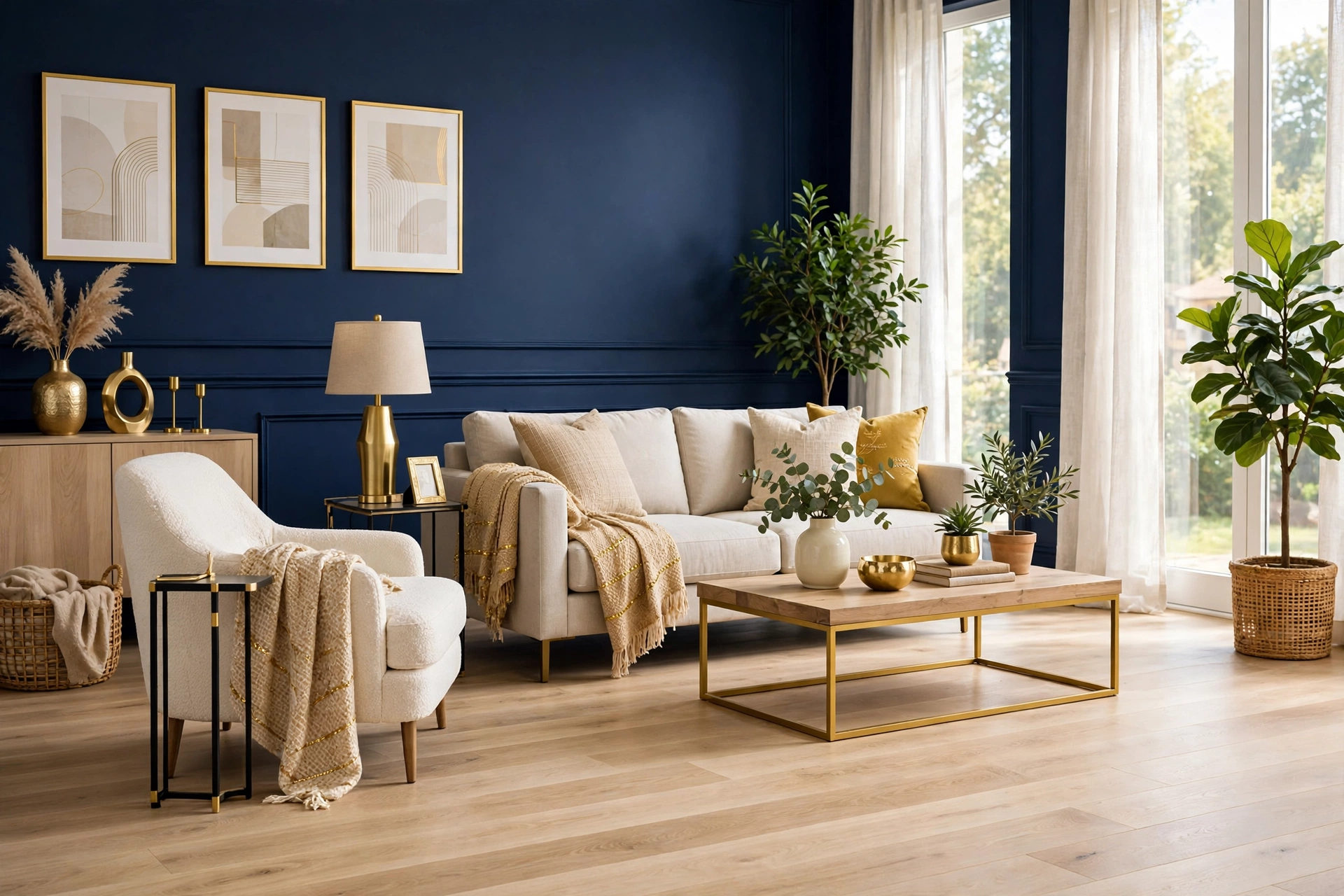
Flooring renovation is the removal of old floor covering, the repair and preparation of the subfloor, and the installation of new flooring, and a full flooring renovation takes 3 to 10 days for most rooms once materials are on site. Flooring renovation covers 7 main material types, installed costs of $2 to $25 per square foot depending on material, and 5 core steps: measure, remove, prepare, install, and finish. This guide compares the 7 types, lists 2026 costs, matches flooring to each room, and gives a 7-step plan, a refinish or replace rule, and a care schedule for new floors. Home Improvement guides on this site cover related house care topics, and this guide fits that same practical pattern: facts first, then steps.
Key Takeaways
- Flooring renovation has 5 core steps: measure, remove, prepare, install, and finish.
- Installed costs run $2 to $25 per square foot in 2026, with carpet cheapest and solid hardwood dearest.
- Luxury vinyl plank and porcelain tile suit wet rooms best, while solid hardwood suits dry living rooms.
- Solid hardwood can be refinished 5 to 10 times, so refinish beats replace when the wood is sound.
- Test subfloor moisture and flatness first, because a damp or uneven subfloor ruins new flooring.
Table of Contents
- What Is Flooring Renovation?
- Flooring Renovation Cost in 2026
- The 7 Main Flooring Types
- Hardwood vs LVP vs Tile
- Best Flooring for Each Room
- Refinish or Replace Your Floors?
- Plan a Flooring Renovation in 7 Steps
- Subfloor Problems That Stop a Renovation
- DIY or Hire a Professional?
- Maintain New Floors After Renovation
- Common Renovation Mistakes to Avoid
- Conclusion
- Frequently Asked Questions
What Is Flooring Renovation?
Flooring renovation is the work of removing old floor covering, fixing the subfloor, and installing new flooring, and flooring renovation changes how a room looks, feels, and wears. Flooring renovation differs from a floor refresh, because a refresh means only cleaning or recoating, while a renovation replaces the surface and fixes what lies below it. Flooring renovation has 4 parts: the old surface, the subfloor, the underlayment, and the new floor. The subfloor is the structural layer below the flooring, and the underlayment is the thin layer between the subfloor and the new floor.
Flooring renovation suits 5 common situations: worn floors, a style update before a sale, water damage repair, a room use change, and a comfort upgrade. Flooring renovation also covers refinish work, where solid hardwood is sanded and recoated instead of replaced. New hardwood floors return about 118 percent of their cost at resale, and refinishing hardwood floors returns about 147 percent of cost, according to the National Association of Realtors 2022 Remodeling Impact Report.
How Much Does Flooring Renovation Cost in 2026?
Flooring renovation costs $2 to $25 per square foot installed in 2026, and flooring renovation cost depends on material, room size, subfloor condition, and labor rates in the area. Material cost is only part of the total, because removal, subfloor repair, underlayment, trim, and labor add to the final price. Get itemized quotes that list material, labor, removal, subfloor work, and trim as separate lines.
| Flooring type | Installed cost per sq ft | Source |
|---|---|---|
| Carpet | $2.25 to $16 | USA Today (2026) |
| Laminate | $4 to $10 | USA Today (2026) |
| Luxury vinyl plank | $4 to $12 | USA Today (2026) |
| Tile | $10 to $20 | USA Today (2026) |
| Hardwood | $6 to $22 | USA Today (2026) |
| Solid hardwood | $10 to $25 | Modernize (2026) |
| Engineered hardwood | $7 to $20 | Modernize (2026) |
Professional installation costs about $3 to $22 per square foot, while a do-it-yourself install costs about $0.50 to $15 per square foot, according to a survey of Angi customers reported by Bob Vila (2025). Labor alone often adds $1 to $2 per square foot to the material price, and subfloor repair adds more when the base is damaged. Order 10 percent extra material for cuts and waste, and keep a few spare planks or tiles for later repairs. Budget 10 to 15 percent above the quote for surprises under the old floor, such as rot or old adhesive.
What Are the 7 Main Flooring Types?
The 7 main flooring types are solid hardwood, engineered hardwood, luxury vinyl plank, laminate, tile, carpet, and natural stone, and each flooring type fits different rooms, budgets, and wear levels. Flooring types differ in 5 ways: water resistance, lifespan, cost, comfort, and care needs. Match the material to the room first and to style second. Flooring materials include carpet, laminate, tile, and vinyl as standard floor covering choices, and each type has clear limits on where it can be installed.
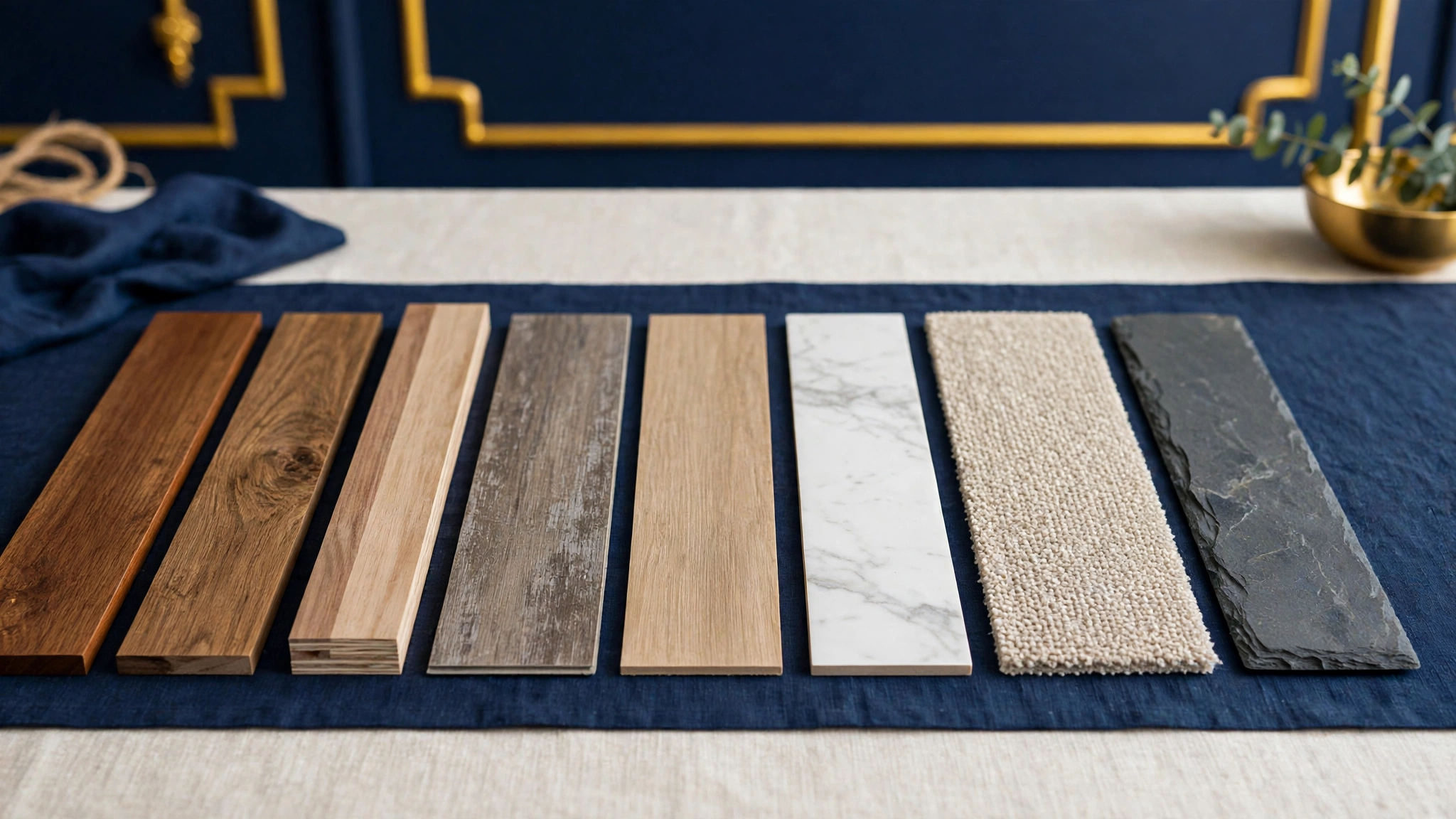
| Flooring type | Water resistance | Lifespan | Best for |
|---|---|---|---|
| Solid hardwood | Low | 50 to 100 years | Living rooms, dining rooms, hallways |
| Engineered hardwood | Medium | 25 to 30 years | Living rooms, over radiant heat |
| Luxury vinyl plank | High | 20 to 25 years | Kitchens, bathrooms, basements |
| Laminate | Medium | 15 to 25 years | Living rooms, dining rooms |
| Tile (ceramic or porcelain) | High | 50 to 75 years | Bathrooms, kitchens, entryways |
| Carpet | Low | 8 to 15 years | Bedrooms, low-traffic rooms |
| Natural stone | High | 75 years or more | Entryways, feature areas |
Solid hardwood is milled from one piece of timber, and solid hardwood can be sanded and refinished 5 to 10 times. Engineered hardwood has a real wood veneer over a plywood core, and engineered hardwood handles humidity better than solid hardwood. Luxury vinyl plank (LVP) copies wood or stone, and LVP is fully waterproof and scratch resistant. Laminate costs less than hardwood but cannot be refinished. Tile is waterproof and lasts decades with little care. Carpet suits bedrooms best, with a typical life of 15 to 18 years, according to Wikipedia (Flooring). Natural stone needs sealing and costs more than tile.
Hardwood vs Luxury Vinyl Plank vs Tile: Which Flooring Wins?
Hardwood wins on resale value and lifespan, luxury vinyl plank wins on water resistance and price, and tile wins on durability in wet rooms, so the best flooring depends on the room, not on one material. Hardwood vs luxury vinyl plank vs tile is the most common flooring choice, and the three materials serve different needs. Wood flooring types cover solid hardwood and engineered wood, and the page shows how solid wood differs from engineered wood in layers, thickness, and refinish count.
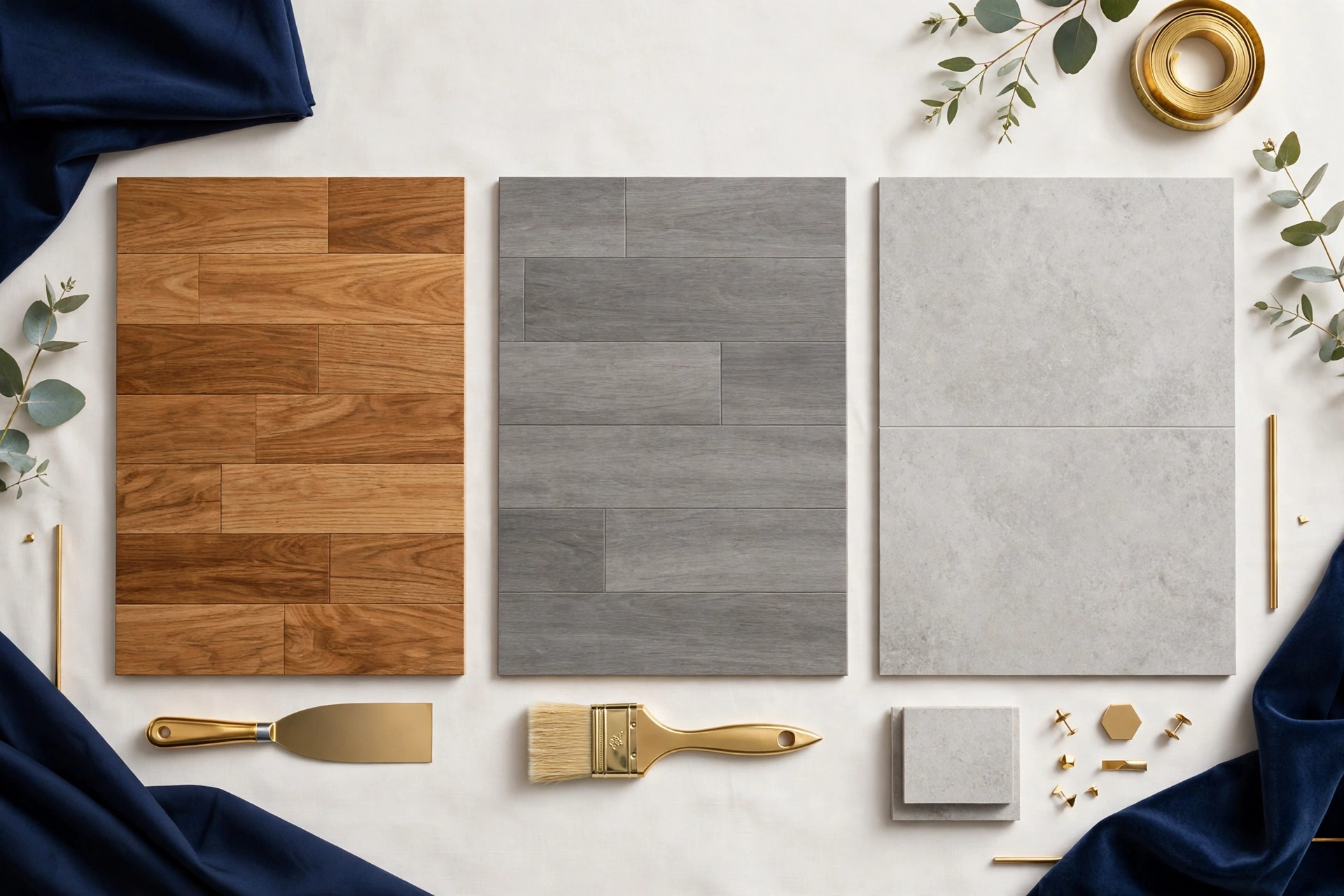
| Factor | Solid hardwood | Luxury vinyl plank | Porcelain tile |
|---|---|---|---|
| Installed cost per sq ft | $10 to $25 | $6 to $12 | $5 to $20 |
| Water resistance | Low | High | High |
| Lifespan | 50 to 100 years | 20 to 25 years | 50 to 75 years |
| Refinish option | Yes, 5 to 10 times | No | No |
| Comfort underfoot | Warm | Warm | Cold and hard |
| Best rooms | Living, dining, hall | Kitchen, bath, basement | Bath, kitchen, entry |
Choose solid hardwood for living rooms and dining rooms where warmth and resale value matter most. Choose luxury vinyl plank for kitchens, bathrooms, and basements where water and spills are daily facts. Choose porcelain tile for bathrooms and entryways where standing water and grit wear floors fast. Hardwood gives the best return at resale, with new hardwood floors returning about 118 percent of cost, according to the National Association of Realtors 2022 Remodeling Impact Report. LVP gives the best value for busy homes with kids or pets, because LVP resists scratches, dents, and water at half the price of hardwood.
How Do You Choose the Right Flooring for Each Room?
Choose flooring by room use first, and the right flooring for each room matches water exposure, foot traffic, and comfort needs before style. Use the table below as the starting point, then check budget and style.
| Room | Best picks | Avoid |
|---|---|---|
| Kitchen | LVP, porcelain tile | Solid hardwood, carpet |
| Bathroom | Porcelain tile, LVP | Solid hardwood, laminate, carpet |
| Living room | Solid hardwood, engineered wood, LVP | Carpet in high-traffic homes |
| Bedroom | Carpet, hardwood, engineered wood | Tile, stone (cold underfoot) |
| Hallway and entry | Tile, LVP, hardwood | Carpet (dirt and wear) |
| Basement | LVP, tile | Solid hardwood, laminate (moisture risk) |
| Laundry room | Tile, LVP | Hardwood, carpet |
Homes with kids or pets need scratch and water resistance first, and luxury vinyl plank is the best pick for those homes, with laminate of at least 10 millimeter thickness as a second option. Homes with allergy concerns need hard floors that do not trap dust, and tile, hardwood, or LVP clean better than carpet. Radiant heat floors suit tile and engineered wood best, because tile holds heat well. Check the wear layer on LVP before buying: a 20 mil wear layer lasts longer than a 12 mil wear layer.
Planning a full home refresh? Read the roof repair signs guide to check the roof before new floors go in.
Should You Refinish or Replace Your Floors?
Refinish your floors when solid hardwood is sound but dull or scratched, and replace your floors when boards are warped, rotted, or too thin to sand again. Refinish vs replace is a cost and condition choice, not a style choice. Refinishing sands off the old finish and adds new coats, and refinishing costs far less than new hardwood. Replacement removes the old floor and installs new material, and replacement is the only option when the floor is beyond sanding.
| Factor | Refinish | Replace |
|---|---|---|
| Cost | Lower, no new material | Higher, material plus labor |
| Time | 2 to 5 days per area | 3 to 10 days per room |
| Lifespan after work | 10 to 20 years per refinish | Full new floor lifespan |
| Works for | Solid hardwood, some engineered wood | Any flooring type |
| Room disruption | Dust and fumes for days | Full removal and install |
Refinishing suits solid hardwood with surface scratches, dull finish, or uneven color, and a floor older than 10 years often needs refinishing. Refinishing does not fix warped boards, deep stains, or boards sanded too thin in past refinish jobs. Solid hardwood can be refinished 5 to 10 times, while engineered hardwood can be refinished 1 to 4 times depending on veneer thickness, according to Modernize (2026). Get a flooring contractor to measure the remaining wood thickness before choosing refinish, because sanding a thin floor ruins it.
How to Plan a Flooring Renovation in 7 Steps
To plan a flooring renovation, follow 7 steps in order: measure, set a budget, pick a material, order, clear the rooms, prepare the subfloor, and install with a finish. A flooring renovation plan keeps the job on time and on budget, and a plan also stops the most common error: ordering material before the subfloor is checked.
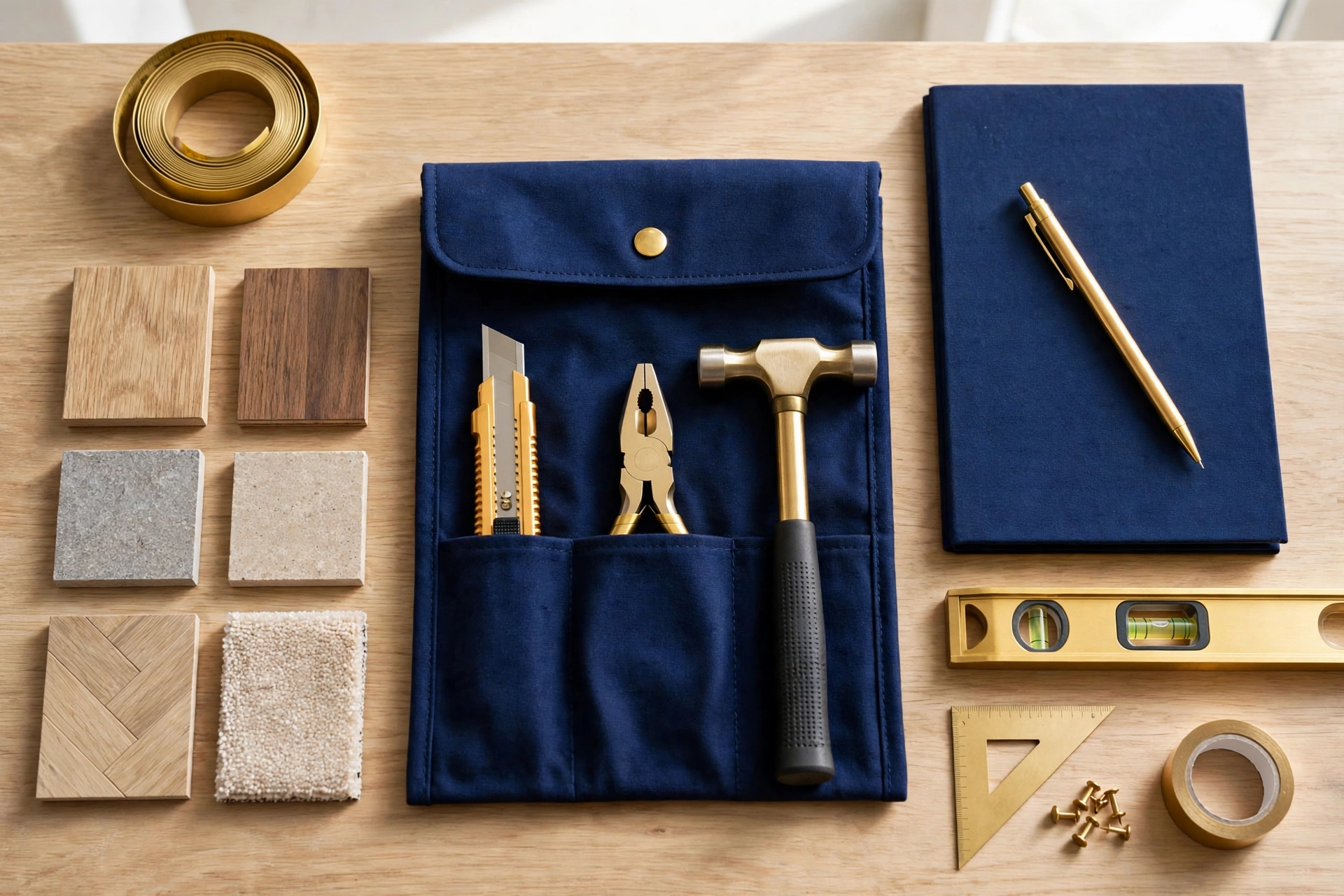
- Measure each room at the longest and widest points, then multiply length by width.
- Set a budget with material, labor, removal, subfloor work, trim, and a 10 to 15 percent buffer.
- Pick a material by room use from the room table, then order samples.
- Order material with 10 percent extra for cuts, waste, and spare pieces.
- Clear the rooms of furniture, rugs, and baseboards.
- Prepare the subfloor by cleaning, leveling, and moisture testing.
- Install and finish with expansion gaps, trim, and transitions.
Allow 48 to 72 hours for hardwood and laminate to acclimate in the home before install, because wood moves with temperature and humidity. Order lead times run 1 to 4 weeks for common materials and longer for stone or custom wood. Plan room downtime: a bedroom is out of use for 3 to 5 days, a kitchen for 5 to 10 days, and a whole house for 1 to 3 weeks. In homes I have walked through after a renovation, the floors that failed first were the ones laid over damp concrete with no moisture test. Book the installer before materials arrive, so the crew and the delivery line up in the same week.
What Subfloor Problems Can Stop a Flooring Renovation?
Subfloor problems that stop a flooring renovation are moisture, unevenness, rot, and old adhesive, and a flooring renovation fails when the subfloor is wet, soft, or out of level. The subfloor is the base that carries the new floor, and a weak base shows as squeaks, gaps, cracked tile, and lifted planks within months. Check the subfloor before ordering, because subfloor repair changes the budget and the schedule.
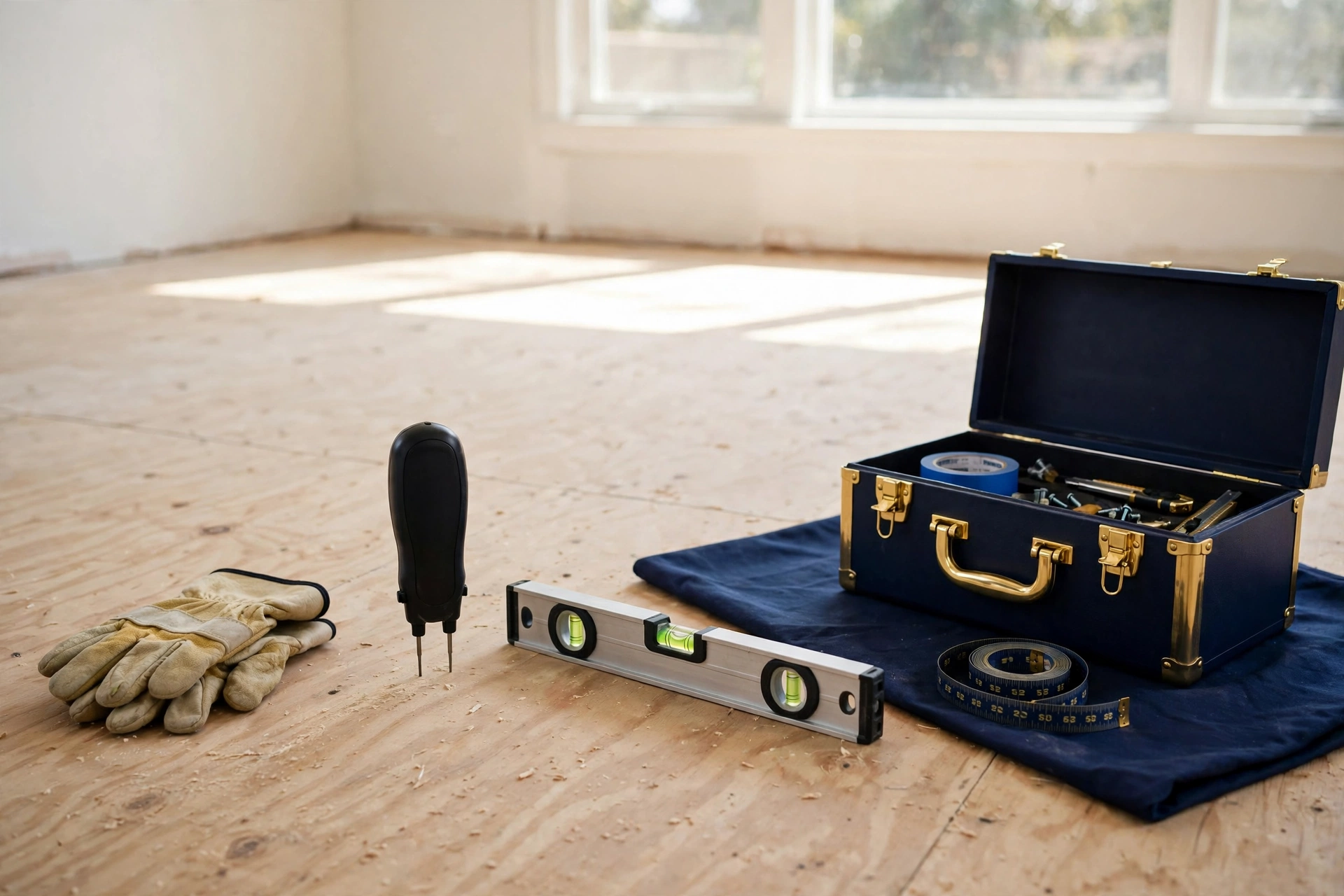
- Moisture: test concrete and wood subfloors with a moisture meter, and do not install wood over a damp slab.
- Flatness: most makers require flatness within 3/16 inch over a 10 foot span, and floating floors need 1/8 inch over a 6 foot span.
- Rot: replace soft or rotted boards, and fix the leak that caused the rot first.
- Old adhesive: scrape off glue, pull staples and tack strips, and sweep the base clean.
- Squeaks: screw loose subfloor panels to joists before the new floor goes in.
- Level changes: use self-leveling compound on low spots and sand down high spots.
Homes built before 1980 need care with old vinyl and tile, because those materials may hold asbestos fibers or silica dust, and a test is wise before tear-out. Wear a P100 or N95 respirator during removal, plus gloves and eye protection. If the subfloor is concrete in a basement, use a moisture barrier under wood or laminate, and pick LVP or tile when moisture readings stay high.
DIY or Hire a Professional: Which Option Fits Your Project?
Hire a professional for tile, solid hardwood, and large or uneven rooms, and do it yourself only for click-lock LVP or laminate in small, square rooms. DIY vs professional is a skill and risk choice, because a bad install costs more to fix than a pro install costs at the start. Click-lock LVP and laminate suit skilled homeowners, because planks snap together without glue or nails. Tile, solid hardwood, and stone need trade tools and layout skill, and errors show for years.
| Factor | DIY install | Professional install |
|---|---|---|
| Cost per sq ft | About $0.50 to $15 | About $3 to $22 |
| Best materials | LVP, laminate | Tile, hardwood, stone |
| Tools needed | Saw, spacers, tapping block | Trade saws, nailers, trowels |
| Risk | Gaps, uneven rows, voided warranty | Lower, with warranty on labor |
| Time | Slower, weekends | Faster, crew of 2 to 4 |
Check the warranty before choosing DIY, because some makers void the warranty when install rules are not followed. Get at least 2 written quotes for pro work, and check licenses, insurance, and photos of past jobs. Ask the installer to list subfloor prep, moisture testing, and trim in the quote, so those jobs are not billed as extras later.
How Do You Maintain New Floors After Renovation?
Maintain new floors with dry cleaning first, damp mopping second, and prompt spill cleanup always, and floor care differs by material, so follow the maker guide for each floor type. Keep dirt and grit off the surface, because grit acts like sandpaper under shoes. Use entry mats and felt pads under furniture.
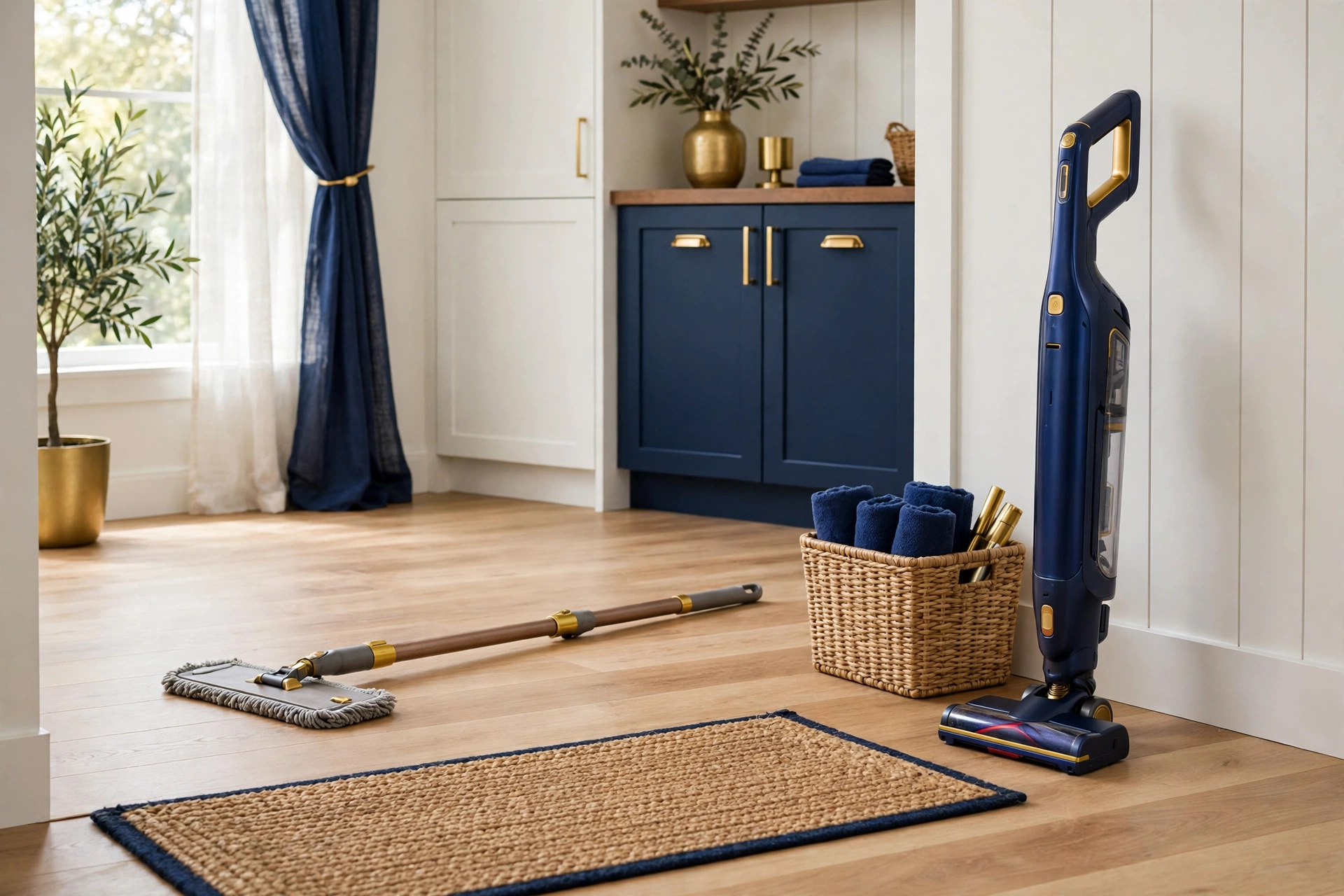
- Hardwood: sweep or vacuum weekly, damp mop with a wood-safe cleaner, and recoat every 3 to 5 years.
- LVP: sweep weekly, damp mop with a vinyl-safe cleaner, and never use steam mops.
- Tile: sweep weekly, mop with a neutral cleaner, and reseal grout once a year.
- Laminate: sweep weekly, use a barely damp mop, and wipe spills at once.
- Carpet: vacuum twice a week, clean spots at once, and deep clean once a year.
- Stone: sweep weekly, mop with a stone-safe cleaner, and reseal every 1 to 2 years.
Keep spare planks or tiles from the install, because a matching spare makes a future repair fast and cheap. Fix small scratches on wood with a touch-up pen, and replace a damaged LVP plank rather than patching it. Check expansion gaps each year, because gaps close in humid months and open in dry months.
Common Flooring Renovation Mistakes to Avoid
The most common flooring renovation mistakes are skipping the moisture test, ordering too little material, ignoring expansion gaps, and picking a material by looks alone. Order 10 percent extra, because a short order stops the job while more material ships. Leave a 1/4 inch expansion gap around the whole room, because wood and laminate move with humidity and buckle without room to move. Stagger plank seams by at least 6 inches, because lined-up seams look wrong and weaken the floor. Do not install new flooring over a damaged old floor, because the old faults show through the new surface. Do not skip acclimation, because planks laid cold from a truck gap and cup within weeks.
Conclusion
Flooring renovation works best when the material matches the room, the subfloor is dry and level, and the plan covers cost, time, and care. Flooring renovation has 5 core steps, 7 main materials, and installed costs of $2 to $25 per square foot in 2026. Solid hardwood suits dry living rooms and gives the best resale return, luxury vinyl plank suits wet and busy rooms at a lower price, and porcelain tile suits bathrooms and entries for decades. Test the subfloor, order 10 percent extra, leave expansion gaps, and keep a care schedule for the new floor. Voice of Wave covers home care topics that help readers plan each job with facts first, and a floor planned this way stays sound for years.
Explore more home guides: Browse the latest practical guides on the Voice of Wave blog for your next home project.
Frequently Asked Questions
How much does flooring renovation cost?
Flooring renovation costs $2 to $25 per square foot installed in 2026, depending on material and labor. Carpet costs $2.25 to $16 per square foot installed, luxury vinyl plank costs $4 to $12, and solid hardwood costs $10 to $25. Removal, subfloor repair, trim, and labor add to the material price, so get an itemized quote.
What is the best flooring for a kitchen?
Luxury vinyl plank and porcelain tile are the best flooring choices for a kitchen. Both resist water, stains, and dropped items, and both clean fast after spills. Solid hardwood and carpet suit kitchens poorly, because water and food spills damage wood fibers and stain carpet.
How long does flooring renovation take?
Flooring renovation takes 3 to 10 days for most rooms once materials are on site, and 1 to 3 weeks for a whole house. Material lead times add 1 to 4 weeks before work starts, and hardwood needs 48 to 72 hours to acclimate. A kitchen takes 5 to 10 days, and a bedroom takes 3 to 5 days.
Is it cheaper to refinish or replace hardwood floors?
Refinishing hardwood floors is cheaper than replacing them, because refinishing needs no new material. Refinishing suits solid hardwood that is dull or scratched but sound, and solid hardwood can be refinished 5 to 10 times. Replacement is needed when boards are warped, rotted, or too thin to sand again.
Can new flooring go over old flooring?
New flooring can go over old flooring only when the old floor is flat, dry, sound, and level. Floating LVP and laminate can go over flat tile or hardwood in some cases, but tile and nail-down hardwood need a clean subfloor. A damaged, damp, or uneven old floor must come out first.
What flooring lasts the longest?
Solid hardwood and natural stone last the longest, with lifespans of 50 to 100 years for hardwood and 75 years or more for stone. Porcelain tile lasts 50 to 75 years, and engineered hardwood lasts 25 to 30 years. Luxury vinyl plank lasts 20 to 25 years, and carpet lasts 8 to 15 years.