
Introduction
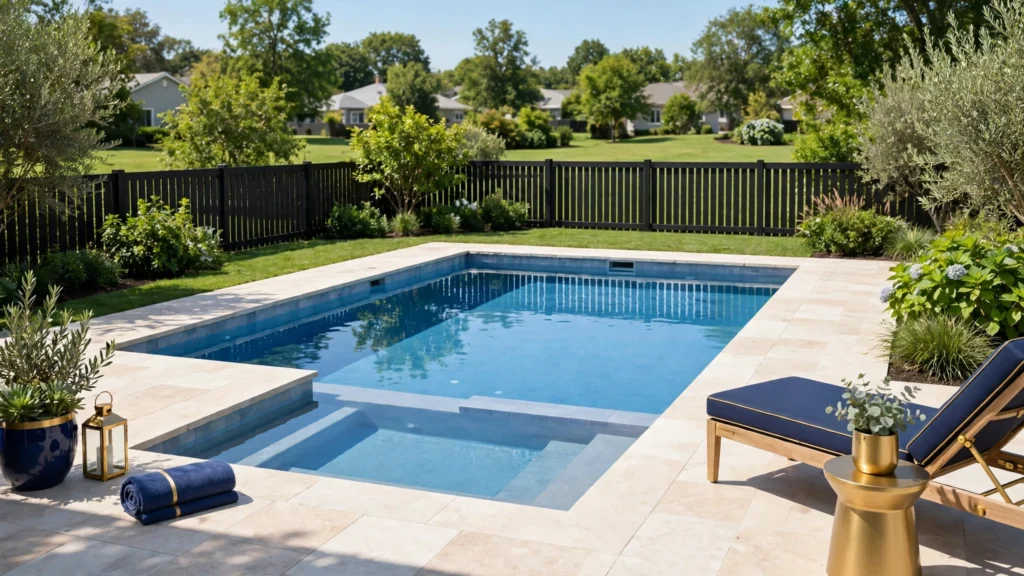
Pool installation is the full job of planning, permitting, digging, building, and filling a home swimming pool, and pool installation starts with 4 choices: pool type, size, location, and budget, since those 4 choices set cost, timeline, and permit needs. A pool gives a home a private place to swim, cool off, and host family time through warm months, and the same project adds fencing, decking, and equipment that shape daily use and upkeep. Pool installation covers 3 in-ground builds, concrete, fiberglass, and vinyl liner, plus above-ground pools, and each path differs in cost, build time, and care needs. This guide covers pool types, 2026 costs, timelines, permits, size and location checks, equipment, builder quotes, running costs, and the mistakes that raise cost after work starts.
Key Takeaways
- Pick the pool type first, since type sets cost, build time, and care needs for the next 20 years.
- Budget the full project, not the shell alone, since deck, fence, and equipment add 30 to 50 percent to the pool price.
- Get permits, setbacks, and HOA approval in writing before any digging starts.
- Compare 3 itemized builder quotes on the same scope, and check license, insurance, and recent local jobs.
- Plan first-year running costs of $1,200 to $3,500, based on FixupFirst data from 2026.
Table of Contents
- What Is Pool Installation?
- What Are the 4 Main Types of Pools?
- How Much Does Pool Installation Cost in 2026?
- How Long Does Pool Installation Take?
- What Permits and Rules Apply Before You Dig?
- How Do You Choose the Right Pool Size and Location?
- What Equipment Does a Pool Need?
- Concrete vs Fiberglass vs Vinyl Liner: Which Pool Type Fits Your Home?
- How Do You Compare Pool Builder Quotes?
- What Are the Ongoing Costs After Pool Installation?
- What Mistakes Should You Avoid During Pool Installation?
- Conclusion
- Frequently Asked Questions
What Is Pool Installation?
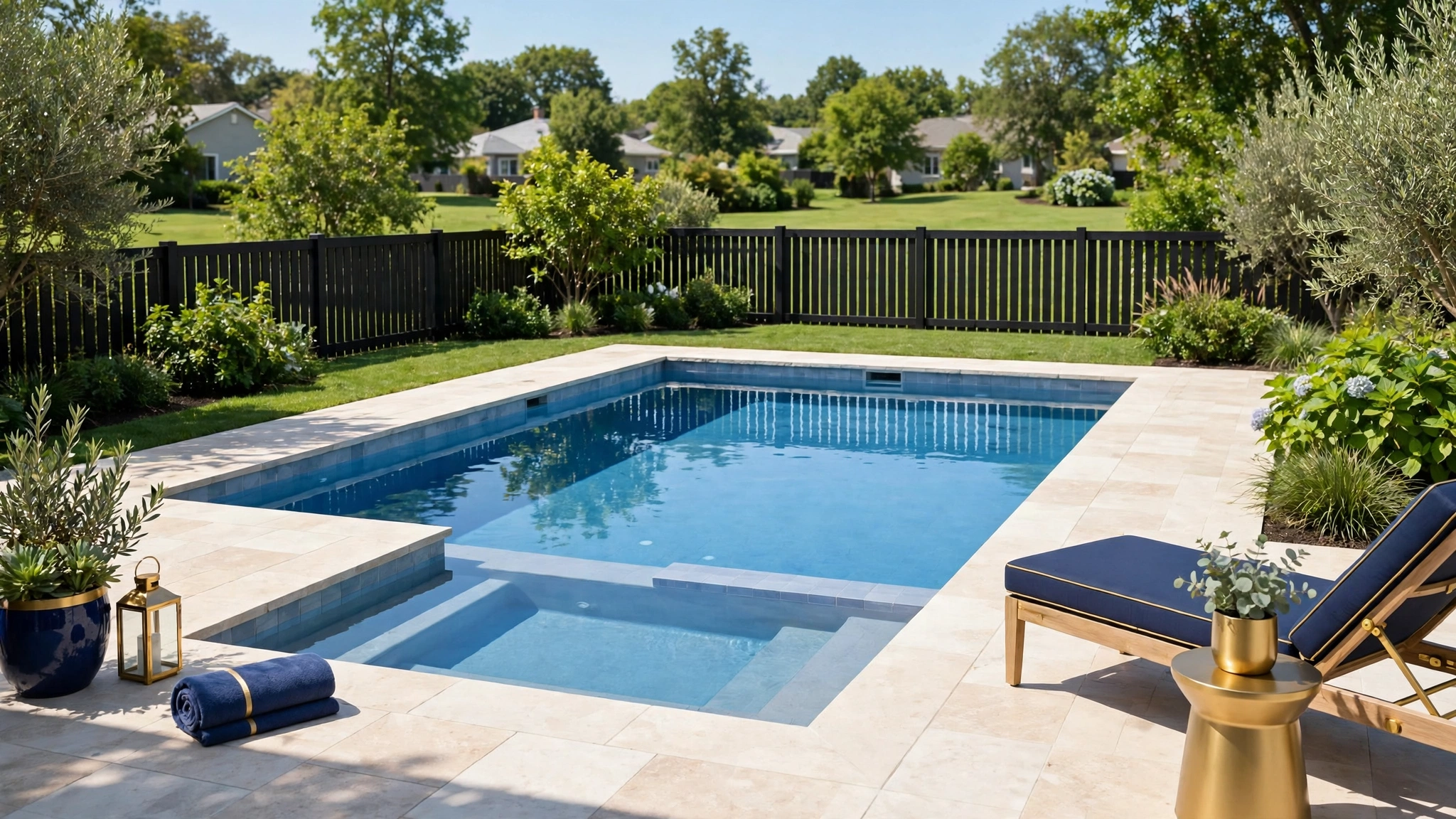
Pool installation is the work of turning a yard plan into a working swimming pool, and pool installation runs through 7 stages: design, permits, excavation, shell build, plumbing and electrical work, deck and fence, and water fill with startup chemistry. Pool installation differs from pool maintenance, since installation builds the pool and maintenance keeps water clean and equipment working after the build. A standard in-ground job moves through survey, soil check, utility marking, dig, shell set, plumbing, finish, equipment hookup, and fill, and each stage needs a sign-off before the next stage starts.
A swimming pool is a structure built to hold water for swimming and related water activity, and pools sit in the ground or above ground, in concrete, fiberglass, vinyl liner, metal, or composite shells. The Great Bath at Mohenjo-Daro in modern-day Pakistan, dug in the 3rd millennium BC and lined with bricks with a tar-based sealant, stands as one of the earliest known pools (Source: Wikipedia, Swimming pool). Readers who plan other house care jobs can browse the Home Improvement guides for related topics on the same site.
What Are the 4 Main Types of Pools?
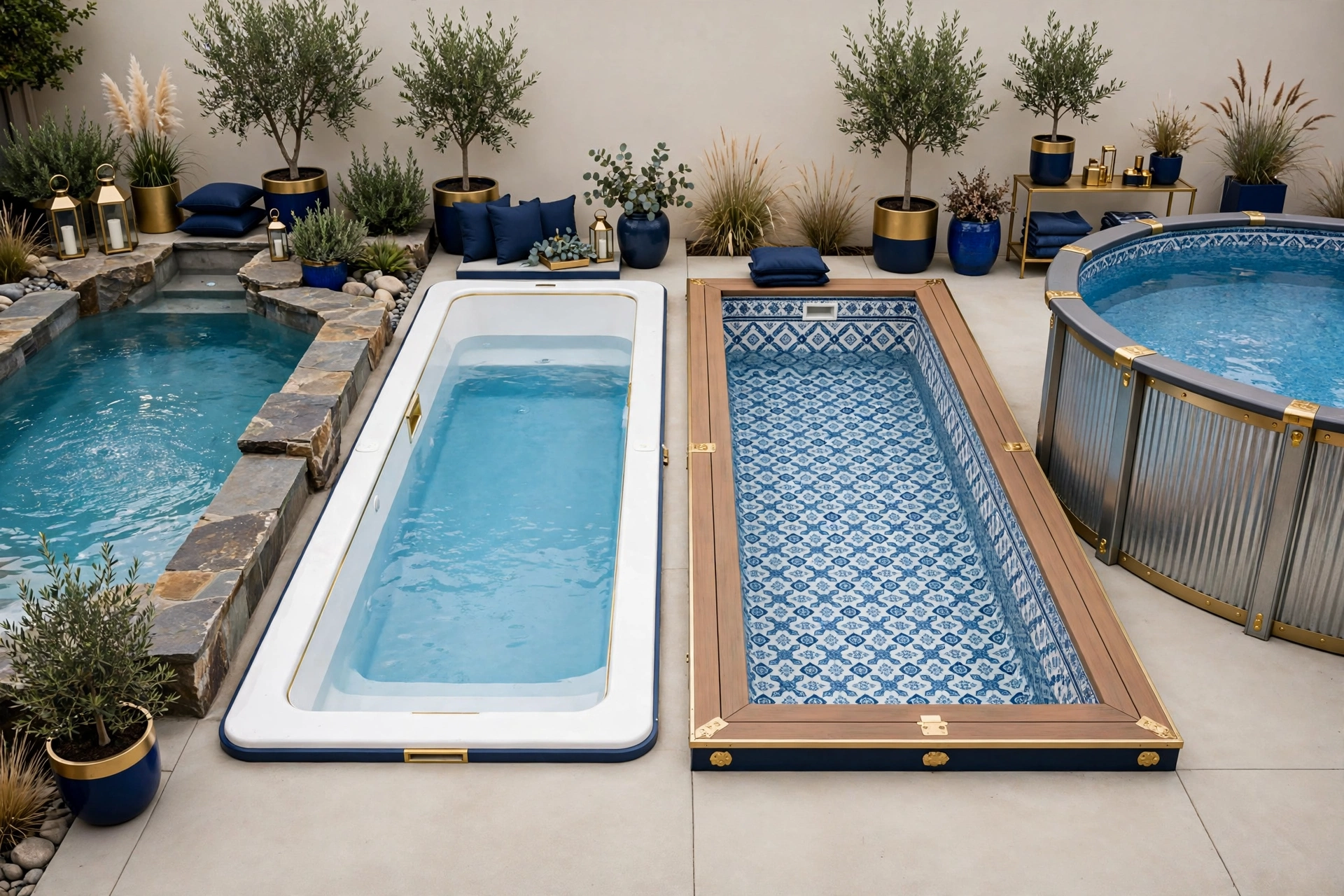
The 4 main types of pools are concrete pools, fiberglass pools, vinyl liner pools, and above-ground pools, and the 4 types differ in shell material, cost, build time, shape freedom, and care needs. Concrete pools suit custom shapes, fiberglass pools suit fast builds, vinyl liner pools suit the lowest in-ground price, and above-ground pools suit low budgets. Settle type before asking builders for prices, since type fixes the rest of the project.
In-Ground Concrete (Gunite) Pools
A concrete pool is a pool with a sprayed concrete shell, called gunite or shotcrete, shaped over steel bars, and a concrete pool allows any shape, depth, and feature set a yard can hold. Builders spray concrete over a steel frame, cure the shell, then finish it with plaster, tile, or pebble. Concrete pools cost the most and take the longest to build, and the shell lasts 50 years or more with resurfacing every 10 to 15 years (Source: Re-design, 2026). Concrete pools suit large yards, sloped lots, and owners who want a spa, waterfall, or tanning ledge built into the same shell.
Fiberglass Pools
A fiberglass pool is a pool with a single preformed shell made off site and set into a dug hole by crane, and a fiberglass pool gives the fastest in-ground build with a smooth, nonporous surface. The shell arrives by truck, a crane lowers it into the excavation, and crews backfill, plumb, and fill it. The smooth gel coat surface resists algae growth and needs less chemical care than plaster. Fiberglass pools limit shape and size to factory molds, and wide shells need road access for a large truck and crane. A standard fiberglass pool costs $45,000 to $85,000 installed (Source: PoolPad, 2026).
Vinyl Liner Pools
A vinyl liner pool is a pool with steel, polymer, or aluminum walls set in a sand or concrete floor, covered by a custom-fit vinyl liner, and a vinyl liner pool gives the lowest in-ground entry price. The liner forms the waterproof surface, and the wall panels form the shape. Vinyl liner pools cost $35,000 to $65,000 installed (Source: PoolPad, 2026), and the liner needs replacement every 7 to 10 years at $4,500 to $6,500 (Source: Re-design, 2026). Sharp objects, pets with claws, and poor water balance can tear a liner.
Above-Ground and Semi In-Ground Pools
An above-ground pool is a pool with a metal or resin wall and a vinyl liner that sits on leveled ground, and an above-ground pool gives the lowest cost and the fastest setup of the 4 types. Above-ground pools cost $800 to $5,000 for the kit before professional installation (Source: Angi, 2026), and a full installed range runs $3,000 to $15,000 (Source: PoolPad, 2026). Setup takes 1 to 3 days on level ground with good drainage. Semi in-ground pools sit partly in the ground and cost $7,000 to $25,000 on average (Source: Angi, 2026). Local rules often limit permanent ladders and deck attachments.
How Much Does Pool Installation Cost in 2026?
Pool installation costs $3,000 to $15,000 for above-ground pools and $40,000 to $120,000 or more for in-ground pools in 2026, and pool installation cost depends on pool type, size, soil, access, permits, and the deck and fence scope. Angi (2026) reports in-ground pools at $39,000 to $70,000 for professional installation, and a national in-ground average of $65,909, with a typical range of $44,499 to $87,349. PoolPad (2026) puts vinyl liner pools at $40,000 to $65,000, fiberglass pools at $55,000 to $90,000, and concrete pools at $60,000 to $120,000 or more. The spread comes from scope: some prices cover the shell only, while others cover the full job.
| Pool type | Installed cost (2026) | Main cost driver |
|---|---|---|
| Above-ground | $3,000 to $15,000 | Kit size, deck, installation labor |
| Vinyl liner in-ground | $40,000 to $65,000 | Size, liner grade, deck scope |
| Fiberglass in-ground | $55,000 to $90,000 | Shell size, crane access, deck scope |
| Concrete (gunite) in-ground | $60,000 to $120,000+ | Custom shape, features, build time |
| Plunge pool | $25,000 to $50,000 | Small size, lower heating and chemical load |
The shell price is only part of the bill. Deck work runs $15 to $35 per square foot, so 600 square feet runs $9,000 to $21,000 (Source: Re-design, 2026). Code-required fencing runs $25 to $60 per linear foot, often $4,000 to $8,000 for a full yard (Source: Re-design, 2026). FixupFirst (2026) reports total project cost runs 40 to 80 percent above the base pool price. CostToBuildHouse (2026) shows a mid-range in-ground example near $80,000 all-in: pool $55,000, decking $12,000, fencing $6,000, yard work $5,000, and permits $2,000. A practical first-hand observation helps here: mark the pool outline with stakes and string before the first builder visit, since the marked outline shows at once whether a deck, fence line, and equipment pad still fit.
How Long Does Pool Installation Take?
Pool installation takes 1 to 3 days for above-ground pools, 2 to 6 weeks for fiberglass pools, 4 to 8 weeks for vinyl liner pools, and 8 to 16 weeks for concrete pools, and pool installation time depends on permits, weather, soil, and feature scope. PoolPad (2026) reports the same ranges, with fiberglass fastest once the shell arrives. Permit review adds time before digging starts, and rain, rock, or a high water table adds days during excavation. Start in the off season when possible, since builders book up in spring and a winter start gives room for permit review and weather delays.
What Permits and Rules Apply Before You Dig?
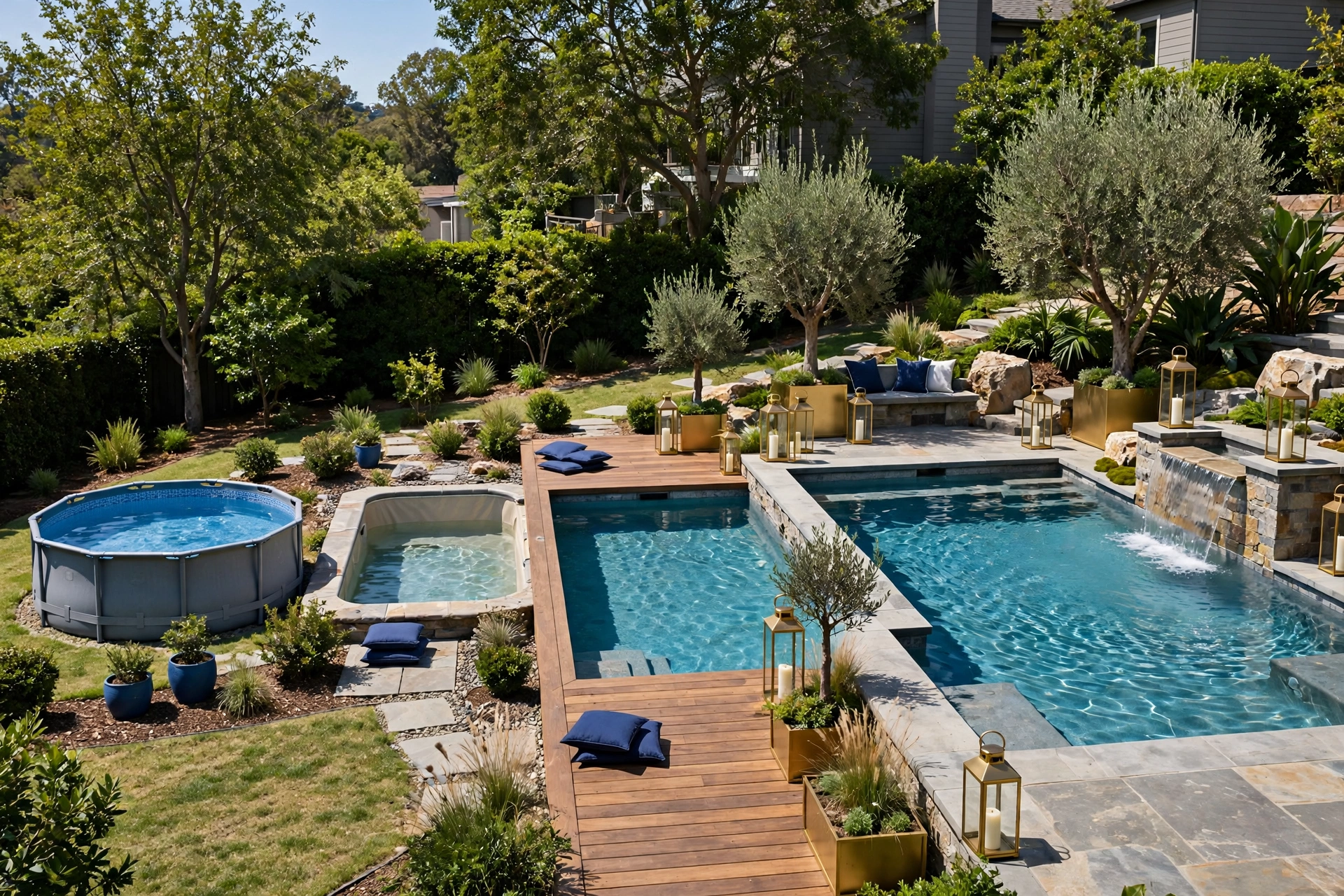
A pool permit is a city or county approval that allows excavation and construction, and a pool permit needs a site plan, setback check, fence plan, and electrical plan before approval in most areas. Most cities require a building permit for in-ground pools and for many above-ground pools, and the permit office checks setbacks from property lines, septic systems, and easements. A homeowners association (HOA) may need a separate design approval, and HOA rules can limit pool size, fence style, and deck materials. Call the local permit office before signing a contract, since permit rules differ by city and county.
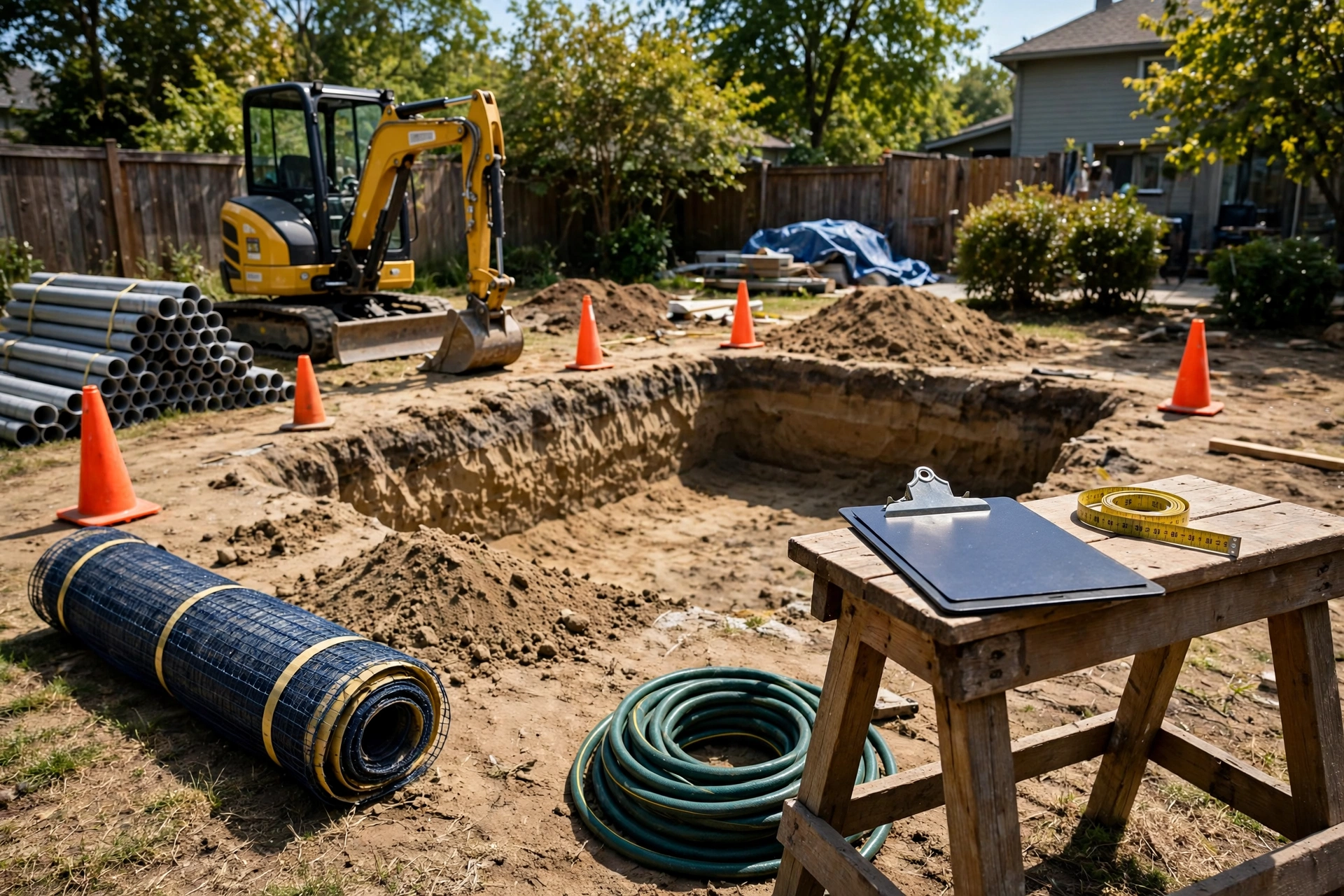
Follow this pre-dig order: check zoning setbacks and easements; get HOA design approval in writing, if an HOA applies; apply for the building permit with a site plan and fence plan; call 811 to mark underground utilities; confirm fence height, gate, and alarm rules; and confirm insurance changes before the build starts. Many areas require a fence that isolates the pool from the house and yard, with a self-closing and self-latching gate. Angi (2026) warns that home insurance costs rise when a pool is added, so contact the insurance agent early. Keep every approval in writing.
How Do You Choose the Right Pool Size and Location?
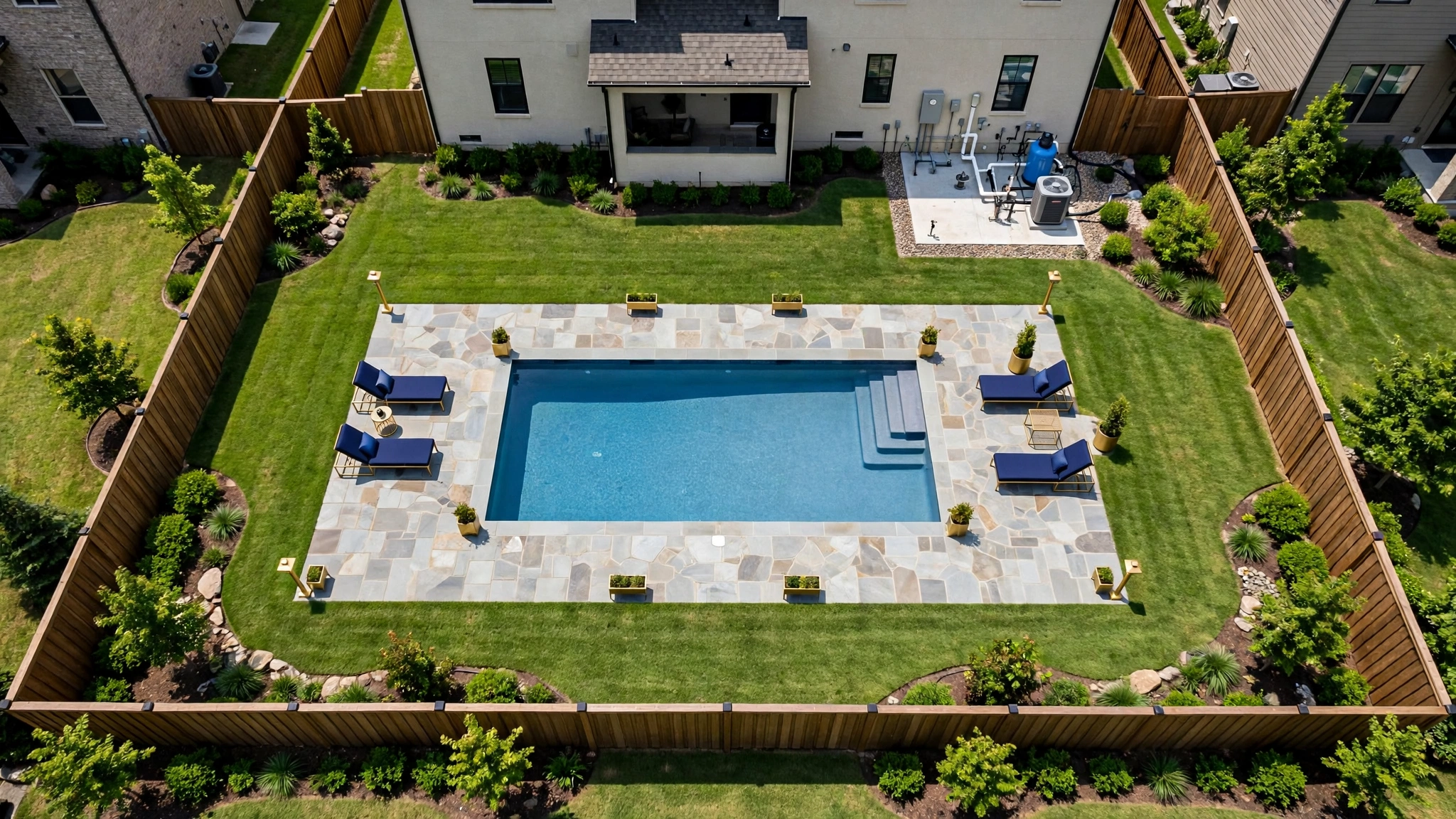
The right pool size fits the yard, the fence line, the deck, and the equipment pad with room left over, and the right pool location sits on level ground with sun, wind shelter, and clear access for trucks and cranes. A standard in-ground pool measures 16 by 32 feet, and that size needs a yard with room for a deck of at least 3 to 4 feet on each side plus a fence line outside the deck. A plunge pool measures near 10 by 20 feet and 4 to 5 feet deep, and a plunge pool suits small yards and owners who want cooling and lounging more than lap swimming (Source: Re-design, 2026). Lap pools run long and thin, up to 70 feet long, and lap pools suit exercise in narrow yards (Source: Angi, 2026).
Check 5 site facts before picking a spot: sun, with 6 or more hours to warm water and cut heater use; wind, blocked by fences or trees; trees, kept clear since roots lift shells and leaves clog filters; slope and soil, tested for rock, clay, and water table height since rock and high water raise excavation cost; and access, with a truck and crane path to the dig site. Ask the builder how soil and water conditions change the quote, and ask for that answer in writing.
What Equipment Does a Pool Need?
A pool needs 5 equipment groups: a pump, a filter, a sanitizer system, a heater, and cleaning tools, and a pool pump and filter move water, trap debris, and keep water clear every day. The pump pulls water from skimmers and drains, pushes water through the filter, and returns clean water to the pool. The filter traps dirt in sand, cartridge, or diatomaceous earth media. The sanitizer system uses chlorine or saltwater chlorine to kill germs. The heater uses gas, electric, or heat pump energy to hold water temperature. Cleaning tools include a skimmer net, brush, vacuum, and test kit, and pool water pH should sit between 7.2 and 7.8 (Source: Organizertone, 2026).
Saltwater systems turn salt into chlorine inside the pool and feel gentler on skin, while traditional chlorine systems need manual dosing and steady testing. Angi (2026) notes that filtration system cost runs $100 to $2,500. Size the pump and filter to pool volume, not to price alone, since an undersized pump runs longer and costs more over time.
For a seasonal care routine that pairs with pool season, read the Air Conditioner Maintenance Guide for a checklist that covers the same summer months.
Concrete vs Fiberglass vs Vinyl Liner: Which Pool Type Fits Your Home?
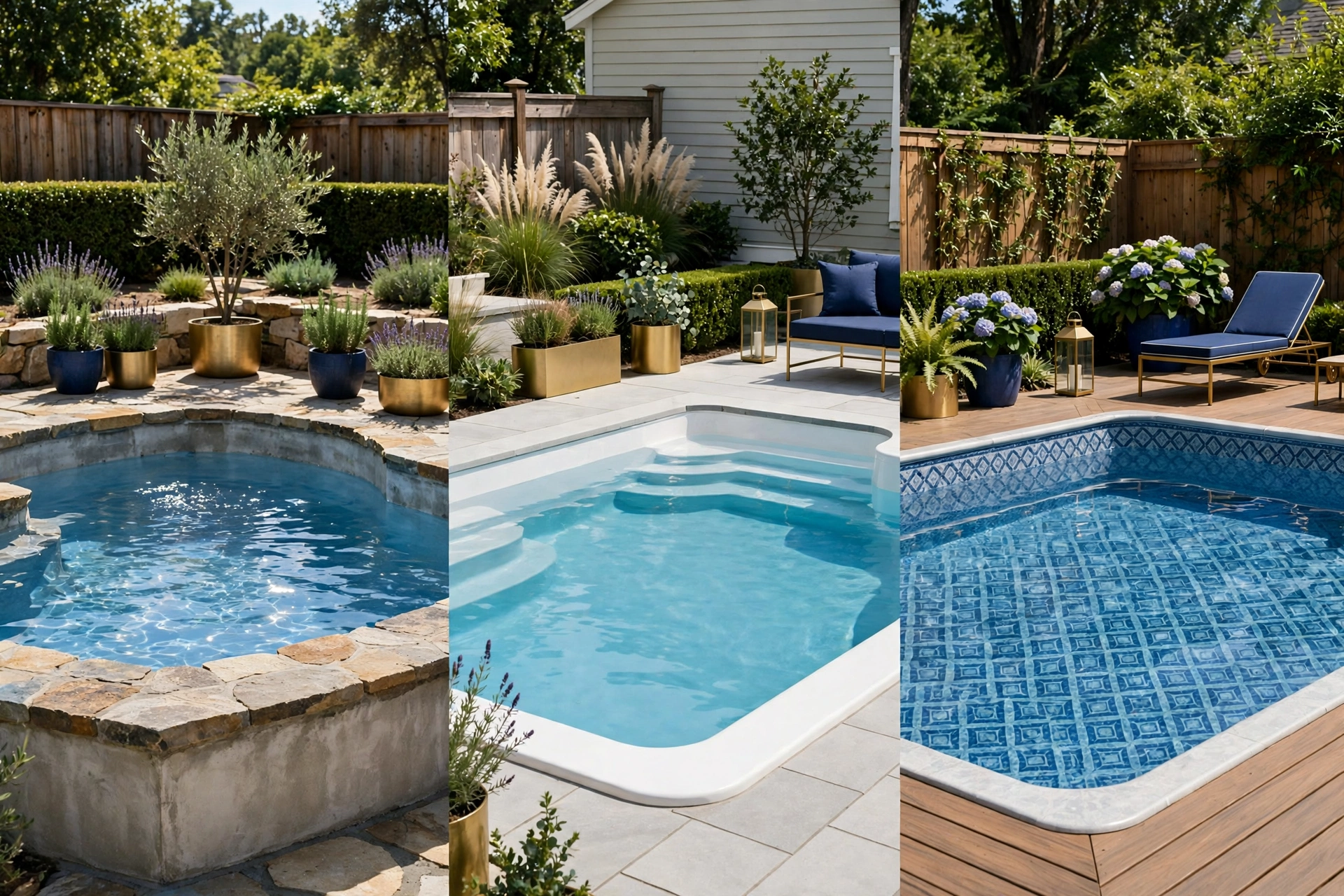
Concrete pools fit custom shapes and long life, fiberglass pools fit fast builds and low chemical care, and vinyl liner pools fit the lowest in-ground budget, and the best pool type fits yard size, budget, timeline, and care time together. No single type wins on every point, so weigh the trade-offs in the table below against the yard and the budget.
| Factor | Concrete (gunite) | Fiberglass | Vinyl liner |
|---|---|---|---|
| Installed cost | $60,000 to $120,000+ | $55,000 to $90,000 | $40,000 to $65,000 |
| Build time | 8 to 16 weeks | 2 to 6 weeks | 4 to 8 weeks |
| Shape freedom | Any shape or depth | Factory molds only | Wide shape range |
| Surface care | Resurface every 10 to 15 years | Low chemical demand | Liner replace every 7 to 10 years |
| Best fit | Custom design, large yard | Fast build, low care | Lowest in-ground price |
Concrete pools suit owners who plan to stay for decades and want a spa or waterfall built in. Fiberglass pools suit owners who want a fast build and less weekly chemical work. Vinyl liner pools suit owners who accept liner replacement as a planned cost. The swimming pool types page on Wikipedia lists the main in-ground builds as gunite shotcrete, concrete, vinyl-lined, and one-piece fiberglass shells.
How Do You Compare Pool Builder Quotes?
To compare pool builder quotes, collect 3 itemized bids on the same written scope, and compare pool builder quotes line by line on shell, excavation, plumbing, electrical, deck, fence, equipment, permits, and yard repair. PoolPad (2026) advises requesting at least 3 itemized bids and checking licenses, insurance, and recent local projects before choosing a builder. A lump-sum quote hides cost, so ask for each line as a separate price, since a bid that skips deck, fence, or permits looks cheap and costs more later.
Demand these 8 lines in every bid: shell type, size, depth, and finish, with brand and model named; excavation cost, with soil and rock terms stated; plumbing and electrical work, with specs named; pump, filter, sanitizer, and heater, with brand and model named; deck size, material, and square footage; fence length, height, gate count, and alarm; permit fees; and yard repair, debris removal, and fill water cost. Check the builder before signing: verify the license with the state board, ask for proof of liability insurance and workers cover, visit 2 recent local jobs, and ask past clients about schedule slips, extra charges, and aftercare. Ask for a written warranty that names shell, equipment, plumbing, and workmanship terms separately, with year counts for each. Never pay the full price up front; a staged payment plan tied to build milestones protects both sides.
What Are the Ongoing Costs After Pool Installation?
Ongoing pool costs run $1,200 to $3,500 per year for a typical in-ground pool, and ongoing pool costs cover chemicals, electricity, water, cleaning, and minor repairs. FixupFirst (2026) reports annual maintenance at $1,200 to $3,500. Hammerio (2026) breaks the same range into chemicals at $400 to $800, electricity for pump and heater at $600 to $1,800, water at $100 to $300, and minor repairs on top. Angi (2026) reports pool maintenance at $230 per session on average for a professional visit.
Winter care belongs in the first-year plan. Close the pool before the first freeze in cold climates, drain lines, add winter chemicals, and fit a cover. In warm climates, run the pump on a shorter winter schedule and test water monthly. Set aside a repair fund from year one.
What Mistakes Should You Avoid During Pool Installation?
The 5 mistakes that raise pool installation cost are skipping permits, pricing the shell only, picking a pool that outgrows the yard, hiring on price alone, and adding features after the build starts. Each mistake costs money or time, and each one is easy to avoid with a written plan. Angi (2026) warns that features such as slides and tanning ledges must be planned from day one, since adding them later costs more and takes more work. A water slide costs near $4,000, an in-ground hot tub near $13,000, a waterfall near $7,000, and a tanning ledge near $10,000 (Source: Angi, 2026). Check the contract for a change-order rule: every change after signing needs a written price and a signed approval before work starts. Keep a photo log of each build stage.
Conclusion
Pool installation rewards planning more than spending, and pool installation goes well when type, size, location, permits, and a full budget are settled before the first dig. In-ground pools cost $40,000 to $120,000 or more in 2026, above-ground pools cost $3,000 to $15,000 installed, and the full project adds deck, fence, equipment, and permits on top of the shell price. Fiberglass pools build fastest, concrete pools allow the most custom design, vinyl liner pools cost least in-ground, and above-ground pools cost least overall. Get 3 itemized quotes, check license and recent jobs, and plan $1,200 to $3,500 per year for running costs. Voice of Wave covers home care in plain terms.
Explore more home guides on the Voice of Wave blog.
Frequently Asked Questions
How much does pool installation cost in 2026?
Pool installation costs $3,000 to $15,000 for above-ground pools and $40,000 to $120,000 or more for in-ground pools in 2026. Vinyl liner pools cost $40,000 to $65,000, fiberglass pools cost $55,000 to $90,000, and concrete pools cost $60,000 to $120,000 or more (Source: PoolPad, 2026). Deck, fence, equipment, and permits add 30 to 50 percent to the shell price.
How long does pool installation take?
Pool installation takes 1 to 3 days for above-ground pools, 2 to 6 weeks for fiberglass pools, 4 to 8 weeks for vinyl liner pools, and 8 to 16 weeks for concrete pools. Permit review, weather, soil, and feature scope add time (Source: PoolPad, 2026). Ask each builder for a written schedule with start, excavation, shell, deck, and fill dates.
Do you need a permit to install a pool?
Yes, most cities and counties require a building permit for in-ground pools and for many above-ground pools. The permit office checks setbacks, easements, fence plans, and electrical plans. An HOA may need a separate design approval. Call the local permit office and get every approval in writing before digging starts.
Which pool type lasts longest?
Concrete pools last longest, with shells that last 50 years or more with resurfacing every 10 to 15 years. Fiberglass pools last 25 to 30 years or more with low chemical demand. Vinyl liner pools last 25 years or more, but the liner needs replacement every 7 to 10 years (Source: Re-design, 2026).
Does a pool raise home value?
No, a pool does not guarantee a higher sale price, and a pool can narrow the buyer group in cool climates or small yards. A pool adds value in warm climates where buyers expect one, and a pool adds less value where swim seasons run short. Weigh personal use over resale value when deciding.
What is the cheapest pool to install?
Above-ground pools are the cheapest pools to install, at $3,000 to $15,000 installed in 2026. Soft-sided kits cost less, while steel or resin pools with a deck cost more. Among in-ground pools, vinyl liner pools cost least, at $40,000 to $65,000 installed (Source: PoolPad, 2026).