

Introduction
Aesthetic treatments are non-surgical cosmetic procedures that change how skin, face and body look without an operation, and they cover injectables, peels, lasers, microneedling and body contouring. This guide explains the 7 main types, what each one does, typical costs, benefits, risks and aftercare, so you can pick the right option with clear facts. Aesthetic treatments work in 4 ways: relaxing muscles, adding volume, removing damaged skin layers, or heating tissue to prompt collagen growth. The main benefits are smoother skin, softer lines, firmer texture and more even tone, with little or no time off work. Aesthetic treatments fit 5 common goals: softening wrinkles, restoring volume, clearing pigment, smoothing scars and shaping body contours. The 7 main types are injectables, chemical peels, laser treatments, microneedling, energy-based tightening, facials and body contouring.
Key Takeaways
- The 7 main types are injectables, chemical peels, lasers, microneedling, energy-based tightening, facials and body contouring.
- Minimally invasive procedures reached 28.2 million in the United States in 2024 (Source: American Society of Plastic Surgeons, 2024).
- Average surgeon fees in 2024 ran from $196 for a chemical peel to $1,829 for skin resurfacing (Source: American Society of Plastic Surgeons, 2024).
- Botox lasts 2 to 4 months, fillers last 6 to 12 months, and mild redness, swelling and bruising are the common effects.
Table of Contents
- What Are Aesthetic Treatments?
- The 7 Main Types
- How Do Injectables Work?
- What Do Skin Resurfacing Treatments Do?
- Aesthetic Treatments vs Cosmetic Surgery
- How Much Do Aesthetic Treatments Cost?
- Benefits
- Risks
- How to Choose the Right Treatment
- Before and After Care
- Who Should Avoid Aesthetic Treatments?
- Conclusion
- Frequently Asked Questions

What Are Aesthetic Treatments?
Aesthetic treatments are non-surgical or minimally invasive cosmetic procedures that change the look of skin, face or body, and they work by relaxing muscles, adding volume, removing damaged skin layers or heating tissue to prompt collagen growth. Aesthetic treatments are elective, which means no illness forces the choice. Aesthetic treatments sit between daily skin care and surgery: creams work on the surface, surgery cuts and reshapes tissue, and aesthetic treatments use needles, light, heat or acid solutions to change skin from inside or just below the surface. Voice of Wave covers health topics like this one in its Health section.
Aesthetic treatments happen in clinics, dermatology offices and medical spas. Minimally invasive cosmetic procedures reached 28.2 million in the United States in 2024, a 3 percent rise on the prior year (Source: American Society of Plastic Surgeons, 2024). Worldwide, non-surgical procedures reached 20.5 million in 2024 (Source: International Society of Aesthetic Plastic Surgery, 2024).
What Are the 7 Main Types of Aesthetic Treatments?
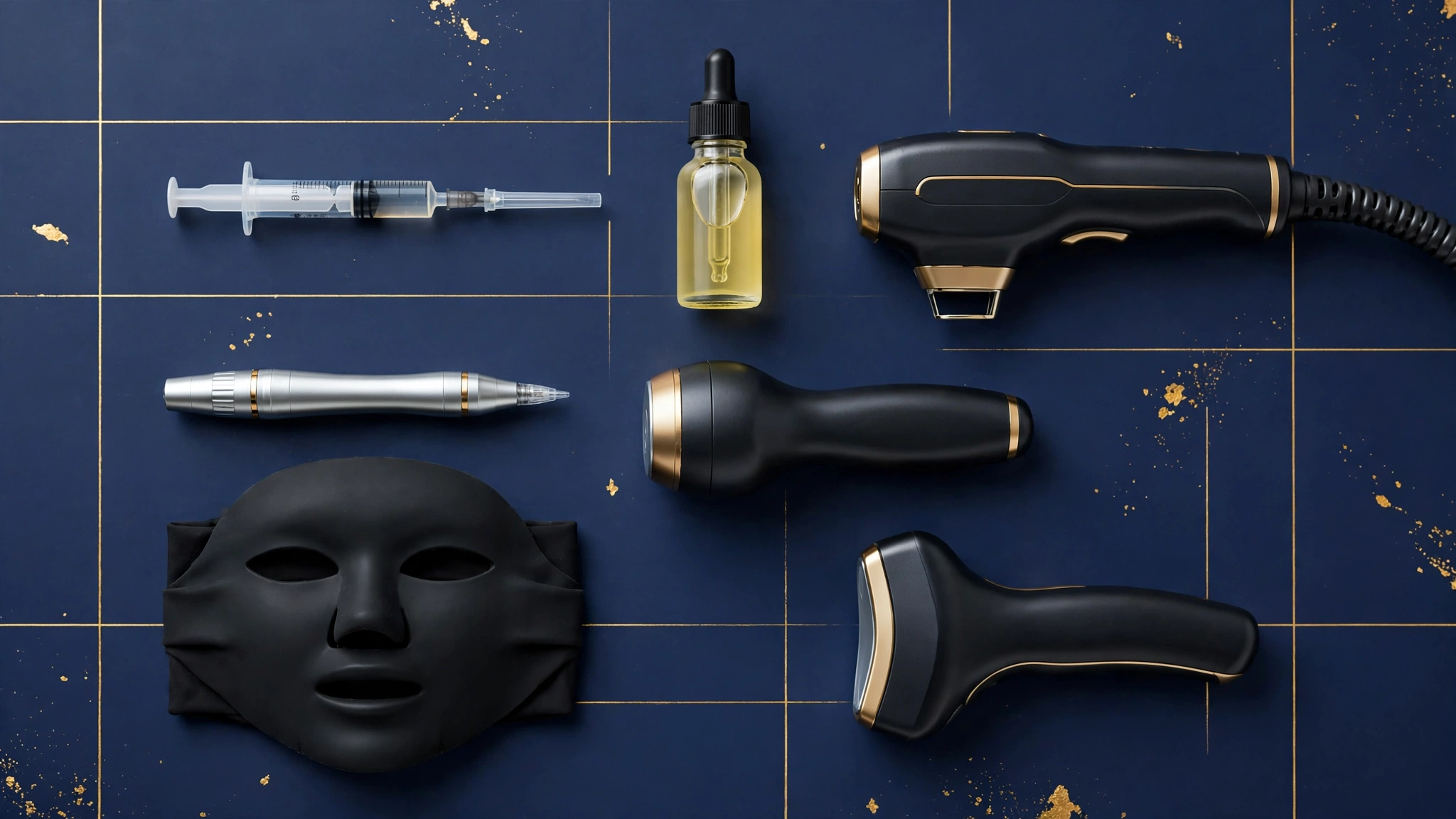
The 7 main types of aesthetic treatments are injectables, chemical peels, laser treatments, microneedling, energy-based tightening, facials, and body contouring, and each type targets one main concern, from wrinkles to fat pockets. The table below sets each type against its job, its best concern and its downtime.
| Type | What it does | Best for | Downtime |
|---|---|---|---|
| Injectables | Relax muscles or add volume under skin | Wrinkles, thin lips, hollow cheeks | None to 1 day |
| Chemical peels | Remove damaged outer skin layers with acid | Pigment, acne marks, rough texture | 1 to 7 days |
| Laser treatments | Send light energy into skin | Pigment, veins, hair, scars, fine lines | 1 to 7 days |
| Microneedling | Make tiny channels that prompt repair | Scars, pores, mild laxity | 1 to 3 days |
| Energy-based tightening | Heat deep tissue with radiofrequency or ultrasound | Loose jawline, neck, mild sagging | None to 1 day |
| Facials | Cleanse, exfoliate, extract and hydrate | Dull skin, clogged pores, dryness | None |
| Body contouring | Freeze or heat fat cells in set spots | Small fat pockets, mild cellulite | None to 1 day |
Injectables split into wrinkle relaxers such as Botox and dermal fillers such as hyaluronic acid gels. Chemical peels split into light, medium and deep. Laser treatments split by target: pigment, redness and veins, or resurfacing. Microneedling pairs well with platelet rich plasma (PRP). Energy-based tightening heats the dermis and prompts new collagen over 2 to 3 months.
How Do Injectables Work?
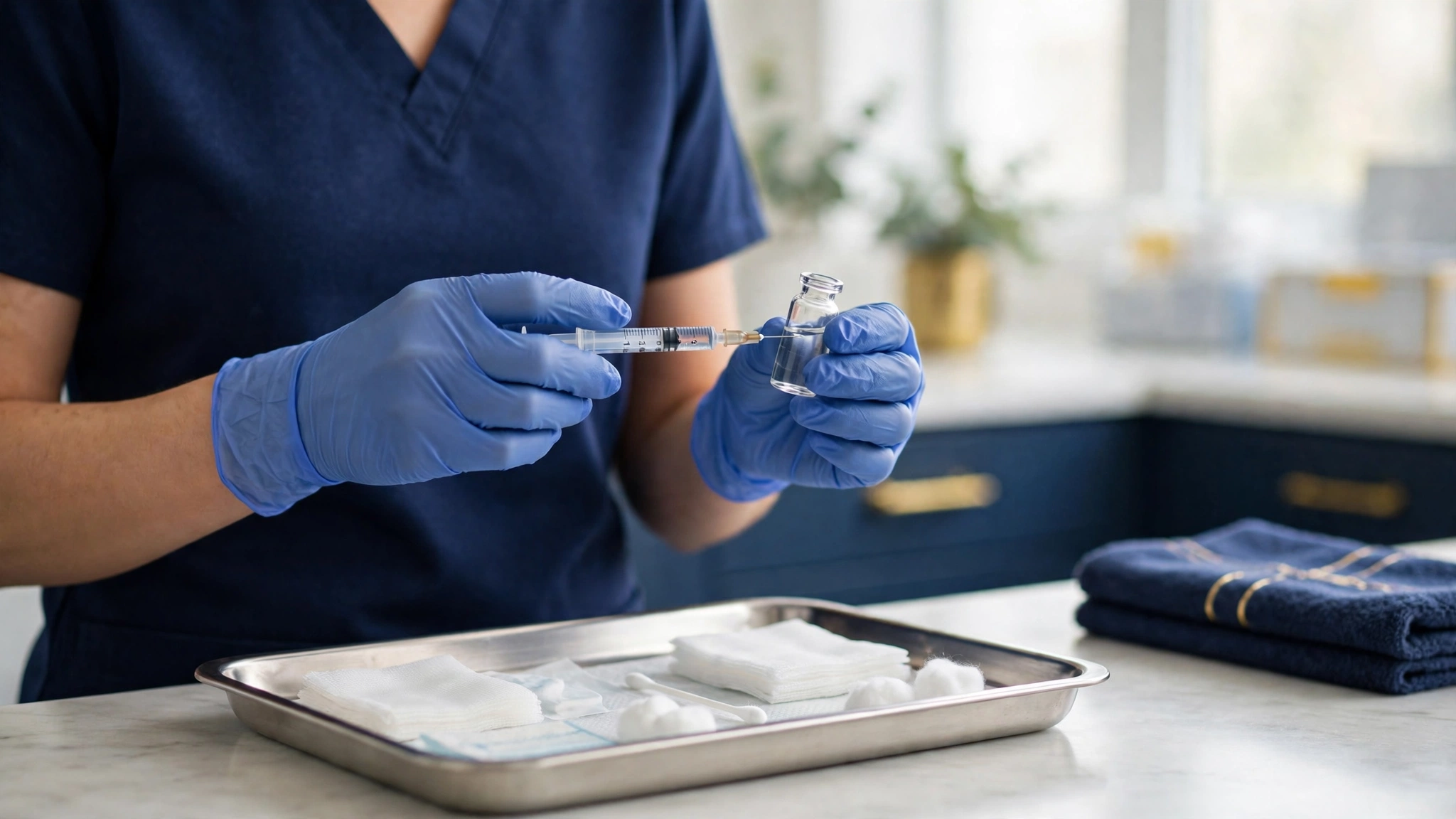
Injectables work in 2 ways: wrinkle relaxers block the nerve signal that tells a muscle to contract, and dermal fillers add volume under the skin to lift hollows and smooth folds. Wrinkle relaxers use botulinum toxin, a purified protein that blocks acetylcholine release at the nerve ending, so the treated muscle relaxes and the line above it softens. Botulinum toxin is the active agent in Botox, Dysport, Xeomin, Jeuveau and Daxxify. Smoothing appears 3 to 5 days after injection, with full effect at about 1 week, and effects last 2 to 4 months for most brands, with some patients seeing up to 6 months (Source: Wikipedia, 2026). The United States Food and Drug Administration (FDA) added boxed warnings to botulinum toxin products in 2009 over spread from the injection site (Source: FDA, 2009).
Dermal fillers use soft gels, most often hyaluronic acid, a substance the body makes to hold water in skin. Hyaluronic acid fillers restore volume in cheeks, lips, chin and folds, and a provider can dissolve them with an enzyme if needed. Collagen-stimulating fillers such as Sculptra and Radiesse prompt the body to build its own collagen, and their results last up to 2 years. Wrinkle-relaxing injections made up about half of all non-surgical treatments by United States plastic surgeons in 2025, and hyaluronic acid fillers made up about 30 percent (Source: American Society of Plastic Surgeons, 2025).
What Do Skin Resurfacing Treatments Do?
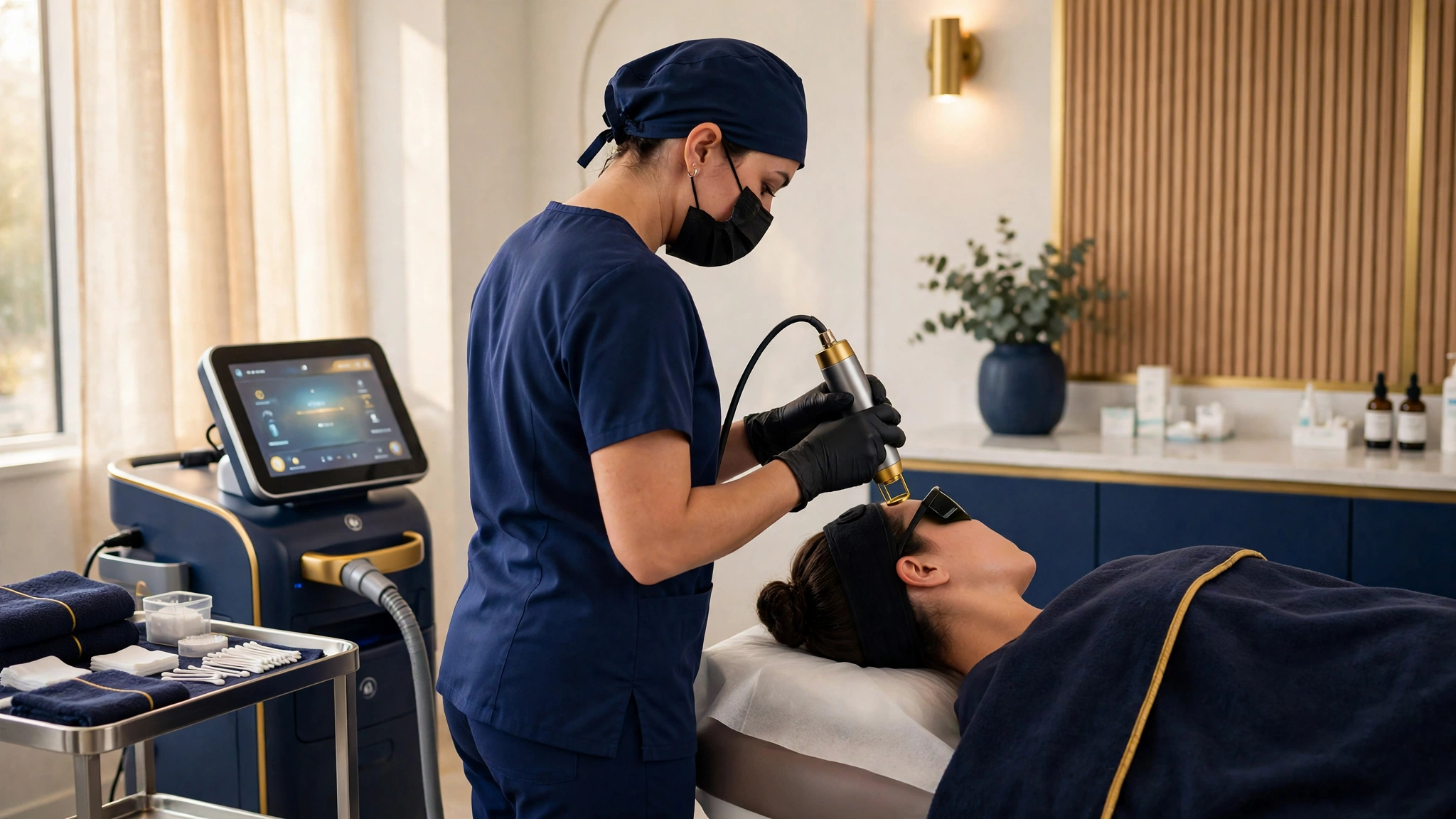
Skin resurfacing treatments remove or renew damaged outer skin so fresh, smoother skin grows in its place, and they treat pigment, acne scars, fine lines and rough texture. A chemical peel uses an acid solution to remove the outermost layers of skin, and the skin peels over days as new skin forms below. Light peels use alpha hydroxy acids (AHAs) such as glycolic acid or beta hydroxy acids (BHAs) such as salicylic acid. Medium peels use trichloroacetic acid (TCA), with about 1 week of peeling. Deep peels use phenol-croton oil, and they need weeks of healing and medical care.
Laser resurfacing removes thin layers of skin with a focused beam, and fractional lasers treat small columns at a time so healing runs faster. Skin resurfacing procedures reached 3,703,305 in the United States in 2024, a 6 percent rise on the prior year and the fastest growth among the top non-surgical procedures (Source: American Society of Plastic Surgeons, 2024). Microneedling uses fine needles to make tiny channels in the skin, and the channels prompt new collagen and elastin. A course of 3 to 4 sessions, spaced 4 to 6 weeks apart, gives the clearest change.
Aesthetic Treatments vs Cosmetic Surgery: What Is the Difference?
Aesthetic treatments differ from cosmetic surgery in 5 ways: no general anesthesia, no incisions, shorter downtime, shorter-lived results, and lower cost per session. Cosmetic surgery cuts tissue, moves fat or skin, and reshapes structure, while aesthetic treatments change the surface or the tissue just below it.
| Factor | Aesthetic treatments | Cosmetic surgery |
|---|---|---|
| Anesthesia | None or numbing cream | General or deep sedation |
| Incisions | None, or needle pricks only | Yes, with scars |
| Downtime | None to 7 days | 1 to 4 weeks |
| Results last | 3 to 24 months | Years, often permanent |
| Cost per session | $196 to $1,829 on average | $3,000 to $10,000 surgeon fee |
| Best for | Lines, pigment, mild laxity, small fat pockets | Major sagging, large volume change, reshaping |
Aesthetic treatments suit readers who want a change they can test and reverse, since most results fade and fillers can be dissolved. Cosmetic surgery suits readers who want a large, lasting change and accept weeks of healing. One rule holds for both: the provider matters more than the device.
How Much Do Aesthetic Treatments Cost?
Aesthetic treatments cost $196 to $1,829 per session on average, and the type, the provider and the city set the price. The table below uses average surgeon fees from the American Society of Plastic Surgeons (2024), excluding anesthesia and facility charges.
| Treatment | Average surgeon fee (2024) | Sessions often needed |
|---|---|---|
| Chemical peel | $196 | 1 to 6, by depth and goal |
| Botulinum toxin (Botox) | $326 | 1, repeated every 3 to 4 months |
| Laser skin treatments | $697 | 3 to 6 |
| Skin resurfacing | $1,829 | 1 to 3 |
| Dermal fillers | $600 to $1,200 per syringe | 1, repeated every 6 to 12 months |
| Laser hair removal | $200 to $500 per session | 6 to 8 |
City clinics charge more than small-town clinics, and dermatologist clinics charge more than day spas. Packages cut the per-visit price in many clinics, so check the expiry date before paying. Insurance does not cover aesthetic treatments, since they are elective. A price far below the local average can mean diluted products or untrained staff.

What Are the Benefits of Aesthetic Treatments?
Aesthetic treatments benefit readers in 5 ways: softer lines, smoother texture, firmer skin, more even tone, and higher confidence in appearance. Aesthetic treatments soften dynamic lines on the forehead, between the brows and around the eyes, and the change looks natural when the dose stays low. Aesthetic treatments smooth rough texture and acne scars by renewing the surface layer, and the change builds over weeks as collagen forms. Aesthetic treatments firm mild laxity on the jawline and neck, and the lift appears over 2 to 3 months. Aesthetic treatments even out tone by clearing sun spots, redness and melasma patches. Readers who want plain facts on everyday health topics can find more guides on Voice of Wave.
Aesthetic treatments also help confidence: a survey by the American Academy of Facial Plastic and Reconstructive Surgery found that 70 percent of respondents felt their non-surgical treatment improved their self-esteem (Source: American Academy of Facial Plastic and Reconstructive Surgery, 2024). Most readers return to normal tasks the same day.
What Are the Risks of Aesthetic Treatments?
No, aesthetic treatments are not risk-free: mild redness, swelling and bruising are common, and rare harm includes infection, scarring, allergic reaction and blood vessel blockage. Mild effects appear in most patients and fade in days: redness for hours, swelling for 1 to 3 days, bruising for up to 1 week, and peeling after peels and lasers. Stronger effects are rare but real: burns from a laser set too high, and pigment change, which hits darker skin tones more often. Allergic reactions are rare, and a patch test lowers the risk.
The risk the FDA calls most concerning is injection into a blood vessel, which can block blood flow and, in rare cases, damage skin or vision (Source: FDA, 2024). Fillers carry this risk more than wrinkle relaxers, and the injector must know vessel paths and keep hyaluronidase, the dissolving enzyme, on hand.
How Do You Choose the Right Aesthetic Treatment?
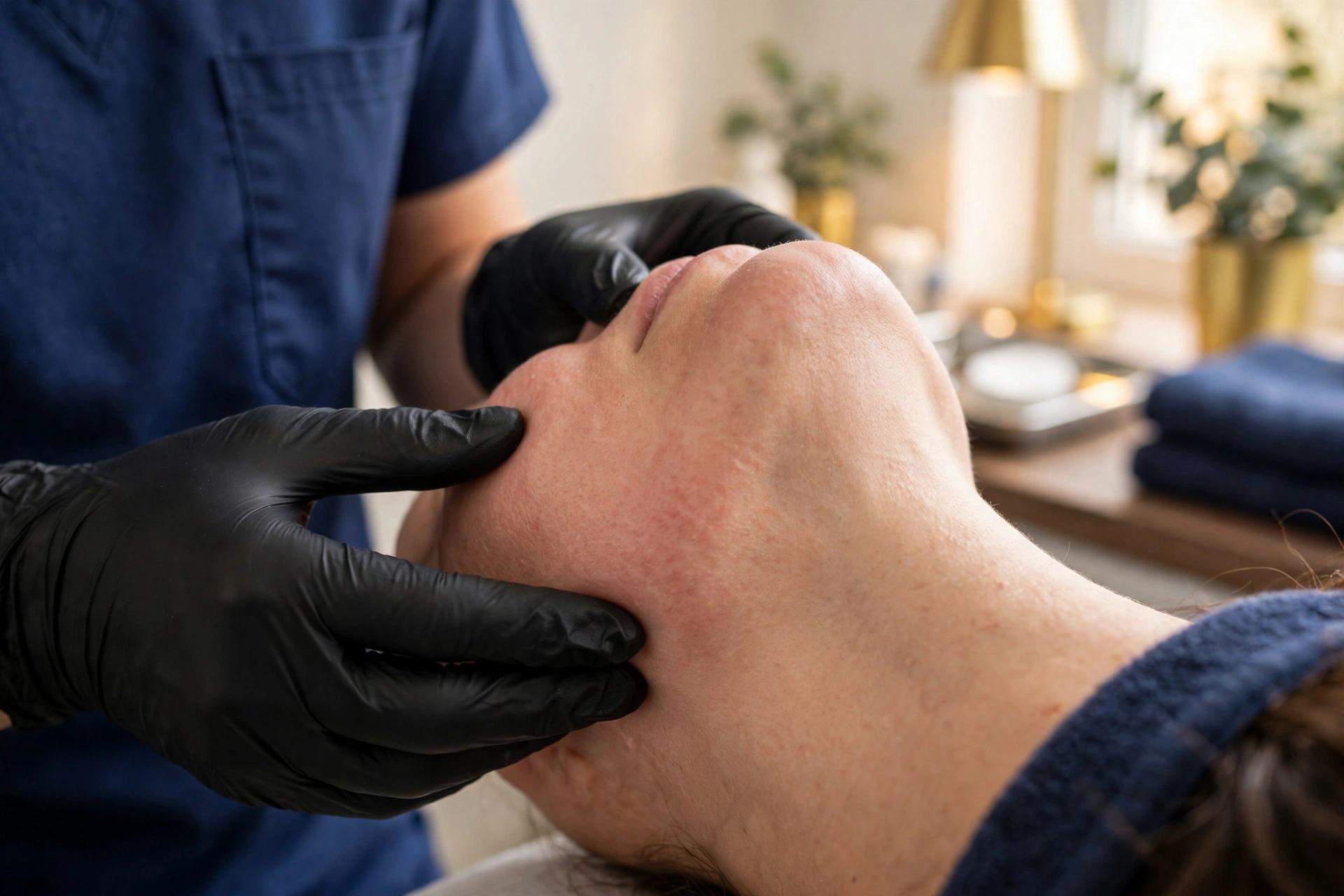
Choose the right aesthetic treatment in 6 steps: name the concern, match the layer, check the provider, compare costs, read the downtime, and book a consultation.
- Name the one concern that bothers you most.
- Match the concern to the skin layer: muscle, volume or surface.
- Check the provider’s license, training and patient photos.
- Compare the full cost, including all sessions.
- Read the downtime, and pick a date that fits.
- Book a consultation first, and walk away if the clinic skips it.
Read next: Professional Facials: Skincare Guide explains the gentler starting point for skin care.
Match the layer, not the label: a filler will not fix loose skin, and a laser will not lift a hollow cheek. A consultation should end with a written plan naming the treatment, sessions, price and downtime.
What Should You Do Before and After an Aesthetic Treatment?
Before an aesthetic treatment, pause strong acids and retinoids for 3 to 5 days, arrive with clean skin, and bring a product list; after the treatment, use a mild cleanser, moisturizer and sunscreen for 48 hours, and skip scrubs, strong acids and hard workouts for 1 to 2 days.
Before the visit:
- Pause retinol and acid products 3 to 5 days before.
- Skip waxing and strong peels for 1 week before.
- Tell the provider about allergies, medicines and skin conditions.
- Arrive with little makeup, and avoid alcohol for 24 hours before injectables.
After the visit:
- Use a mild cleanser, moisturizer and sunscreen for 48 hours.
- Skip scrubs, acids, retinoids and hot showers for 1 to 2 days.
- Skip hard workouts for 24 hours after injectables.
- Call the clinic when redness, swelling or pain lasts past 48 hours.
Sun care matters most after peels and lasers: fresh skin burns with ease, so sunscreen with SPF 30 or higher is part of aftercare. Plan a treatment 3 to 5 days before a big event, not the day before.
Who Should Avoid Aesthetic Treatments?
Pregnant or breastfeeding readers, people with active skin infection, open wounds, severe eczema flare-ups or recent sunburn should avoid aesthetic treatments until the condition clears. Pregnancy rules out most injectables, peels and lasers, since safety data for the unborn child is thin. Active cold sores, acne cysts or skin infections raise the risk that treatment spreads the infection, so wait until the skin heals.
Readers who take blood thinners face higher bruising risk, and they need medical clearance first. Readers who use prescription isotretinoin need dermatologist clearance, since the drug changes how skin heals. Readers with a history of keloid scars should tell the provider. Readers with unrealistic goals should pause too: aesthetic treatments soften lines, but they do not rebuild a face.
Conclusion
Aesthetic treatments are non-surgical cosmetic procedures that change how skin, face and body look without an operation, and they cover 7 main types: injectables, chemical peels, lasers, microneedling, energy-based tightening, facials and body contouring. Aesthetic treatments cost $196 to $1,829 per session on average. Aesthetic treatments benefit readers with softer lines, smoother texture, firmer skin, more even tone and higher confidence, and mild redness, swelling and bruising are the common effects. Choose the right one by naming the concern, matching the skin layer, checking the provider and booking a consultation first.
Read more health guides on the Voice of Wave blog.
Frequently Asked Questions
Are aesthetic treatments safe?
Yes, aesthetic treatments are safe for most healthy adults when a trained, licensed provider performs them in a clean clinic, and serious harm is rare. Mild redness, swelling and bruising fade in days. Rare harm includes infection, scarring, allergic reaction and blood vessel blockage from fillers. A full health history and proper aftercare keep the risk low.
How long do Botox results last?
Botox results last 2 to 4 months for most brands, with some patients seeing effects for up to 6 months. Smoothing appears 3 to 5 days after injection, with full effect at about 1 week. Muscles can be treated again to keep the smoothed look, and regular treatments often need lower doses over time as muscles learn to stay relaxed.
How much do aesthetic treatments cost?
Aesthetic treatments cost $196 to $1,829 per session on average, based on 2024 surgeon fees from the American Society of Plastic Surgeons. A chemical peel averages $196, botulinum toxin $326, laser skin treatments $697, and skin resurfacing $1,829. The type, provider, city and number of sessions set the final price, and insurance does not cover elective care.
What is the best aesthetic treatment for wrinkles?
The best aesthetic treatment for wrinkles depends on the wrinkle type: wrinkle relaxers suit movement lines, fillers suit deep folds and hollows, and lasers or peels suit fine surface lines. Forehead lines respond to Botox, deep folds to hyaluronic acid fillers, and fine lines to peels or fractional laser. A consultation matches the treatment to the line type.
What is the difference between Botox and fillers?
Botox relaxes the muscle that causes a wrinkle, while fillers add volume under the skin to lift hollows and smooth folds. Botox suits movement lines on the forehead, between the brows and around the eyes, and it lasts 2 to 4 months. Fillers suit cheeks, lips, chin and folds, and hyaluronic acid fillers last 6 to 12 months.
How many sessions does laser hair removal need?
Laser hair removal needs 6 to 8 sessions, spaced 4 to 6 weeks apart, because hair grows in cycles and the laser only treats follicles in the active growth phase. Each session costs $200 to $500 on average. Results build across the course, and most readers need a yearly touch-up session to keep the area smooth.