
Introduction
To read lab results, read each line in the same order: test name, result, units, reference range, and flag, then read flagged lines together with related tests and earlier results. A lab report is a comparison tool, not a diagnosis on its own. A flag says a value sits outside the range printed on that report. A flag does not say why the value sits outside the range, or how much the value matters. This guide explains report parts, reference ranges, H and L flags, and the main panels: a complete blood count (CBC), a comprehensive metabolic panel (CMP), a lipid panel, a thyroid panel, and urine results. This guide also covers trends, repeat testing, and questions to ask a clinician.
This article gives general education only, not personal medical advice. Discuss your results with a clinician who knows your history, symptoms and medicines.
- Read lab results line by line: test name, result, units, reference range, and flag.
- A reference range covers the middle 95 percent of healthy people, so about 1 in 20 healthy people falls outside it on one test.
- H means high and L means low against the range on your own report. A flag shows a boundary was crossed, not the distance or the cause.
- Read flagged results with related tests and earlier results from the same laboratory.
- Ranges differ between laboratories, and some numbers are guideline targets, not reference ranges.
What Does It Mean to Read Lab Results?
To read lab results means to compare each value with the reference range or target printed on the same report, in the units printed on the same report, and then to read flagged values with related tests, symptoms, medicines and earlier results. A lab report lists the test name, result, units, reference range, and flag for each test. A clinician reads a lab report with history, symptoms, medicines, and other tests. A reader at home reads the same report to prepare questions and track change. A reader at home does not diagnose a condition from one number.
A lab report contains a patient name, a sample date, a sample type, and comments from the laboratory. Read comments before you read the numbers. Laboratory test results drive about 70 percent of clinical decisions (Source: Journal of the American Board of Family Medicine, 2025). For more health guides in the same plain style, browse the Health section on this site.
How Do You Read One Line on a Lab Report?
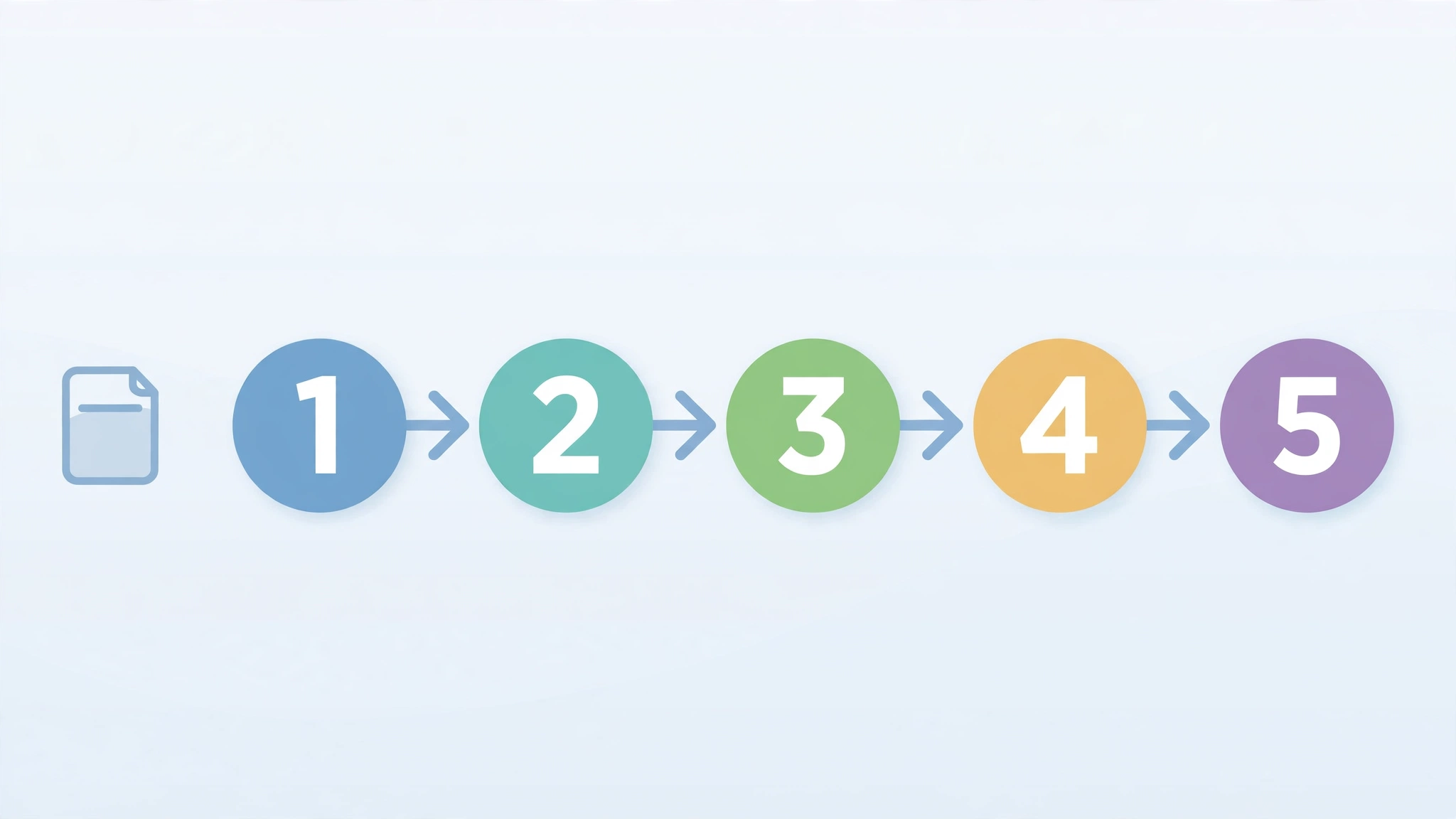
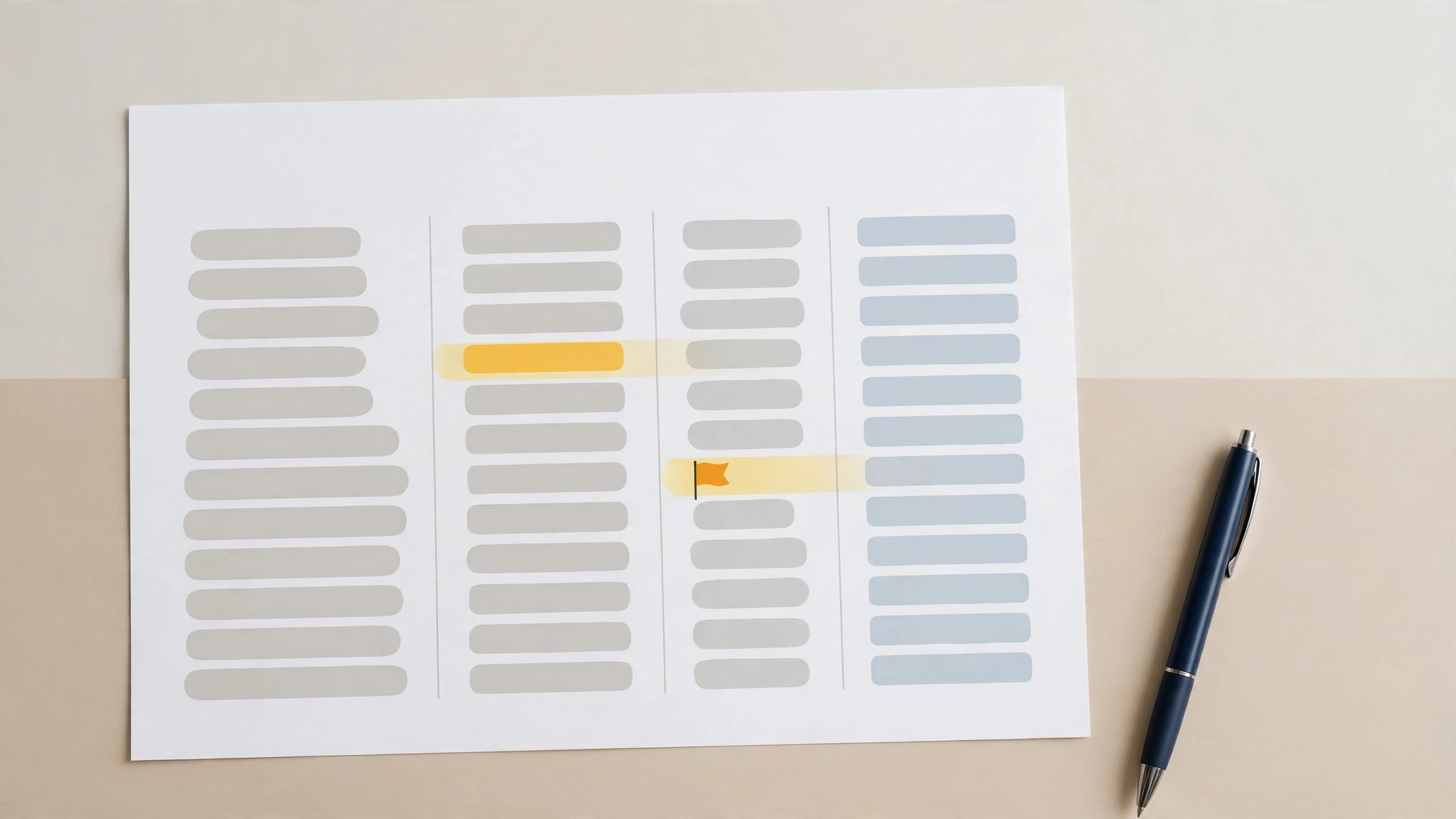
To read one line on a lab report, read the test name, then the result, then the units, then the reference range, then the flag, in that order, every time, and use the range printed on the same report for every line. The fixed order stops a common error: a reader sees a flag first and judges the result before checking units or range.
- Test name. What was measured, often as an abbreviation such as Hgb, ALT, or TSH.
- Result. Your value, as a number or as a word such as positive, negative, or trace.
- Units. The units beside the result, such as mg/dL, mmol/L, mIU/L, or percent.
- Reference range. The range printed on the same report.
- Flag. H for high, L for low, or a critical marker, or no flag.
Units decide meaning. A glucose result of 100 mg/dL and a glucose result of 100 mmol/L are different values. Worked example: hemoglobin 13.5 g/dL, range 12.0 to 16.0 g/dL, no flag, so the value sits inside the range. Hemoglobin 11.9 g/dL, same range, flag L: the value sits 0.1 g/dL below the lower limit.
What Is a Reference Range, and Why Do Healthy People Fall Outside It?
A reference range is the interval that covers the middle 95 percent of values measured in a group of healthy people, and healthy people fall outside a reference range because the range is a statistical interval, not a line between health and disease. A laboratory keeps the middle 95 percent of values from a reference group. The lowest 2.5 percent and the highest 2.5 percent fall outside by design.
The usual process entails testing at least 120 healthy people, and the central 95 percent of the values is adopted as the range (Source: Journal of the American Board of Family Medicine, 2025). The same review states that 64.2 percent of healthy people will have at least one abnormal result in a panel of 20 tests (Source: Journal of the American Board of Family Medicine, 2025).
A reference range{target=”_blank” rel=”noopener noreferrer”} differs from a target. A reference range describes values in healthy people. A target describes a value linked to lower risk, such as a cholesterol target. A target stays the same across laboratories. A reference range changes across laboratories.
| Feature | Reference range | Guideline target or threshold |
|---|---|---|
| Reference range | Values in a healthy reference group | A value linked to risk or a treatment goal |
| How the number is set | Middle 95 percent of reference group values | Clinical guideline or diagnostic criteria |
| Same across laboratories? | No, ranges differ by laboratory, method, age group and sex | Yes, in most cases the target stays the same |
| Example | Hemoglobin range on your report | HbA1c threshold for diabetes diagnosis |
What Do H, L, and Critical Flags Mean?
An H flag means a result sits above the reference range on the report, an L flag means a result sits below the reference range on the same report, and a critical flag means a result needs prompt clinician contact. A flag is a marker, not a diagnosis. A flag says a boundary was crossed. A flag does not say how far past the boundary the value sits, or why it crossed.
H and L flags use the same letter for a small crossing and a large crossing. A hemoglobin of 11.9 g/dL against a lower limit of 12.0 g/dL gets an L flag. A hemoglobin of 7.5 g/dL against the same lower limit gets the same L flag. Read the number, the two limits, and whether related tests move in the same direction.
Critical values sit apart from H and L flags. Laboratories contact the clinician who ordered the test at once when a result reaches a critical value. A critical value can appear with a double asterisk, bold type, an arrow, or color. When a result carries a critical marker, follow the contact instructions on the report and contact a clinician promptly.
Some results use words, not numbers. A positive result means a substance or marker was detected. A negative result means a substance or marker was not detected at the test threshold. A trace result means a small amount was detected.
How Do You Read a Complete Blood Count (CBC)?
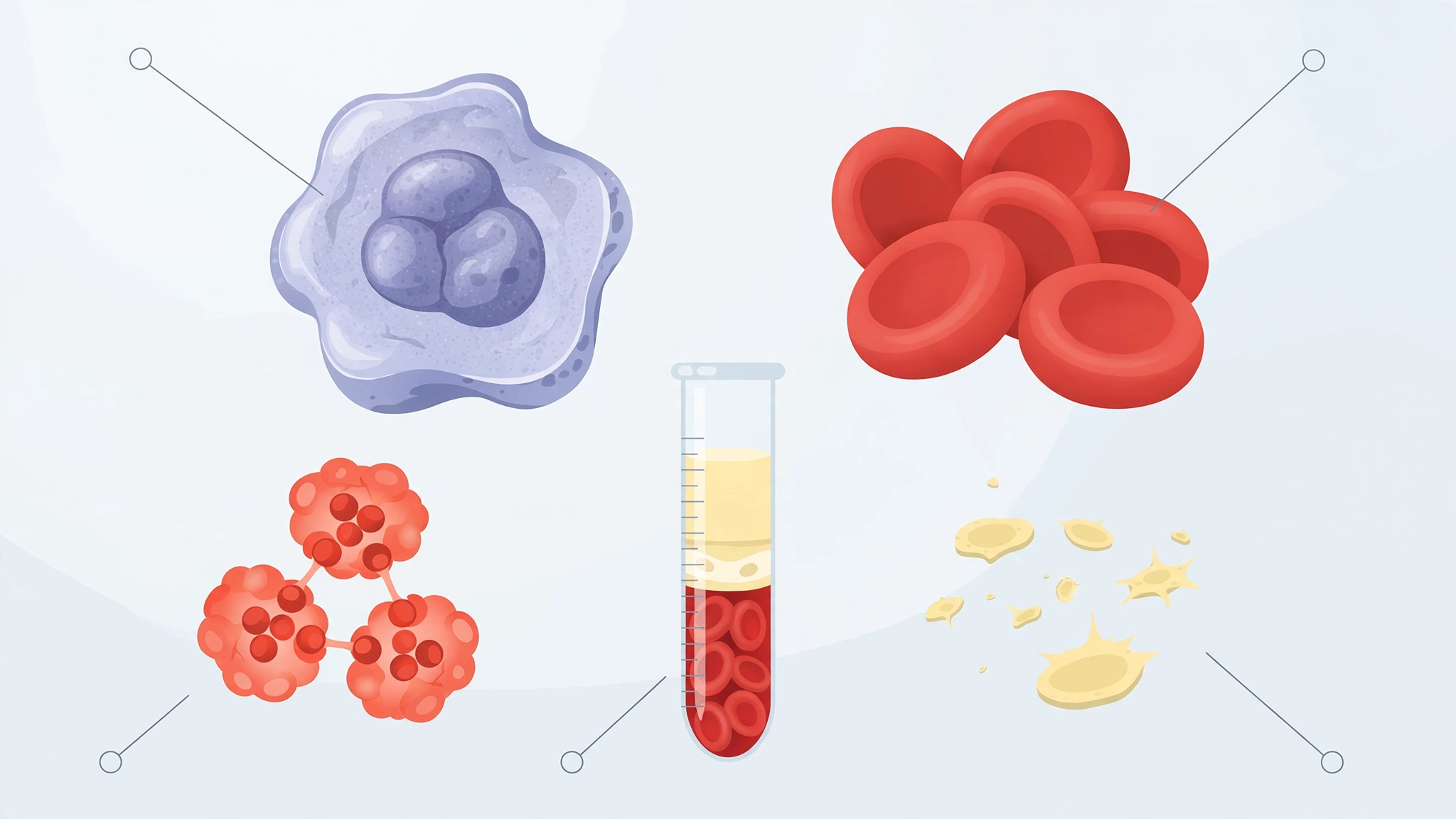
A complete blood count (CBC) is a panel that measures red blood cells, white blood cells, and platelets, and a CBC is read by checking each cell group first, then reading the cell size and hemoglobin values together. A blood test{target=”_blank” rel=”noopener noreferrer”} groups several measurements into one panel, and a CBC is one such panel. White blood cells (WBC) fight infection. Red blood cells (RBC) carry oxygen. Hemoglobin (Hgb) carries oxygen in red blood cells. Hematocrit (Hct) is the share of blood volume from red blood cells. Mean corpuscular volume (MCV) is average red blood cell size. Platelets (Plt) help blood clot.
| CBC line | What the line measures | Typical adult example range |
|---|---|---|
| White blood cells (WBC) | Infection-fighting cells | 4,000 to 11,000 cells per microliter |
| Red blood cells (RBC) | Oxygen-carrying cells | 4.0 to 5.5 million cells per microliter |
| Hemoglobin (Hgb) | Oxygen-carrying protein | 12.0 to 17.5 g/dL |
| Hematocrit (Hct) | Share of blood volume from red cells | 36 to 50 percent |
| Mean corpuscular volume (MCV) | Average red blood cell size | 80 to 100 fL |
| Platelets (Plt) | Clotting cells | 150,000 to 400,000 cells per microliter |
The example ranges match the example ranges listed on the Wikipedia Blood test page, accessed in 2026. Read CBC lines in groups. Low hemoglobin with low hematocrit and low MCV points toward small red blood cells and possible iron shortage. High white blood cells with fever point toward infection. Low platelets with bruising point toward a clotting question.
How Do You Read a Metabolic Panel, Lipid Panel, and Thyroid Panel?
A comprehensive metabolic panel (CMP) measures blood sugar, kidney markers, electrolytes, liver markers, and proteins; a lipid panel measures cholesterol and triglycerides against targets; and a thyroid panel measures thyroid stimulating hormone (TSH) together with thyroid hormones. Each panel answers a different question.
A CMP includes fasting glucose, blood urea nitrogen (BUN), creatinine, estimated glomerular filtration rate (eGFR), sodium, potassium, calcium, albumin, bilirubin, and liver enzymes such as alanine transaminase (ALT), aspartate transaminase (AST), and alkaline phosphatase (ALP). BUN and creatinine show kidney function. Read liver enzymes as a pattern.
A lipid panel includes total cholesterol, low-density lipoprotein (LDL) cholesterol, high-density lipoprotein (HDL) cholesterol, and triglycerides. Targets: total cholesterol under 200 mg/dL, LDL under 100 mg/dL, triglycerides under 150 mg/dL, and HDL 40 mg/dL or higher for men and 50 mg/dL or higher for women. A clinician sets a personal target from history and risk factors.
A thyroid panel centers on thyroid stimulating hormone (TSH), a pituitary hormone that signals the thyroid gland. Free T4 (thyroxine) is a thyroid hormone. A common adult TSH example range is 0.4 to 4.0 mIU/L, with the range on your report controlling your reading. High TSH with low free T4 points toward an underactive thyroid. Low TSH with high free T4 points toward an overactive thyroid.
HbA1c measures average blood sugar over about 2 to 3 months. The American Diabetes Association Standards of Care in Diabetes (2026) set HbA1c below 5.7 percent as normal, 5.7 to 6.4 percent as prediabetes, and 6.5 percent or higher as diabetes (Source: American Diabetes Association, 2026).
How Do You Read Lab Results Over Time?
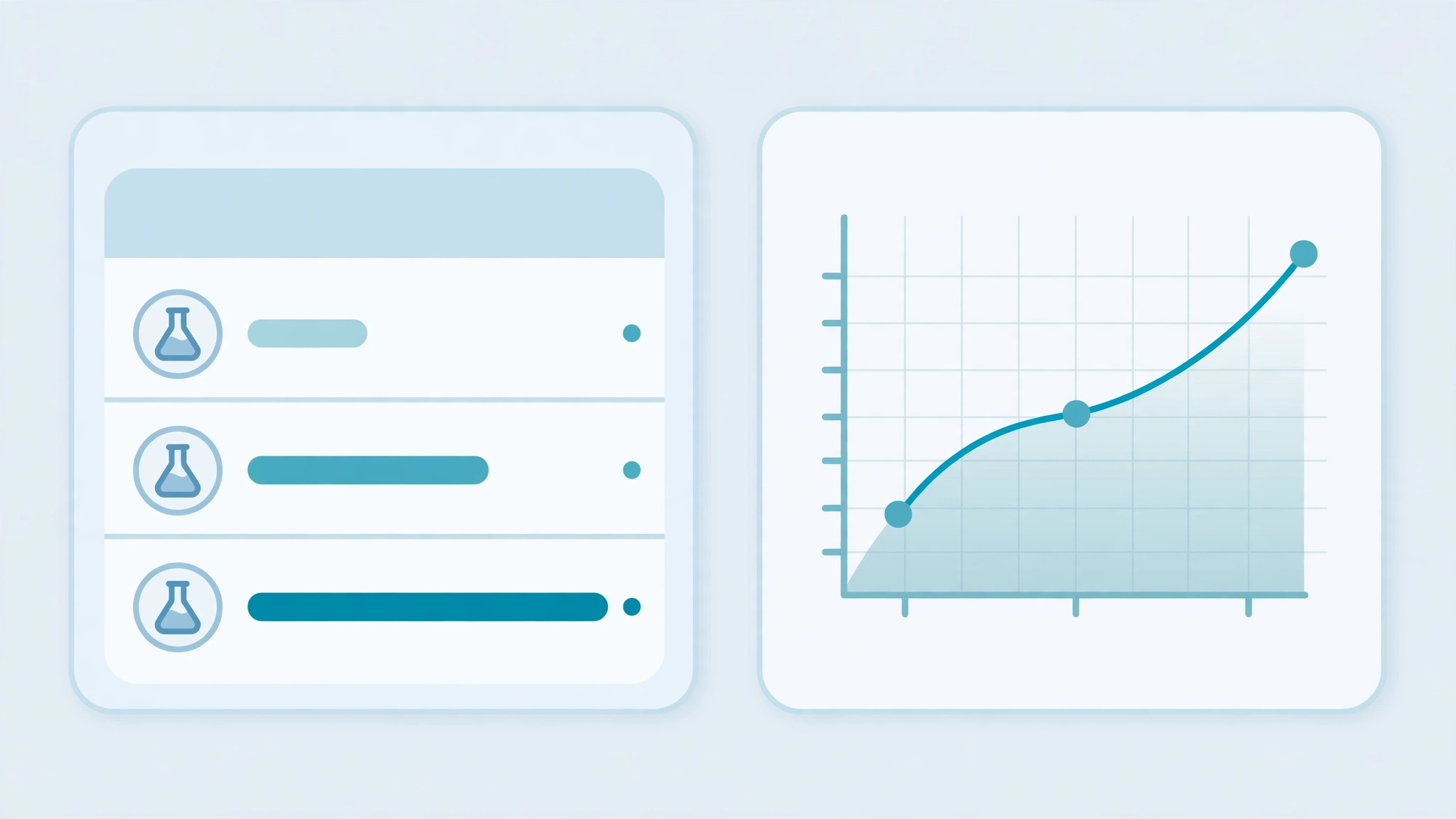
To read lab results over time, compare results from the same laboratory, in the same units, with the same fasting and medicine conditions, and look for a sustained direction of change across at least two or three time points. Plot the values in a simple table with date, test name, result, units, range, flag, fasting status, and medicines.
Stay with one laboratory for trend tracking when you can. A value can cross a flag boundary when the laboratory changes, with no change in health.
Fasting, time of day, hydration, exercise, illness, and medicines change many results. Glucose and triglycerides rise after meals. Dehydration raises hemoglobin, hematocrit, BUN, and creatinine readings. A cold raises white blood cell counts. Biotin supplements change thyroid test readings. Note fasting hours, recent illness, and the full medicine list for each report.
What Should You Do When a Result Is Out of Range?
When a result is out of range, note the size of the crossing, check fasting, medicines, illness and laboratory change, read related lines, and contact a clinician with the report and your notes, promptly when symptoms or report instructions require prompt contact. Chest pain, breathlessness, confusion, heavy bleeding, and fever with low white blood cells need urgent care, even when a flag looks small.
Do not change a medicine dose, stop a medicine, or start a supplement from one flagged result. Ask a clinician whether a repeat test or a medicine review is the next step. A repeat test uses the same laboratory when possible, the same fasting state, the same sample time, and the same medicine list, unless a clinician directs a change.
Read one related Voice of Wave guide next: explore daily habits for a healthy life for small routines that support routine checks.
What Questions Should You Ask Your Clinician?

The questions to ask a clinician about lab results are questions about the test purpose, the range, the size of any crossing, related tests, repeat testing, medicines, and the next step, asked with the report in hand at the visit. Take the report, the trend table, and the medicine list. Ask the clinician to explain each flagged line in plain language.
Ask these questions at the visit:
- What was the purpose of each test?
- Which results sit outside the range, and by how much?
- Does this range fit my age group, sex, and history?
- Do related tests move in the same direction?
- Could fasting, illness, exercise, or a medicine explain this result?
- Does this need a repeat test, and when, and under what conditions?
- Does this need a new test, a referral, or a medicine review?
- What symptoms need faster contact before the next visit?
- When will the next result be ready, and how will I receive it?
- What should I track before the next visit?
A clinician answer needs a next step and a date. Ask for the date and the contact route.
Voice of Wave covers health topics plainly.
Conclusion
To read lab results well, read each line in the fixed order of test name, result, units, reference range, and flag, and read flagged lines with related tests and earlier results. A reference range covers the middle 95 percent of healthy people, so a flag alone is not a diagnosis. A repeat test under the same conditions answers many mild flags. Discuss your results with a clinician, and bring the report, the trend table, and the medicine list.
Explore more guides on the Voice of Wave blog for fresh health, lifestyle, and everyday explainers.
Frequently Asked Questions
What does H mean on lab results?
H means the result sits above the reference range printed on the report. H shows a boundary was crossed. H does not show how far past the boundary the value sits, and H does not show the cause. Read the number, the range limits, and related lines, then discuss the result with a clinician.
What does L mean on lab results?
L means the result sits below the reference range printed on the report. L shows a boundary was crossed on the low side. L does not show how far below the limit the value sits, and L does not show the cause. Read the number, the range limits, and related lines, then discuss the result with a clinician.
Can lab results be wrong?
Yes, lab results can be wrong when a sample is hemolyzed, mislabeled, collected at the wrong time, or affected by fasting, medicines, or illness. A laboratory comment can flag a sample problem. A repeat test under the same conditions checks whether a surprising result holds, and a clinician decides whether a repeat test is needed.
Why do reference ranges differ between labs?
Reference ranges differ between labs because each lab uses its own instruments, methods, and reference group of healthy people. Ranges also differ by age group and sex. The range printed on your own report is the range that applies to your result, so compare your result with that range only.
Should I worry about one slightly abnormal result?
No, one slightly abnormal result on its own is not a reason to worry, because about 5 percent of healthy people fall outside a reference range on a single test by design. Note the size of the crossing, check fasting and medicines, read related lines, and ask a clinician whether a repeat test is needed.
How fast do lab results come back?
Lab results come back at different speeds by test type. Routine blood panels often return in hours or days, while cultures and specialized tests can take days or weeks. A patient portal may show a result before a clinician has reviewed the result. Wait for the clinician review unless report instructions or symptoms require prompt contact.
What is the difference between a reference range and a normal range?
A reference range is the middle 95 percent of values from a healthy reference group, while the term normal range is often used for the same interval. The term reference range is preferred because a value outside the interval is not always a sign of disease. Some numbers are guideline targets, not reference ranges, and targets follow clinical guidelines instead.