
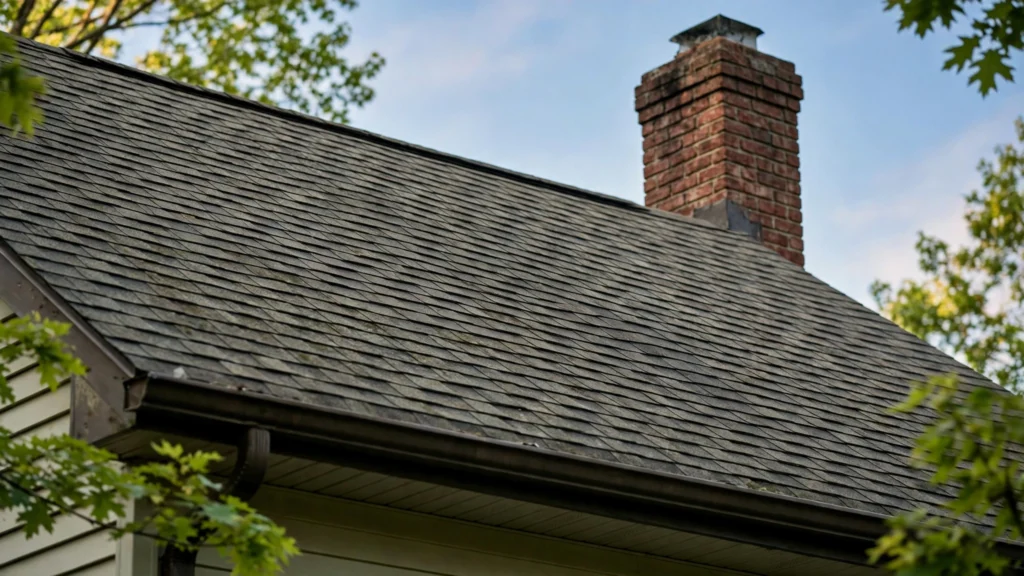
Roof repair signs often appear long before a leak stains a ceiling, and catching them early can save thousands in water damage, mold growth, and structural repairs. A roof protects a home from rain, wind, and sun every day, yet most homeowners only look at it when something goes wrong. This guide explains the 10 warning signs that matter most, how to check a roof safely from the ground, when to call a professional inspector, and what to do after a storm.
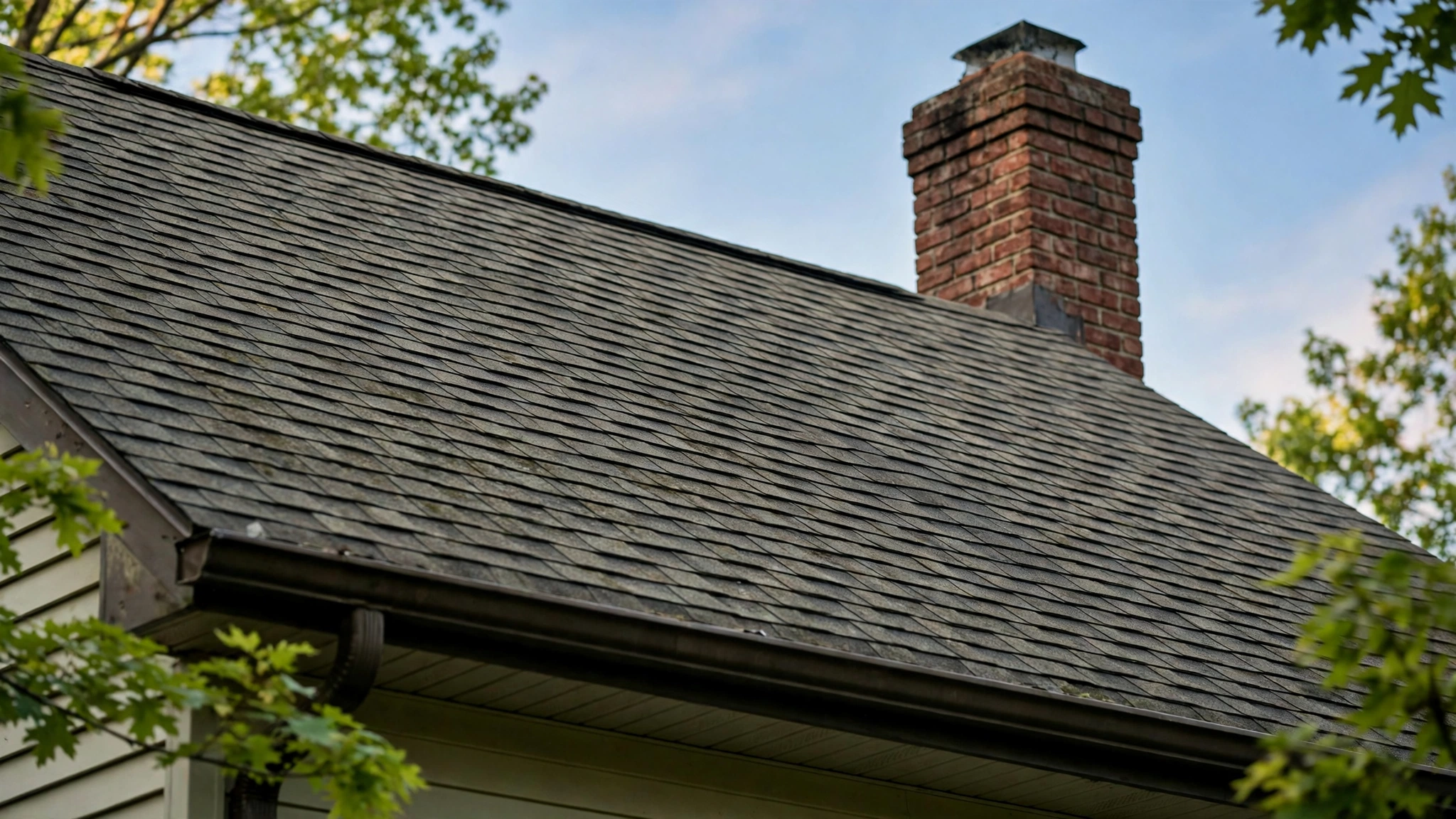
Key Takeaways
- Check from the ground with binoculars, never climb a steep or wet roof.
- Damaged shingles, flashing faults, and sagging are the top roof repair signs.
- Water stains, granule loss, and gutter debris signal leaks or wear.
- Storm damage needs a prompt inspection, even if no leak is visible yet.
- Call a professional for sagging, widespread damage, or any roof work at height.
Table of Contents
- How to Check a Roof Safely
- Damaged or Missing Shingles
- Flashing and Seal Failures
- Sagging and Structural Signs
- Leaks, Stains, and Attic Clues
- Gutters, Granules, and Storm Debris
- When to Call a Professional
- Frequently Asked Questions
How to Check a Roof Safely
Check a roof safely from the ground with binoculars, looking at the roofline, shingles, flashing, gutters, and chimney without climbing onto the roof. Stand across the street or in the yard and scan each slope slowly, noting any dips, missing pieces, or color changes. Check after rain for pooling or overflow, and check the attic for daylight, damp insulation, or stains on rafters. Never walk on a steep, wet, icy, or damaged roof, and never inspect during a storm or high wind.
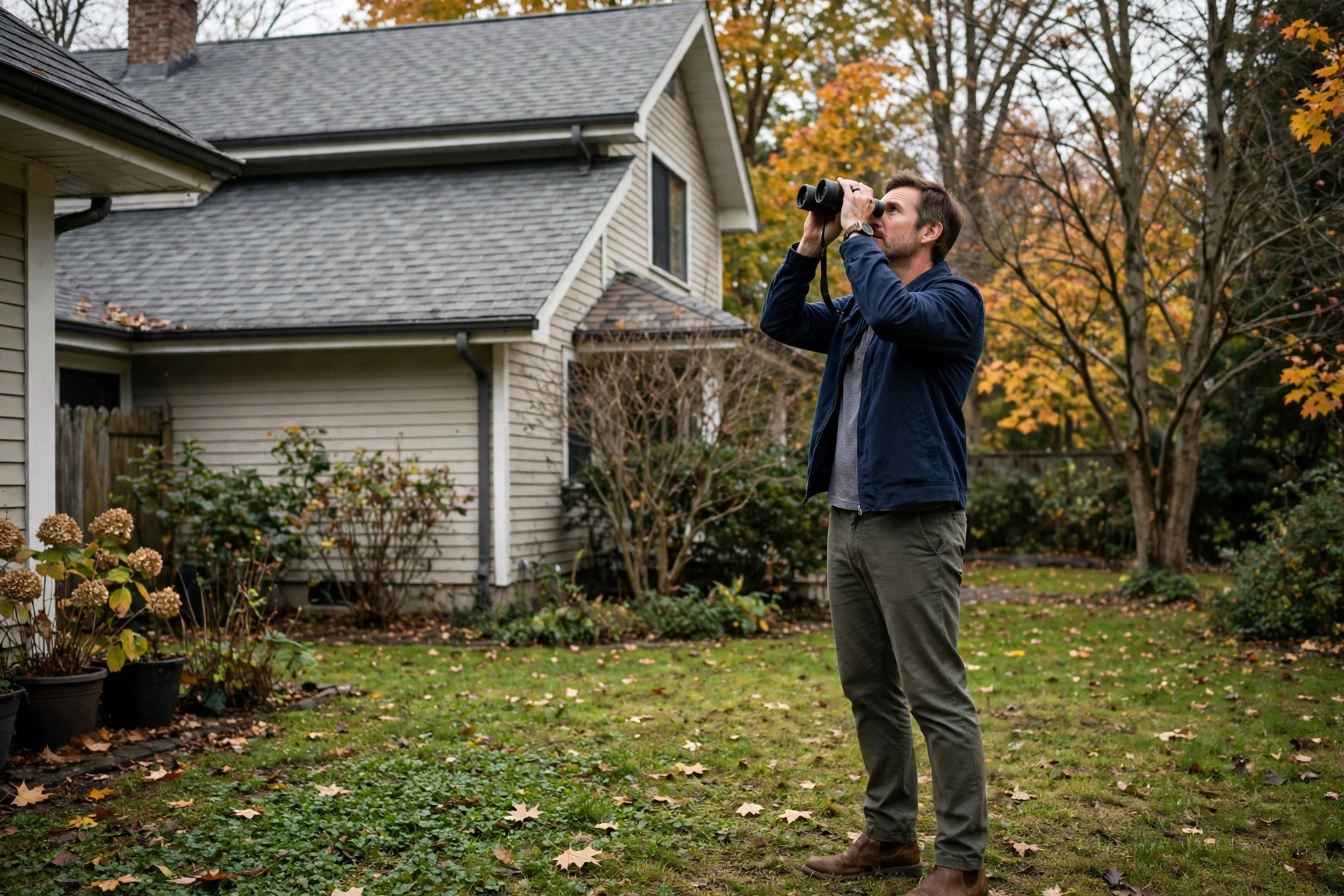
A simple ground check takes 15 minutes and should be done twice a year, in spring and fall, plus after any major storm. Bring binoculars, a phone for photos, and a notebook to record the date and any changes since the last check. Photos help a roofer understand the problem before a visit, and they help with insurance claims if storm damage is found.
Damaged or Missing Shingles
Damaged shingles show as cracked, curled, cupped, or missing pieces, and they leave gaps where water can enter the roof layers below. Shingles curl when they age, dry out, or lose granules, and they crack from heat, hail, or foot traffic. Missing shingles are the clearest repair sign, because the underlayment below is not designed to handle long-term weather exposure. A few damaged shingles can often be replaced individually, but widespread damage across a slope usually means the roof is near the end of its life.
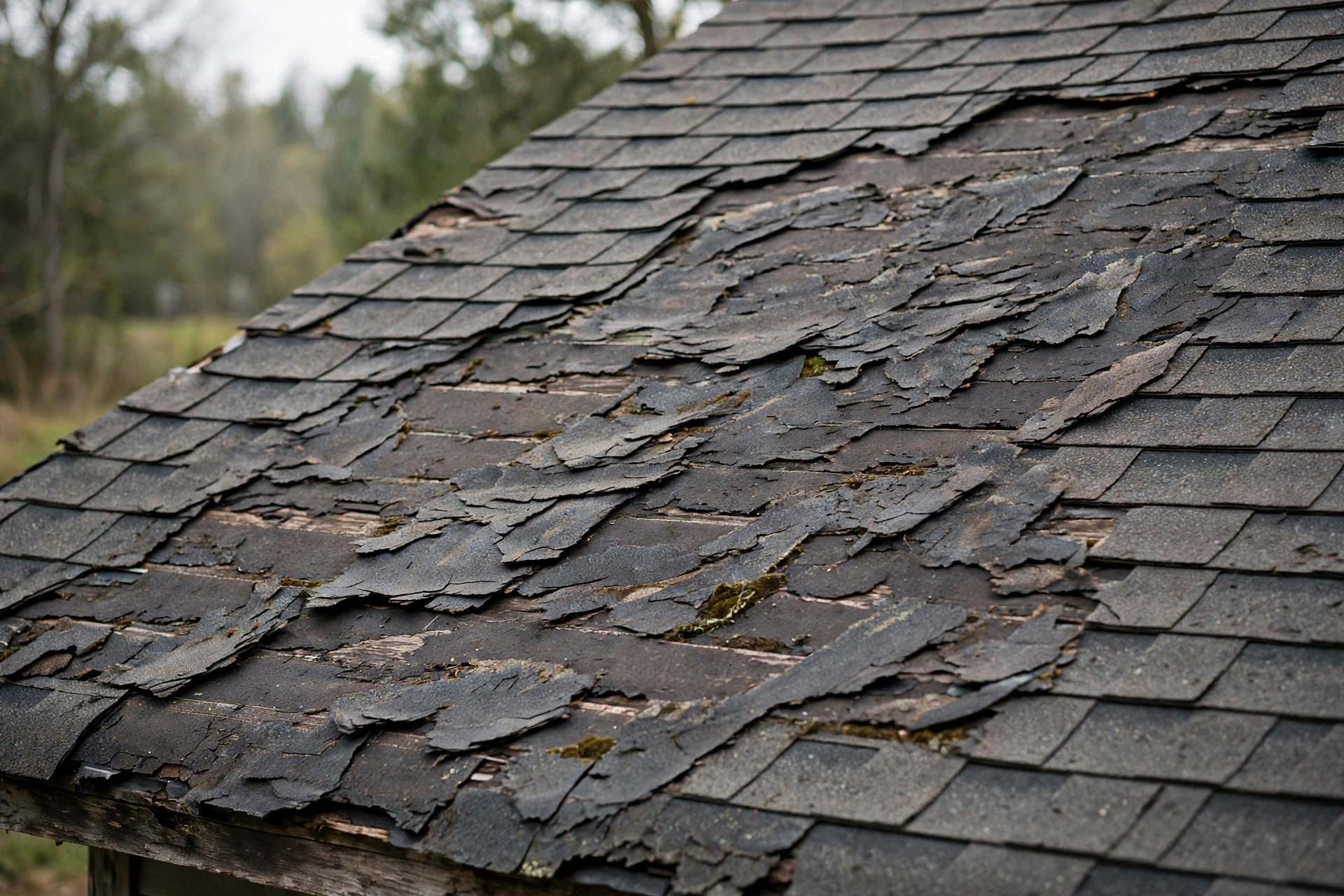
Check for shingle problems by looking for uneven color, lifted edges, and bare spots where granules have worn away. Granule loss shows as dark patches on shingles and as grit in gutters or downspouts. If more than a few shingles are damaged, or if the same slope keeps losing shingles in wind, get a professional assessment rather than patching one piece at a time.
Flashing and Seal Failures
Flashing is the metal that seals joints around chimneys, vents, skylights, and valleys, and when it rusts, lifts, or cracks, water leaks into the home. Flashing failures are one of the most common leak sources, because joints move with temperature changes and sealants dry out over time. Signs include rust stains, lifted edges, gaps at the joint, and water stains on ceilings near a chimney or vent.
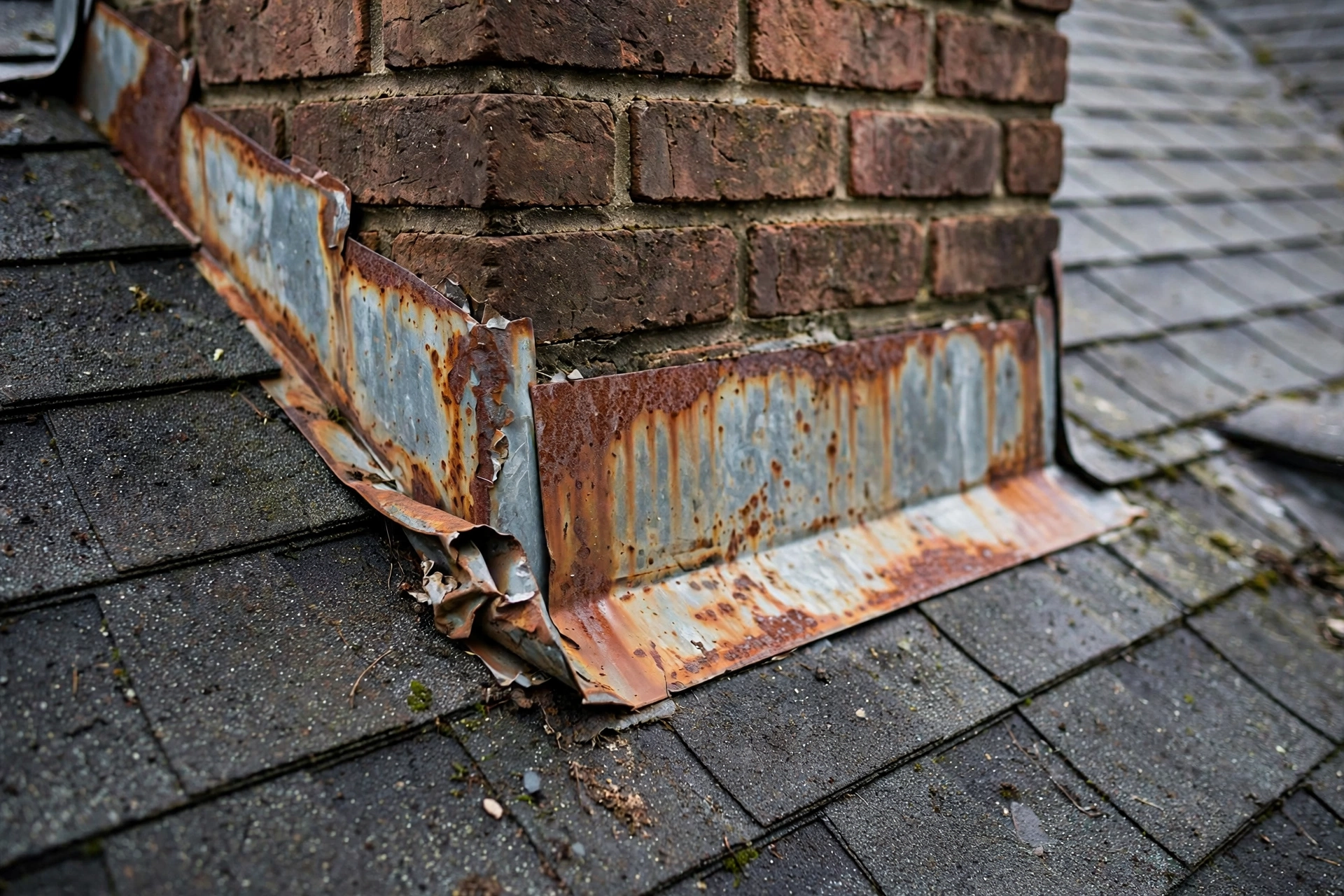
Homeowners can spot flashing problems from the ground with binoculars, but repairs at height should be left to a roofer. A roofer will reseal or replace the flashing, check the underlayment below, and confirm that water is not trapped behind the joint. Ignoring a flashing fault can lead to rot in roof decking and framing, which is far more expensive than a flashing repair.
Sagging and Structural Signs
A sagging roofline, a dip between rafters, or a wavy ridge line signals structural trouble that needs immediate professional attention. Sagging can come from water-damaged decking, undersized rafters, excess weight from multiple roof layers, or long-term moisture in the attic. From across the street, the roofline should look straight, with no dips, waves, or sunken sections.
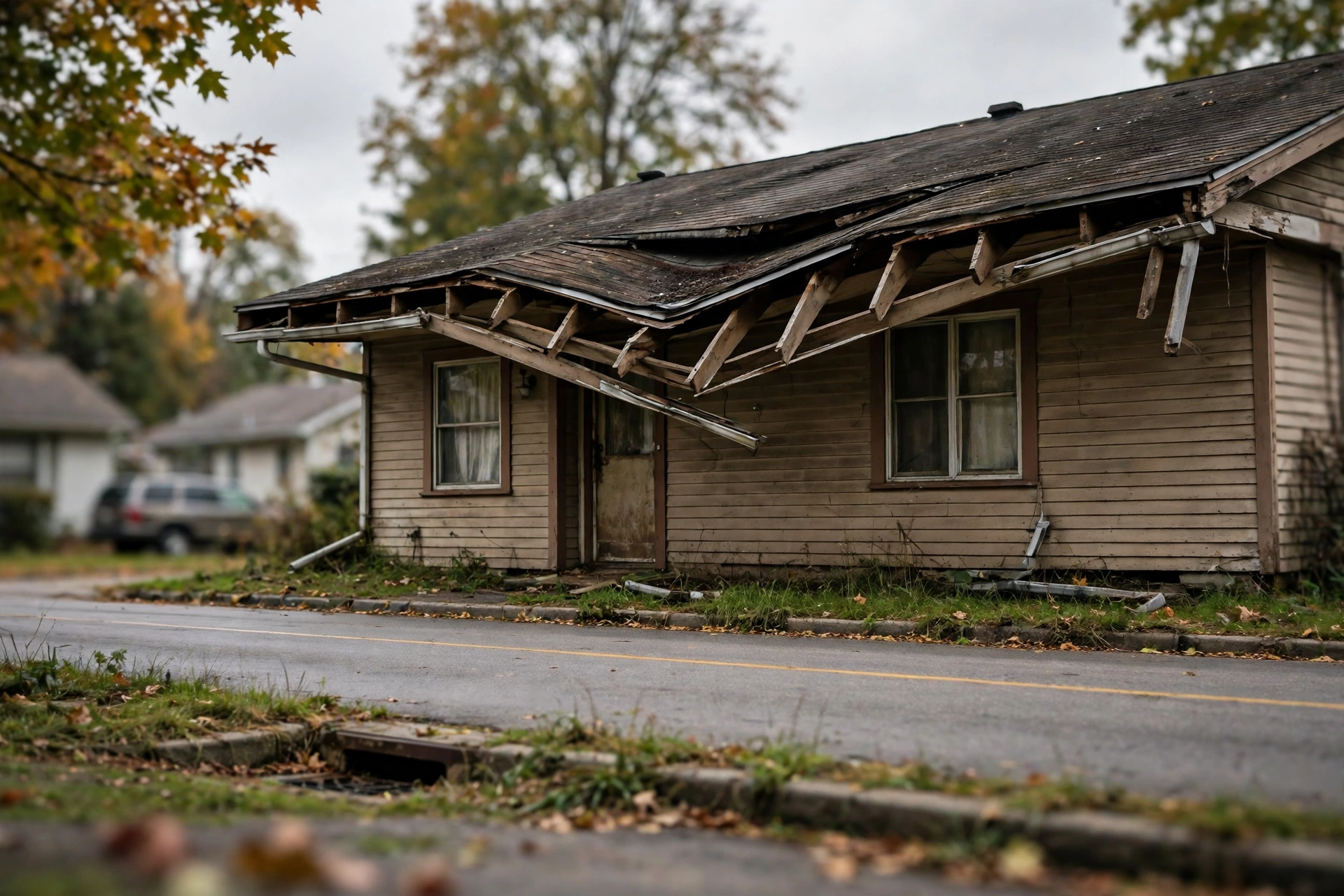
Inside, check the attic for bowed rafters, cracked framing, or daylight through gaps. Do not walk on a sagging roof, and do not try to prop it up yourself. A structural engineer or experienced roofer should assess the cause, because sagging can worsen quickly under snow, rain, or wind loads.
Leaks, Stains, and Attic Clues
Leaks often show first as water stains on ceilings, peeling paint, damp insulation, or a musty smell in the attic, even when the roof looks fine from outside. Water can travel along rafters and decking before it drips, so the stain on a ceiling may not sit directly under the roof fault. Check the attic after rain, looking for wet spots, dark stains, mold, and daylight through cracks. Also check around vents, pipes, and chimneys, where flashing faults are most likely.
If a leak is active, place a bucket under the drip, move furniture away, and call a roofer promptly. Do not ignore a small stain, because it can hide rot, mold, and insulation damage that grows with each rain. A roofer can trace the leak to its source, which is often a flashing joint, a damaged shingle, or a valley problem, rather than the spot where water appears inside.
Gutters, Granules, and Storm Debris
Gutters, granule loss, and storm debris give early clues about roof wear, because shingles shed granules as they age and storms knock loose shingles, flashing, and gutter parts. After a storm, check the ground for shingle pieces, dented gutter metal, and granule piles near downspouts. Clogged or sagging gutters can also cause water to back up under shingles, leading to leaks at the eaves.
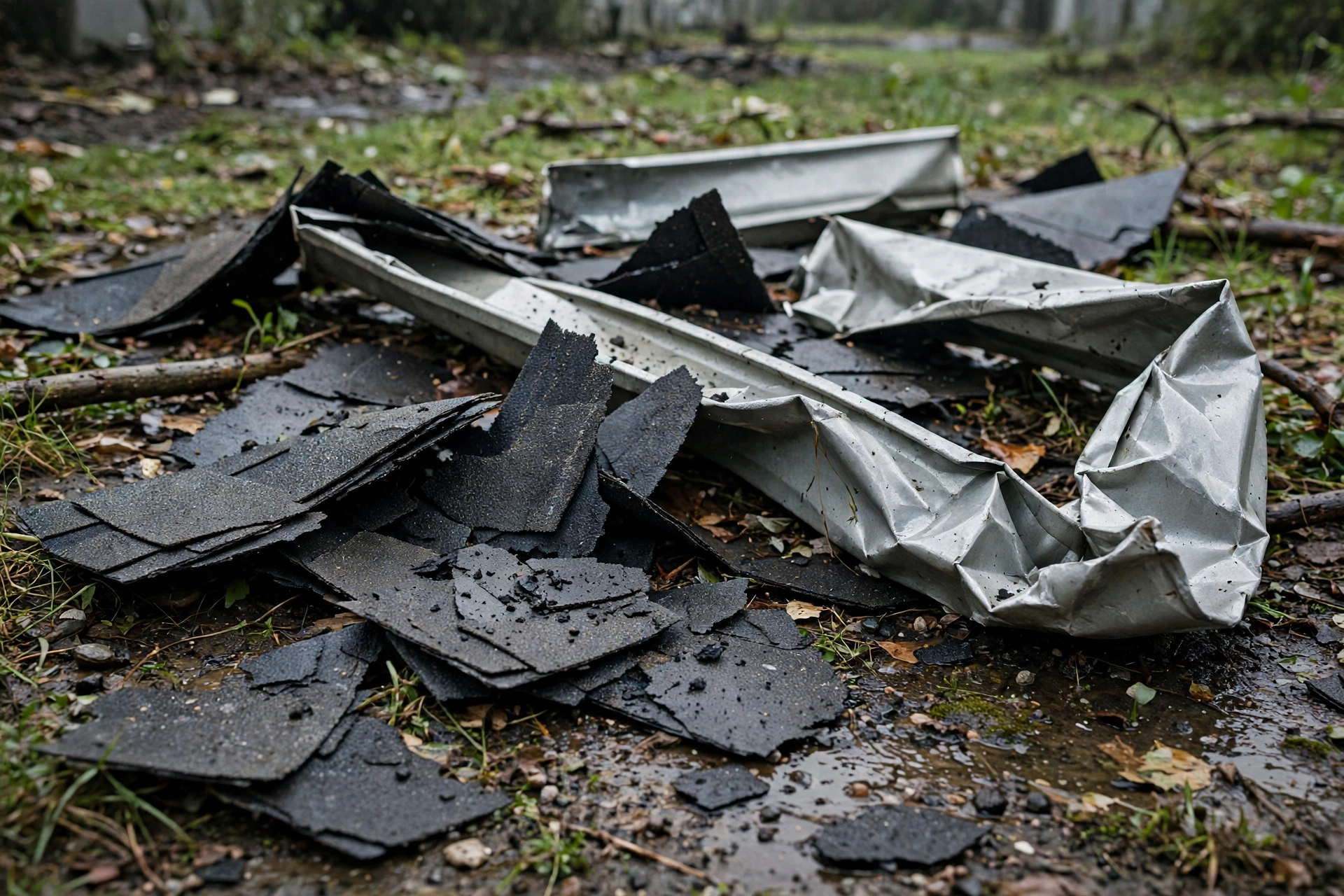
Clean gutters twice a year, check downspouts for granule buildup, and look for rust, holes, or separated joints. If granule loss is heavy, or if storm debris includes large shingle sections, schedule an inspection, even if no leak is visible yet. Storm damage can weaken a roof in ways that only appear in the next heavy rain.
When to Call a Professional
Call a professional roofer for sagging, widespread shingle damage, active leaks, flashing repairs at height, or any work that requires walking on the roof. A professional inspection usually costs $150 to $400, and many roofers apply that fee to repair work if hired. Get at least 2 written quotes for major repairs, check licenses and insurance, and ask for photos of the problem areas and the proposed fix.
For a home purchase, a roof inspection is especially important, because roof replacement can cost $8,000 to $20,000 or more depending on size and material. A written inspection report helps buyers negotiate repairs or price, and it helps sellers document the roof condition before listing.
Conclusion
Roof repair signs are easier to spot than most homeowners think, once they know what to look for from the ground and in the attic. Damaged shingles, flashing faults, sagging, stains, and storm debris all point to problems that grow worse with time and water. Twice-yearly ground checks, prompt storm inspections, and professional help for structural or height work keep a roof sound and a home dry. When in doubt, a professional inspection is cheaper than a leak that goes unnoticed.
Find more practical home guides on the Voice of Wave blog.
Frequently Asked Questions
How often should I inspect my roof?
Inspect a roof twice a year, in spring and fall, plus after major storms. Ground checks with binoculars and attic checks after rain catch most problems early without climbing onto the roof.
What are the most common roof repair signs?
The most common roof repair signs are cracked, curled, or missing shingles, rusted or lifted flashing, sagging rooflines, water stains on ceilings, granule loss in gutters, and storm debris on the ground.
Can I repair a few damaged shingles myself?
A few damaged shingles on a low, safe roof can be replaced by a skilled homeowner, but most roof work at height, on steep slopes, or near flashing and valleys should be left to a professional roofer for safety and warranty reasons.
How do I know if a roof leak is serious?
A roof leak is serious if it is active, if stains are growing, if the attic shows mold or rot, or if the roofline sags. Even a small, slow leak should be checked promptly, because water damage worsens with each rain.
Does homeowners insurance cover roof repairs?
Homeowners insurance often covers sudden storm damage, such as hail or wind, but usually does not cover wear, age, or poor maintenance. Check the policy and document damage with photos before repairs.
When should a roof be replaced instead of repaired?
A roof should be replaced when damage is widespread, when shingles are near the end of their lifespan, when the decking is rotted, or when repairs keep failing on the same slope. A professional inspection can confirm whether repair or replacement is the better value.