


Introduction
Pest management is the planned control of insects, rodents, and other animals that damage homes, spoil food, or spread disease, and it works best when prevention, monitoring, and targeted control run in that order. Pest management covers ants, cockroaches, mice, rats, termites, bed bugs, and mosquitoes, and it uses inspection, sealing, sanitation, traps, baits, and, only when needed, pesticides. The core method is Integrated Pest Management (IPM), a system that starts with prevention and treats chemicals as a last step. This guide explains what pest management is, which pests enter homes, how IPM works in 6 steps, how to prevent pests, which control methods fit each pest, when DIY works and when a professional fits better, what sets the cost, and how to keep pests away for good.
Key Takeaways
- Prevention beats treatment: sealing gaps, fixing leaks, and storing food sealed stops most infestations before they start.
- Identify first, treat second: the pest species sets the method, and a wrong guess wastes time and money.
- IPM runs in 6 steps: inspect, identify, learn, set a threshold, choose a tactic, and check.
- Baits beat sprays: baits reach the nest, sprays kill only the pests you see.
- Termites, bed bugs, and large rodent problems belong with a professional.
- Pest management is a routine: a short monthly check keeps a home pest-free.
Table of Contents
What Is Pest Management? | What Pests Are Most Common in Homes? | How Does Integrated Pest Management Work? | How Do You Prevent Pests at Home? | What Are the Main Pest Control Methods? | DIY vs Professional Pest Management | What Sets the Cost? | How Do You Keep Pests Away for Good? | When Should You Call a Professional? | Conclusion
What Is Pest Management?
Pest management is the regulation of pest species that harm people, property, or food, and it uses prevention, monitoring, and control in that order to keep pest numbers below the level where they cause real damage. Old-style pest control often means spraying on a fixed schedule, while pest management acts only when inspection shows a real problem, and chooses the least harmful method that works.
Pest management covers insects, rodents, birds, and fungi that damage wood. Insects include ants, cockroaches, termites, bed bugs, fleas, and mosquitoes. Each group needs a different method, so identification comes first.
Cats were used to guard grain stores from rodents in Egypt as long ago as 3000 BC, and Sumerians used sulphur compounds as insecticides around 2500 BC (Source: Wikipedia, 2026). The Pest control page on Wikipedia sets out the history and the main methods. Homeowners use pest management for health, food safety, property protection, comfort, and legal duty. Browse the Home Improvement section on Voice of Wave for more upkeep topics.
What Pests Are Most Common in Homes?
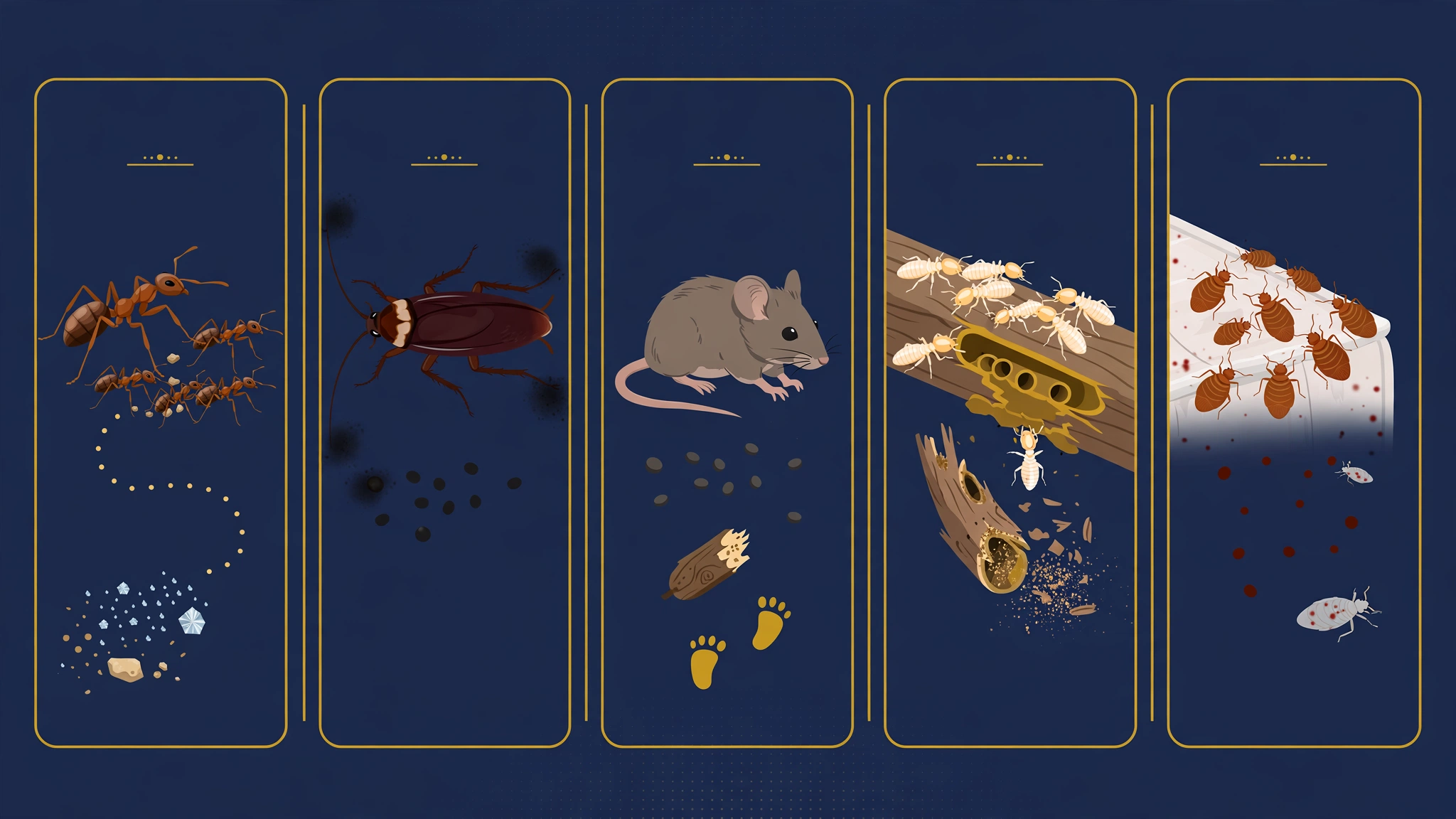
The most common home pests are ants, cockroaches, house mice, roof rats, termites, bed bugs, and mosquitoes, and each one leaves a distinct sign that tells a homeowner what to do first. Ants leave trails to food and water. Cockroaches leave pepper-like droppings and a stale smell. Mice leave small pellet droppings and gnaw marks. Rats leave larger droppings and grease marks along walls. Termites leave mud tubes and hollow wood. Bed bugs leave small blood spots on sheets and bites in lines.
| Pest | Main signs | Main risk | First action |
|---|---|---|---|
| Ants | Trails to food, small piles of soil | Food contamination | Wipe trail, place bait, seal gap |
| Cockroaches | Pepper-like droppings, stale smell | Asthma triggers, germs on food | Clean, fix leaks, place gel bait |
| House mice | Pellet droppings, gnaw marks | Disease, chewed wires | Seal quarter-inch gaps, set snap traps |
| Roof rats | Large droppings, grease marks | Disease, roof and attic damage | Trim branches, seal roof gaps, trap |
| Termites | Mud tubes, hollow wood | Structural damage | Call a professional at once |
| Bed bugs | Blood spots, bites in lines | Bites, sleep loss | Wash bedding hot, call a professional |
| Mosquitoes | Bites, larvae in standing water | Disease, outdoor nuisance | Empty standing water, screen windows |
More than 13,800 ant species have been described worldwide, and only a handful enter homes (Source: Wikipedia, 2026). House mice enter through gaps as small as a quarter inch, about 6 millimetres (Source: Indiana Department of Environmental Management, 2026). Termites cause the largest repair bills: the National Pest Management Association (NPMA) reports that termites cause more than 5 billion dollars in property damage each year in the United States (Source: NPMA, 2024).
How Does Integrated Pest Management Work?
Integrated Pest Management (IPM) is a 6-step system that uses inspection, identification, pest biology, thresholds, least-harmful tactics, and follow-up checks to manage pests with the least risk to people, pets, and property.
IPM is a method, not a product, and it treats pesticides as the last tool, not the first. The Integrated pest management page on Wikipedia gives the full 6-step process.
Follow the 6 steps in order:
- Inspect the home and the yard for pest signs and entry points.
- Identify the pest species before choosing a method.
- Learn the pest’s biology, food, water, and breeding habits.
- Set an action threshold, the level that triggers treatment.
- Choose the least harmful tactic that works for that pest.
- Check the result after 7 to 14 days and change tactics if numbers do not fall.
Step 1 means a full walk around the home with a flashlight: under sinks, behind appliances, in the attic, and around the foundation. Note every sign: droppings, trails, gnaw marks, nests, and dead insects.
How Do You Prevent Pests at Home?
To prevent pests at home, seal entry gaps, remove food and water, cut moisture, and clear clutter, since pests need all 4 to settle in a home.
Prevention is the first and cheapest step in pest management, and it stops most infestations before they start.
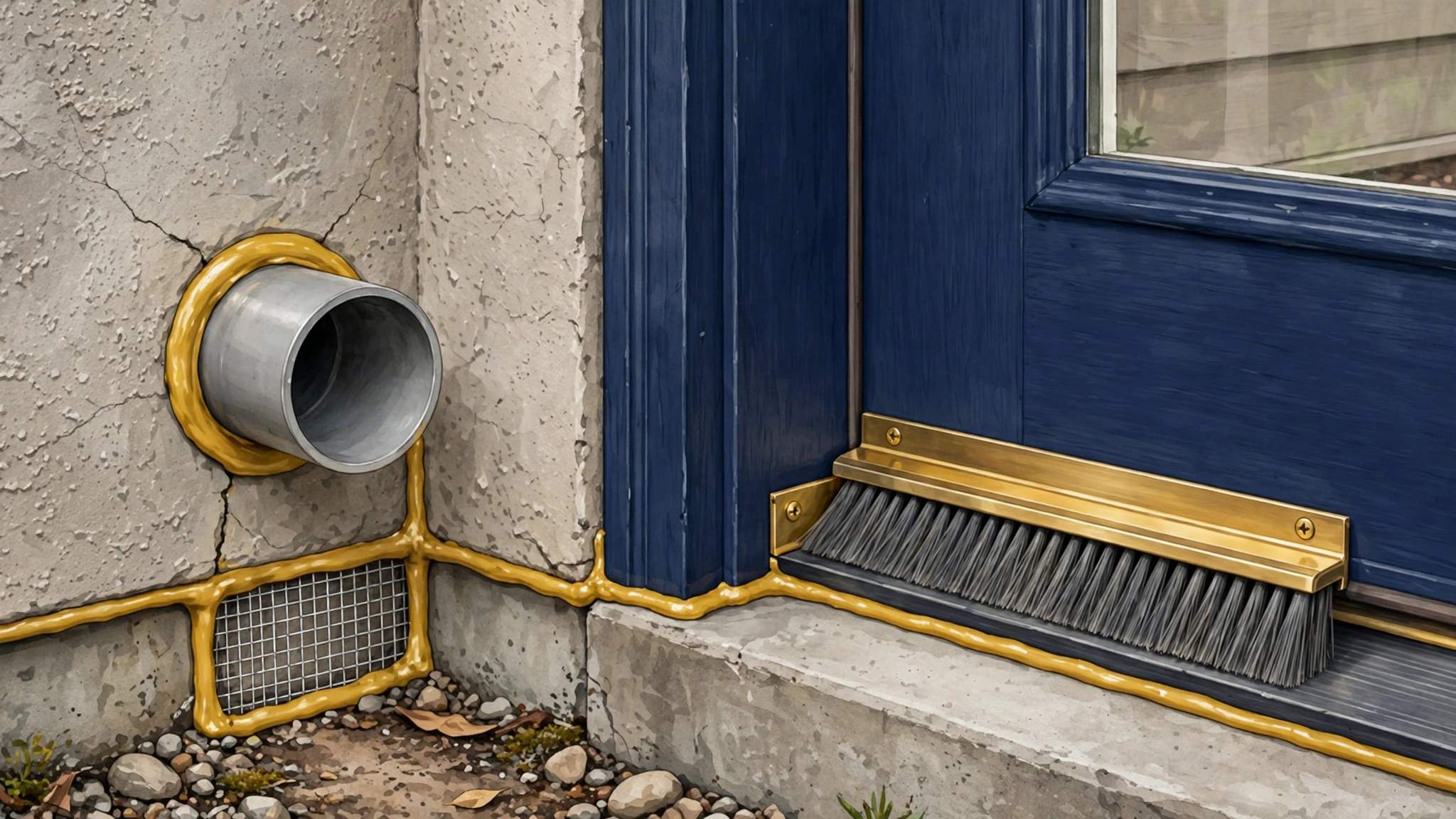
Sealing comes first. Close gaps around pipes, wires, and vents with silicone caulk or foam sealant. Fit door sweeps, repair torn screens, and cap the chimney. A mouse fits through a quarter-inch gap, so seal gaps down to that size.
Sanitation comes second. Store cereal, flour, rice, snacks, and pet food in sealed glass or hard plastic containers. Wipe counters nightly, take trash out daily, and never leave pet food out overnight.
Moisture control comes third. Fix drips under sinks within days. Run a dehumidifier in damp basements, and keep gutters clear so water runs away from the foundation.
What Are the Main Pest Control Methods?
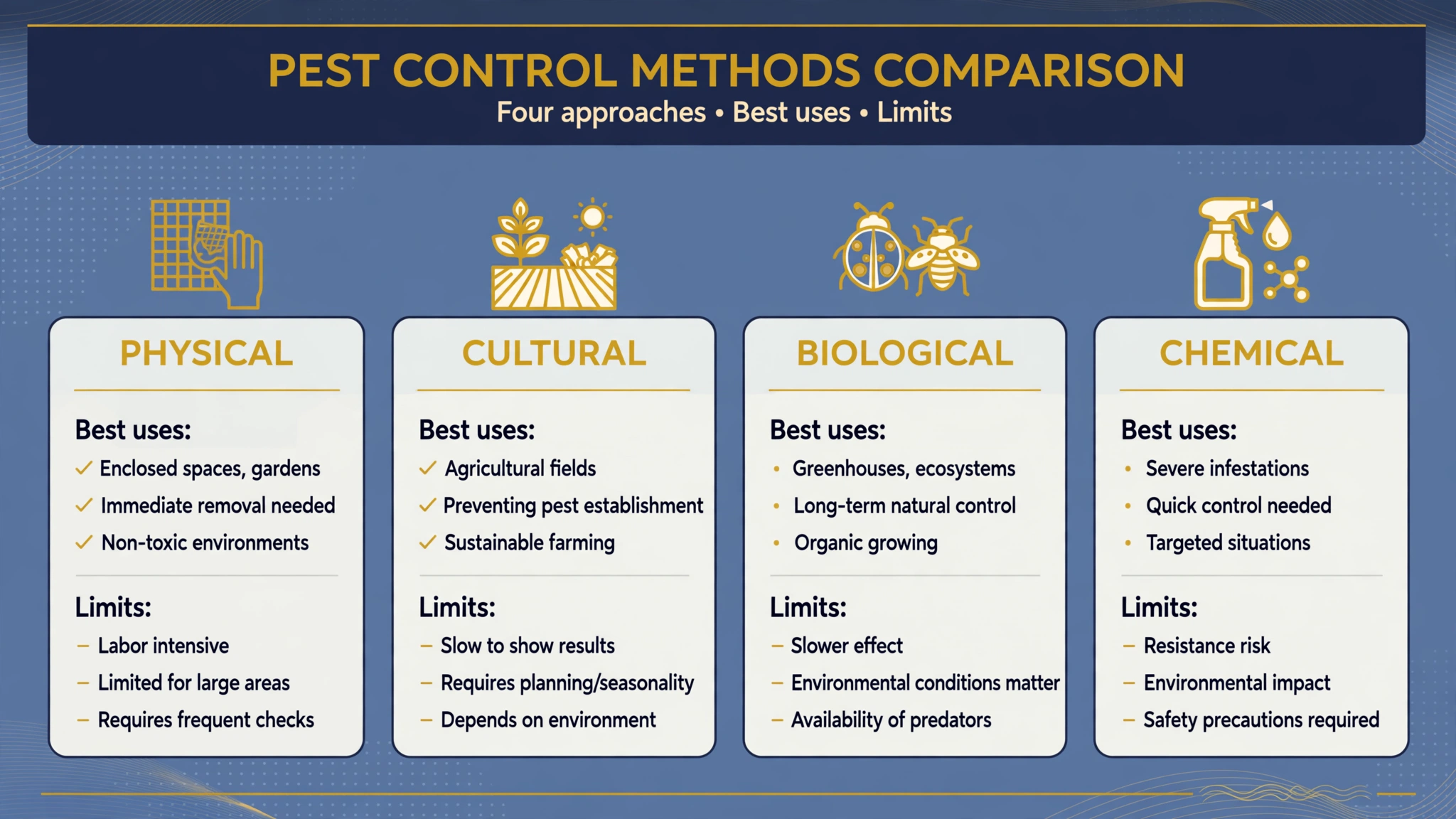
The main pest control methods are physical, cultural, biological, and chemical, and pest management uses them in that order, from least to most harmful.
Physical methods block or remove pests, cultural methods change habits so pests lose food and shelter, biological methods use natural enemies, and chemical methods use baits or sprays as a last step.
Physical methods include traps, screens, caulk, door sweeps, vacuuming, and heat treatment. Snap traps catch mice fast, and glue boards show where roaches travel. Heat treatment kills bed bugs without chemicals, but it needs professional equipment.
Cultural methods include sanitation, storage, and yard care. Sealed containers stop pantry pests, daily trash removal stops flies, and trimmed shrubs stop roof rats from reaching the roof.
Biological methods include predators, parasites, and microbes. Bacillus thuringiensis, a soil bacterium, kills mosquito larvae in standing water without harming pets. Nematodes control grubs in lawns.
Chemical methods include baits, gels, dusts, and sprays. Gel baits suit ants and roaches, since workers carry the poison back to the nest. Sprays kill on contact, but they scatter roaches and miss the nest.
| Method | How it works | Best for | Limits |
|---|---|---|---|
| Physical | Blocks, traps, or removes pests | Mice, flies, bed bugs | Needs regular checks |
| Cultural | Removes food, water, and shelter | Ants, roaches, pantry pests | Needs steady habits |
| Biological | Uses natural enemies or microbes | Garden pests, mosquitoes | Slow, outdoor use mainly |
| Chemical | Baits, gels, dusts, or sprays | Roaches, ants, wasps | Last resort, label rules apply |

DIY vs Professional Pest Management: Which One Fits Your Problem?
DIY pest management fits small, known problems such as a few ants or one mouse, while a professional fits termites, bed bugs, large infestations, and any pest that carries disease risk.
The line between the two is the pest, the size, and the risk, not the price.
DIY works well for 5 cases: ant trails in the kitchen, a single mouse, pantry moths, a few cockroaches, and fruit flies.
A professional fits 6 cases: termites, bed bugs, carpenter ants, large roach infestations, roof rats, and wasp nests in walls.
Ask 4 questions before hiring: which species, what treatment, what follow-up, and what must I do before the visit?
For a worked example, read our guide to ants in the kitchen to see how bait, waiting, and sealing work in sequence.
What Sets the Cost of Professional Pest Management?
The cost of professional pest management is set by the pest species, the size of the infestation, the treatment type, the home size, and the region.
A single ant treatment costs less than a termite job, since termites need inspection, bait stations, and follow-up visits. A bed bug heat treatment costs more than a spray, since it needs special equipment and a full day.
Treatment type changes the price most. Bait stations and gel cost less than heat treatment for bed bugs, and a one-time visit costs less than a quarterly plan.
Get 3 quotes, and compare them on the same points: species named, treatment named, rooms covered, follow-up included, and guarantee length.
| Job | Professional cost | Follow-up cost | DIY cost |
|---|---|---|---|
| Ants | $150 to $300 | $100 to $200 | $10 to $30 |
| Cockroaches | $150 to $350 | $100 to $250 | $15 to $40 |
| Mice | $200 to $500 | $150 to $300 | $20 to $50 |
| Termites | $500 to $1,500 | $1,000 to $3,000 | $200 to $400 |
| Bed bugs | $300 to $1,500 | $500 to $2,000 | $50 to $100 |
| Mosquitoes | $100 to $300 | $200 to $400 | $20 to $60 |
| Quarterly plan | $100 to $300 | $100 to $300 per visit | N/A |
How Do You Keep Pests Away for Good?
To keep pests away for good, run a short monthly routine and a seasonal check, since new scouts arrive every season.
Prevention is a routine, not a one-time fix. The routine takes about 30 minutes a month.
Run this monthly check: look under sinks for drips, check bait stations and traps, vacuum behind one appliance, and walk the foundation for new gaps.
Seasonal tasks add one more layer. In spring, check door seals and screens after winter wear. In summer, empty standing water each week, store fruit in the fridge, and keep trash bins closed. In autumn, seal gaps before cold weather pushes mice and spiders indoors. In winter, check the attic and the basement for droppings and nests, since rodents move indoors for warmth. A practical observation from my own home: the same gap behind the stove drew ants each spring until the gap was sealed with silicone, and no amount of wiping ended the trail before that gap closed.
When Should You Call a Pest Control Professional?
Call a pest control professional for termites, bed bugs, carpenter ants, winged ants indoors, a trail that returns after two full weeks of baiting, or a rodent problem that grows after trapping.
These 6 signs mean the pest needs tools or access that a homeowner cannot buy or reach safely. Termites need a full inspection and a bait or barrier system, and bed bugs need heat treatment or a full-room plan. Carpenter ants signal wood damage that grows while bait works slowly. Winged ants indoors signal a mature nest inside the home, not a passing trail.
Rodents also set clear limits. Call a professional when droppings appear in several rooms, when gnaw marks show on wires, or when traps catch mice every night. Chewed wires are a fire risk. Stinging insects in a wall void also belong with a professional, since a disturbed nest can send wasps into living rooms.
Before the visit, clear under sinks, behind appliances, and along baseboards. Note the signs you found, with dates and places, and share the log. Ask for a written plan with the species, the treatment, and the follow-up date.
Conclusion
Pest management works when prevention comes first, identification sets the method, and treatment follows a clear plan with a follow-up check. Seal gaps, fix leaks, store food sealed, and clear clutter, and most pests never settle. When pests do appear, identify the species, set a threshold, and pick the least harmful tactic that works. Baits reach nests that sprays cannot reach. Termites, bed bugs, and large rodent problems belong with a professional. Pest management is a routine, not a single visit, and a short monthly check keeps a home pest-free through every season. Voice of Wave covers practical home guides like this one.
Explore the latest articles on the Voice of Wave blog for more home improvement guides.

FAQs
What is pest management?
Pest management is the planned control of pests that harm people, property, or food, and it uses prevention, monitoring, and targeted control in that order. It covers ants, cockroaches, rodents, termites, bed bugs, and mosquitoes. The core method is Integrated Pest Management (IPM), which starts with sealing and sanitation and treats pesticides as a last step.
How does Integrated Pest Management work?
Integrated Pest Management works in 6 steps: inspect, identify, learn the pest, set a threshold, choose a tactic, and check the result. Each step follows the last, and the check at the end decides whether the tactic worked or must change. Pesticides sit last in the order, and they are used only when other methods fall short.
What is the best way to prevent pests at home?
The best way to prevent pests at home is to seal entry gaps, store food in sealed containers, fix leaks, and take trash out daily. These 4 habits remove the food, water, and shelter every pest needs. A short monthly check of sinks, pantry, traps, and foundation keeps the habits working all year.
Are pest control sprays safe for children and pets?
Pest control sprays are safe for children and pets only when the label rules are followed, and baits and traps are safer than sprays in most homes. Read the label, apply only the amount it allows, and keep children and pets out of treated rooms for the time the label states. Sealed bait stations keep poison away from food surfaces, children, and pets.
When should I call a professional for pest management?
Call a professional for termites, bed bugs, carpenter ants, winged ants indoors, trails that return after two weeks of baiting, or rodent problems that keep growing. These cases need tools and treatments a homeowner cannot buy, such as heat treatment, wall-void injection, and termite bait systems. Ask for a written plan with a follow-up date.
How often should pest management be done?
Pest management should run as a monthly check at home, with a professional visit once or twice a year, or more often when the home has had past infestations. Monthly checks catch new activity early. Seasonal checks in spring and autumn cover the times pests move indoors. Homes near woods or water may need more frequent checks.