
Written by Michael Brooks for Voice of Wave.
Last updated: October 2026
Introduction
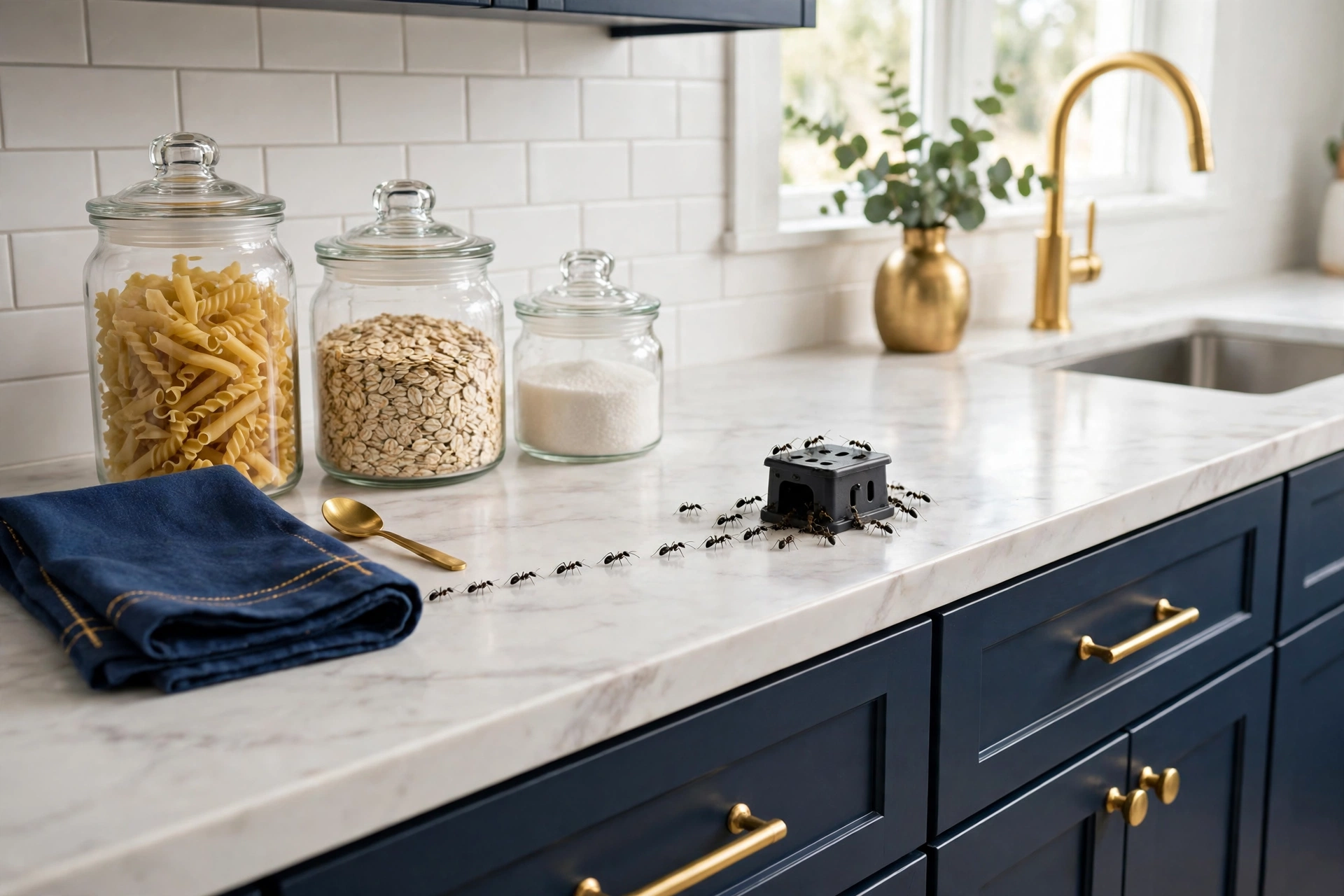
Ants in kitchen spaces are worker ants following a scent trail from an outdoor nest to food or water in the home, and the fastest fix is to wipe the trail, remove the food, place slow-acting bait on the trail for 7 to 14 days, then seal the entry gap once activity stops. That order matters because sprays kill only the ants you see, while bait travels back to the colony and reaches the queen. Ants in kitchen areas come from a few common species, and each species prefers a different bait. This guide explains why ants enter kitchens, how to identify the species on your counter, how to use baits and natural methods safely, how to seal entry points, and how to keep ants out for good. It closes with clear rules for when a professional should take over.
Key Takeaways
- Bait the colony, do not just spray the trail: slow-acting bait reaches the queen, while sprays kill only visible workers.
- Follow the trail first: the trail shows the entry point and the food source in one line.
- Match the bait to the species: sugar baits suit odorous house ants, and protein baits suit pavement ants in spring.
- Wait 7 to 14 days: a short surge at the bait station is a good sign, not a failure.
- Seal last, not first: seal gaps only after bait has reduced activity, or ants find a new route in.
- Call a professional for carpenter ants, winged ants indoors, or trails that return after two full weeks of baiting.
Table of Contents
- Why Are Ants in Your Kitchen?
- What Kind of Ants Are in Your Kitchen?
- How Do You Get Rid of Ants in the Kitchen Fast?
- How Do Ant Baits Work?
- Spray vs Bait: Which Method Works Better?
- What Natural Methods Work Against Kitchen Ants?
- How Do You Seal a Kitchen Against Ants?
- How Do You Keep Ants Out of the Kitchen for Good?
- When Should You Call a Pest Control Professional?
- Conclusion
- FAQs
Why Are Ants in Your Kitchen?
Ants enter kitchens because scout ants found food, water, or shelter there and marked the route with a scent trail that worker ants then follow. A single scout lays the trail on the way back to the nest, and each worker that follows the trail strengthens it. That is why a line of ants appears fast and grows through the day. Most kitchen ants nest outdoors and enter only to forage. A clean kitchen still gets ants when rain, heat, or a seasonal shift pushes workers indoors to search for moisture and sugar.
Ants in kitchen areas follow three needs: food, water, and access. Food needs include sugar, grease, crumbs, pet food, and sticky spills. Water needs include drips under sinks, condensation on pipes, damp dishcloths, and pet water bowls. Access needs include gaps around pipes, cracks in grout, gaps under doors, and torn window screens.
Ants communicate through trail pheromones, chemical signals that guide nestmates to food. Workers renew the trail on every trip, so the line stays active while food remains. Wiping the trail with soapy water removes the signal, and the line breaks. Wiping alone never ends the problem, because the colony sends new scouts. Wiping works best as step one, paired with bait that reaches the nest.
What Kind of Ants Are in Your Kitchen?
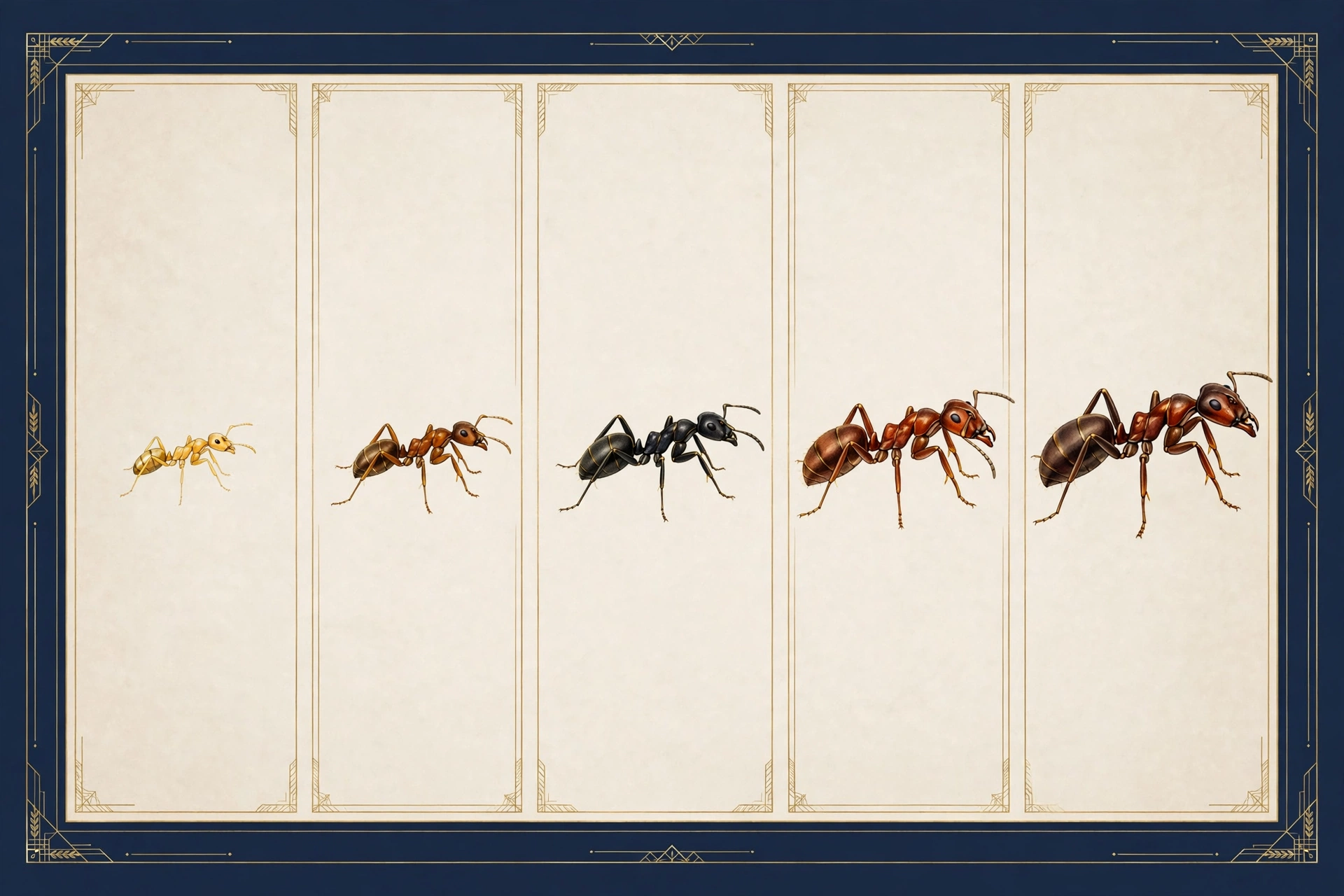
The ants in most kitchens are odorous house ants, Argentine ants, pavement ants, pharaoh ants, or carpenter ants, and the species sets the bait choice. Odorous house ants are small, dark brown to black, and smell like rotten coconut when crushed. Argentine ants are light to dark brown and form long trails along walls and pipes. Pavement ants are dark brown to black with a pale banded look and often nest under slabs near the kitchen door. Pharaoh ants are tiny and yellow to light brown and prefer warm indoor spots. Carpenter ants are large and black or red-black, and they tunnel in damp wood.
To identify the ants in your kitchen, check size, color, and trail location. Small ants near sugar, honey, and fruit point to odorous house ants or Argentine ants. Small ants near grease, meat scraps, and pet food point to pavement ants. Tiny yellow ants near warm appliances and wall voids point to pharaoh ants. Large ants near damp window frames, dishwashers, or leaky sinks point to carpenter ants.
Species also sets food preference, and food preference changes with the season. Sugar baits work best for odorous house ants, Argentine ants, and pharaoh ants. Protein baits work best for pavement ants and carpenter ants, and many colonies switch from protein in spring to sugar in late summer. When one bait type gets ignored for three days, switch to the other type. That single switch fixes most “bait does not work” complaints.
Ants belong to the family Formicidae, and more than 13,800 ant species have been described worldwide (Source: Wikipedia, accessed October 2026). Only a handful of those species enter kitchens, and all five common kitchen species respond to the same four-step plan: clean, bait, wait, seal.
How Do You Get Rid of Ants in the Kitchen Fast?
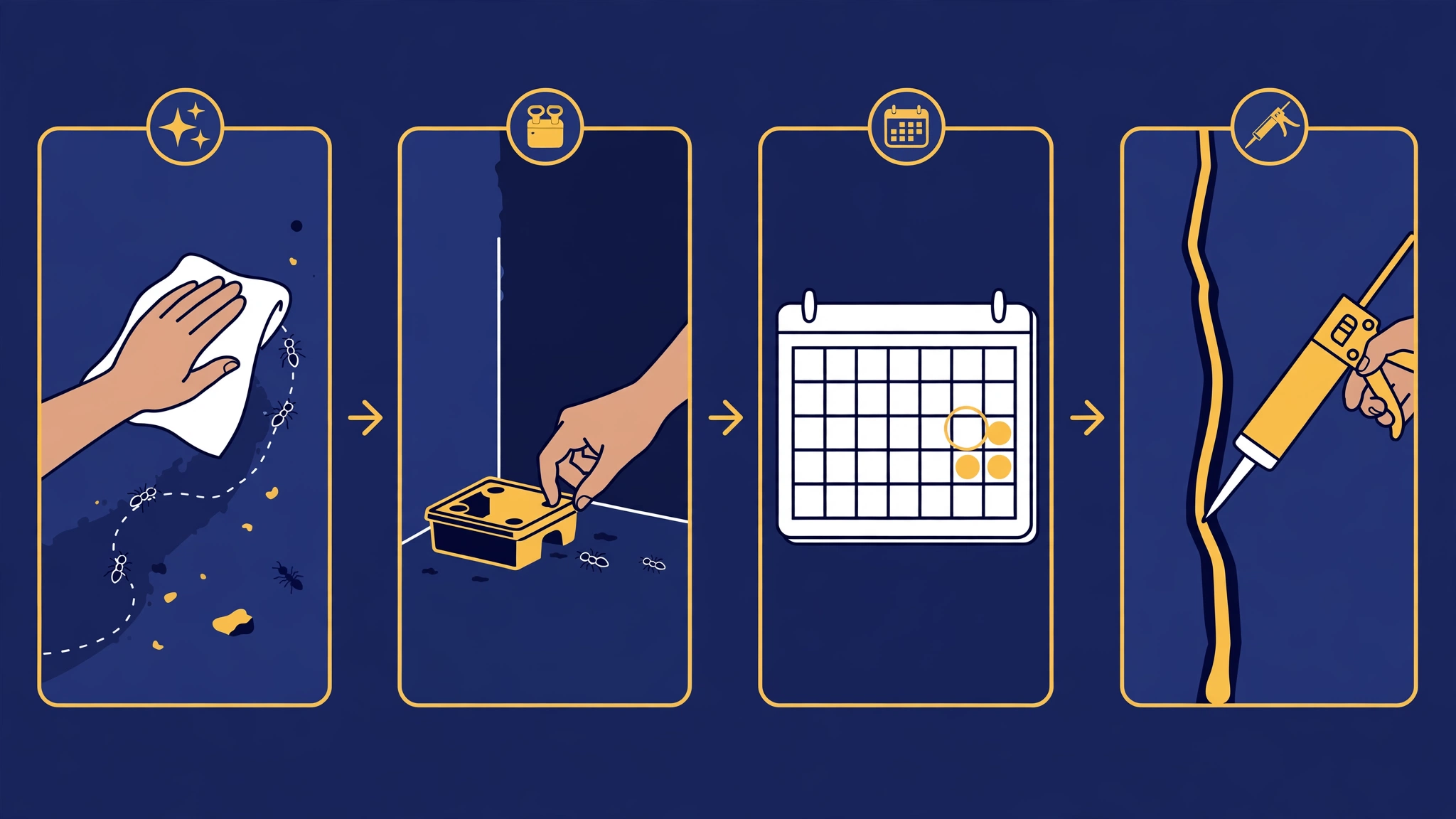
To get rid of ants in the kitchen fast, wipe the trail with soapy water, remove every food and water source, place bait stations on the trail, and leave the bait alone for 7 to 14 days. Speed comes from doing the steps in that order on day one, not from spraying harder. Spraying on day one scatters workers, breaks the bait route, and leaves the queen alive.
Follow these steps on day one:
- Follow the trail to the entry point and the food source.
- Wipe counters, baseboards, and the trail line with warm soapy water.
- Move open food into sealed glass or hard plastic containers.
- Fix drips, dry the sink, and empty the trash.
- Place 2 to 3 bait stations directly on the active trail.
- Mark the calendar and check the stations once a day.
Day two to day three often brings more ants at the bait station. That surge is a good sign: workers are recruiting nestmates to a food source they trust. Do not spray the surge, move the stations, or wipe the trail near the bait. By day seven, traffic should fall. By day fourteen, the trail should stop. When traffic has not fallen by day fourteen, switch bait types and check for a second entry point.
For readers planning wider home fixes, browse more practical guides in the Home Improvement section on Voice of Wave.
How Do Ant Baits Work?
Ant baits work because worker ants eat a slow-acting poison, carry it back to the nest, and share it with larvae and the queen through mouth-to-mouth food sharing. That sharing step is the whole point of bait. A fast poison kills the worker on the counter, and the queen never gets a dose. A slow poison lets the worker return, feed nestmates, and spread the dose through the colony. Bait stations keep the poison in a sealed container, away from food surfaces, children, and pets.
Bait types differ by form and food base. Gel baits suit cracks, corners, and cabinet hinges. Liquid bait stations suit sugar-loving ants and stay tidy on counters. Granular baits suit outdoor nests near the foundation. Protein-based baits suit grease-loving species in spring. Sugar-based baits suit sweet-loving species in late summer. Place stations every 30 to 60 centimetres along the active trail, near the entry point, under the sink, and behind one appliance. Replace dried or empty stations, and keep stations out until activity stops for three full days.
One practical observation from my own kitchen: the trail always reappeared at the same grout line behind the stove until the gap behind the stove was sealed, and no amount of wiping ended the trail before that gap closed. That pattern matches the rule in this guide: bait first, seal second, and seal the exact gap the trail used.
Spray vs Bait: Which Method Works Better?
Bait works better than spray for ending a kitchen ant problem, because bait reaches the colony while spray reaches only the ants on the surface. Spray has one real job: killing a stray ant that wanders off the trail. Bait has the job that ends the infestation. Use spray away from bait stations, never on the trail while bait is out.
| Method | What it kills | Speed | Lasting result | Kitchen safety |
|---|---|---|---|---|
| Contact spray | Visible workers only | Seconds | Trail returns in days | Keep off food surfaces |
| Slow-acting bait | Workers, larvae, and queen | 7 to 14 days | Colony ends | Sealed stations, away from food |
| Vinegar or soapy water wipe | Trail signal, not the colony | Minutes | Trail breaks until next scout | Safe on most counters |
| Diatomaceous earth | Ants that cross the powder | Days | Works while powder stays dry | Keep out of food and airways |
If damp spots draw pests too, read our guide to removing mold from your home.
What Natural Methods Work Against Kitchen Ants?
Natural methods that work against kitchen ants are vinegar or soapy water for trail wiping, food-grade diatomaceous earth for dry barriers, and sealed commercial bait stations for colony control. Natural methods split into two jobs: repelling and killing. Vinegar, lemon juice, cinnamon, and peppermint oil repel ants and erase trail signals. None of those four reaches the nest, so none ends a colony alone. Diatomaceous earth kills ants that cross the dry powder, because the powder damages the ant’s outer shell and causes drying. Borax-based baits kill colonies, but homemade borax mixes carry a safety warning: Health Canada advises against making homemade pesticides with boric acid, and sealed commercial bait stations give the same slow-acting effect with less risk.
Use natural methods in this order. Wipe trails with equal parts white vinegar and water, or warm soapy water, and wipe the entry gap too. Sprinkle food-grade diatomaceous earth in dry gaps behind appliances and inside wall voids, never on counters or near food. Keep the powder dry, since wet powder stops working. Refresh the powder after cleaning. Place sealed commercial bait stations on the trail for colony control.
Safety rules matter most in kitchens with children or pets. Keep all bait stations where children and pets cannot reach them, and never place loose powder or liquid bait on a food surface. Wash hands after handling bait stations. When a child or pet eats bait, read the product label and call a poison control line at once.
How Do You Seal a Kitchen Against Ants?
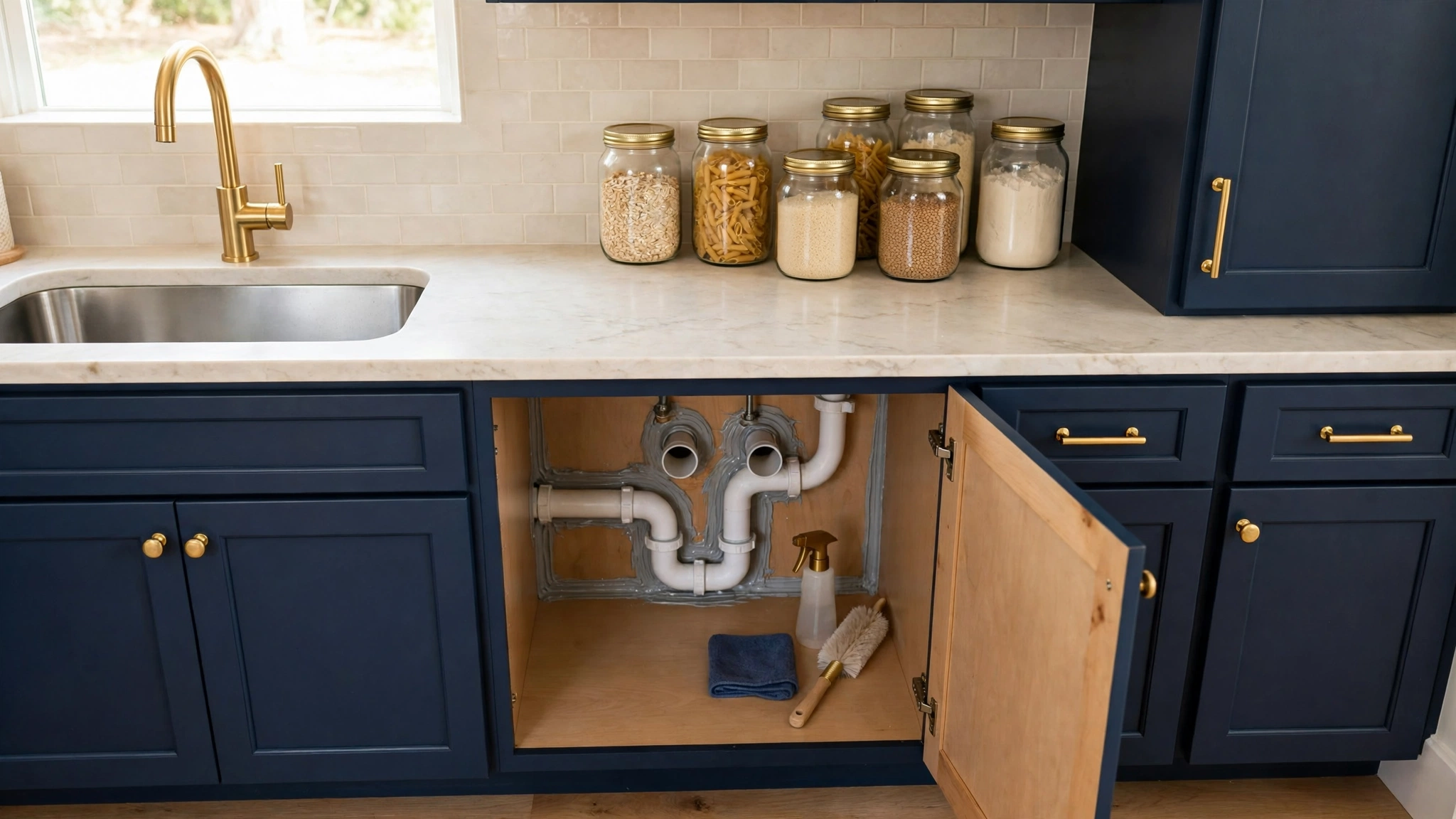
To seal a kitchen against ants, close the exact gaps the trail used with silicone caulk, foam sealant, or weather stripping, after bait has reduced activity. Sealing works only when the gap list comes from the trail, not from a guess. Common gaps include pipe entries under sinks, gaps around dishwasher hoses, cracks in grout, gaps under exterior doors, torn screens, and gaps where cables enter the wall.
Use silicone caulk for gaps around sinks, pipes, and backsplashes, since silicone resists water. Use foam sealant for larger voids behind cabinets and around utility entries. Use weather stripping for door gaps and window frames. Replace torn screens before sealing anything else, since a torn screen is an open door. Do not seal gaps while bait is still drawing heavy traffic, since blocked workers find a new route and start a second trail. Seal after traffic falls, then watch for three days for a new trail.
Sealing also covers storage habits. Glass jars and hard plastic containers beat bags and cardboard boxes, since ants chew through thin packaging. Keep sugar, flour, cereal, and pet food sealed at all times. Empty trash daily during an infestation, and use a bin with a tight lid.
How Do You Keep Ants Out of the Kitchen for Good?
To keep ants out of the kitchen for good, run a short weekly routine: wipe spills at once, store food sealed, dry the sink each night, take trash out daily, and check entry gaps each month. Prevention is a routine, not a one-time fix. Colonies send new scouts each season, and a kitchen that offers food and water gets a new trail each time. A kitchen that offers neither gets scout visits that end without a trail.
Build the routine around five habits. Wipe counters and the stove after cooking, sweep crumbs each night, and wash dishes promptly. Store fruit in the fridge during warm months, since ripe fruit draws scouts fast. Keep pet food in sealed containers, and lift pet bowls between meals. Check under the sink each week for drips, and fix any leak within days. Trim plants and mulch away from the kitchen wall, since branches and mulch give ants a bridge to the house.
Seasonal checks add one more layer. In spring, check door seals and screens after winter wear. In summer, check for ripe fruit, open trash, and pet food left outdoors near the kitchen door. In autumn, check gaps before cold weather pushes ants indoors.
When Should You Call a Pest Control Professional?
Call a pest control professional for carpenter ants, winged ants indoors, trails that return after two full weeks of baiting, or nests inside walls that bait cannot reach. Carpenter ants signal wood damage, and the damage grows while bait works slowly. Winged ants indoors signal a mature nest inside the home, not a passing trail. A trail that survives two bait types and two full weeks signals a large colony, a hidden nest, or a second entry point that needs professional tools.
A professional brings three tools a homeowner lacks: non-repellent treatments that workers carry without alarm, wall-void injection for hidden nests, and species confirmation under magnification. Ask the professional to name the species and explain the treatment in plain language before work starts, and ask for a written plan with a follow-up visit date.
Conclusion
Ants in kitchen spaces end when the colony ends, and the colony ends through bait, not spray. Wipe the trail, remove food and water, bait the trail for 7 to 14 days, then seal the exact gap the trail used. Match the bait to the species, switch bait types when one type gets ignored, and keep the weekly routine running after the trail stops. Carpenter ants, winged ants, and two-week failures belong with a professional. Follow that order, and the kitchen stays ant-free through the next season too.
For more practical home guides, read Voice of Wave.
Explore the latest articles on the Voice of Wave blog for more home improvement guides.
FAQs
Why do ants keep coming back to my kitchen?
Ants keep coming back because the colony survives each time only visible workers die, and new scouts follow old scent trails to the same food or water source. Spray kills workers, but the queen keeps producing replacements. Bait reaches the queen, and sealing the entry gap removes the route, so the trail stops for good.
Are ants in the kitchen dangerous?
Most kitchen ants are a nuisance rather than a danger, but they can carry bacteria onto counters and food, so food they walked on should be thrown away. Carpenter ants are the exception, since they tunnel in damp wood and cause structural damage. Pharaoh ants need care in homes with vulnerable people, since they spread easily between rooms.
How long does it take to get rid of kitchen ants?
Kitchen ants take 7 to 14 days to clear with bait, since workers must carry the poison back to the nest and share it with larvae and the queen. Traffic often rises for the first few days, then falls by day seven. When traffic has not fallen by day fourteen, switch bait types and check for a second entry point.
What is the best bait for kitchen ants?
The best bait for kitchen ants is a sealed commercial bait station matched to the species: sugar gel or liquid bait for odorous house ants and Argentine ants, and protein bait for pavement ants in spring. When ants ignore one bait type for three days, switch to the other type. Place stations directly on the trail, not beside it.
Does vinegar kill ants in the kitchen?
No, vinegar does not kill ant colonies, but a mix of equal parts white vinegar and water wipes away the scent trail and repels scouts from the wiped surface. Vinegar works as step one, paired with bait for colony control. Vinegar alone leaves the queen alive, so the trail returns with the next scout.
Is it safe to use ant bait around pets and children?
Sealed commercial bait stations are safer than loose powders or liquids, but they must still sit where children and pets cannot reach them, and hands must be washed after handling. Never place bait on a food surface. When a child or pet eats bait, read the product label and call a poison control line at once.