
Introduction
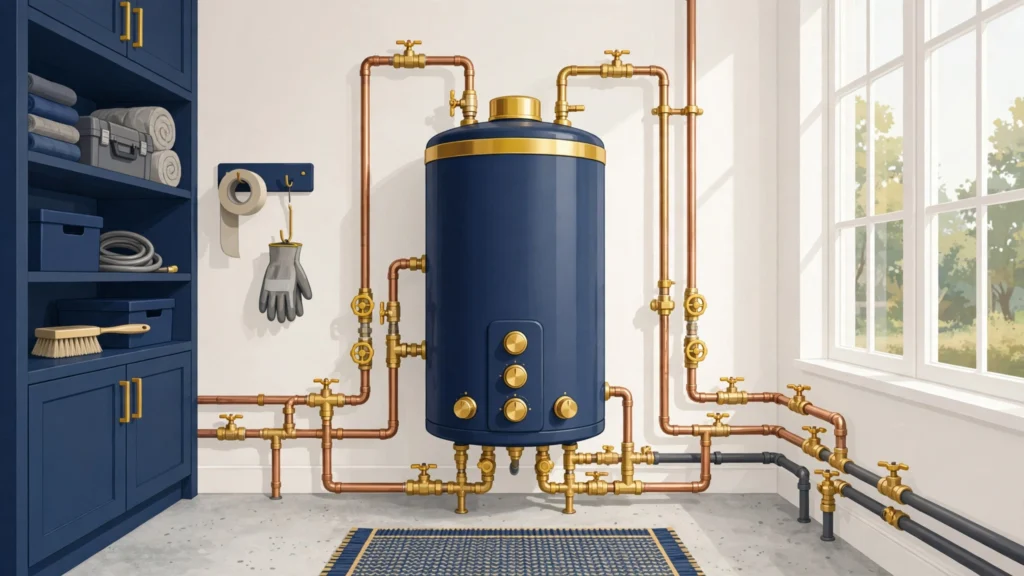
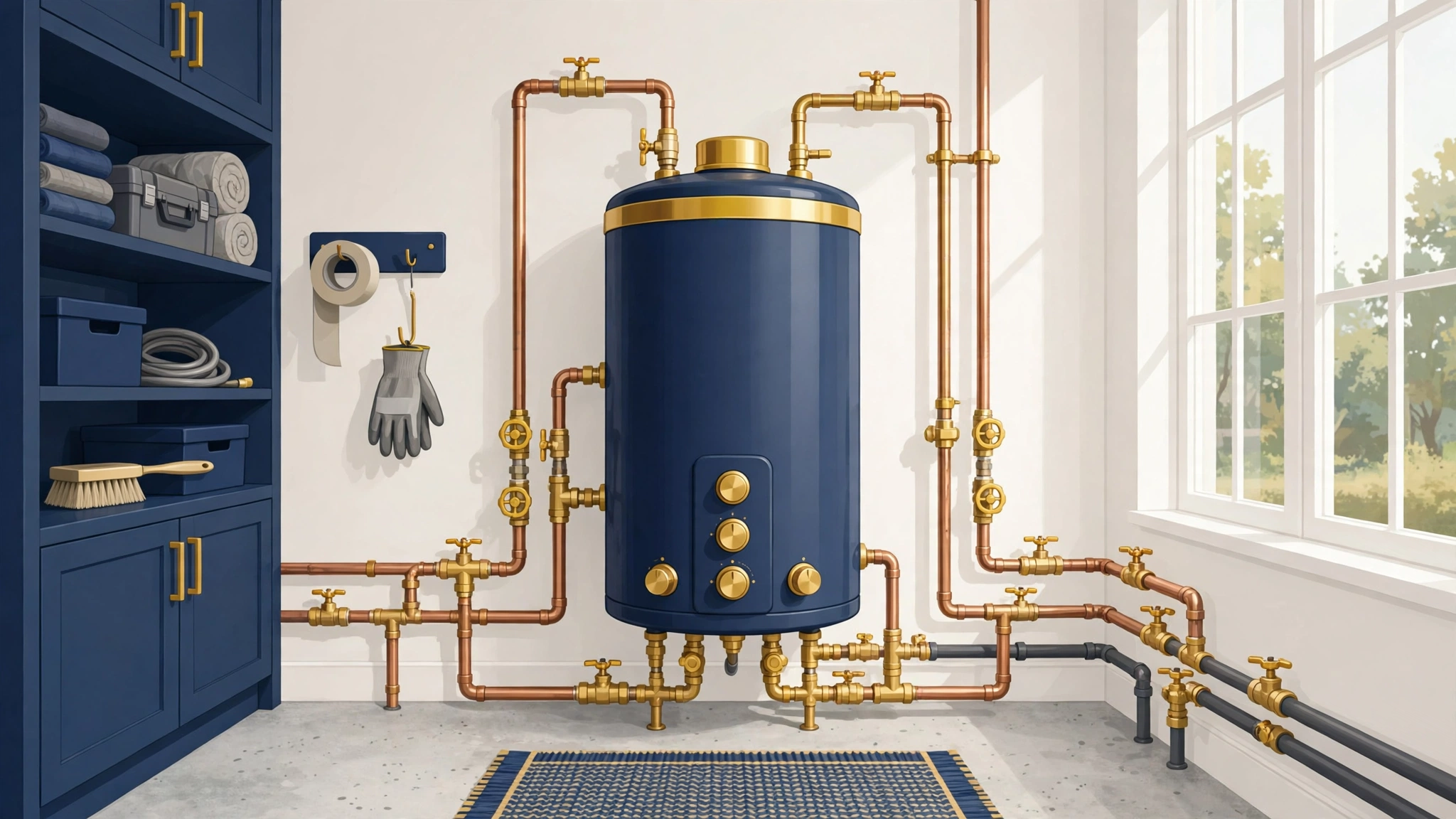
Water heater maintenance is the set of checks that keep a home water heater safe, efficient, and working for its full service life, and water heater maintenance covers 5 core jobs: flushing sediment, inspecting the anode rod, testing the relief valve, setting the thermostat to 120°F (49°C), and checking pipes for leaks. A water heater works every day, and scale, rust, and worn parts build up inside it. This guide covers the 4 heater types, a full schedule, flush and descaling steps, valve tests, warning signs, costs, a repair or replace rule, and a seasonal calendar.
Key Takeaways
- Flush a tank heater once a year, every 6 months in hard water.
- Check the anode rod every 2 to 3 years, and replace it below half an inch.
- Test the relief valve once a year, and replace one that drips or sticks.
- Set the thermostat to 120°F (49°C) for safe hot water and slower scale buildup.
- Tankless heaters need a yearly descale and a 6 month filter clean.
- A tank seam leak means replacement; a fitting leak is a quick fix.
Table of Contents
- Water Heater Maintenance Basics
- 4 Main Types of Water Heaters
- Maintenance Schedule
- Flushing a Tank Heater
- Anode Rod Inspection and Replacement
- Relief Valve Test
- Tankless Heater Maintenance
- Water Heater Temperature Setting
- Tank vs Tankless Maintenance
- Warning Signs
- Maintenance Costs
- Repair or Replace?
- Seasonal Care Calendar
- Conclusion
- Frequently Asked Questions
What Is Water Heater Maintenance?
Water heater maintenance is the routine care of a home water heater, and water heater maintenance includes flushing sediment, checking the anode rod, testing the safety valve, and setting the temperature, so the heater runs safely and lasts its full service life.
A water heater heats water for showers, taps, laundry, and dishes. Storage tank heaters hold 20 to 100 US gallons of hot water, while tankless heaters heat water only when a tap opens. Both types collect mineral scale from hard water, and scale coats heating parts. Maintenance removes that scale, checks the parts that stop rust, and tests the valve that stops excess pressure.
What Are the 4 Main Types of Water Heaters?
The 4 main types of water heaters are storage tank, tankless, heat pump, and solar, and the 4 types differ in heat source, storage, and yearly maintenance jobs.
| Type | Heat source | Storage | Main job |
|---|---|---|---|
| Storage tank | Burner or element | 20 to 100 gallons | Flush, anode check |
| Tankless | Burner or element, on demand | None | Descale, filter clean |
| Heat pump | Heat from air | 50 to 80 gallons | Filter, drain check |
| Solar | Collectors plus backup | Tank | Collector, backup test |
Storage tank heaters are the most common type in North American homes, and typical household gas models hold 40 to 50 US gallons with a burner rated at 34,000 to 40,000 BTU per hour (Source: Wikipedia, 2026). The page on how water heating systems work lists each type and its fuel source.
The heater type sets the maintenance list: a tank heater needs a flush and an anode rod check, a tankless heater needs a descaling flush and a filter clean, a heat pump heater needs clean air filters, and a solar heater needs a collector check. The model label names the type and fuel. Readers who maintain other home systems can explore the Home Improvement guides for checklists on heating, plumbing, and safety.
How Often Should You Maintain a Water Heater?
A water heater needs a flush once a year, a safety valve test once a year, an anode rod check every 2 to 3 years, and a filter clean every 6 months on tankless models.
| Task | Tank | Tankless | Heat pump |
|---|---|---|---|
| Flush or descale | Every 12 months | Every 12 months | Every 12 months |
| Anode rod | 2 to 3 years | None | 2 to 3 years |
| Relief valve | Every 12 months | Every 12 months | Every 12 months |
| Filter clean | None | Every 6 months | 3 to 6 months |
| Leak check | Every 6 months | Every 6 months | Every 6 months |
Water hardness sets the real interval. The U.S. Geological Survey classifies water at or above 180 milligrams per liter as very hard (Source: U.S. Geological Survey, 2026), and very hard water leaves scale faster, so a flush every 6 months fits those homes. A softener holds the 12 month interval, while large households build scale faster. Write the service dates on the heater, since a record stops jobs from slipping a year. Browse more Home Improvement guides for related topics.
How Do You Flush a Tank Water Heater?
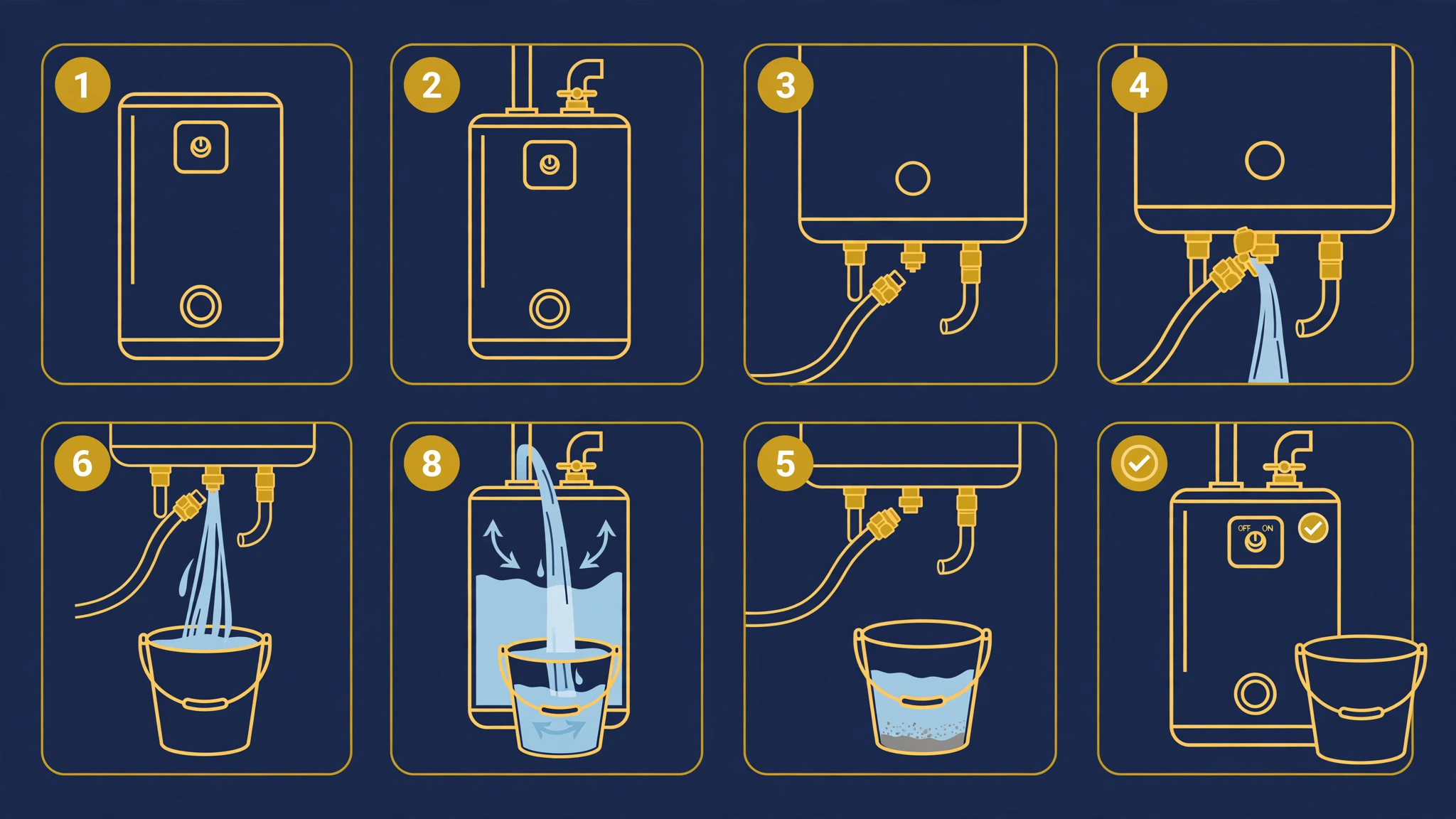
To flush a tank water heater, switch off power or gas, close the cold water inlet, attach a garden hose to the drain valve, open the valve until the water runs clear, then close the valve and restore power.
- Switch off power at the breaker, or set a gas valve to pilot.
- Close the cold water inlet valve at the top.
- Open a hot water tap to release pressure.
- Attach a garden hose to the drain valve.
- Run the hose to a drain or outdoors.
- Open the drain valve until the water runs clear.
- Open the cold inlet in short bursts to stir sediment.
- Close the drain valve, refill the tank, then restore power or gas.
Sediment is mostly calcium carbonate from heated water that settles on the tank floor. The U.S. Department of Energy recommends draining a quarter of the tank every few months to reduce sediment (Source: U.S. Department of Energy, 2026).
How Do You Inspect and Replace the Anode Rod?
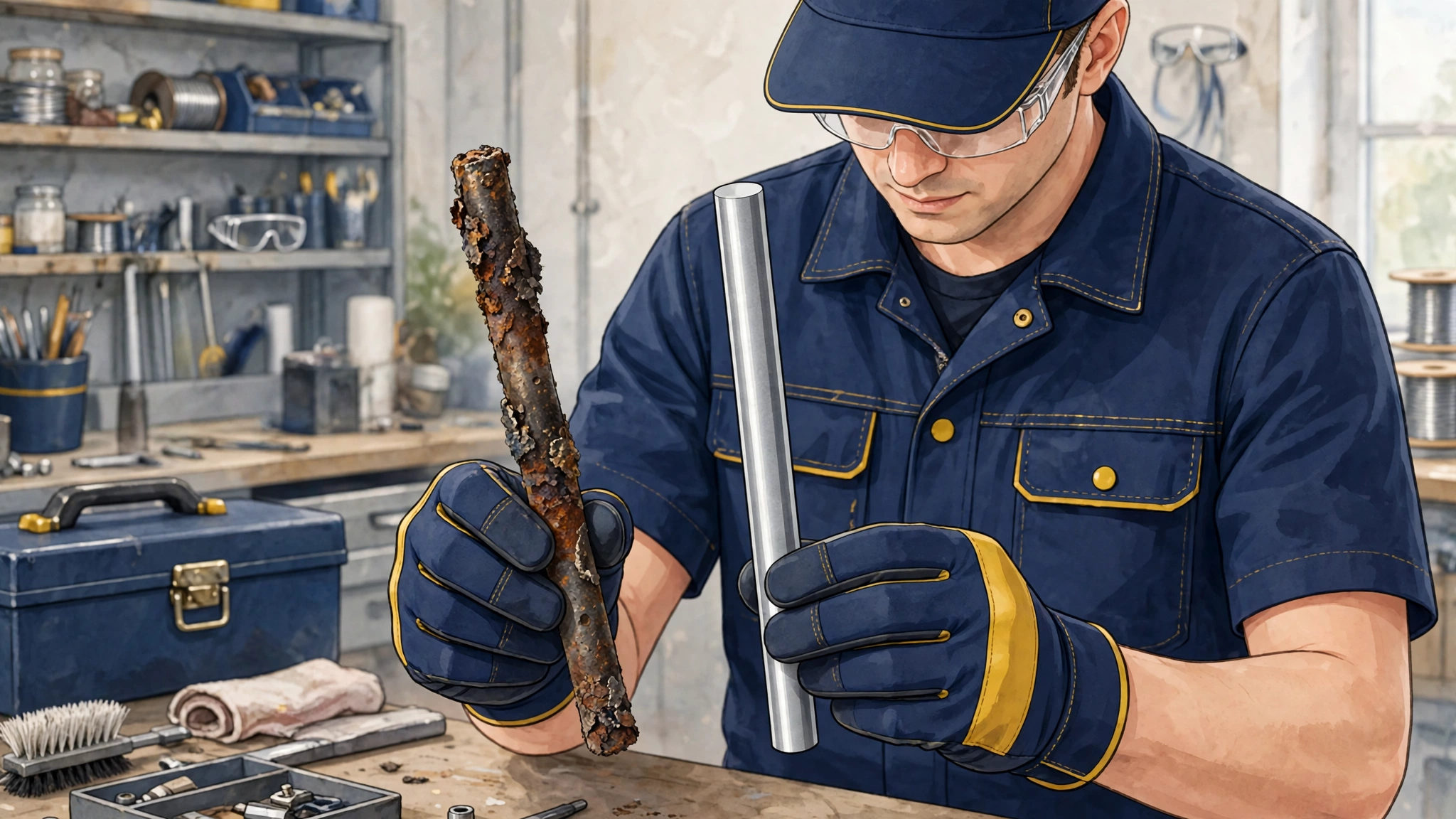
To inspect the anode rod, switch off power and water, drain a few gallons, unscrew the rod with a large socket, and replace it when less than half an inch of metal remains or more than 6 inches of core wire shows.
The anode rod is a magnesium, aluminum, or zinc rod that corrodes in place of the steel tank, and the page on how a sacrificial anode protects steel explains why the more active metal corrodes first. Check the rod every 2 to 3 years, and every 2 years in hard water areas. A rod with a flexible joint fits low ceilings.
How Do You Test the Temperature and Pressure Relief Valve?
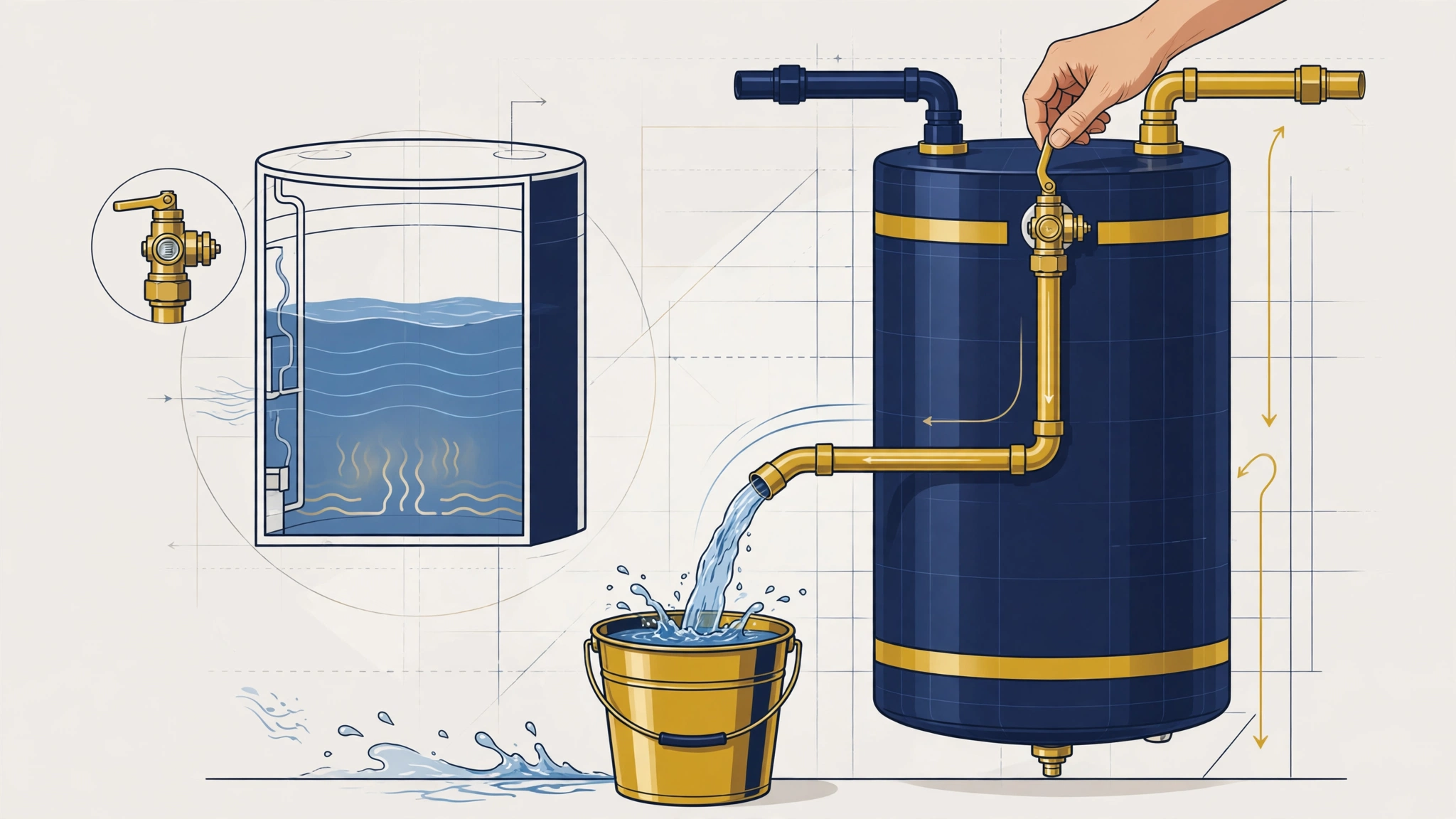
To test the temperature and pressure relief valve, place a bucket under the discharge pipe, lift the lever for 5 seconds, and watch for a strong stream of hot water, then let the lever snap shut.
The temperature and pressure (T and P) relief valve releases water when tank temperature or pressure rises too high, and a stuck valve is a safety risk. If the valve drips after the test, lift the lever again to clear grit, and replace the valve if it still drips. A valve that will not open needs a professional at once.
How Do You Maintain a Tankless Water Heater?
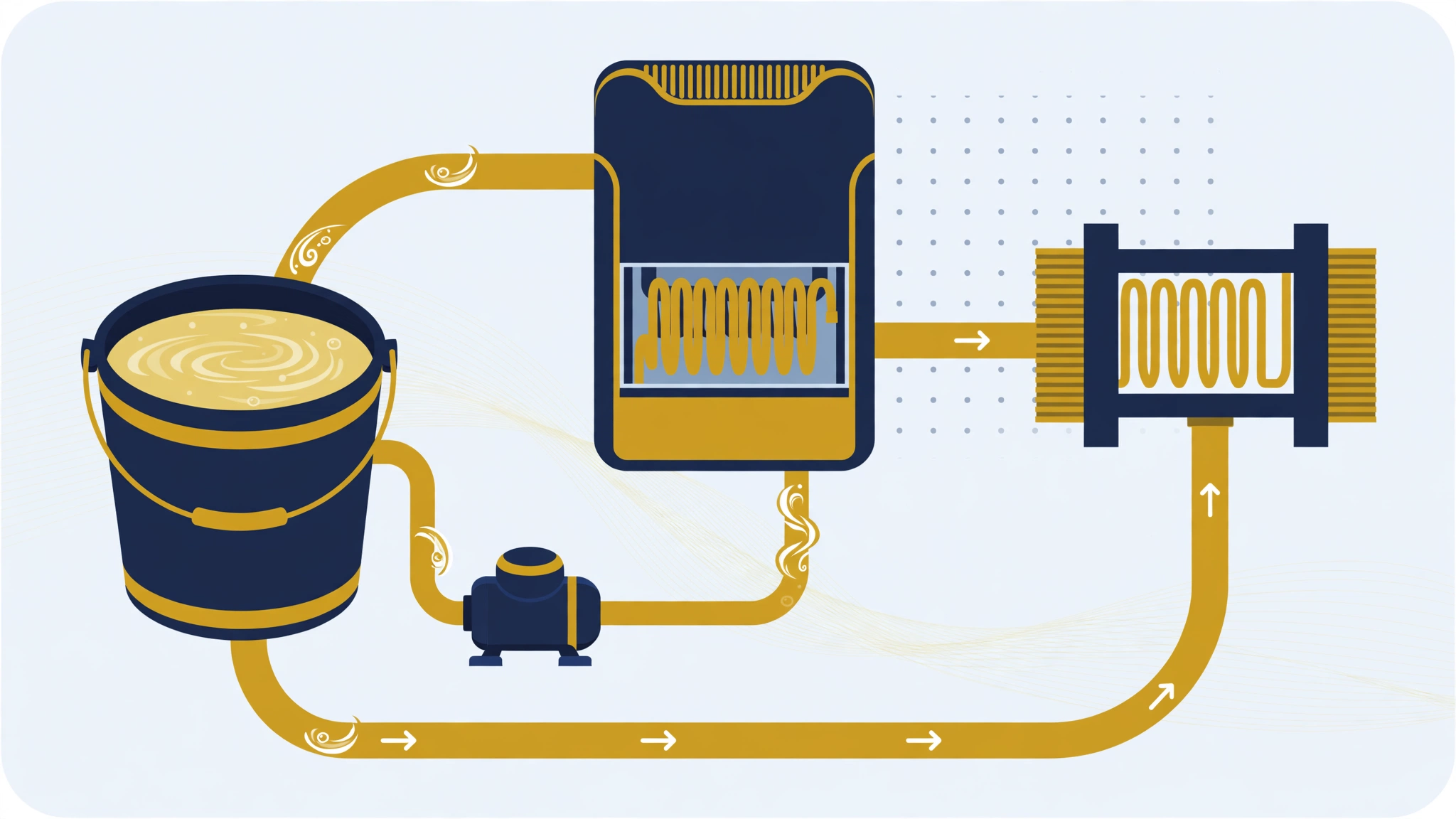
To maintain a tankless water heater, clean the inlet water filter every 6 months, flush the heat exchanger with vinegar once a year, and check the condensate drain on condensing models.
A tankless flush circulates undiluted white vinegar through the heat exchanger with a small pump for 45 to 60 minutes, then rinses with clean water. About 3 to 4 gallons of vinegar covers a routine yearly flush, and a commercial descaler clears heavy buildup faster. Rinnai, Navien, and Rheem manuals tie annual flushing to warranty terms, and scale damage is excluded from coverage when the flush is skipped (Source: manufacturer manuals, 2026). Error codes flag scale early: Rinnai shows LC, Navien shows E016 or E030, and Noritz shows C1. Clean the inlet screen each time, since a clogged screen cuts flow and raises error codes.
For related heating care, read our heating system repair guide.
What Temperature Should a Water Heater Be Set To?
A water heater should be set to 120°F (49°C) for most homes, since 120°F gives hot water for showers and laundry, cuts scald risk, and slows mineral scale inside the tank.
Many heaters ship set to 140°F. Lowering the setting by 10°F can save up to 5 percent in energy costs, according to This Old House (2026).
Tank vs Tankless Maintenance: What Is Different?
Tank and tankless maintenance differ in 4 ways: tank heaters need a sediment flush and an anode rod check, tankless heaters need a vinegar descale and a filter clean, tankless units last longer, and scale is the main failure cause for tankless units.
| Job | Tank | Tankless |
|---|---|---|
| Annual flush | Drain tank sediment | Vinegar flush |
| Anode rod | Every 2 to 3 years | None |
| Filter clean | None | Inlet screen every 6 months |
| Typical service life | 10 to 15 years | Past 20 years |
| Main failure cause | Rust and sediment | Scale |
The U.S. Department of Energy puts tankless life expectancy past 20 years, against 10 to 15 years for tank heaters, with annual flushing (Source: U.S. Department of Energy, 2026).
What Are the Warning Signs That a Water Heater Needs Repair?
A water heater needs repair when hot water runs out fast, water looks rusty or smells odd, the tank rumbles, water pools at the base, or the pilot light will not stay lit.
- Rusty or cloudy hot water points to tank rust or a spent rod.
- A rotten egg smell points to bacteria or a failed rod.
- Rumbling or popping points to sediment on the heating surface.
- Water at the base points to a leak at a valve, fitting, or seam.
- Hot water that runs out fast points to a failed element or heavy sediment.
- A pilot light that will not stay lit points to a failed thermocouple.
A leak at a fitting is a quick fix, while a leak from the tank seam means replacement, since a steel tank cannot be patched safely.
How Much Does Water Heater Maintenance Cost?
Water heater maintenance costs $0 to $50 for DIY jobs such as a flush and a valve test, $100 to $300 for a professional flush or descale, and $150 to $300 for an anode rod or valve replacement by a professional.
| Job | DIY cost | Professional cost |
|---|---|---|
| Tank flush | $0 to $10 | $100 to $200 |
| Tankless descaling flush | $30 to $60 | $150 to $300 |
| Anode rod part | $30 to $60 | $150 to $300 |
| T and P valve part | $15 to $30 | $100 to $200 |
| Annual inspection | $0 | $100 to $200 |
Cost ranges are typical figures reported by United States home service cost guides in 2026, and costs vary by region and heater type.
When Should You Repair or Replace a Water Heater?
Repair a water heater when it is under 10 years old and the fix costs less than half of a replacement, and replace it when the tank leaks, faults repeat, or energy bills keep rising.
| Situation | Repair or replace | Reason |
|---|---|---|
| Under 10 years, first fault | Repair | Long life remains |
| Fix under half of replacement | Repair | Years of use at lower cost |
| Tank leaks from a seam | Replace | A steel tank cannot be patched safely |
| Over 10 years, repeat faults | Replace | Repeat labor erases repair savings |
| Energy bills keep rising | Replace | Higher efficiency |
Age is the first filter. A storage tank heater past 10 years with no service history is a replacement planning talk, not a repair call, and a tankless unit past 20 years with scale damage follows the same rule. Compare repair and replacement quotes in writing, with parts and labor listed as separate lines, before approving work.
How Do You Keep a Water Heater Working Year After Year?
To keep a water heater working year after year, follow a seasonal calendar: flush and test the valve each spring, clean filters each summer, book an inspection each autumn, and check insulation and settings before winter.
- Spring: flush the tank or descale a tankless unit, and test the relief valve.
- Summer: clean tankless inlet filters, and check the condensate drain.
- Autumn: book a professional inspection, check the anode rod if due, and test carbon monoxide detectors.
- Winter: check pipe insulation, confirm the 120°F setting, and watch for leaks after cold snaps.
A calendar turns maintenance into a routine. The autumn inspection matters most for gas heaters, since a technician checks the burner, vent, and gas controls before winter use. Voice of Wave covers home care guides in the same plain style.
Conclusion
Water heater maintenance is an annual routine: a flush, an anode rod check, a valve test, a 120°F setting, and a leak check keep hot water safe and steady. Water heater maintenance costs little when done on time, and far more when skipped, since scale and rust turn into failed parts and a failed tank. Pick the jobs that fit the heater type, and book a technician for gas and electrical work.
Explore the latest guides on the Voice of Wave blog.

Frequently Asked Questions
How often should I flush my water heater?
Flush a tank water heater once a year, and every 6 months in hard water areas. Tankless heaters need a descaling flush once a year too, with a shorter interval when water hardness runs high. A yearly flush clears sediment, keeps heat transfer strong, and protects the tank from rust.
What temperature should I set my water heater to?
Set a water heater to 120°F (49°C). That setting gives hot water for showers and laundry, cuts scald risk, and slows mineral scale inside the tank. Lowering the setting by 10°F can save up to 5 percent in energy costs, according to This Old House (2026).
How long do water heaters last?
A storage tank water heater lasts 10 to 15 years, and a tankless water heater lasts past 20 years with annual flushing, according to the U.S. Department of Energy (2026). Heat pump models last 10 to 15 years. Annual care, water hardness, and use levels set where a unit lands in each range.
Can I flush my water heater myself?
Yes, a homeowner can flush a tank water heater with a garden hose, a bucket, and gloves, by following the 8 steps in this guide. Never restore power to an electric heater before the tank is full. Leave gas, vent, and electrical work to a licensed technician.
What does the anode rod do?
The anode rod is a magnesium, aluminum, or zinc rod that corrodes in place of the steel tank, so the tank lining stays intact. Check the rod every 2 to 3 years. Replace the rod when less than half an inch of metal remains or more than 6 inches of steel core wire shows.
Why does my water heater make a rumbling noise?
A rumbling or popping noise means sediment sits on the tank floor and traps water under the heating surface, so steam bubbles form and burst. Flush the tank to clear the sediment. A noise that stays after a full flush points to heavy scale or a failing heating element.