
Introduction
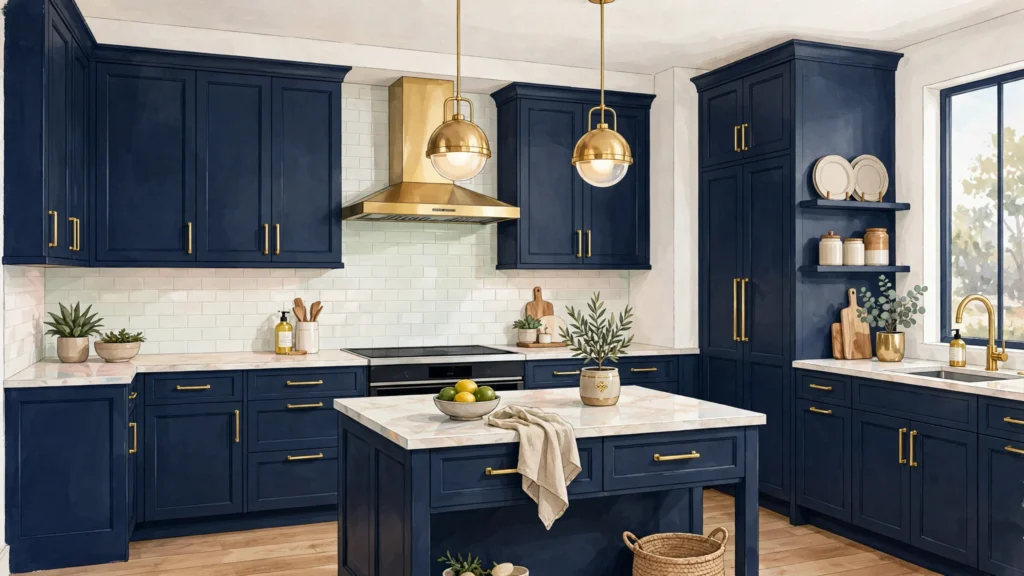
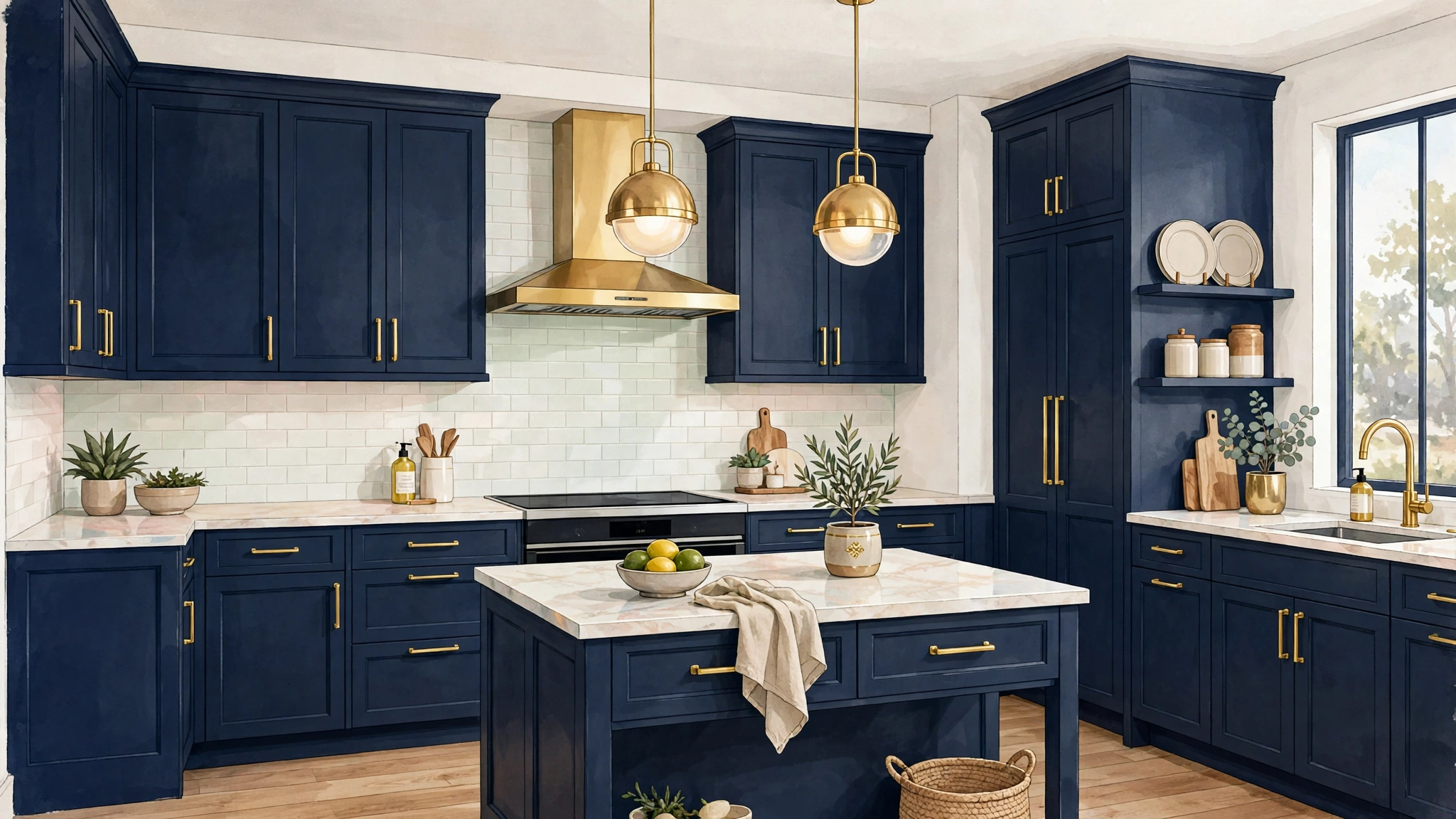
Custom cabinetry is storage built to the exact size, shape, and style of one room, and it fits spaces where standard cabinets leave gaps. Custom cabinetry gives a homeowner control over dimensions, materials, finishes, door styles, hardware, and interior fittings, and a cabinet shop builds each piece to order for that room alone.
This guide sets out 2026 costs, the 3 cabinet types, the best materials, the project timeline from first measure to final install, and the mistakes that add cost or delay. Custom cabinetry suits kitchens, bathrooms, home offices, and laundry rooms where walls, ceilings, or appliances break standard sizes. Each section opens with a direct answer. Read one section for a single question, or read the full guide in order before you sign a cabinet contract.
Key Takeaways
- Custom cabinetry is built to order for one room, with no fixed sizes, and it costs $500 to $1,200 per linear foot installed in 2026 (Source: HomeAdvisor, 2026).
- Stock, semi-custom, and custom cabinets differ in size choice, lead time, and price, and custom suits odd layouts and exact fits.
- Plywood boxes with 3/4 inch panels, dovetail drawers, and soft-close hardware mark a well-built cabinet.
- A full custom project takes 12 to 20 weeks from first consultation to finished install (Source: Final Draft Cabinetry, 2026).
- Late appliance choices and slow finish decisions cause most delays, so lock both before drawings are approved.
Table of Contents
- What Is Custom Cabinetry?
- How Much Does Custom Cabinetry Cost in 2026?
- Custom vs Stock vs Semi-Custom: Which Type Fits Your Home?
- Which Materials Work Best for Custom Cabinetry?
- How Long Does a Custom Cabinet Project Take?
- How to Plan a Custom Cabinetry Project Step by Step
- What Mistakes Should You Avoid With Custom Cabinetry?
- How Do You Care for Custom Cabinets?
- Conclusion
- FAQs
What Is Custom Cabinetry?
Custom cabinetry is storage designed and built for one specific room, with every dimension, door, drawer, and finish chosen for that space. Custom cabinetry starts from a blank drawing, not a catalog size, and a cabinet shop cuts, joins, and finishes each box, door, and drawer to fit the walls, ceiling, and appliances in that room.
Custom cabinetry differs from stock cabinets in 4 ways: size, material, finish, and interior layout. Stock cabinets come in fixed 3 inch width steps, while custom cabinetry fits any width, height, or depth the room allows. Kitchen cabinets are built-in furniture for storage of food, cooking equipment, and dishes, and custom work extends that idea to any room with storage needs.
Custom cabinetry covers 5 parts: the cabinet box, doors and drawer fronts, shelves and drawers, hardware, and finish. The box carries the load, the doors set the look, and the finish protects the wood.
Custom cabinetry fits rooms where a standard run leaves a gap: a sloped ceiling, a chimney breast, or a corner with pipes. A cabinet maker measures the wall, notes outlets, vents, and plumbing, and draws the run to fit those facts. Kitchens, vanities, laundry rooms, offices, and wardrobes all suit custom work when the room breaks standard sizes.
A practical check before you order: open every cabinet in your current kitchen and note which shelves you reach daily and which ones stay empty, since that list sets the drawer plan. For more home projects, browse the Home Improvement guides on this site.
How Much Does Custom Cabinetry Cost in 2026?
Custom cabinetry costs $500 to $1,200 per linear foot installed in 2026, based on HomeAdvisor figures, and a full kitchen runs $15,000 to $50,000 or more. Custom cabinetry cost rises with wood species, door style, finish, hardware, and install difficulty, so a written quote for one scope gives a firmer figure than a national range alone.
| Cabinet type | Cost per linear foot installed in 2026 | Full kitchen range in 2026 |
|---|---|---|
| Stock | $100 to $300 | $3,000 to $8,000 |
| Semi-custom | $150 to $650 | $8,000 to $20,000 |
| Custom | $500 to $1,200 | $15,000 to $50,000 or more |
Per-linear-foot figures come from HomeAdvisor (2026), and full kitchen ranges come from HomeAdvisor and Mr. Cabinet Care (2026).
Cost turns on 5 groups: wood species, door style, finish, hardware, and install difficulty. Painted MDF doors cost less than solid walnut doors, and a glazed finish adds labor.
Hardware adds real cost that many budgets miss. Basic drawer slides cost about $4 to $6 per pair, while soft-close undermount slides cost $19 to $38 per drawer (Source: VC Woodworks, 2026).
Cabinetry runs 30 to 40 percent of a total kitchen renovation budget (Source: B and B Associates, 2026), so a cabinet quote shapes the whole project budget.

Custom vs Stock vs Semi-Custom: Which Type Fits Your Home?
Stock cabinets suit a tight budget and a fast timeline, semi-custom cabinets suit most remodels with some size choice, and custom cabinets suit rooms where exact fit and finish matter most.
| Feature | Stock | Semi-custom | Custom |
|---|---|---|---|
| Sizing | Fixed 3 inch steps | 1/2 or 1 inch steps | Any dimension |
| Lead time | Days to 1 week | 4 to 8 weeks | 8 to 12 or more weeks |
| Cost per linear foot | $75 to $250 | $200 to $650 | $500 to $1,500 or more |
Figures come from Mr. Cabinet Care (2026), and cost ranges vary by region, materials, and project scope.
The choice turns on 3 tests: room shape, budget, and time. Choose stock when the layout is standard and the budget is tight, semi-custom when you want some sizes and finishes, and custom when walls, ceilings, or appliances break standard sizes.
Which Materials Work Best for Custom Cabinetry?
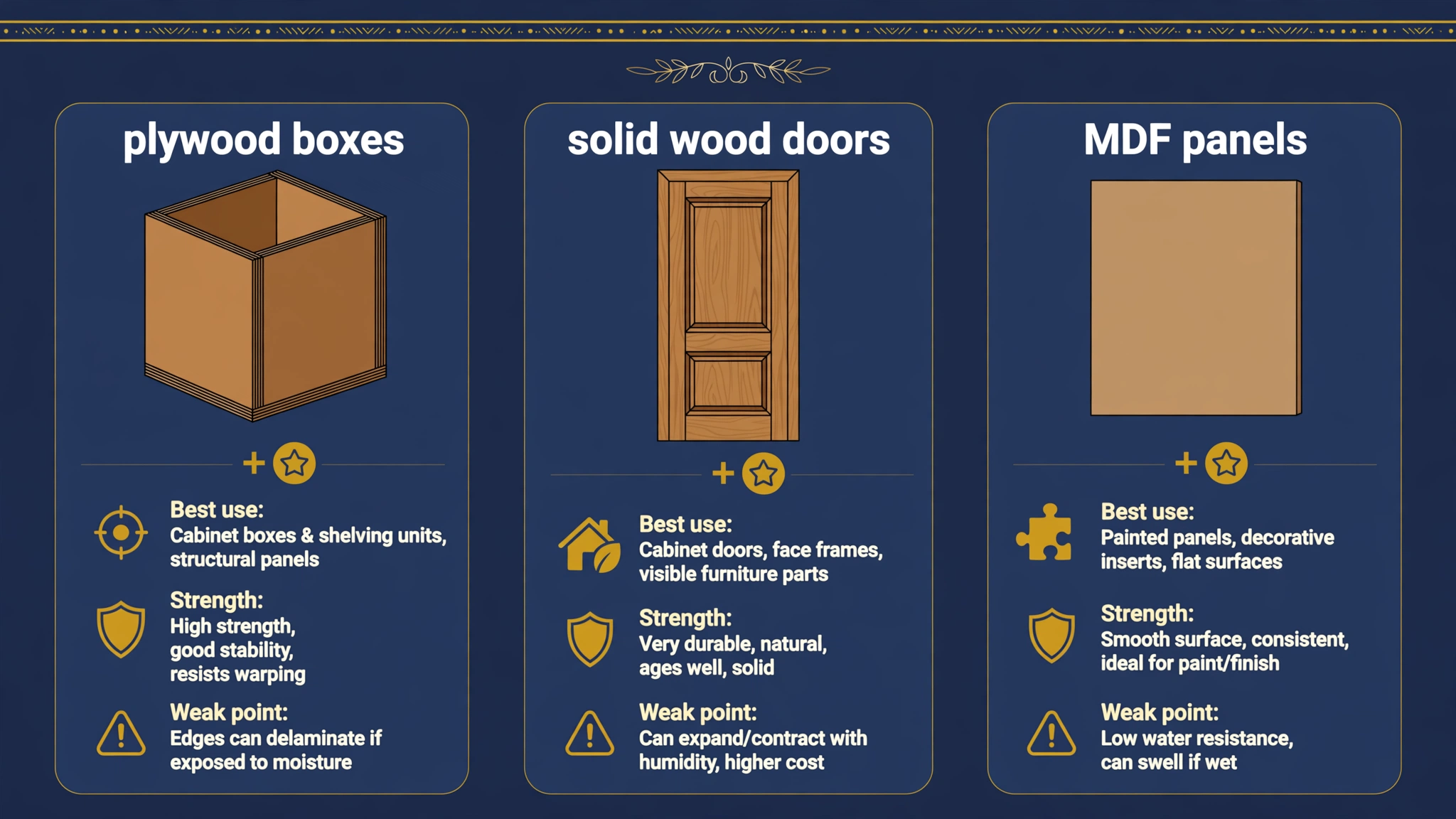
Plywood boxes with 3/4 inch panels work best for most custom cabinetry, with solid wood doors and drawer fronts, MDF for painted doors, and particleboard only where budget forces a compromise.
| Material | Best use | Strength | Weak point |
|---|---|---|---|
| Solid wood | Doors, frames | Durable, repairable, shows grain | Cost, moves with humidity |
| Plywood | Boxes, shelves | Strong, stable, holds screws | Cost above MDF |
| MDF | Painted doors | Smooth paint face, stable | Heavy, swells if soaked |
| Particleboard | Budget boxes | Low cost | Swells with water, weak screw hold |
The box is what you do not see, and the box decides how long custom cabinetry lasts. Plywood with 3/4 inch panels holds screws and resists sagging, while particleboard swells with water and loses screw hold.
Doors and drawer fronts take the visible wear. Solid wood suits doors where grain matters, and MDF suits painted doors for a smooth face.
Framed and frameless construction set the look and the access. Framed cabinets have a face frame on the front of the box, and frameless cabinets attach doors straight to the box. The page on cabinet construction follows one of those two paths. Framed cabinets suit traditional rooms, while frameless cabinets suit modern rooms with wider access.
Paint hides grain and gives the widest color choice, stain shows grain and needs sound wood, and a clear coat protects either. Compare the finish-first option in our Cabinet Refinishing guide before ordering new boxes.
How Long Does a Custom Cabinet Project Take?
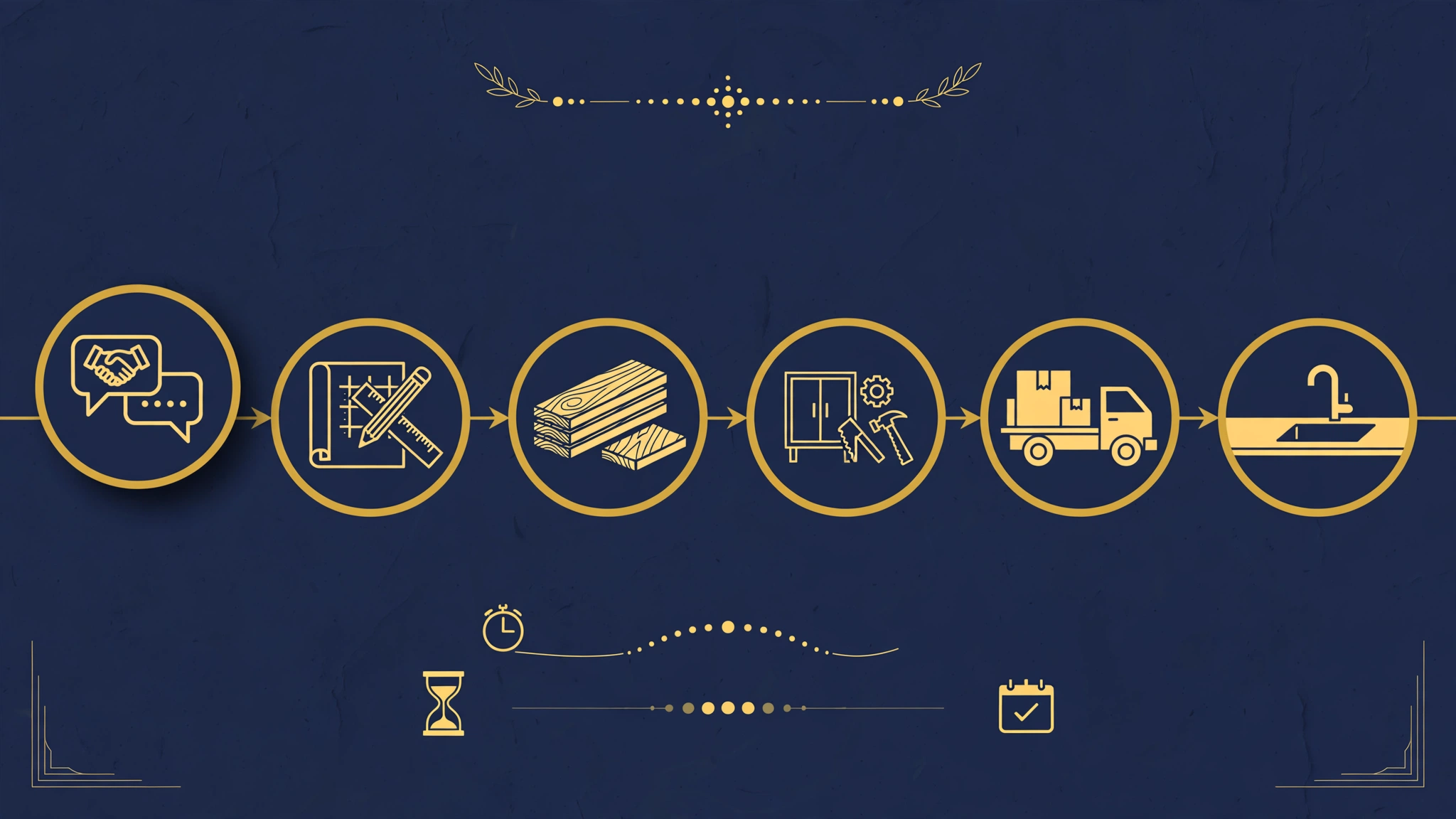
A custom cabinet project takes 12 to 20 weeks from first consultation to finished install, based on 2026 cabinet maker guidance, with production taking 6 to 10 weeks after drawings are approved. Custom cabinetry time splits into design, approval, production, and install, and each stage needs its own schedule.
| Stage | Typical time |
|---|---|
| Consultation and site measure | 1 to 2 weeks |
| Design and drawings | 2 to 4 weeks |
| Approval, contract, and deposit | 1 to 2 weeks |
| Production | 6 to 10 weeks |
| Install | 1 to 2 weeks |
| Countertop template and fit | 1 to 3 weeks after install |
Stage times come from Final Draft Cabinetry and Birch and Grain (2026).
Countertops cannot be templated until the base cabinets are installed and level, so plan on 1 to 3 weeks between cabinet install and a working sink (Source: Birch and Grain, 2026).
Five things cause most delays: slow decisions at the design stage, change orders after the build starts, appliances not selected or back-ordered, countertop fabricator scheduling, and surprises behind old cabinets, such as water damage or a wall out of plumb by an inch (Source: Birch and Grain, 2026).
How to Plan a Custom Cabinetry Project Step by Step
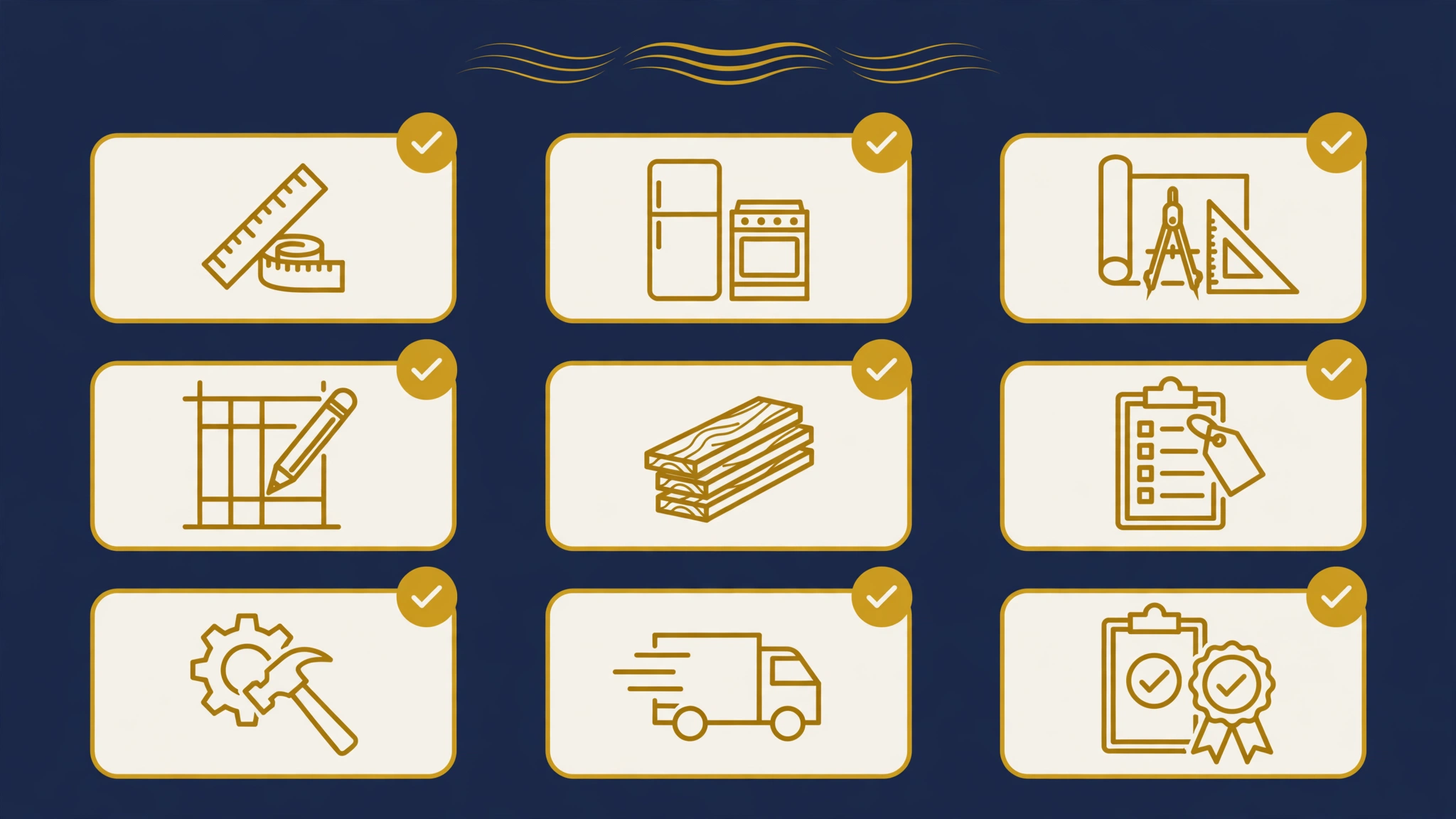
To plan custom cabinetry, measure the room, list storage needs, pick appliances first, approve drawings, and sign off on materials before production starts. Custom cabinetry planning runs in 9 steps, from measure to install, and each step locks a choice that costs time and money to change later.
- Measure walls, ceiling height, and appliance spaces twice.
- List what each cabinet must hold, by daily use.
- Choose appliances and keep their spec sheets ready.
- Set the budget range and the must-have features.
- Review drawings and elevations with the cabinet maker.
- Pick wood, door style, finish, and hardware together.
- Approve final drawings and pay the deposit.
- Clear the room and protect floors before delivery.
- Check each cabinet on install day, then sign off.
Appliance models must be selected before final shop drawings, since panel-ready refrigerators, slide-in ranges, and undercounter units change cabinet sizes by inches between brands (Source: Birch and Grain, 2026).
Two revision rounds are normal, and the clock on everything downstream starts when you approve drawings, not when you first called, so a client who takes 3 weeks to decide on a door style has a 12-week project, not a 9-week one (Source: Birch and Grain, 2026). Review elevations for every cabinet, check door swing against appliances, and confirm outlet and vent positions before you sign. Voice of Wave covers practical home guides that set out the checks to run before the main work starts.
What Mistakes Should You Avoid With Custom Cabinetry?
Avoid custom cabinetry mistakes by locking appliances and finishes before approval, measuring twice, and leaving the finish cure time untouched. Custom cabinetry mistakes cost most at the design and finish stages, where a late change means re-cutting wood or re-coating doors.
Ordering before appliances are chosen is the first mistake. Cabinet sizes depend on appliance specs, and a range swap after drawings are approved forces a re-cut, so keep spec sheets on file before the drawing stage.
Skipping a full site measure is the second mistake. A rushed measure misses a duct chase, an uneven floor, or a wall out of plumb, and each one forces a revision after approval (Source: Final Draft Cabinetry, 2026).
Changing the layout after cutting starts is the third mistake. Once material is cut, a layout change means re-cutting, and changes during the build reset part of the schedule (Source: Birch and Grain, 2026).
Rushing the finish cure is the fourth mistake. A finish stacked before it cured will print or stay soft, and you will see marks in it for the life of the cabinet (Source: Birch and Grain, 2026).
Picking the cheapest hardware is the fifth mistake. Basic slides wear fast under daily loads, while soft-close slides cost $19 to $38 per drawer and hold up through years of use (Source: VC Woodworks, 2026).
How Do You Care for Custom Cabinets?
To care for custom cabinets, wipe spills at once with a soft damp cloth, use mild soap for grease, and skip abrasive pads and harsh cleaners. Custom cabinetry lasts 25 years or more with sound care, and the finish, hinges, and drawer slides set the service life.
Wipe spills at once, with extra care at sink fronts, stove sides, and trash pull-outs. Use a soft, damp cloth for dust, and mild soap with water for grease, followed by a dry wipe. Skip abrasive scrubbers and harsh cleaners, since those dull the finish and cut the film at edges.
Wood moves with humidity changes, so steady indoor air protects doors and joints. Pull doors by handles, not by door edges. Check hinge screws and drawer slides once a year.
Keep a small amount of the exact finish for chips, and record the product name, color code, and sheen in one place. A matched touch-up on a small chip keeps the finish even without a full re-coat.
Conclusion
Custom cabinetry fits rooms where standard sizes leave gaps, and it gives a homeowner full control over size, material, and finish. Custom cabinetry costs $500 to $1,200 per linear foot installed in 2026 (Source: HomeAdvisor, 2026), and a full project takes 12 to 20 weeks from first consultation to finished install (Source: Final Draft Cabinetry, 2026). Plywood boxes, solid wood doors, and soft-close hardware mark a well-built job. Measure twice, lock appliances and finishes before approval, and check each cabinet on install day.
Explore more guides on the Voice of Wave blog for your next home step.

FAQs
How much does custom cabinetry cost per linear foot?
Custom cabinetry costs $500 to $1,200 per linear foot installed in 2026, based on HomeAdvisor figures. A full kitchen runs $15,000 to $50,000 or more, and the final price turns on wood species, door style, finish, hardware, and install difficulty. A written quote for one scope gives a firmer figure than a national range alone.
How long does custom cabinetry take from order to install?
A custom cabinet project takes 12 to 20 weeks from first consultation to finished install, based on 2026 cabinet maker guidance. Production takes 6 to 10 weeks after drawings are approved, and countertops add 1 to 3 weeks after install. Slow finish decisions and late appliance choices cause most delays, so lock both before approval.
Is custom cabinetry worth the cost?
Yes, custom cabinetry is worth the cost when the room has odd sizes, sloped ceilings, or built-in needs that stock cabinets cannot meet. It is less clear value in a standard rectangle kitchen with no special storage needs, where semi-custom cabinets give most of the look for less money.
What is the best wood for custom cabinets?
Maple and oak suit most custom cabinetry for strength and cost, while cherry and walnut suit rooms where grain and color matter most. Plywood boxes with solid wood doors give the best mix of strength and value, and MDF suits painted doors for a smooth face.
What is the difference between framed and frameless cabinets?
Framed cabinets have a wood frame on the front of the cabinet box, while frameless cabinets attach doors straight to the box for wider access. Framed cabinets suit traditional rooms, while frameless cabinets suit modern rooms. The choice is a look and access decision, not a quality one.
Can custom cabinetry fit an awkward or small kitchen?
Yes, custom cabinetry fits awkward and small kitchens, since each box is built to the exact wall, ceiling, and appliance layout. Custom work fills odd corners, sloped ceilings, and narrow gaps that stock sizes leave empty. A small kitchen gains the most from custom drawers and pull-outs, since every inch counts.