
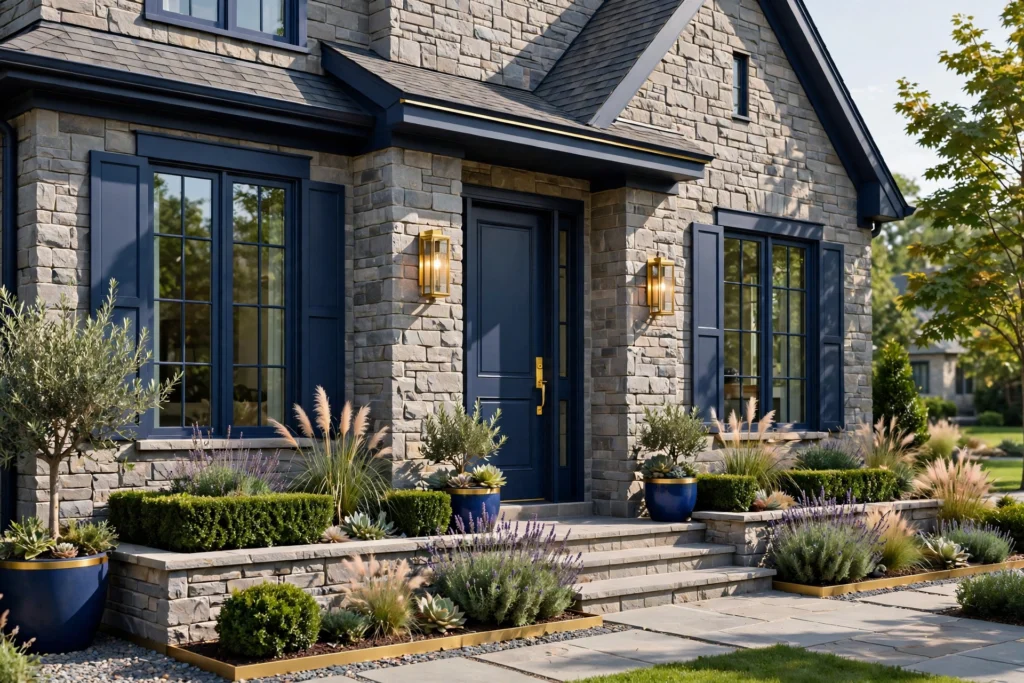
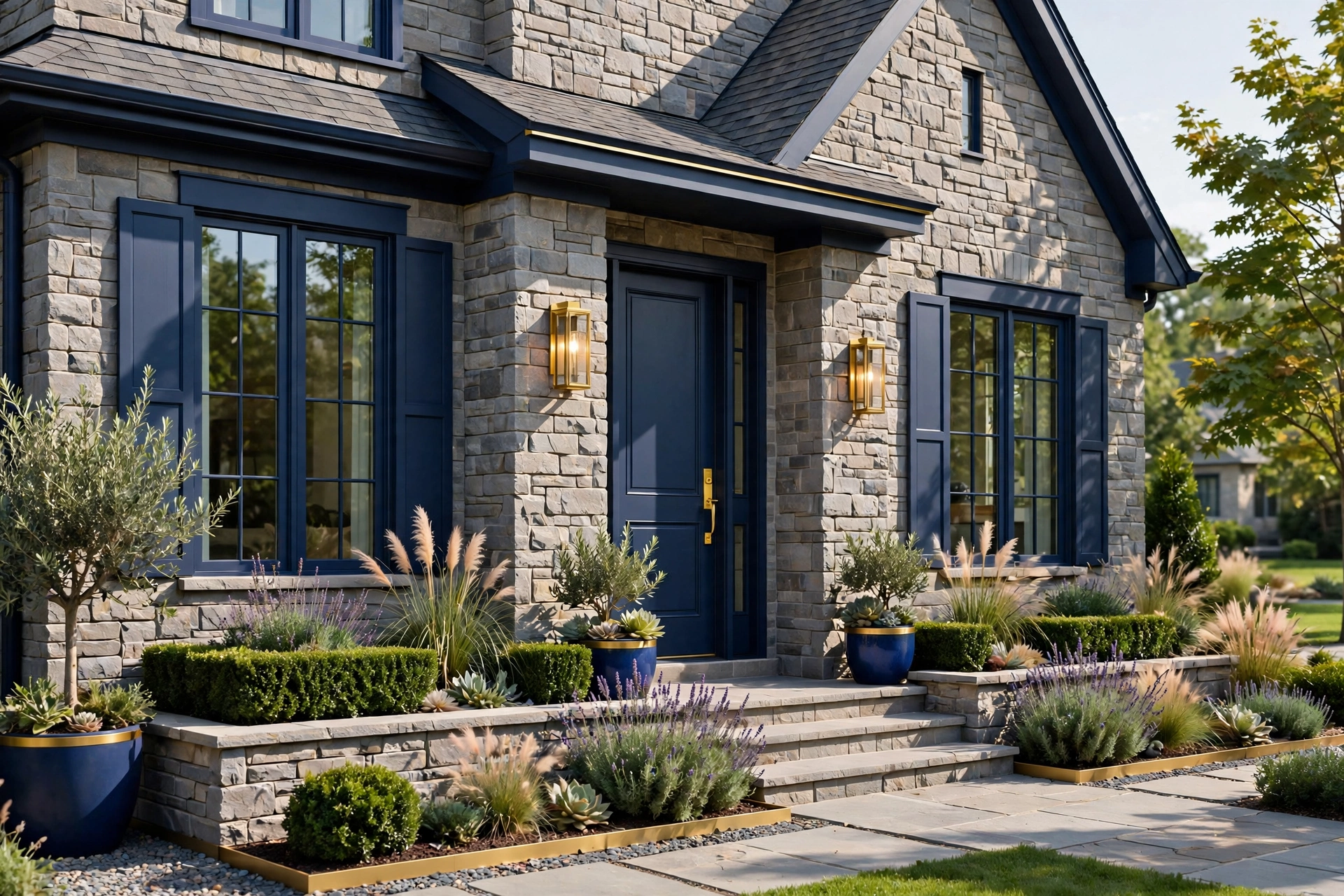
Stone veneer is a thin layer of natural or manufactured stone fixed to a wall as a decorative facing, and it gives a home the look of solid stone without the weight, the foundation work, or the full stone price. Stone veneer works on exterior walls, fireplaces, kitchen walls, and entryways, and it comes in 5 main styles that suit different house types.
Natural stone veneer is real quarried stone cut thin, while manufactured stone veneer is molded concrete colored to look like real stone. Stone veneer design starts with 3 choices: natural or manufactured stone, a style profile, and a placement. Each choice changes the cost, the weight, the look, and the install method. This guide covers types, styles, costs, installation, moisture protection, and design ideas, so a homeowner can pick stone veneer with confidence.
Key Takeaways
- Stone veneer is a thin decorative stone facing, not a load-bearing wall.
- Natural stone veneer is real quarried stone cut to 0.75 to 1.5 inches thick; manufactured stone veneer is molded concrete made to look like real stone.
- 5 main styles are ledgestone, fieldstone, ashlar, castle stone, and river rock.
- Stone veneer material costs $11 to $18 per square foot, with labor adding $2 to $4 per square foot (Source: Angi, 2026).
- Moisture protection needs a weather barrier, flashing, and a drainage gap.
Table of Contents
- What Is Stone Veneer?
- What Are the Main Types of Stone Veneer?
- Stone Veneer Styles That Shape a Design
- Natural Stone Veneer vs Manufactured Stone Veneer
- How Much Does Stone Veneer Cost?
- Where Can You Use Stone Veneer in a Home?
- How to Install Stone Veneer
- How Do You Keep Water Out of Stone Veneer Walls?
- How to Choose Stone Veneer for Your Home
- How to Maintain Stone Veneer
- Common Stone Veneer Mistakes to Avoid
- Conclusion
- Frequently Asked Questions
What Is Stone Veneer?
Stone veneer is a thin layer of natural or manufactured stone applied to a wall surface as a decorative facing, and it is not meant to carry structural loads. Stone veneer covers wood framing, concrete block, cement board, or drywall, and the wall behind the stone veneer carries the real load. Stone veneer ranges from 0.25 inches thick for flexible sheets to 1.5 inches thick for natural thin stone, while full-bed stone runs 3 to 5 inches thick.
Thin stone veneer first appeared in the late 19th century, and the Roman Colosseum used marble veneer on its concrete core far earlier. Readers who follow home guides on the Home Improvement category page will find more exterior and repair guides in the same place.
Stone veneer suits a home because it is light. A full stone wall can weigh more than 100 pounds per square foot and needs a concrete footing, while stone veneer weighs far less and fits on standard wood-framed walls with no extra foundation.
What Are the Main Types of Stone Veneer?
Stone veneer has 3 main types: manufactured stone veneer, natural thin stone veneer, and full-bed stone veneer, and each type differs in material, thickness, weight, and cost. Manufactured stone veneer is molded concrete, natural thin stone veneer is real quarried stone cut thin, and full-bed stone veneer is real stone at full masonry depth. A fourth type, flexible stone veneer, is a thin sheet of real slate, mica, or sandstone on a resin and fiberglass backing.
| Type | Material | Thickness | Best use |
|---|---|---|---|
| Manufactured stone veneer | Portland cement, aggregates, iron oxide pigments | About 1 to 2 inches | Budget exteriors, fireplaces, DIY projects |
| Natural thin stone veneer | Real granite, limestone, sandstone, slate, quartzite | 0.75 to 1.5 inches | High-end exteriors, fireplaces, lasting value |
| Full-bed stone veneer | Real quarried stone | 3 to 5 inches | Structural-look walls, garden walls, chimneys |
| Flexible stone veneer | Thin real stone on resin and fiberglass backing | About 0.08 to 0.12 inches | Curved walls, furniture fronts, light remodels |
Manufactured stone veneer, also called cultured stone or faux stone, is cast in molds taken from real rock, then colored with iron oxide pigments. Brands such as Cultured Stone by Boral and Eldorado Stone lead this segment, and the best products are hard to tell from real stone at a glance.
Natural thin stone veneer is real stone, so each piece has true color depth and texture that no mold can copy. Natural stone veneer holds color under sun and lasts for decades, but it costs more and needs a skilled mason.
Flexible stone veneer is real stone in sheet form, and it bends around gentle curves and fits cabinet fronts, columns, and feature walls.
Stone Veneer Styles That Shape a Design
Stone veneer styles shape the whole look of a wall, because the shape and layout of the pieces set the tone before color or grout play any part. Stone veneer comes in 5 main styles: ledgestone, fieldstone, ashlar, castle stone, and river rock, plus mosaic patterns for a random handcrafted look. The style choice should match the house, not fight it.
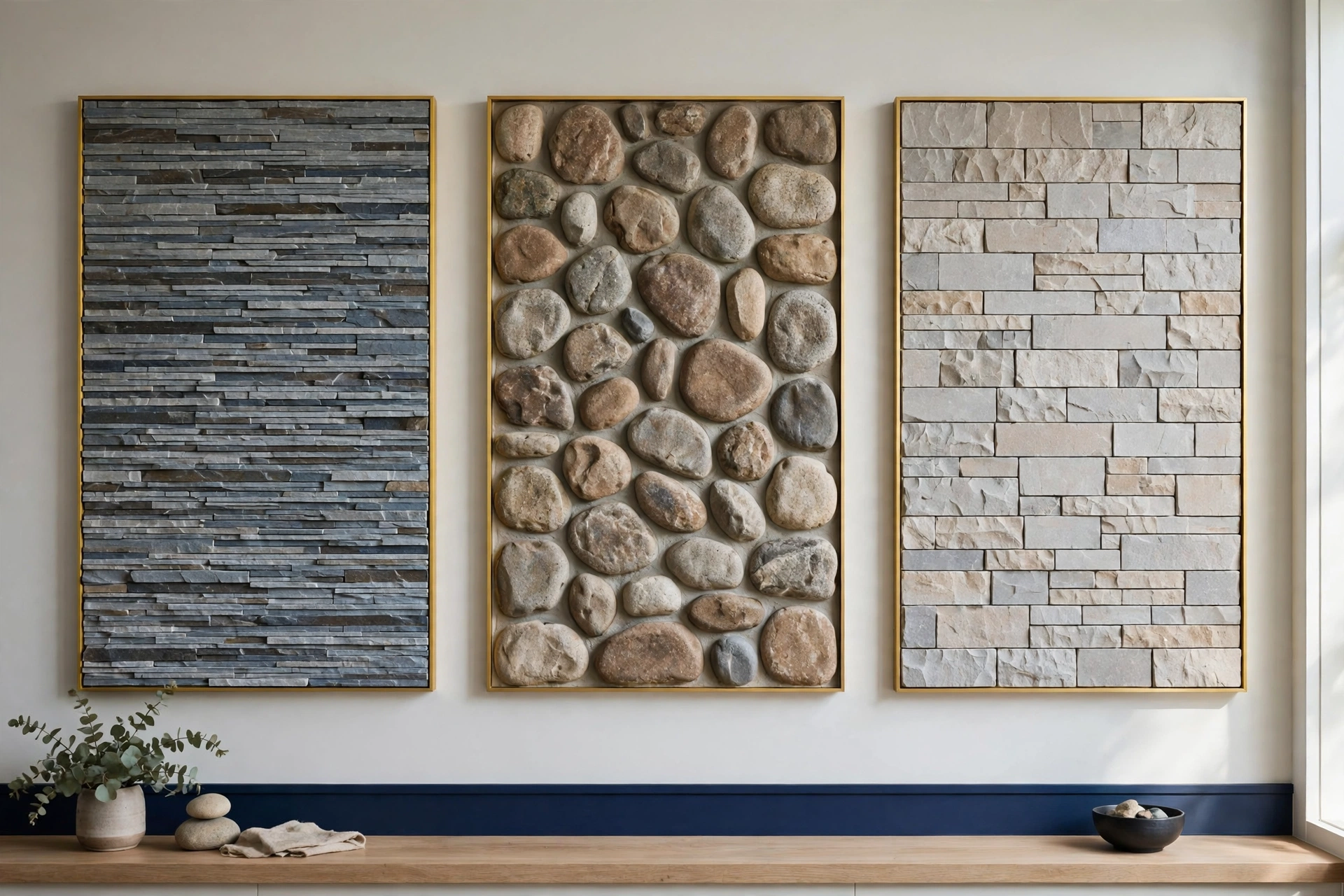
Ledgestone veneer uses long, narrow, flat-faced pieces stacked in tight horizontal rows, and it reads clean and modern. Ledgestone veneer suits contemporary homes, modern farmhouses, and fireplace walls.
Fieldstone veneer uses rounded, irregular stones that look gathered from a field, and it reads rustic and old-world. Fieldstone veneer suits cottages, cabins, country homes, and garden walls.
Ashlar veneer uses rectangular cut stones in rows of varied heights, and it reads formal and structured. Ashlar veneer suits colonial, Georgian, and upscale traditional homes.
Castle stone veneer uses large block-like pieces that recall medieval stonework, and it reads bold and dramatic. Castle stone veneer suits large homes, chimneys, and tall entry walls.
River rock veneer uses smooth, rounded stones from riverbeds, and it reads warm and relaxed. River rock veneer suits rustic living rooms, outdoor kitchens, and garden walls.
Mosaic stone veneer uses irregular pieces in random layouts, and it reads organic and handcrafted. Mosaic stone veneer needs a skilled installer, because random joints can look chaotic without careful placement. A practical first-hand observation: on a walk past a row of 1990s brick homes, the houses with a low stone veneer wainscot and a matching porch column read as newer and more cared for than the plain brick houses beside them, and the effect came from one narrow band of stone.
Natural Stone Veneer vs Manufactured Stone Veneer
Natural stone veneer beats manufactured stone veneer on authenticity and life span, while manufactured stone veneer beats natural stone veneer on price, weight, and ease of install. The right pick depends on budget, climate, and how close a viewer stands to the wall.
| Factor | Natural stone veneer | Manufactured stone veneer |
|---|---|---|
| Material | Real quarried stone | Molded concrete and pigments |
| Look | True color depth and texture | Close copy, flatter in close view |
| Weight | Heavier, needs firm substrate | Lighter, fits more walls |
| Cost | Higher material and labor | Lower material and labor |
| Durability | Lasts decades, holds color in sun | Can fade, chip, or crack in harsh weather |
| Install | Needs a skilled mason | Cuts with a saw, faster install |
| Maintenance | Low, seal only in some cases | Seal more often, watch for cracks |
Natural stone veneer is the pick for a forever home, a full facade, or a fireplace that guests see up close. Natural stone veneer also suits hot sun and freeze-thaw climates, because real stone holds color and resists cracking better than molded concrete.
Manufactured stone veneer is the pick for a budget project, a rental, or a large wall where cost matters more than close-up realism. Manufactured stone veneer comes in more colors and more uniform sizes, so a crew can cover a wall fast, but it can fade in strong sun, so a sealer helps in harsh climates.
The history of stone veneer explains the split: The history of stone veneer shows thin stone facing moved from grand buildings to ordinary homes as cutting tools improved. Voice of Wave covers home materials in plain terms.
How Much Does Stone Veneer Cost?
Stone veneer material costs $11 to $18 per square foot, and professional installation labor adds $2 to $4 per square foot (Source: Angi, 2026). Manufactured stone veneer material costs $5 to $8 per square foot, which makes it the lowest-cost path to a stone look. Natural thin stone veneer costs more than manufactured stone veneer, and full-bed stone can exceed $30 per square foot for material alone.
| Project | Material cost per sq ft | Installed cost per sq ft | 100 sq ft total (installed) |
|---|---|---|---|
| Manufactured stone veneer | $5 to $8 | $15 to $30 | $1,500 to $3,000 |
| Natural thin stone veneer | $12 to $30 | $30 to $50 | $3,000 to $5,000 |
| Full-bed stone veneer | $30 or more | $50 or more | $5,000 or more |
| Flexible stone veneer | $10 to $20 | $20 to $35 | $2,000 to $3,500 |
The total cost depends on 5 factors: stone type, wall size, wall condition, region, and installer skill. A flat, sound wall costs less than a wall that needs new sheathing, a moisture barrier, or lath. A moisture barrier costs $2 to $4 per square foot, and underlayment repair for a 1,000 square foot area costs $440 to $520 (Source: Angi, 2026).
A small fireplace surround of 40 square feet in manufactured stone veneer can cost $600 to $1,200 installed, while a full exterior facade of 500 square feet in natural stone veneer can cost $15,000 to $25,000 installed.
Where Can You Use Stone Veneer in a Home?
Stone veneer works on exterior accents, fireplaces, kitchen walls, entryways, columns, and outdoor kitchens, and it fails in places with constant standing water or heavy impact. Stone veneer is a facing, so it needs a sound wall behind it, and the wall must stay dry.
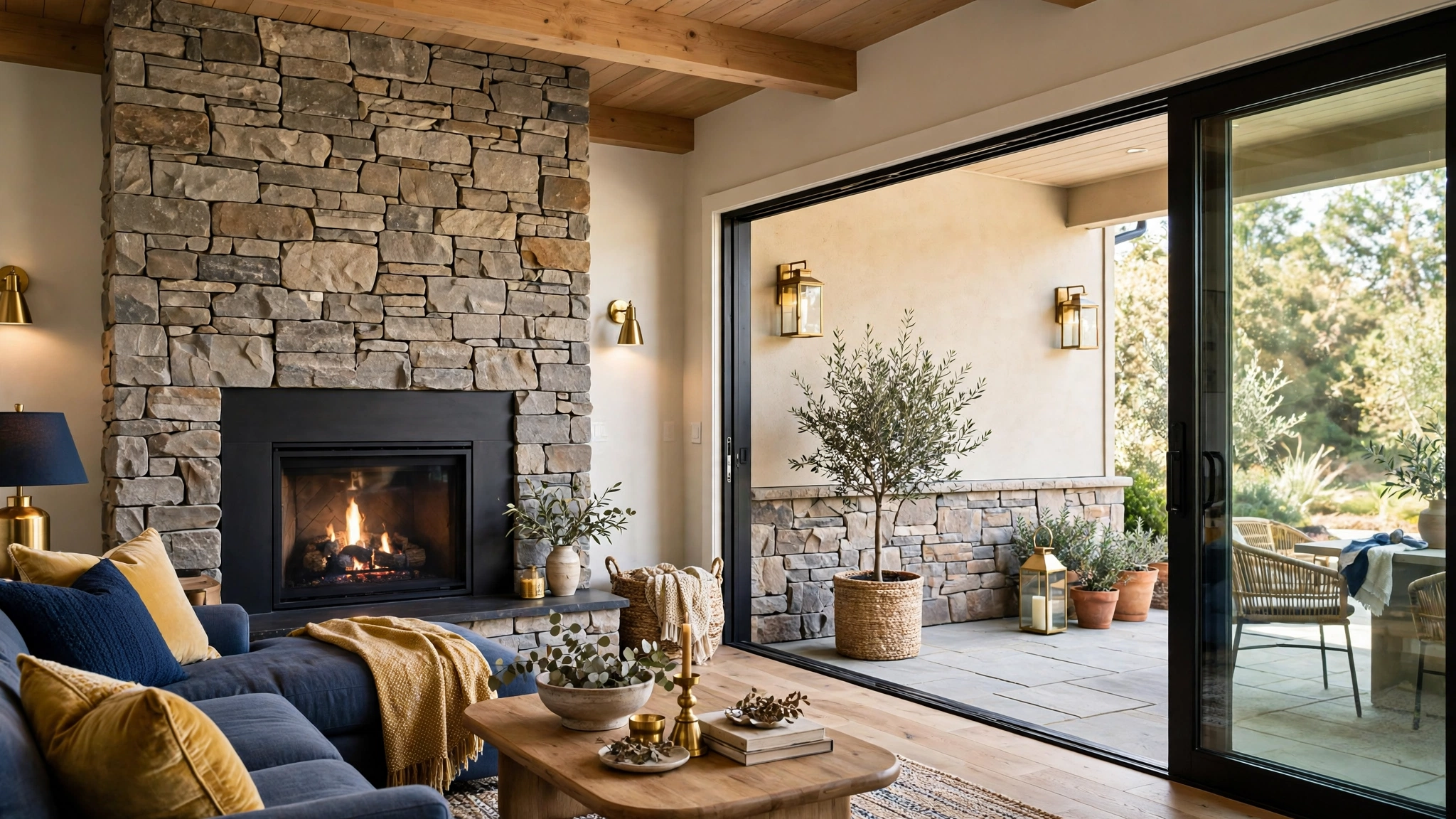
Exterior walls: Stone veneer suits wainscoting on the lower third of a wall, full gables, chimneys, porch columns, and entry surrounds. A stone veneer wainscot adds weight and texture to a plain facade.
Fireplaces: A stone veneer fireplace is the most popular interior use, because a floor-to-ceiling stone wall turns a plain firebox into a focal point. Stone veneer suits gas, electric, and wood fireplaces.
Kitchens: Stone veneer suits a range hood surround, a breakfast bar front, or one accent wall, and it pairs well with wood cabinets and black fixtures. Stone veneer is not the best pick for a full backsplash behind a sink, because grout lines and rough texture trap grease and water.
Bathrooms: Stone veneer suits one dry accent wall in a bathroom, but it needs a sealer and a maker approval for wet use. Stone veneer should not cover a shower wall unless the product is rated for constant water, because trapped moisture can loosen mortar and grow mold.
Entryways and bedrooms: Stone veneer suits an entry wall, a stair wall, or a bedroom accent wall, and it adds texture without paint. Light limestone or pale ashlar suits small rooms better than dark ledgestone.
Outdoor kitchens and garden walls: Stone veneer suits outdoor kitchen bases, seat walls, and garden walls, because stone handles weather well. Use natural stone veneer outdoors in freeze-thaw climates, because manufactured stone veneer can crack when water freezes in its pores.
For more exterior upkeep ideas, read our guide to roof warning signs: Roof Repair Signs: 10 Warning Signs Homeowners Must Spot pairs stone veneer exterior work with a sound roof and dry walls.
How to Install Stone Veneer
To install stone veneer, prepare the wall, fix a weather barrier and metal lath, apply a mortar scratch coat, butter each stone with mortar, set the stones from the bottom up, and grout or point the joints. The steps below cover a standard adhered install on a wood-framed exterior wall.
- Check the wall. The wall must be flat, dry, and sound, with no rot, loose paint, or crumbling sheathing.
- Fix the weather barrier. Staple two layers of weather-resistive barrier to the sheathing, with overlaps that shed water down and out.
- Fix metal lath. Staple galvanized metal lath over the barrier, with overlaps of at least 2 inches at seams.
- Apply a scratch coat. Trowel a 0.5 inch mortar scratch coat over the lath, score it, and let it cure for 24 to 48 hours.
- Lay out the stones. Sort pieces by size and color, and mix tones from several boxes.
- Butter each stone. Spread mortar on the back of each stone to full cover, with no bare spots at the edges.
- Set stones bottom up. Press each stone into the scratch coat with a slight twist, and hold it until it grips.
- Mind the joints. Keep joints tight for a dry-stack look, or leave a finger-width gap for grout.
- Grout the joints. Pipe grout into joints with a grout bag, then rake the joint to a concave profile when the grout firms.
- Clean and cure. Brush off loose mortar, mist the wall lightly, and keep the wall damp for 2 to 3 days while the mortar cures.
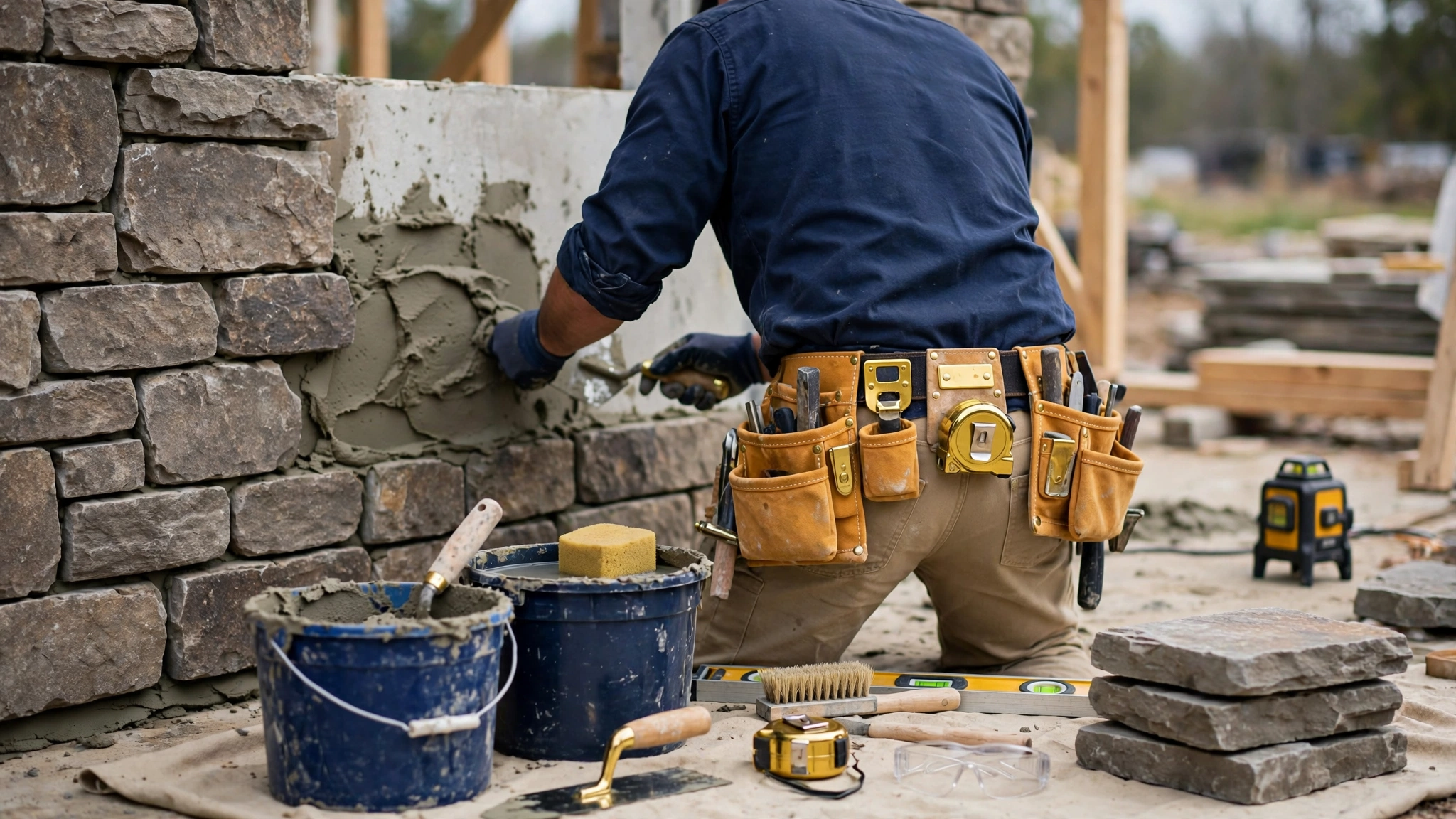
Corner pieces need care, because a bad corner shows from every angle. Use pre-cut corner pieces or cut full stones at a 45-degree angle, and alternate long and short legs so the corner reads as solid stone.
DIY install suits small interior walls and fireplace surrounds, and a skilled homeowner can finish 40 square feet in a weekend. Exterior walls, tall walls, and full facades suit a licensed mason, because moisture errors can rot framing and cost far more than the labor saved.
How Do You Keep Water Out of Stone Veneer Walls?
Stone veneer walls stay dry with 2 layers of weather-resistive barrier, flashing at every opening, a weep screed at the base, and a drainage gap that lets water escape. Water gets behind stone veneer through joints, cracks, and gaps at windows and doors, so the wall system must drain water out, not trap it. Most stone veneer failures come from water, not from the stone itself.
Two barrier layers: The first barrier layer covers the sheathing, and the second barrier layer covers the first, so a tear in one layer does not let water reach the wood. Overlaps must run down and out, like roof shingles, so water sheds to the outside.
Flashing: Metal flashing must sit at the top of windows, doors, and wall penetrations, and it must direct water out past the stone face. Flashing that ends behind the stone traps water, and trapped water rots sheathing and framing over time.
Weep screed: A weep screed at the base of the wall gives water an exit at the bottom, and it stops the mortar bed from wicking ground water up into the wall. The weep screed must sit above grade, with a clear gap below it.
Drainage gap: A rainscreen gap between the barrier and the stone lets air move and water drain, and it keeps the wall dry in driving rain. Masonry veneer walls use the same air space as a drainage plane, with flashing and weep holes that direct water out through the base of the wall.
How to Choose Stone Veneer for Your Home
Choose stone veneer by matching the style to the house, the type to the budget and climate, and the color to the fixed features of the home. The checklist below turns those 3 matches into 7 checks a homeowner can run before ordering.
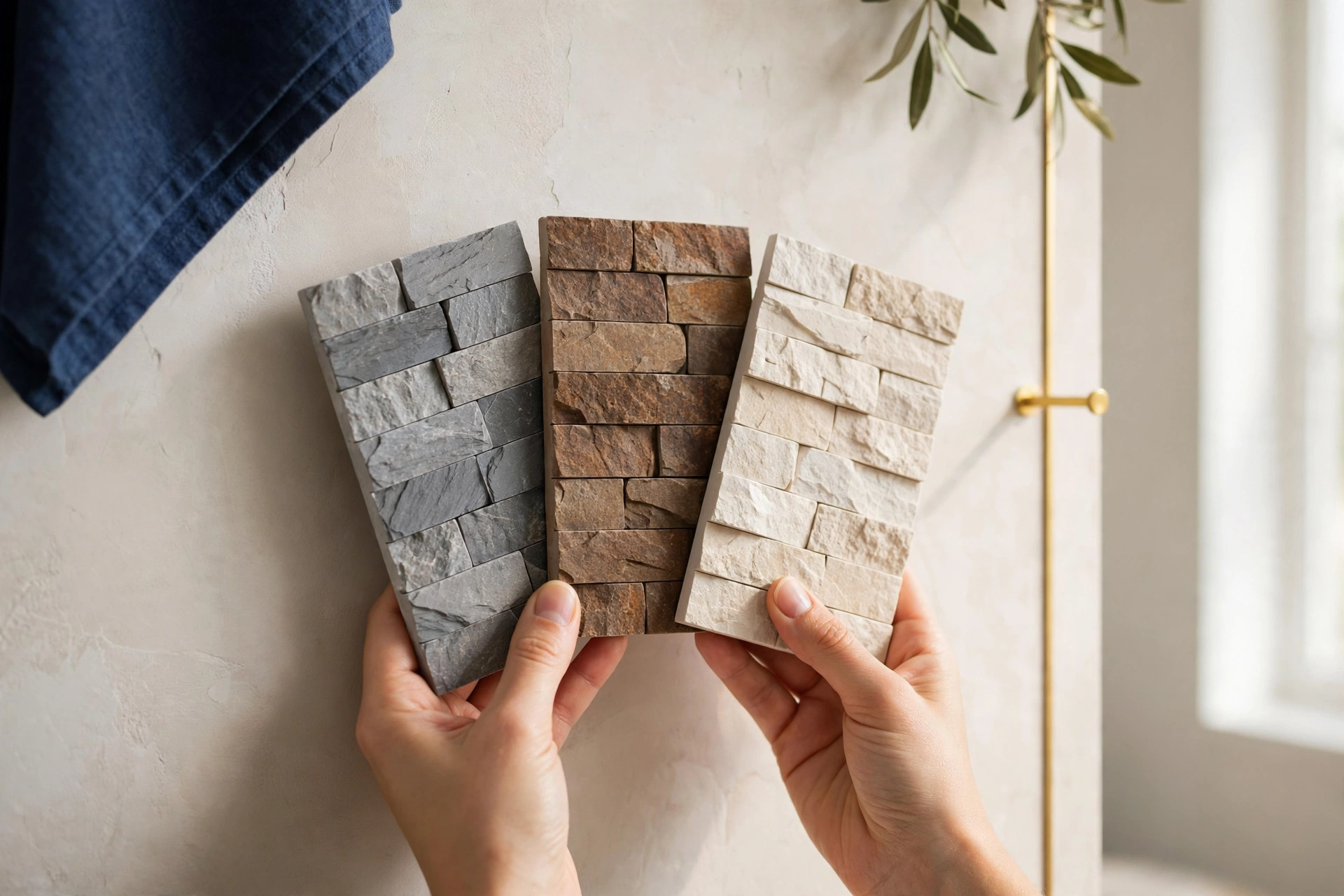
- Match the house style. Ledgestone suits modern and farmhouse homes, ashlar suits formal homes, fieldstone suits cottages, and castle stone suits large traditional homes.
- Match the climate. Natural stone veneer suits freeze-thaw and strong sun, while manufactured stone veneer needs a sealer in the same climates.
- Match the budget. Manufactured stone veneer suits a tight budget, natural stone veneer suits a long-term home, and full-bed stone suits a landmark wall.
- Match the fixed colors. Pick stone tones that sit well with the roof, brick, trim, and door color, because those features will not change.
- Check the light. View stone samples on the real wall in morning and evening light, because sun changes how gray, brown, and gold tones read.
- Order extra material. Order 10 percent extra stone for cuts, breaks, and future repairs, and keep a few spare pieces in storage.
- Check the warranty. Ask the maker for the warranty terms in writing, and check whether DIY install voids the warranty.
Color deserves a slow look, because stone veneer lasts for decades. Gray stone suits cool roofs and black trim, brown stone suits warm brick and wood, and cream limestone suits white siding and pale trim.
How to Maintain Stone Veneer
Stone veneer needs little maintenance: wash it once a year, check joints and sealant each spring, and replace a cracked piece promptly. Stone veneer holds up well when the wall stays dry, and most upkeep is inspection, not repair.
Wash stone veneer with a garden hose and a soft brush, and use a mild soap for dirt or algae. Never use a high-pressure washer at close range, because the jet can erode mortar and drive water behind the stone.
Seal stone veneer when the maker calls for it, and re-seal every 3 to 5 years in harsh climates. A penetrating sealer keeps water out of pores while letting vapor escape, and it slows fading on manufactured stone veneer.
Fix a cracked piece by chipping out the broken stone, cleaning the mortar bed, buttering a spare piece, and setting it in place. Keep spare pieces from the same batch, because a new batch can differ in tone.
Watch for efflorescence, the white salt crust that appears when water moves through mortar. Efflorescence signals water entry, so find the leak before cleaning the crust, or the crust will return.
Common Stone Veneer Mistakes to Avoid
The most common stone veneer mistakes are skipping the moisture barrier, using one flat stone color, leaving straight joint lines, and grouting too soon. Each mistake is easy to avoid with a short check before work starts.
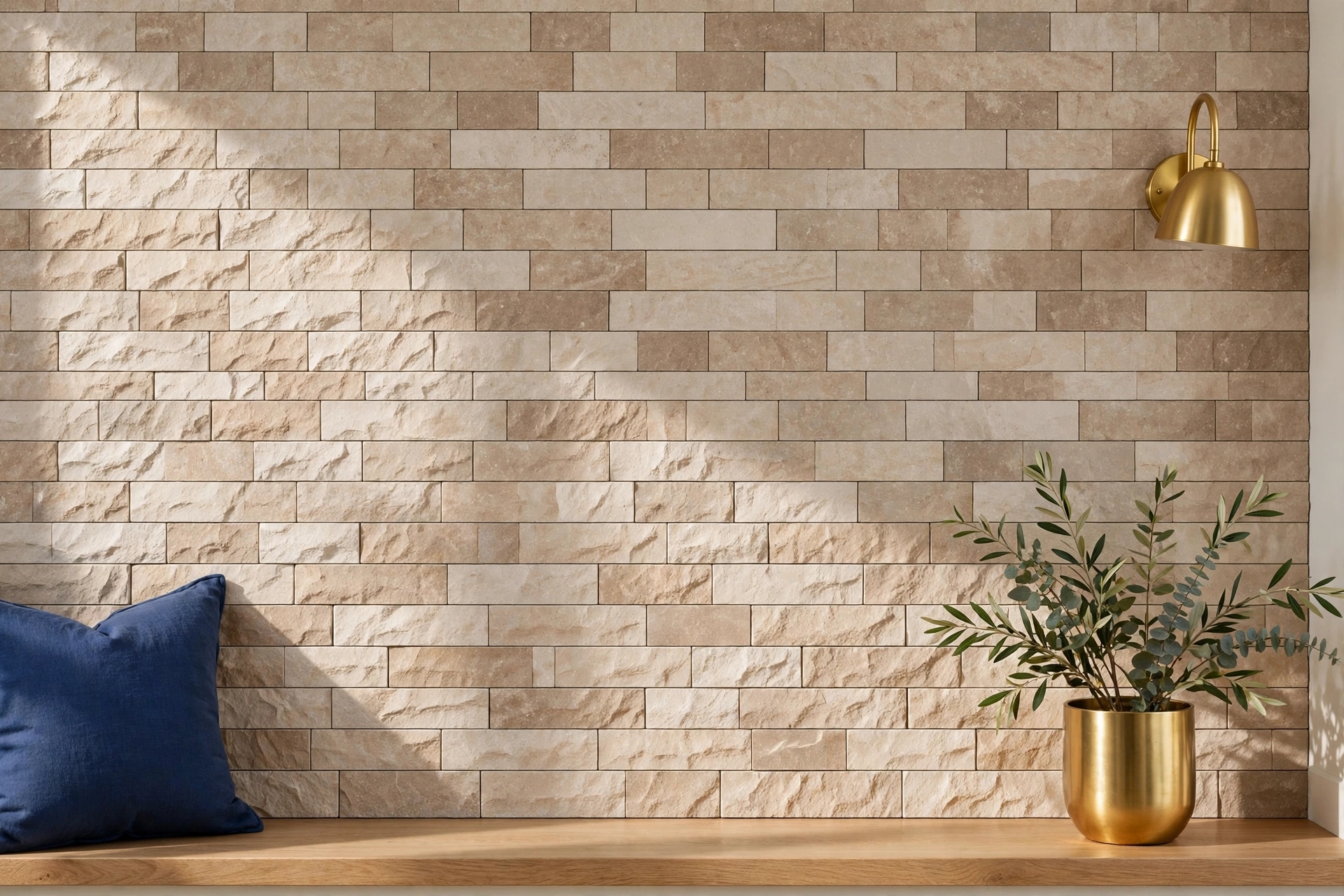
Skipping the moisture barrier is the costliest mistake, because trapped water rots framing and grows mold behind a wall that looks fine from outside. Never install stone veneer on bare sheathing, and never trust caulk alone at windows and doors.
Using one flat color makes manufactured stone veneer read as fake, because real stone always varies in tone. Mix pieces from several boxes, and blend light, mid, and dark tones across the whole wall.
Leaving straight joint lines makes a stone wall read as brick, because the eye follows the line. Mix piece sizes, stagger joints, and break any vertical or horizontal line after 2 pieces.
Grouting too soon smears wet mortar on the stone face and stains it. Wait until the grout firms, then rake the joint and brush the face clean.
Forgetting spare pieces leaves a homeowner with no match when one stone cracks years later. Order 10 percent extra, label the batch, and store spares in a dry place.
Painting stone veneer to fix a color mistake traps moisture and peels, and it is hard to undo. Pick the color from large samples on the real wall, not from a small photo.
Conclusion
Stone veneer gives a home the look of solid stone at a lower cost and a far lower weight, and the right pick comes from 3 choices: natural or manufactured stone, a style that matches the house, and a placement that suits the room. Stone veneer material costs $11 to $18 per square foot, with labor adding $2 to $4 per square foot (Source: Angi, 2026), and a small fireplace project can cost under $1,200 installed while a full natural stone facade can cost $15,000 or more. Moisture protection decides whether stone veneer lasts: two barrier layers, flashing, and a weep screed keep water out, while a skipped barrier can rot the wall behind a wall that looks fine.
Find more home guides on the Voice of Wave blog.
Frequently Asked Questions
Is stone veneer cheaper than real stone?
Yes, stone veneer costs far less than full stone. Stone veneer material costs $11 to $18 per square foot, while full-bed stone can exceed $30 per square foot for material alone, and stone veneer needs no extra foundation work, which keeps the total project cost down.
Can you install stone veneer yourself?
Yes, a skilled homeowner can install stone veneer on a small interior wall or fireplace surround. Exterior walls, tall walls, and full facades suit a licensed mason, because moisture errors on an exterior wall can rot framing and cost more to fix later.
How long does stone veneer last?
Natural stone veneer can last for decades with little change, and manufactured stone veneer can last for decades too when it is sealed and kept dry. Life span depends on install quality, climate, and moisture protection more than on the stone itself.
Does stone veneer need sealing?
Stone veneer needs sealing when the maker calls for it, and most manufactured stone veneer benefits from a penetrating sealer every 3 to 5 years. Natural stone veneer needs sealing less often, but a sealer still helps in freeze-thaw climates.
Can stone veneer go in a bathroom?
Yes, stone veneer can go on one dry accent wall in a bathroom with a sealer. Stone veneer should not cover a shower wall unless the product is rated for constant water, because trapped moisture can loosen mortar and grow mold.
What is the difference between stone veneer and cultured stone?
Cultured stone is one name for manufactured stone veneer, which is molded concrete made to look like real stone. Stone veneer is the wider term, and it covers both manufactured stone veneer and natural thin stone veneer cut from real rock.