

Introduction
Concrete cleaning is the process of removing dirt, stains, mold, and grime from concrete driveways, patios, sidewalks, and floors, using a gentle-first order: sweep and rinse, wash with detergent, treat the stain, and use a pressure washer only when the gentler steps fall short. Concrete cleaning protects the surface, cuts slip risk, and keeps outdoor areas looking cared for.
Concrete cleaning covers driveways, patios, sidewalks, garage floors, and pool decks around the home. Concrete is hard and porous, so dirt, oil, and plant growth settle into small surface pores over time. This guide covers tools and cleaners, a step by step method, oil, mold, rust, and efflorescence removal, pressure washing safety, a method comparison table, sealing steps, and a maintenance schedule.

- Concrete cleaning works best gentle-first: sweep, wash, treat the stain, then pressure wash only when needed.
- Fresh oil stains lift with an absorbent and a detergent paste, while old oil stains need a degreaser or a poultice.
- Mold grows on dirt and biofilm on concrete, not on the concrete itself, so fix the moisture source first.
- Safe pressure washing uses 2,500 to 3,500 PSI, a 25 or 40 degree nozzle, and a moving wand held 6 to 12 inches away.
- Sealing clean, dry concrete slows future staining and makes the next cleaning round easier.
What Is Concrete Cleaning?
Concrete cleaning is the removal of dirt, stains, algae, mold, oil, and salt deposits from concrete surfaces through sweeping, washing, targeted stain treatment, and pressure washing. Concrete cleaning keeps driveways, patios, and sidewalks safe to walk on, and it prepares concrete for sealing or resurfacing.
Concrete is a composite material made from aggregate bound with cement paste, and the paste hardens into a stone-like surface. The surface stays porous, so water, oil, and salts sink into small pores and leave marks. Driveways collect oil drips and tire marks, patios collect leaf stains and algae in shade, and sidewalks collect mud and rust marks from metal items.
Match the method to the stain. Loose dirt needs a broom and a hose, general grime needs detergent and a stiff brush, oil needs a degreaser or a poultice, and mold needs an oxygen cleaner and a moisture fix. A method that is too strong for the stain can etch the surface or strip a sealer, so the gentler step always comes first.
Browse more home care topics in the Home Improvement category for repairs, upkeep, and outdoor projects that pair with concrete care.
What Tools and Cleaners Do You Need for Concrete Cleaning?
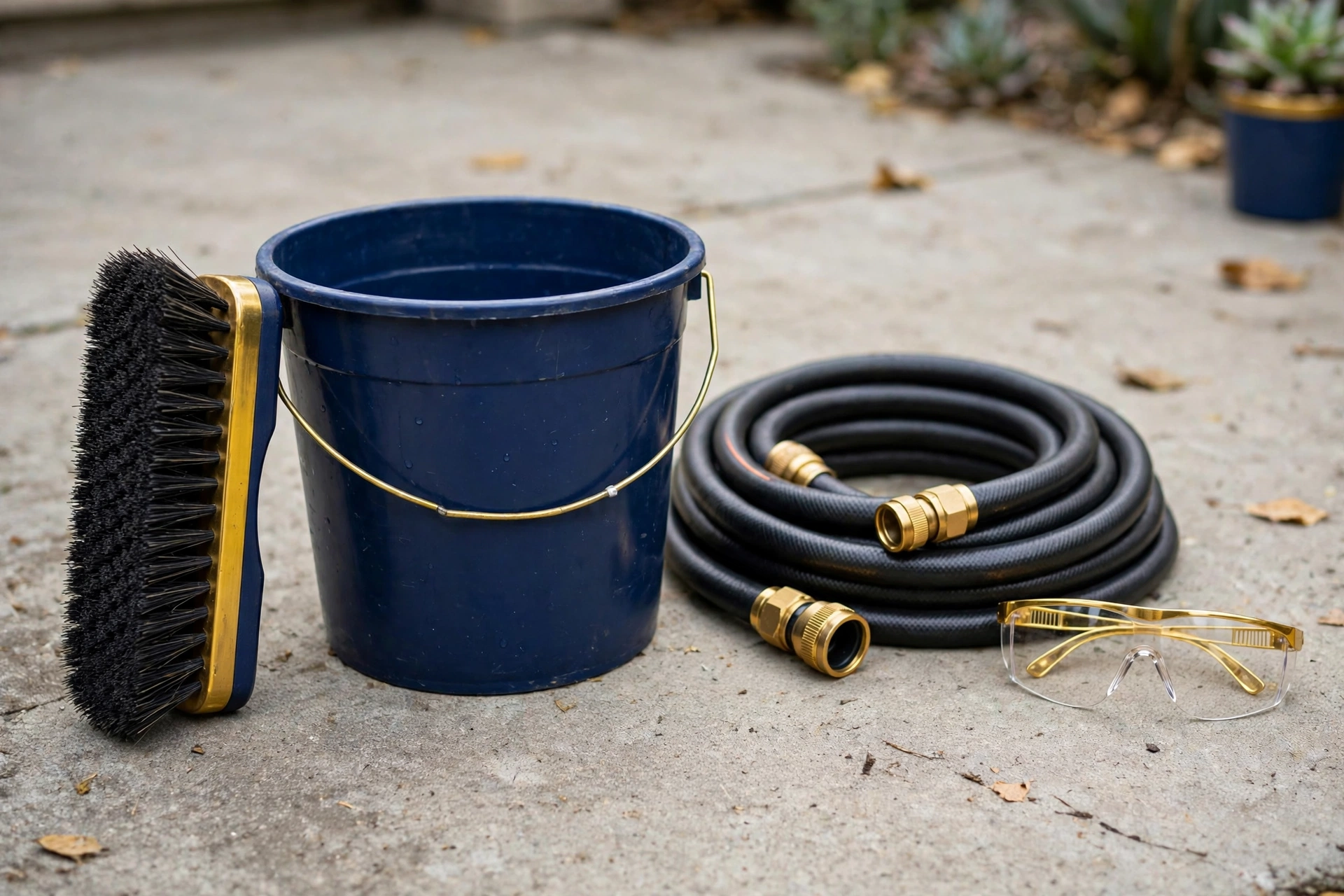
Concrete cleaning tools include a stiff nylon brush, a push broom, a garden hose, a bucket, safety glasses, gloves, and closed-toe shoes, plus a pressure washer with a 25 or 40 degree nozzle for larger jobs. Concrete cleaning cleaners include dish detergent, baking soda, oxygen bleach, a concrete degreaser, and a rust remover made for masonry.
A stiff nylon brush suits most concrete, since a wire brush can leave metal marks and scratch sealed or colored surfaces. Safety glasses protect eyes from splashback, and gloves protect hands from cleaners and grime.
Cleaner choice follows the stain type. Dish detergent handles light grime and fresh oil. Baking soda forms a mild abrasive paste for surface stains. Oxygen bleach, made from sodium percarbonate, lifts mold and algae without the plant damage risk that chlorine bleach carries. A commercial concrete degreaser handles set-in oil, and a masonry rust remover handles rust marks. Follow the dilution rate on the label, since a stronger mix does not clean better and can harm plants, sealers, and nearby metal.
How Do You Clean Concrete Step by Step?
To clean concrete, sweep the surface, rinse it with a hose, scrub it with detergent and a stiff brush, treat any stain that stays, rinse again, and let the concrete dry fully. To clean concrete without damage, test each stronger step in a small corner first, and move to pressure washing only when scrubbing leaves dirt behind.
Follow these 7 steps in order:
- Clear furniture, planters, toys, and vehicles from the concrete area.
- Sweep loose dirt, leaves, and grit off the full surface.
- Rinse the concrete with a garden hose to wet the pores.
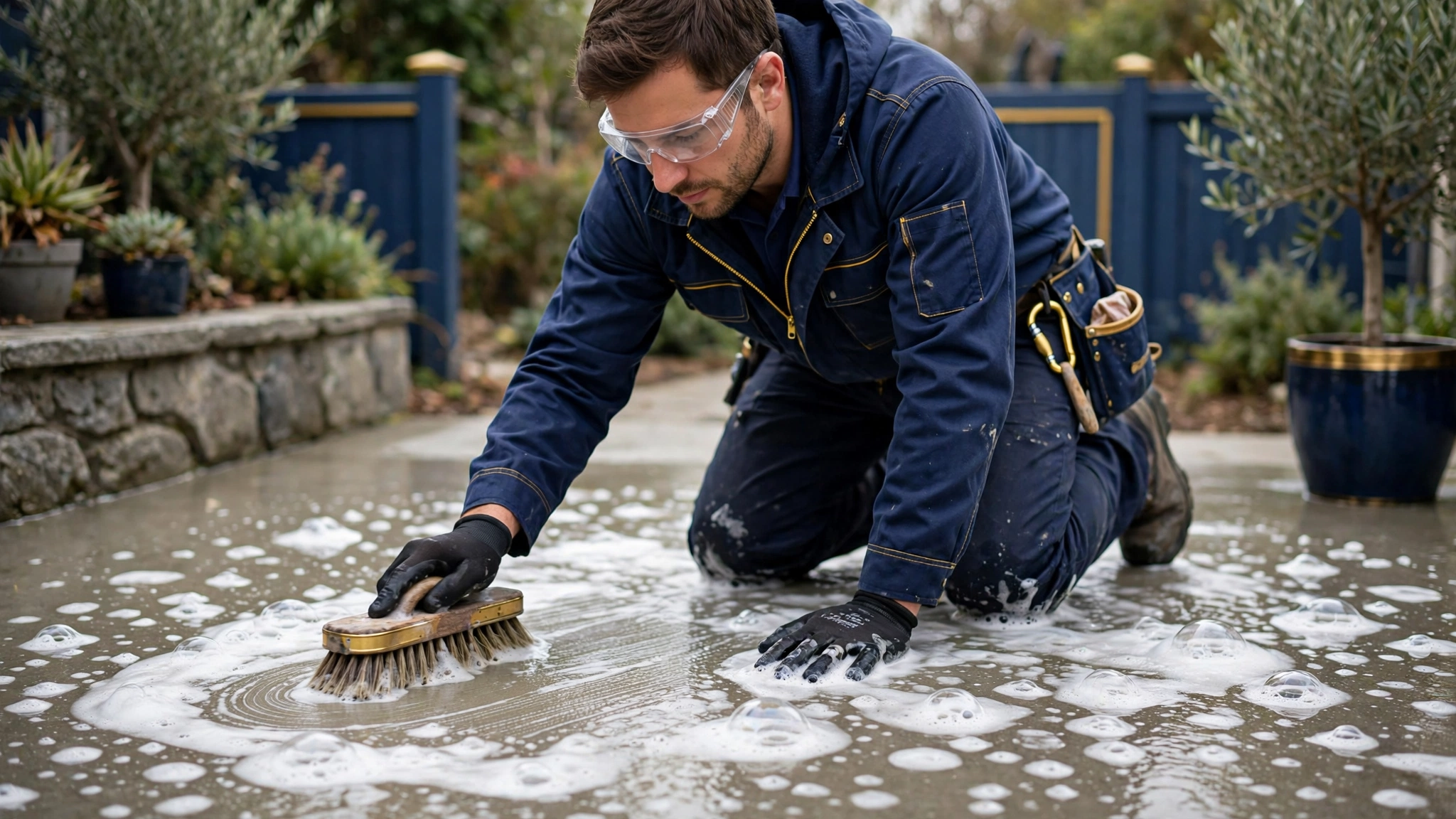
- Mix dish detergent with warm water, spread it over one section, and scrub with a stiff brush.
- Treat any stain that stays with the method that matches the stain type.
- Rinse the section with clean water, and repeat the scrub on any dull patch.
- Let the concrete dry fully, then check the result in daylight before sealing.
Keep the concrete wet while a cleaner sits on it, since a dried cleaner loses strength and can leave a film. Start at the high end of a slope and work down, so dirty water runs away from cleaned areas. A practical observation from cleaning patios by hand: a second short scrub after the first rinse lifts far more grime than one long scrub, since the first pass loosens dirt and the rinse carries it out of the pores.
How Do You Remove Oil Stains from Concrete?
To remove oil stains from concrete, absorb fresh oil with clay cat litter or baking soda, scrub the stain with a detergent or baking soda paste, and use a degreaser or a poultice for old, set-in oil. To remove old oil stains, repeat the treatment, since deep oil often needs two or three rounds before the mark fades.
Fresh oil responds fast. Cover a wet spill with clay cat litter, sand, or baking soda, leave it for 30 minutes for a small stain or overnight for a large stain, then sweep it up. Scrub the mark with a paste of baking soda and water or with dish detergent and a stiff brush, then rinse. Repeat the scrub when a shadow stays.
Old oil needs a stronger method. A commercial concrete degreaser breaks down oil that has sunk into the pores, and the label dwell time, often 5 to 30 minutes, must pass before scrubbing. A poultice suits a small, stubborn stain: mix an absorbent such as cat litter with a solvent rated for concrete use, spread it over the stain, cover it with plastic, and let it sit for several hours so the absorbent draws the oil out. Scrape it off, scrub, and rinse. Never use gasoline to clean oil, since gasoline is flammable and can leave a discolored patch in place of the stain.
For wood surfaces that sit next to a concrete patio, read Deck Repair and Maintenance.
How Do You Remove Mold, Mildew, and Algae from Concrete?
To remove mold, mildew, and algae from concrete, scrub the growth with an oxygen bleach solution and a stiff brush, rinse well, and fix the moisture source that feeds regrowth. To remove mold from concrete safely, wear gloves and eye protection, work in fresh air, and keep bleach away from plants and metal fixtures.
Mold on concrete grows on dust, pollen, and biofilm that settle on the surface, not on the concrete itself. Shade, poor drainage, and damp air feed growth, which explains why north-facing patios and basement floors show mold first. Oxygen bleach suits most outdoor mold: mix it per the label, spread it over the growth, let it sit for 10 to 15 minutes, scrub with a stiff brush, and rinse. Chlorine bleach kills surface mold too, but it can harm plants and metal, and it does not stop regrowth when the moisture source stays.
Fixing the moisture source matters more than the scrub. Clear gutters and downspouts so water drains away from the slab, trim plants that shade the area all day, and move planters that trap water on the surface. A penetrating sealer on dry concrete slows water entry into the pores. Mold that covers a large indoor area, or mold tied to a leak inside a wall, calls for a licensed mold professional rather than a home scrub.
How Do You Remove Rust and Efflorescence from Concrete?
To remove rust from concrete, apply a rust remover made for masonry, let it sit per the label, scrub lightly, and rinse fully, since rust needs a chelating or acid-based cleaner that plain detergent cannot lift. To remove efflorescence from concrete, brush off the white salt deposit, rinse, and fix the water path that carries salts to the surface.
Rust marks come from metal items, fertilizer, and well water with high iron content. A masonry rust remover targets the iron stain without the harsh action of muriatic acid, which can etch concrete and harm colored or sealed finishes. Test the remover in a corner first, keep it off plants and metal fixtures, and rinse twice so no chemical stays active on the surface.
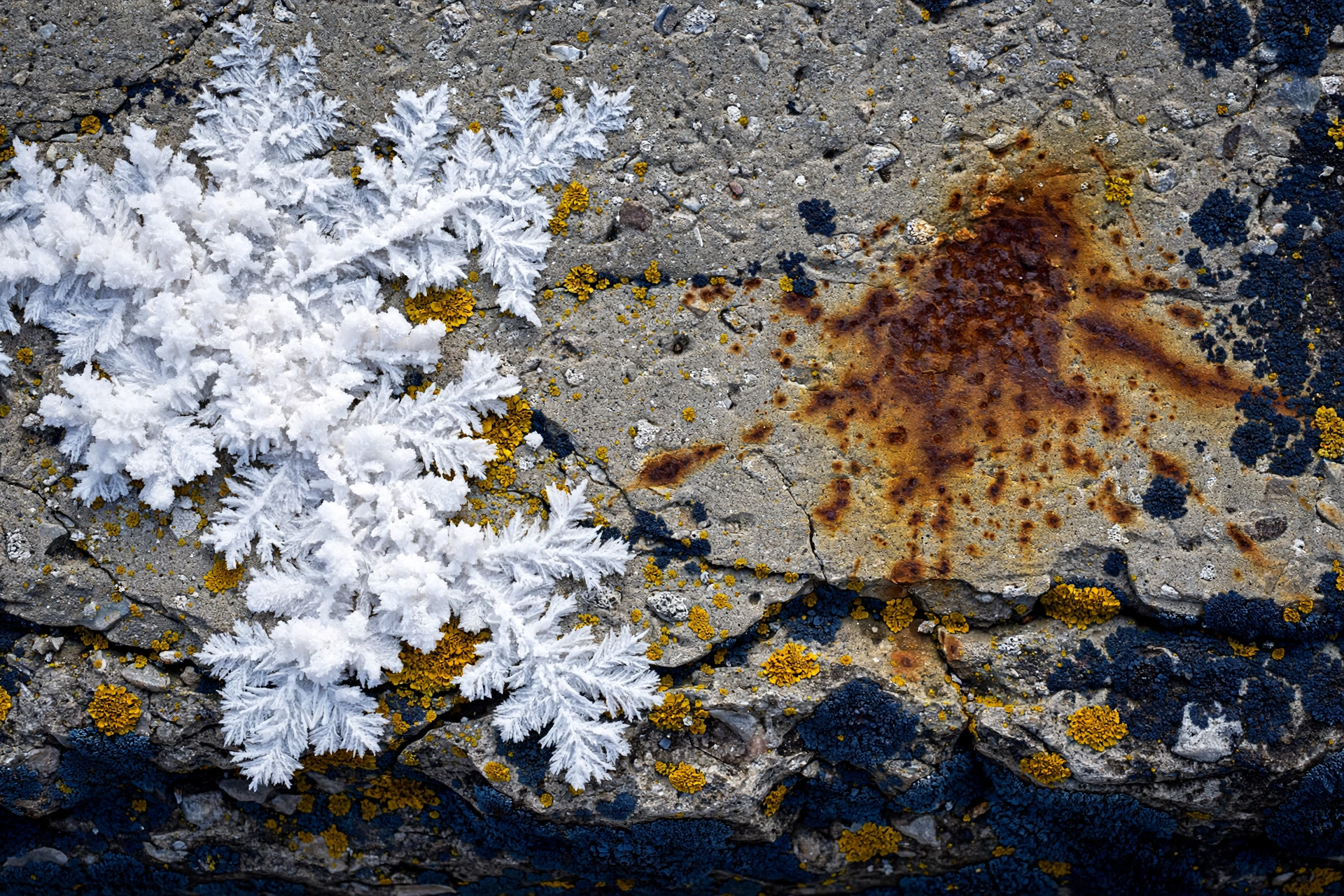
Efflorescence is a white, chalky salt deposit left when water moves through concrete, evaporates, and leaves dissolved salts behind. A simple water test tells efflorescence from mold: spray the deposit with water, and efflorescence darkens or dissolves, while mold stays put. Brush the salts off, rinse, and look for the water source, such as a gutter leak or poor grading. Efflorescence itself poses no health risk, but it signals a moisture path that also supports mold growth, so sealing the slab after it dries fully helps stop the cycle.
Can Pressure Washing Damage Concrete?
Yes, pressure washing can damage concrete when the nozzle is too narrow, the pressure is too high, or the wand stays too close to one spot, since a focused jet strips the thin cement paste and leaves etched lines. A wide nozzle, a moving wand, and a corner test keep pressure washing safe on cured concrete.
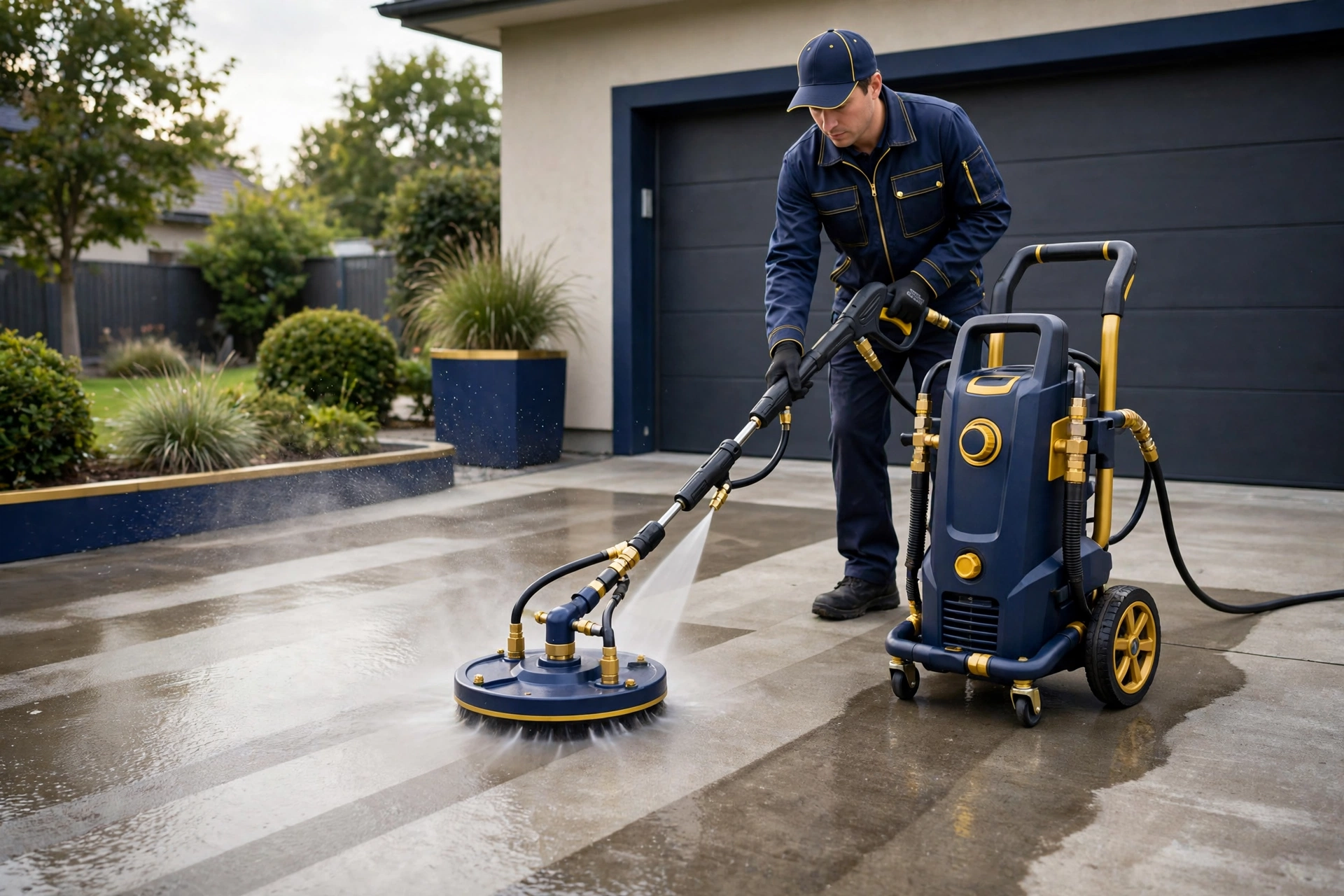
The safe working range for cured, unsealed residential concrete is 2,500 to 3,500 PSI with a 25 degree green nozzle or a rotary surface cleaner, with the tip held 6 to 12 inches from the surface (Source: Tristarbuilt, 2026). A 40 degree white nozzle suits sealed, stamped, or stained concrete, since it spreads the jet wider and cuts less. A 0 degree red nozzle concentrates the full jet on one point and must never touch concrete, since it can cut the surface and cause injury.
New concrete needs time before any pressure washing. The common cure period is about 28 days, and washing sooner can damage the soft surface layer. Decorative finishes need a gentler touch: stamped concrete, stained concrete, and exposed aggregate can lose color or texture under a narrow jet. Watch for warning signs while washing: a surface that turns rough, stripes that show through a sealer, or lines that match the wand path all mean the pressure is too high or the wand is too close. Stop, switch to a wider tip, step back, and test again.
The pressure washing process uses a high-pressure water spray to remove mold, grime, dust, mud, and dirt from surfaces such as concrete, and surface cleaner attachments spread that spray evenly over flat areas.
Concrete Cleaning Methods Compared
Concrete cleaning methods differ by strength, stain type, and risk, and the table below matches each method to the job it suits. Concrete cleaning starts with sweeping and detergent, moves to targeted stain treatment, and ends with pressure washing only for large or stubborn areas.
| Method | Best for | Strength | Risk |
|---|---|---|---|
| Sweep and rinse | Loose dirt, leaves, dust | Low | None on cured concrete |
| Detergent and stiff brush | General grime, light oil, foot traffic marks | Low to medium | Low, safe for most finishes |
| Oxygen bleach scrub | Mold, mildew, algae, leaf stains | Medium | Low, rinse plants after use |
| Degreaser or poultice | Set-in oil, grease, tire marks | Medium to high | Medium, test on colored concrete first |
| Masonry rust remover | Rust, iron stains, fertilizer marks | Medium to high | Medium, can etch when misused |
| Pressure washer | Large driveways, heavy grime, full surface refresh | High | High when nozzle or pressure is wrong |
| Sealer after cleaning | Prevention of future stains | Protective | Low when applied to dry concrete |
Pick the gentlest method that clears the stain, and move up one step at a time. A driveway with light grime needs detergent and a brush, not a pressure washer. A patio with mold needs an oxygen bleach scrub and a drainage fix, not a stronger jet. A garage floor with old oil needs a degreaser or a poultice, and a full surface refresh after stain treatment is the one job where a pressure washer earns its place.
How Do You Seal Concrete After Cleaning?
To seal concrete after cleaning, let the concrete dry fully, repair cracks, apply a penetrating or film-forming sealer per the label, and keep foot traffic off the surface until the sealer cures. To seal concrete well, clean first, since sealing over dirt or oil traps the stain under the sealer and locks it in place.
Sealer choice follows the surface and the goal. A penetrating silane or siloxane sealer soaks into the pores, cuts water entry, and keeps the natural look and texture of the concrete, which suits driveways and patios. A film-forming acrylic sealer coats the surface, adds a sheen, and deepens color, which suits decorative and stamped concrete, but it can trap vapor when applied over damp concrete and can turn slippery when wet unless a grip additive joins the mix.
Apply sealer in thin, even coats with a roller or sprayer. Two thin coats beat one thick coat, since a thick coat pools, peels, and cures unevenly. Check the label cure time, often 24 to 72 hours for full cure, and keep vehicles off a sealed driveway until that time passes. A sealed surface still needs cleaning, but dirt and oil sit on the sealer rather than sinking into pores, so the next cleaning round takes less scrubbing.
How Often Should You Clean Concrete?
You should deep clean concrete once or twice a year, sweep or rinse every few weeks, and clean a stain at once when it appears, since fresh stains lift far easier than set-in stains. A concrete driveway needs at least one deep cleaning a year, plus a second for shaded patios or driveways with frequent oil drips.
Spring suits the first deep cleaning, after pollen season and winter grit have passed, and fall suits the second, after leaves drop and before wet weather sets in. High-traffic areas, such as a driveway entrance or a walkway to a door, may need a mid-year scrub as well.
A simple yearly plan keeps concrete in good shape: sweep weekly in leaf season, rinse monthly, deep clean in spring and fall, treat stains at once, and reseal every 2 to 4 years based on wear and label guidance. A clean surface also shows cracks early, when a small repair still works, and it stays safer, since algae and mold turn shaded slabs slippery.
Conclusion
Concrete cleaning works best as a gentle-first routine: sweep and rinse often, scrub with detergent for grime, treat each stain with the method that matches it, and save the pressure washer for large or stubborn jobs. Concrete cleaning done this way keeps driveways and patios clean without etching the surface or stripping a sealer.
Voice of Wave covers home care topics with the same practical, check-first approach. Start with one section of concrete, test each stronger step in a corner, seal the clean surface once it dries fully, and keep the yearly schedule simple enough to follow.
Explore more home guides on the Voice of Wave blog.
Frequently Asked Questions
What is the best way to clean concrete?
The best way to clean concrete is gentle-first: sweep, rinse, scrub with detergent and a stiff brush, treat any stain that stays, and use a pressure washer only when scrubbing leaves dirt behind. This order clears most grime without etching the surface or stripping a sealer.
How do you clean concrete without a pressure washer?
You can clean concrete without a pressure washer by sweeping, rinsing with a hose, scrubbing with dish detergent and a stiff brush, and treating stains with baking soda paste, oxygen bleach, or a degreaser. A second scrub after rinsing lifts more grime than one long scrub.
What PSI should you use to pressure wash concrete?
Use 2,500 to 3,500 PSI with a 25 degree nozzle or a rotary surface cleaner on cured, unsealed residential concrete, with the tip held 6 to 12 inches away and kept moving. Use a 40 degree nozzle and lower pressure on sealed, stamped, or stained concrete.
How do you remove old oil stains from concrete?
Remove old oil stains from concrete with a commercial degreaser or a poultice made from an absorbent and a solvent rated for concrete use, left for several hours, then scraped off, scrubbed, and rinsed. Repeat the treatment when a shadow stays, since deep oil often needs two or three rounds.
Can you use bleach on concrete?
Yes, you can use bleach on concrete, but oxygen bleach suits mold and algae better than chlorine bleach, since chlorine bleach can harm plants and metal fixtures. Rinse well after any bleach use, and fix the moisture source so mold does not return.
How often should you seal concrete?
Seal concrete every 2 to 4 years based on wear, traffic, and label guidance, and always seal clean, fully dry concrete. A sealed surface resists oil and water better, and dirt sits on the sealer rather than sinking into the pores.