
Last updated: October 2026
Written by Michael Brooks for Voice of Wave
Introduction
Pool filter maintenance is the routine cleaning, inspection, and media replacement that keeps a pool filter trapping dirt, oils, and fine debris so pool water stays clear and safe to swim in through the full swim season, with less pump strain and fewer wasted chemicals. Pool filter maintenance works through 3 filter types (sand, cartridge, and diatomaceous earth), 4 core tasks (pressure checks, cleaning, inspection, and media replacement), and one main rule: clean the filter when pressure rises 8 to 10 pounds per square inch (psi) above its clean baseline. Pool owners use pool filter maintenance to protect the pump, cut chemical waste, and keep water clear through heavy use, storms, and long swim seasons. This guide covers each filter type, cleaning steps, warning signs, a seasonal checklist, common mistakes, and replacement decisions.
A dirty filter slows water flow, strains the pump, and clouds water even when chemicals test normal.
Key Takeaways
- Clean at 8 to 10 psi above the clean baseline. Pressure, not the calendar alone, decides cleaning day.
- Sand filters backwash, cartridge filters rinse and soak, DE filters backwash and recharge. Each type needs a different procedure.
- Record the clean pressure after every deep clean. That baseline makes every later reading easy to judge.
- Inspect O-rings, gauges, grids, and cartridges at every opening. Small part failures cause most repeat problems.
- Never move a multiport valve with the pump running.
Table of Contents
- What Is Pool Filter Maintenance?
- What Are the 3 Types of Pool Filters?
- How Often Should You Clean a Pool Filter?
- How Do You Backwash a Sand Filter?
- How Do You Clean a Cartridge Filter?
- How Do You Clean and Recharge a DE Filter?
- What Are the Signs a Pool Filter Needs Attention?
- Pool Filter Maintenance Checklist by Season
- Common Pool Filter Maintenance Mistakes to Avoid
- When Should You Replace Pool Filter Media or Parts?
- Conclusion
What Is Pool Filter Maintenance?
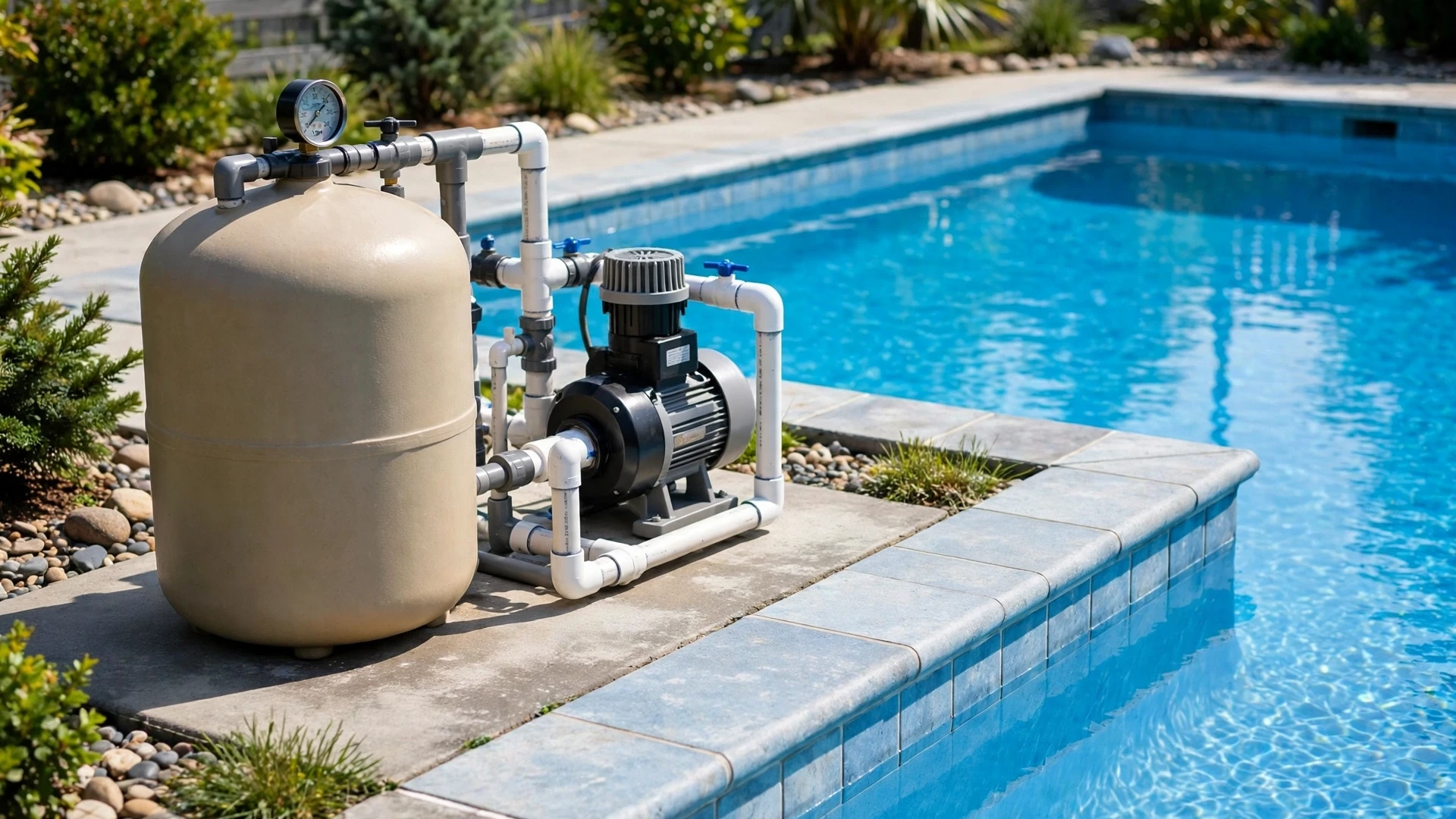
Pool filter maintenance is the set of regular tasks that keep a pool filter trapping debris at full flow: checking pressure, cleaning or backwashing the media, inspecting seals and parts, and replacing worn media on schedule. Pool filter maintenance starts at the pump and filter pad, where pool water passes through sand, pleated fabric, or diatomaceous earth (DE) coated grids. The media traps dirt, body oils, sunscreen, leaves, and fine particles, and clean water returns to the pool through the return jets.
Homeowners who follow a steady routine spend less time fighting cloudy water and less money on shock treatments and pump repairs. Browse the Home Improvement guides on Voice of Wave for related home care topics that pair with pool care.
What Are the 3 Types of Pool Filters?
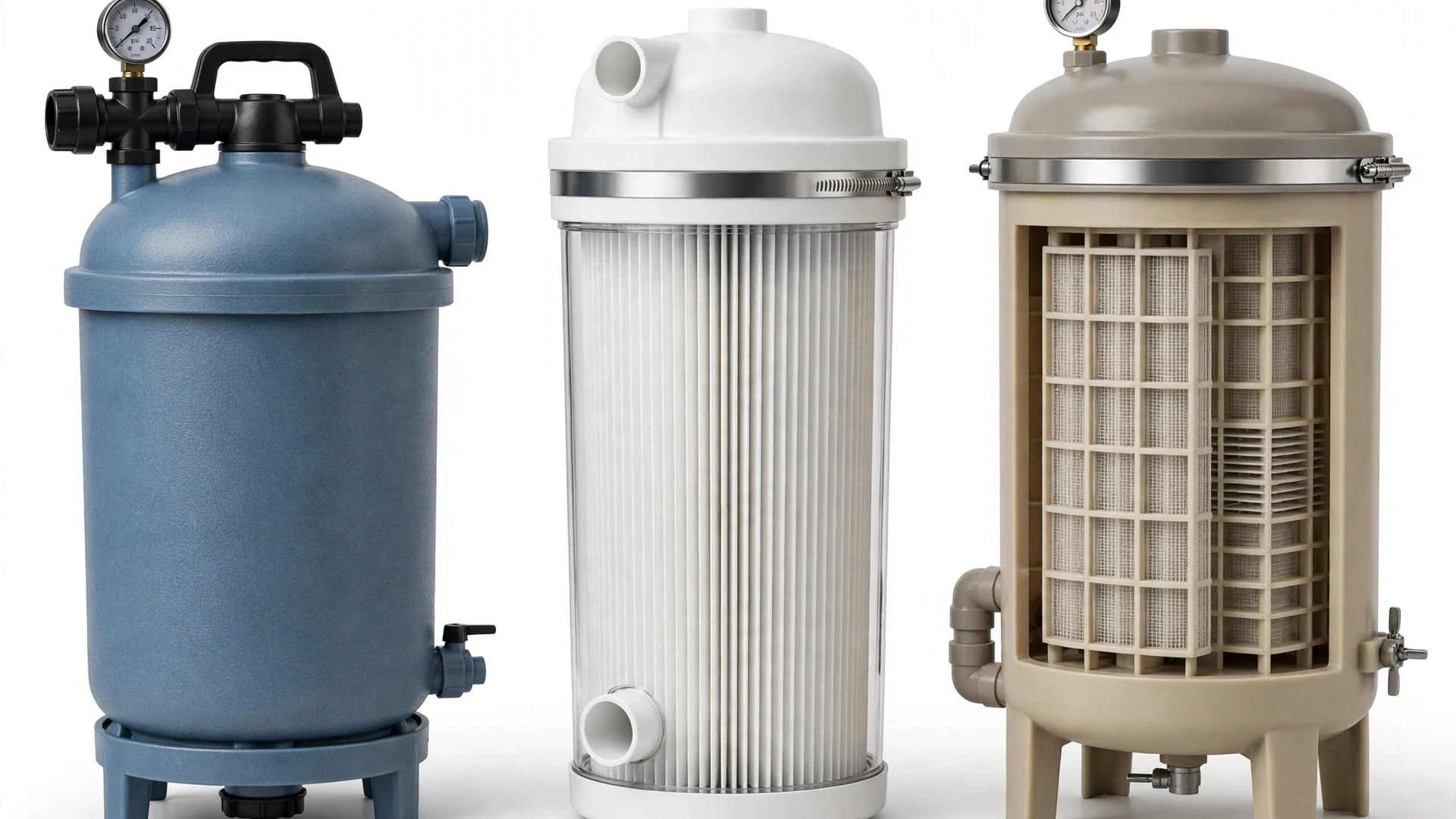
The 3 types of pool filters are sand filters, cartridge filters, and diatomaceous earth (DE) filters, and they differ in media, cleaning method, and how fine a particle each type traps. Sand filters push water through a bed of graded sand, and cleaning means reversing the flow to flush trapped dirt out the waste line. Cartridge filters push water through pleated fabric, and cleaning means removing the cartridges and hosing the pleats.
| Feature | Sand filter | Cartridge filter | DE filter |
|---|---|---|---|
| Media | Graded sand bed | Pleated fabric cartridges | DE powder on fabric grids |
| Cleaning method | Backwash, then rinse | Hose rinse, then chemical soak | Backwash, then recharge with DE |
| Typical particle capture | Coarsest of the 3 types | Finer than sand | Finest of the 3 types |
| Best fit | Large pools, heavy debris | Water saving setups, small to medium pools | Owners who want the clearest water |
Sand filters suit owners who want simple, fast cleaning. Cartridge filters suit owners who want to save water and accept removing cartridges by hand. DE filters suit owners who want the finest filtration and accept powder handling and grid inspection.
How Often Should You Clean a Pool Filter?
Clean a pool filter when the pressure gauge reads 8 to 10 psi above the clean baseline, and use the table below as a planning guide between pressure checks. The clean baseline is the pressure reading taken right after a full cleaning with the pump running at normal speed, and that reading belongs in a notebook or taped to the filter tank. Pressure checks beat fixed dates because heavy swimming, storms, and pollen load a filter faster than a calm week does.
| Filter type | Routine cleaning | Deep cleaning |
|---|---|---|
| Sand | Backwash at 8 to 10 psi above baseline | Chemical clean of the sand bed once a year |
| Cartridge | Hose rinse every 1 to 3 months in season | Chemical soak every 6 months |
| DE | Backwash and recharge at 8 to 10 psi above baseline | Full grid teardown and wash every 6 to 12 months |
Check pressure at least once a week during swim season, and check pressure after every storm or pool party. I mark the clean pressure on the gauge with tape after every deep clean, and that single mark removes guesswork at the next check.
How Do You Backwash a Sand Filter?
To backwash a sand filter, turn the pump off, set the multiport valve to backwash, run the pump until the sight glass runs clear, rinse the sand bed, and return the valve to filter. Backwashing reverses water flow through the sand bed, and reversed flow lifts trapped dirt out through the waste line. Never move the valve handle while the pump runs.
- Turn the pump off completely before touching the valve.
- Set the multiport valve handle to the backwash position.
- Direct the waste hose to an approved discharge point.
- Turn the pump on and watch the sight glass on the valve.
- Run backwash for 2 to 3 minutes, or until the sight glass runs clear.
- Turn the pump off and set the valve to rinse.
- Run the rinse cycle for 30 to 60 seconds to settle the sand bed.
- Turn the pump off, set the valve back to filter, and restart the pump.
- Record the new clean pressure reading from the gauge.
Backwash water carries dirt and chemicals, so send it to the discharge point allowed by local rules, never to the street, a storm drain, or a neighbor’s yard. If pressure stays high after a full backwash and rinse, the sand bed may have channeling (worn paths that let water bypass the sand), and a chemical sand cleaner or a sand change may be needed.
How Do You Clean a Cartridge Filter?
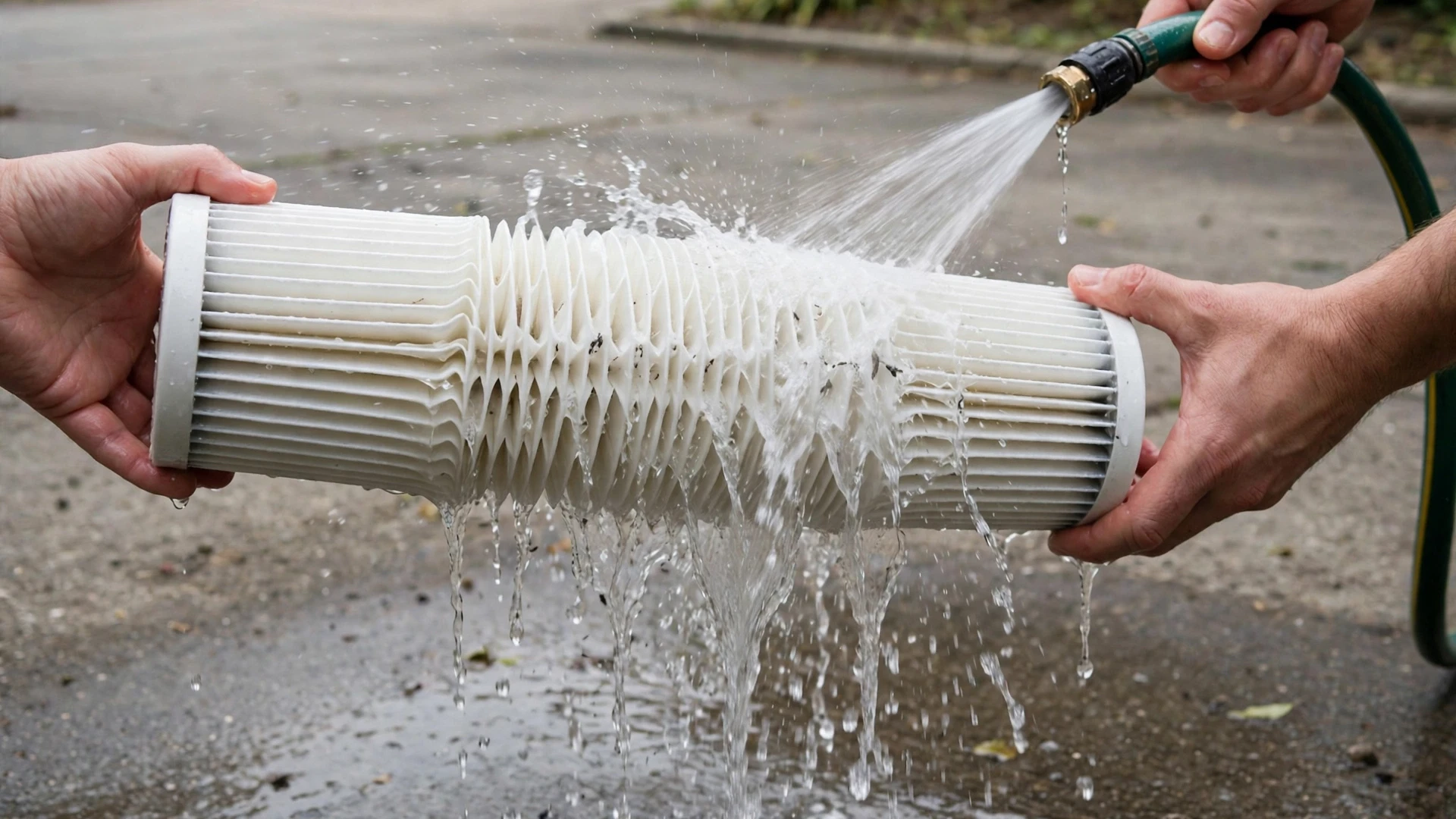
To clean a cartridge filter, turn the pump off, relieve pressure, remove the cartridges, hose the pleats from top to bottom, soak the cartridges in filter cleaner, rinse again, and reinstall them. Cartridge cleaning needs no backwash valve and uses far less water than sand cleaning.
- Turn the pump off and open the air relief valve to release pressure.
- Remove the filter lid and lift each cartridge out of the tank.
- Hose each cartridge from top to bottom, working between every pleat.
- Soak the cartridges in cartridge filter cleaner for the time the cleaner label states.
- Rinse the cartridges again until rinse water runs clear.
- Inspect pleats for tears, cracks, flattened bands, and frayed fabric.
- Check the tank O-ring, lubricate the O-ring if the manual allows it, and reseat the lid.
- Restart the pump, bleed air through the relief valve, and record the clean pressure.
Never use a pressure washer on cartridges, since high pressure shreds pleats and shortens cartridge life. Never soak cartridges in household bleach, since bleach damages pleat fabric and leaves residue in the filter.
For a wider pool care routine that covers water testing, brushing, and vacuuming beside filter work, read the Voice of Wave guide to pool care: Pool Care Guide: Keep Your Pool Clean and Safe.
How Do You Clean and Recharge a DE Filter?
To clean and recharge a DE filter, backwash the old DE powder out, open the tank for a full grid wash on deep clean day, reassemble the grids, and add a fresh DE charge measured from the filter manual. DE filters trap the finest particles of the 3 filter types because DE powder coats fabric grids with a thin layer that catches debris.
- Turn the pump off and set the valve to backwash.
- Run the pump until the sight glass runs clear, then rinse if the valve offers that setting.
- Turn the pump off, set the valve to filter, and restart the pump.
- Mix the manual DE charge into a slurry with pool water in a bucket.
- Pour the slurry slowly into the skimmer with the pump running.
- Record the clean pressure once the DE coat settles.
On deep clean day, open the tank, remove the grid assembly, and hose each grid from the inside out. Diatomaceous earth filter media comes from fossilized diatoms, and pool grade DE differs from garden grade DE, so use pool grade DE only. Inspect every grid for tears and worn seams, since a torn grid sends DE powder back into the pool as white dust on the floor. Wear a dust mask when handling dry DE powder, since dry DE dust irritates lungs.
What Are the Signs a Pool Filter Needs Attention?
A pool filter needs attention when pressure rises 8 to 10 psi above baseline, return jets weaken, water stays cloudy after chemical balance, or sand or DE powder appears in the pool. Weak return jets signal restricted flow through a loaded filter, and weak skimmer suction signals the same restriction on the suction side.
Check the gauge first, then check the pump basket, skimmer basket, and water level, since a clogged basket or low water level mimics filter failure.
Pool Filter Maintenance Checklist by Season
Pool filter maintenance follows the swim season: weekly pressure checks in season, a deep clean at opening and closing, and extra checks after storms and heavy use. Opening season starts with a full inspection, a deep clean, and a recorded clean baseline before swimmers arrive.
- Spring opening: inspect the tank, gauge, O-rings, and valve; deep clean the filter; record the clean baseline.
- Weekly in season: check pressure, empty baskets, check water level, and skim debris.
- After storms: check pressure, clean the filter if pressure rose, and clear debris from baskets.
- After pool parties: check pressure and water chemistry, and clean the filter early if flow drops.
- Autumn closing: deep clean the filter, inspect media and parts, and store spares dry and clean.
- Winter (pools left running): check pressure every 2 weeks, and watch for freeze risk at the equipment pad.
Owners in warm climates with year round swimming keep the weekly rhythm all year, and owners with short seasons pack the same tasks into opening, midseason, and closing weekends.
Common Pool Filter Maintenance Mistakes to Avoid
Common pool filter maintenance mistakes are moving the valve with the pump running, skipping the rinse cycle, skipping the DE recharge, pressure washing cartridges, and ignoring O-rings and gauges. Moving a multiport valve under pressure tears the internal spider gasket, and a torn gasket sends water to the wrong ports and leaks at the valve. Skipping the rinse cycle after backwash sends loose sand and debris back into the pool through the returns. Skipping the DE recharge after backwash leaves grids bare and filtration weak from the first hour. Pressure washing cartridges shreds pleats, and shredded pleats pass debris that a healthy cartridge would trap.
- Running past the pressure threshold: extra head pressure strains the pump motor and cuts flow.
- Forgetting the O-ring check: a dry, cracked, or pinched O-ring leaks air and water at the lid.
- Using the wrong cleaner: household bleach and harsh acids damage cartridges, grids, and seals.
- Guessing DE amounts: too little DE leaves grids bare, and too much DE raises pressure fast.
- Ignoring a stuck gauge: a dead gauge removes the one warning sign that schedules cleaning.
- Backwashing to the wrong place: discharge rules vary by area, and street discharge breaks local rules in many places.
Slow down at each valve move, and confirm the pump is off before the handle moves.
When Should You Replace Pool Filter Media or Parts?
Replace pool filter media or parts when inspection shows damage, when cleaning no longer restores baseline pressure, or when the part reaches the end of its typical service life. Sand media lasts 5 to 7 years in most home pools, and sand that channels or calcifies needs replacement even before that range ends. Cartridges last 1 to 3 years, and cartridges with torn pleats or cracked end caps need replacement at once. DE grids last 5 to 10 years, and grids with tears or collapsed fabric need replacement, not another cleaning.
| Part | Replace when | Typical life |
|---|---|---|
| Sand media | Channeling or high pressure after cleaning | 5 to 7 years |
| Cartridge set | Torn pleats, cracked caps, or low flow after soaking | 1 to 3 years |
| DE grids | Tears, holes, or DE dust returns to the pool | 5 to 10 years |
| O-rings and gaskets | Cracks, flattening, or leaks at the lid or valve | Every 1 to 2 years, or at any leak |
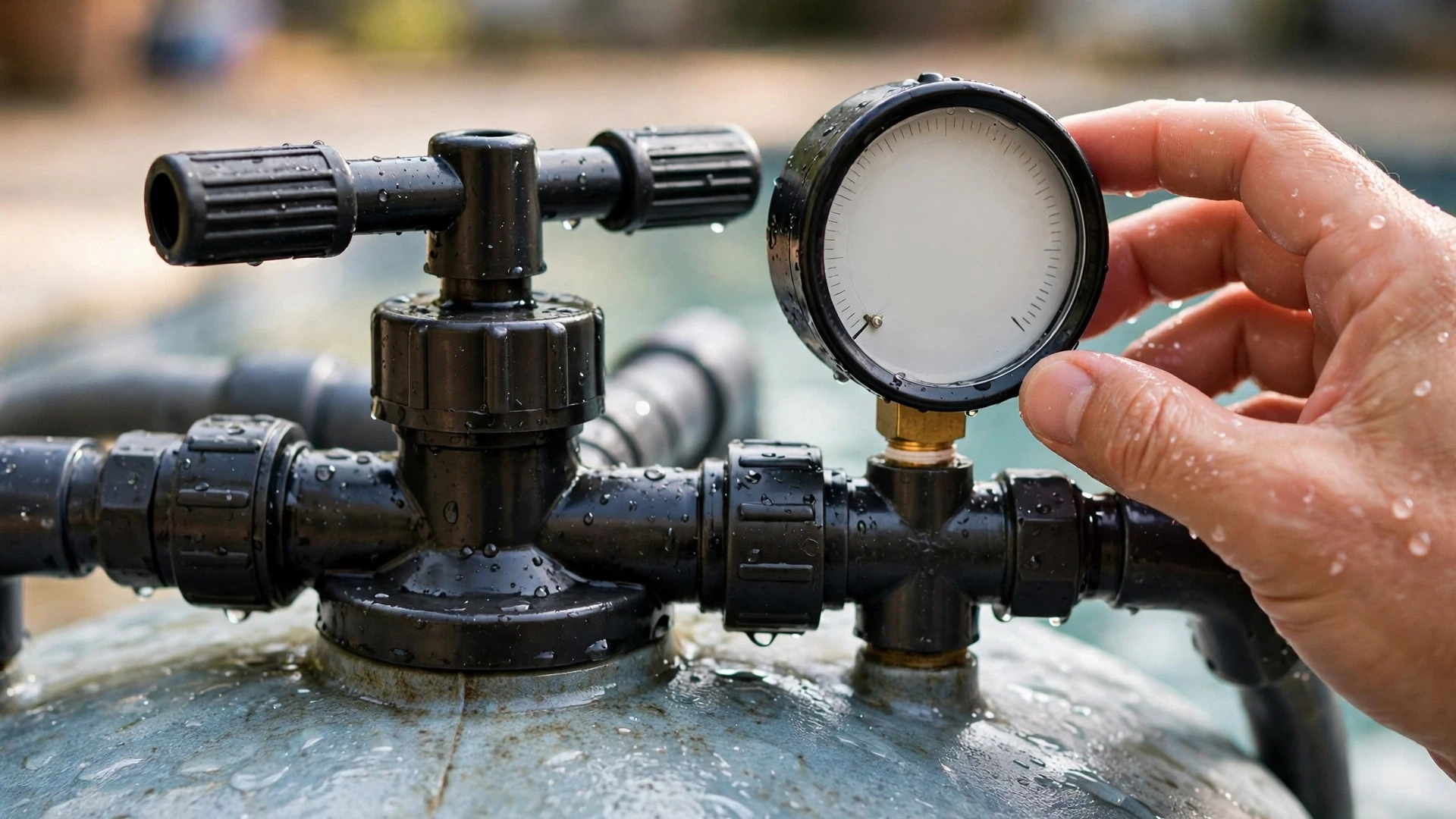
| Pressure gauge | Needle stuck, fogged, or readings that never change | At any fault |
| Multiport valve parts | Leaks between ports or a handle that will not seat | At any fault |
Compare repair cost against replacement cost before ordering parts for an old tank, since a cracked tank calls for full filter replacement. Order parts by model number, not by tank appearance alone.
Conclusion
Pool filter maintenance keeps pool water clear through one habit: watch the pressure gauge, clean at 8 to 10 psi above the clean baseline, inspect parts at every opening, and replace media on schedule. Sand owners backwash and rinse, cartridge owners hose and soak, and DE owners backwash, inspect grids, and recharge with a full manual charge. Voice of Wave covers practical home guides like this one for everyday household systems.
Start this week by recording the clean baseline pressure and checking O-rings and baskets.
Explore the latest Voice of Wave articles for more home and lifestyle guides: Browse the latest articles on Voice of Wave.
Frequently Asked Questions About Pool Filter Maintenance
How often should I clean my pool filter?
Clean your pool filter when the pressure gauge reads 8 to 10 psi above the clean baseline, and check pressure at least once a week during swim season. Heavy swimming, storms, pollen, and nearby trees load a filter faster than a calm week, so pressure readings give a better cleaning signal than fixed calendar dates alone.
Can I backwash a cartridge filter?
No, cartridge filters do not backwash, and cleaning a cartridge filter means removing the cartridges, hosing the pleats, and soaking them in cartridge filter cleaner. Backwash valves belong to sand and DE filter systems, while cartridge systems clean by hand removal and rinsing, which also saves the water that backwashing would use.
Why does my pool filter pressure stay high after cleaning?
Pressure stays high after cleaning when sand channels, DE grids carry scale, cartridges stay oil fouled, or a part such as a lateral, manifold, or gauge has failed. Recheck baskets and water level first, then deep clean the media, and inspect internal parts if pressure still fails to return near the clean baseline.
How much DE powder should I add after backwashing?
Add the exact DE charge stated in your filter manual, mixed into a slurry with pool water and poured slowly into the skimmer with the pump running. Manual charges vary by filter size and grid area, so a guessed amount leaves grids partly bare or raises pressure fast, and both faults cut filtration quality.
Is it safe to handle DE powder?
Handle dry DE powder with care: wear a dust mask, keep the powder dry and sealed, and use pool grade DE only, since dry DE dust irritates lungs. Garden grade DE differs from pool grade DE, so check the product label before use, and wash hands and work surfaces after handling the powder.
When should I replace my pool filter media?
Replace sand media every 5 to 7 years, cartridges every 1 to 3 years, and DE grids every 5 to 10 years, or sooner when inspection shows tears, channeling, or pressure that cleaning no longer restores. Replace any part at once when damage appears, since damaged media passes debris straight back into the pool.