
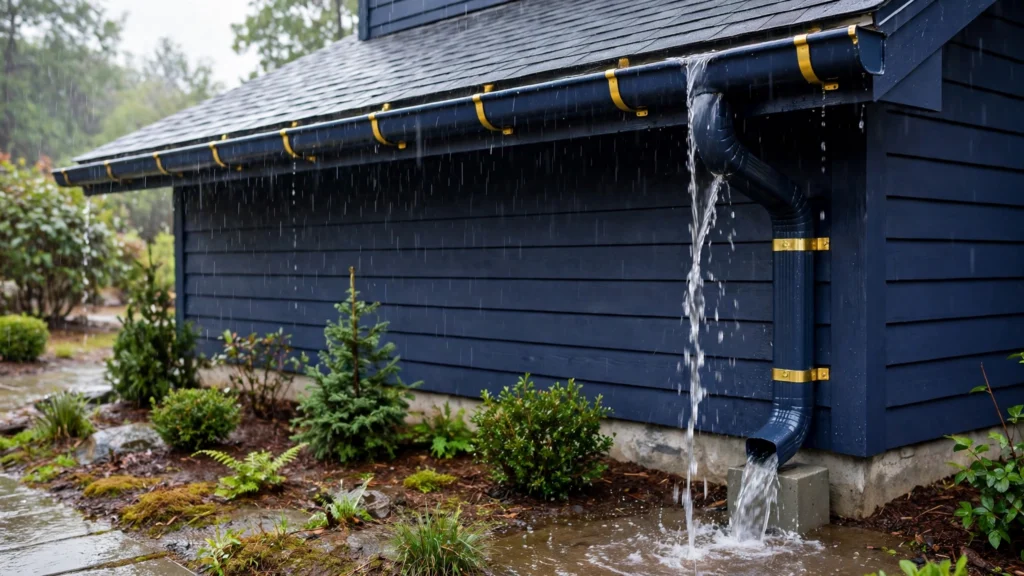
Gutter maintenance is the routine cleaning, inspection, and repair of the channels and downspouts that carry rainwater away from a roof. Gutter maintenance means clearing leaves and debris twice a year, flushing downspouts, checking slope and fasteners, and fixing leaks before water reaches walls or the foundation. Clean gutters protect the roof edge, siding, and foundation, and the work takes a few hours per visit with basic tools.
Gutter maintenance covers 5 parts: the gutter channel, the downspout, the hangers, the end caps, and the elbows. Leaves block the channel, granules settle in the elbow, hangers loosen under wet debris, and seams leak after freeze cycles. This guide gives the full routine: cleaning steps, inspection, repair or replace decisions, material lifespans, gutter guards, costs, and a seasonal calendar.
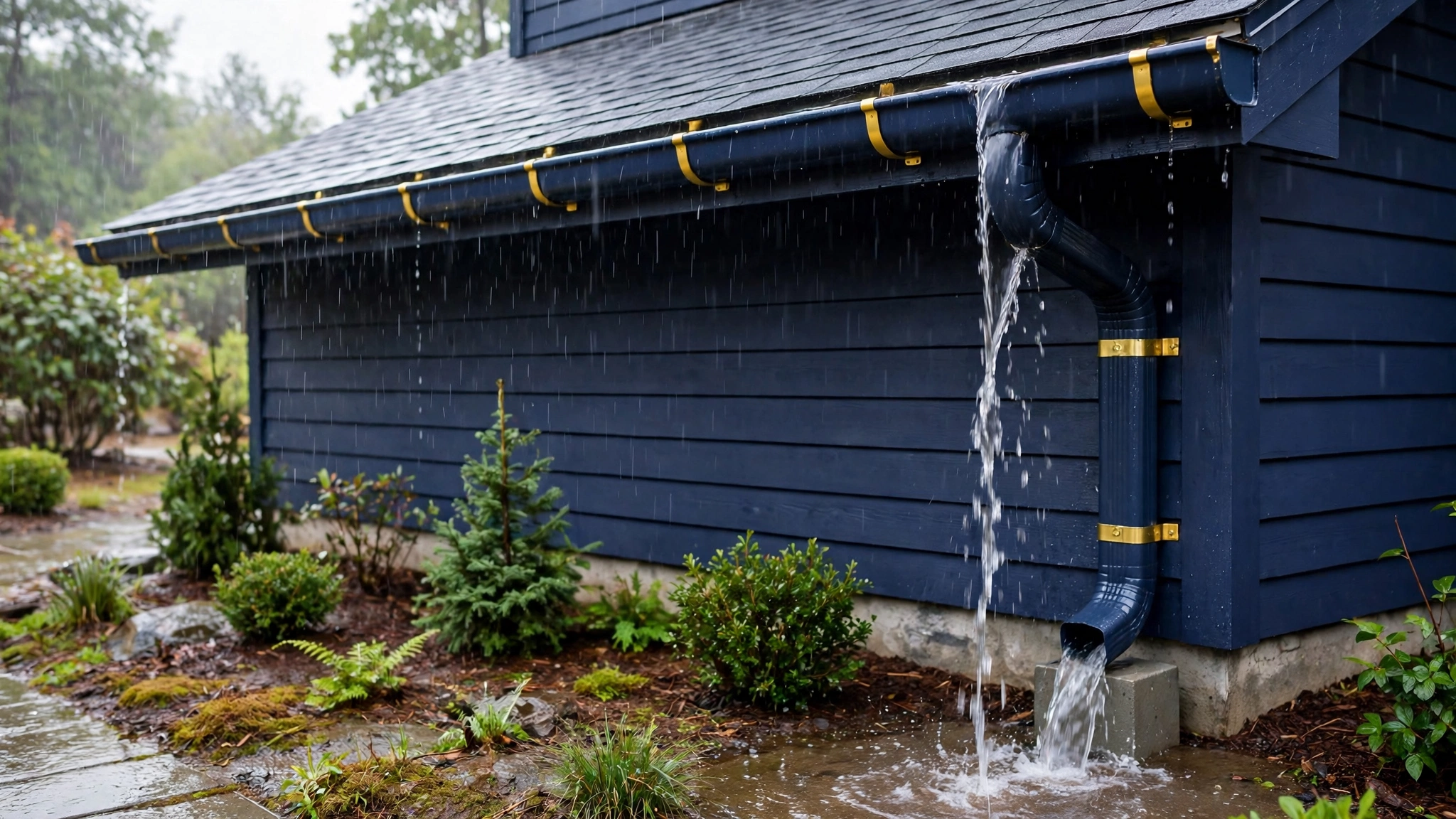
Key Takeaways
- Clean gutters twice a year: late spring and late fall, with extra cleanings under pine trees.
- Gutter maintenance has 5 parts: channel, downspout, hangers, end caps, and elbows.
- Check slope first: gutters need a drop of 1/4 inch per 10 feet toward the downspout.
- Repair small leaks: reseal seams, reset hangers, and replace one bad section.
- Aluminum lasts 20 to 30 years: copper lasts 50 years or more, vinyl 10 to 20, steel 20 to 25.
Table of Contents
- What Is Gutter Maintenance?
- Why Does Gutter Maintenance Matter?
- How Often Should You Clean Your Gutters?
- How Do You Clean Gutters Step by Step?
- How Do You Inspect Gutters for Damage?
- What Gutter Problems Need Repair, and What Needs Replacement?
- Which Gutter Material Lasts Longest?
- Are Gutter Guards Worth the Cost?
- How Much Does Gutter Maintenance Cost?
- Gutter Maintenance Calendar by Season
- Conclusion
- Frequently Asked Questions
What Is Gutter Maintenance?
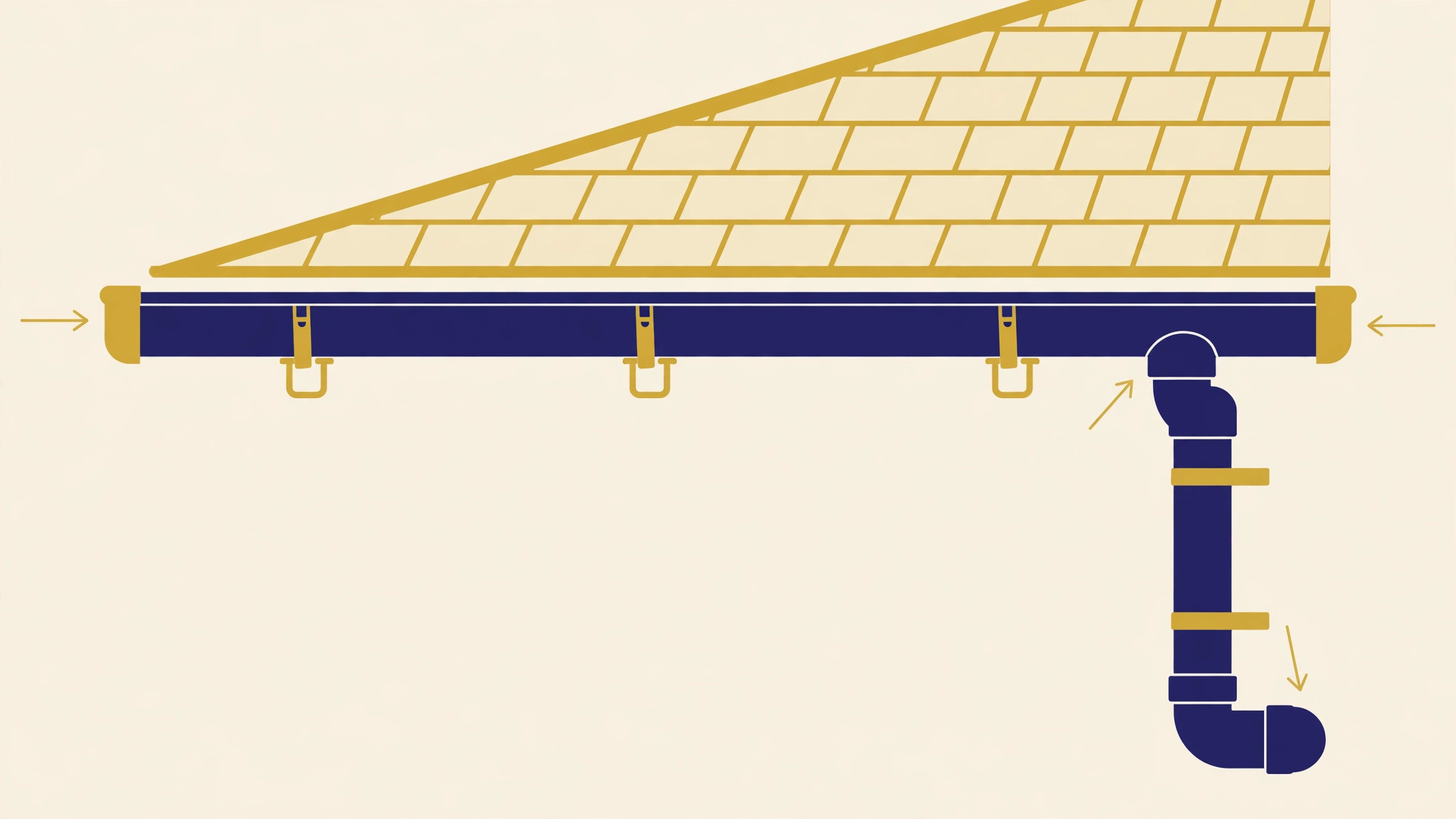
Gutter maintenance is the routine care of the gutter system, and gutter maintenance covers cleaning, inspection, slope checks, leak repair, and downspout care. Gutter maintenance keeps rainwater moving from the roof edge to the ground and away from the foundation. A gutter system has 5 parts: the horizontal channel, the vertical downspout, the hangers that hold the channel to the fascia board, the end caps, and the elbows.
A rain gutter is a channel that collects roof runoff and feeds it to a downspout. The fascia board is the flat board behind the gutter, and water that pools in the channel rots the fascia board from behind. Our Home Improvement guides cover the same habit of small, regular checks that stop big repairs. The routine has 4 parts: clean the channel twice a year, flush the downspout, inspect hangers and seams, and fix small leaks at once.
Water enters the channel at the roof edge, runs along the slope to the outlet, drops through the downspout, and leaves through the elbow at the base. Each joint in that path is a point where water can escape, so a system with fewer joints leaks less often. One-piece runs have joints only at corners and outlets, while sectional runs have a joint every 10 feet. The elbow at the base sets where water lands, and a short elbow dumps water at the foundation while a long extension carries it clear.
Why Does Gutter Maintenance Matter?
Gutter maintenance matters because clogged gutters send rainwater to the worst places, and gutter maintenance stops foundation damage, fascia rot, siding stains, and mold. A clogged gutter overflows at the front lip, and the overflow soaks the siding, the soil at the foundation, and the basement wall. Water that pools at the foundation seeps through cracks, and repeated pooling shifts soil and cracks concrete. One in every 67 insured homes files a claim for water damage or freezing each year, and the average claim totals about $15,400 (Source: Insurance Information Institute, 2026).
Standing water in a clogged channel breeds mosquitoes and adds weight that pulls hangers loose. A 10 foot run packed with wet leaves can weigh over 50 pounds, and that weight bends the channel and opens seams. Trapped water freezes in cold weather, and ice dams pry sections loose. Damp debris feeds mold on the soffit and in the attic, and mold can start within 24 to 48 hours on damp surfaces (Source: U.S. Environmental Protection Agency, 2026). A routine cleaning costs $150 to $300 per visit for a single story home (Source: Furilia, 2026), while foundation repair from gutter neglect often starts above $1,500.
In my own checks each fall, the same pattern repeats: the run under the largest tree holds a wet mat of leaves while the open runs stay clear, and the clogged run always shows the first stain on the fascia board. The fix takes 20 minutes with a scoop and a hose when caught in fall, and the same clog left to winter turns into a loose hanger and a cracked seam by spring.
How Often Should You Clean Your Gutters?
You should clean your gutters twice a year, once in late spring and once in late fall, and you should clean your gutters 3 to 4 times a year if pine trees or heavy tree cover surround the home. Late spring cleaning clears seeds, pollen, and spring debris before summer storms. Late fall cleaning clears leaves after the trees drop them and before winter freeze. Homes with pine trees need extra visits because pine needles fall all year and pack into dense clogs.
Gutter maintenance timing follows 3 rules. Rule 1 is the tree rule: no trees near the roof means twice a year is enough, and heavy tree cover means 3 to 4 cleanings a year. Rule 2 is the storm rule: inspect gutters after any heavy storm, because wind drops branches and packs debris in one night. Rule 3 is the overflow rule: water that sheets over the front lip during rain means clean at once, not in 3 months. Guards cut the debris load, but guards do not end cleaning, because fine debris still settles on screens and in mesh pores.
Tree type sets the schedule more than any other factor. Oak and maple drop leaves in one fall wave, so one late fall cleaning clears most of the load. Pine and fir shed needles all year, so the channel needs a check every 3 months. Homes near construction or open fields also collect more dust and grit, and grit settles in the elbow where it blocks flow first.
How Do You Clean Gutters Step by Step?
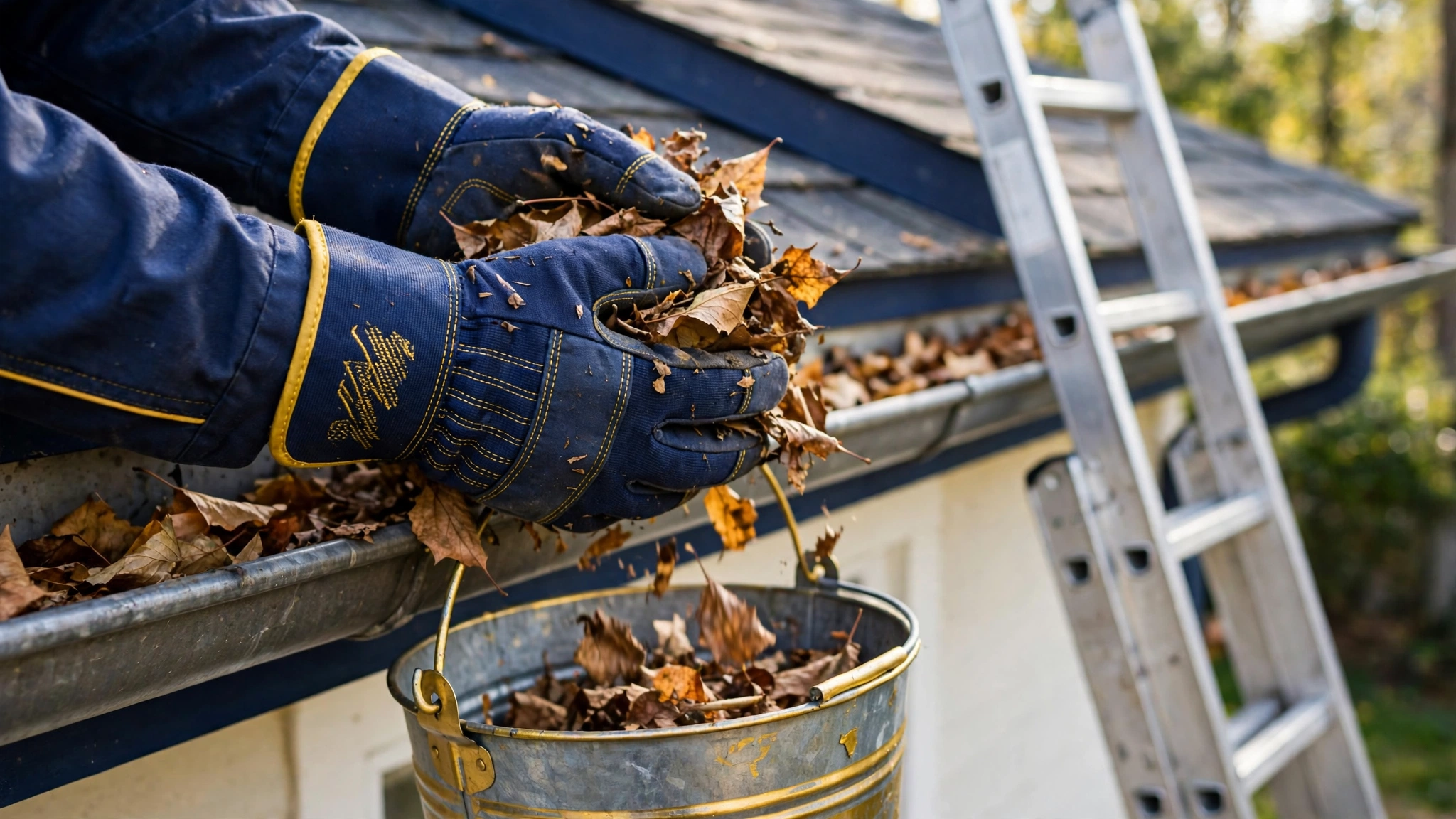
To clean gutters, work from the downspout outward in 7 steps: inspect the run, set the ladder, scoop debris, flush with a hose, clear the downspout, check the slope, and reseal leaks. To clean gutters safely, wear thick gloves and eye protection, keep 3 points of contact on the ladder, and never lean past the ladder rails. A helper who holds the ladder and hands up the bucket makes the job safer and faster.
- Inspect the run from the ground. Look for sagging sections, gaps at the fascia board, rust stains, and water marks.
- Set the ladder on firm, level ground. Place a tarp below the work area to catch debris and protect plants.
- Scoop debris by hand. Remove leaves, twigs, and dirt with a gloved hand or a plastic scoop, and drop debris in a bucket.
- Flush the channel with a garden hose. Start at the end far from the downspout and push water toward the downspout.
- Clear the downspout. Run water from the top, and clear a clog from the bottom up with a plumber snake.
- Check the slope. Pour water in the channel, watch it run to the downspout, and note any standing water.
- Reseal leaks and reset hangers. Apply gutter sealant to leaking seams, let it dry for a day, and tighten loose hangers.
To clean gutters without a ladder, use a leaf blower with a gutter attachment or a telescopic wand. The no ladder method clears loose leaves, but it leaves packed sludge behind, so use it between full cleanings, not as a replacement. If the home has more than one story, or if ladder work feels unsafe, hire a professional.
How Do You Inspect Gutters for Damage?
To inspect gutters for damage, check 8 points on every visit: sagging, gaps at the fascia board, cracks, rust, peeling paint, standing water, granules, and plant growth. To inspect gutters well, walk the full run after cleaning, because debris hides cracks and loose hangers. A gutter inspection takes 15 minutes after a cleaning, and it catches the small failures that turn into big repairs.
- Sagging sections: a dip of 1 to 2 inches means hangers loosened under debris weight.
- Gaps at the fascia board: a visible gap means fasteners pulled out.
- Cracks or splits: even hairline cracks grow fast, and water through a crack rots the fascia board.
- Rust or orange stains: rust on steel gutters means the coating has failed.
- Peeling paint or water stains: stains under a gutter mark the overflow point.
- Standing water after a flush: water that stays in the channel means the slope is wrong.
- Granules in the channel: roof granules in the gutter signal roof wear.
- Plants in the gutter: weeds mean packed debris has sat long enough to root.
Check that downspouts end 4 to 6 feet from the foundation, and add an extension or a splash block if water pools at the base. Trim branches that hang over the roof, because overhanging branches drop leaves straight into the channel and add weight in storms.
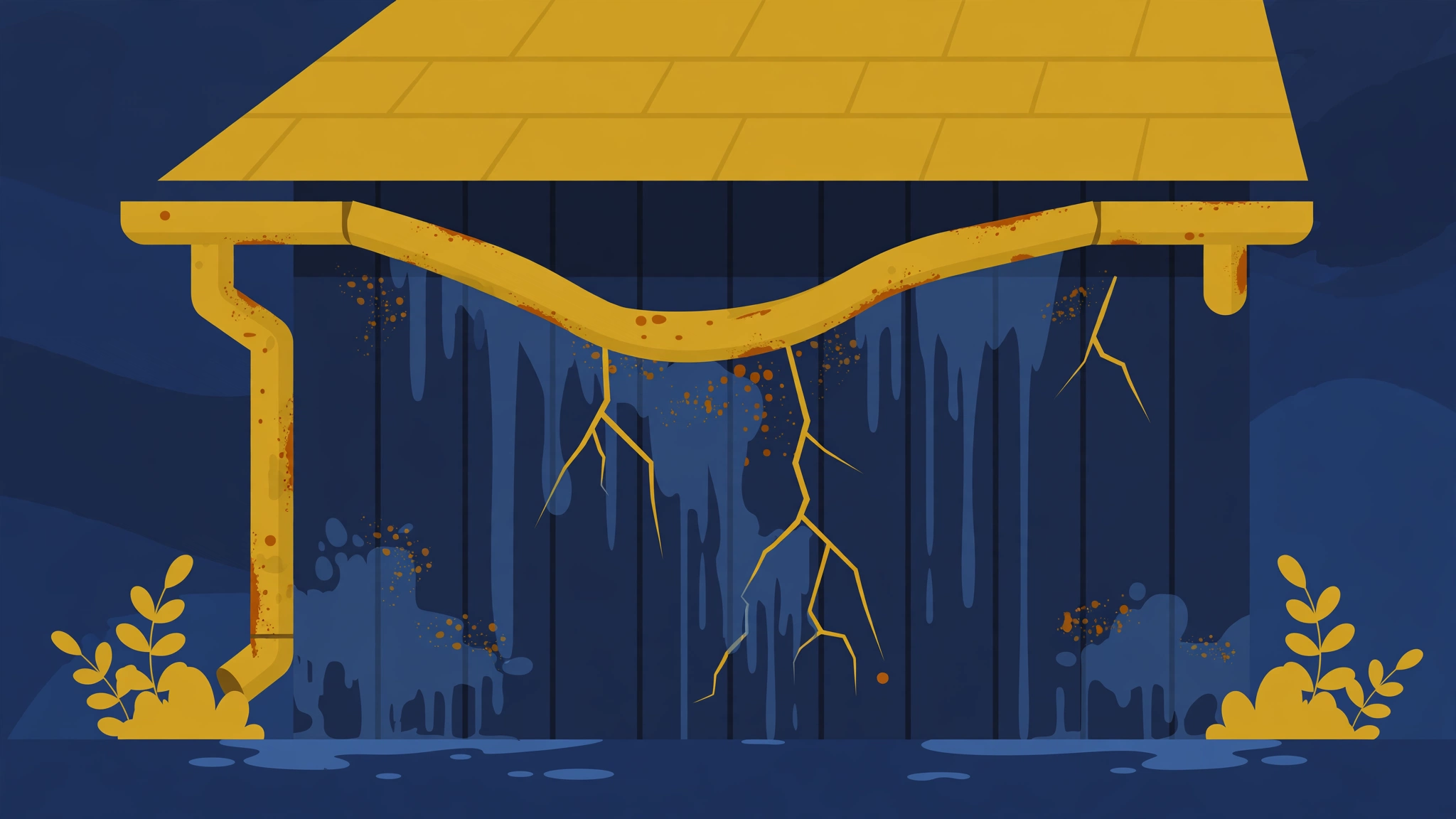
What Gutter Problems Need Repair, and What Needs Replacement?
Gutter problems need repair when damage stays in one or two sections and the gutters are under 15 years old, and gutter problems need replacement when sagging, cracking, or rust covers several sections or the gutters are over 20 years old. Gutter maintenance repair covers 4 jobs: reseal a leaking seam, reset or replace hangers, replace one bad section, and clear a clogged downspout.
| Factor | Repair fits | Replace fits |
|---|---|---|
| Damage area | One or two sections | Several sections or the full run |
| Gutter age | Under 10 to 15 years | Over 20 years |
| Leak type | Small leak at a seam | Widespread cracking or holes |
| Sagging | One loose hanger | Sagging along multiple runs |
| Rust | One small rust spot | Rust across the system |
| Cost trend | One repair under $150 | Repeat repairs near new gutter cost |
Repair starts with the seam: clean it, dry it, apply gutter sealant with a caulk gun, and let it dry for a day before rain. A downspout elbow costs $30 to $75 in parts, and a full elbow replacement with labor runs $60 to $150 (Source: Pastelink, 2026). Replacement makes sense when 3 or more warning signs appear at once, because a new run resets the lifespan clock. Get 3 itemized quotes before replacement, and check that each quote lists material, linear feet, hangers, downspouts, and disposal of the old run.
Which Gutter Material Lasts Longest?
Copper gutters last longest at 50 years or more, and aluminum gutters last 20 to 30 years, steel gutters last 20 to 25 years, and vinyl gutters last 10 to 20 years. Gutter maintenance needs differ by material: vinyl needs the least care but cracks in cold weather, aluminum needs seam checks, steel needs rust checks, and copper needs almost no care but costs the most. The right material depends on budget, climate, and how long the owner plans to stay in the home.
| Material | Installed cost per linear foot | Full home estimate | Lifespan | Best for |
|---|---|---|---|---|
| Vinyl | $3 to $6 | $500 to $1,200 | 10 to 20 years | Low budget, mild climate |
| One-piece aluminum | $6 to $12 | $1,000 to $2,400 | 20 to 30 years | Most homes, best value |
| Galvanized steel | $8 to $15 | $1,300 to $3,000 | 20 to 25 years | Heavy snow loads |
| Copper | $25 to $40 | $4,200 to $8,000 | 50 years or more | Historic or luxury homes |
A downspout is a pipe that carries rainwater from a rain gutter to the ground, and the downspout material should match the gutter material so joints seal well. One-piece aluminum gutters have the fewest joints, because a roll forming machine makes each run in one piece on site. Sectional gutters come in 10 foot pieces, and each joint is a future leak point. Use a soft brush and mild soap on aluminum and vinyl, and never use a metal scoop that scratches the coating. Copper needs no paint and no coating, and its surface darkens to a green patina over about 20 years.
Are Gutter Guards Worth the Cost?
Gutter guards are worth the cost for homes under heavy trees, and gutter guards cut cleaning from 3 to 4 visits a year to 1 or 2 visits, but gutter guards do not end cleaning. Gutter guards are covers or inserts that sit over the channel and block debris while they let water flow through. Guards stop large leaves, but fine debris, seeds, and pine needles still settle on guards and in mesh pores, so guards need their own cleaning twice a year.
- Screen guards: metal or plastic mesh that snaps on, low cost, good for large leaves, weak against pine needles.
- Micromesh guards: fine steel mesh that blocks small debris too, best protection, higher cost, needs surface brushing.
- Reverse curve guards: solid hoods that use surface tension to pull water in, good for heavy rain, hard to clean.
- Foam guards: foam inserts that fill the channel, easy to fit, pores clog fast and need replacement.
- Brush guards: bristle inserts like pipe cleaners, easy to fit, block large debris only, trap small debris.
Gutter maintenance with guards still needs 2 checks a year: brush debris off the guard surface in spring and fall, and flush the channel to confirm water runs clear. For homes with no trees near the roof, guards pay back slowly, and twice a year hand cleaning costs less. For homes under pine trees, guards pay back fast, because pine needles pack into dense clogs that take the longest to clear.
Guard cost runs from a few dollars per foot for screens to much higher prices for micromesh and reverse curve systems, and pro fitting adds labor on top. A guard that costs more than 3 years of cleaning visits pays back slowly, so compare the fitted price against the yearly cleaning bill before buying. Guards also change the cleaning job: the work moves from scooping the channel to brushing the guard surface, and the channel still needs a flush twice a year.
If clogged gutters already caused water inside the home, read our guide to water damage recovery for the drying and repair steps that follow a leak.

How Much Does Gutter Maintenance Cost?
Gutter maintenance costs $150 to $300 per cleaning visit for a single story home, and gutter maintenance costs $250 to $400 per visit for a two story home, with twice a year service running $300 to $800 a year (Source: Furilia, 2026). Gutter maintenance DIY costs far less in cash: gloves, a scoop, a hose nozzle, and sealant run $25 to $80 for a full cleaning kit, and the cost is time and ladder work instead of money. The choice between DIY and pro work turns on height, roof pitch, and comfort on a ladder.
| Cost item | Typical range |
|---|---|
| Professional cleaning, single story | $150 to $300 per visit |
| Professional cleaning, two story | $250 to $400 per visit |
| Professional cleaning, three story or complex roof | $300 to $600 per visit |
| DIY cleaning kit | $25 to $80 |
| Reseal one leaking seam | $10 to $25 in materials |
| Replace one downspout elbow | $30 to $75 in parts |
| Add or reset hangers | $3 to $6 per hanger |
| One-piece aluminum replacement | $6 to $12 per linear foot installed |
| Copper replacement | $25 to $40 per linear foot installed |
Plan 2 cleanings a year, one inspection each visit, and a small repair fund for seams and hangers. Homes with heavy tree cover need 3 to 4 cleanings a year, and the budget rises with each visit. A yearly gutter maintenance budget of $300 to $800 covers cleaning for most homes, and one skipped year can turn a $150 cleaning into a $500 repair when ice pries a loose section free. Voice of Wave covers home care topics like this one so readers can plan small jobs before they turn into big bills.
Gutter Maintenance Calendar by Season
The gutter maintenance calendar runs in 4 seasons: spring cleaning, summer checks, fall cleaning, and winter watch. The gutter maintenance calendar puts the heavy work in spring and fall, and it puts quick checks in summer and winter. Follow the calendar below and no season catches the gutters full.
- Spring (March to May): clean out winter debris, flush downspouts, check seams after freeze cycles, and test the slope with a hose.
- Summer (June to August): inspect after summer storms, clear seed pods and pollen mats, trim branches that grew over the roof, and check guard surfaces.
- Fall (September to November): clean after leaves drop, flush the full system, reseal any leaking seam, and confirm downspouts end 4 to 6 feet from the foundation.
- Winter (December to February): watch for ice dams at the roof edge, check for sagging after snow load, and clear any ice block at the downspout mouth.
Gutter maintenance in fall has one timing rule: clean after the leaves drop, not before. Clean too early and a second leaf drop fills the channel again. Clean too late and freezing weather makes sealant and fasteners hard to work with. In cold regions the real deadline is the first hard freeze, because water left in the channel expands and works fasteners loose overnight.
Mark the 2 main cleanings on a calendar at the start of the year, and set a reminder for the week after the last leaves fall. A fixed date beats a vague plan, because gutters fill silently and the first sign of a clog is often a stain on the siding or water at the foundation.

Conclusion
Gutter maintenance is a small routine with a large payoff, and gutter maintenance protects the roof edge, the siding, and the foundation for a few hours of work twice a year. Clean gutters twice a year, flush the downspouts, check the slope, and fix small leaks at once. Choose aluminum for most homes, copper for a 50 year lifespan, and guards only where trees make them pay. Keep the seasonal calendar, and treat overflow during rain as a call to clean at once.
Keep reading: Explore the latest home guides on the Voice of Wave blog for more practical routines that protect your home.
Frequently Asked Questions
How often should you clean your gutters?
You should clean your gutters twice a year, once in late spring and once in late fall. Homes with pine trees or heavy tree cover need 3 to 4 cleanings a year, because pine needles fall all year and pack into dense clogs. Inspect gutters after any heavy storm as well.
How do you know if your gutters are clogged?
You know your gutters are clogged when water sheets over the front lip during rain, or when you see sagging, plants, or stains on the siding. Other signs are standing water in the channel, granules in the downspout, and water pooling at the foundation after rain.
Can you clean gutters without a ladder?
Yes, you can clean gutters without a ladder using a leaf blower attachment or a telescopic wand, but the result is lighter than a hand cleaning. The no ladder method clears loose leaves yet leaves packed sludge behind, so use it between full cleanings, not as a replacement for them.
How long do gutters last?
Aluminum gutters last 20 to 30 years, steel gutters last 20 to 25 years, vinyl gutters last 10 to 20 years, and copper gutters last 50 years or more. Regular cleaning and prompt seam repair push each material toward the top of its range, while neglect shortens every lifespan.
Are gutter guards worth it?
Yes, gutter guards are worth it for homes under heavy trees, because guards cut cleaning from 3 to 4 visits a year to 1 or 2 visits. Guards do not end cleaning, since fine debris still settles on screens and in mesh pores, so check guards twice a year.
When should you replace gutters instead of repairing them?
You should replace gutters when sagging, cracking, or rust covers several sections, when the gutters are over 20 years old, or when repeat repairs cost nearly as much as new gutters. Repair fits small leaks, one bad section, and gutters under 15 years old.