
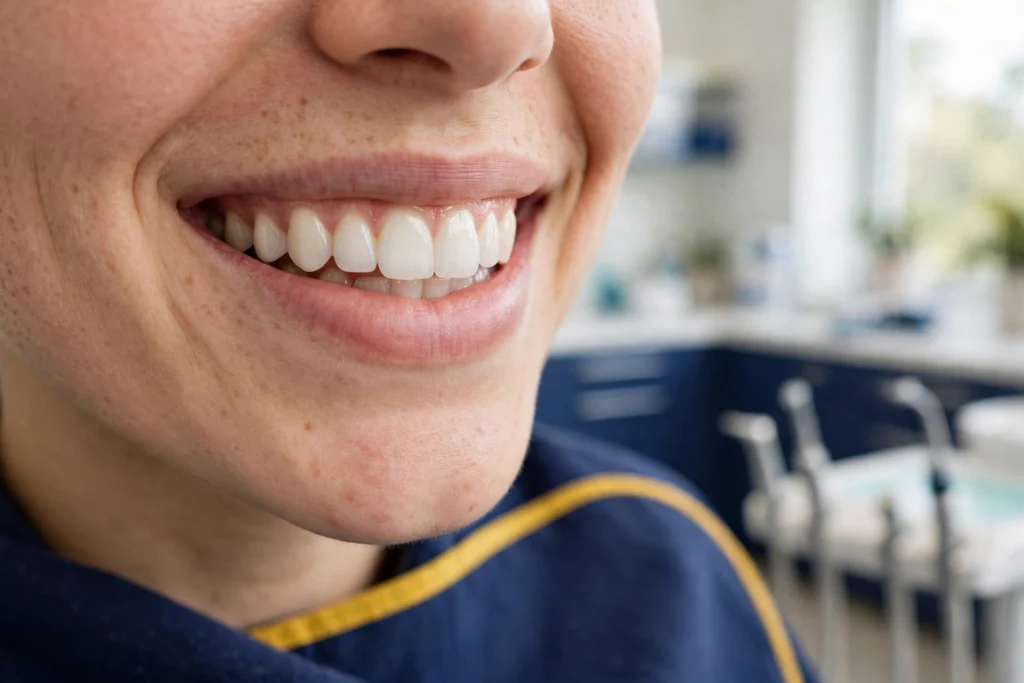
Aesthetic dentistry is the branch of dentistry that changes how teeth, gums, and smiles look, and it covers 8 main treatments: teeth whitening, porcelain veneers, composite bonding, clear aligners, dental crowns, dental implants, gum contouring, and enamel reshaping. Aesthetic dentistry works through planned steps: a consultation, a digital preview of the new smile, treatment in 1 to 8 visits, and daily care after treatment. Costs in the United States in 2026 run from about 300 US dollars for whitening to 30,000 US dollars or more for a full smile makeover, and most purely cosmetic work is not covered by dental insurance. This guide explains each treatment, the costs, the risks, and how to pick the right dentist for your smile.
Key Takeaways
- Aesthetic dentistry changes tooth color, shape, size, alignment, and gum line, and it covers 8 main treatments.
- Whitening is the cheapest and least invasive start, while porcelain veneers change color, shape, and size in one treatment.
- Porcelain veneers last 10 to 30 years with good care, and composite veneers last about 4 years.
- Costs in 2026 range from 300 US dollars for whitening to 30,000 US dollars or more for a full smile makeover.
- Gum disease and untreated decay must be fixed before any cosmetic work starts.
- Cosmetic dentistry is not a recognized dental specialty, so check a dentist’s training before you book.
Table of Contents
- What Is Aesthetic Dentistry?
- What Are the 8 Main Aesthetic Dentistry Treatments?
- How Much Does Aesthetic Dentistry Cost in 2026?
- Porcelain Veneers vs Teeth Whitening: Which One Fits Your Goal?
- What Happens at an Aesthetic Dentistry Consultation?
- Who Is a Good Candidate for Aesthetic Dentistry?
- What Are the Risks and Downsides of Aesthetic Dentistry?
- How Do You Choose the Right Cosmetic Dentist?
- How Do You Care for Your New Smile?
- Conclusion
What Is Aesthetic Dentistry?
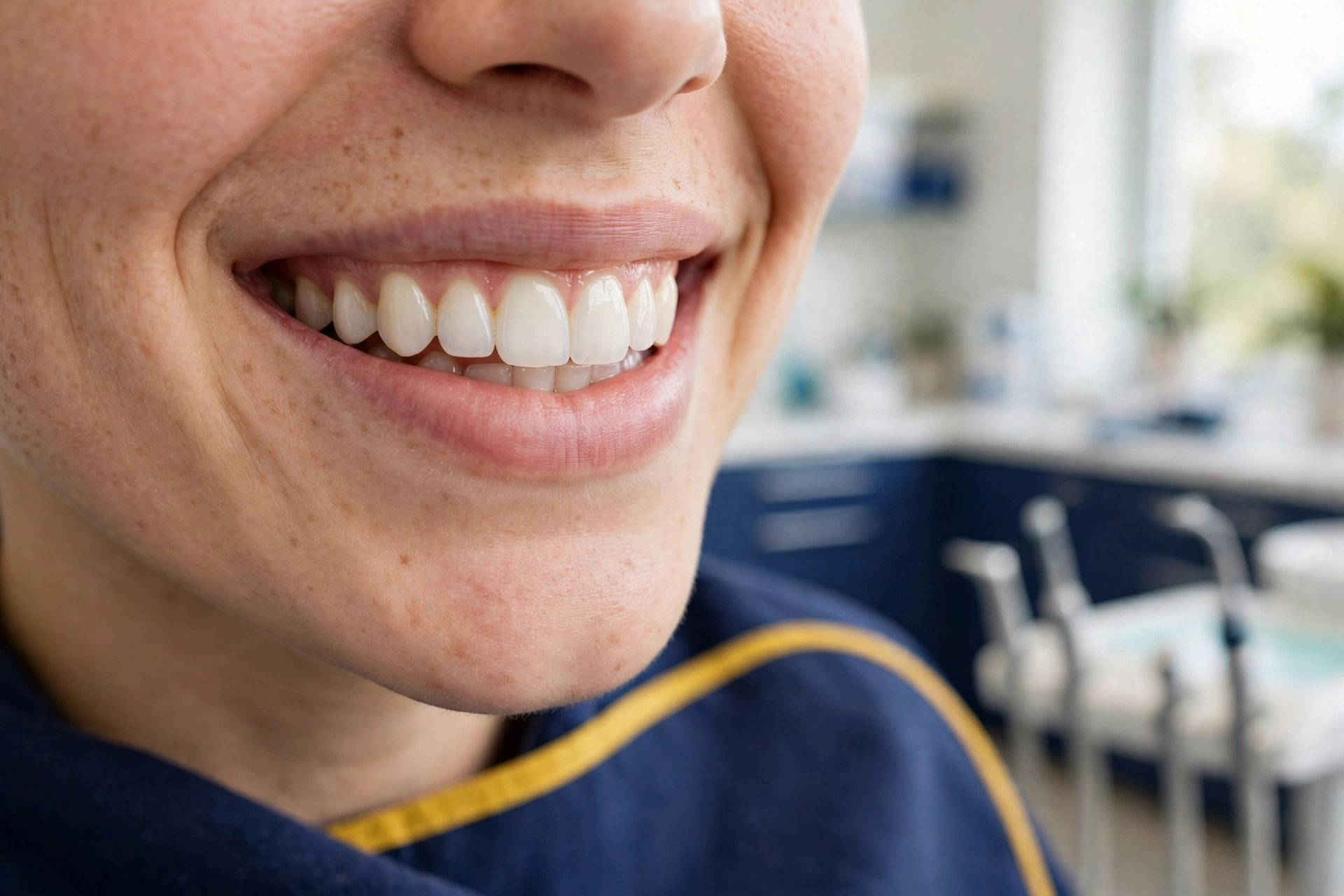
Aesthetic dentistry is the branch of dentistry that improves the look of teeth, gums, and smiles, and it focuses on color, shape, size, alignment, and gum line. Aesthetic dentistry is also called cosmetic dentistry, and the two terms describe the same work. General dentistry treats disease, pain, and function, while aesthetic dentistry changes appearance. Aesthetic dentistry still needs healthy teeth and gums as its base, so a dentist treats decay and gum disease before any cosmetic work starts.
Aesthetic dentistry rests on 4 design ideas: symmetry, balance, color harmony, and fit with the face. Symmetry means the left and right sides of the smile match. Balance means tooth sizes suit each other and the lips. Color harmony means tooth shade suits skin tone and age. Fit with the face means tooth shape suits the jaw and lip line.
Aesthetic dentistry has 2 roots. Prosthodontics is the dental specialty that covers crowns, veneers, bridges, and implants, and orthodontics is the specialty that covers tooth alignment. The American Dental Association does not recognize cosmetic dentistry as a formal specialty area, and general dentists may still perform simple cosmetic procedures. That fact matters when you pick a dentist, because training varies widely. Browse the Health category on Voice of Wave for more guides on everyday health topics.
What Are the 8 Main Aesthetic Dentistry Treatments?
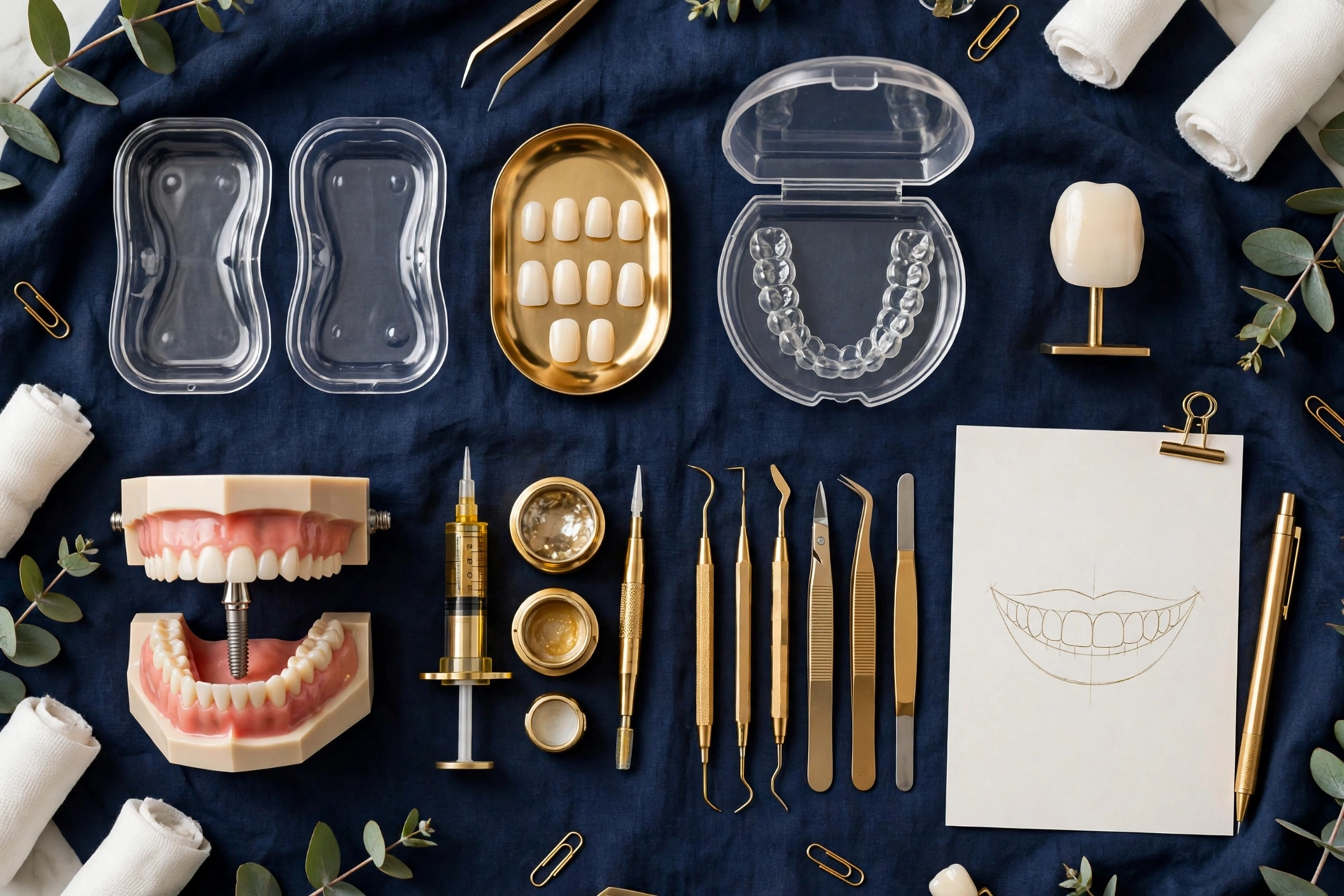
Aesthetic dentistry has 8 main treatments: teeth whitening, porcelain veneers, composite bonding, clear aligners, dental crowns, dental implants, gum contouring, and enamel reshaping. Each treatment fixes a different problem, and dentists often combine 2 or 3 treatments in one smile plan.
1. Teeth whitening
Teeth whitening is the most common cosmetic dental procedure, and it lightens natural teeth by 3 to 8 shades in one in-office visit. Whitening uses a peroxide gel that breaks down stain inside the enamel. In-office whitening uses a stronger gel and takes about 1 hour. Take-home whitening uses custom trays with a milder gel worn for about 2 weeks. Whitening does not change the color of crowns, veneers, or fillings, and results fade over 1 to 3 years without touch-ups.
2. Porcelain veneers
Porcelain veneers are ultra-thin shells of ceramic bonded to the front of teeth, and they change color, shape, size, and mild alignment in one treatment. Veneers suit deep stains that whitening cannot lift, chips, gaps, and worn edges. A dentist removes a thin layer of enamel, takes a scan, and bonds the veneer after a trial fitting. Porcelain veneers last 10 to 30 years with good care, and they resist stains better than composite veneers. Veneers are not reversible because enamel removal is permanent.
3. Composite bonding
Composite bonding is the process of shaping tooth-colored resin onto a tooth, hardening it with a light, and polishing it to match the other teeth. Bonding fixes small chips, cracks, gaps, and stains in a single visit, and it needs little or no enamel removal. Bonding costs less than veneers and suits small fixes, but resin stains faster and wears sooner than porcelain. Composite veneers last about 4 years, and a dentist can repair bonded resin in one visit.
4. Clear aligners
Clear aligners are removable plastic trays that move teeth into line over months, and they suit mild to moderate crowding, gaps, and bite problems. A patient wears each set of trays for 1 to 2 weeks, then moves to the next set. Clear aligners are less visible than metal braces, and patients remove them to eat and brush. Full treatment takes 6 to 18 months for most adults and costs 3,000 to 8,000 US dollars in 2026. Clear aligners do not change tooth color, so patients often add whitening after alignment ends.
5. Dental crowns
Dental crowns are caps that cover a whole tooth, and they restore teeth that are cracked, heavily filled, or worn down. Aesthetic crowns use all-ceramic or zirconia material that matches natural tooth color. A crown needs 2 visits in most cases: one to shape the tooth and take an impression, and one to fit the crown. Crowns last 10 to 15 years with good care, and they protect weak teeth while they improve the look of the smile.
6. Dental implants
Dental implants are prosthetic replacements for missing teeth, and each implant has 3 parts: a titanium post in the jawbone, an abutment, and a crown. Implants look and feel like natural teeth, and they stop the jawbone from shrinking after tooth loss. Implant treatment takes 3 to 6 months because the post needs time to fuse with the bone. A single implant crown costs 3,500 to 6,500 US dollars in 2026. Implants need healthy gums and enough jawbone, and smoking lowers the success rate.
7. Gum contouring
Gum contouring is the reshaping of the gum line with a laser or a scalpel, and it fixes a gummy smile or an uneven gum line. Gum contouring removes small amounts of gum tissue to show more tooth, and it makes short teeth look longer. The procedure takes 1 visit and heals in 1 to 2 weeks. Gum contouring suits people with healthy gums and sound teeth, and dentists often pair it with veneers in a smile makeover.
8. Enamel reshaping
Enamel reshaping is the removal of small amounts of enamel to smooth rough edges, shorten a long tooth, or even out tooth sizes. Enamel reshaping is also called enameloplasty or contouring, and it gives fast results in a single visit. Enamel removal is permanent, and the dentist can only remove a small amount safely. Enamel reshaping suits minor shape problems, and it pairs well with bonding when one tooth needs a small build-up after reshaping.
How Much Does Aesthetic Dentistry Cost in 2026?
Aesthetic dentistry costs in the United States in 2026 range from 300 US dollars for in-office whitening to 30,000 US dollars or more for a full smile makeover, and most purely cosmetic work is not covered by dental insurance.
| Treatment | 2026 USA price range | Visits | Lifespan |
|---|---|---|---|
| In-office teeth whitening | 300 to 800 US dollars per session | 1 | 1 to 3 years |
| Take-home whitening trays | 200 to 400 US dollars | 1 plus home use | 1 to 2 years |
| Composite bonding | 150 to 600 US dollars per tooth | 1 | 3 to 5 years |
| Composite veneers | 400 to 1,000 US dollars per tooth | 1 to 2 | About 4 years |
| Porcelain veneers | 900 to 2,500 US dollars per tooth | 2 to 3 | 10 to 30 years |
| Clear aligners | 3,000 to 8,000 US dollars full treatment | 6 to 18 months | Permanent with retainers |
| All-ceramic crown | 1,000 to 2,500 US dollars per tooth | 2 | 10 to 15 years |
| Single dental implant | 3,500 to 6,500 US dollars per tooth | 3 to 6 months | 15 years or more |
| Gum contouring | 200 to 800 US dollars per tooth | 1 | Permanent |
| Full smile makeover | 5,000 to 30,000 US dollars or more | 3 to 8 weeks | 15 to 20 years |
Price sources: 2026 provider-published guides from Top5CosmeticDentist.com (2026) and A-Dental Center (2026). Dental insurance rarely pays for purely cosmetic work, and it may pay part of a crown or implant placed for structural reasons. The FSA contribution limit in 2026 is 3,300 US dollars, and the HSA limit for self-only coverage is 4,300 US dollars. Many clinics offer payment plans, and financing terms run up to 60 months through lenders such as CareCredit.
For the daily habits that keep any new smile healthy, read our guide to Oral Health and Overall Wellbeing.

Porcelain Veneers vs Teeth Whitening: Which One Fits Your Goal?
Porcelain veneers fit goals that need a change in color, shape, size, and length, while teeth whitening fits goals that need a color change only. Whitening is the gentler and cheaper first step, and veneers are the stronger fix when whitening cannot reach the goal.
| Feature | Professional whitening | Porcelain veneers |
|---|---|---|
| What it changes | Tooth color only | Color, shape, size, and length |
| Best for | Surface stains from coffee, tea, or tobacco | Deep stains, chips, gaps, worn teeth |
| Cost in 2026 | 300 to 800 US dollars per session | 900 to 2,500 US dollars per tooth |
| Visits | 1 | 2 to 3 |
| Lifespan | 1 to 3 years | 10 to 30 years |
| Enamel removal | None | Thin layer removed, not reversible |
| Works on crowns or fillings | No | Yes, veneers cover old work |
| Sensitivity | Short-term, common | Short-term after fitting |
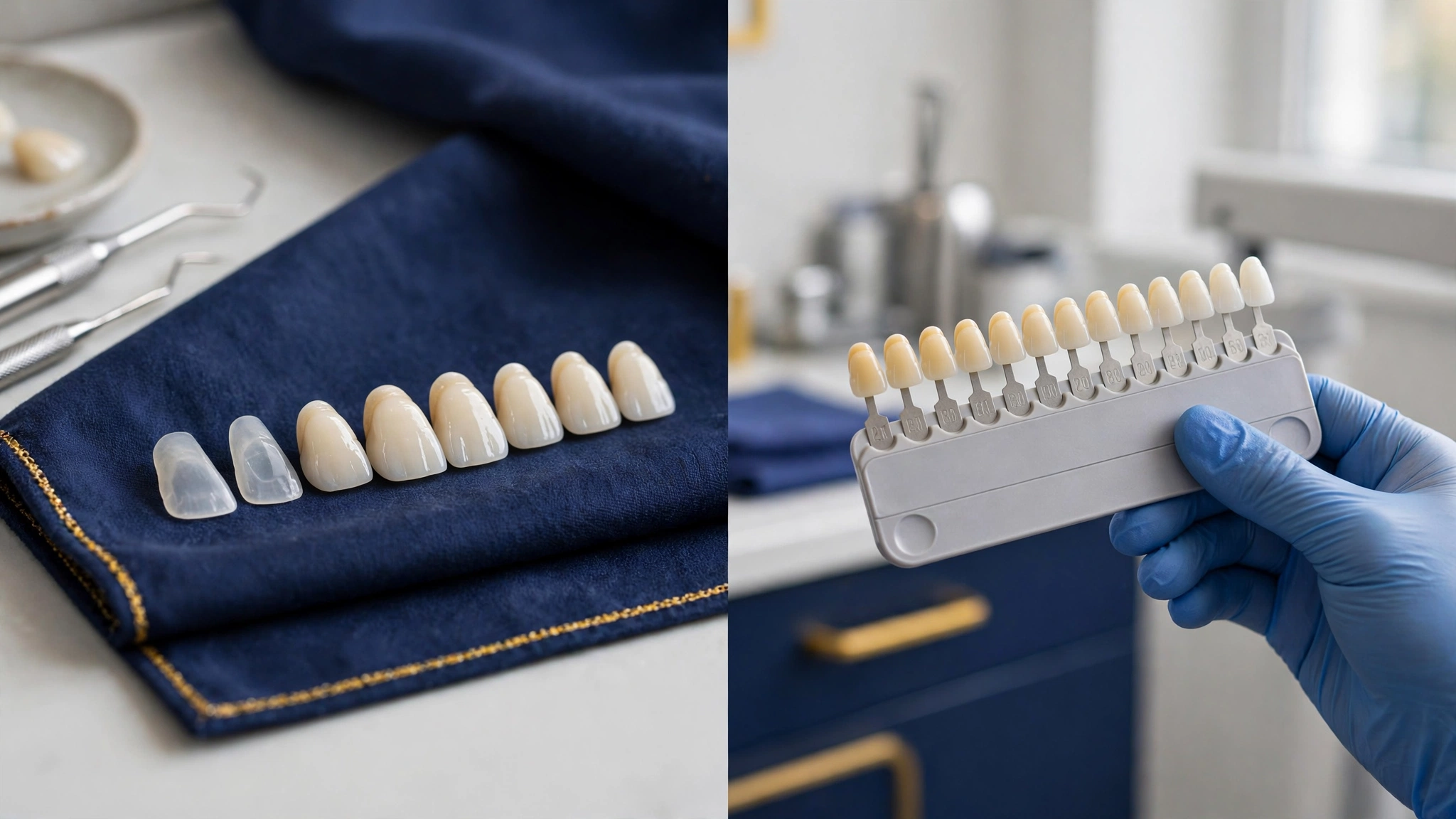
Pick veneers when teeth are chipped, uneven, or stained from medicine or injury, because whitening cannot fix shape or deep stains. Dental veneers come in 2 main materials, composite and porcelain, and porcelain veneers resist stains better and last longer than composite veneers.
What Happens at an Aesthetic Dentistry Consultation?
An aesthetic dentistry consultation has 5 steps: a health check, a goal talk, photos and scans, a digital smile preview, and a written plan with costs.
Follow these 5 steps at a consultation:
- Tell the dentist your goal in plain words, such as whiter teeth or a closed gap.
- Let the dentist check teeth, gums, bite, and old fillings or crowns.
- Ask for photos, a 3D scan, and a shade reading of your teeth.
- Review the digital smile design preview on screen and ask for changes.
- Take the written plan with costs, visit counts, and aftercare home before you decide.
Digital smile design (DSD) is software that maps tooth size, shape, and position onto photos of your face, and it shows a preview of the planned smile before any work starts. A trial smile uses temporary material on your teeth so you can test the look and feel for a few days. Ask for a trial smile when the plan includes 4 or more veneers, because the cost and the permanence justify a test run. Voice of Wave covers everyday health topics in plain language, and a planned smile deserves the same clear thinking.

Who Is a Good Candidate for Aesthetic Dentistry?
A good candidate for aesthetic dentistry has healthy teeth and gums, a clear goal, and realistic hopes about the result. Aesthetic dentistry suits adults with stained, chipped, gapped, worn, or mildly crooked teeth, and it suits people with missing teeth who want implants or bridges.
Aesthetic dentistry works best for 4 groups: adults with healthy gums who want whiter or straighter teeth, people with small chips or gaps that bonding or veneers can fix, people with worn teeth from age or grinding who need crowns or veneers, and people with missing teeth who need implants. Age is not a limit on its own, and older adults often gain the most from a smile makeover because worn teeth and receding gums change the smile over decades.
Some people should wait. Aesthetic dentistry should wait when gum disease is active, when untreated decay is present, when teeth grinding is uncontrolled, or when the patient hopes for a perfect smile that no treatment can give. Dentists treat gum disease and decay first, because veneers placed over inflamed gums or untreated decay fail early. People who grind their teeth at night need a night guard before veneers, because grinding cracks porcelain. Teenagers should wait for veneers in most cases, because their teeth and gums are still changing.
What Are the Risks and Downsides of Aesthetic Dentistry?
The risks of aesthetic dentistry are tooth sensitivity, enamel loss, gum irritation, veneer damage, and results that do not match hopes. Most risks stay small when a trained dentist plans the work, but every treatment has a downside to weigh.
Whitening causes short-term sensitivity to cold drinks in many patients, and the sensitivity fades within days. Veneers need enamel removal, and that removal is permanent, so a tooth with veneers always needs a veneer or a crown after that point. Porcelain veneers can chip or crack from hard food, ice, or teeth grinding, and a cracked veneer needs repair or replacement. Clear aligners need strict wear of 20 to 22 hours a day, and skipped wear slows or stalls tooth movement. Implants can fail when bone is thin or when smoking slows healing, and implant failure needs removal and a new plan.
The American Academy of Cosmetic Dentistry (AACD) was founded in 1984 and has over 7,000 members in the United States and more than 70 countries, and it runs an accreditation program for dentists who want to prove skill in cosmetic work. A survey by the American Academy of Cosmetic Dentistry found that nearly 75 percent of adults believe that an unattractive smile can hinder a person’s chances for career success.
How Do You Choose the Right Cosmetic Dentist?
Choose a cosmetic dentist by checking training, viewing real before and after photos, asking about digital smile design, and getting a written plan with costs.
Use this 6-point checklist before you book:
- Ask what training the dentist has in cosmetic work, and look for AACD accreditation or a prosthodontics specialty.
- Ask to see before and after photos of the exact treatment you need.
- Ask whether the dentist uses digital smile design and trial smiles.
- Ask how many veneers or implants the dentist places each month.
- Ask for a written plan with costs, visit counts, and aftercare.
- Ask what happens if a veneer chips or a result needs a fix.
Watch for 3 warning signs: a dentist who pushes veneers for healthy young teeth, a dentist who will not show photos or a written plan, and a price far below other quotes with no clear reason. Cosmetic dentistry covers work that improves the appearance of teeth, gums, and bite, and the American Dental Association does not recognize it as a formal specialty, so training and proof of skill matter more than the title on the door. The Voice of Wave health guides explain everyday topics in the same plain style, so you can compare advice across topics before you decide.

How Do You Care for Your New Smile?
Care for a new smile with 5 daily habits: brush twice a day with fluoride toothpaste, clean between teeth once a day, avoid hard foods that crack porcelain, wear a night guard if you grind, and visit the dentist every 6 months. New dental work needs the same daily care as natural teeth, and it needs a few extra habits.
Brush for 2 minutes twice a day with a soft brush and fluoride toothpaste, and clean between teeth once a day with floss or interdental brushes. Avoid chewing ice, hard candy, and bottle caps, because porcelain veneers and crowns can chip under hard force. Limit coffee, tea, red wine, and tobacco, because stains build on bonding and on natural teeth next to veneers. Wear a night guard each night when the dentist advises it, because grinding cracks veneers and wears bonding fast. Visit the dentist every 6 months for a check and cleaning, and ask the dentist to check veneer edges and implant gums at each visit.
Conclusion
Aesthetic dentistry is the branch of dentistry that improves tooth color, shape, size, alignment, and gum line through 8 main treatments, and the right choice starts with healthy teeth and a clear goal. Whitening suits stains alone, veneers suit shape and color together, bonding suits small fixes, and aligners suit mild crowding. Costs in 2026 run from 300 US dollars for whitening to 30,000 US dollars or more for a full smile makeover, and most cosmetic work is not covered by insurance. Start with a consultation, and pick the smallest treatment that reaches your goal.
Explore more health guides: Visit Voice of Wave Blog for more everyday health guides, practical tips, and plain-language explainers.
FAQ Section
Is aesthetic dentistry the same as cosmetic dentistry?
Yes, aesthetic dentistry and cosmetic dentistry describe the same work. Both terms cover treatments that improve the look of teeth, gums, and smiles, such as whitening, veneers, bonding, and aligners. The American Dental Association does not recognize either term as a formal specialty.
How much does aesthetic dentistry cost?
Aesthetic dentistry costs 300 to 800 US dollars for in-office whitening, 900 to 2,500 US dollars per tooth for porcelain veneers, and 3,000 to 8,000 US dollars for clear aligners in 2026. A full smile makeover costs 5,000 to 30,000 US dollars or more. Most purely cosmetic work is not covered by insurance.
How long do dental veneers last?
Porcelain veneers last 10 to 30 years with good care, and composite veneers last about 4 years. Veneer life depends on oral hygiene, teeth grinding, and diet. A night guard, soft brushing, and dentist visits every 6 months extend veneer life.
Does aesthetic dentistry hurt?
No, most aesthetic dentistry causes little or no pain. Whitening can cause short-term sensitivity to cold drinks. Veneer and crown work uses local anesthetic, and mild soreness fades within days. Tell the dentist about pain that lasts more than a few days.
Is aesthetic dentistry covered by insurance?
No, most dental insurance does not cover purely cosmetic work such as whitening or veneers for appearance. Insurance may pay part of a crown or implant placed for structural reasons. Ask the dentist for a written estimate and check the policy before treatment starts.
What is the best age for aesthetic dentistry?
Adults of any age can get aesthetic dentistry when teeth and gums are healthy. Teenagers should wait for veneers in most cases, because their teeth and gums are still changing. Bonding and whitening suit younger patients better, and older adults often gain the most from smile work.