
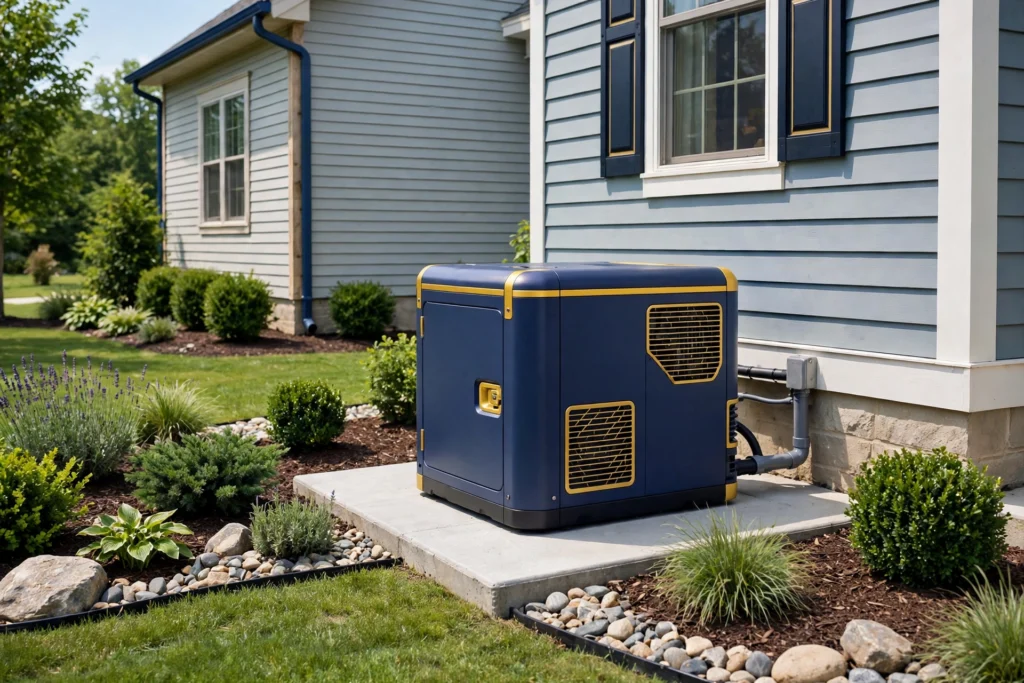
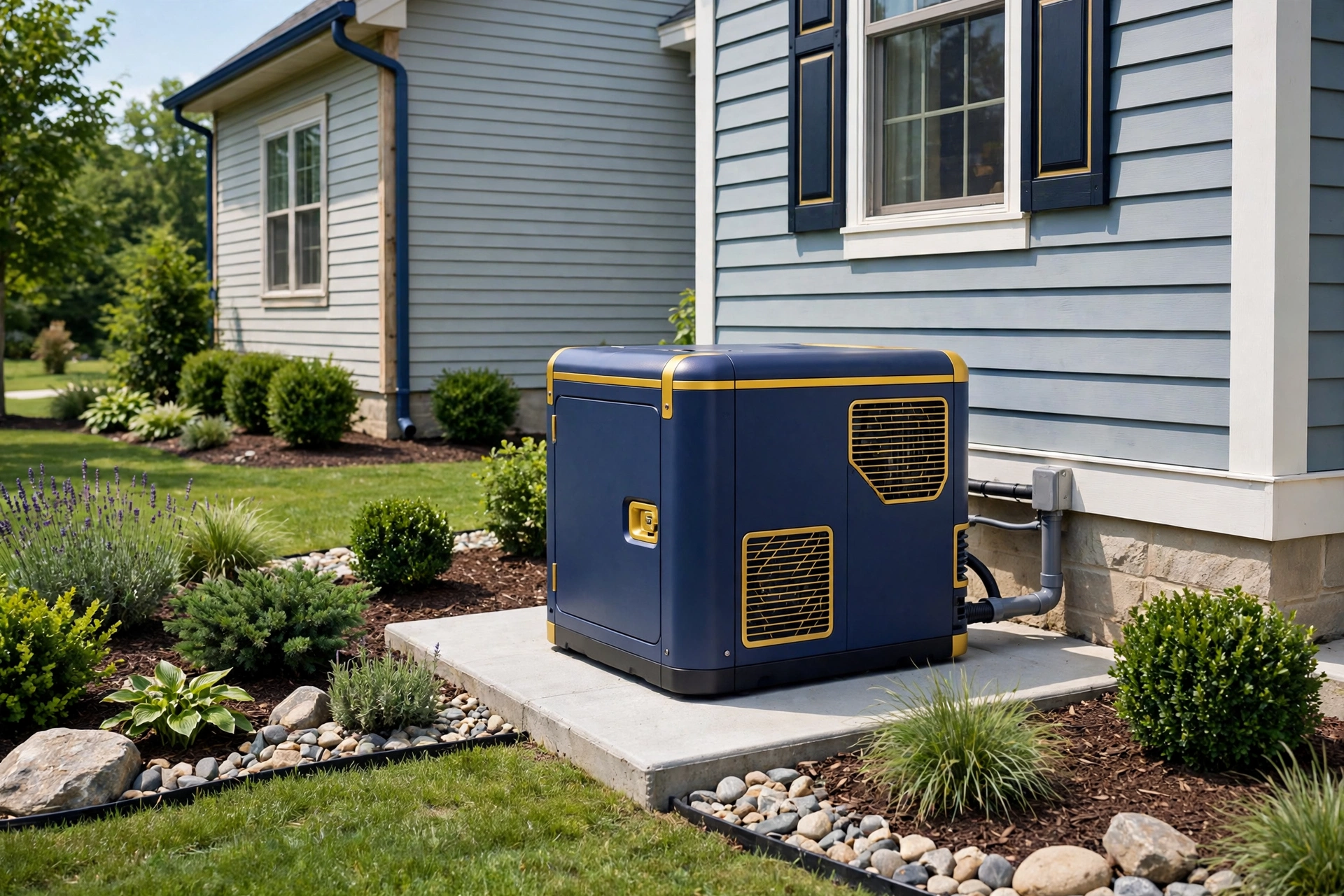
Generator maintenance is the routine care that keeps a home generator ready to start when the power fails. Generator maintenance means checking the oil, fuel, battery, and air filter on a set schedule, running the weekly exercise cycle, changing the oil and filters once a year, and booking a professional service once a year, so the unit starts on demand and runs at full load. A generator that gets this care starts in seconds and lasts 15 to 25 years (Source: EcoFlow, 2026).
The work covers 7 parts: engine oil, air filter, spark plugs, fuel system, battery, transfer switch, and enclosure. Homeowners handle the checks, the oil change, and the filter swaps, and a licensed technician handles the transfer switch, load test, and valve work once a year. This guide gives the schedule, checklist, costs, and safety rules.
Key Takeaways
- Check the oil, fuel, and battery before every use, and confirm the weekly exercise cycle ran.
- Change the oil and filters once a year or every 100 to 200 hours, whichever comes first.
- Book one professional generator service a year, and replace the battery every 3 to 4 years.
- A single service visit costs $171 to $395, and a well kept generator lasts 15 to 25 years.
- Change the oil, swap the filters, and test the battery yourself, and leave transfer switch, load test, and valve work to a licensed technician.
- Run a generator outdoors only, at least 20 feet from the house, and test carbon monoxide detectors monthly.
Table of Contents
- What Is Generator Maintenance?
- How Often Should Generator Maintenance Be Done?
- What Does a Generator Maintenance Checklist Include?
- How Do You Change Generator Oil and Filters?
- What Does a Professional Generator Service Include?
- How Much Does Generator Maintenance Cost?
- Portable vs Standby Generator Maintenance
- What Are the Signs Your Generator Needs Maintenance Now?
- How Do You Stay Safe During Generator Maintenance?
- Conclusion
- Frequently Asked Questions
What Is Generator Maintenance?
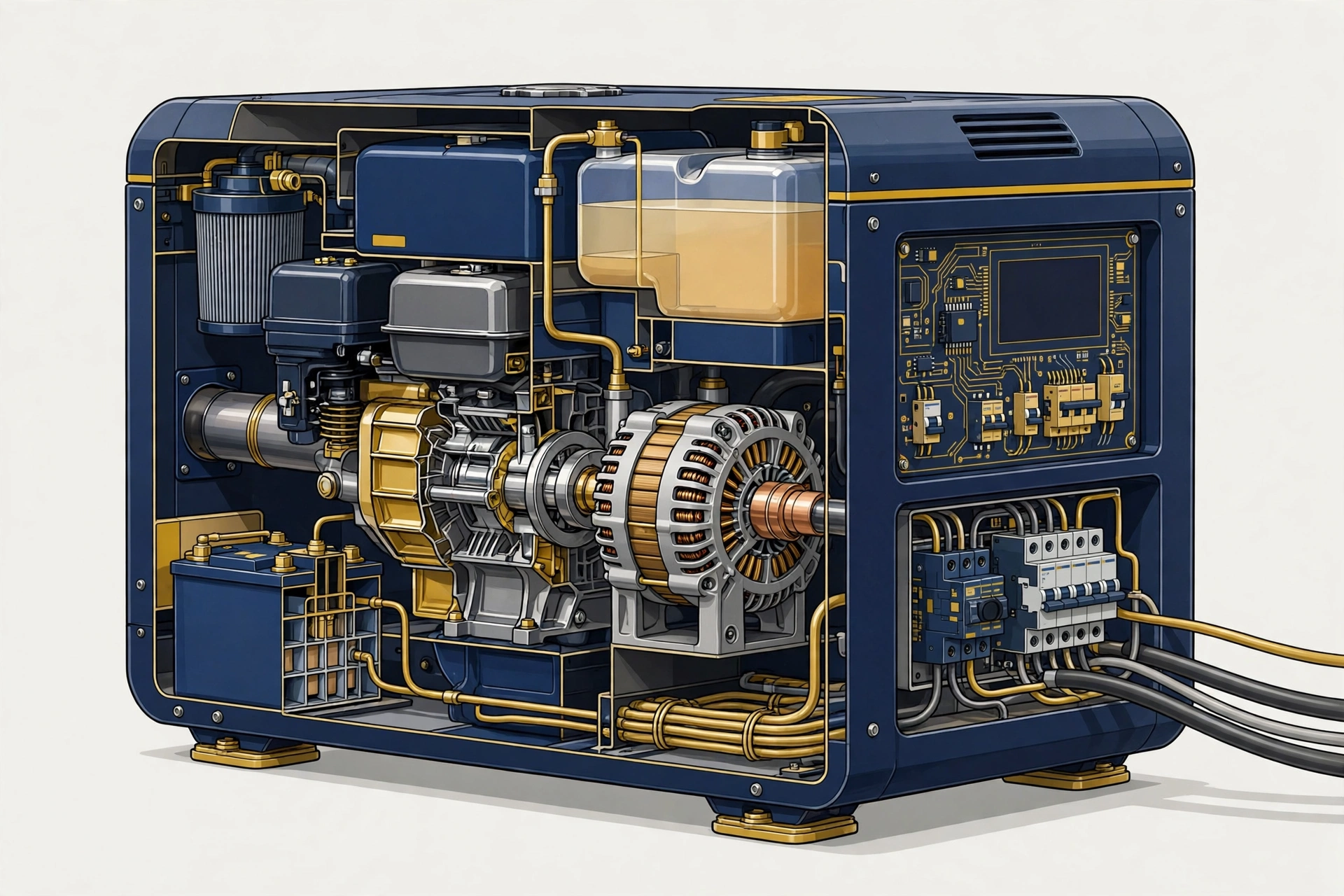
Generator maintenance is the set of inspection, cleaning, and replacement tasks that keep a home generator ready to produce power on demand, and it covers the engine oil, air filter, spark plugs, fuel system, battery, transfer switch, and enclosure, while homeowners handle the checks and fluid changes and a licensed technician handles the electrical and load tests once a year.
A generator is an electromechanical device that converts mechanical energy to electrical energy, and the first electromagnetic generator, the Faraday disk, was built in 1831 by British scientist Michael Faraday. The electric generator page explains how a rotating shaft inside a magnetic field produces current. Home generators come in 2 types: portable and standby. Portable units run on gasoline or propane and power a few circuits through extension cords. Standby units sit on a concrete pad, connect to natural gas or propane, and switch on by themselves through an automatic transfer switch (ATS).
Generator maintenance has 2 lanes. The homeowner lane runs weekly and monthly with no special tools. The professional lane runs once a year with gauges, load banks, and training. Both lanes serve one goal: power that starts on the first try, runs at full load, and shuts off safely. The parts that fail most often, the battery and the fuel system, get caught before an outage.
How Often Should Generator Maintenance Be Done?
Generator maintenance follows a yearly rhythm: check the oil and fuel before every use, confirm the weekly exercise cycle ran, inspect the battery and air filter every month, change the oil and filters once a year or every 100 to 200 hours, and book a professional service once a year. Portable units need a run every 3 months, and standby units test themselves weekly.
| Task | How often | Who handles it |
|---|---|---|
| Check oil level and fuel level | Before every use | Homeowner |
| Confirm the weekly exercise cycle ran | Weekly | Homeowner (standby) |
| Inspect the battery and terminals | Monthly | Homeowner |
| Check the air filter | Monthly | Homeowner |
| Run a portable unit under light load | Every 3 months, 15 to 30 minutes | Homeowner |
| Change the oil and oil filter | Once a year or every 100 to 200 hours | Homeowner or technician |
| Replace the air filter and spark plugs | Every 200 hours or every 2 years | Homeowner or technician |
| Professional service with load test | Once a year | Licensed technician |
| Replace the starting battery | Every 3 to 4 years | Homeowner or technician |
Our home improvement guides cover the same habit of small, regular checks that stop big repairs. The schedule above turns generator care into a routine that takes about 10 minutes a month plus one yearly visit.
Generac publishes the clearest factory schedule for home standby units. The break-in oil and filter change comes after the first 25 hours. Schedule A, oil and filter plus a battery check, comes every 2 years or 200 hours. Schedule B, which adds the air filter, spark plugs, and a valve clearance check where it applies, comes every 4 years or 400 hours (Source: Generac, 2026). Cold weather shortens the oil interval to every year or 100 hours below 40 degrees Fahrenheit or above 85 degrees Fahrenheit (Source: Generac, 2026).
NFPA 110, the standard for emergency and standby power systems, calls for a weekly inspection and a monthly loaded exercise of at least 30 minutes at 30 percent or more of the nameplate load, with a permanent log of inspections, tests, and repairs (Source: NFPA 110, cited 2026). The weekly exercise proves the engine cranks and runs, and the loaded monthly run proves the unit carries a real load without wet stacking, the soot buildup from long no-load running.
What Does a Generator Maintenance Checklist Include?
A generator maintenance checklist includes a walk-around inspection, oil and fuel level checks, battery terminal cleaning, air filter inspection, exercise cycle confirmation, and an annual professional service that covers the load test, transfer switch, valve clearance, and fuel system leak test, and the list splits into homeowner jobs and technician jobs.
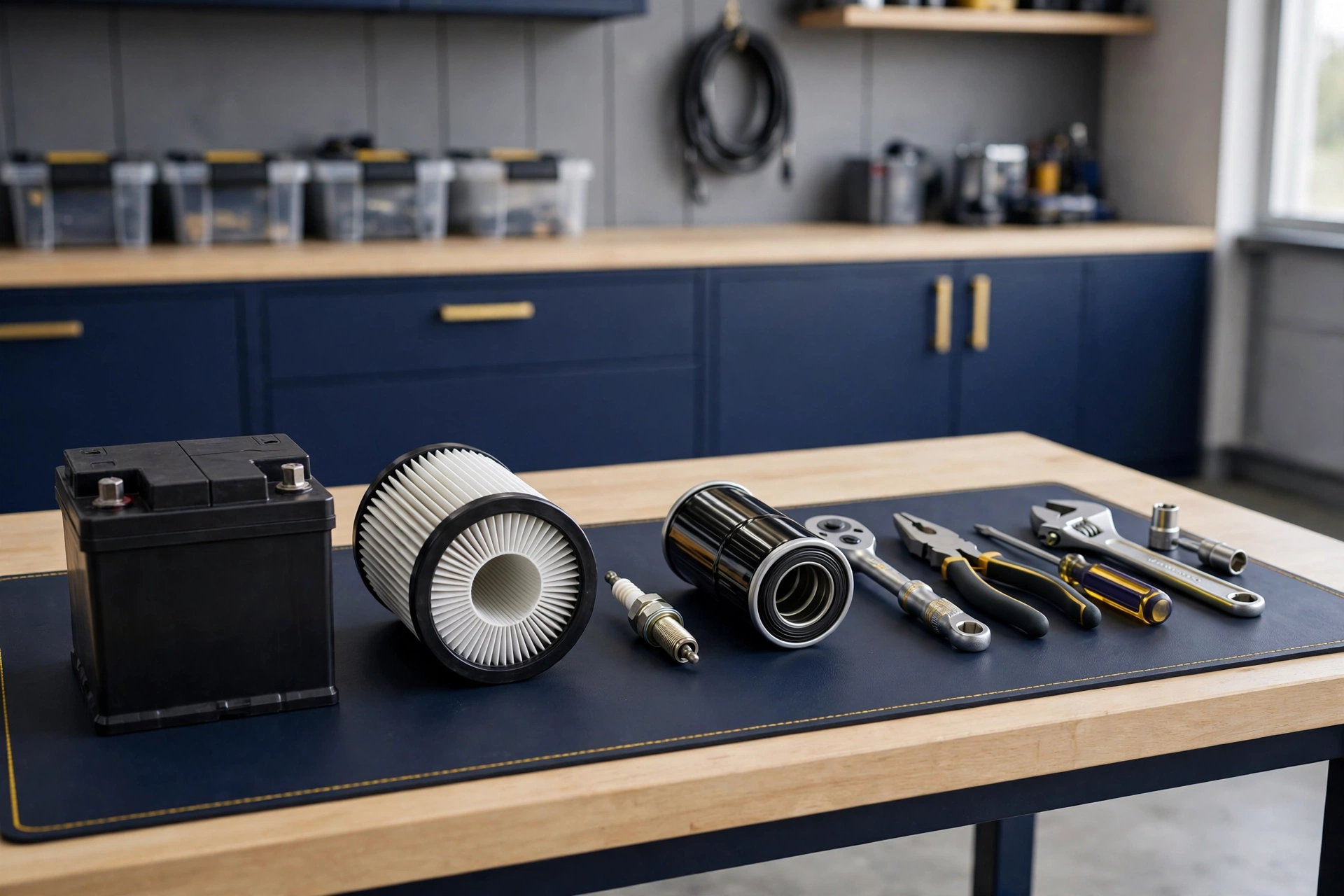
The homeowner half needs no tools beyond a flashlight and a rag. Walk around the unit once a week and look for leaks, rust, rodent nests, and debris blocking the air intake and exhaust. Check the oil on the dipstick and top it up below the minimum mark. Check the fuel level and order fuel before the tank reaches the refill point. Look at the battery terminals for white or greenish corrosion, and clean them with a wire brush if buildup appears. Read the controller: it must sit in AUTO with no active alarms. A yellow light means service is due, and a red light means the unit will not start.
The technician half covers the parts a homeowner must not touch: a full load test, a transfer switch test that moves load from utility power to generator power and back, a valve clearance check, a fuel system leak test, and a battery load test. Weak or undercharged starting batteries are the most common cause of standby power failures (Source: Cummins, cited 2026). Batteries older than 3 years need a load test every year, and most need replacement at 4 to 5 years (Source: Ontario Generator Systems, 2026). A service that skips the battery load test or the transfer switch test is not a full service, and a homeowner should ask for both by name when booking.
How Do You Change Generator Oil and Filters?
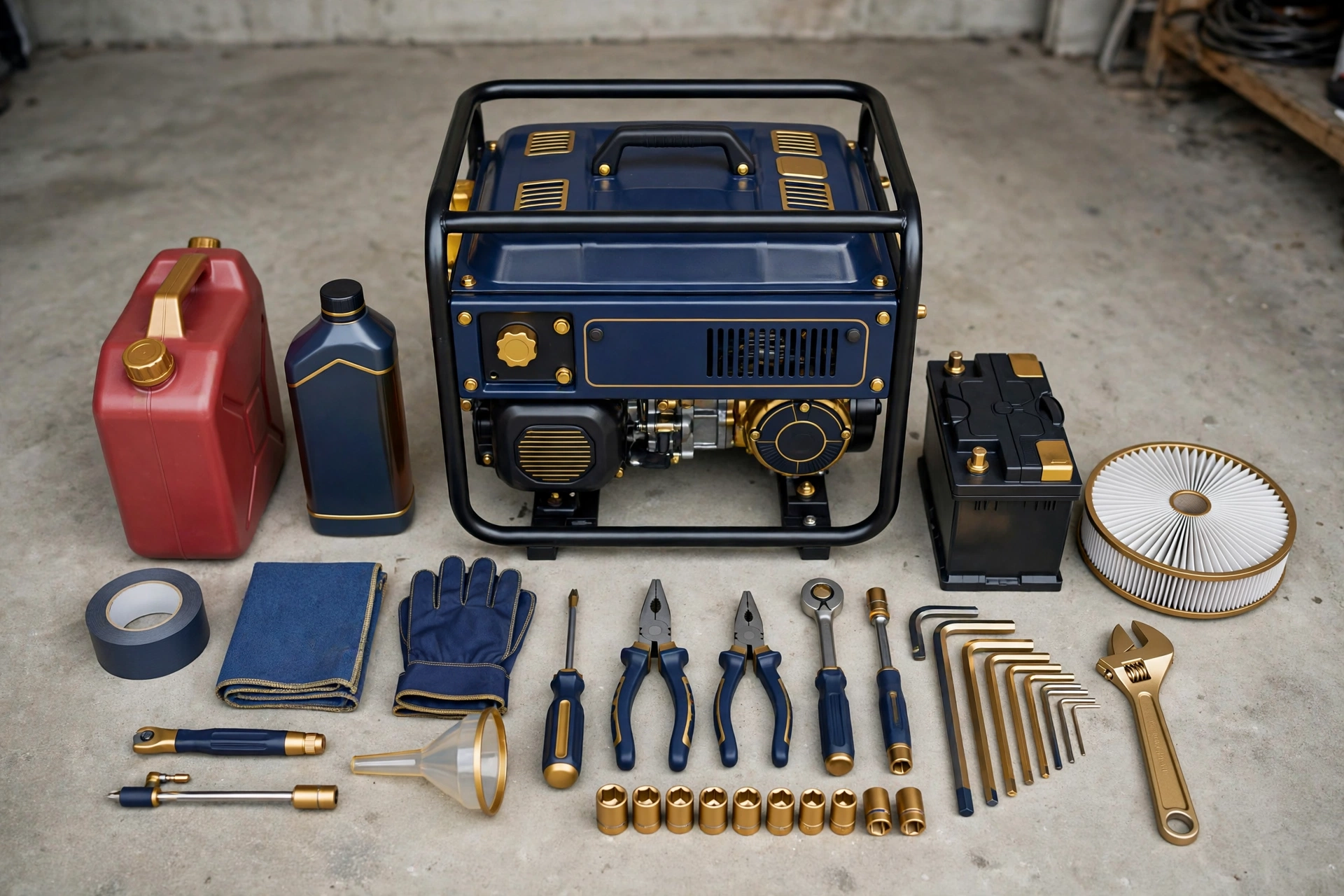
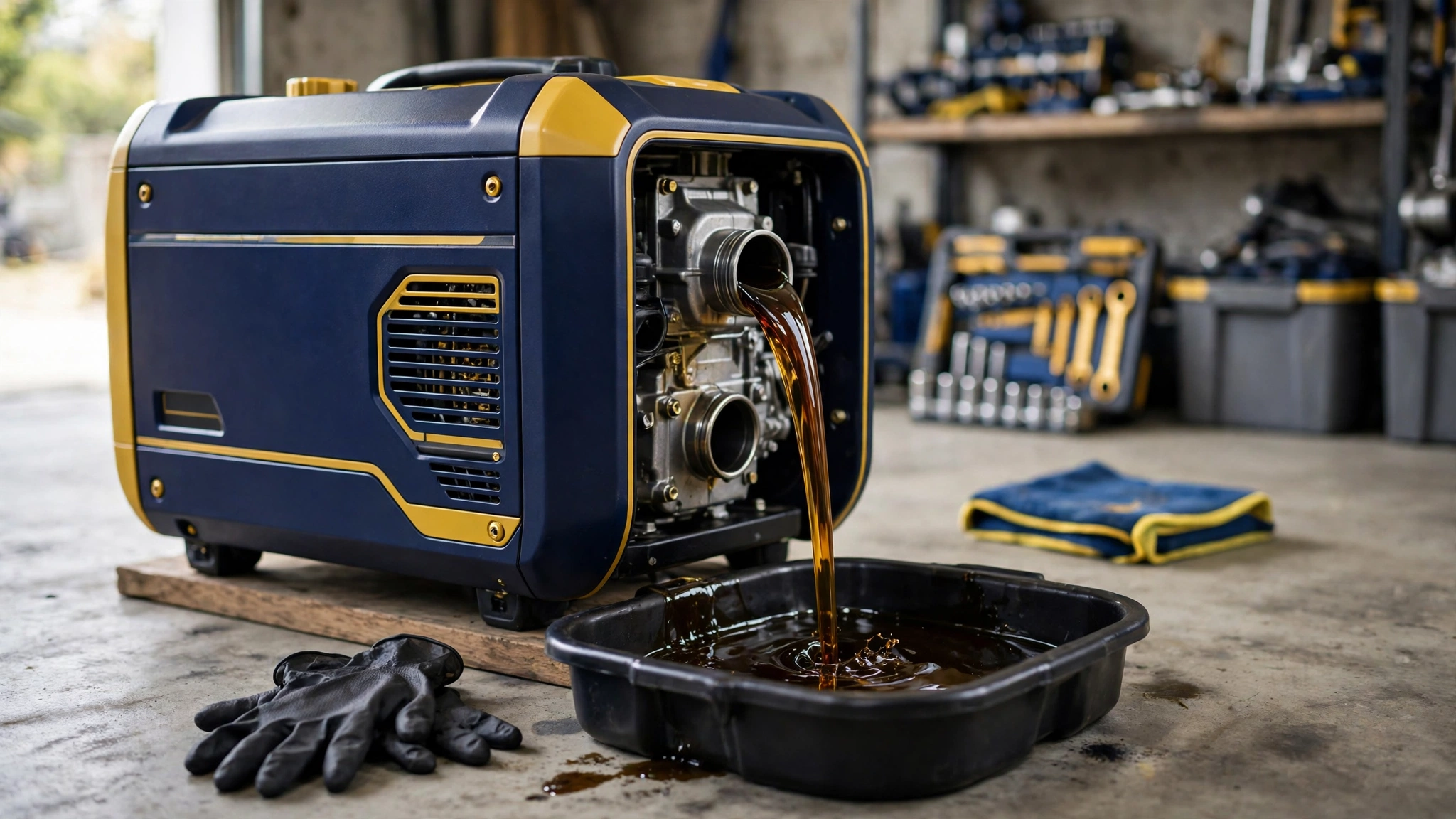
To change generator oil and filters, warm the engine for a few minutes, shut it off, drain the old oil, fit a new oil filter, refill with the oil grade in the manual, fit a clean air filter and new spark plugs at the right interval, and run the unit for 5 minutes to check for leaks. The job takes about 30 minutes, and writing the date and the hour meter reading on a label stuck to the generator frame tracks the next change.
Follow these 7 steps in order:
- Run the generator for 5 minutes to warm the oil, then shut it off and let it cool.
- Place a drain pan under the oil drain, open the drain, and let the old oil flow out.
- Remove the old oil filter, coat the new filter seal with fresh oil, and fit the new filter.
- Close the drain, refill with the oil grade in the manual, and check the dipstick.
- Remove the air filter cover, clean or replace the air filter, and refit the cover.
- Pull the spark plug at the right interval, check the gap, and fit a new plug if worn.
- Start the generator, run it for 5 minutes, and check the drain and filter for leaks.
Oil grade comes from the manual, not from a guess. Common grades are SAE 10W-30 and SAE 5W-30 synthetic, and the manual wins where it differs. The first oil change matters most: portable units need it after the first 5 to 30 hours, and standby units after the first 25 hours, because break-in leaves metal particles in the oil. After break-in, change the oil every 100 hours or once a year, and the air filter and spark plugs every 200 hours. In my own home, writing the oil change date and the hour meter reading on a label stuck to the generator frame ended the guessing about the last service, and the oil now gets changed on time every year. Never overfill the engine, and never change oil on a hot engine, since the oil burns skin on contact.
What Does a Professional Generator Service Include?
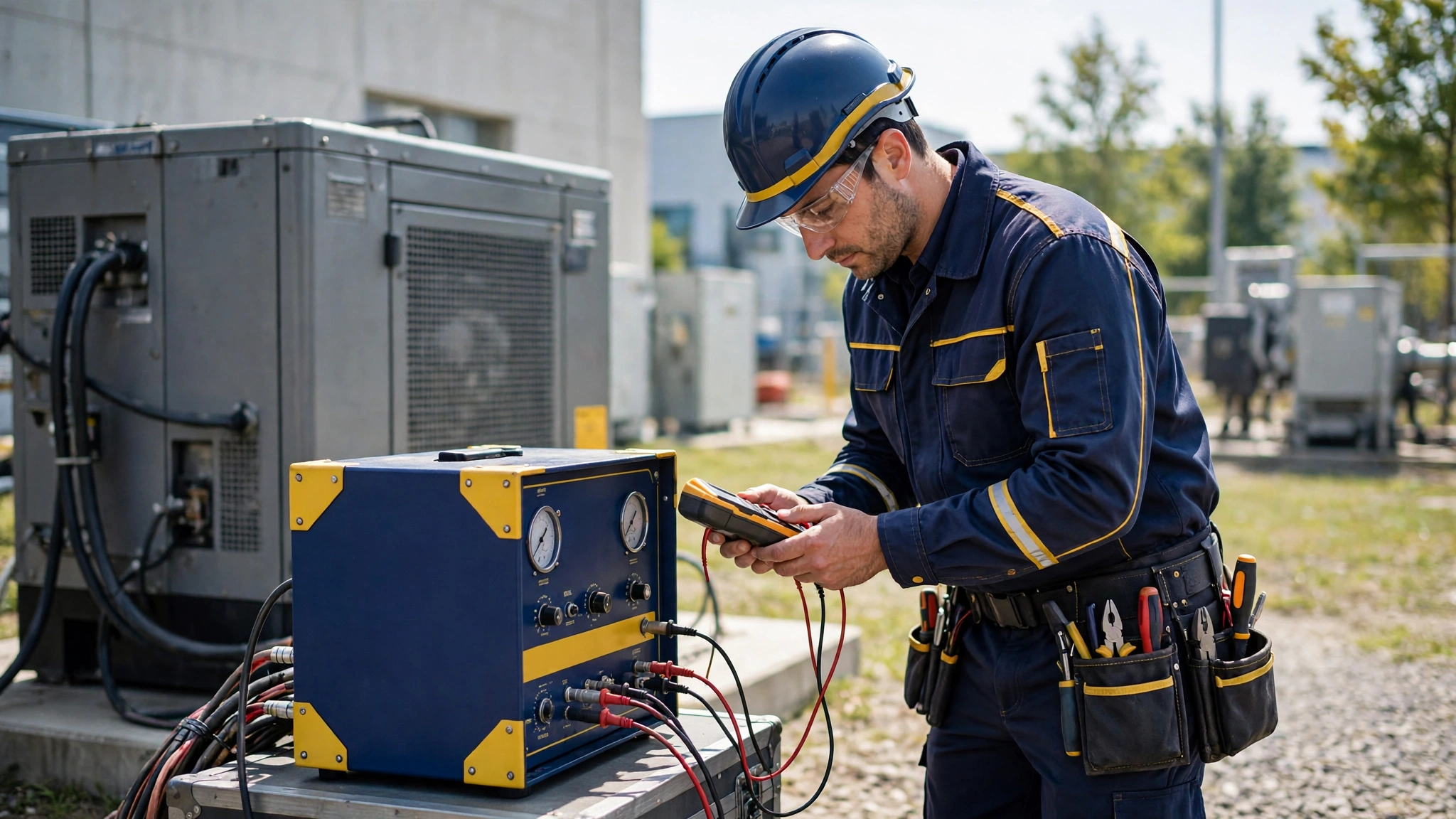
A professional generator service includes an oil and filter change, air filter and spark plug replacement, battery load test, transfer switch test, full load test, valve clearance check where it applies, and a written report of the readings, and the visit takes 1 to 2 hours (Source: GridGuard, 2026).
The visit starts with the controller. The technician reads the fault history, checks the exercise timer, and confirms the unit starts and stops in the right order. Then the technician opens the enclosure, changes the oil and filters, replaces the spark plugs at the right interval, and inspects the belts, hoses, and wiring for wear.
The safety sequence comes next. The technician load-tests the starting battery, tests the transfer switch by moving the house load to generator power and back, runs the generator under load to confirm voltage and frequency hold steady, checks valve clearance on models that need it, and runs a fuel system leak test. The visit ends with a written report of the readings and any parts that need a follow-up. Most manufacturer warranties require documented regular maintenance, so the owner should keep every report with the manual.
Keep every home system on the same kind of schedule: read our furnace maintenance guide for a matching routine.
How Much Does Generator Maintenance Cost?
A single generator service visit typically costs $171 to $395, with an average of $273, and full annual care runs $200 to $600 a year, while a well kept generator lasts 15 to 25 years and a neglected unit often fails after 7 years (Source: EcoFlow, 2026).
| Service | Typical cost | What it covers |
|---|---|---|
| Single professional service visit | $171 to $395 | Oil, filters, battery check, full inspection (Source: EcoFlow, 2026) |
| Annual professional service | $200 to $400 | Oil, filters, spark plugs, load test (Source: GridGuard, 2026) |
| Annual maintenance plan | $150 to $300 per year | Scheduled visits and priority service (Source: The Healthy Attitude, 2026) |
| Battery replacement | $150 to $250 | New starting battery every 3 to 4 years (Source: Ewing Electric, 2026) |
| Emergency call-out during an outage | $800 to $1,200 plus parts | Urgent repair while the power is out (Source: GridGuard, 2026) |
| 10-year maintenance total | $2,000 to $6,000 | A decade of routine upkeep (Source: EcoFlow, 2026) |
Price moves with generator size, fuel type, and local labor rates, so a homeowner should get a written quote before the visit. Large standby units of 24 kW and above cost $600 to $1,000 a year to maintain, and units that run often need extra service every 100 to 200 hours (Source: EcoFlow, 2026). A plan pays off when it covers the yearly visit and a parts discount. The cost of a skipped service shows up later as a repair bill: an emergency call-out costs $800 to $1,200 plus parts, 3 to 4 times the price of a planned visit (Source: GridGuard, 2026).
Portable vs Standby Generator Maintenance
Portable generator maintenance centers on the owner: manual starts, monthly runs, and fuel care, while standby generator maintenance centers on the unit itself: a weekly exercise cycle, a controller that flags faults, and a yearly professional visit, so portable units need more owner time and standby units need more professional time. Both types need a yearly oil change and a yearly service.
| Care point | Portable generator | Standby generator |
|---|---|---|
| Power source | Gasoline or propane, carried in cans or tanks | Natural gas or propane, piped in |
| Starting | Manual pull cord or electric start | Automatic, through the transfer switch |
| Weekly exercise | Owner runs it monthly for 15 to 30 minutes | Automatic weekly self-test, 12 to 20 minutes |
| Oil change | Every 100 hours or every season | Every 100 hours or once a year |
| First oil change | After the first 5 to 30 hours | After the first 25 hours |
| Air filter and spark plugs | Every 100 to 200 hours | Every 200 to 400 hours |
| Fuel care | Stabilizer or drain before storage | Piped fuel, no storage step |
| Battery | Electric-start battery, checked monthly | Starting battery, load-tested yearly |
| Annual service | DIY tune-up or one technician visit | One technician visit with load test |
Fuel care splits the two types most clearly. Gasoline starts degrading within about a month, so a portable unit that sits with old fuel needs stabilizer in fresh fuel, or the carburetor run dry before storage (Source: HEI Generators, 2026). A standby unit burns piped natural gas or propane, so it has no stored gasoline to age. Storage splits them too: if a portable generator will sit unused for more than 20 days, drain or stabilize the fuel, change the oil, and store it dry with the tank empty or full of stabilized fuel (Source: Harbor Freight, 2026). A standby unit stays in place year round, and its storage job is a clear enclosure and exhaust path.
What Are the Signs Your Generator Needs Maintenance Now?
Your generator needs maintenance now when it starts hard, runs rough, shows a yellow or red warning light, puts out low voltage, leaks oil or fuel, shows rust on the enclosure, or skips its weekly exercise cycle. Any one of these signs calls for a check first and a technician call if the sign stays.
Sounds tell the story first. A hard start often means a weak battery, old fuel, or a fouled spark plug, and the battery is the first check because it fails most often. Rough running or surging often means a dirty air filter, stale fuel, or a clogged carburetor. Black smoke often means a dirty air filter or an overfilled crankcase. A yellow light means service is due, and a red light means the unit will not start until a technician clears the fault. Oil or fuel stains under the unit mean a seal or a line has failed, and the unit must stay off until the leak is fixed. A battery older than 3 years that cranks slowly needs a load test at once, since a battery that shows good voltage can still fail under cranking load.
How Do You Stay Safe During Generator Maintenance?
Stay safe during generator maintenance by running the unit outdoors only, at least 20 feet from the house with the exhaust pointed away from windows, doors, and vents, letting the engine cool before refueling, and testing carbon monoxide detectors monthly (Source: Electrical Safety Foundation, cited 2026).
Never run a generator indoors or in an enclosed space, including a home, garage, basement, or crawl space. Generator exhaust holds carbon monoxide, a colorless and odorless gas that kills without warning. More than 500 Americans die each year from unintentional carbon monoxide poisoning (Source: CDC, cited 2026). Carbon monoxide poisoning starts with flu-like signs, headache, dizziness, weakness, and confusion, and a detector that sounds is a call to leave the home and phone emergency services from outside.
Carbon monoxide detectors need the same routine as the filter. The U.S. Consumer Product Safety Commission recommends alarms on every level of the home and outside sleeping areas, with monthly testing and a battery change each year (Source: U.S. Consumer Product Safety Commission, 2026). Keep the generator clear of dry leaves, snow, and debris, since a blocked intake overheats the engine. Let the engine cool for 15 minutes before refueling, since spilled gasoline on a hot muffler catches fire. Store gasoline in an approved container outside the living space. Wear gloves and eye protection when draining oil, and keep hands clear of the belts and fan while the engine runs.
Conclusion
Generator maintenance is a small routine with a large payoff. Generator maintenance keeps a generator starting on the first try for 15 to 25 years, and it asks only for a monthly battery and filter check, a yearly oil and filter change, and one professional service a year. The schedule in this guide turns those jobs into a habit that takes about 10 minutes a month. Portable and standby units differ in detail, but the rules stay the same: keep the oil fresh, keep the fuel clean, test the battery, and let a licensed technician handle the transfer switch, the load test, and the valve work. For more home care guides like this one, visit Voice of Wave.
Keep your home running well: explore the latest home care guides on the Voice of Wave blog for more simple routines that protect your backup power.
Frequently Asked Questions
How often should generator maintenance be done?
You should check the oil and fuel before every use, confirm the weekly exercise cycle ran, inspect the battery and air filter every month, change the oil and filters once a year or every 100 to 200 hours, and book a professional service once a year. Portable units need a run every 3 months, and standby units test themselves weekly.
How much does generator maintenance cost?
A single professional service visit typically costs $171 to $395, with an average of $273, and full annual care runs $200 to $600 a year (Source: EcoFlow, 2026). A battery costs $150 to $250 every 3 to 4 years, and an emergency call-out during an outage costs $800 to $1,200 plus parts (Source: GridGuard, 2026).
Can I do generator maintenance myself?
Yes, you can check the oil and fuel, clean the battery terminals, change the oil and filters, replace the air filter and spark plugs, and run the monthly exercise yourself. Leave transfer switch testing, load testing, valve clearance, and fuel system leak testing to a licensed technician, since those jobs need gauges and training.
How long does a generator last with maintenance?
A well kept home standby generator lasts 15 to 25 years, while a neglected unit often fails after 7 years (Source: EcoFlow, 2026). Air-cooled units last 15 to 20 years, and liquid-cooled units last 25 years or more with proper care (Source: Generator Supercenter of South Florida, 2026).
What happens if you skip generator maintenance?
Skipping generator maintenance leaves stale fuel in the carburetor, wears the battery down, clogs the air filter, and lets small faults grow until the unit fails to start in an outage. Most manufacturer warranties require documented regular maintenance, so skipped service can also void the warranty and turn a planned $200 visit into an $800 emergency call-out.
When is the best time to schedule generator maintenance?
The best time to schedule generator maintenance is in spring or early fall, before storm season or heating season starts and before technicians fill their schedules. A service booked in that window catches worn parts while the weather is still mild, and a part ordered then arrives before the next outage season.