
Furnace maintenance is the routine cleaning, inspection, and testing that keeps a home furnace heating safely and well. Furnace maintenance means checking the filter every month, replacing it every 1 to 3 months, testing the thermostat and carbon monoxide detectors each fall, and booking a professional tune-up once a year before heating season. A furnace that gets this care heats a home with less fuel, breaks down less often, and lasts 15 to 20 years (Source: U.S. Department of Energy, 2026).
The work covers 6 parts: the filter, the burners, the heat exchanger, the blower, the thermostat, and the vents. Homeowners handle the filter, the vents, and the detectors. A licensed technician handles combustion, gas, and electrical checks once a year. This guide gives the full schedule, the full checklist, the costs, and the safety rules, so a reader can run the routine with confidence.
Key Takeaways
- Check the furnace filter every month and replace it every 1 to 3 months.
- Book one professional furnace tune-up a year, in early fall before heating season.
- A standard tune-up costs $70 to $200, and the full yearly cost stays under $300 for most homes.
- Change the filter, clear the vents, and test the thermostat and detectors yourself, and leave gas, combustion, and heat exchanger work to a licensed technician.
- Test carbon monoxide detectors monthly and keep one on every level of the home.
- A well kept furnace lasts 15 to 20 years.
Table of Contents
- What Is Furnace Maintenance?
- How Often Should Furnace Maintenance Be Done?
- What Does a Furnace Maintenance Checklist Include?
- How Do You Change a Furnace Filter?
- What Does a Professional Furnace Tune-Up Include?
- How Much Does Furnace Maintenance Cost?
- Gas vs Electric vs Oil Furnace Maintenance
- What Are the Signs Your Furnace Needs Maintenance Now?
- How Do You Stay Safe During Furnace Maintenance?
- Conclusion
- Frequently Asked Questions
What Is Furnace Maintenance?
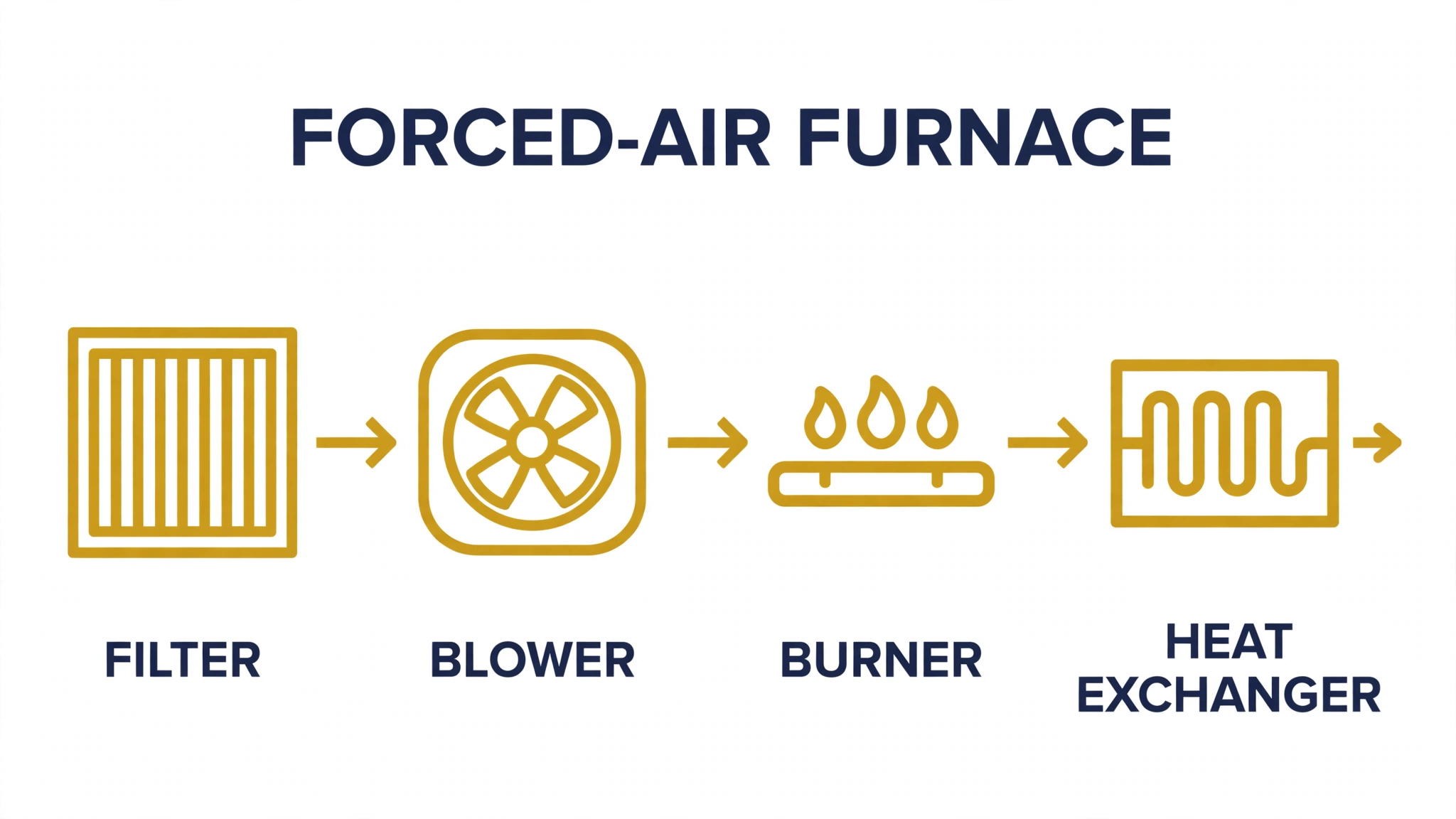
Furnace maintenance is the set of cleaning, inspection, and testing tasks that keep a forced-air furnace heating a home safely and well, and it covers the filter, burners, heat exchanger, blower, thermostat, and vents, while homeowners handle the filter, the vents, and the detectors, and a licensed technician handles combustion, gas, and electrical checks once a year.
A furnace is a heating appliance that warms air and moves that warm air through ducts to every room. Most homes in North America use a forced-air gas furnace, and the blower fan pushes heated air through supply registers while return grilles pull cool air back for reheating. Each part in that loop needs care. A dirty filter chokes airflow and strains the blower motor. Dirty burners burn fuel poorly. A cracked heat exchanger can leak combustion gases into the home. A weak blower leaves rooms cold.
Furnace maintenance has 2 lanes. The homeowner lane runs monthly and seasonally, and it needs no special tools. The professional lane runs once a year, and it needs gauges, analyzers, and training. Both lanes serve one goal: heat that starts on the first cold day, runs at full strength, and shuts off safely. A furnace that gets both lanes wastes less fuel, and the U.S. Department of Energy reports that replacing a dirty, clogged filter alone can lower a furnace energy use by 5 to 15 percent (Source: U.S. Department of Energy, 2026).
How Often Should Furnace Maintenance Be Done?
Furnace maintenance follows a yearly rhythm: check the filter every month during heating season, replace it every 1 to 3 months, test the thermostat and carbon monoxide detectors each fall, and book a professional tune-up once a year in early fall. Oil furnaces need the same yearly visit, and heat pumps need two visits a year because they heat and cool.
The best booking window is September through early October, before technicians fill their winter schedules. A tune-up booked in that window catches worn parts while the weather is still mild, and a part ordered in October arrives before the first hard freeze. A tune-up booked after heating season starts still has value, and a mid-season visit still catches safety faults and worn parts before they cause a no-heat call.
| Task | How often | Who handles it |
|---|---|---|
| Check the air filter | Monthly in heating season | Homeowner |
| Replace the air filter | Every 1 to 3 months | Homeowner |
| Clear vents and registers | Monthly | Homeowner |
| Test the thermostat | Each fall | Homeowner |
| Test carbon monoxide detectors | Monthly | Homeowner |
| Clear the furnace area | Each fall | Homeowner |
| Flush the condensate drain | Each fall | Homeowner |
| Professional furnace tune-up | Once a year, in early fall | Licensed technician |
| Heat exchanger and combustion check | Once a year, in early fall | Licensed technician |
Our home improvement guides cover the same habit of small, regular checks that stop big repairs. The schedule above turns furnace care into a routine that takes about 10 minutes a month plus one yearly visit.
What Does a Furnace Maintenance Checklist Include?
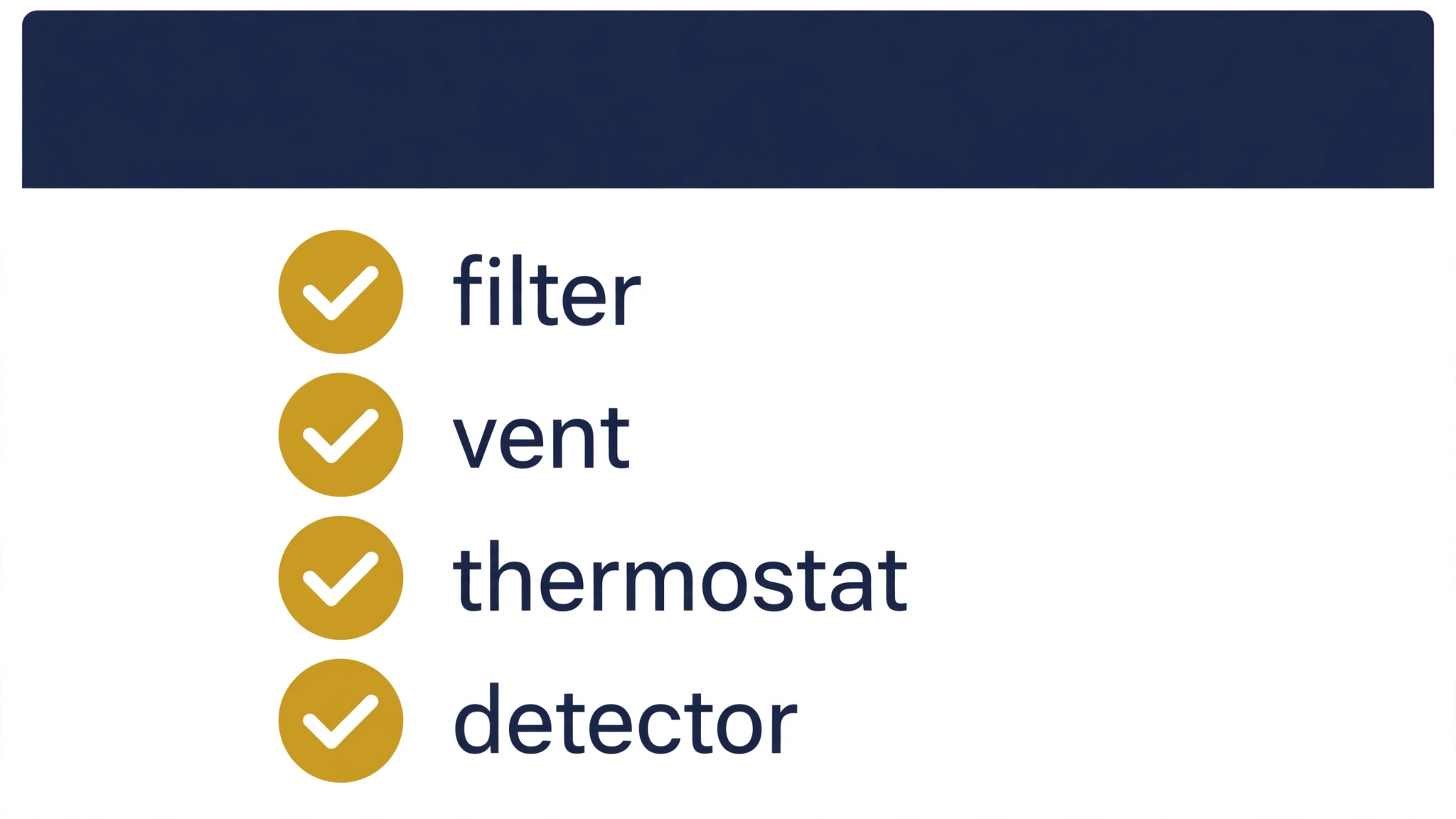
A furnace maintenance checklist includes filter checks, vent and register clearing, thermostat testing, carbon monoxide detector testing, burner flame checks, and an annual professional tune-up that covers the heat exchanger, gas pressure, combustion, and electrical parts, and the list splits into homeowner jobs and technician jobs.
The split keeps gas and combustion work with licensed pros.
The homeowner half of the list needs no tools beyond a vacuum and a flashlight. Check the filter each month and hold it up to a light: a filter that blocks the light needs a new one. Walk the rooms and lift rugs and furniture off supply registers, then vacuum the return grilles. Raise the thermostat a few degrees and confirm the furnace starts and stops as it should. Press the test button on each carbon monoxide detector and swap the batteries each fall. Look at the burner flame through the sight glass: a steady blue flame shows a healthy burn, and a yellow or flickering flame calls for a shutdown and a technician visit.
The technician half covers the parts a homeowner must not touch. The technician inspects the heat exchanger for cracks, measures gas pressure, tests combustion with an analyzer, checks electrical connections and motor voltage, cleans the burners and flame sensor, tests the ignition system, and checks the venting and draft. ENERGY STAR recommends a pre-season heating check-up that covers the gas connections, gas pressure, burner combustion, and heat exchanger (Source: ENERGY STAR, 2026).
How Do You Change a Furnace Filter?
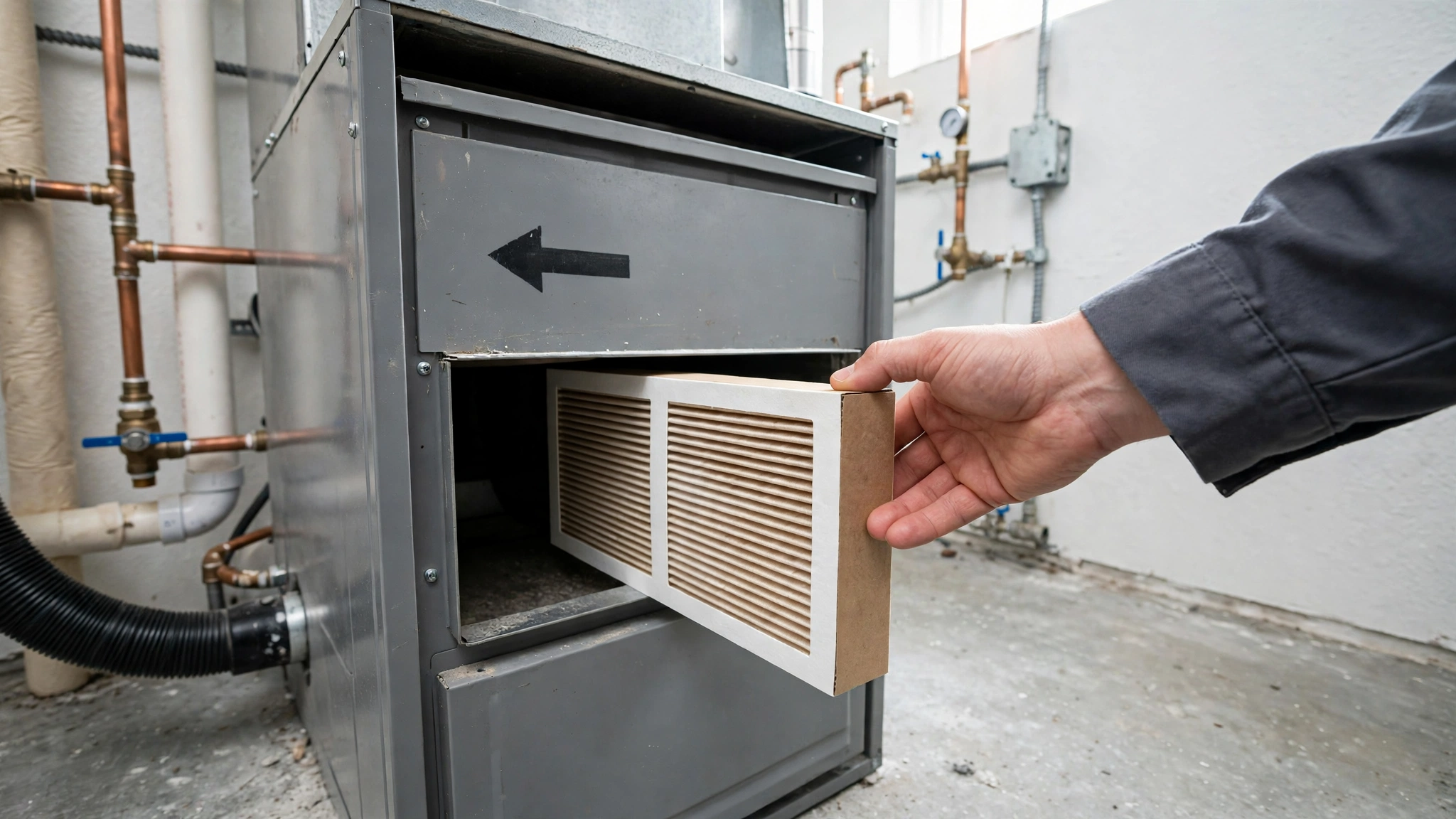
To change a furnace filter, turn off the furnace, slide out the old filter, note the size printed on its frame, slide in the new filter with the airflow arrow pointing toward the blower, and turn the furnace back on. The job takes about 5 minutes, and writing the date on the new filter frame tracks the next change.
Follow these 6 steps in order:
- Turn off the furnace at the thermostat and the power switch.
- Find the filter slot at the furnace cabinet or in the return duct.
- Slide out the old filter and read the size printed on its frame.
- Match the new filter size exactly, and check the MERV rating in the furnace manual.
- Slide the new filter in with the airflow arrow pointing toward the blower.
- Turn the power back on and set the thermostat to heat.
Filter size comes from the frame, not from a guess. A 1 inch filter needs a change every 1 to 3 months, and a 4 to 5 inch media filter lasts 3 to 12 months. Homes with pets, smokers, or allergy sufferers change filters at the short end of each range. In my own home, writing the change date on the filter frame with a marker ended the guessing about when the last change happened, and the filter now gets changed on time every month. Never run a furnace with no filter in place, since dust then coats the blower and the heat exchanger directly.
What Does a Professional Furnace Tune-Up Include?
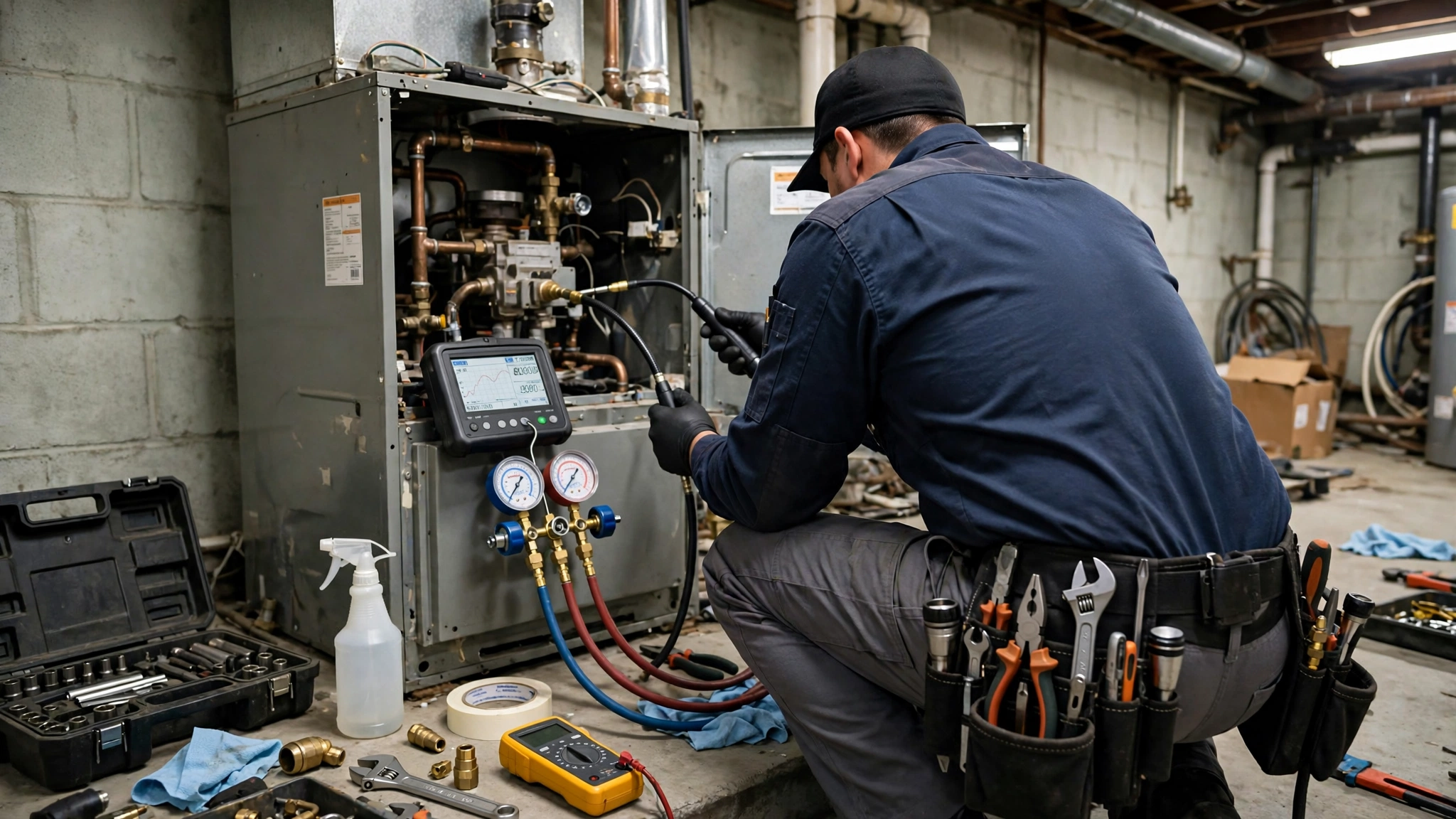
A professional furnace tune-up includes thermostat calibration, electrical connection checks, blower and motor inspection, burner and flame sensor cleaning, heat exchanger inspection, gas pressure and combustion testing, and a carbon monoxide safety test, and the visit takes 60 to 90 minutes with a written report of the readings at the end (Source: Bryant, 2026).
The visit starts with the thermostat and the controls. The technician checks the thermostat settings, tests the heating call, and confirms the furnace starts and stops in the right order. Then the technician opens the cabinet and checks the electrical connections, measures motor voltage and current, and inspects the blower wheel and belt for wear. Moving parts that need oil get oil, and sealed motors get no oil.
The safety sequence comes next. The technician cleans the burners and the flame sensor, tests the ignition system, inspects the heat exchanger with a mirror or camera, measures gas pressure with a manometer, and runs a combustion analysis that reads carbon monoxide and oxygen levels in the flue gas. The visit ends with a carbon monoxide test in the home air and a note of any parts that need a follow-up. A tune-up that skips the heat exchanger inspection or the carbon monoxide test is not a full tune-up, and a homeowner should ask for both by name when booking.
Keep every home appliance on the same kind of schedule: read our washing machine maintenance guide for a matching routine.
How Much Does Furnace Maintenance Cost?
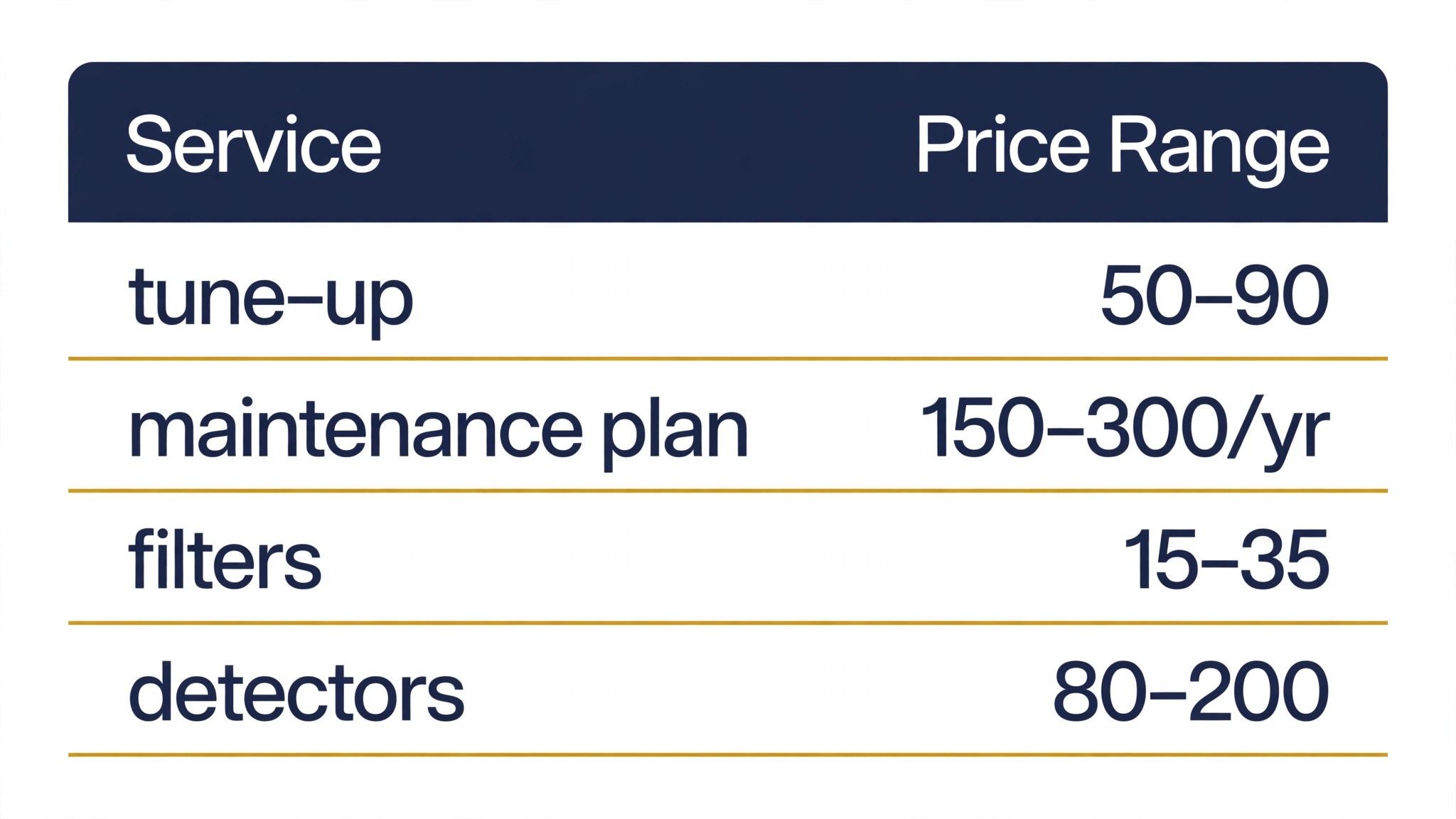
A professional furnace tune-up costs $70 to $200 for a standard visit, while annual maintenance plans cost $150 to $300 a year and oil furnace service costs $150 to $300 per visit (Source: Carrier, 2026; Amazing Flash, 2026), and filters cost $5 to $30 each, so the full yearly cost of furnace maintenance stays under $300 for most homes.
| Service | Typical cost | What it covers |
|---|---|---|
| Standard furnace tune-up | $70 to $200 | One visit, full inspection, cleaning, and testing |
| Furnace inspection only | $50 to $100 | Inspection with no cleaning |
| Annual maintenance plan | $150 to $300 per year | 1 to 2 visits, priority service, parts discount |
| Oil furnace service | $150 to $300 per visit | Burner, nozzle, oil filter, and soot cleaning |
| Replacement filters | $5 to $30 each | 4 to 6 filters a year for most homes |
| Carbon monoxide detector | $25 to $50 each | One per level, replaced every 7 to 10 years |
Price moves with fuel type, system age, and local labor rates, so a homeowner should get a written quote before the visit. A maintenance plan pays off when it covers two visits a year and a parts discount of 10 to 15 percent, and a plan that covers one visit only is often dearer than a single tune-up. The cost of a skipped tune-up shows up later as a repair bill: common furnace repairs run $150 to $600, and a cracked heat exchanger can cost more than the furnace is worth (Source: Wally Falke’s Heating and Air, 2026).
Gas vs Electric vs Oil Furnace Maintenance
Gas furnace maintenance centers on burners, gas pressure, and the heat exchanger, electric furnace maintenance centers on heating elements and electrical parts, and oil furnace maintenance centers on the burner nozzle, oil filter, and soot cleaning, so oil furnaces need the most hands-on yearly service. All three types need a yearly professional visit and monthly filter checks.
| Care point | Gas furnace | Electric furnace | Oil furnace |
|---|---|---|---|
| Main yearly focus | Burners, gas pressure, heat exchanger | Heating elements, sequencer, wiring | Burner nozzle, oil filter, soot |
| Combustion test | Yes, every year | No combustion | Yes, every year |
| Carbon monoxide risk | Yes, from cracked heat exchanger | No fuel combustion | Yes, from soot and venting |
| Filter schedule | Monthly check, 1 to 3 month change | Monthly check, 1 to 3 month change | Monthly check, 1 to 3 month change |
| Extra yearly job | Flame sensor cleaning | Element and contactor check | Nozzle change and tank check |
| Tune-up cost | $70 to $200 | $70 to $200 | $150 to $300 |
High-efficiency condensing gas furnaces add two jobs: the condensate drain and trap need a flush each fall, and the PVC intake and exhaust pipes need a check for snow, nests, and blockage. These furnaces reach 90 to 98 percent AFUE (Annual Fuel Utilization Efficiency), which is the share of fuel turned into heat, and that rating holds only when the secondary heat exchanger and the drain stay clean (Source: Wikipedia, 2026). The types of home furnaces page explains the four designs, natural draft, forced-air, forced draft, and condensing, and how each one moves heat through a home.
What Are the Signs Your Furnace Needs Maintenance Now?
Your furnace needs maintenance now when it makes banging, squealing, or rattling sounds, heats rooms unevenly, cycles on and off in short bursts, blows weak or cold air, raises the heating bill without a cold snap, or shows a yellow burner flame. Any one of these signs calls for a filter check first and a technician call if the sign stays.
Sounds tell the story first. A banging sound at startup often means delayed ignition, and gas has built up before the burners lit. A squealing sound often means a worn blower belt or a dry motor bearing. A rattling sound often means a loose panel or a cracked duct joint. Short cycling, where the furnace starts and stops every few minutes, often means a clogged filter, a dirty flame sensor, or a thermostat fault, and the filter is the first check because it costs nothing.
Uneven heat and weak airflow point to the same causes. Closed or blocked registers starve some rooms, and a dirty filter starves the whole system. A heating bill that climbs while the weather stays mild points to a furnace that runs longer to hit the same temperature, and that pattern often means dirty burners or a failing blower. A yellow burner flame is the one sign that needs a shutdown at once: yellow means incomplete combustion, and incomplete combustion makes carbon monoxide.
How Do You Stay Safe During Furnace Maintenance?
You stay safe during furnace maintenance by turning off power and gas before any hands-on work, never touching the gas valve or heat exchanger, keeping flammable items away from the furnace, and testing carbon monoxide detectors monthly with one detector on every level of the home. Carbon monoxide is colorless and odorless, so detectors are the only warning.
The safety line is clear. Homeowners may change the filter, clear vents, test the thermostat, flush the condensate drain, and clean the flame sensor with the power off. Homeowners must not clean or adjust burners, open a gas valve, change gas pressure, bypass a safety switch, probe live terminals, repair venting, or inspect a heat exchanger with improvised tools. Those jobs need a license, a manometer, and a combustion analyzer.
Carbon monoxide detectors need the same routine as the filter. The U.S. Consumer Product Safety Commission recommends carbon monoxide alarms on every level of the home and outside sleeping areas, with monthly testing and a battery change each year (Source: U.S. Consumer Product Safety Commission, 2026). More than 500 Americans die each year from unintentional carbon monoxide poisoning, and most cases trace back to faulty fuel-burning equipment in the home (Source: CDC, cited 2026). Carbon monoxide poisoning starts with flu-like signs, headache, dizziness, weakness, and confusion, and a detector that sounds at night is a call to leave the home and phone emergency services from outside.
Conclusion
Furnace maintenance is a small routine with a large payoff. Furnace maintenance keeps a furnace heating safely for 15 to 20 years, and it asks only for a monthly filter check, a filter change every 1 to 3 months, a fall thermostat and detector test, and one professional tune-up a year. The schedule in this guide turns those jobs into a habit that takes about 10 minutes a month. Gas, electric, and oil furnaces differ in detail, but the rules stay the same: keep the filter clean, keep the vents open, test the detectors, and let a licensed technician handle gas, combustion, and the heat exchanger. For more home care guides like this one, visit Voice of Wave.
Keep your home running well: explore the latest home care guides on the Voice of Wave blog for more simple routines that protect your heating system.
Frequently Asked Questions
How often should furnace maintenance be done?
You should book a professional furnace tune-up once a year in early fall, check the filter every month during heating season, replace the filter every 1 to 3 months, and test the thermostat and carbon monoxide detectors each fall. Heat pumps need two visits a year because they heat and cool.
How much does furnace maintenance cost?
A standard furnace tune-up costs $70 to $200, an annual maintenance plan costs $150 to $300 a year, and oil furnace service costs $150 to $300 per visit. Filters add $5 to $30 each, so the full yearly cost stays under $300 for most homes.
Can I do furnace maintenance myself?
Yes, you can change the filter, clear vents and registers, test the thermostat, test carbon monoxide detectors, and flush the condensate drain yourself. Leave gas, combustion, burner, and heat exchanger work to a licensed technician, since those jobs need gauges and training.
What happens if you skip furnace maintenance?
Skipping furnace maintenance raises heating bills, wears parts faster, voids many manufacturer warranties, and raises the risk of a mid-winter breakdown or a carbon monoxide leak from a cracked heat exchanger. A dirty filter alone can raise energy use by 5 to 15 percent.
How long does a furnace tune-up take?
A standard furnace tune-up takes 60 to 90 minutes, and a visit with repairs or a dirty oil burner can take up to 2 hours. The technician should leave a written report of the readings and any parts that need a follow-up.
When is the best time to schedule furnace maintenance?
The best time to schedule furnace maintenance is early fall, in September or October, before heating season starts and before technicians fill their winter schedules. A tune-up booked in that window catches worn parts while the weather is still mild.