
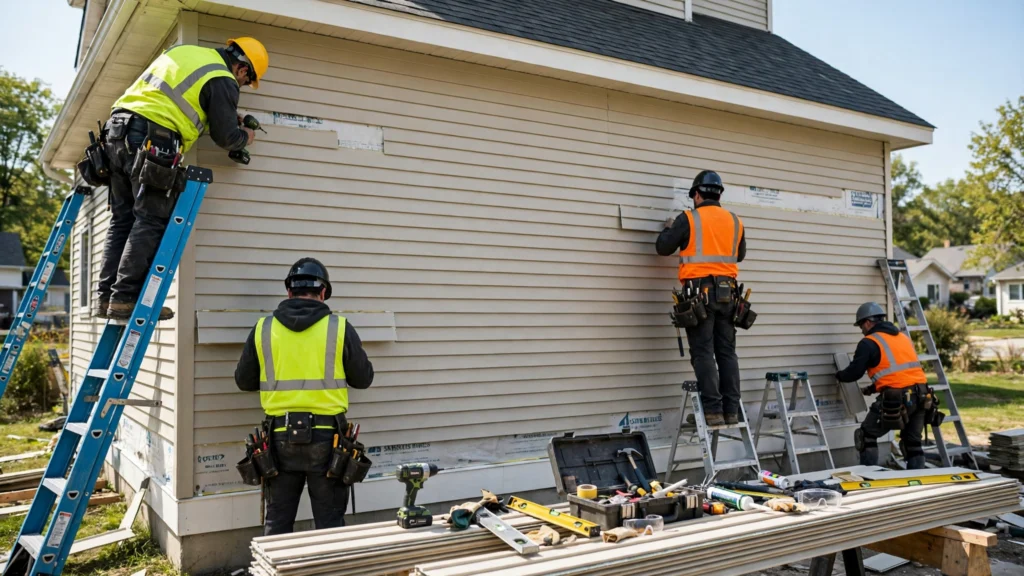
Siding installation is the process of fastening cladding panels to the walls of a house. Installers first fit a weather barrier and trim, then hang panels from the bottom up so each row sheds water over the row below. A home takes 1 to 2 weeks, and the wall shields the frame from rain, wind, sun and pests for decades.
Siding installation suits a full exterior renewal, a storm repair, and a resale refresh. The main parts are the weather barrier, starter strip, corner posts, J-channel trim, panels, and fasteners. The main steps are wall prep, barrier and flashing, trim, panel hanging, and final checks. Costs run $3 to $12 per square foot for vinyl and up to $30 per square foot for premium materials (Source: Angi, 2026). This guide covers material choice, cost, tools, the full step order, permits, and care.
Key Takeaways
- Siding installation hangs panels loose on the wall so they can expand and contract with temperature change.
- Vinyl costs $3 to $12 per square foot installed, and a full replacement averages $11,500 in the United States in 2026 (Source: Angi, 2026).
- A typical home takes 1 to 2 weeks, with tear-off taking 1 to 5 days and panel work taking 5 to 14 days (Source: Angi, 2026).
- The weather barrier and flashing matter more than the panel color, because water entry starts at joints and openings.
- Check permit rules before work starts, and keep a written punch list for the final inspection.
Table of Contents
- What Is Siding Installation?
- What Are the Main Types of Siding?
- How Much Does Siding Installation Cost in 2026?
- How Long Does Siding Installation Take?
- What Tools and Materials Do You Need for Siding Installation?
- How to Install Siding Step by Step
- Vinyl vs Fiber Cement vs Wood: Which Siding Fits Your Home?
- Should You DIY Siding Installation or Hire a Contractor?
- Do You Need a Permit for Siding Installation?
- What Mistakes Should You Avoid During Siding Installation?
- How Do You Maintain New Siding?
- Conclusion
- FAQs
What Is Siding Installation?
Siding installation is the process of fastening cladding panels to the exterior walls of a house, over a weather barrier, so rain runs down and off the wall face instead of into the frame. Siding installation covers the wall frame with overlapping pieces that shed water, block wind, and cut heat loss. Each piece is smaller than the wall it covers, which lets the material expand and contract with moisture and temperature change.
Siding is also called wall cladding because it covers the wall face and forms the first line of defense with the roof. The wall system has 4 layers: sheathing, weather barrier, an air gap on some builds, and the cladding panels. The weather barrier is a breathable wrap or rigid foam board that stops liquid water while letting vapor escape, and flashing steers water away from joints, window heads, and door heads.
Siding installation works by gravity and overlap. Panels start at the bottom and build upward, so each upper panel overlaps the panel below it. Joints between panel ends need a small gap for movement, and nails sit in the center of slotted holes with the head left slightly proud, so the panel hangs instead of being pinned tight. For more projects in the same category, browse the Home Improvement guides on this site.
What Are the Main Types of Siding?
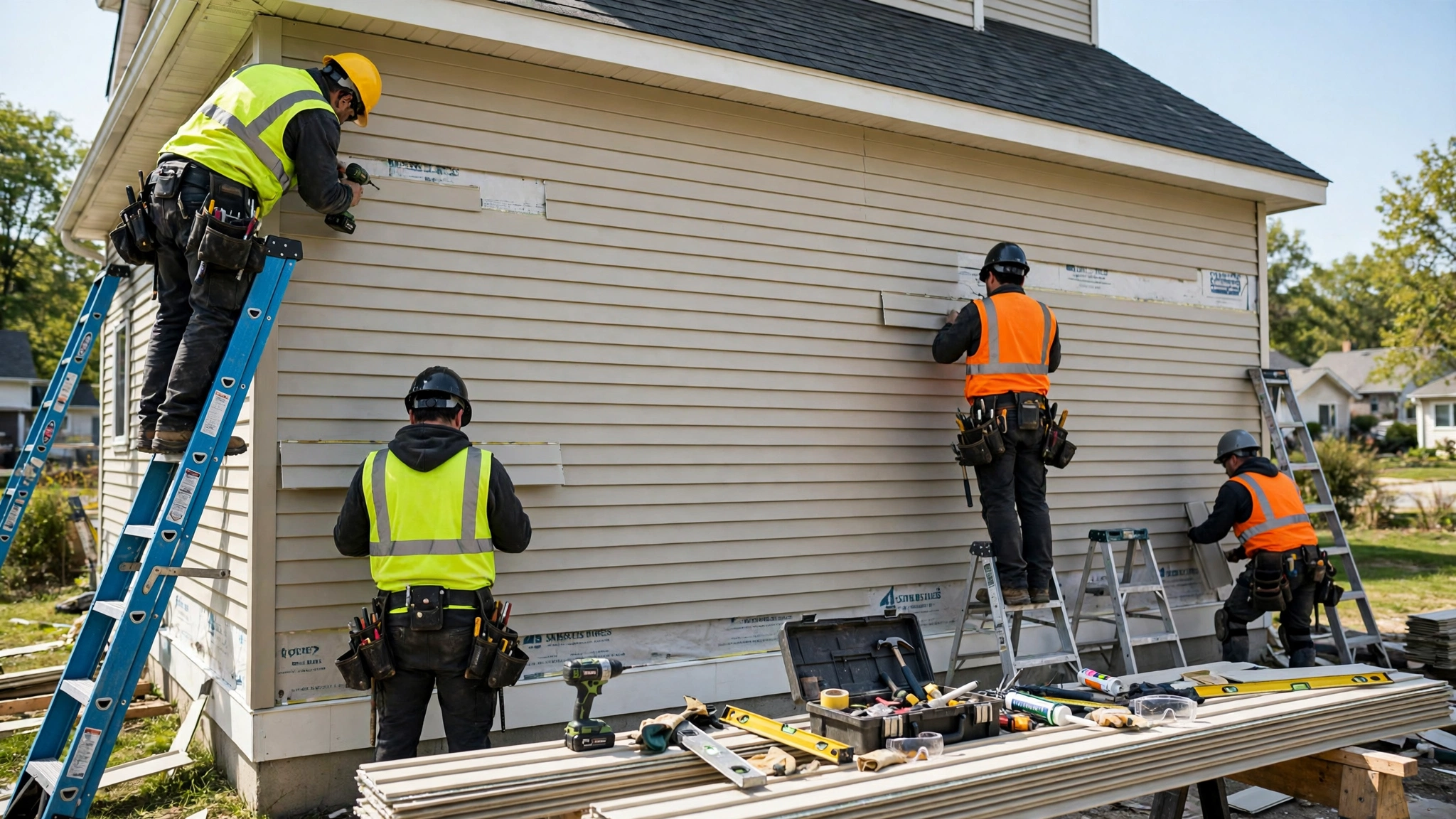
The main types of siding are vinyl, fiber cement, wood, metal, engineered wood, and masonry veneer, and the right pick depends on budget, climate, and upkeep tolerance. Vinyl leads the market: it is the most commonly installed exterior cladding for residential construction in the United States and Canada (Source: Wikipedia, Vinyl siding). Fiber cement suits buyers who want a wood look with fire resistance and low upkeep. Wood suits historic homes and owners who accept regular painting. Metal suits modern designs and coastal homes. Masonry veneer suits owners who want the longest service life and accept the highest upfront cost.
Vinyl siding is plastic exterior siding made mainly from polyvinyl chloride (PVC) resin, and it imitates wood clapboard, board and batten, or shakes. Vinyl siding entered the exterior market in the late 1950s as a replacement for aluminum siding (Source: Wikipedia, Vinyl siding). Most makers offer 50 year warranties against fading (Source: Wikipedia, Vinyl siding). Vinyl costs least upfront and needs only washing, but it can crack on impact in cold weather and warp near strong heat from a grill.
Fiber cement mixes cement, cellulose fiber, sand, and water into boards that imitate wood grain. Fiber cement resists fire, rot, and insects and holds paint for years, but the boards are heavy and produce silica dust when cut, so pro tools are needed. Wood siding includes clapboard, shingles, shakes, and board and batten. Wood takes any paint or stain color and repairs in small sections, but it needs treatment every 4 to 9 years depending on exposure (Source: Wikipedia, Siding (construction)) and faces ant and termite risk in some regions.
Metal siding uses aluminum or steel in lap, vertical, or corrugated profiles: aluminum resists salt air on coasts, while steel resists dents and hail better. Engineered wood presses wood fibers and resin into boards that cost less than solid wood and resist rot better. Masonry veneer uses thin stone or brick over the frame, with durability of over 100 years and minimal upkeep, while its main drawback is the initial cost (Source: Wikipedia, Siding (construction)).
| Material | Installed cost per square foot | Typical service life | Upkeep level |
|---|---|---|---|
| Vinyl | $3 to $12 (Source: Angi, 2026) | 20 to 40 years | Low, wash yearly |
| Fiber cement | $5 to $13 (Source: OrganizerTone, 2026) | 30 to 50 years | Low, repaint in 10 to 15 years |
| Wood | $6 to $15 (Source: OrganizerTone, 2026) | 20 to 40 years with care | High, paint or stain every 4 to 9 years |
| Metal | Mid to high range, varies by metal | 40 to 70 years | Low, wash and check finish |
| Engineered wood | Mid range | 20 to 30 years | Medium, repaint on schedule |
| Masonry veneer | High range | Over 100 years | Minimal |
How Much Does Siding Installation Cost in 2026?
Siding installation costs $11,500 on average for a full replacement in the United States in 2026, with vinyl at $3 to $12 per square foot installed and premium materials reaching $30 per square foot (Source: Angi, 2026). A typical 2,000 square foot home runs $6,370 to $18,250 for a full vinyl job, materials and labor included, with labor alone at $3.70 to $5 per square foot (Source: This Old House, 2024). The wide range comes from 5 cost drivers, and each one can move the quote by thousands of dollars.
The 5 cost drivers are wall area, material grade, tear-off and disposal, hidden repairs, and wall complexity. Wall area sets the base: crews price by the square, which equals 100 square feet. Material grade sets the next band: builder-grade vinyl costs least, thick premium vinyl costs more, and fiber cement, wood, and masonry sit above vinyl. Tear-off adds labor and dump fees when old siding comes off, and disposal fees rise with heavy materials such as fiber cement or masonry.
Hidden repairs are the largest surprise cost. Tear-off can expose rotted sheathing, wet insulation, or insect damage that needs repair before new panels go up. Wall complexity adds cost for tall walls, gables, dormers, bay windows, and many corners, because each one adds cutting time and trim. Order about 10% extra material for cuts and future repairs, and ask each quote to list labor, materials, tear-off, disposal, and repairs as separate lines.
Read our Bathroom Remodel: Complete Guide to plan interior and exterior upgrades in one schedule.
How Long Does Siding Installation Take?
Siding installation takes 1 to 2 weeks for a typical home, with tear-off taking 1 to 5 days and panel work taking 5 to 14 days (Source: Angi, 2026). Vinyl installs fastest because the panels are light and cut with a knife or snips. Fiber cement and masonry take longer because the pieces are heavy and need more cutting time. Weather sets the real pace: rain, high wind, and freezing temperatures can pause work, so crews watch the forecast before tear-off.
| Stage | Typical time |
|---|---|
| Planning, measuring, and ordering | 1 to 4 weeks |
| Permits | Days to weeks |
| Tear-off and wall repair | 1 to 5 days |
| Weather barrier and flashing | 1 to 2 days |
| Trim and panel work | 5 to 14 days |
| Final inspection and cleanup | 1 day |
What Tools and Materials Do You Need for Siding Installation?
Siding installation needs 10 tools and 8 material groups, and missing one trim piece can stall a whole wall. Gather every item before the first panel goes up, because a mid-job supply run wastes a workday and leaves the wall open to weather.
Tools:
- Tape measure and chalk line for level layout lines
- 4 foot level for starter strip and panel courses
- Circular saw with a fine-tooth blade
- Tin snips and a utility knife for vinyl trimming
- Hammer or coil nailer for fasteners
- Snap-lock punch for the top course under eaves
- Zip tool for releasing vinyl panels during repairs
- Ladder or scaffolding rated for the wall height
- Safety glasses, gloves, and a dust mask
- Caulk gun for sealing around windows and doors
Materials:
- Siding panels in the chosen profile and color
- Starter strip for the first course
- Inside and outside corner posts
- J-channel for windows, doors, and gable ends
- Undersill trim for the top course
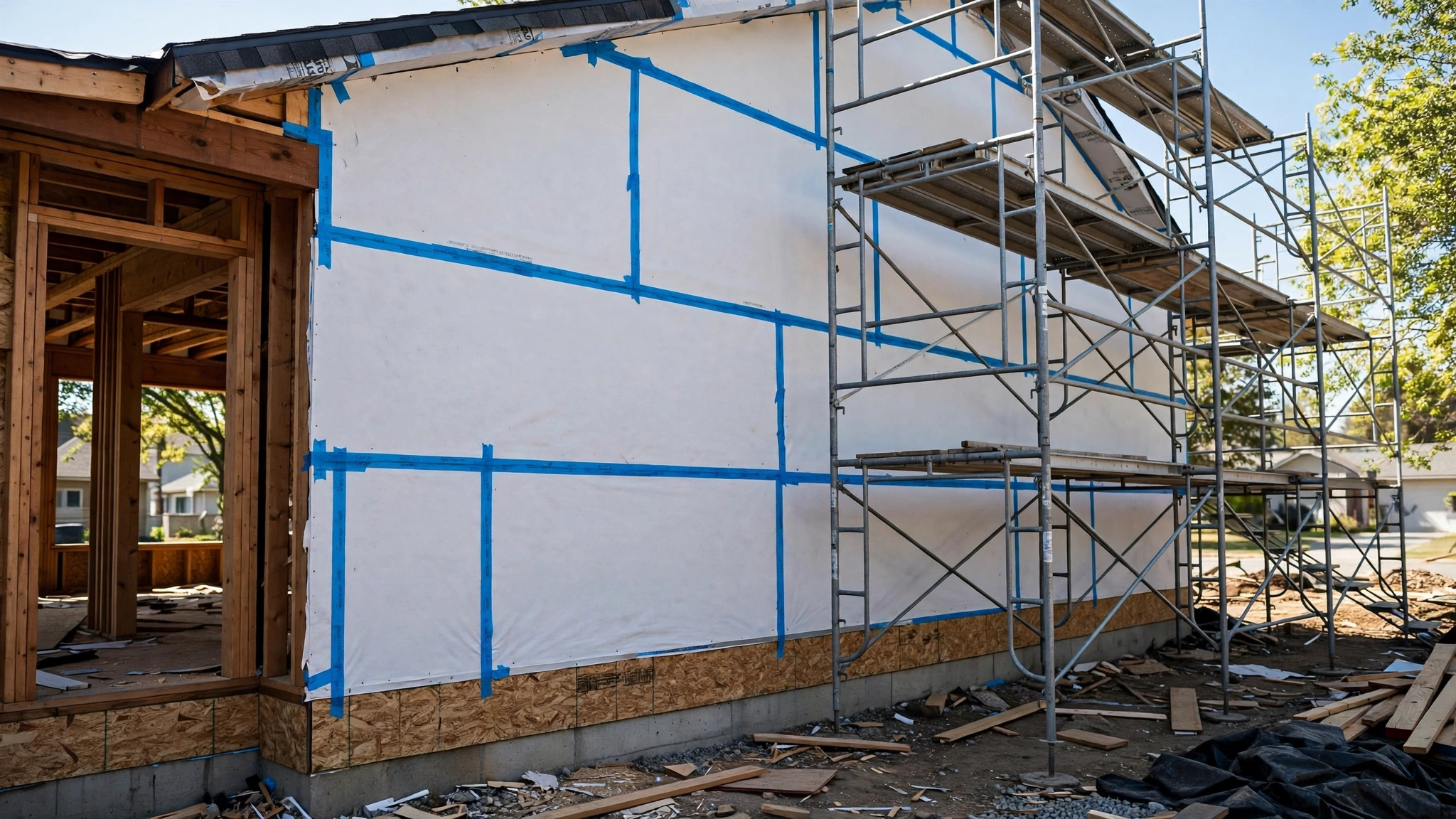
- House wrap and seam tape for the weather barrier
- Flashing tape and drip cap flashing for openings
- Galvanized or aluminum nails with wide heads
Use nails with a head diameter of about 3/8 inch so the head cannot pull through the slot. Buy trim in the same color family as the panels, because mismatched trim shows at every window and corner.
How to Install Siding Step by Step
To install siding, strip the wall, fit the weather barrier and flashing, set the trim, then hang panels from the bottom up with nails left loose for expansion. The 9 steps below cover vinyl, the most common material. Fiber cement and wood follow the same order but use different fasteners and cutting tools.
- Remove old siding, fixtures, and trim, then inspect the sheathing.
- Replace rotted sheathing and fix soft spots before covering the wall.
- Roll house wrap over the sheathing and tape every seam.
- Fit drip cap flashing above windows and doors first.
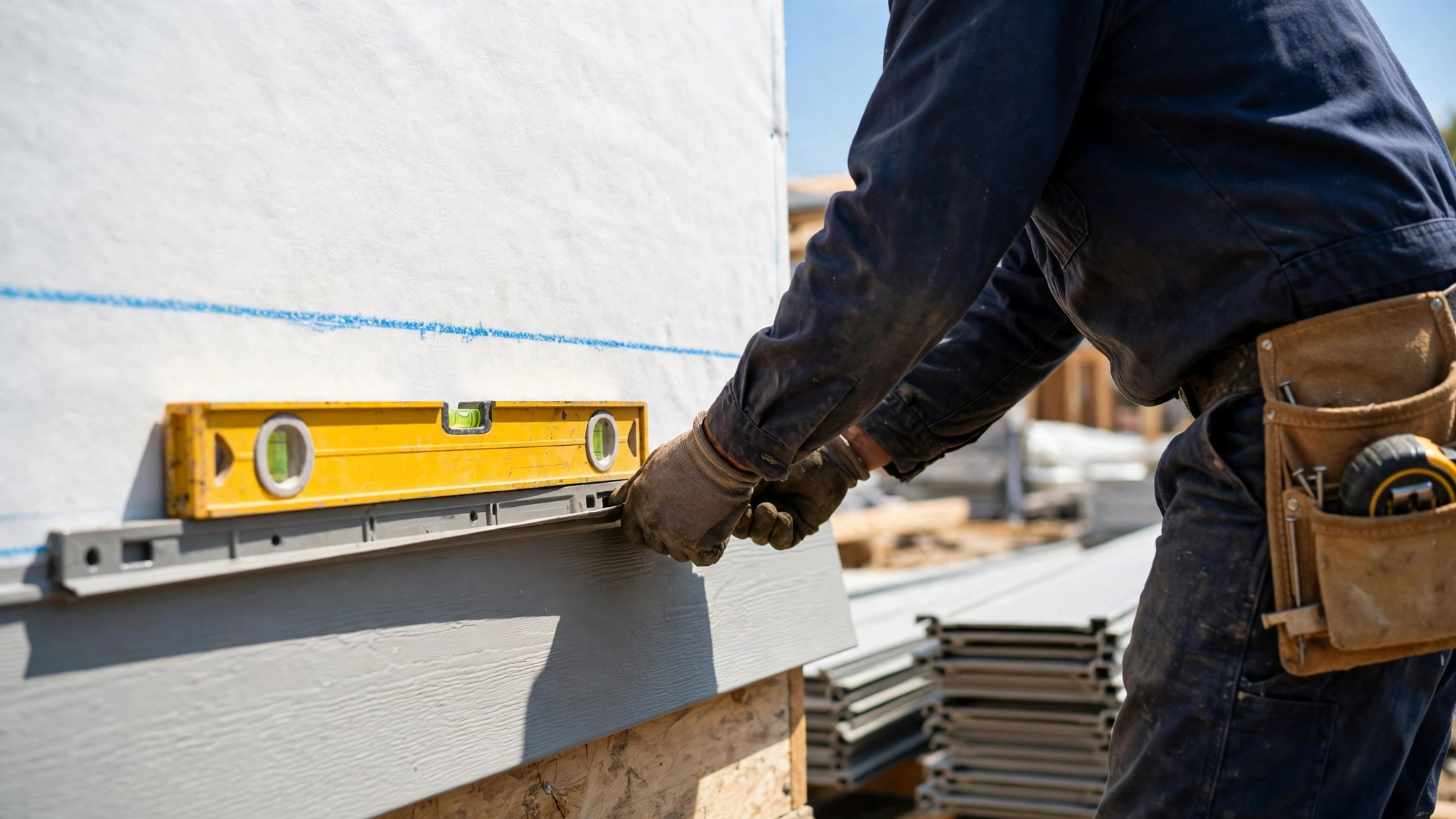
- Snap a level chalk line and nail the starter strip along it.
- Set corner posts plumb and J-channel around all openings.
- Lock the first panel into the starter strip and nail it loose.
- Hang each course upward, stagger joints, and cut panels at openings.
- Fit the top course with undersill trim and snap-lock lugs.
Start at the lowest corner and check level after the first 3 courses, because an early error grows with each row. Drive each nail into the center of the slot and into a stud, with the head left about 1/32 inch proud of the panel, about the thickness of a dime. The panel must slide a little side to side when tugged. Leave a 1/4 inch gap at corner posts and J-channel stops: a 12 foot length of vinyl can grow as much as 5/8 inch between winter and summer. Stagger panel joints by at least 4 feet from the joints in the row below, and overlap panel ends away from the main street view so seams draw less notice.
Vinyl vs Fiber Cement vs Wood: Which Siding Fits Your Home?
Vinyl fits a tight budget and low upkeep, fiber cement fits a long service life with a wood look, and wood fits a historic style where regular painting is accepted. The table below compares the 3 most common choices on the points buyers ask about first.
| Feature | Vinyl | Fiber cement | Wood |
|---|---|---|---|
| Installed cost per square foot | $3 to $12 (Source: Angi, 2026) | $5 to $13 (Source: OrganizerTone, 2026) | $6 to $15 (Source: OrganizerTone, 2026) |
| Weight and handling | Light, one person can carry a panel | Heavy, needs two people and pro cutting tools | Medium, cuts with standard saws |
| Fire behavior | PVC will not ignite until about 730 F (387 C) (Source: Wikipedia, Vinyl siding) | Non-combustible | Burns, needs fire-safe gaps in wildfire zones |
| Upkeep | Wash yearly, no paint | Repaint in 10 to 15 years | Paint or stain every 4 to 9 years |
| Look | Clean lap lines, visible seams | Sharp wood grain, deep shadow lines | Warm grain, any color |
| Best fit | Budget jobs and rentals | Long-term family homes | Historic and craftsman homes |
Climate shapes the pick. Vinyl suits mild zones but can crack on impact in deep cold and warp near reflected heat. Fiber cement suits hot, humid, and fire-prone zones because it resists rot, insects, and flame. Wood suits dry zones with low insect pressure and owners who paint on schedule. Metal suits coastal zones because aluminum resists salt air. Insulated vinyl adds a foam backing with an average R-value of 3.96, about triple the value of other exterior cladding materials (Source: Wikipedia, Siding (construction)).
Should You DIY Siding Installation or Hire a Contractor?
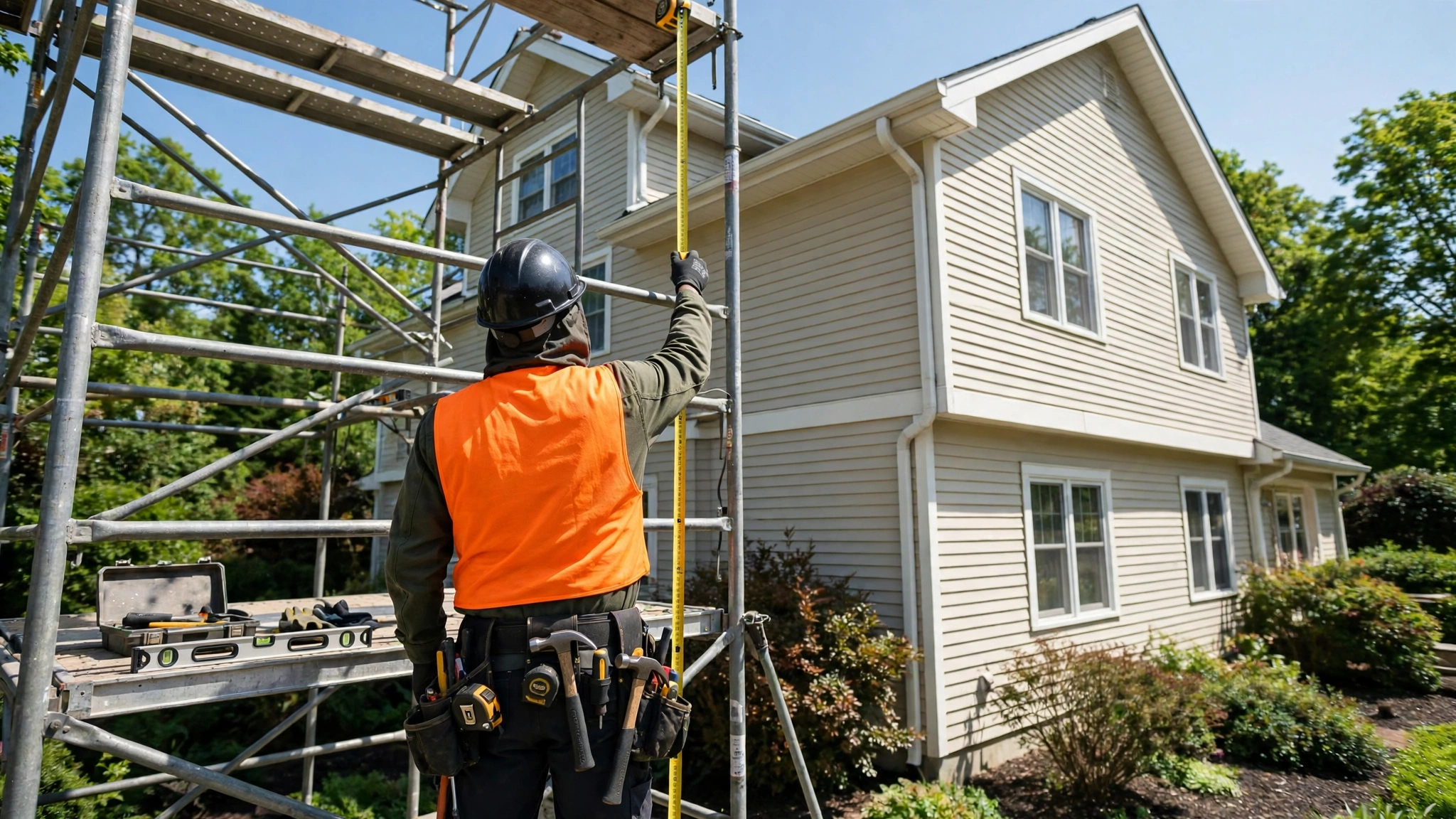
Yes, a skilled DIYer can install vinyl siding on a simple one-story home, while fiber cement, masonry, tall walls, and full tear-offs belong to a contractor. The decision rests on 4 tests: height, material, wall condition, and time. A single-story ranch with flat walls and vinyl panels is a fair DIY job. A two-story home needs scaffolding and fall protection, which changes the risk and the cost.
DIY saves labor, which runs $3.70 to $5 per square foot for vinyl (Source: This Old House, 2024), but it costs time: a first-time DIYer needs several weekends for a job a crew finishes in 1 to 2 weeks. A contractor brings a crew, scaffolding, cutting tools, and a warranty on the work, and the crew spots rotted sheathing fast because tear-off is routine work for them. On one vinyl job I watched, the installer tugged each panel after nailing to confirm it slid a little, and that quick check caught 2 tight nails on the first wall. Hire a contractor when the wall needs structural repair, when the home sits in a historic district, or when the material is fiber cement or masonry.
Check 3 items before hiring: a current license, proof of insurance, and 2 recent local jobs you can view from the street. Get 3 written quotes with labor, materials, tear-off, disposal, and repairs on separate lines. Ask who pulls the permit and who registers the product warranty, and get both answers in writing before work starts.
Do You Need a Permit for Siding Installation?
Yes, you need a permit for siding installation in many cities when the work changes the wall structure, the weather barrier, or the home footprint, while a like-for-like panel swap on the same frame often needs no permit, so check local rules first. Permit rules vary by city and county, and the building department gives the final answer for the address. Call the department with the material, the wall area, and the scope before ordering panels.
A permit is likely when the job strips siding to the sheathing, adds rigid foam insulation, changes window or door openings, or touches a historic district. A homeowners association can also require approval for color and profile changes, and that approval is separate from the city permit. Keep the permit card on site, book the inspection before the walls close, and file the signed inspection record with the warranty papers.
What Mistakes Should You Avoid During Siding Installation?
The most costly mistakes in siding installation are nailing panels tight, skipping the weather barrier, and flashing openings wrong, because each one traps water or locks panels that need to move. The 6 mistakes below cause most callbacks, and each one is easy to prevent with a check at the right step.
- Nailing vinyl tight stops expansion and causes buckling in summer heat.
- Nailing off-center in the slot lets panels bind and warp.
- Skipping house wrap lets wind-driven rain reach the sheathing.
- Fitting J-channel without a drip edge sends water behind the trim.
- Starting with an unlevel starter strip tilts every course above it.
- Caulking vinyl panel joints shut blocks the movement the panels need.
Caulk belongs where trim meets windows and doors, not between vinyl panels. Keep the bottom edge of the siding at least 6 inches above finished grade so splashback and soil do not wet the panels. Cap the lower ends of outside corner posts so insects cannot nest inside the hollow post.
How Do You Maintain New Siding?
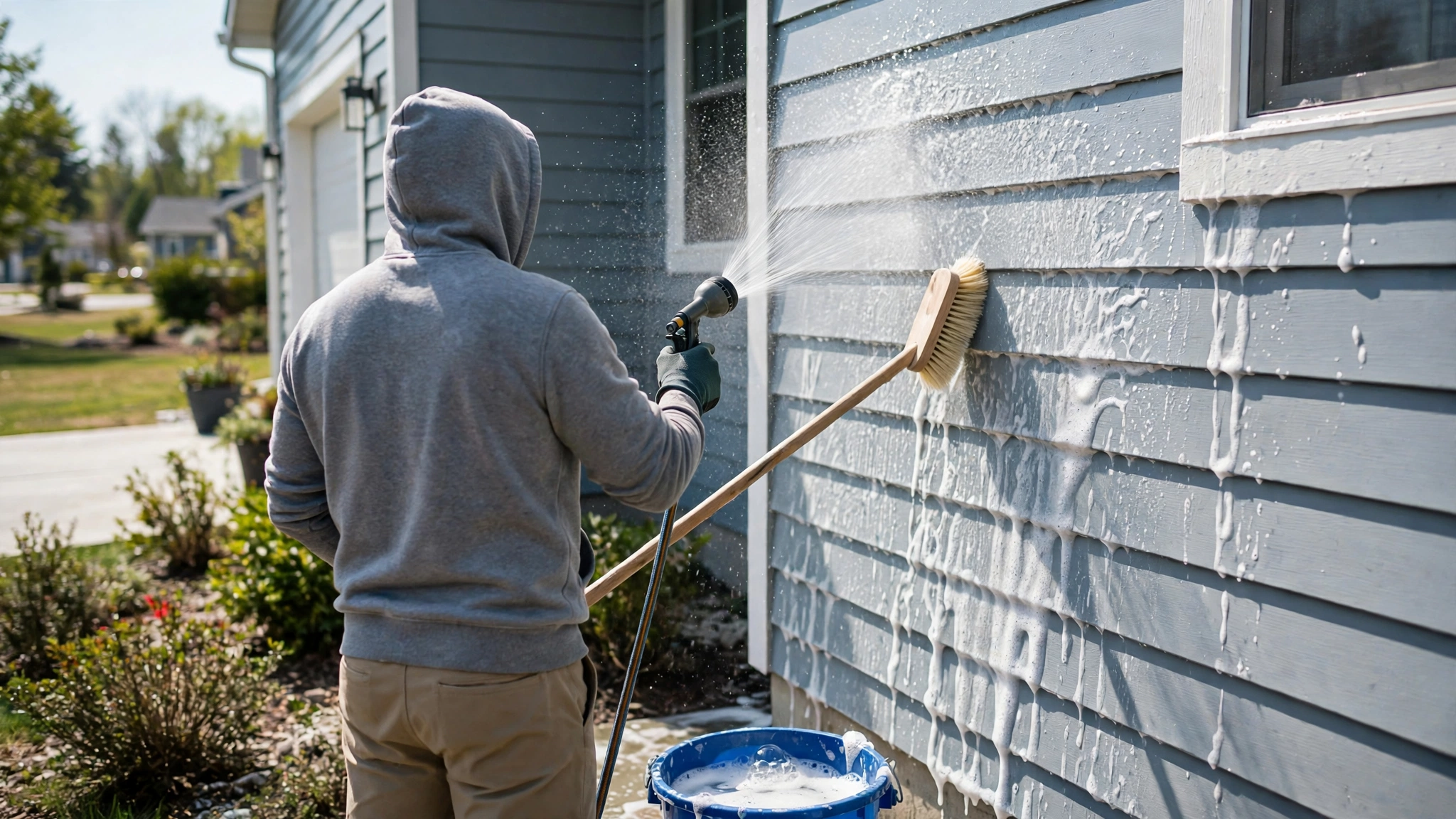
Maintain new siding with a yearly wash, a spring inspection of caulk and flashing, and paint or stain on the schedule the material needs. Wash vinyl, fiber cement, and metal with a garden hose and a soft brush, and use a mild soap mix for grime. A pressure washer can force water behind panels, so keep the nozzle at a low setting and aim downward. Inspect caulk at windows and doors each spring and replace cracked beads before rain season.
Wood needs paint or stain every 4 to 9 years depending on exposure (Source: Wikipedia, Siding (construction)). Keep grills, fire pits, and patio heaters away from vinyl walls, because vinyl is sensitive to direct heat from grills and barbecues (Source: Wikipedia, Vinyl siding). Trim shrubs back 6 inches from the wall so air moves and pests have no bridge to the panels.
Conclusion
Siding installation protects a home when the wall system works as one unit: sound sheathing, a taped weather barrier, correct flashing, level trim, and panels hung loose enough to move. Vinyl costs $3 to $12 per square foot installed, fiber cement and wood cost more and last longer with the right care, and a typical home takes 1 to 2 weeks from tear-off to final check (Source: Angi, 2026). Plan the material for the climate, check the permit rules, and inspect each wall before final payment. More home project guides appear on Voice of Wave each week.
Explore more home guides: See the latest Home Improvement articles on the Voice of Wave blog.
FAQs
How much does siding installation cost?
Siding installation costs $11,500 on average for a full replacement in the United States in 2026, with vinyl at $3 to $12 per square foot installed and premium materials reaching $30 per square foot (Source: Angi, 2026). A 2,000 square foot vinyl job runs $6,370 to $18,250 with labor included (Source: This Old House, 2024). Get 3 itemized quotes.
How long does siding installation take?
Siding installation takes 1 to 2 weeks for a typical home, with tear-off taking 1 to 5 days and panel work taking 5 to 14 days (Source: Angi, 2026). Planning and ordering add 1 to 4 weeks before work starts. Rain, wind, and freezing temperatures can pause the job.
Can I install siding myself?
Yes, a skilled DIYer can install vinyl siding on a simple one-story home, while fiber cement, masonry, tall walls, and full tear-offs belong to a contractor. Vinyl is light and cuts with basic tools. Fiber cement is heavy and needs pro cutting tools, and two-story work needs scaffolding and fall protection.
What is the best siding material?
The best siding material depends on budget, climate, and upkeep tolerance: vinyl fits a tight budget, fiber cement fits a long service life, and wood fits a historic look. Vinyl costs least and needs only washing. Fiber cement resists fire, rot, and insects. Wood takes any color but needs paint or stain every 4 to 9 years.
Do I need a permit for siding installation?
Yes, you need a permit for siding installation in many cities when the work changes the wall structure, the weather barrier, or the home footprint, while a like-for-like panel swap often needs no permit, so check local rules first. Call the local building department with the material and scope before ordering panels.
How often does siding need maintenance?
Siding needs a yearly wash and a spring inspection of caulk and flashing, while wood needs paint or stain every 4 to 9 years depending on exposure (Source: Wikipedia, Siding (construction)). Vinyl, fiber cement, and metal need only washing. Keep grills away from vinyl walls and trim shrubs back from the panels.