

Washing machine maintenance is the routine cleaning and inspection that keeps a washer cleaning clothes well and running for years. Washing machine maintenance means cleaning the drum, gasket, detergent drawer, and drain filter on a set schedule, checking hoses for wear, using the right detergent in the right amount, and leaving the door open after every wash so the drum dries fully. A washer that gets this care lasts longer, smells fresh, and uses less water and power. A washer that gets no care builds up detergent residue, mold, and limescale, and that buildup leads to odors, leaks, and early breakdowns. This guide gives a simple schedule for front load and top load machines, step by step cleaning methods, hose and filter checks, and clear signs that a repair visit is due.
Key Takeaways
- Clean the drum monthly with a hot empty cycle to clear residue and odor.
- Wipe the gasket dry after every wash and leave the door open.
- Clear the drain filter every 3 months and check hoses for wear.
- Use HE detergent in high-efficiency machines and measure each dose.
- Replace inlet hoses every 5 years, even when they look fine.
- A well-kept washer lasts 10 to 15 years.
Table of Contents
- What Is Washing Machine Maintenance?
- How Often Should You Clean Your Washing Machine?
- How Do You Clean a Front Load Washing Machine?
- How Do You Clean a Top Load Washing Machine?
- How Do You Stop Washing Machine Smells and Mold?
- When Should You Replace Washing Machine Hoses and Clean the Filter?
- Front Load vs Top Load Washing Machine Maintenance
- What Are the Signs Your Washing Machine Needs Professional Service?
- Conclusion
- Frequently Asked Questions
What Is Washing Machine Maintenance?
Washing machine maintenance is the set of small cleaning and inspection tasks that keep a washer working well, and it covers the drum, the rubber door gasket, the detergent drawer, the drain pump filter, the inlet and drain hoses, and the machine feet that keep the washer level. The drum collects detergent residue and mineral scale. The gasket traps water, lint, and hair. The drawer clogs with dried detergent. The filter catches coins, buttons, and lint. The hoses age and weaken.
A washing machine is a machine designed to launder clothing with water and detergent, and the first automatic washing machine was introduced in 1937. By 1940, 60 percent of the 25,000,000 electrically wired homes in the United States had an electric washing machine (Source: Wikipedia, 2026). The average age of a washing machine in an American home is around 13 years (Source: U.S. Census Bureau, cited 2026). Consumer Reports data puts top-loaders at about 18 years and front-loaders at about 14 years with good care (Source: Consumer Reports, cited 2026). The home improvement guides on Voice of Wave cover the same habit of small, regular checks that stop big repairs.
How Often Should You Clean Your Washing Machine?
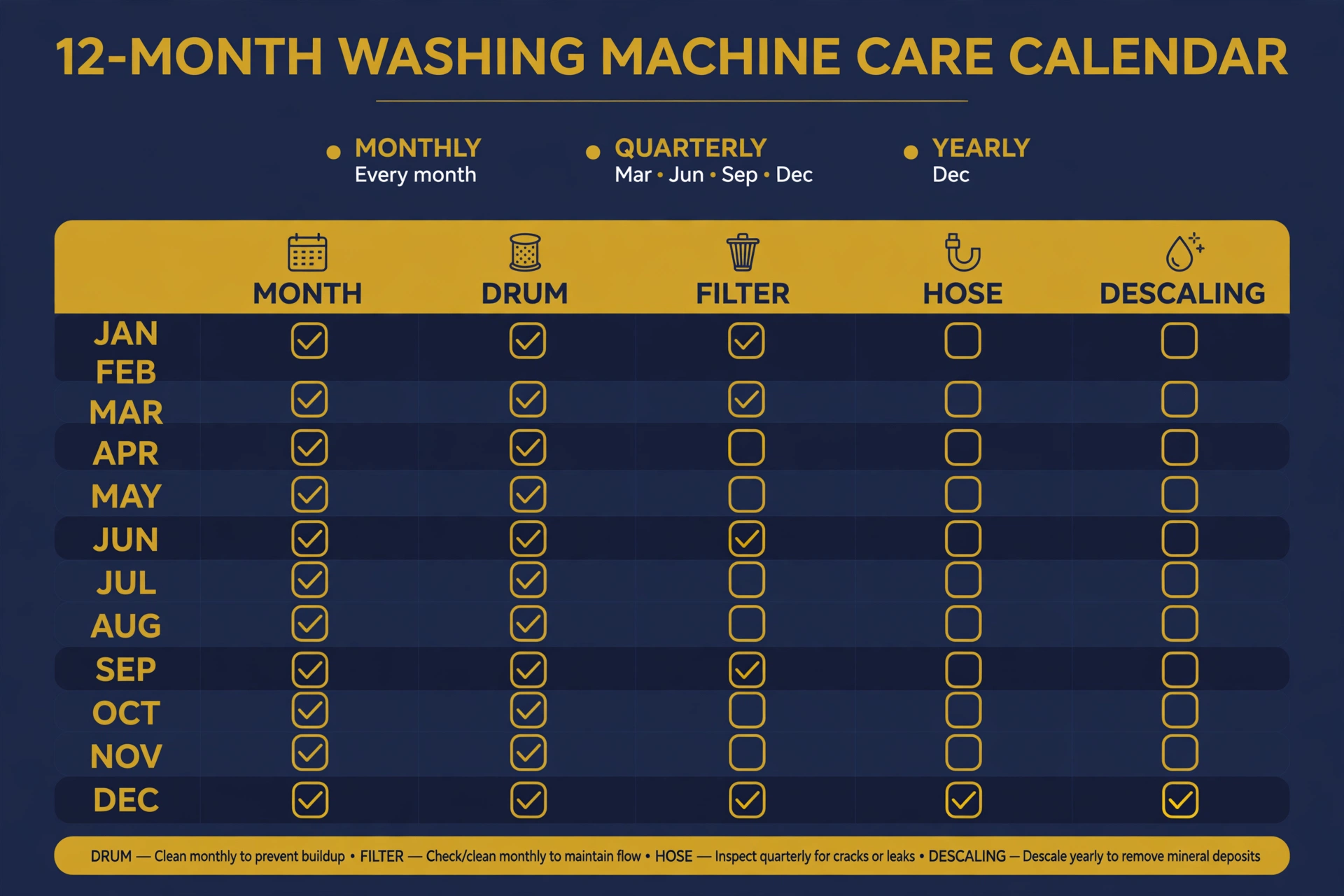
You should clean your washing machine on a fixed schedule: wipe the gasket and leave the door open after every wash, clean the detergent drawer every 2 weeks, run a hot drum clean cycle once a month, clear the drain filter every 3 months, descale every 3 months in hard water areas, and inspect hoses and leveling once a year.
| Task | How often | Time needed |
|---|---|---|
| Wipe gasket or rim dry | After every wash | 30 seconds |
| Leave door or lid open | After every wash | 30 minutes of air drying |
| Clean detergent drawer | Every 2 weeks | 5 minutes |
| Run hot drum clean cycle | Once a month | 60 to 90 minutes |
| Clear drain pump filter | Every 3 months | 10 minutes |
| Descale in hard water areas | Every 3 months | 90 minutes |
| Inspect inlet and drain hoses | Every 6 months | 5 minutes |
| Check leveling and feet | Once a year | 10 minutes |
| Professional service | Once a year after age 4 | 60 minutes |
Frequency depends on use and water. A 2024 review in the journal Antibiotics found that bacteria form biofilms on the drum, gasket, and drawer unless the machine is cleaned on a regular schedule (Source: Antibiotics, 2024).
Water hardness decides the descaling interval. Soft water needs descaling once a year, medium water every 6 months, hard water every 3 months, and very hard water every 2 months.
How Do You Clean a Front Load Washing Machine?
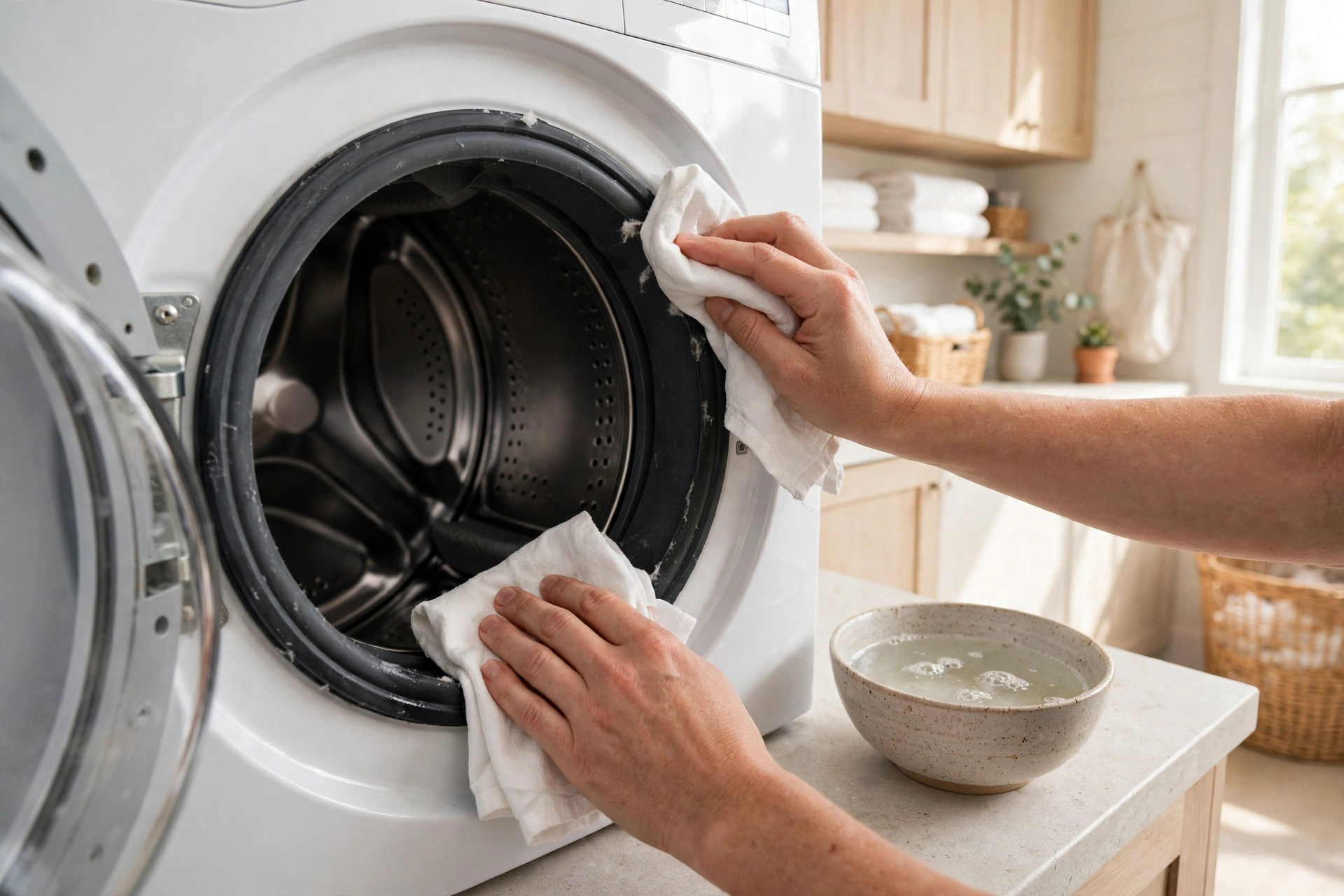
To clean a front load washing machine, wipe the rubber gasket and drum with a cloth, remove and rinse the detergent drawer, add 2 cups of white vinegar or a washer cleaner tablet to the drum, run the hottest empty cycle, wipe the drum dry, and leave the door open so the drum airs out. The full job takes about 10 minutes of hands-on work plus the cycle time.
Start with the gasket. The rubber seal around the door folds inward and traps water, lint, hair, and detergent. Pull the folds open gently and wipe inside each fold with a cloth dipped in a mix of equal parts white vinegar and water. In my own laundry room, the gasket folds held a grey film after only 3 weeks of skipped wiping, and one careful wipe with vinegar water cleared it in minutes.
Next, clean the drawer and run the drum cycle. Pull the drawer out, press the release tab, and lift it out. Rinse it under warm water and scrub the compartments with a toothbrush. Put 2 cups of white vinegar in the drum, or use a washer cleaner tablet made for the job. Run the hottest, longest cycle with no laundry inside. When the cycle ends, wipe the drum and the gasket dry and leave the door ajar for at least 30 minutes.
How Do You Clean a Top Load Washing Machine?
To clean a top load washing machine, wipe the rim, lid, and agitator or impeller, add 4 cups of white vinegar to the drum, run the hottest and longest empty cycle, pause the cycle for 1 hour so the vinegar water soaks, finish the cycle, wipe the drum dry, and leave the lid open. The full job takes about 10 minutes of hands-on work plus the soak and cycle time.
Top loaders have no door gasket, so they skip the mold trap that front loaders carry. They still collect residue around the rim, under the lid, and on the agitator or impeller plate. Wipe those parts with a cloth dipped in vinegar water.
The drum clean uses more vinegar than a front loader because a top loader holds more water. Pour 4 cups of white vinegar into the drum, select the hottest water setting and the largest load size, and start the cycle. After the drum fills and agitates for a few minutes, pause the machine and let the vinegar water sit for 1 hour. Restart the cycle and let it finish. When it ends, wipe the drum with a clean cloth and leave the lid open for a few hours.
How Do You Stop Washing Machine Smells and Mold?
You stop washing machine smells and mold by wiping the gasket dry after every wash, leaving the door or lid open so the drum dries, running a hot drum clean cycle once a month, using the right dose of HE detergent, and cleaning the detergent drawer every 2 weeks. Smells come from mold, mildew, and bacteria that grow in damp, soapy places. Dry air and hot water break that growth cycle.
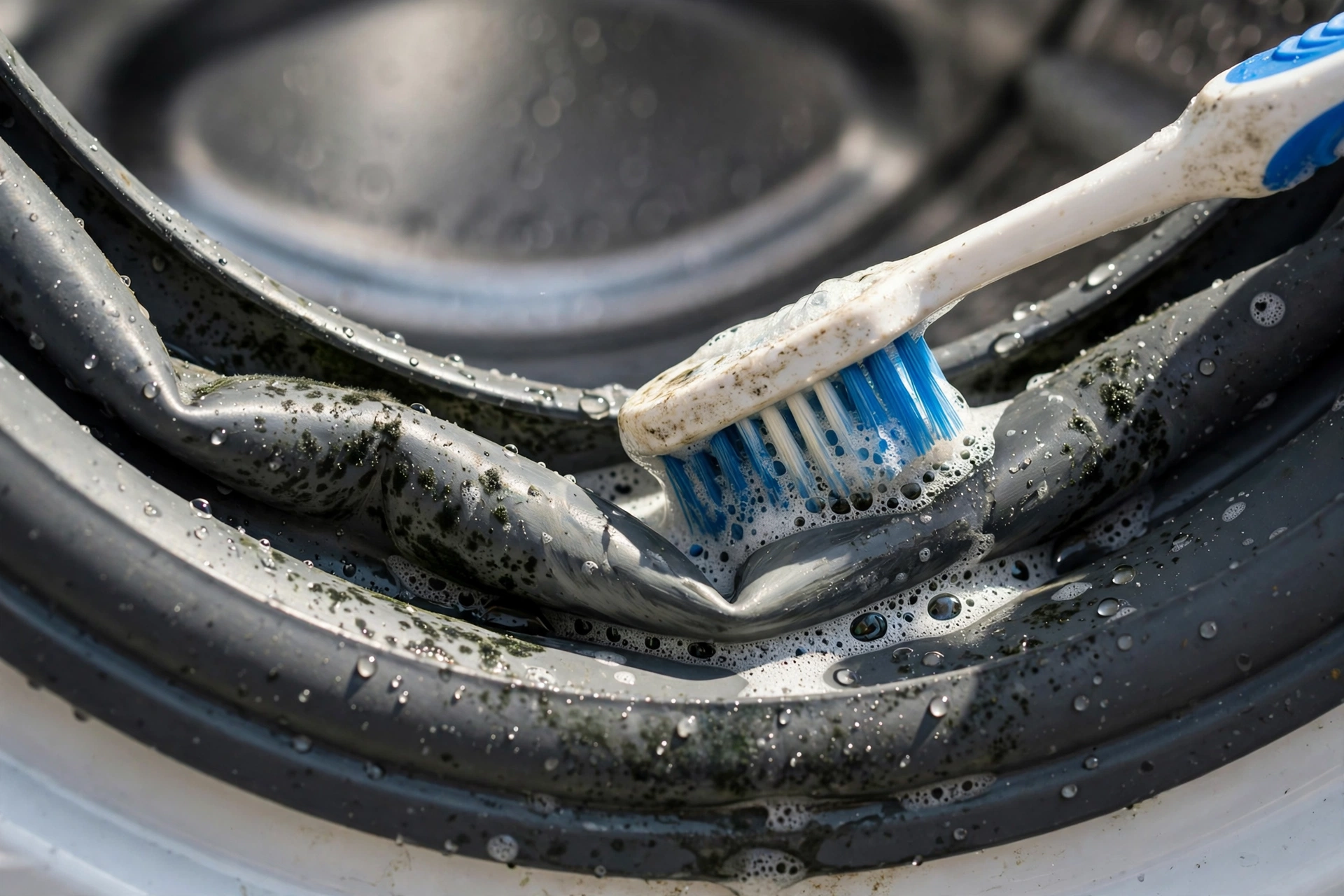
Mold grows fastest in the gasket folds of a front loader. The folds stay wet after a wash, and they stay dark when the door closes. Wiping the folds dry after every wash removes the water that mold needs. Leaving the door ajar lets air move through the drum and dries the folds between washes. A door left open for 30 minutes after each load cuts odor more than any cleaner does.
Detergent choice drives smells too. Too much detergent leaves a soapy film in the drum and hoses, and that film feeds bacteria. Fabric softener leaves a waxy coat that traps odor. When smells persist after a month of correct care, run 2 hot cleaning cycles in a row: the first with 2 cups of white vinegar in the drum, and the second with half a cup of baking soda.
Readers who maintain other laundry appliances can apply the same routine there. Read our water heater maintenance guide for a matching schedule that keeps a second hard-working home appliance in good shape.
When Should You Replace Washing Machine Hoses and Clean the Filter?
You should replace washing machine inlet hoses every 5 years, inspect them every 6 months for cracks, bulges, and leaks, and clear the drain pump filter every 3 months, because a burst hose can flood a laundry room in minutes and a clogged filter stops the machine from draining.
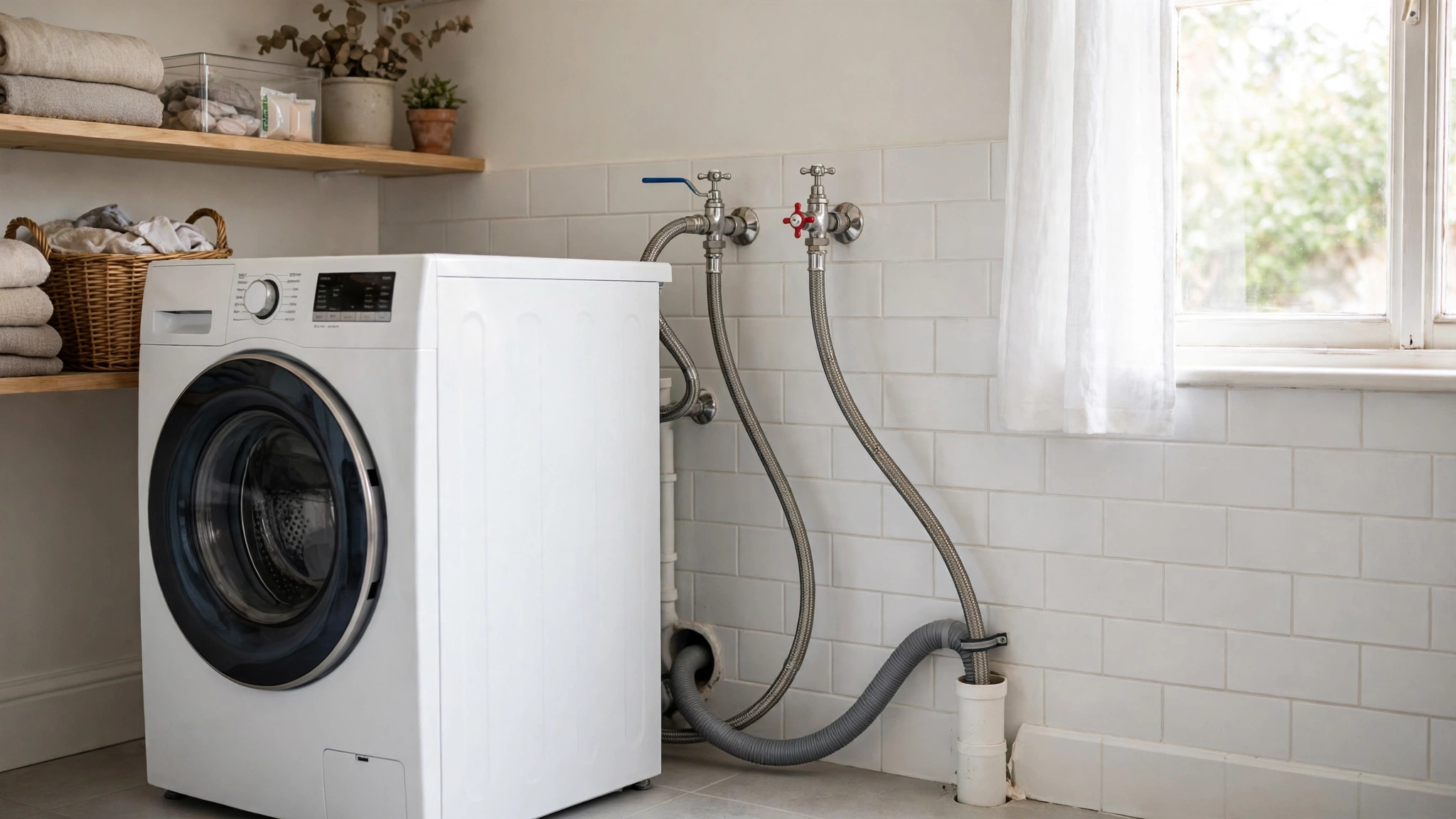
Inlet hoses carry water from the wall taps to the machine. Rubber hoses age from water pressure and heat, and they can look fine outside while the inner lining weakens. Check each hose for cracks, bulges, soft spots, rust on the fittings, and damp patches at the joints. Braided stainless steel hoses cost more than rubber hoses and resist bursting better, and they are the better choice at replacement time.
The drain hose and filter need the same care. The drain pump filter sits behind a small panel at the bottom front of most front loaders, and near the agitator or base on many top loaders. To clean it, place towels and a shallow tray under the panel, open the panel, unscrew the filter slowly, and let the trapped water drain into the tray. Rinse the filter under running water, pull out any debris, and screw it back in firmly. Do this every 3 months, and do it at once when the machine drains slowly or stops mid-cycle with water inside.
Limescale is the quiet threat to hoses, pumps, and heating elements. Limescale is a hard, chalky deposit made mainly of calcium carbonate, and it builds up inside pipes and appliances that use hot water. Descale every 3 months in hard water areas.
Front Load vs Top Load Washing Machine Maintenance
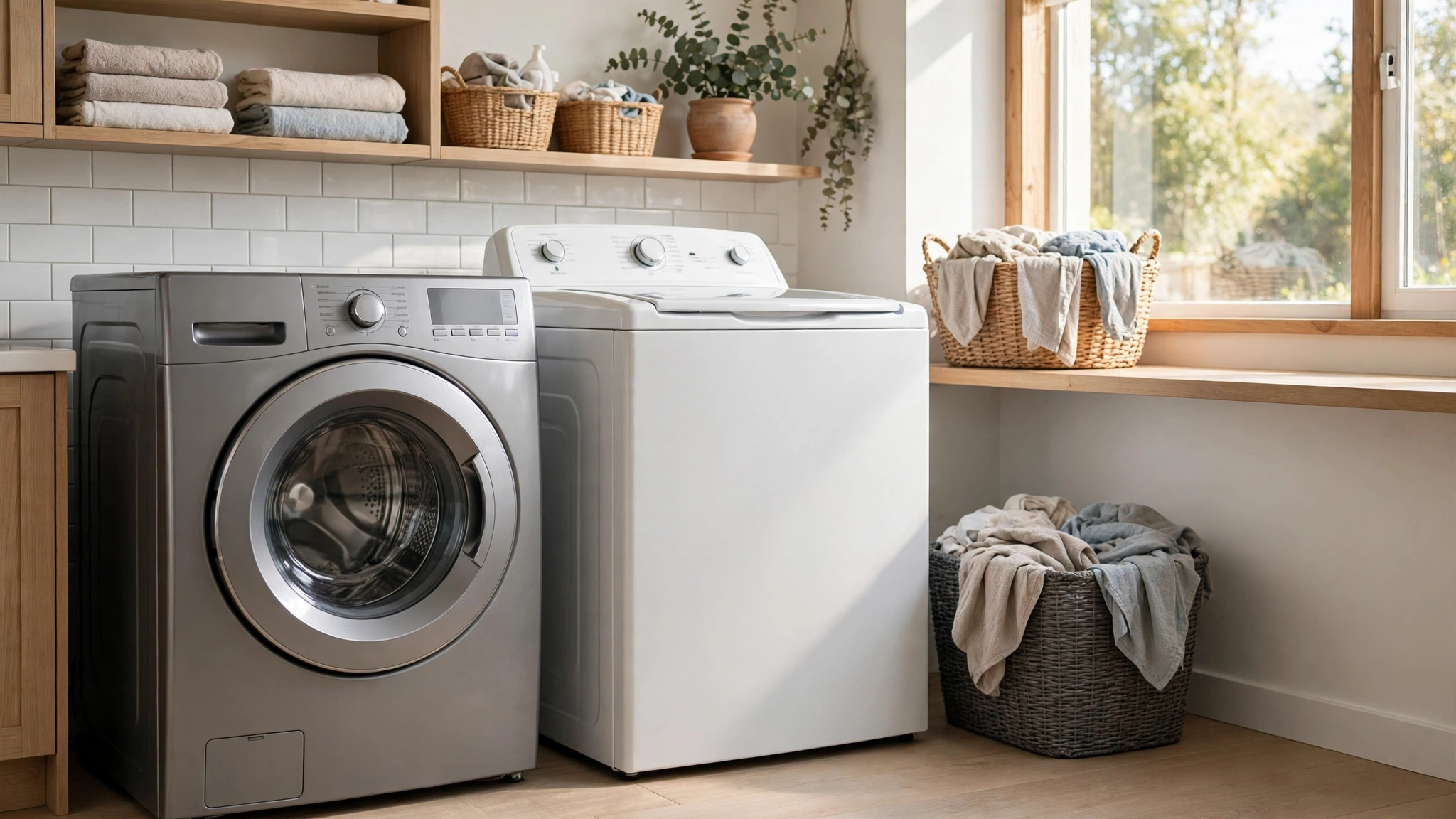
Front load washing machine maintenance needs more gasket care and monthly drum cleaning, while top load washing machine maintenance needs less seal care but the same hose, filter, and descaling routine, so front loaders take about 15 minutes more care per month than top loaders. The door seal is the main difference in care.
| Care task | Front load washer | Top load washer |
|---|---|---|
| Gasket or seal care | Wipe folds dry after every wash | No gasket to wipe |
| Drum cleaning | Hot cycle, 2 cups vinegar, monthly | Hot cycle, 4 cups vinegar, monthly |
| Detergent type | HE detergent only | Standard or HE detergent |
| Filter cleaning | Drain pump filter every 3 months | Lint or pump filter every 3 months |
| Hose replacement | Every 5 years | Every 5 years |
| Odor risk | Higher, from gasket mold | Lower, drum dries faster |
| Lifespan with care | About 14 years | About 18 years |
The gasket needs wiping after every wash, and a skipped month shows up as black spots and a stale smell. Both types share the same big rules: never overload the drum, use the right detergent in the right dose, keep the machine level, descale in hard water areas, and replace hoses every 5 years. Voice of Wave covers home care topics like this one so readers can keep every appliance running longer with small, steady habits.
What Are the Signs Your Washing Machine Needs Professional Service?
Your washing machine needs professional service when it leaks, shakes hard on spin, makes grinding or banging noises, stops draining, shows repeat error codes, or smells bad after a full cleaning routine, because these signs point to worn bearings, a failing pump, a broken belt, or a control fault that home cleaning cannot fix.
Leaks need fast action. Turn off the water at the wall taps and unplug the machine. Check whether the leak comes from a hose joint, the door seal, or the drain pump filter cap, since those three spots have home fixes. Noise tells a story too. A grinding sound on spin often means worn drum bearings, and that is one of the most costly front loader repairs. A banging sound often means a broken suspension spring or a failed shock absorber. A squealing sound often means a worn belt on a top loader.
Drain failure has a clear order of checks. Clear the drain filter first. Check the drain hose for kinks next. Run a hot empty cycle after that. When the drum still holds water, the pump may be blocked or dead, and that is a technician job. The repair vs replace choice follows age and cost. A machine under 5 years old is usually worth repairing. A machine over 10 years old with a repair quote above half the price of a new machine is usually better replaced.
Renter and owner duties differ. A renter should clean the drum, gasket, drawer, and filter, use the right detergent, and report leaks, noises, and error codes to the landlord at once. A landlord should pay for hose replacement, professional service, and part repairs, since those belong to the appliance owner. Check the warranty before using any cleaner, since some makers void warranty cover when harsh chemicals or abrasive pads are used.
Conclusion
Washing machine maintenance is a small habit with a large payoff. Washing machine maintenance keeps a washer cleaning well for 10 to 15 years, and it asks only for a monthly hot drum clean, a dry gasket after every wash, a filter clear every 3 months, and a hose check twice a year. The schedule in this guide turns those jobs into a routine that takes about 10 minutes a month. The front load and top load steps differ in detail, but the rules stay the same: use the right detergent in the right dose, never overload the drum, keep the machine level, descale in hard water areas, and replace hoses every 5 years.
Keep your home running well: explore the latest home care guides on the Voice of Wave blog for more simple routines that protect your appliances.
Frequently Asked Questions
How often should you clean your washing machine?
You should clean your washing machine once a month with a hot empty cycle, wipe the gasket after every wash, clean the detergent drawer every 2 weeks, and clear the drain filter every 3 months. Households that run 2 or more loads a day should clean the drum every 2 weeks, and hard water homes should descale every 3 months.
How do you clean a smelly washing machine?
You clean a smelly washing machine by wiping the gasket folds with vinegar water, running a hot empty cycle with 2 cups of white vinegar, running a second hot cycle with half a cup of baking soda, and cleaning the drawer and drain filter. Leave the door open after every wash so the drum dries and the smell stays away.
How do you clean a washing machine filter?
You clean a washing machine filter by placing towels and a shallow tray under the bottom front panel, unscrewing the filter slowly, letting trapped water drain, rinsing the filter under running water, removing debris, and screwing it back in firmly. Do this every 3 months, or at once when the machine drains slowly.
When should you replace washing machine hoses?
You should replace washing machine inlet hoses every 5 years, even when they look fine, and inspect them every 6 months for cracks, bulges, rust, and damp joints. Replace both hoses at the same time, and choose braided stainless steel hoses, since they resist bursting better than rubber hoses.
Can you use vinegar to clean a washing machine?
Yes, you can use white vinegar to clean a washing machine, and 2 cups in a front loader drum or 4 cups in a top loader drum on the hottest empty cycle dissolves residue and scale. Vinegar is safe for most machines, but check the manual first, and never mix vinegar with bleach in the same cycle.
Does a front load or top load washer last longer?
A top load washer usually lasts longer, at about 18 years with good care, while a front load washer lasts about 14 years with good care. Front loaders use less water and energy and treat clothes more gently, but they need more gasket care, and their bearings and seals wear sooner.