

Apartment cleaning and maintenance is the routine of cleaning, checking, and caring for a rented home so it stays healthy, safe, and in good shape. Apartment cleaning and maintenance covers daily tidying, weekly cleaning of kitchens and bathrooms, monthly care of appliances and drains, and seasonal deep cleaning, plus quick reports to the landlord when a fault appears. A renter who follows this routine spends about 20 to 30 minutes a day on small tasks and about 1 to 2 hours a week on full cleaning. This guide gives the full schedule, the room-by-room checklists, the supply kit, the tenant and landlord duty split, and the complete move-out plan, so any renter can run the whole routine with no guesswork.

Key Takeaways
- Apartment cleaning and maintenance runs on 4 rhythms: daily resets, weekly cleaning, monthly care, and a deep clean every 3 to 6 months.
- Daily work takes 20 to 30 minutes, weekly work takes 1 to 2 hours, and a full deep clean takes 3 to 8 hours (Source: Amenify, 2026).
- Kitchens and bathrooms need the most care, because the kitchen sponge and dishcloth carry the most germs in a home (Source: National Sanitation Foundation, 2011).
- Tenants handle routine cleaning and prompt fault reports, while landlords handle structural repairs, systems, and common areas.
- Photo records at move-in and move-out protect the security deposit more than any cleaning product does.
Table of Contents
- What Is Apartment Cleaning and Maintenance?
- Why Does Apartment Cleaning and Maintenance Matter?
- What Supplies Do You Need for Apartment Cleaning?
- How Do You Clean an Apartment Room by Room?
- What Is the Best Apartment Cleaning Schedule?
- How Often Should You Deep Clean an Apartment?
- Regular Cleaning vs Deep Cleaning: What Is the Difference?
- Who Handles What: Tenant or Landlord?
- How Do You Stop Mold, Pests, and Odors in an Apartment?
- How Do You Clean an Apartment Before Moving Out?
- What Mistakes Make Apartment Cleaning Harder?
- Conclusion
- Frequently Asked Questions
What Is Apartment Cleaning and Maintenance?
Apartment cleaning and maintenance is the set of routine tasks that keep a rented apartment clean, working, and free of damage, and it covers cleaning of rooms and surfaces, care of appliances and drains, checks of filters and detectors, and prompt reporting of faults to the landlord, while the landlord handles structural repairs and building systems.
Apartment cleaning and maintenance has 2 parts. The cleaning part removes dirt, dust, grease, and germs from floors, counters, sinks, toilets, and showers. The maintenance part keeps the home working: it covers filter changes, drain care, vent cleaning, leak checks, and small fixes before they turn into repairs. Housekeeping covers the same ground, and the Wikipedia page on housekeeping lists dusting, vacuuming, laundry, and disinfecting surfaces as the core tasks of domestic housekeeping.
The routine fits small spaces. Apartments have less floor area than houses, so dirt and clutter build up faster, and one room often serves 2 purposes, like a living room that doubles as a workspace. A short daily reset stops that buildup, and a weekly clean keeps the home at a steady level.
Why Does Apartment Cleaning and Maintenance Matter?
Apartment cleaning and maintenance matters because it protects health, protects the security deposit, cuts repair costs, and keeps the home pleasant to live in, and a clean apartment also makes faults easy to spot before they turn into damage.
Health comes first. Kitchens and bathrooms hold the most germs in a home, and a 2011 study by the National Sanitation Foundation found that 75 percent of kitchen sponges and dishcloths carried coliform bacteria (Source: National Sanitation Foundation, 2011). Regular wiping of counters, sinks, and high-touch spots like door handles and light switches cuts that germ load. Dust holds fibers, dead skin cells, and soil tracked in on shoes, and weekly vacuuming keeps it out of the air and off surfaces.
Money follows health. Preventative cleaning and maintenance reduces service requests by 13.4 percent and lowers maintenance costs by 8.8 percent (Source: RentCheck, 2026). A tenant who reports a small leak early avoids a repair bill for water damage. The deposit is the other money point: landlords can charge for damage beyond normal wear and tear, and a clean, well-kept unit at move-out leaves little to charge for. For more house care topics, browse the Home Improvement guides on this site.
What Supplies Do You Need for Apartment Cleaning?
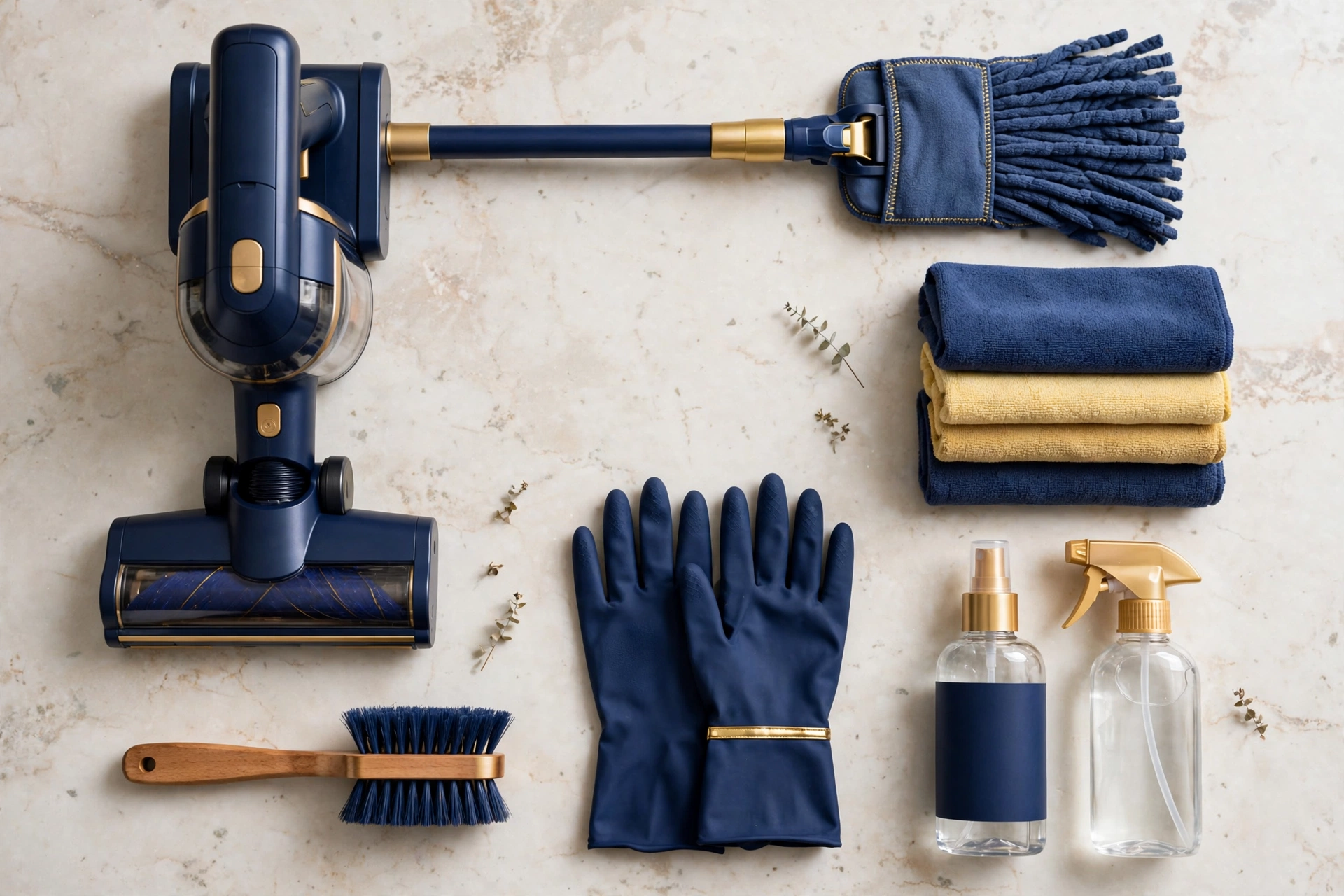
Apartment cleaning needs 10 items: a vacuum with attachments, a mop and bucket, microfiber cloths, an all-purpose cleaner, a bathroom cleaner, glass cleaner, dish soap, baking soda, white vinegar, and rubber gloves, and the full kit costs about $40 to $70 for a first setup.
Microfiber cloths trap dust instead of pushing it around, and 6 to 8 cloths cover a full weekly clean when they go in the wash after use. A vacuum with a crevice tool reaches edges, vents, and under furniture, and a stick vacuum suits small apartments because it stores in a closet. Keep one caddy with the sprays, cloths, and gloves, so the kit moves from room to room in one trip. Cleaning methods on Wikipedia list washing, mopping, wiping, and vacuum cleaning as the core methods, and those 4 methods cover nearly every job in this guide. Store cleaners out of reach of children and pets, and never mix bleach with vinegar or ammonia, because the mix makes harmful gas.
How Do You Clean an Apartment Room by Room?
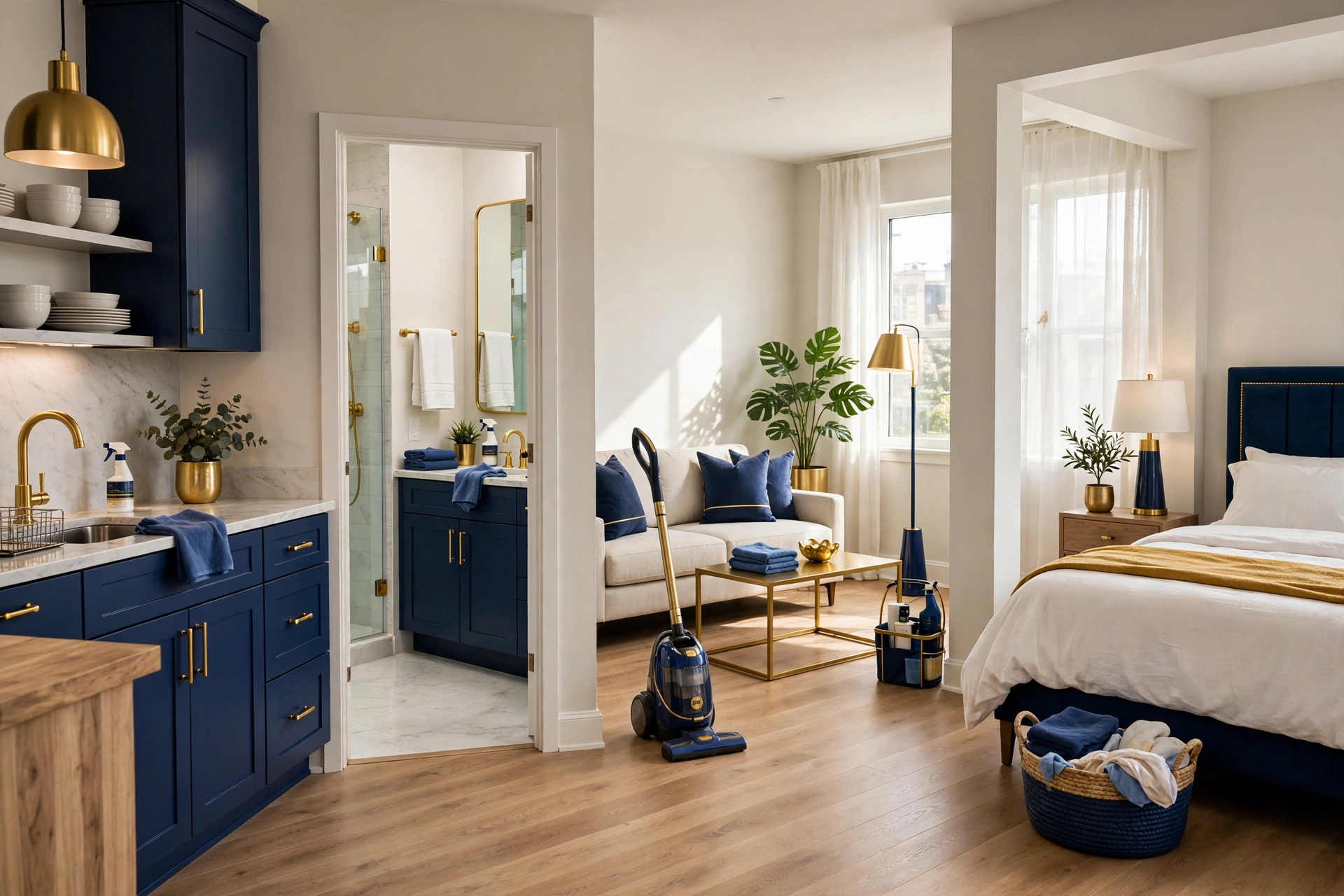
To clean an apartment room by room, start with the kitchen, then the bathroom, then the living room and bedroom, and work top to bottom in each room, so dust falls to the floor and the floor gets cleaned last.
The kitchen needs the most time. Clear the counters, wash the dishes, wipe the counters and stove, clean the sink, and sweep or mop the floor. Wipe fridge shelves monthly, clean the microwave weekly, and degrease the range hood filter every 1 to 3 months. Swap the kitchen sponge every 1 to 2 weeks, because it holds more germs than any other item in the home (Source: National Sanitation Foundation, 2011).
The bathroom needs disinfecting, not just wiping. Scrub the toilet bowl and wipe the seat, lid, base, and the floor behind the tank. Clean the sink, faucet handles, and mirror, and scrub the shower or tub and the grout lines. Wash or swap the shower curtain liner when it shows mildew, and launder bath mats weekly. Run the vent fan during and after showers to cut moisture.
The living room and bedroom need dusting and floor care. Dust from ceiling to floor, wipe tables, shelves, and electronics, vacuum rugs and edges, and mop hard floors. Change bed sheets weekly and vacuum the mattress every few months. In my own apartment, a 10-minute nightly reset, dishes in the sink, counters wiped, clutter back in place, keeps the weekly clean under an hour.
What Is the Best Apartment Cleaning Schedule?
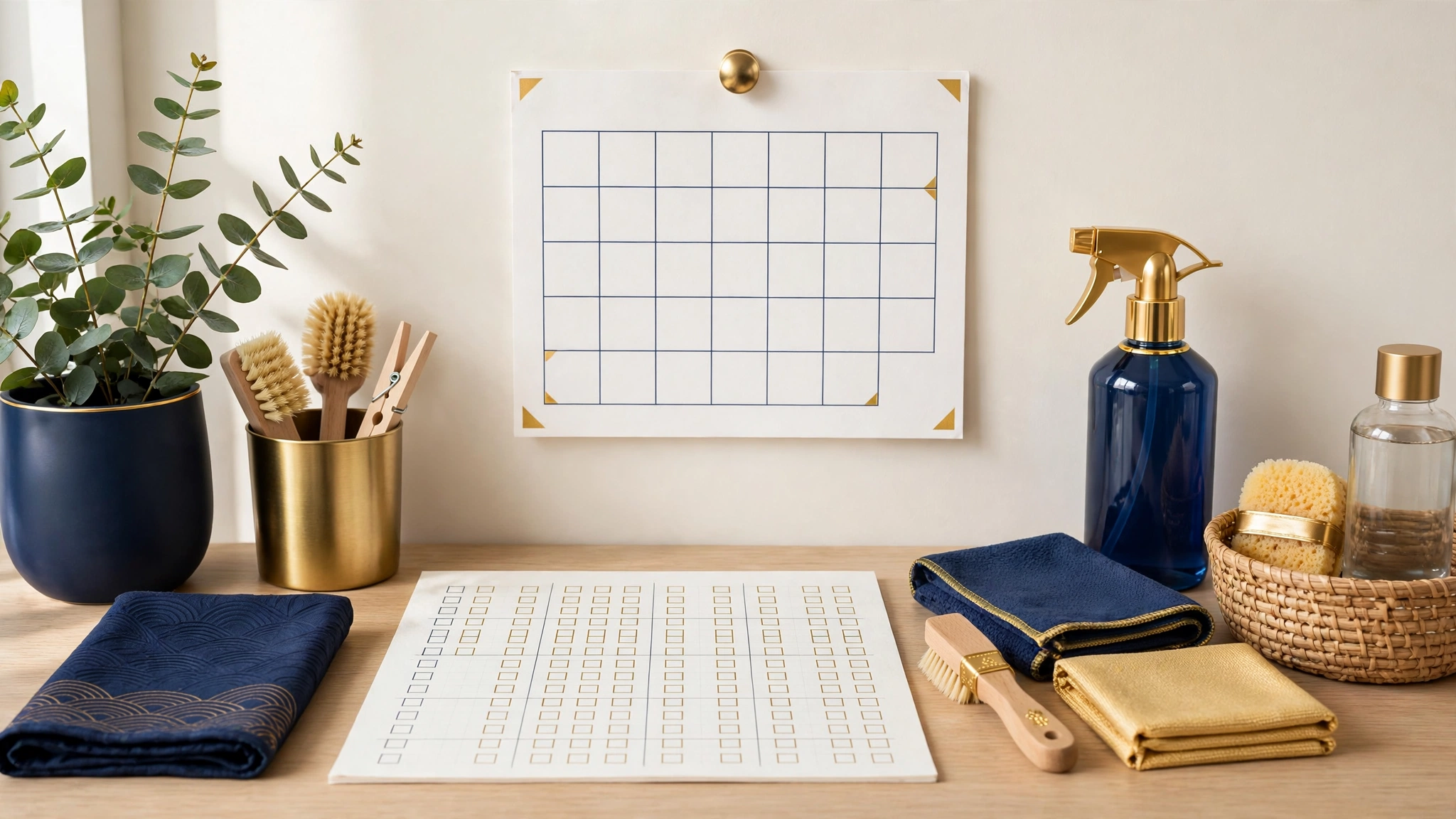
The best apartment cleaning schedule splits work into 4 rhythms: daily resets of 20 to 30 minutes, a weekly clean of 1 to 2 hours, monthly care of appliances and hidden spots, and a seasonal deep clean every 3 to 6 months.
Daily work stops mess from building. Wash dishes, wipe kitchen counters and the sink, take out full trash, make the bed, and do a quick clutter reset. Weekly work holds the line: vacuum and mop all floors, clean the toilet and shower, wipe mirrors and high-touch spots, change bed sheets, dust all surfaces, and take out trash and recycling. Monthly work reaches the spots weekly cleaning skips: clean the fridge and oven, wipe baseboards and door frames, dust vents and light switches, vacuum under furniture and beds, and clean window sills and tracks.
| Rhythm | Tasks | Time |
|---|---|---|
| Daily | Dishes, wipe counters and sink, make the bed, quick tidy, take out full trash | 20 to 30 minutes |
| Weekly | Vacuum and mop floors, clean bathroom, change sheets, dust surfaces, wipe handles and switches | 1 to 2 hours |
| Monthly | Clean fridge and oven, wipe baseboards, dust vents, vacuum under furniture, clean window sills | 2 to 3 hours |
| Every 3 to 6 months | Deep clean carpets, grout, upholstery, curtains, mattress, behind appliances | 3 to 8 hours |
Tie the schedule to a fixed day, like Saturday morning for the weekly clean and the first Sunday of the month for monthly care. A fixed day turns cleaning into a habit, and a habit needs no willpower. Shared-building factors add 2 jobs: keep the balcony swept and wipe the laundry room surfaces after use if the building shares machines.
How Often Should You Deep Clean an Apartment?
Most apartments need a deep clean every 3 to 6 months, and homes with pets, children, allergies, or heavy cooking need one every 3 months, while a small apartment with one occupant and no pets can stretch to every 6 months.
A deep clean reaches the places routine work skips: grout lines, under furniture, behind appliances, upholstery, vents, window tracks, and built-up grease. A full-apartment deep clean takes 3 to 8 hours, based on the size of the apartment, its state, and whether one person or a team does the work (Source: Amenify, 2026). Work room by room instead of task by task, and finish one room fully before starting the next.
Spring and fall suit deep cleans, because windows can stay open for ventilation while cleaners dry. A tenant who keeps the weekly routine strong will find each deep clean shorter, because grime never gets months to harden.
Keep every home system on the same kind of schedule: read our furnace maintenance guide for a matching routine.
Regular Cleaning vs Deep Cleaning: What Is the Difference?
Regular cleaning keeps surfaces clean week to week, while deep cleaning reaches the hidden and built-up dirt that regular cleaning skips, and both matter, because regular cleaning holds the line and deep cleaning resets it.
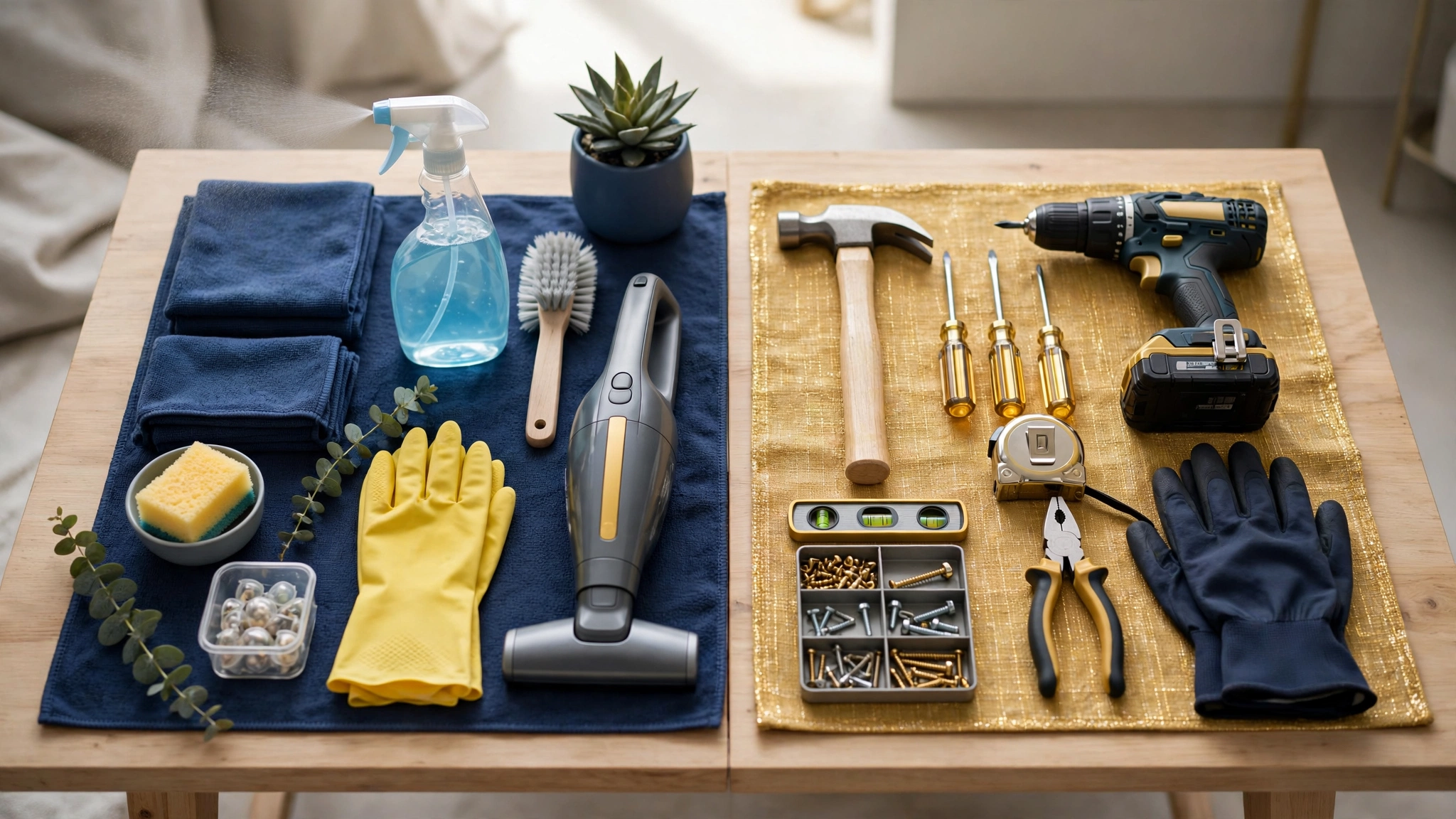
Regular cleaning covers visible dirt: floors, counters, sinks, toilets, mirrors, and dust on open surfaces. It runs daily and weekly, takes 20 to 30 minutes a day, and needs only the basic kit. Deep cleaning covers hidden dirt: grout, tile edges, appliance interiors, vents, upholstery, curtains, mattresses, and the space behind and under furniture. It runs every 3 to 6 months, takes 3 to 8 hours, and may need a steam cleaner, a grout brush, or a hired pro for carpets.
| Point | Regular cleaning | Deep cleaning |
|---|---|---|
| Goal | Hold a steady level of clean | Reset hidden and built-up dirt |
| Frequency | Daily and weekly | Every 3 to 6 months |
| Time per session | 20 to 30 minutes daily, 1 to 2 hours weekly | 3 to 8 hours |
| Areas | Floors, counters, sinks, toilets, mirrors | Grout, vents, upholstery, behind appliances, mattress |
Who Handles What: Tenant or Landlord?
Tenants handle routine cleaning, small upkeep, and prompt fault reports, while landlords handle structural repairs, building systems, common areas, and safety equipment, and the lease sets the exact split for each home.
The split follows a simple rule: the tenant keeps the unit clean and reports faults, and the landlord fixes what the tenant cannot fix. Tenants keep the unit reasonably clean and sanitary, take out trash, keep drains clear with strainers, and report leaks, mold, pests, and broken appliances at once. Landlords supply running water, working heat and hot water, safe wiring and plumbing, working smoke and carbon monoxide detectors, and clean, lit common areas. The U.S. Department of Housing and Urban Development lists move-in and move-out inspections as standard practice in the rental industry, and those inspections set the baseline for what a tenant owes at the end of a lease.
| Task | Tenant | Landlord |
|---|---|---|
| Routine cleaning of rooms and surfaces | Yes | No |
| Trash and recycling removal | Yes | Supplies bins |
| Drain strainers and slow-drain reports | Yes | Clears blockages and repairs pipes |
| Leak, mold, and pest reports | Yes, at once | Repairs cause and treats the problem |
| Structural repairs, roof, walls | No | Yes |
| Heating, plumbing, electrical systems | No | Yes |
| Common areas, halls, stairs, lighting | No | Yes |
Read the lease before signing, and note the cleaning and maintenance clauses. A lease that says “tenant shall keep the unit in a clean and sanitary condition” gives the landlord a right to act on garbage buildup or pest-attracting filth, while a clause that demands professional carpet cleaning every month is much harder to enforce.
How Do You Stop Mold, Pests, and Odors in an Apartment?
To stop mold, pests, and odors in an apartment, control moisture, remove food sources, and keep air moving, because mold grows on damp surfaces, pests follow food and water, and odors come from trapped moisture and old trash.
Mold starts with moisture. Run the bathroom fan during and after showers, wipe standing water from sinks and tubs, and report leaks and drips to the landlord at once, because a leak left for a week feeds mold behind walls. Clean small mold spots on tiles and grout with a bathroom cleaner and gloves, and never paint over mold, because paint hides the growth and the moisture stays.
Pests follow food and water. Take out trash every few days, store dry food in sealed containers, wipe crumbs from counters and floors, and keep pet food in sealed bins. Fix dripping taps, because a drip gives pests a water source, and report any pest sighting to the landlord, because building-wide pests need building-wide treatment. The home care guides on Voice of Wave treat mold as a moisture problem first and a cleaning problem second, and that order saves repeat work.
Odors come from trapped moisture and old waste. Empty the trash before it smells, clean the trash bin monthly, and wash the fridge when food spills. Air out bedding and curtains, and wash soft furnishings that hold smells. Baking soda in the fridge and in shoes absorbs odor, and white vinegar on a cloth cuts smells on hard surfaces.
How Do You Clean an Apartment Before Moving Out?
To clean an apartment before move-out, work top to bottom and room by room, clean inside every appliance and cabinet, and photograph every room after cleaning, because the photos prove the unit’s state if the deposit is disputed.
Start 2 weeks before the move. Clean the kitchen first: empty and wipe the fridge and freezer, clean the oven and stove, degrease the range hood, wipe cabinets inside and out, and clean the sink and floor. Clean the bathroom next: scrub the toilet, shower, tub, and grout, descale faucets and showerheads, clean mirrors, and wipe tiles. Then clean the living room and bedroom: dust all surfaces, wipe baseboards and door frames, clean windows and sills, and vacuum and mop floors.
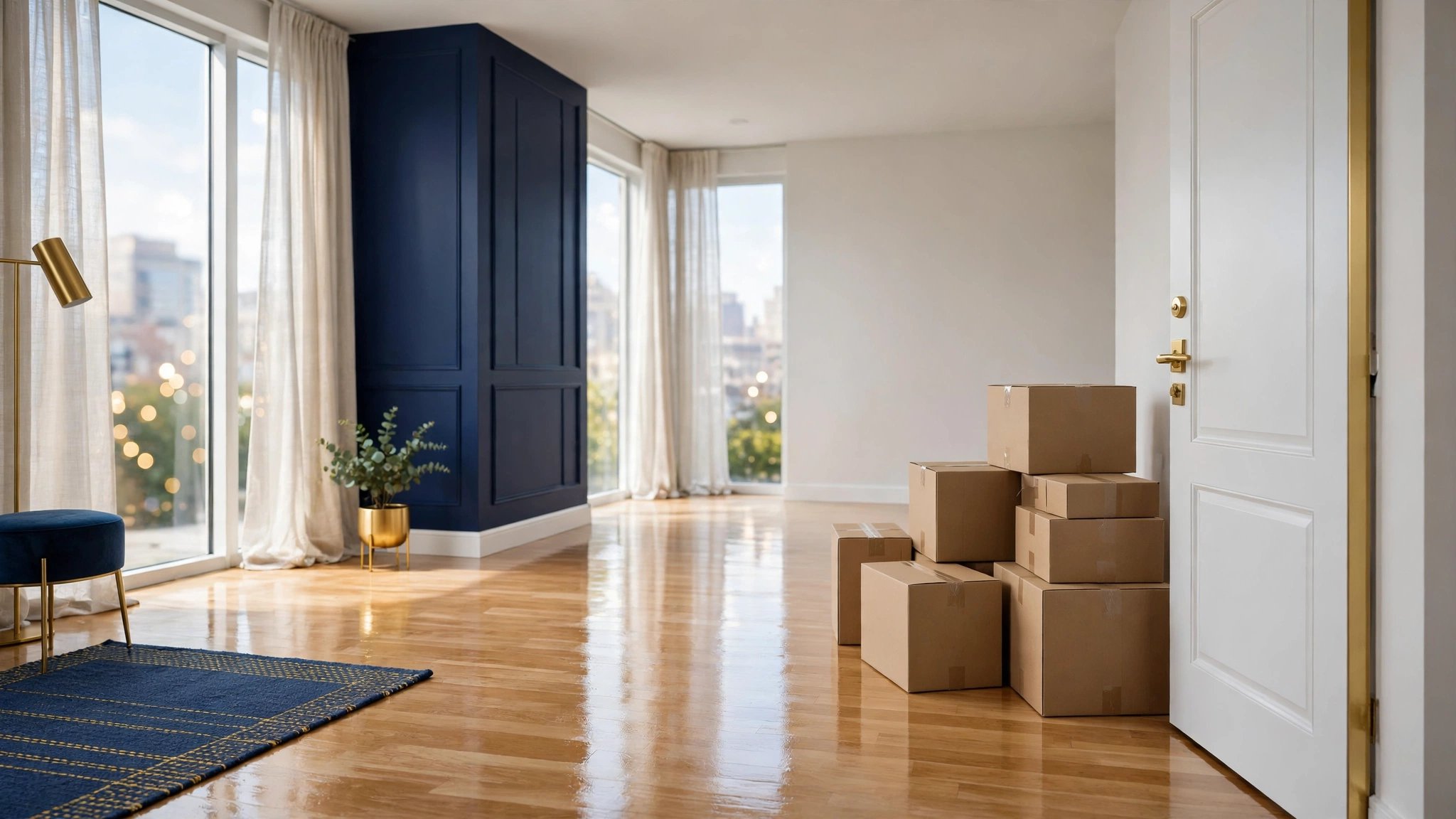
Leave nothing behind. Remove all personal items, empty every closet and drawer, and take out the last trash. Return keys and any building passes on the agreed day, and walk the unit with the landlord or agent when the lease allows it. Take dated photos and a short video of every room after cleaning, and keep the move-in photos beside them. Landlords can charge for damage beyond normal wear and tear, not for routine cleaning, so a clean unit with photo proof leaves little room for a dispute. Ask for the deposit in writing.
What Mistakes Make Apartment Cleaning Harder?
The 5 mistakes that make apartment cleaning harder are skipping the daily reset, cleaning bottom to top, using one cloth for every surface, mixing cleaners, and ignoring small faults until they grow.
Skipping the daily reset is the first mistake. A 10-minute reset each night stops clutter and crumbs from building, and a skipped week turns a 1-hour weekly clean into a 3-hour job. Cleaning bottom to top is the second mistake: dust falls down, so a floor cleaned first gets dirty again when shelves get dusted, and top-to-bottom order avoids rework. Using one cloth for every surface is the third mistake: a cloth that wiped the toilet must never wipe the kitchen counter, and color-coded cloths keep bathroom and kitchen work apart.
Mixing cleaners is the fourth mistake, and it is the risky one. Bleach mixed with vinegar or ammonia makes harmful gas, and no cleaning job needs that mix. Ignoring small faults is the fifth mistake: a slow drain, a dripping tap, or a small mold spot grows into a repair, and a fast report to the landlord costs nothing while a late report can cost the deposit.
Conclusion
Apartment cleaning and maintenance is a simple system: a short daily reset, a weekly clean of 1 to 2 hours, monthly care of appliances and hidden spots, and a deep clean every 3 to 6 months. Apartment cleaning and maintenance protects health by cutting germs and dust, protects money by cutting repair costs and guarding the deposit, and keeps the home pleasant to live in. The tenant handles routine cleaning and fast fault reports, the landlord handles systems and structure, and photo records at move-in and move-out settle deposit questions. Start with the kit and fix one cleaning day each week.
Find more home care guides on the Voice of Wave blog.
Frequently Asked Questions
How often should I clean my apartment?
Clean your apartment daily for 20 to 30 minutes with a quick reset, weekly for 1 to 2 hours with a full clean of floors, kitchen, and bathroom, and monthly for 2 to 3 hours with appliance and hidden-spot care. A deep clean every 3 to 6 months resets the hidden dirt. Homes with pets, children, or heavy cooking need the short end of each range.
How long does it take to deep clean an apartment?
A full-apartment deep clean takes 3 to 8 hours, based on the size of the apartment, its state, and whether one person or a team does the work (Source: Amenify, 2026). A small one-bedroom apartment in good shape takes about 3 to 4 hours, while a larger apartment with pets or months of buildup takes 6 to 8 hours. Work room by room to keep the job moving.
What is the tenant responsible for in apartment maintenance?
A tenant is responsible for routine cleaning, trash removal, drain care with strainers, and prompt reports of leaks, mold, pests, and broken appliances. The landlord handles structural repairs, heating, plumbing, electrical systems, common areas, and safety equipment. The lease sets the exact split, so read its maintenance clauses before signing.
Can a landlord charge for cleaning from my security deposit?
A landlord can charge for damage beyond normal wear and tear, not for routine cleaning that a reasonable tenant would leave behind. A clean unit with dated move-in and move-out photos leaves little room for a cleaning charge. Ask for an itemized list of any deduction, and check local rules for deposit return deadlines.
How do I keep a small apartment clean?
Keep a small apartment clean with a 10-minute nightly reset, one fixed weekly cleaning day, and strict storage rules where every item has a place. Small spaces show clutter fast, so declutter often, use vertical storage, and clean as you cook. A stick vacuum and a single cleaning caddy suit small homes well.
How do I stop mold in my apartment bathroom?
Stop bathroom mold by running the vent fan during and after showers, wiping standing water, and reporting leaks at once, because mold grows on damp surfaces. Clean small spots on grout with a bathroom cleaner and gloves, and keep humidity near 30 to 50 percent. Never paint over mold, because paint hides the growth while moisture stays.