
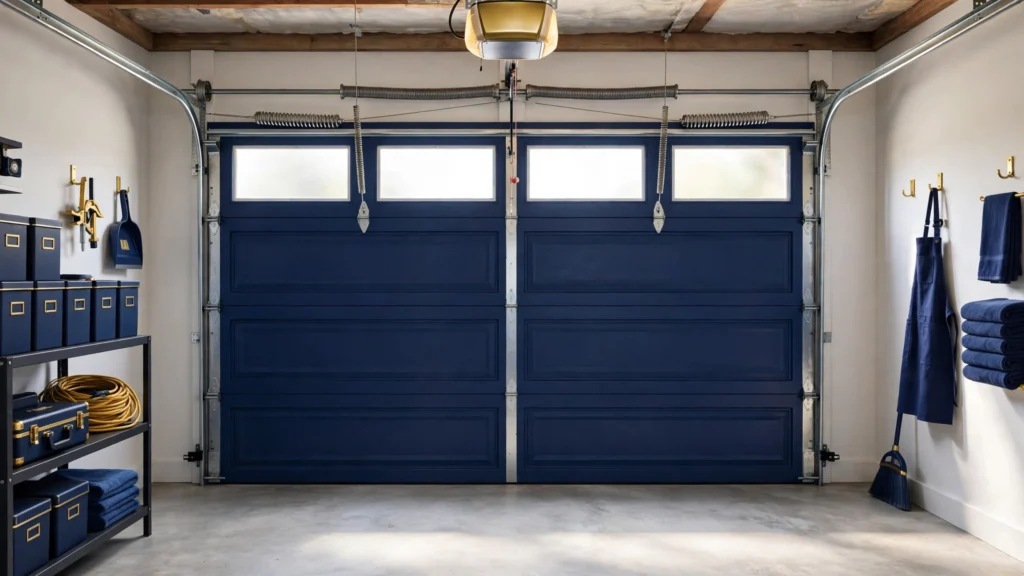
Garage door repair is the diagnosis and fix of faults in the moving parts of a garage door, and early diagnosis saves money and prevents injury. A garage door gives clear warnings before it fails: new noises, slow movement, uneven travel, a door that reverses, or a remote that stops working. This guide explains the 7 parts of a garage door system, the 7 warning signs that point to each part, the safe checks a homeowner can run in 10 minutes, and the faults that need a trained technician at once. It also lists 2026 repair costs and a monthly safety test that keeps the door safe. A reader who follows the steps in order finds the fault fast, and a reader who knows the stop rules stays safe while doing it.
Key Takeaways
- A garage door shows 7 early warnings: new sounds, slow travel, uneven movement, reversing, remote failure, visible wear, and a heavy feel by hand.
- A standard torsion spring lasts about 10,000 to 15,000 cycles, or 3 to 7 years under warranty terms (Source: Wikipedia, 2026).
- Safe homeowner jobs are sensor cleaning, battery changes, track cleaning, lubrication, and bolt tightening.
- Spring, cable, and balance work belongs to a trained technician.
- Professional garage door repair costs $250 to $400 on average, with a typical average near $260 (Source: Angi, 2026).
Table of Contents
- What Is Garage Door Repair?
- How Does a Garage Door System Work?
- What Are the 7 Early Warning Signs of Garage Door Trouble?
- How Do You Diagnose a Garage Door That Will Not Open?
- Why Does a Garage Door Reverse Before It Closes?
- How Do You Spot a Broken Garage Door Spring?
- What Do Garage Door Noises Mean?
- Garage Door Repair vs Replacement: When to Choose Each
- How Much Does Garage Door Repair Cost in 2026?
- What Is the Monthly Garage Door Safety Check?
- When Should You Call a Garage Door Technician?
- Conclusion
- Frequently Asked Questions
What Is Garage Door Repair?
Garage door repair is the work of finding the failed part in a garage door system and fixing it, and it covers the panels, tracks, rollers, springs, cables, opener, and safety sensors. Garage door repair starts with diagnosis, not with parts. A door that will not close can point to a dirty sensor, a bent track, a broken spring, or a failed opener.
Garage door repair splits into 2 lanes. The homeowner lane covers sensor cleaning, battery changes, track clearing, lubrication, and bolt tightening. The technician lane covers springs, cables, and balance. The split rests on force: springs and cables hold hundreds of pounds of tension, and the Door and Access Systems Manufacturers Association (DASMA) states that spring work belongs to a trained technician.
How Does a Garage Door System Work?
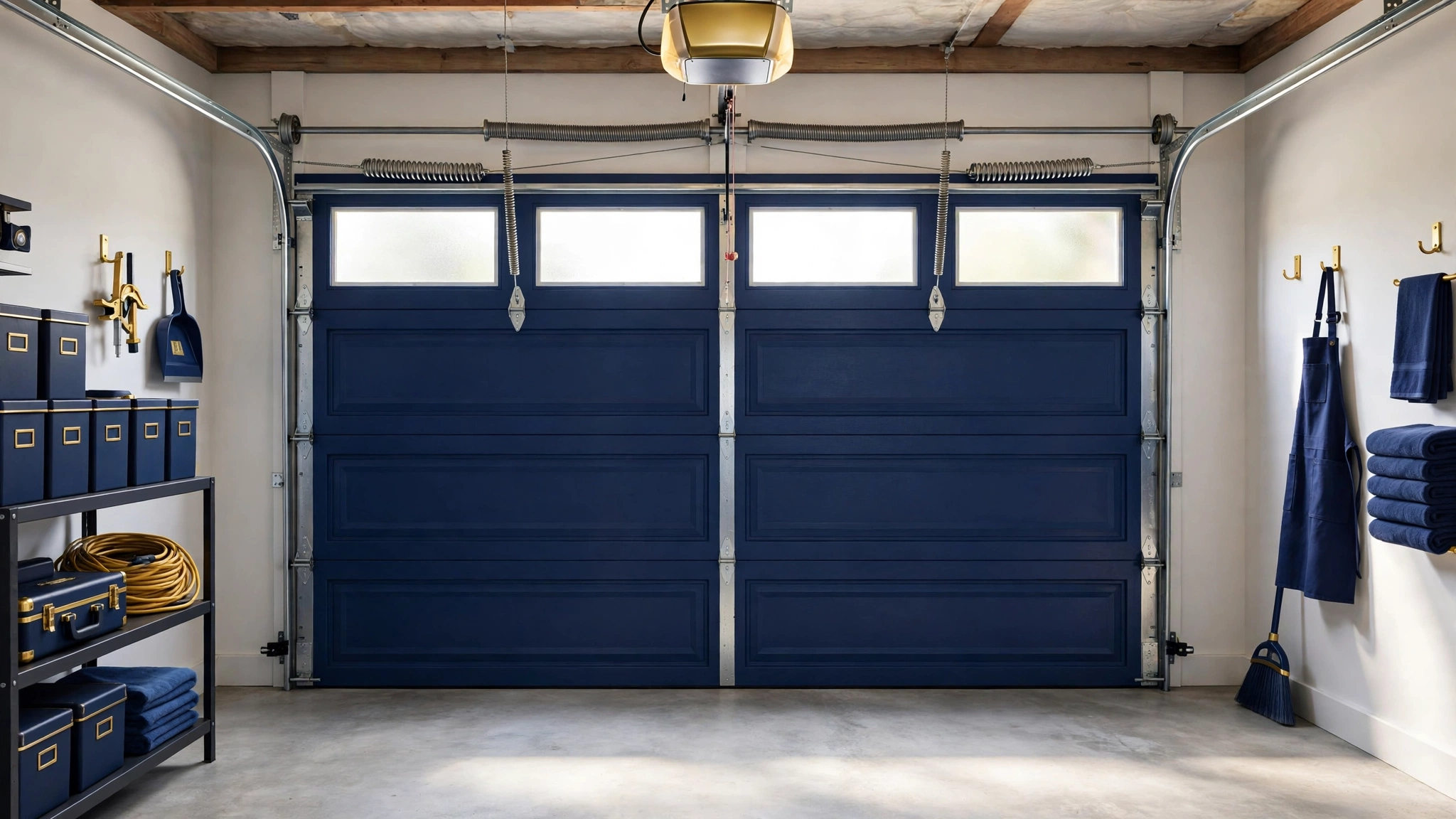
A garage door system works as a counterbalanced unit: the springs carry the door weight, the tracks guide the panels, and the opener controls the travel. The opener does not lift the door. A door that feels heavy by hand has a spring problem, and a door that moves well by hand but not by motor has an opener problem.
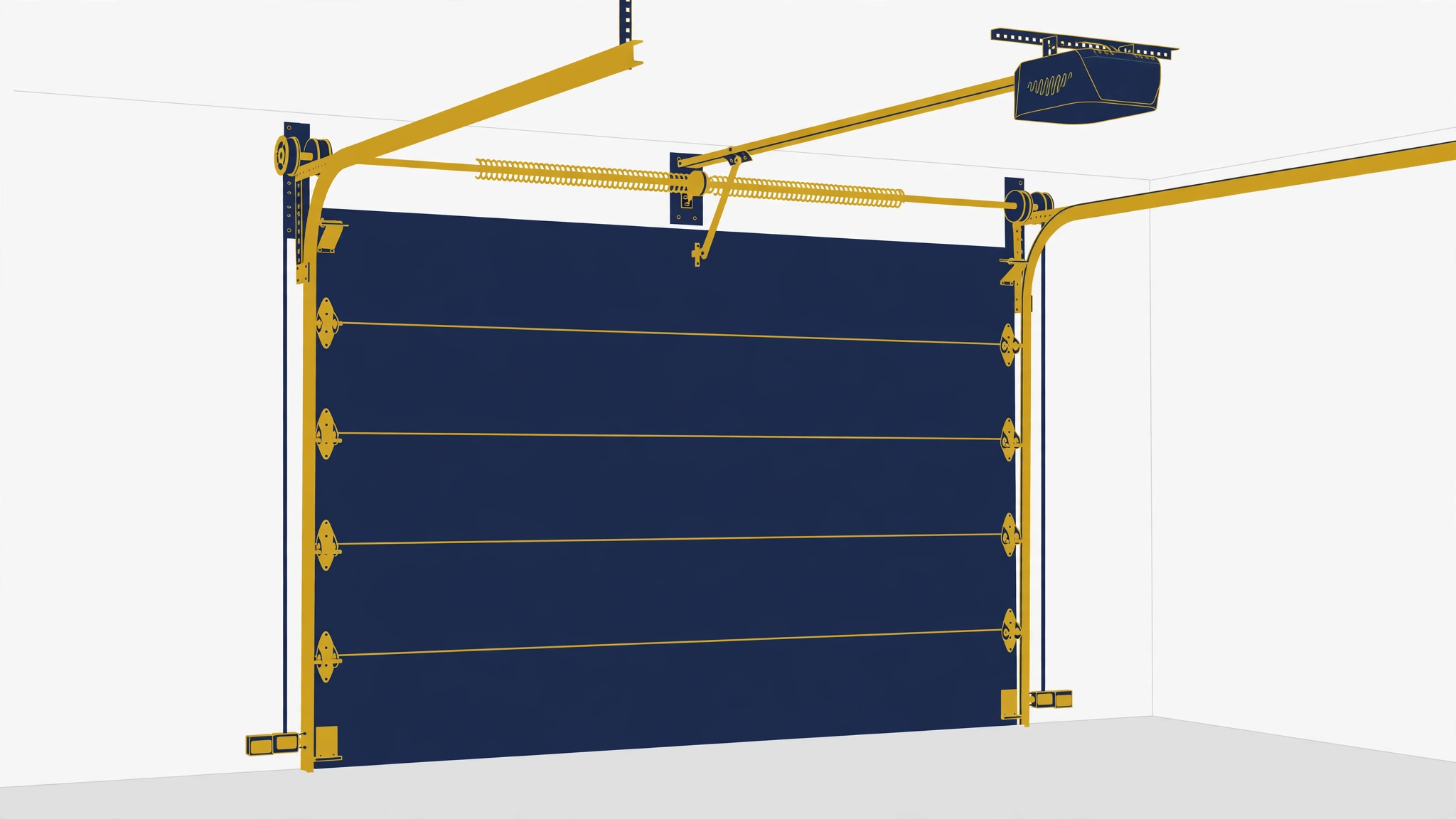
A garage door system has 7 parts: panels, tracks, rollers, springs, lift cables, opener, and photoelectric safety sensors near the floor. A garage door may weigh 400 lb (180 kg) or more, and the springs balance that weight so a person can lift the door by hand (Source: Wikipedia, 2026). The garage door types page on Wikipedia describes sectional, single-panel, rolling, and side-sliding designs.
Two spring designs serve homes: a torsion spring sits on a shaft above the door, and an extension spring runs along each side track. The garage door opener types page on Wikipedia lists 6 opener types. Homeowners who read our home improvement guides find the same habit of small, regular checks that stop big repairs in every guide.
What Are the 7 Early Warning Signs of Garage Door Trouble?
The 7 early warning signs of garage door trouble are new sounds, slow travel, uneven movement, reversing, remote failure, visible wear, and a heavy feel by hand. A door that shows 2 or more signs needs a check the same week.
- New sounds. Grinding, popping, squealing, or banging mark wear in rollers, hinges, or springs.
- Slow travel. A slower door points to worn springs, a weak opener, or binding tracks.
- Uneven movement. Tilting or jerking points to a cable fault, a bent track, or uneven tension.
- Reversing. A door that starts down and then reverses points to sensors or an obstruction.
- Remote failure. A dead remote with a working wall button points to a battery or pairing fault.
- Visible wear. Frayed cables, rusted springs, or cracked rollers point to parts near the end of service life.
- Heavy feel by hand. A heavy door with the opener disconnected points to a spring fault.
In my own garage, a faint morning squeal turned out to be a dry hinge, and one drop of lubricant ended it in 5 minutes.
How Do You Diagnose a Garage Door That Will Not Open?
To diagnose a garage door that will not open, check power first, then the remote, then the manual release, then the balance. The cheapest causes sit first and the dangerous causes sit last.
Follow these 6 steps in order:
- Check power. Confirm the opener is plugged in and the breaker holds.
- Test the wall button. A working wall button with a dead remote points to a battery or pairing fault.
- Check the remote. Replace the battery and re-pair the remote.
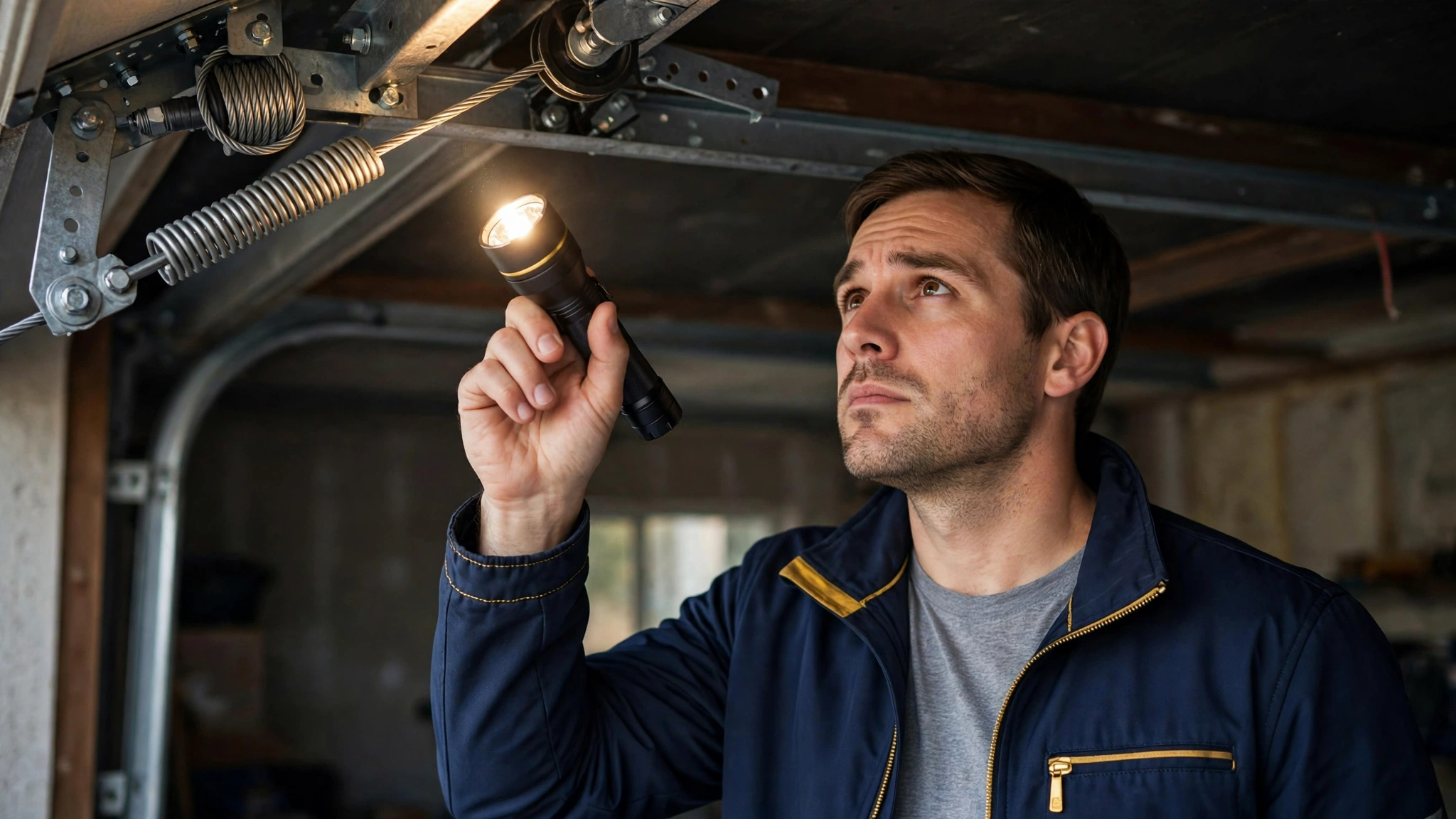
- Look at the springs and cables. Stand clear and look for a spring gap or a loose cable.
- Test manual movement. Close the door, pull the red release cord, and lift the door by hand.
- Read the result. A smooth lift points to an opener fault, and a heavy, stuck, or crooked door points to a spring, cable, or track fault.
A door that lifts smoothly by hand but will not move by motor has an opener fault. A door that will not lift by hand has a spring or cable fault: a standard double door weighs 150 to 250 pounds without spring support.
Why Does a Garage Door Reverse Before It Closes?
A garage door reverses before it closes because the safety sensors see an obstruction, the sensors have lost alignment, or the close-force setting is too low. The sensors sit 4 to 6 inches above the floor. When the beam breaks, the opener reverses the door. United States rules in force since 1991 require automatic openers to reverse when the door strikes an object, under the ANSI/UL 325 standard (Source: Wikipedia, 2026).
Check the sensors in this order: look for an object in the doorway, such as a broom or a cobweb; wipe both lenses, since dust blocks the beam; check the lights, where a solid light shows alignment and a blinking light shows a sensor that needs a push back into line; and check for sun glare, since direct afternoon sun can break the beam.
If the sensors are clean, aligned, and lit, and the door still reverses, the close-force setting may sit too low.
How Do You Spot a Broken Garage Door Spring?
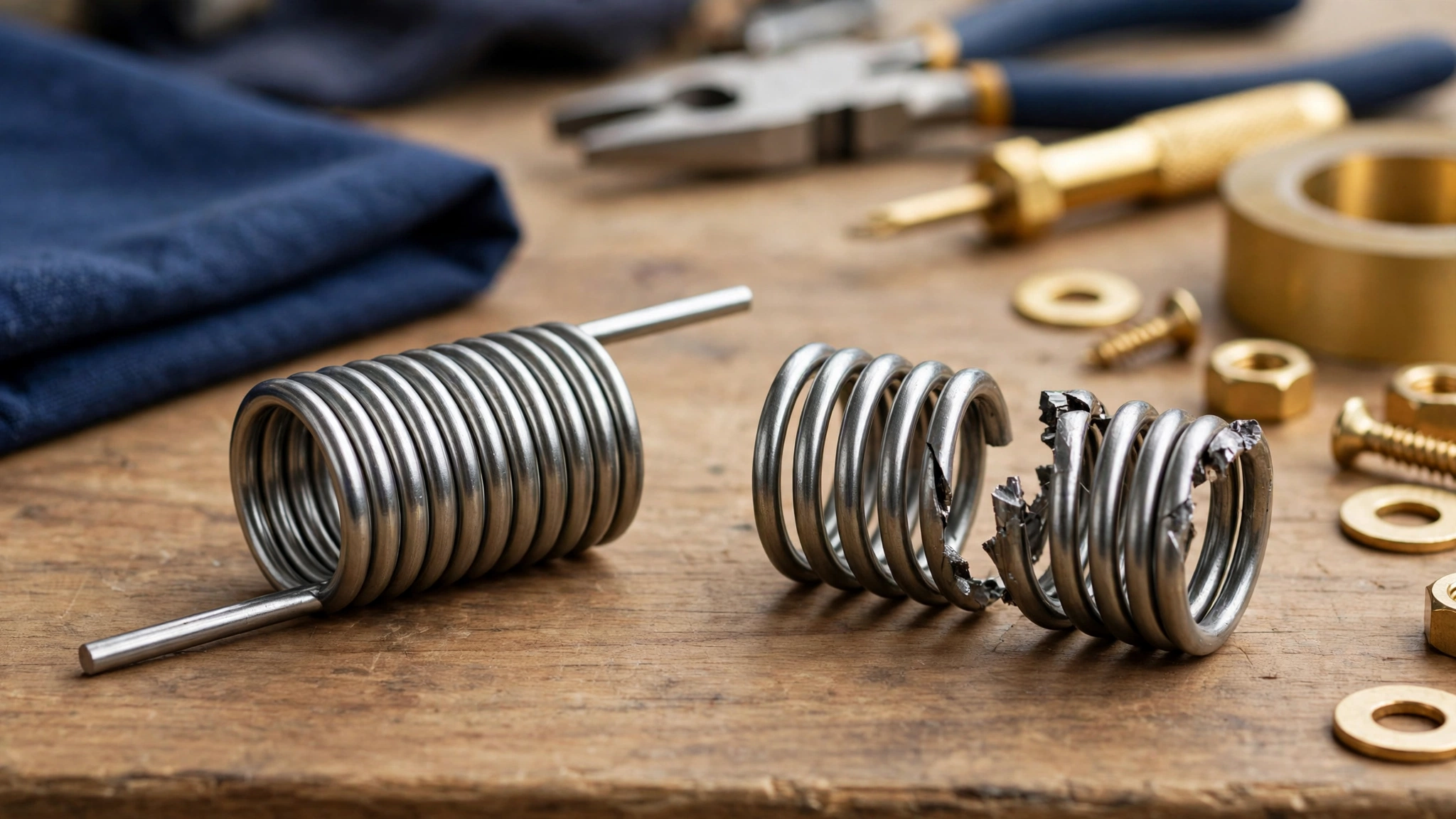
A broken garage door spring shows 5 signs: a loud bang, a door that will not lift, a door that feels very heavy by hand, a visible gap in the spring coil, and loose or hanging cables. A torsion spring break often sounds like a gunshot, and the coil snaps into 2 pieces on the shaft above the door.
A standard torsion spring is rated for about 10,000 to 15,000 cycles, where one cycle is one open and one close, and the warranty term runs 3 to 7 years (Source: Wikipedia, 2026). A household that cycles the door 4 times a day reaches 10,000 cycles in about 7 years.
When a spring breaks: stop using the door; do not lift the door by hand; keep kids, pets, and cars out of the opening; and call a technician the same day. Spring work is never a homeowner job: a loaded torsion spring stores enough force to cause severe injury, and the winding bars and torque settings need training and the right tools.
What Do Garage Door Noises Mean?
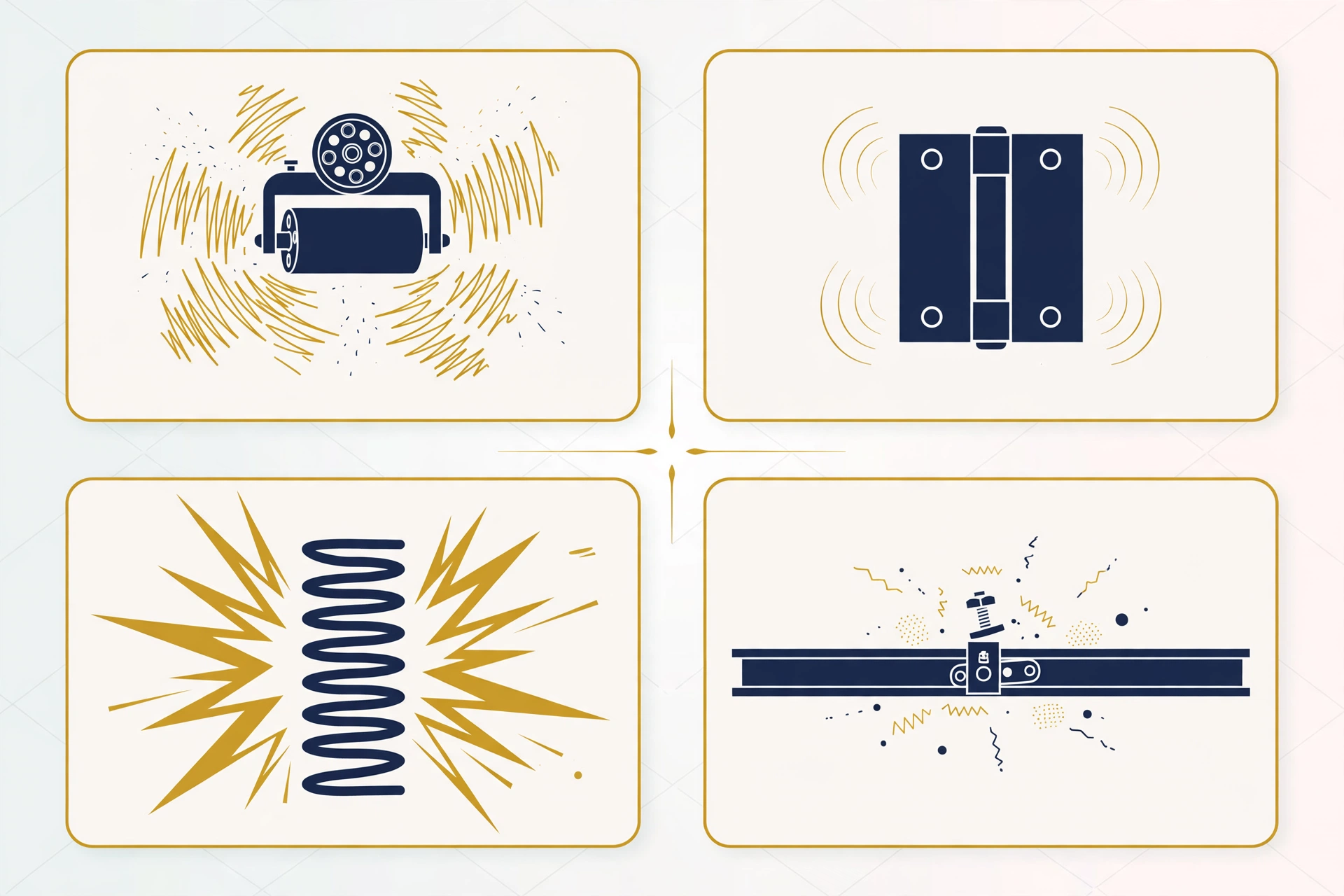
Garage door noises map to parts: grinding means worn rollers or dry bearings, popping means a spring or hinge fault, squealing means dry hinges or a worn belt, and a bang means a broken spring.
| Sound | Likely cause | Safe next step |
|---|---|---|
| Grinding | Worn rollers or grit in the track | Clean the track, lubricate the bearings, book a check |
| Popping | Worn hinge or loose hardware | Tighten the bolts, lubricate the hinges, watch the spring |
| Squealing | Dry hinges or a worn belt | Lubricate hinges and rollers, check the belt |
| Banging | Broken torsion spring | Stop using the door, call a technician |
| Rattling | Loose track bolts | Tighten visible bolts with the door closed |
Use a silicone-based spray or white lithium grease on hinges, roller bearings, and the torsion spring wire. Do not use heavy grease on the tracks. Do not lubricate the lift cables. Lubricate 2 times a year, in spring and in fall.
Keep your whole home on the same care routine: read our Furnace Maintenance: Complete Guide for a matching seasonal checklist.
Garage Door Repair vs Replacement: When to Choose Each
Garage door repair is the right choice when the door is sound and one part has failed, and replacement is the right choice when the door has repeat failures, wide damage, or outdated safety parts. A door under 10 years old with one failed part is a repair.
| Factor | Repair | Replacement |
|---|---|---|
| Door age | Under 15 years | Over 20 years |
| Failed parts | 1 part: spring, cable, sensor, or roller | 3 or more parts in one year |
| Panel condition | Panels straight, no rust through | Panels bent or rusted through |
| Safety parts | Sensors and auto-reverse work | No sensors or auto-reverse |
| Cost test | Under half the cost of a new door | Over half the cost of a new door |
A door that needs a spring, a cable, and a roller set in the same year has passed the repair line, since the combined bill nears half the cost of a new door.
How Much Does Garage Door Repair Cost in 2026?
Garage door repair costs $250 to $400 for a typical professional visit, with the average near $260, and a spring replacement costs about $250 (Source: Angi, 2026). A service call fee of $100 to $200 often applies before parts.
| Repair | Typical cost | Notes |
|---|---|---|
| Service call and diagnosis | $100 to $200 | Often waived if the repair goes ahead |
| Torsion spring replacement | $150 to $350 per spring | Parts and labor |
| Lift cable replacement | $100 to $200 per pair | Done with the spring work |
| Roller replacement set | $100 to $200 | Nylon rollers run quieter than steel |
| Opener repair | $150 to $350 | Gear, capacitor, or board work |
| Opener replacement | $300 to $600 | New rail, sensors, and remotes |
A quote that lists parts and labor separately is easier to compare than a single lump sum. Get 2 quotes for any job over $400, and check that the quote covers the balance test and the safety reverse test.
What Is the Monthly Garage Door Safety Check?
The monthly garage door safety check is a 10-minute routine with 2 tests: a balance test and an auto-reverse test, plus a visual look at the springs, cables, rollers, and sensors. The check runs on the first Saturday of each month.
Follow these 6 steps each month:
- Look at the springs and cables. Look for a spring gap, rust, or a frayed cable.
- Wipe the sensor lenses. Clean both lenses and confirm the lights stay solid.
- Run the balance test. Close the door, pull the red release cord, lift the door halfway, and let go. A balanced door stays in place.
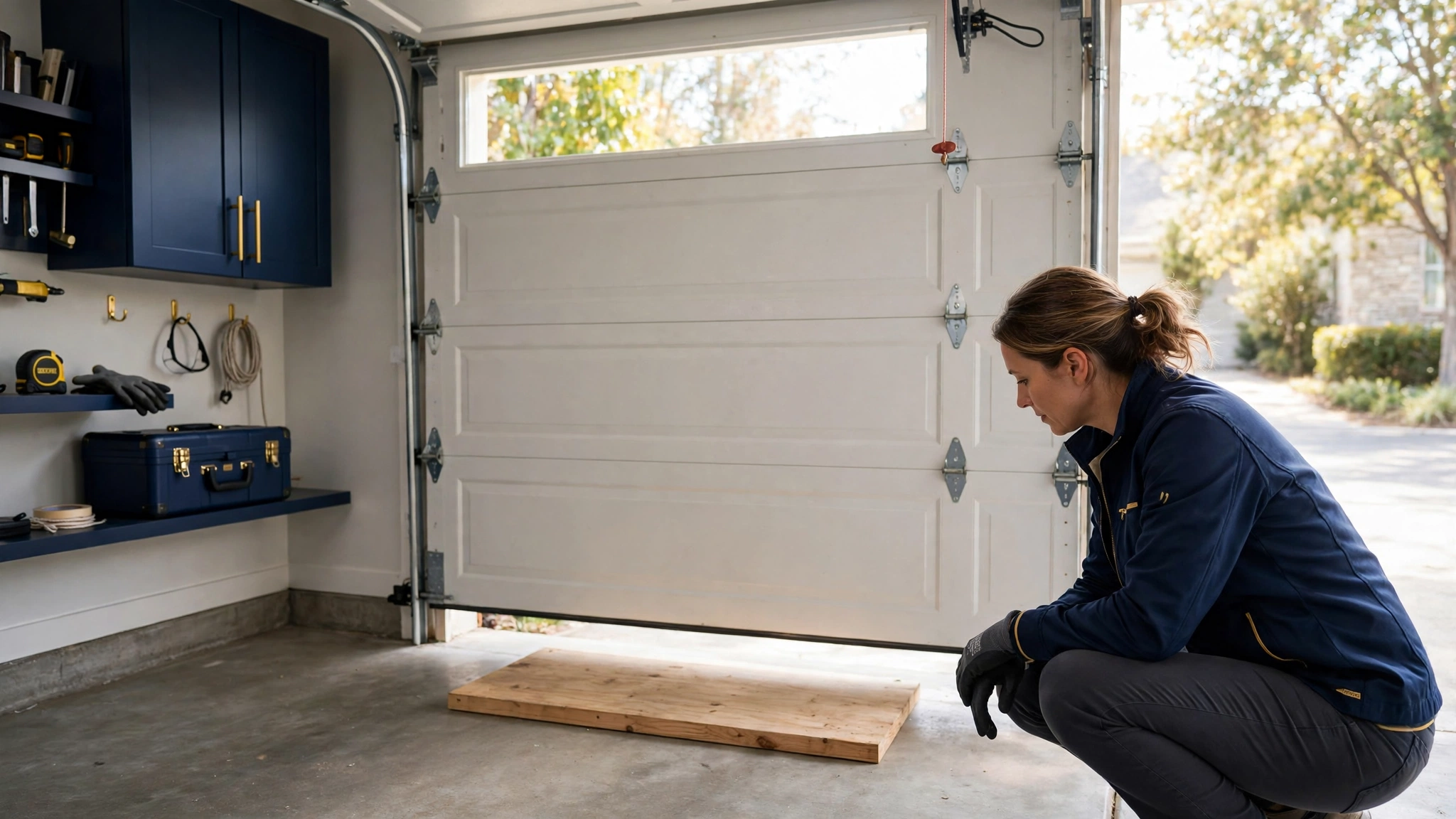
- Run the auto-reverse test. Place a 2 by 4 board flat in the doorway and let the closing door touch it. A safe door reverses at once.
- Run the sensor test. Wave a broom across the beam while the door closes. A safe door reverses at once.
- Reconnect the opener. Pull the release cord toward the motor until the trolley clicks back, then run one full cycle.
The balance test separates spring faults from opener faults in 30 seconds. A door that fails either test needs a technician before the next use. Voice of Wave covers home care guides that follow this same monthly rhythm.
When Should You Call a Garage Door Technician?
Call a garage door technician at once when the door is heavy, crooked, jammed, off its track, or affected by a broken spring, loose cable, damaged roller, or failed opener.
Call a technician the same day for these 6 faults: a loud bang followed by a door that will not lift; a crooked door or a roller out of the track; a frayed or hanging cable; a door that slams down or will not stay open; a door that feels very heavy by hand; and an opener that strains or smells of burning.
Book a routine visit within the week for these 4 faults: a door that runs loud after lubrication, a door that moves slower than last month, a remote that needs re-pairing more than once, or a sensor that loses alignment every few weeks.
Conclusion
Garage door repair starts with early diagnosis, and early diagnosis starts with watching the door. A garage door that shows new sounds, slow travel, uneven movement, reversing, remote failure, visible wear, or a heavy feel by hand is asking for a check. Safe homeowner jobs are sensor cleaning, battery changes, and lubrication, while spring, cable, and balance work belongs to a trained technician. A standard spring lasts about 10,000 to 15,000 cycles, and a typical professional repair costs $250 to $400. Watch the door, test it monthly, and call a technician the day a spring, cable, or track fault appears.
Explore more home care guides: Visit Voice of Wave Blog for more everyday home care guides, practical tips, and plain-language explainers.
Frequently Asked Questions
How much does garage door repair cost?
Garage door repair costs $250 to $400 for a typical professional visit, with the average near $260, and a spring replacement costs about $250 (Source: Angi, 2026). A service call fee of $100 to $200 often applies before parts, and prices move with the part, the door size, and local labor rates.
How do I know if my garage door spring is broken?
A broken garage door spring shows a loud bang, a door that will not lift, a door that feels very heavy by hand, a visible gap in the spring coil, and loose or hanging cables. Stop using the door at once and call a technician the same day, since the door now carries its full weight with no counterbalance.
Why does my garage door reverse before it closes?
A garage door reverses before it closes because the safety sensors see an obstruction, the sensors have lost alignment, or the close-force setting is too low. Clean both sensor lenses, check that both sensor lights stay solid, and clear the doorway before adjusting the force setting in very small steps.
Can I repair a garage door spring myself?
No, a homeowner should not repair a garage door spring, because a loaded torsion spring stores enough force to cause severe injury. Spring replacement needs winding bars, torque settings, and training, and the Door and Access Systems Manufacturers Association (DASMA) states that spring work belongs to a trained technician.
How long do garage door springs last?
A standard garage door torsion spring lasts about 10,000 to 15,000 cycles, or 3 to 7 years under warranty terms (Source: Wikipedia, 2026). A household that cycles the door 4 times a day reaches 10,000 cycles in about 7 years, and high-cycle 30,000-cycle springs last about 3 times longer.
What is the monthly garage door safety check?
The monthly garage door safety check is a 10-minute routine with a balance test and an auto-reverse test, plus a visual look at the springs, cables, rollers, and sensors. A balanced door stays halfway when lifted by hand, and a safe door reverses at once when it touches a 2 by 4 board in the doorway.