
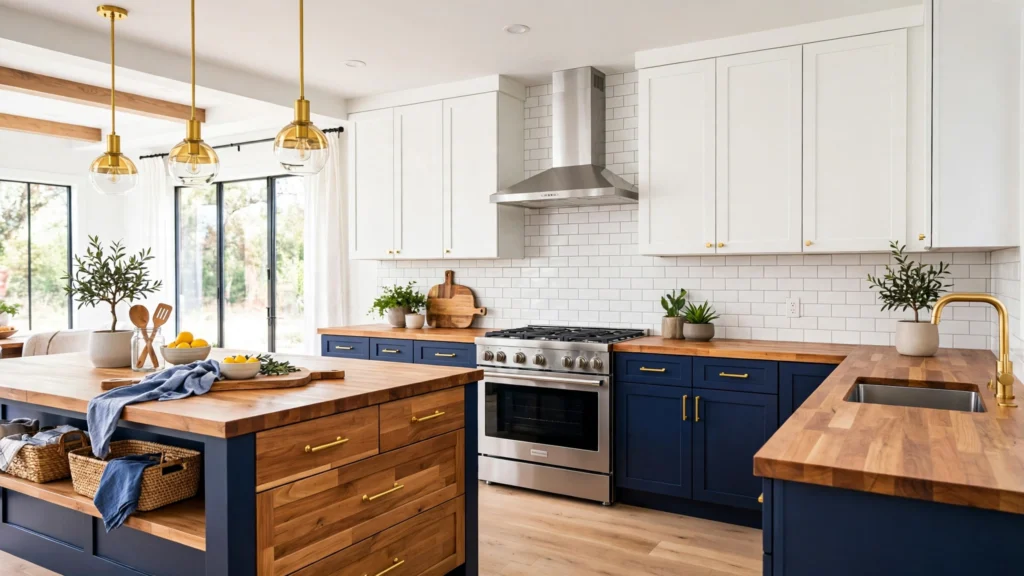
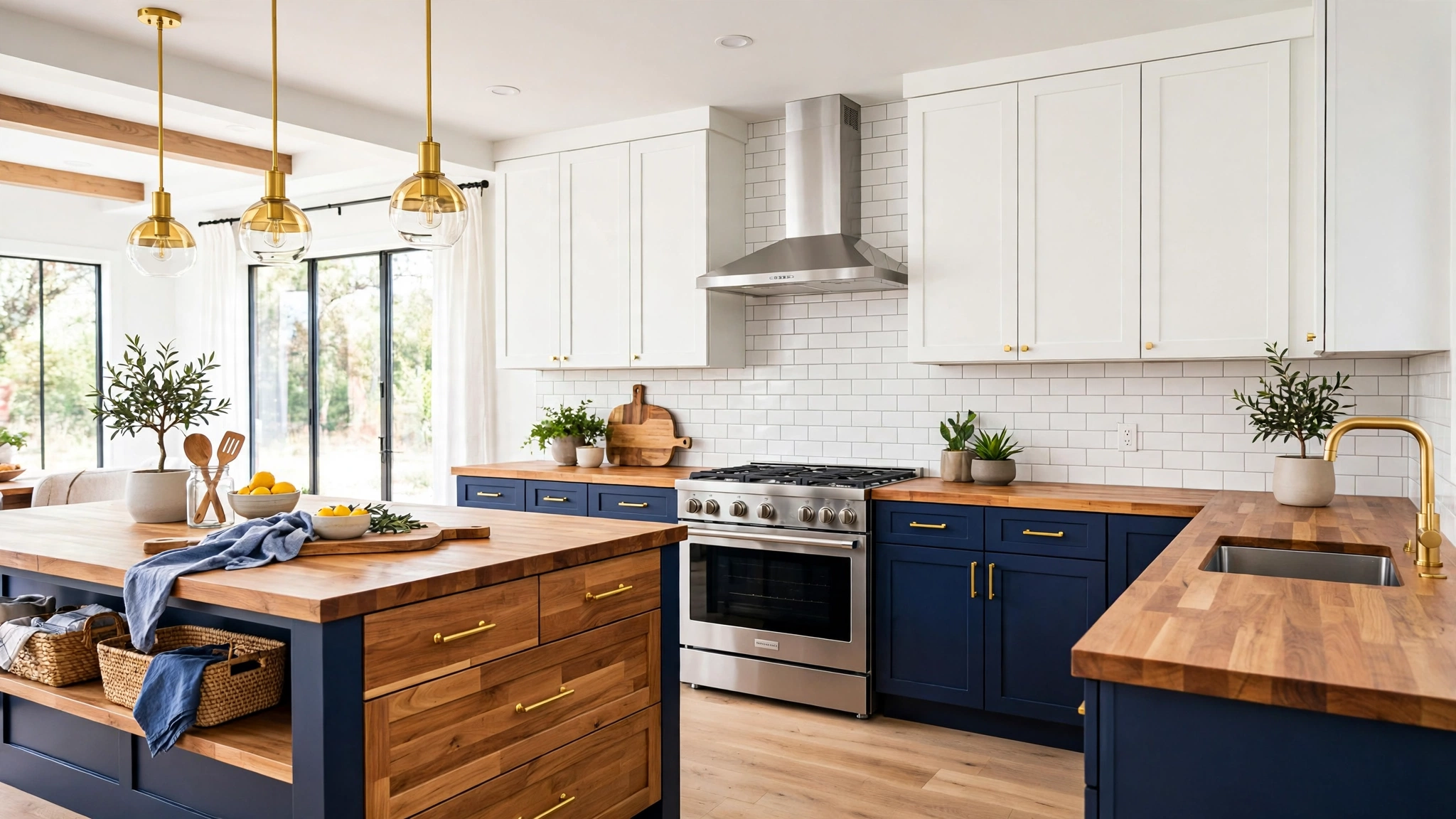
Cabinet refacing is the process of keeping existing cabinet boxes and replacing the doors, drawer fronts, hardware, and outer veneer to give a kitchen a new look. Cabinet refacing costs $4,000 to $13,500 for a typical kitchen in 2026, based on Angi figures, and most pro jobs finish in 3 to 5 days.
This guide explains what cabinet refacing includes, what it costs in 2026, how it compares with replacement and refinishing, which materials last, and the step by step process. Cabinet refacing has 4 main parts: new doors, new drawer fronts, veneer on box fronts, and new hardware. Cabinet refacing fits kitchens, bathrooms, laundry rooms, and built-in storage where boxes stay sound. Browse the Home Improvement guides for related home topics.
Key Takeaways
- Cabinet refacing keeps existing boxes and replaces doors, drawer fronts, veneer, and hardware.
- Cabinet refacing costs $4,000 to $13,500 in 2026, based on Angi figures, and runs 30 to 50 percent below full replacement.
- Cabinet refacing takes 3 to 5 days for a pro crew and 1 to 3 weekends for a skilled DIY job.
- Wood veneer costs most and looks most like new wood cabinets, while laminate and thermofoil cost less.
- Reface when boxes stay sound and the layout works, and replace when boxes fail or the layout must change.
Table of Contents
- What Is Cabinet Refacing?
- How Much Does Cabinet Refacing Cost in 2026?
- Cabinet Refacing vs Replacement
- What Materials Are Used in Cabinet Refacing?
- How Do You Reface Kitchen Cabinets Step by Step?
- Can You Reface Kitchen Cabinets Yourself?
- How Long Does Cabinet Refacing Take and Last?
- What Mistakes Cause Cabinet Refacing to Fail?
- How Do You Care for Refaced Cabinets?
- Conclusion
- FAQs
What Is Cabinet Refacing?
Cabinet refacing is the renewal of the visible faces of existing cabinets: new doors, new drawer fronts, a new veneer skin on box fronts, and new hardware, while the cabinet boxes stay in place. Cabinet refacing changes how a kitchen looks without moving walls, counters, or plumbing.
Cabinet refacing starts with the box. The box is the carcass that holds shelves and carries the load, and cabinet refacing keeps that box when the box stays solid, square, and dry. Workers remove doors, drawer fronts, hinges, and pulls, then cover face frames, stiles, rails, and exposed box sides with a thin skin that matches the new doors.
Cabinet refacing differs from 2 near options. Cabinet refinishing keeps the same doors and changes only the finish with paint or stain. Cabinet replacement removes boxes and installs all new cabinetry. Voice of Wave covers practical home guides that set out the checks to run before the main work starts, and cabinet refacing fits that same pattern: test the boxes first, then pick the finish.
How Much Does Cabinet Refacing Cost in 2026?
Cabinet refacing costs $4,000 to $13,500 for a typical kitchen in 2026, based on Angi figures, with most homeowners paying $4,483 to $10,592 and the national average near $7,235. Cabinet refacing cost rises with door count, material choice, kitchen size, and local labor rates.
HomeAdvisor lists refacing at $4,234 to $10,226 for a standard kitchen in 2026, and HomeAdvisor puts full replacement at $10,000 or more for the same scope (Source: HomeAdvisor, 2026). HomeGuide lists refacing by kitchen size from 2023 figures: a small kitchen at $4,000 to $10,000, an average kitchen at $5,000 to $13,000, and a large kitchen at $9,000 to $22,000 and higher (Source: HomeGuide, 2023).
Cost per linear foot shows how material choice moves the total. Angi lists resurfacing at about $150 to $450 per linear foot across all materials (Source: Angi, 2026). Material only rates run lower: rigid thermofoil at $75 to $125 per linear foot, laminate at $80 to $130, wood veneer at $100 to $175, and real wood doors plus veneer at $150 to $225 (Source: Procraft, 2026).

A kitchen with 10 to 20 doors sits near the low end, a kitchen with 20 to 30 doors sits near the middle, and a kitchen with 30 to 50 doors plus island cabinetry sits near the high end.
Cabinet Refacing vs Replacement: Which Option Fits Your Kitchen?
Cabinet refacing fits a kitchen where boxes stay sound and the layout works, while full replacement fits a kitchen where boxes fail, the layout must change, or new storage is needed. Cabinet refacing costs less and finishes faster, and replacement gives full design freedom.
Cabinet refacing changes how a kitchen looks. The boxes decide the choice. Open the sink base first and press the cabinet floor with a thumb. Soft, swollen wood at the sink base is the most common reason a reface quote turns into a replacement quote, and that test takes 30 seconds.
| Factor | Cabinet Refacing | Full Replacement |
|---|---|---|
| Typical cost in 2026 | $4,000 to $13,500 (Source: Angi, 2026) | $10,000 or more, often $15,000 to $50,000 (Source: HomeAdvisor, 2026) |
| Timeline on site | 3 to 5 days | 1 to 3 weeks or more |
| Layout change | No, layout stays the same | Yes, full redesign possible |
| What changes | Doors, drawer fronts, veneer, hardware | Boxes, doors, drawer fronts, hardware |
| Disruption | Low, kitchen stays usable | High, demolition and dust |
| Storage gain | None, unless add-ons are bought | Yes, new runs and organizers |
| Best fit | Sound boxes, good layout, new look wanted | Damaged boxes, bad layout, more storage wanted |
Cabinet refacing wins on cost, speed, low mess, and a kitchen that stays usable during work. Cabinet refacing runs 30 to 50 percent below full replacement for a comparable door style and finish (Source: HomeAdvisor, 2026). Cabinet replacement wins on layout freedom, new storage, new box structure, and a fix for water damage.
Use this 4 question test before you decide. Are the boxes solid, square, and dry? Does the layout work for daily cooking? Do you want a new door style, not just a new color? Is the budget below replacement cost? Yes to all 4 points to refacing, and no to the first 2 points to replacement.
What Materials Are Used in Cabinet Refacing?
Cabinet refacing uses 4 main materials: rigid thermofoil, laminate, wood veneer, and solid wood doors with veneer. Cabinet refacing material choice sets cost, look, and care needs, and wood veneer gives the most natural wood look.
Rigid thermofoil (RTF) is vinyl film pressed over medium-density fiberboard (MDF). Rigid thermofoil costs $75 to $125 per linear foot, gives a smooth face, and suits flat modern door styles (Source: Procraft, 2026). Rigid thermofoil can peel near heat, so keep thermofoil doors away from stove sides. Laminate is a hard plastic sheet bonded to a core, and laminate costs $80 to $130 per linear foot with a wide color range (Source: Procraft, 2026). Laminate resists stains and wipes clean.
Wood veneer is a thin slice of real wood glued to box fronts, and wood veneer costs $100 to $175 per linear foot (Source: Procraft, 2026). Wood veneer shows real grain, takes stain, and matches solid wood doors best. Wood veneer needs a sound frame and a dry box, since thin veneer sands through fast and lifts where water sits. Solid wood doors plus veneer cost $150 to $225 per linear foot and give the closest match to new wood cabinets (Source: Procraft, 2026). Learn how built-in units are put together from the guide to how kitchen cabinets are built before you pick a material, since box build sets which skins bond well.
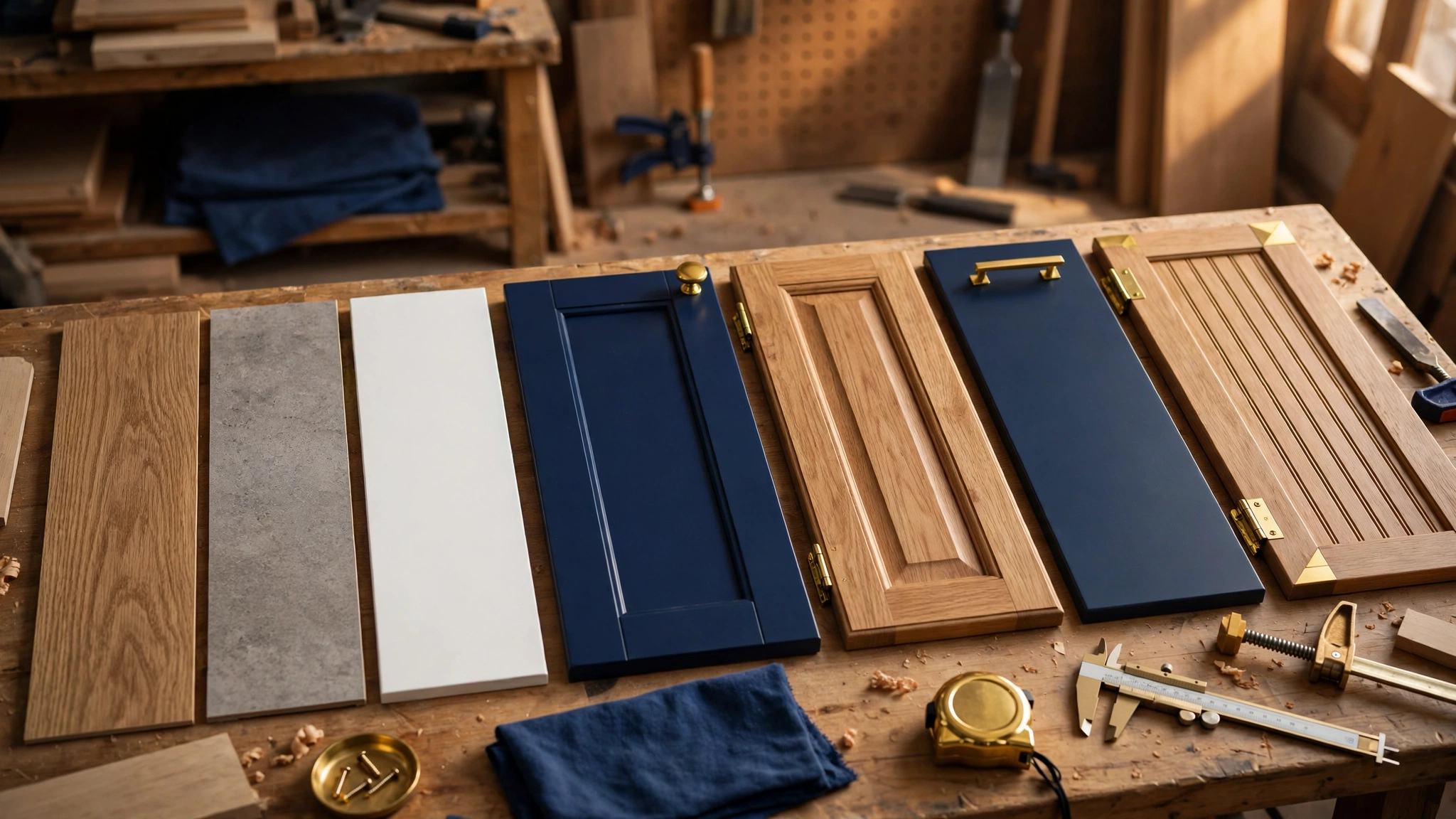
Door style matters as much as material. Shaker doors suit most kitchens with clean lines and a flat center panel. Flat slab doors suit modern kitchens with a plain face. Raised panel doors suit classic kitchens with shaped centers. Thermofoil suits flat profiles, while wood suits shaped profiles and stain work.
Compare the finish-first option in our Cabinet Refinishing guide before you order new doors, since refinishing costs less when only color must change.
How Do You Reface Kitchen Cabinets Step by Step?
To reface kitchen cabinets, assess the boxes, remove doors and hardware, clean and prep box fronts, apply veneer, hang new doors and drawer fronts, fit hardware, and run a final alignment check. Cabinet refacing follows 9 steps in order.
- Measure each run, count doors and drawer fronts, and note hinge type.
- Test boxes for square, dry wood, and solid joints at the sink base.
- Remove doors, drawer fronts, hinges, and pulls, and label each part.
- Clean box fronts with degreaser, rinse, and let wood dry fully.
- Sand face frames lightly, vacuum dust, and wipe with a tack cloth.
- Cut veneer to size, apply adhesive, press veneer flat, and trim edges.
- Hang new doors, fit drawer fronts, and set even gaps at each opening.
- Fit new hinges, pulls, and knobs, and test soft close action twice.
- Walk the kitchen, check each door swing, and list touch-ups.
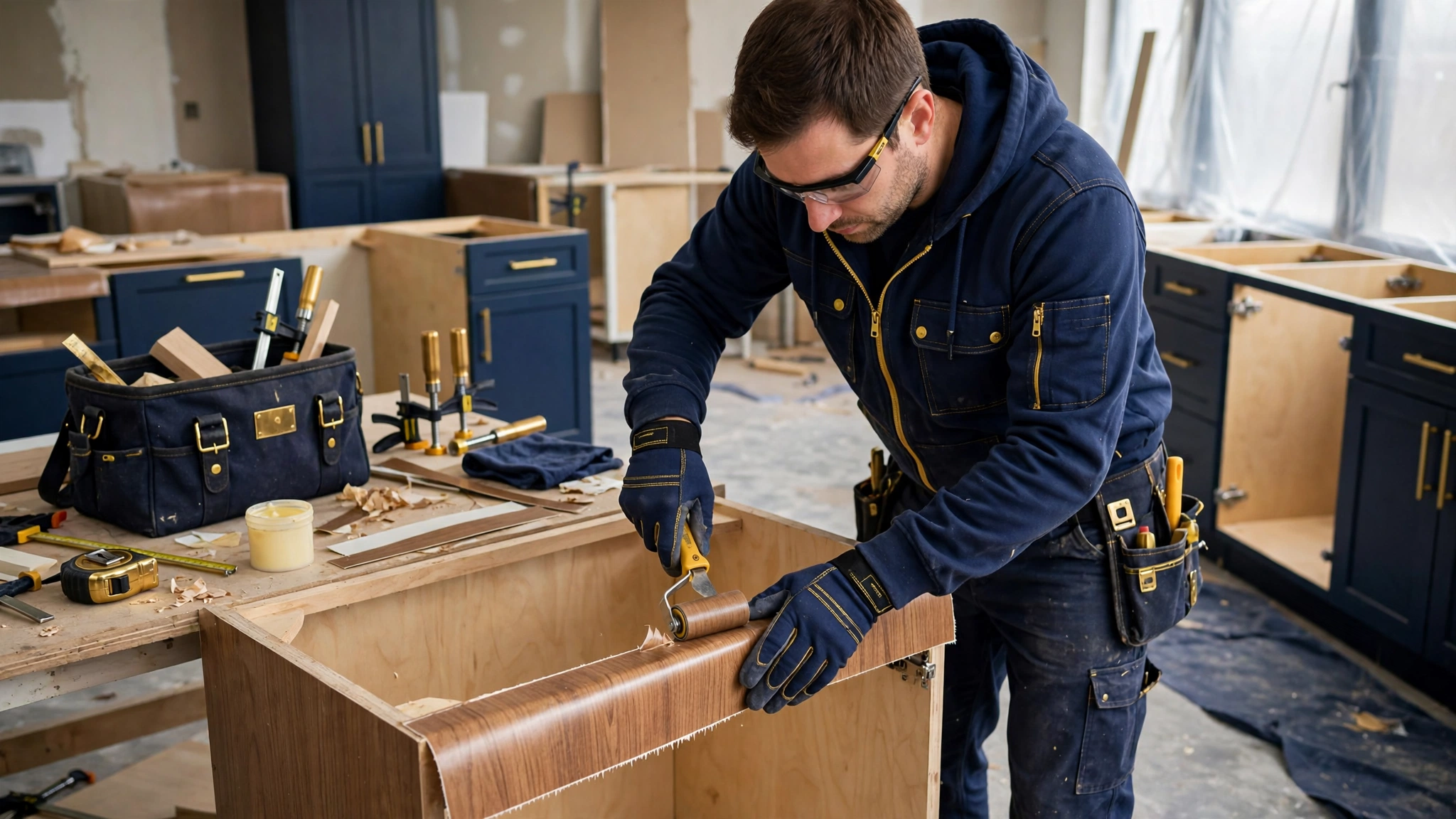
Veneer work sets the finish quality. Veneer is cut a fraction wide, pressed from the center out so air stays out, and trimmed with a sharp blade after the adhesive sets. Hinge holes must line up with new doors, since a hole off by 2 millimeters shows as a crooked gap. Adhesive cure time runs 24 to 72 hours by product label, so treat doors with care in the first week.
Can You Reface Kitchen Cabinets Yourself?
Yes, you can reface kitchen cabinets yourself when you have solid boxes, basic woodwork skills, and the right tools, and DIY cabinet refacing costs $1,000 to $5,000 in materials for a small kitchen. Cabinet refacing as a DIY job suits flat doors and simple runs, while shaped doors and large kitchens suit a pro crew.
DIY cabinet refacing needs 6 tools: a tape measure, a level, a utility knife with fresh blades, a veneer roller, a drill with a hinge jig, and clamps. A first DIY job should start with one small run, such as a laundry cabinet, before the kitchen.
DIY materials cost less than pro labor. This Old House lists DIY materials at $1,000 to $5,000 for laminate or wood veneer in a small kitchen, based on 2024 Angi reports (Source: This Old House, 2026). A door and drawer front kit runs $800 to $2,500, veneer and adhesive add the next share, and hinges and pulls add the rest. DIY time runs 1 to 3 weekends for a standard kitchen, against 3 to 5 days for a pro crew.
Hire a pro when the kitchen has more than 25 doors, the door style has shaped panels or glass, or the boxes need repair at the sink base or corners. Ask a pro for a written warranty on workmanship, since many firms give a 5 year written workmanship warranty on refacing work (Source: Cabinet Refinishing St. Albert, 2026).
How Long Does Cabinet Refacing Take and How Long Does It Last?
Cabinet refacing takes 3 to 5 days on site for a pro crew and 1 to 3 weekends for a DIY job, and refaced cabinets last 10 to 20 years in most kitchens with sound boxes and correct install, based on 2026 contractor guidance. Cabinet refacing lifespan turns on box condition, veneer bond, and daily care.
Pro time runs 3 to 5 days for a standard kitchen. Small kitchens with 10 to 20 doors finish near 3 days. Large kitchens with 30 to 50 doors plus island cabinetry run 5 days or more, and some firms list 10 to 14 days for executive kitchens with heavy island work (Source: Cabinet Refinishing St. Albert, 2026). Lead time adds to site time: doors and veneer take 2 to 4 weeks to order and build, so plan the order date, not just the install date.
Lifespan turns on 4 factors: box condition, veneer bond, finish quality, and daily use. Sound plywood boxes outlast swollen particleboard boxes. A full veneer bond outlasts a bond with air pockets. High touch zones wear first. Heat and water cut life fastest, so wipe steam and splashes at once and keep kettle steam off door faces.
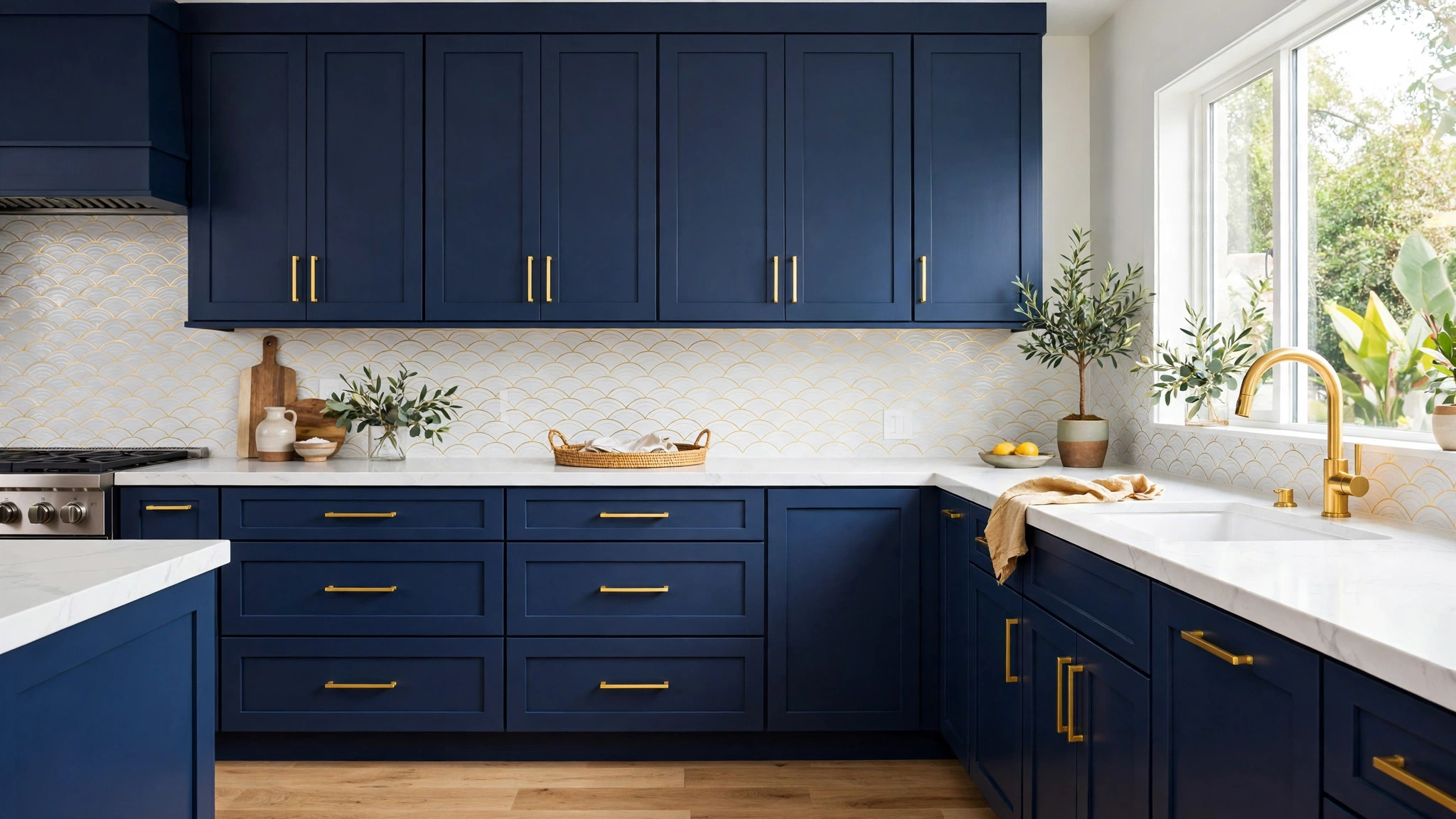
What Mistakes Cause Cabinet Refacing to Fail?
Cabinet refacing fails when boxes are weak, prep is skipped, veneer lifts, or doors go back before adhesive cures. Cabinet refacing fails at prep and cure stages more often than at color choice.
Weak boxes form the first failure group. Water damage under the sink, swollen particleboard, warped frames, and loose joints all show through new doors. A new door on a weak box sags, gaps open, and veneer lifts at the edge. Test every box before you order: press the sink base, check corners for square, and open each door to feel hinge bite.
Skipped prep forms the second failure group. Grease on frames blocks adhesive, dust under veneer leaves bubbles, and a rough sand leaves ridges that show through thin skins. Degrease twice near stoves and handles, sand in order, vacuum after each pass, and wipe with a tack cloth before veneer goes on. Thick adhesive, air pockets, and early use form the third group. Press veneer from the center out, roll each seam twice, and wait for the label cure time before full use.
Wrong material choice forms the fourth group. Thermofoil near high heat peels, thin veneer over a rough frame shows every ridge, and paint over laminate without a bonding primer fails fast. Match material to place.
How Do You Care for Refaced Cabinets?
To care for refaced cabinets, wipe spills at once with a soft damp cloth, use mild soap for grease, skip abrasive pads and harsh cleaners, and keep heat and standing water off the finish. Cabinet refacing lasts longer when handles take the load and care starts on day one.
Daily care stays simple. Wipe spills at once, with extra care at sink fronts, stove sides, and trash pull-outs. Use a soft, damp cloth for dust, and mild soap with water for grease, followed by a dry wipe. Skip abrasive scrubbers and harsh cleaners, since those dull the finish and cut the film at edges. Pull doors by handles, not by door edges.
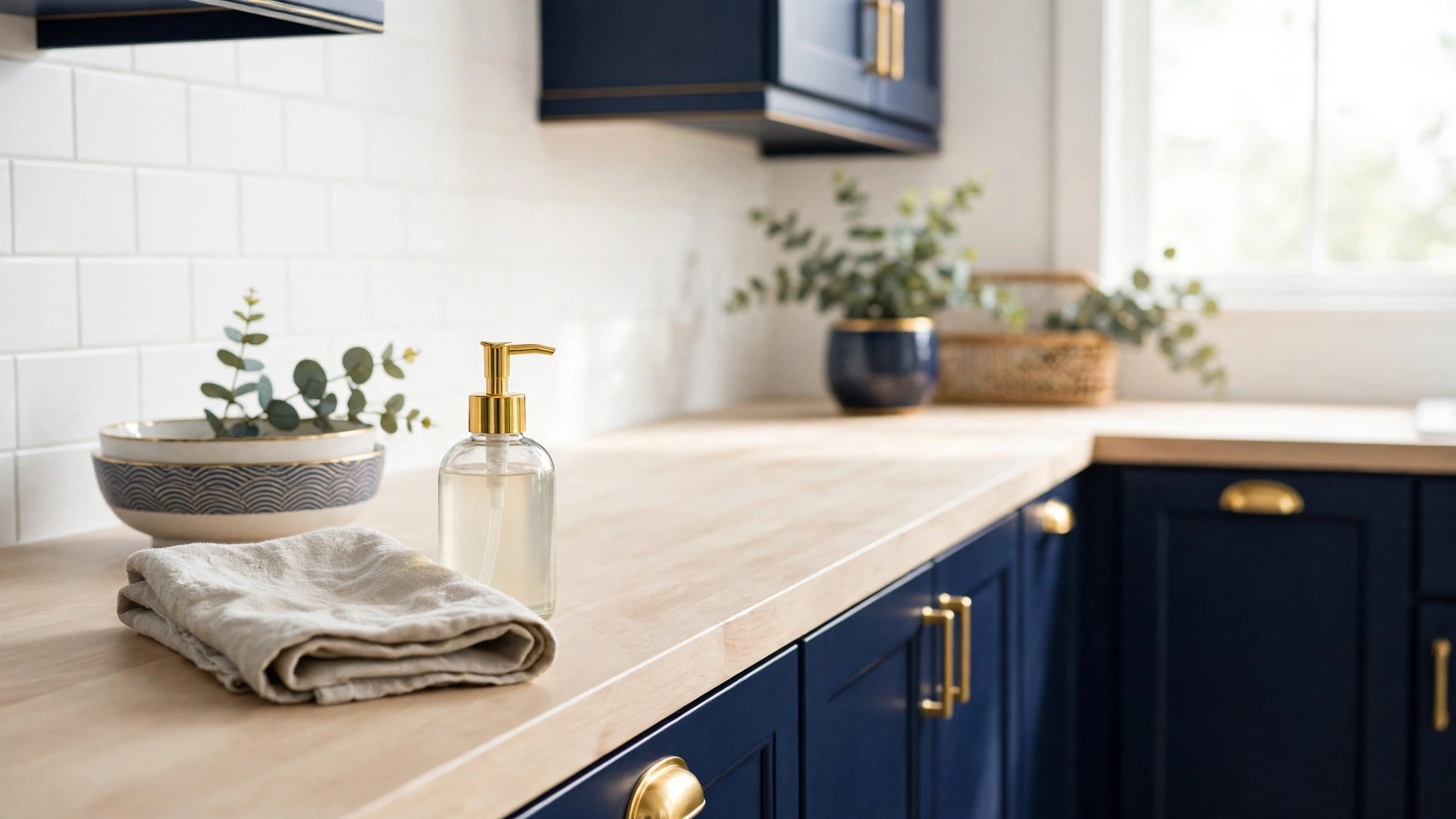
Care differs by material. Wood veneer needs a dry wipe after damp cleaning, since standing water lifts veneer edges. Laminate takes a damp wipe and mild soap with ease. Thermofoil needs cool cleaning and distance from heat, since heat lifts the film. Check hinge screws twice a year and tighten loose screws before doors sag.
Conclusion
Cabinet refacing gives a kitchen a clean, current face without new boxes or a new layout, when boxes stay sound and the finish plan fits the material. Cabinet refacing costs $4,000 to $13,500 for a typical kitchen in 2026, based on Angi figures, and the final price turns on door count, material choice, and local labor. Test the boxes first, count doors and drawer fronts, get 3 itemized quotes, and pick the material that fits the room, the heat, and the budget.
Explore more guides on the Voice of Wave blog for your next home step.
FAQs
How much does cabinet refacing cost?
Cabinet refacing costs $4,000 to $13,500 for a typical kitchen in 2026, based on Angi figures, with most homeowners paying $4,483 to $10,592. Cabinet refacing cost rises with door count, material choice, and local labor rates, so get 3 itemized quotes.
Is cabinet refacing worth it?
Yes, cabinet refacing is worth it when boxes stay sound and the layout works, since cabinet refacing costs 30 to 50 percent less than full replacement and finishes in 3 to 5 days. No, cabinet refacing is not worth it when boxes are water damaged or the layout must change.
How long does cabinet refacing take?
Cabinet refacing takes 3 to 5 days on site for a pro crew, with small kitchens near 3 days and large kitchens near 5 days. DIY cabinet refacing takes 1 to 3 weekends, and doors and veneer need 2 to 4 weeks of lead time before work starts.
Can you reface cabinets yourself?
Yes, you can reface cabinets yourself when boxes stay sound and you have basic woodwork skills, and DIY cabinet refacing materials cost $1,000 to $5,000 for a small kitchen. Start with one small run first, and hire a pro for shaped doors or kitchens with more than 25 doors.
Does cabinet refacing include new drawer boxes?
No, cabinet refacing does not include new drawer boxes in a standard scope, since cabinet refacing covers doors, drawer fronts, veneer, and hardware only. Interiors, shelves, and drawer boxes stay as they are unless the quote adds them as separate lines.
What is the difference between refacing and refinishing?
Cabinet refacing replaces doors, drawer fronts, and veneer, while cabinet refinishing keeps the same doors and changes only the finish with paint or stain. Cabinet refacing costs more and changes door style, while cabinet refinishing costs less and changes color only.