

Introduction
Minimalist living is the intentional practice of owning fewer possessions and simplifying your daily commitments so you can focus on what matters most. It means clearing physical, digital, and mental clutter through deliberate choices, keeping only what adds genuine value to your life.
If your home feels crowded, your schedule feels packed, and your mind feels noisy, you are not alone. Most of us accumulate far more than we need: clothes we never wear, gadgets we forgot, apps we never open. Minimalist living offers a way out. It is not about empty rooms or strict rules. It is about choosing less on purpose so you can have more of what counts: time, calm, money, and freedom. In this guide, the Voice of Wave Editorial Team covers everything from core ideas to first steps, mistakes to avoid, and making it work with a busy family.
Key Takeaways
- Minimalist living means intentionally keeping only what adds value, not owning as little as humanly possible.
- Start small: one drawer or one category beats a whole-house purge that ends in burnout.
- Simple systems like the 90/90 rule and the one-in-one-out rule keep clutter from creeping back.
- Minimalism works with kids and skeptical partners when you start with shared spaces and lead by example.
- Digital clutter deserves the same attention as physical clutter: inbox, apps, photos, and subscriptions all count.
- Avoid common traps: decluttering too fast, chasing perfection, and comparing your progress to influencers.
Table of Contents
- What Is Minimalist Living?
- How Minimalist Living Actually Works
- Key Areas of a Minimalism Lifestyle
- Benefits of a Minimalist Lifestyle
- Simple Living Tips: How to Start Minimalist Living as a Beginner
- Minimalist Living With a Family
- Challenges and Common Mistakes to Avoid
- Minimalist Living vs. Related Movements
- Frequently Asked Questions
- Conclusion
What Is Minimalist Living?
Minimalist living is a lifestyle built on one simple idea: remove the excess so the essential can thrive. It applies to your home, your schedule, your spending, and your digital life.
The modern movement was shaped by writers like Joshua Fields Millburn and Ryan Nicodemus (The Minimalists), Marie Kondo with her KonMari method, Fumio Sasaki, and Joshua Becker of Becoming Minimalist. Their shared message: your possessions should serve your life, not the other way around.
Minimalism vs. Deprivation: Clearing Up the Confusion
The biggest myth about minimalist living is that it means suffering. It does not. Deprivation is forced; minimalism is chosen. A minimalist might own a quality camera and a full bookshelf because those enrich their days. What they will not own is a drawer of dead batteries or clothes that have not fit in four years. The test is never “how little can I own” but “does this earn its place in my life.”
The Core Principles of Intentional Living
Every simple lifestyle rests on three foundations. Intentionality: every object and commitment should be there on purpose. Simplicity: favor the straightforward in your home, routines, and finances. Mindfulness: pay attention to what you buy, keep, and how you spend your hours. Together, these turn minimalism from a one-time purge into a lasting way of life.
How Minimalist Living Actually Works
Minimalist living works through two repeating cycles: a thoughtful initial declutter, then simple systems that prevent clutter from returning.
Declutter Your Life, Step by Step
Declutter category by category, not room by room. Start with easy wins like expired pantry items to build momentum, then tackle clothes, books, papers, sentimental items. Ask: used in the past year? Would I buy it again? Sort removals into sell, donate, recycle, trash. Schedule drop-offs within seven days.
The One-In-One-Out Rule and Other Maintenance Systems
One in, one out: every new item in means one similar item out. Add a quarterly fifteen-minute room scan and a 30-day list for non-essential purchases (write it down, wait, buy only if you still want it). Most cravings fade within a week. For more ideas on managing your money wisely, see our guide to starting a small business on a budget.
Key Areas of a Minimalism Lifestyle
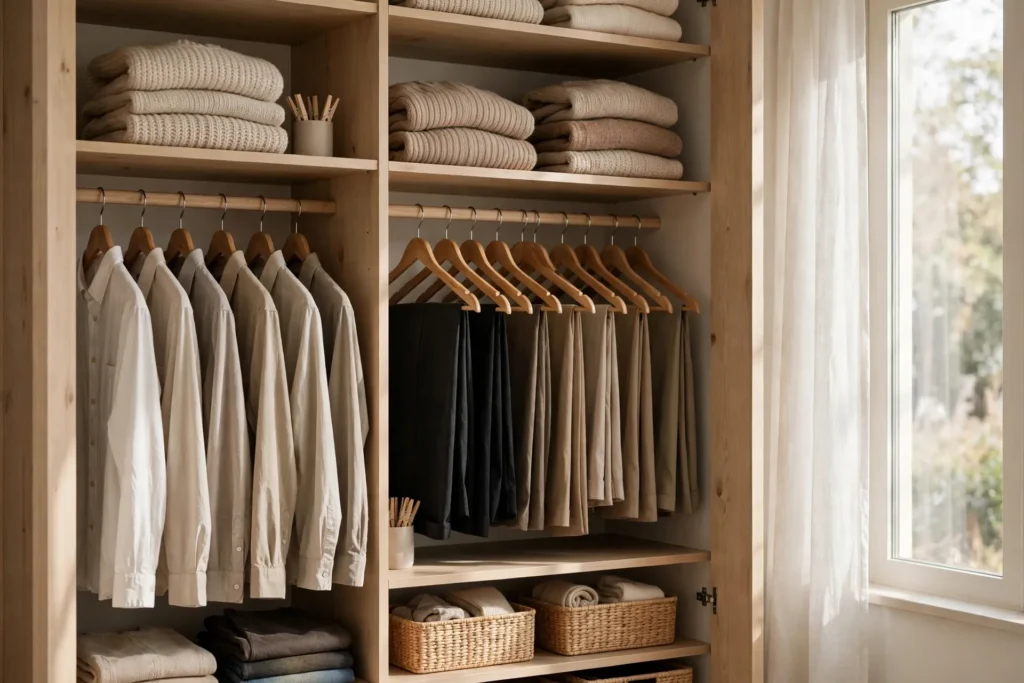
A complete minimalism lifestyle touches more than closets. Physical stuff is the most visible, but digital noise and packed calendars cause just as much stress.
Physical Spaces: A Room-by-Room Approach
In the bedroom, clear nightstands first; visual calm improves sleep. In the kitchen, keep only weekly-use tools and clear half your counters. The bathroom hides expired products; toss them. Living areas follow the “flat surface rule”: three intentional items per surface, maximum. For closets, try a 30-piece capsule wardrobe per season. Garages: untouched for two years means it is storage rent on forgotten things.
Digital Minimalism: Taming the Invisible Clutter
Start with your inbox: unsubscribe ruthlessly and filter aggressively. Audit your phone: delete unused apps, silence non-essential notifications. For photos, back up then delete duplicates monthly. Review forgotten subscriptions. Cal Newport suggests a 30-day step back from optional tech, then reintroducing only what serves your values. Your attention is your most valuable asset.
Time and Commitments
Audit your calendar like your closet. List recurring commitments; ask which you would decline if asked today. “That does not work for me” is a complete answer. Batch errands, protect one unscheduled day weekly.
Benefits of a Minimalist Lifestyle
The benefits of a minimalist lifestyle show up fast, often within the first month. Research and practitioner reports agree: the benefits of minimalist lifestyle changes compound over time, touching mental health, finances, and even relationships.
Mental Clarity and Less Decision Fatigue
Every object demands attention: to clean, store, or look past. Researchers call the drain decision fatigue. A UCLA study linked crowded homes to elevated cortisol, the stress hormone. Reduce what you manage and you free bandwidth for work and people you love. The calm is not just visual, it is mental.
Financial Freedom
Buying less means spending less and saving more. Selling decluttered items generates a welcome lump sum, while lower consumption cuts maintenance costs. Over a year, households redirect thousands toward debt, savings, or experiences.
A Lighter Environmental Footprint
Owning less means consuming less: less waste, a smaller carbon footprint. Minimalists buy quality that lasts, repair instead of replace, and choose secondhand first. Simply buying less is one of the highest-impact individual choices.
Simple Living Tips: How to Start Minimalist Living as a Beginner

Learning how to start minimalist living as a beginner means avoiding two errors: doing too much on day one, and having no system afterward.
Start With Your Why
Write down why you want this before touching a drawer: less stress, less spending, downsizing for a move, or craving calm. Keep it visible. On hard days, your “why” keeps you going.
The 90/90 Rule and Other Decluttering Methods
The 90/90 rule asks: used it in the last 90 days, will you in the next 90? If no to both, let it go. The KonMari method keeps only what “sparks joy.” The four-box method (keep, donate, sell, trash) suits fast passes. The one-year rule is gentlest for the hesitant. Pick what fits your temperament, and pair it with a deadline so the project does not sprawl. To declutter your life effectively, finishing matters more than method.
What to Do With Everything You Remove
Sell valuables on local marketplaces, priced to move fast. Donate clothes and kitchenware to charities. Recycle electronics per local rules. Trash what is broken. Process boxes within seven days, or they become relocated clutter.
Minimalist Living With a Family

Most guides ignore families. Minimalist living works with kids and partners; it just looks different from the Instagram version.
When Your Partner Is Not on Board
Never declutter someone else’s belongings. Start with your own things and shared spaces. As the house calms, skeptics usually come around. Frame it as an experiment: “Let us try the living room for a month.”
Kids and Clutter: A Realistic Approach
Use toy rotation: keep a small set out, store the rest, swap monthly. Old toys feel new again. Rule for kids: one new toy in, one old toy donated. Give everything a home so tidying is a game. Aim for manageable, not perfect.
Challenges and Common Mistakes to Avoid
Minimalist living is simple, but not always easy. Knowing the pitfalls saves you from learning them the hard way.
Decluttering Too Fast and Regretting It
The classic beginner mistake is the weekend purge, followed by Tuesday’s regret over the slow cooker you actually used. Speed creates rebound clutter when you rebuy what you tossed. For uncertain items, use a “maybe box”: seal it, date it six months out, donate unopened if you never looked inside.
When Minimalism Becomes Perfectionism
Some trade shopping addiction for decluttering addiction, constantly optimizing and counting. If minimalism makes you anxious instead of calm, you have missed the point. No prize for owning the fewest things.
The Social Pressure Problem
Friends joke about empty shelves; family keeps gifting things you do not want. Handle gifts graciously and quietly rehome what does not fit; the love was in the giving. Unfollow accounts that make you feel inadequate. Comparison ruins the journey faster than clutter ever could.
Minimalist Living vs. Related Movements
Minimalism overlaps with several popular movements, and the distinctions matter when you are finding your own path.
Essentialism, Slow Living, and Tiny Living: How They Differ
Essentialism (Greg McKeown) is minimalism for time: fewer things, done better. Slow living is about pace: cooking, walking, savoring routines. Tiny living is about small spaces; you can cram a tiny home full or be minimalist in a big one. Cousins asking different questions: what adds value, what is essential, what deserves time, how little space do I need.
Frequently Asked Questions
Is minimalist living expensive to start?
Not at all. Starting costs nothing because decluttering uses what you already own. You may even earn money selling unwanted items. The “buy quality” advice applies later, when replacements are genuinely needed. Beginners should focus on removing, not buying. Minimalist living saves money from the first month through reduced impulse spending.
How long does it take to become a minimalist?
There is no finish line, which is actually good news. A first full-home declutter typically takes four to eight weekends at a relaxed pace. But minimalism is an ongoing practice of intentional choices, not a project you complete. Most people feel meaningful change within the first month of consistent effort.
Can minimalists have hobbies and collections?
Absolutely. Minimalism is about intentionality, not emptiness. A photographer with three cameras she uses weekly is more minimalist than someone with one camera gathering dust plus boxes of unused gear. Collections you actively enjoy and curate fit perfectly. The question is always whether things serve your life, not how many you own.
What if I throw something away and need it later?
This fear stops more beginners than any other. In practice, it rarely happens, and the 90/90 rule plus the “maybe box” handle edge cases. Borrowing or buying secondhand usually solves it cheaply. The money saved by not maintaining excess dwarfs the occasional replacement.
Does minimalist living work in a small apartment?
Small spaces are where minimalism shines brightest. With less room, every item’s cost in space and visual noise is higher, so the payoff of decluttering is immediate. Multi-purpose furniture, vertical storage, and the one-in-one-out rule transform cramped apartments. Many apartment dwellers become minimalists precisely because their space demanded it.
How is minimalism different from just being tidy?
Tidiness organizes what you own; minimalism questions whether you should own it at all. A perfectly organized closet can still hold things you never use. Minimalist living reduces total volume, which makes staying tidy nearly effortless. Less stuff means less to organize and maintain.
Where can I learn more about minimalist living?
Start with foundational books: “The Life-Changing Magic of Tidying Up” by Marie Kondo for method, “Goodbye, Things” by Fumio Sasaki for philosophy. Wikipedia’s article on minimalism covers the history well. For ongoing inspiration, the home page at Voice of Wave features practical lifestyle guides in the same spirit.
Conclusion
Minimalist living is not about white walls, empty shelves, or counting your possessions. It is the quiet practice of choosing less on purpose: fewer things competing for your attention, fewer commitments draining your calendar, fewer notifications fragmenting your focus. Start with one drawer, keep what earns its place, and build simple systems like one-in-one-out so the calm lasts. Whether you live alone or with a full house, the path is the same: decide what matters, remove the rest, and protect the space you have created. Your future self, with more time, more money, and more peace, will thank you for starting today.