
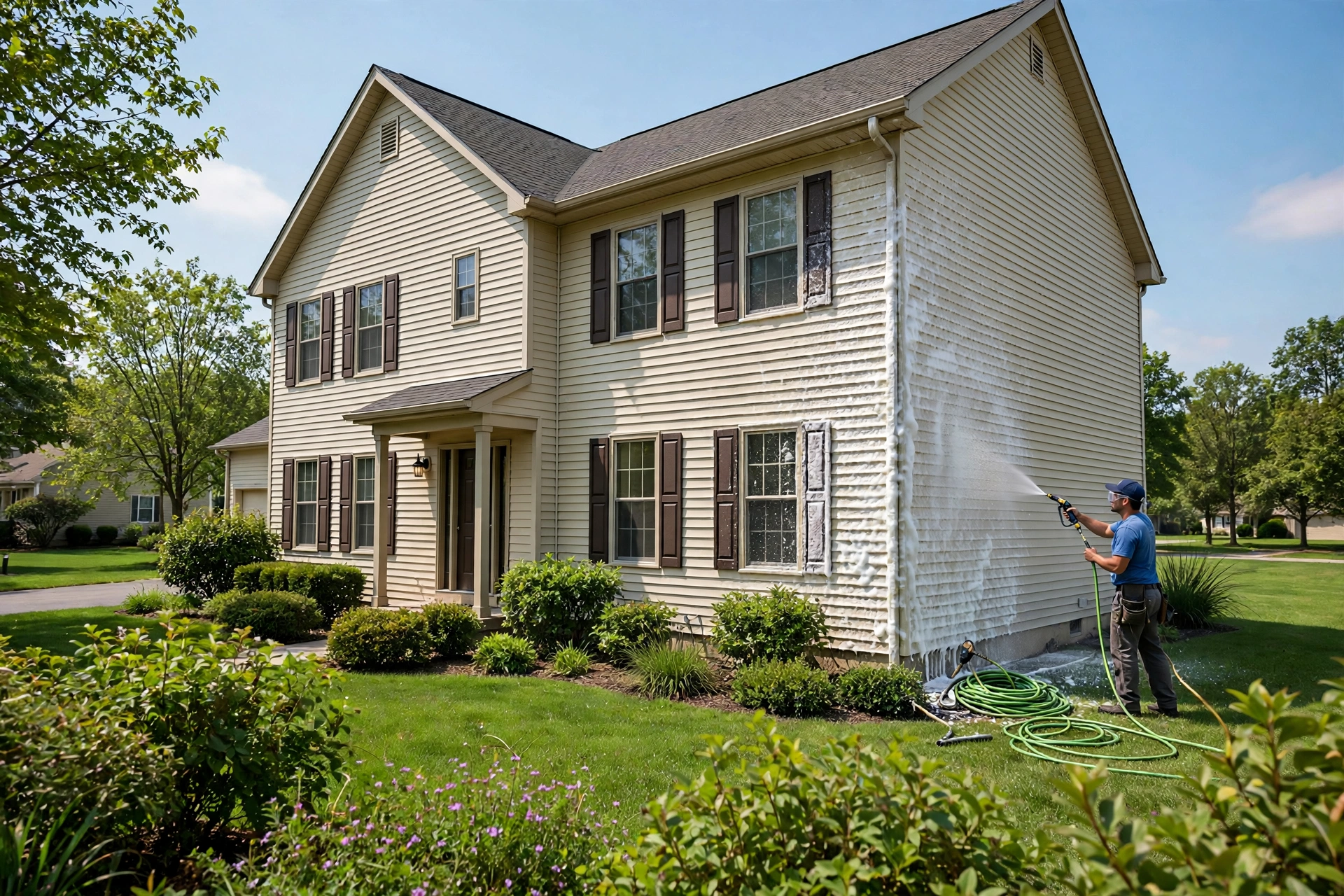
Wondering how to clean house exterior surfaces without damaging them? A dirty exterior makes even a well-kept home look tired, but the wrong method can cause more harm than the grime itself.
The safest way to clean a house exterior is to match the method to the surface: use soft washing, which means low pressure under 500 PSI plus a cleaning solution, for siding, stucco, and painted wood, and save pressure washing at 1,300 to 3,000 PSI for hard surfaces like concrete driveways and brick. Work from top to bottom, protect your plants and pets, and always test a small hidden area first.
This guide covers every major surface, compares soft wash vs pressure wash honestly, and gives you exact PSI ranges, cleaning recipes, and the costliest mistakes to avoid. [INTERNAL LINK: how to boost curb appeal on a budget]
Key Takeaways
- Match the method to the surface: soft wash siding, stucco, and painted wood (under 500 PSI with detergent); pressure wash only concrete and brick (1,300 to 3,000 PSI).
- Direction matters: apply solution bottom to top to avoid streaks, then rinse top to bottom.
- Mold and mildew: oxygen bleach handles most growth; reserve diluted sodium hypochlorite for severe algae.
- Protect what is alive: pre-wet plants, keep pets inside, and rinse landscaping before, during, and after.
- Frequency: most homes need a wash every one to two years; shaded or humid homes need it yearly.
Table of Contents
- What Does Cleaning a House Exterior Actually Involve?
- Soft Wash vs Pressure Wash: Which Method Should You Use?
- What Equipment and Supplies Do You Need?
- How Do You Pressure Wash a House Safely?
- What Is the Best Way to Clean House Siding?
- How Do You Remove Mold, Mildew, and Algae from Siding?
- How to Clean House Exterior Without a Pressure Washer
- How Often Should You Wash Your House Exterior?
- What About Driveways, Gutters, and Other Surfaces?
- Should You DIY or Hire a Professional?
- What Mistakes Should You Avoid?
- Frequently Asked Questions
- Conclusion
What Does Cleaning a House Exterior Actually Involve?
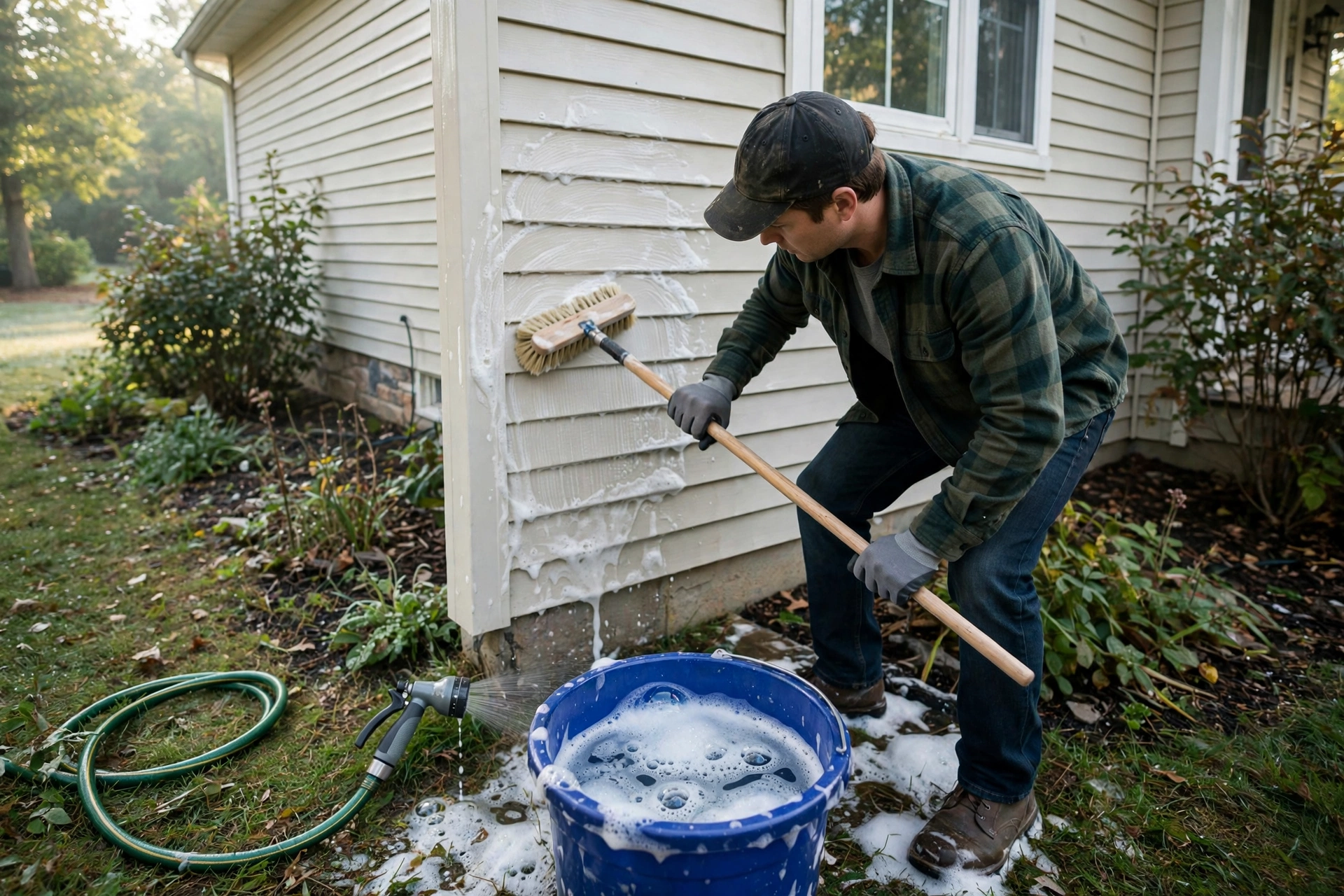
Exterior house cleaning, or house washing, is the systematic cleaning of siding, trim, brick, stucco, concrete, and gutters. These surfaces collect dirt, pollen, exhaust residue, algae, mold, and oxidation. Left alone, that buildup is not just ugly: mold and algae hold moisture against paint and wood, shortening their life, and ground-in concrete grime gets progressively harder to remove.
A proper wash does three jobs at once: it restores curb appeal, prevents long-term surface damage, and prepares the house for painting or sealing. It is consistently one of the highest-return DIY projects for a single weekend of work.
Soft Wash vs Pressure Wash: Which Method Should You Use?
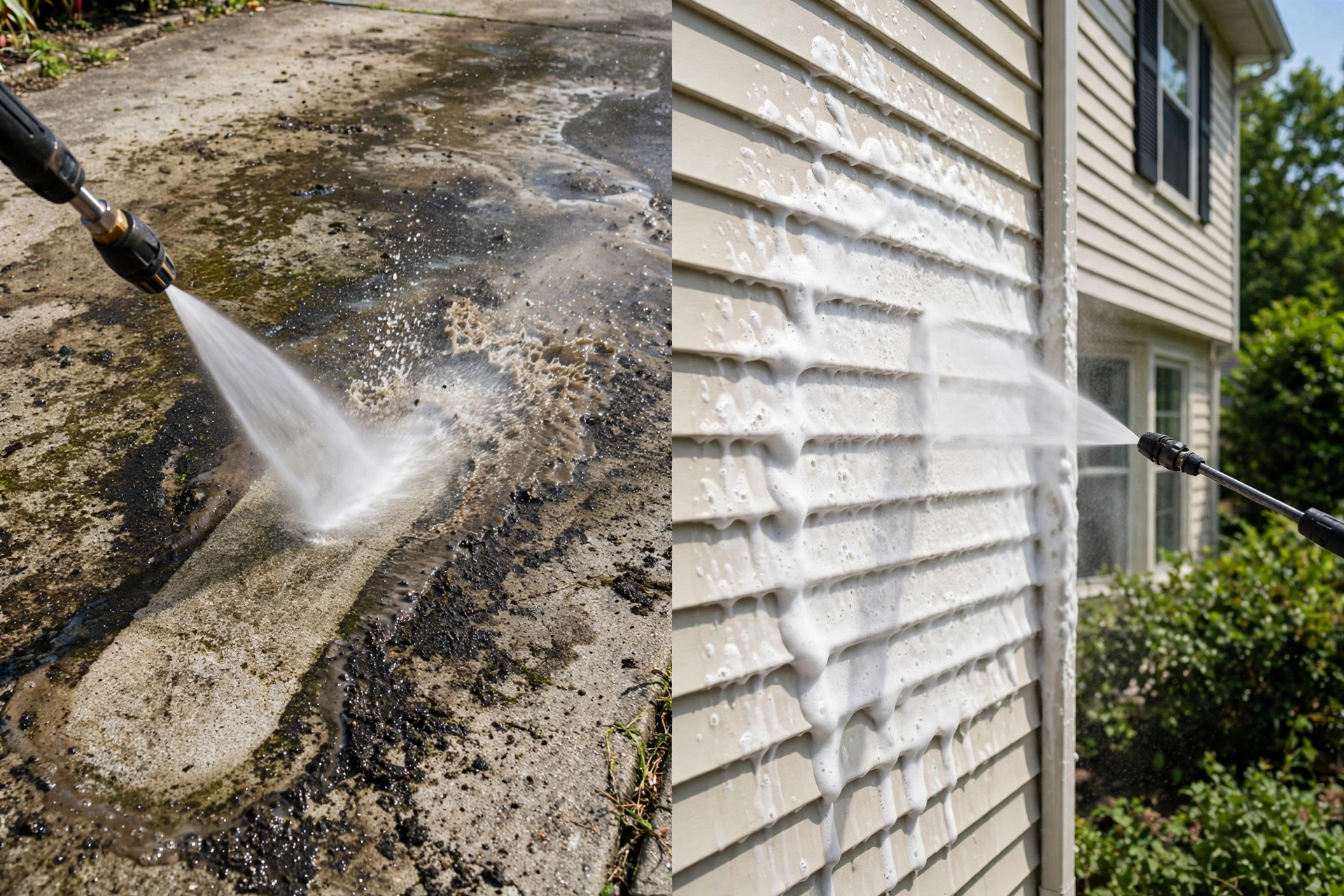
Use soft washing for anything delicate and pressure washing only for hard surfaces; most homes need both. Pressure washing cleans mechanically with a high-pressure jet, while soft washing cleans chemically: low pressure plus detergent that kills mold and algae at the root, followed by a gentle rinse.
| Method | How it works | Typical pressure | Best for | Watch out for |
|---|---|---|---|---|
| Pressure washing | High-pressure water jet | 1,300 to 3,000 PSI | Concrete driveways, sidewalks, brick, stone | Can etch wood, gouge stucco, force water behind siding |
| Soft washing | Low pressure plus cleaning solution | Under 500 PSI | Vinyl and wood siding, stucco, painted surfaces, roofs | Chemicals must not dry on the surface; protect plants |
The costliest mistake is treating the two as interchangeable. High pressure gouges stucco, furs wood grain, and can force water behind vinyl siding where mold grows unseen. Meanwhile, soft washing an oil-stained driveway barely touches the stain. The rule: if high pressure could damage it, soft wash it.
What Equipment and Supplies Do You Need?
The right setup makes the job safer and faster.
The washer: Electric washers (1,300 to 2,000 PSI) suit most house-washing tasks and are lighter and quieter than gas models (2,500 PSI and up), which are better for large concrete areas. Watch GPM (gallons per minute) too: higher GPM rinses faster.
Nozzles: Use a 25-degree (green) or 40-degree (white) nozzle for house exteriors. Never use a 0-degree (red) nozzle on siding, wood, or stucco: its pinpoint jet can cut skin and carve surfaces. A downstream injector, a roughly twenty-dollar part, lets a standard washer apply detergent at low pressure for soft washing.
Cleaning solutions: Oxygen-bleach powder with water and a squirt of dish soap handles most siding; a dedicated vinyl siding cleaner works well for vinyl. Severe algae calls for diluted sodium hypochlorite, a strong chemical demanding careful plant protection.
Safety gear and extras: Safety goggles, rubber gloves, closed-toe shoes, a pump sprayer, plastic sheeting and tape for outlets and vents, and an extension wand. Never operate a pressure washer from a ladder: the recoil can throw you off balance.
How Do You Pressure Wash a House Safely?
Follow this sequence and you will get professional-looking results without the damage that gives pressure washers a bad reputation. When pressure washing house siding and trim, the order of operations matters more than the machine itself.
- Prepare the area: close windows and doors, cover outlets, fixtures, and vents with plastic and tape, move furniture away, and keep kids and pets inside.
- Pre-wet plants with plain water so foliage absorbs less chemical runoff.
- Test a hidden spot behind a shrub to check for discoloration.
- Apply detergent bottom to top to prevent streaking from dirty runoff.
- Let it dwell 5 to 10 minutes without drying; mist lightly on hot days.
- Rinse top to bottom with clean water, staying two-plus feet back at a downward 45-degree angle with steady overlapping sweeps.
- Work in sections, finishing one wall at a time with overlapping passes.
- Re-rinse landscaping to wash chemical overspray off plants.
Pressure Washing House Siding: Safety Recap
- Two-plus feet of distance, 45-degree downward angle, 25 or 40-degree nozzle only.
- Detergent bottom to top, rinse top to bottom, plants pre-wet and re-rinsed.
What Is the Best Way to Clean House Siding?
The best way to clean house siding depends on the material, but soft washing is the default; only masonry tolerates real pressure.
Vinyl siding
Soft wash with a vinyl siding cleaner or oxygen-bleach solution, then rinse gently. High pressure can crack panels or drive water behind them. Older vinyl often develops oxidation, a chalky white film; light oxidation rinses off, but heavy chalking means the surface is degrading and may need paint made for vinyl. (Vinyl siding background.)
Wood siding
Use the lowest effective pressure and keep the wand well back: aggressive washing furs the grain and strips paint. Wash with the grain and let wood dry fully for at least two days before repainting.
Brick
Brick tolerates pressure better than siding, but old mortar does not. Keep pressure moderate, angle the wand, and avoid blasting mortar joints. Soft wash painted brick instead.
Stucco
Never pressure wash stucco: it gouges easily and cracks let water into the wall. Soft wash only with gentle detergent, and repair cracks first.
Fiber cement siding
Fiber cement boards are durable but their painted finish is not. Soft wash with mild detergent, and check the manufacturer’s care guidance, since aggressive washing can void finish warranties.
How Do You Remove Mold, Mildew, and Algae from Siding?
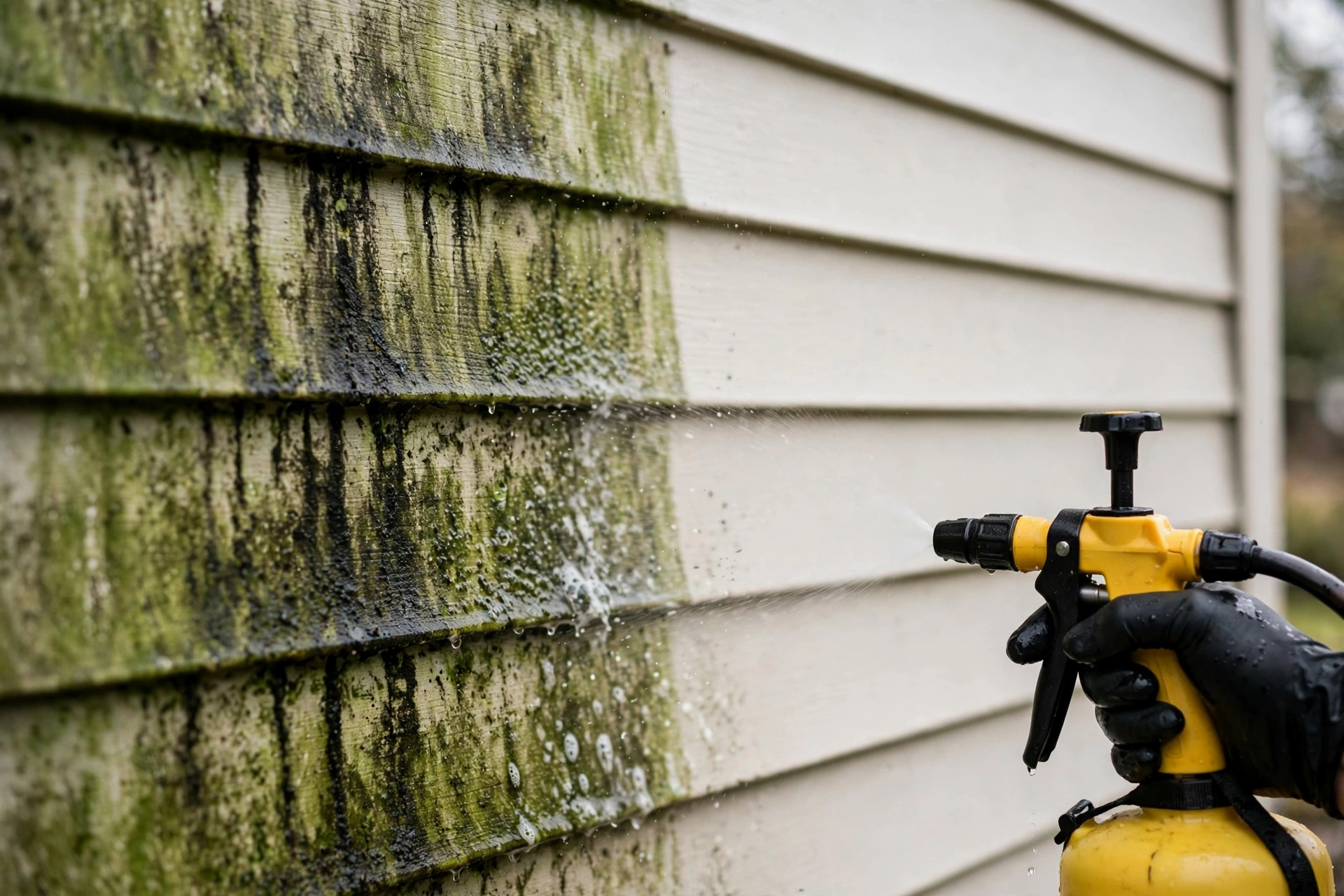
Green algae, black mildew streaks, and blotchy mold are the top reason homeowners wash their houses, and the easiest to mis-treat: blasting live growth with water alone just spreads spores. Kill it first.
For typical mildew, mix oxygen-bleach powder at one-quarter pound per gallon of water with one-eighth cup of dishwashing liquid. Apply with a pump sprayer, let it sit ten to fifteen minutes, scrub stubborn spots with a soft brush, and rinse thoroughly. Wear a mask and rubber gloves.
For severe, widespread algae, professionals use diluted sodium hypochlorite. It is effective but unforgiving: pre-wet and cover every nearby plant, never let it dry on the siding, and never mix it with acids or ammonia, which can release dangerous gases. If growth keeps returning within months, persistent shade or moisture is the cause, and trimming trees or improving drainage helps more than repeated washing.
How to Clean House Exterior Without a Pressure Washer
No pressure washer? You can still get excellent results on light to moderate grime with a garden hose, a pump sprayer, and some elbow grease. This is also the right approach for delicate surfaces, small homes, and spot cleaning between full washes.
Hose the wall down to remove loose dirt. Mix cleaning solution in a pump sprayer or bucket, apply with the sprayer or a long-handled soft brush, and scrub bottom to top in sections. This is the practical answer for anyone searching how to clean house exterior without pressure washer equipment: dwell time and gentle scrubbing replace machine pressure. Siding cleaning kits with hose attachments make it easier. Rinse top down on a firm spray setting. For a one-story vinyl home, this is often all you need.
How Often Should You Wash Your House Exterior?
So how often should you wash house exterior surfaces? Every one to two years for most homes, but go annual if you live in a humid climate, under heavy tree cover, on a north-facing shaded lot, near a busy road, or on the coast where salt spray settles.
Watch for signals, not the calendar: green or black discoloration, slippery siding, and dark streaks under gutters mean growth is active. [INTERNAL LINK: spring home maintenance checklist] A quick spring walk-around catches these early, when a light wash suffices.
What About Driveways, Gutters, and Other Surfaces?
Driveway cleaning: Concrete genuinely wants pressure: use 2,500 to 3,000 PSI with a 25-degree nozzle, keep the wand moving, and overlap passes to avoid striping. Pull weeds from cracks first. Oil stains need a degreaser applied beforehand, since pressure alone rarely lifts them.
Gutter cleaning: Scoop out debris by hand or with a gutter scoop, then flush gutters and downspouts with a garden hose. A plumber’s snake clears stubborn downspout clogs. [INTERNAL LINK: gutter cleaning and maintenance guide]
Windows, trim, and screens: Never aim a pressure washer at windows: it breaks seals and forces water inside. Wash frames by hand, clean glass separately, and wash removed screens flat with soapy water and a soft brush.
Should You DIY or Hire a Professional?
DIY house washing costs a fraction of professional service: a day’s washer rental plus detergents typically runs well under a hundred dollars, while hiring a pro usually costs a few hundred dollars depending on home size and region. One Canadian company, Shine City Pressure Washing, publishes a typical range of 350 to 800 dollars for an average house, representative of pro pricing in many markets.
Hire a pro for multi-story homes, steep or fragile roofs, lead paint (never pressure wash it), or physical limitations. Ask whether they soft wash siding: a contractor who aims high pressure at your walls is a red flag.
What Mistakes Should You Avoid?
- Too much pressure or the wrong nozzle. The 0-degree red nozzle has no place in house washing. Start gentle and increase only if needed.
- Spraying upward under siding laps. This drives water behind the siding, where it feeds hidden mold.
- Letting chemicals dry on the surface. Dried detergent leaves residue and can discolor paint. Work in sections on hot days.
- Skipping plant protection. A five-minute pre-rinse saves hundreds of dollars in landscaping.
- Washing in harsh midday sun. Cleaners evaporate too fast. Work mornings or overcast days.
- Pressure washing windows, screens, or seals. The force breaks seals, tears screens, and strips caulking.
- Skipping the test spot. A quick check behind a bush reveals bad reactions before they show from the street.
Frequently Asked Questions
Can pressure washing damage my house?
Yes, if used incorrectly. High pressure can crack vinyl siding, gouge stucco, fur wood grain, strip paint, and force water behind siding where mold grows unseen. Damage is almost always a method error, not a machine problem: the right pressure, nozzle, and angle for each surface keeps the job safe.
What is the difference between soft washing and pressure washing?
Pressure washing cleans mechanically with high-pressure water (1,300 to 3,000 PSI) and suits hard surfaces like concrete. Soft washing cleans chemically with low pressure (under 500 PSI) plus a detergent solution that kills mold and algae, making it the safer choice for siding, stucco, and painted wood.
How can I clean my house exterior without a pressure washer?
Use a garden hose, a pump sprayer, and a long-handled soft brush. Apply an oxygen-bleach cleaning solution from the bottom up, scrub gently, let it dwell for ten minutes, and rinse from the top down. Siding cleaning kits with hose attachments make this easy and work well for one-story homes.
How often should you wash your house exterior?
Every one to two years for most homes. Wash annually if your home sits in shade, in a humid climate, under heavy tree cover, near a busy road, or in a coastal area. Visible algae, mildew streaks, or slippery siding mean it is time regardless of the calendar.
Is bleach safe for house siding?
Oxygen bleach is safe for most siding when mixed and rinsed properly. Chlorine-based sodium hypochlorite is stronger and effective against severe algae, but it can harm plants and react with certain paint pigments, so always test a hidden area first and protect all landscaping thoroughly.
How long does it take to pressure wash a house?
A one-story home typically takes three to five hours including prep and plant protection; a two-story home can take a full day. First-timers should budget extra time for the test spot, section-by-section work, and thorough rinsing of both the house and the landscaping.
Conclusion
Learning how to clean house exterior surfaces comes down to one principle: match the method to the material. Soft wash siding, stucco, and painted wood with low pressure and the right detergent, reserve real pressure for concrete and brick, and protect plants, pets, and windows. Done right, a weekend of washing restores curb appeal, extends the life of paint and siding, and prevents moisture problems that turn into expensive repairs.
Your next step: walk around your house this weekend, note which surfaces need attention, and pick your method from the guide above. For more practical ideas for your home and everyday life, visit the Voice of Wave homepage.