
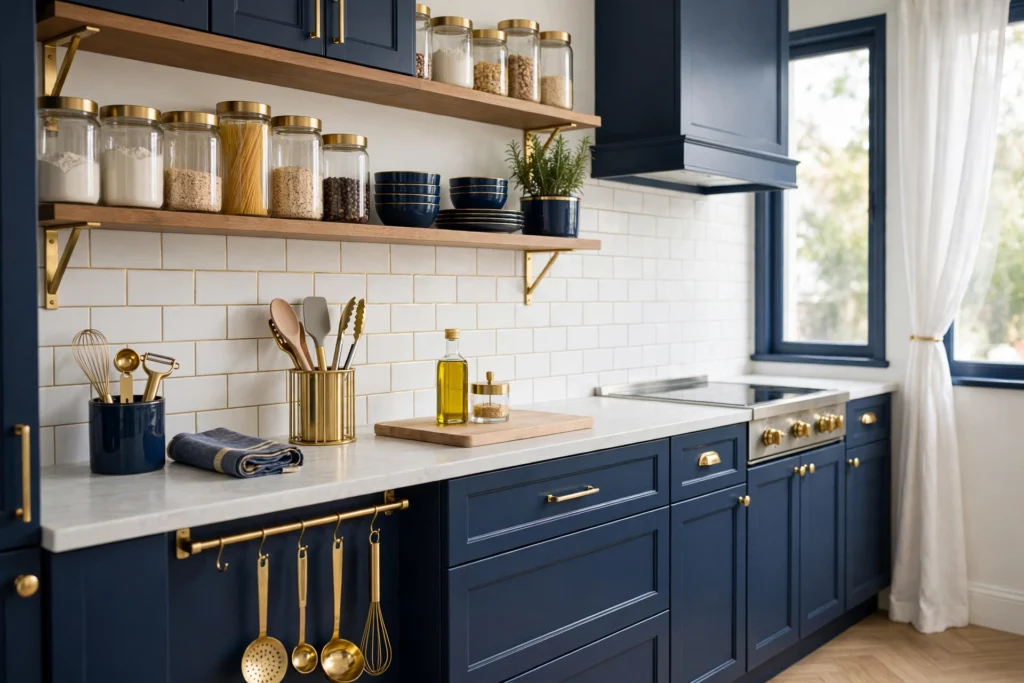
Kitchen organization ideas for small kitchens work best when every item has one home near the place it is used: daily tools at hand height, food grouped by type, and only daily-use items left on the counter. This guide gives 25 ideas for cabinets, drawers, counters, the pantry, the fridge, and walls.
Kitchen organization ideas are plans that put each tool, pan, and food item in one fixed place, so cooking takes fewer steps and less searching. A small kitchen gains the most, since it has less counter space, fewer cabinets, and no room for items with no daily job. The ideas below cover 5 work zones, a 1 hour audit, cabinets, drawers, counters, the pantry, the fridge, and walls, plus a buy-first list and 5 mistakes to avoid. Browse the Food guides for more kitchen routines in the same series.
Key Takeaways
- Start with a 1 hour audit: empty one area at a time, sort into keep, relocate, donate, and throw away.
- Give each cabinet one job and store daily items between knee and shoulder height.
- Clear containers, shelf risers, turntables, and drawer dividers fix most small kitchen problems for under 50 dollars.
- Keep the fridge at or below 40°F (4°C), the freezer at 0°F (-18°C), and eat cooked food within 3 to 4 days (Source: USDA Food Safety and Inspection Service).
- A 10 minute nightly reset keeps the system working: clear the sink, wipe the counters, and put tools back.
Table of Contents
- The Best Kitchen Organization Ideas
- How to Start Organizing
- Organizing Kitchen Cabinets
- Organizing Kitchen Drawers
- Keeping Kitchen Counters Clear
- Organizing a Small Pantry
- Organizing the Fridge
- Storing Pots, Pans, and Lids
- Using Walls and Doors
- What to Buy First
- Mistakes to Avoid
- Conclusion
- FAQs
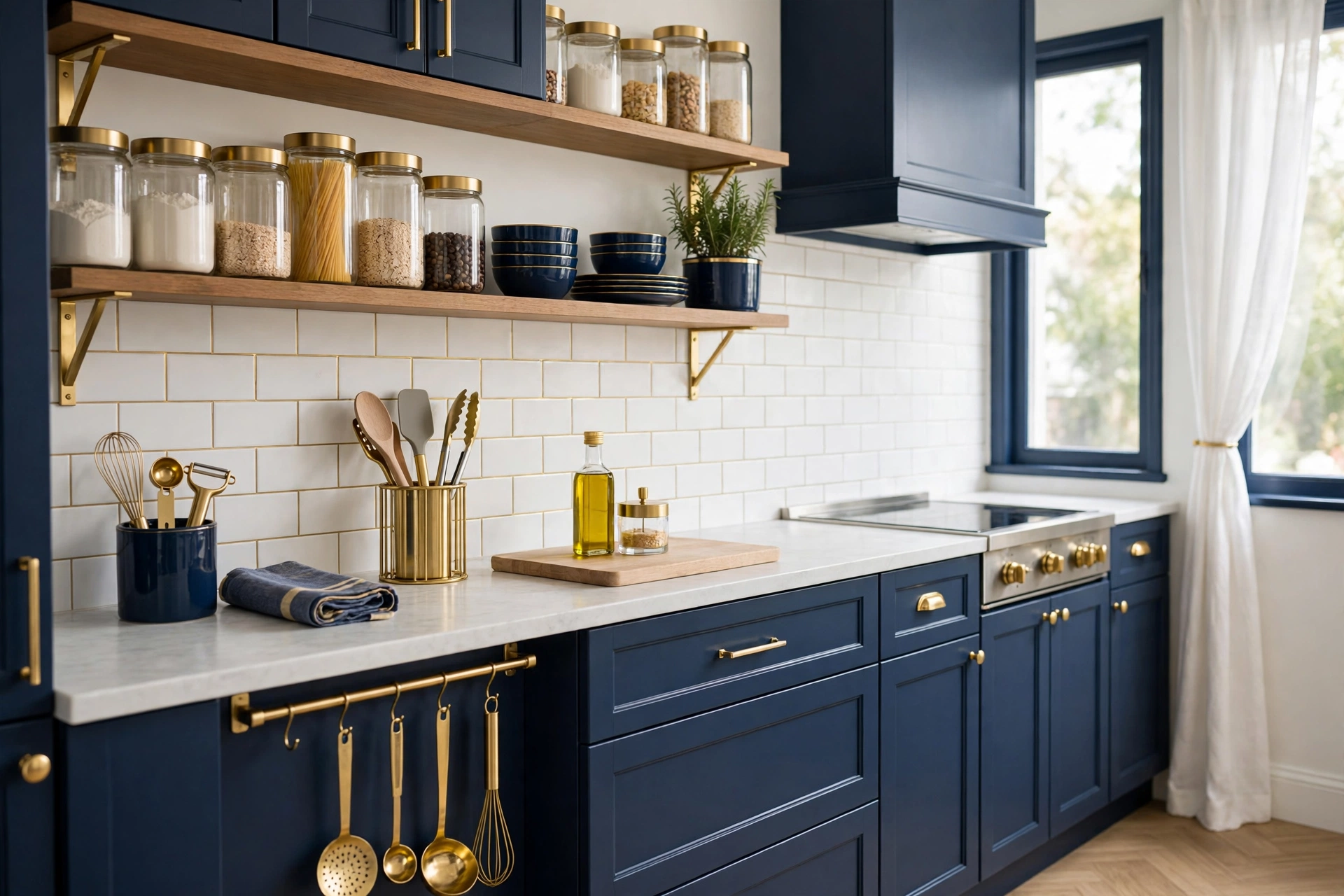
What Are the Best Kitchen Organization Ideas for Small Kitchens?
The best kitchen organization ideas for small kitchens are 5 work zones, an audit, shelf risers, turntables, drawer dividers, clear containers, a zoned fridge, and wall rails, in that order.
A small kitchen works through 5 zones. The cooking zone sits near the stove and holds pans, oils, and spatulas. The prep zone sits on the largest clear counter and holds knives, boards, and bowls. The cleaning zone sits near the sink, the food storage zone near the fridge, and the serving zone near the table. Each zone holds only the items used in that job.
The kitchen work triangle links the stove, sink, and fridge in a short path, and the phrase was coined around 1947 by the University of Illinois Building Research Council (Source: University of Illinois Building Research Council, 1947). Zones build on that idea: the triangle sets the room layout, and zones set where each item lives.
How Do You Start Organizing a Small Kitchen?
You start organizing a small kitchen with a 1 hour audit: empty one area, sort into 4 piles, measure the space, and only then buy organizers.
Follow these 5 steps before you spend anything:
- Empty one area and wipe it clean.
- Sort into 4 piles: keep weekly, relocate, donate, and throw away.
- Throw out expired food, broken tools, and duplicates.
- Group what stays by task: cooking, baking, and cleaning.
- Measure each shelf and drawer: width, depth, and clear height.
Daily items go at eye level near their zone, weekly items go higher or lower, and rare items go on the top shelf or out of the kitchen. A 2026 Houzz Kitchen Trends Study found that 47 percent of homeowners are adding pantry cabinets (Source: Houzz Kitchen Trends Study, 2026). A small kitchen cannot add cabinets, so it must sort harder.
How Do You Organize Kitchen Cabinets?
You organize kitchen cabinets by giving each cabinet one job, adding a shelf riser, putting a turntable in deep corners, and storing lids upright.
A wire or bamboo shelf riser costs about 10 to 20 dollars and creates a second level, so mugs and plates stack in 2 layers. A 10 inch turntable costs about 8 to 15 dollars and spins oils and sauces to the front of a deep cabinet. In my own kitchen, a 10 inch turntable ended the daily hunt for soy sauce.
Pull-out shelves bring the back of a deep cabinet to you, and they cost about 25 to 60 dollars per shelf. Vertical dividers stand baking sheets, boards, and lids on edge. The inside of a cabinet door holds a spice rack or measuring spoons. The National Kitchen and Bath Association recommends that at least half of kitchen storage sit between 18 and 48 inches off the floor (Source: National Kitchen and Bath Association).
How Do You Organize Kitchen Drawers?
You organize kitchen drawers with dividers, a spice drawer with flat jars, and one small junk drawer with a tray.
The top drawer near the prep zone holds the daily tools in slots: knives, peelers, measuring spoons, and scissors. A cutlery tray costs about 10 to 15 dollars and fits most drawers. The spice drawer works best with jars laid flat in rows, labels facing up.
The junk drawer needs a limit: one tray, one drawer, and a monthly clear-out. Keep only items used in the kitchen, and move mail and keys to a tray near the door. Deep drawers suit pots and pans better than plates: a pan organizer holds pans upright and lids in a sorter beside them.
How Do You Keep Small Kitchen Counters Clear?
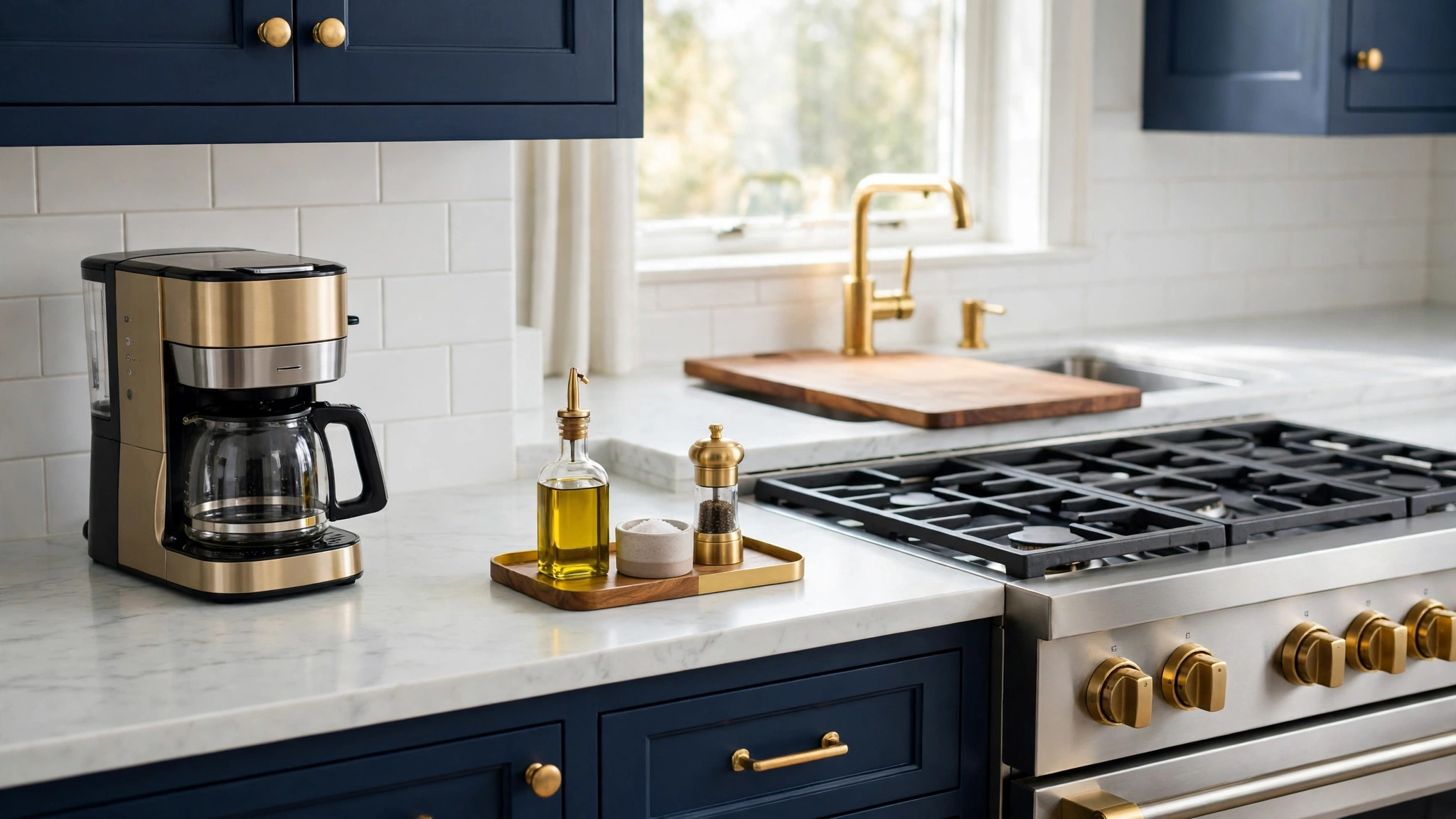
You keep small kitchen counters clear with one rule: only items used every day earn a permanent spot on the counter.
A coffee maker earns counter space, and a toaster earns it only when it runs daily. A blender, a food processor, and a stand mixer do not earn it. A tray groups oil, salt, and pepper by the stove into one unit that catches spills.
An over-sink cutting board adds prep space when needed and disappears when it is not. An over-sink dish rack frees a whole section of counter, and both cost about 15 to 30 dollars. Keep one section of counter fully clear for chopping and mixing, and wipe the counters each night.
How Do You Organize a Small Pantry?
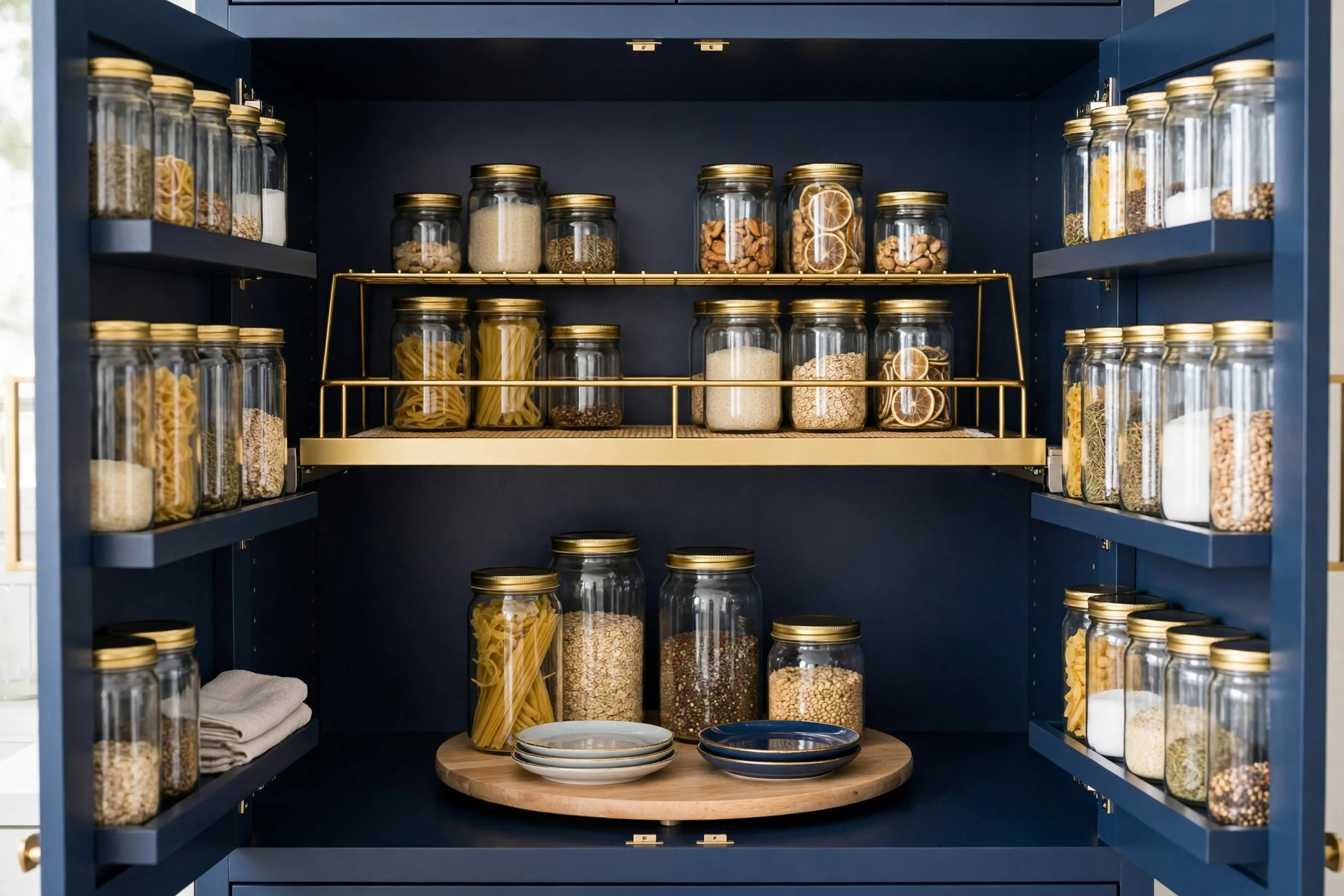
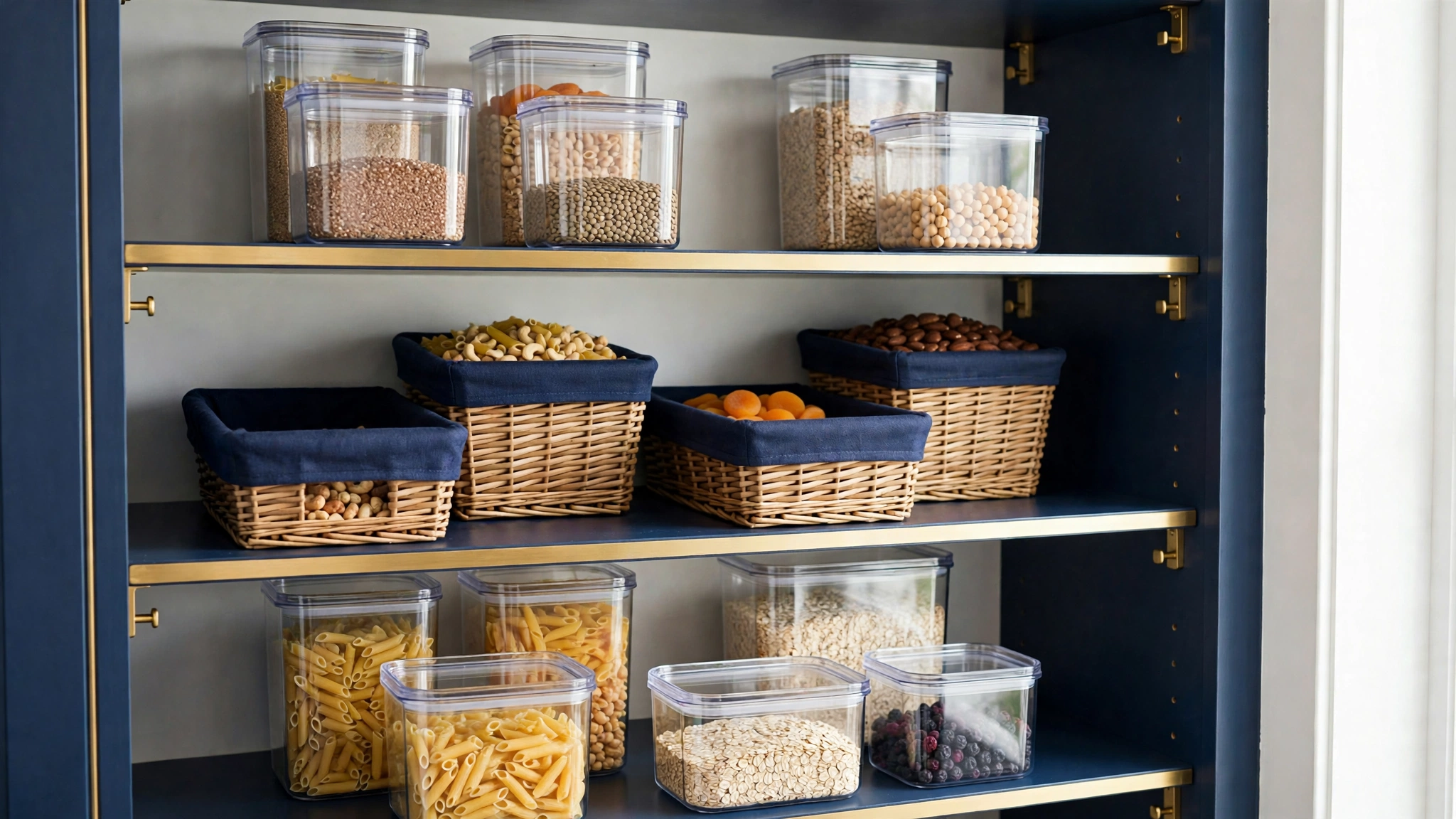
You organize a small pantry by grouping food by type, moving dry goods into clear containers, and placing new food behind older food.
Decant only when it helps. Clear, square jars for flour, rice, and oats save space and show levels at a glance. Group the rest into labeled bins: grains, canned goods, baking, snacks, and sauces. Staples sit at eye level, heavy packages sit low, and rare items sit on the top shelf.
Food rotation cuts waste. First in, first out, called FIFO, means the oldest food gets used first: place new food behind older food. Confusion over date labels accounts for roughly 20 percent of consumer food waste (Source: U.S. Food and Drug Administration). Write the contents and the date on each container.
Pair this pantry plan with the storage steps in Meal Prep for Beginners: A Complete Guide.
How Do You Organize the Fridge in a Small Kitchen?
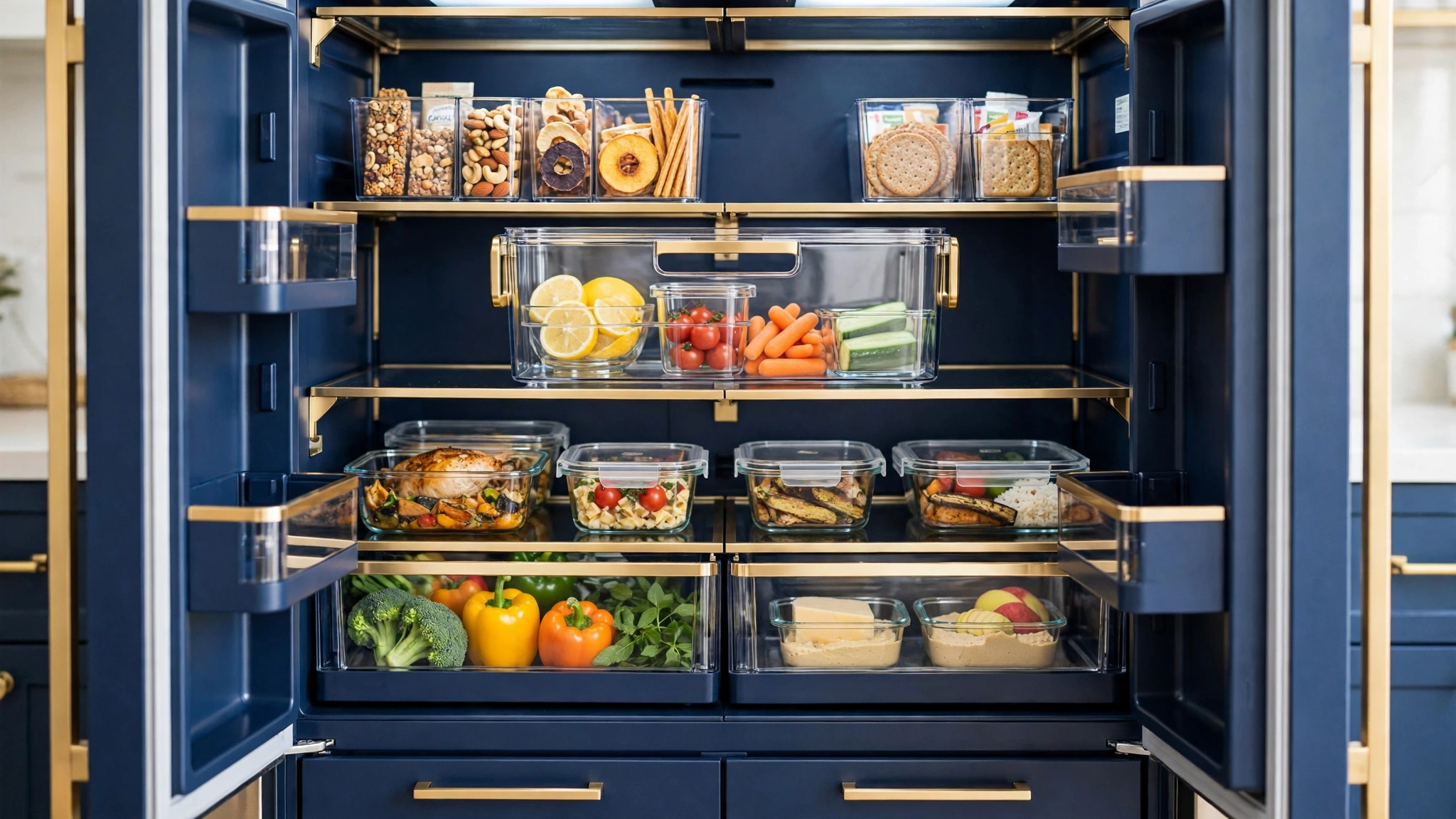
You organize the fridge in a small kitchen by assigning one zone to each food group, keeping a use first bin handy, and holding the fridge at or below 40°F (4°C) with the freezer at 0°F (-18°C).
Assign the zones this way: top shelf for leftovers, middle shelves for dairy and eggs, lower shelves for raw meat in a tray, drawers for produce, and the door for condiments. Raw meat sits lowest so drips cannot fall on ready food.
Food storage guidance lists the same goals: safe temperatures, rotation of older food first, and labeled containers. Cooked food keeps 3 to 4 days in the fridge, and frozen portions keep 2 to 3 months in airtight containers (Source: USDA Food Safety and Inspection Service). Cool cooked food fast in shallow containers, move it to the fridge within 2 hours, and throw out any portion past 4 days.
How Do You Store Pots, Pans, and Lids Without a Pile?
You store pots, pans, and lids without a pile by standing pans upright in a rack and filing lids in a vertical sorter.
A pan organizer costs about 15 to 25 dollars and fits a standard cabinet. It turns a stack into a row. A file sorter holds lids upright in a row, which stops the lid avalanche. Hang the most used pan on a wall rail near the stove when cabinet space runs out.
Store lids with their pans only when the pair fits without stacking. Keep the stockpot and the roasting pan out of the daily cabinet when they run once a week or less. The daily pan, pot, and sheet pan stay in the cooking zone, and the rest move up or out.
How Do You Use Walls and Doors for Kitchen Storage?
You use walls and doors for kitchen storage with a wall rail, hooks inside cabinet doors, a pegboard, and a slim rolling cart for a narrow gap.
A magnetic knife strip frees the space a knife block takes up and keeps blades visible and dry. A wall rail holds ladles, spatulas, and measuring cups beside the stove. A pegboard holds pans and cups, and the hooks move when the layout changes. Adhesive hooks inside cabinet doors hold measuring cups, with no holes in rented walls.
A slim rolling cart fits a gap by the fridge and works as a pantry. It costs about 25 to 40 dollars and rolls out of the way when the floor needs cleaning. A tension rod inside a cabinet holds spray bottles by their triggers, which frees the cabinet floor for sponges and cloths.
What to Buy First vs What to Skip
Buy risers, a turntable, dividers, containers, and labels first, and skip matching sets and single-use gadgets until the system works.
| Buy | Cost | Why it works |
|---|---|---|
| Shelf risers, 2 pack | 10 to 20 dollars | Adds a second level |
| Turntable, 10 inch | 8 to 15 dollars | Spins contents to the front |
| Drawer dividers or tray | 10 to 15 dollars | Stops drawer piles |
| Clear containers, 4 pack | 15 to 25 dollars | Shows levels and stacks |
| Labels and marker | 3 to 5 dollars | Keeps bins clear |
| Rolling cart | 25 to 40 dollars | Fills a narrow gap |
Skip a full matching set until you know which sizes you use. Skip single-use gadgets and open baskets on high shelves, since they collect dust and hide their contents. Measure every shelf before you order.
What Mistakes Make a Small Kitchen Harder to Use?
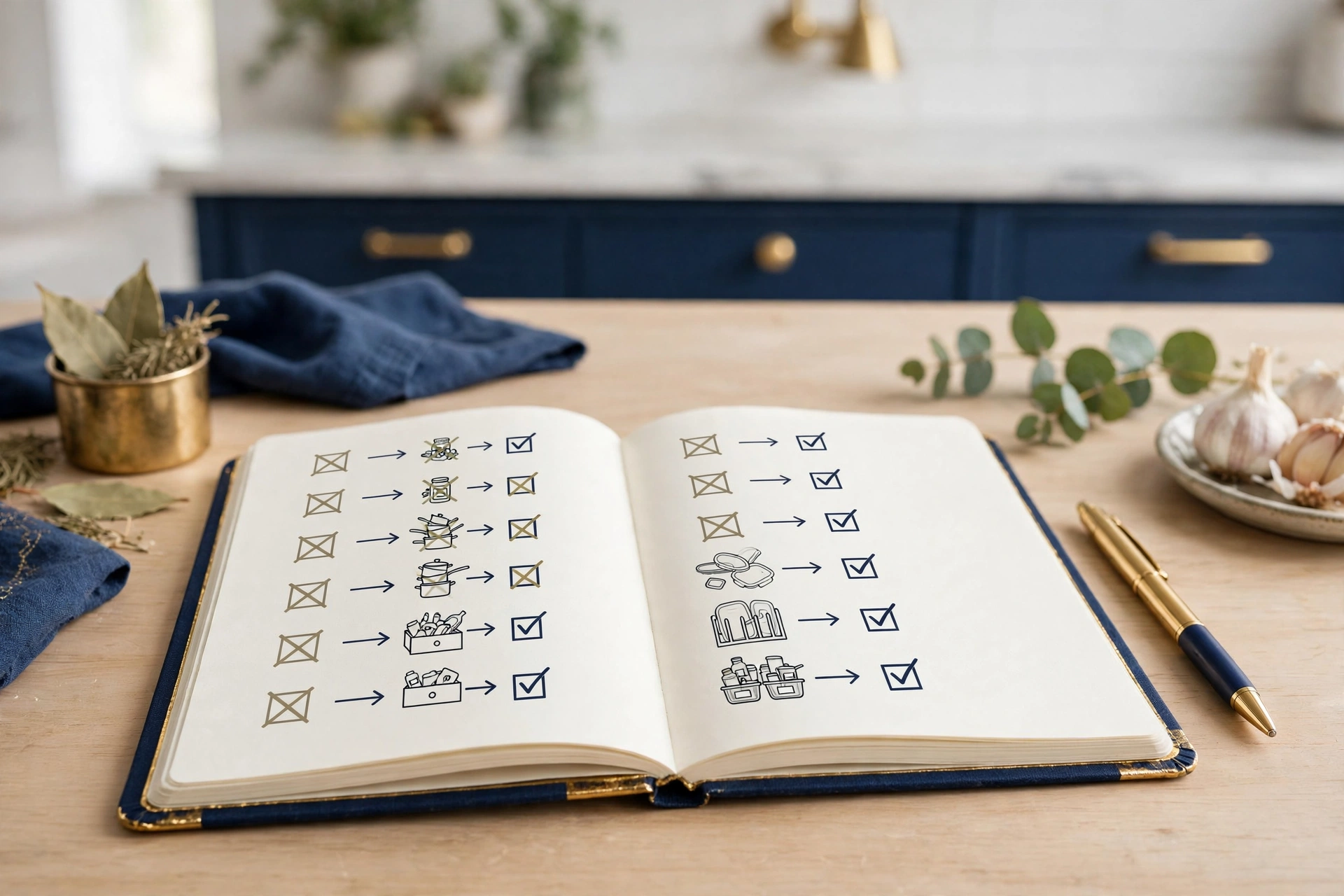
The mistakes that make a small kitchen harder to use are buying bins first, keeping duplicates, storing daily items out of reach, crowding the counter, and skipping the nightly reset.
- Buying bins before the audit. Fix it by emptying one area, sorting into 4 piles, and measuring first.
- Keeping duplicates and broken tools. Fix it by keeping one of each tool and throwing out anything broken or expired.
- Storing daily items out of reach. Fix it by moving daily plates, pans, and oils between knee and shoulder height.
- Leaving the counter crowded. Fix it by keeping only daily-use items on the counter.
- Skipping the nightly reset. Fix it with a 10 minute routine: clear the sink, wipe the counters, and put tools back.
A small kitchen never gains more space, and that is fine. It gains time and calm when every item has one home and the nightly reset holds the system in place.
Conclusion
Kitchen organization ideas for small kitchens come down to one system: audit first, give each cabinet one job, group food by type, keep daily items at hand height, and hold the counter clear. The first 5 buys in this guide cost under 50 dollars, and they turn a crowded kitchen into a room that is easy to cook in. Start tonight with one cabinet: empty it, sort it, and put back only what you use each week. Voice of Wave covers kitchen and home guides in this plain style.
Read more guides on the Voice of Wave blog.
FAQs
What is the best way to organize a small kitchen?
The best way to organize a small kitchen is to audit first, then set up 5 work zones: cooking near the stove, prep on the largest counter, cleaning near the sink, food storage near the fridge, and serving near the table. Give each cabinet one job and keep only daily-use items on the counter.
How do I organize my kitchen on a budget?
You can organize a small kitchen on a budget for under 50 dollars with 5 buys: 2 shelf risers, one 10 inch turntable, drawer dividers, 4 clear containers, and labels. Audit first and measure each shelf, so you buy only what fits. Skip matching container sets and single-use gadgets until the system works.
How do I organize a small kitchen with no pantry?
A small kitchen with no pantry works with one cabinet or one shelf set as the pantry: group food by type in labeled bins, put daily staples at eye level, and use clear containers for flour, rice, and oats. Add a slim rolling cart for the gap beside the fridge, and use the inside of a cabinet door for spices.
Where should I put pots and pans in a small kitchen?
Put pots and pans in the cabinet nearest the stove, standing upright in a pan organizer. File lids upright in a sorter beside them, and hang the most used pan on a wall rail when cabinet space runs out. Move the stockpot and roasting pan to a high shelf when you use them weekly or less.
How do I keep my kitchen counters clear?
Keep kitchen counters clear with one rule: only items used every single day earn a permanent spot on the counter. Move the blender, mixer, and toaster into a cabinet, group daily items such as oil, salt, and pepper on one tray by the stove, and use an over-sink board for extra prep space. Wipe the counters each night.
How often should I reorganize my kitchen?
Reorganize a small kitchen with a full audit twice a year, and run a 10 minute reset each night to hold the system in place. Check the pantry and fridge once a month for expired food, and clear the junk drawer at the same time. A kitchen that gets a nightly reset rarely needs a full reorganization.