
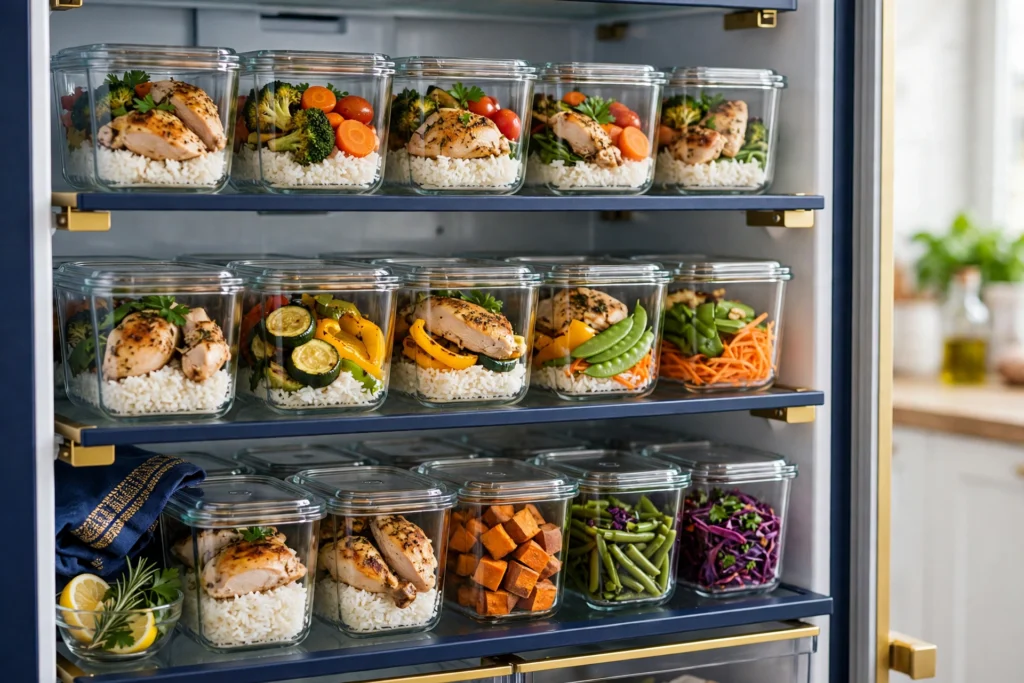
Meal prep for beginners is the practice of planning and preparing meals or meal parts in advance, then storing them in portions to eat through the week. Meal prep for beginners means cooking once and eating well for 3 to 4 days, with about 60 to 90 minutes of work in one session. A beginner starts with one meal type, such as weekday lunches, and preps 3 to 4 portions instead of a full week of food. The method rests on 4 parts: a short plan, one shopping trip, one cooking session, and safe storage in labeled containers. It cuts weeknight cooking, lowers food waste, and keeps ready meals on hand when time is short.
Key Takeaways
- Start small: prep 3 to 4 portions of one meal type, such as weekday lunches, for your first week.
- Prep parts, not full menus: cook one grain, one or two proteins, roasted vegetables, and one sauce, then mix them into different meals.
- Cooked food keeps 3 to 4 days in the fridge: freeze any portion you will not eat in that window.
- One 60-minute session covers a week of lunches: a timed plan saves the most time.
- Refrigerate cooked food within 2 hours: cool it fast, pack it in airtight containers, and label each one with the contents and date.
Table of Contents
- What Is Meal Prep for Beginners?
- Why Meal Prep Saves Time and Money
- How Do I Start Meal Prep as a Beginner?
- What Equipment Do Beginners Need for Meal Prep?
- Meal Prep for Beginners: Batch Cooking vs Ingredient Prep
- How Long Does Meal Prep Last in the Fridge?
- What Should a Beginner Meal Prep First?
- A Simple 60-Minute Meal Prep Plan for Your First Week
- How Much Does Meal Prep Cost?
- 7 Meal Prep Mistakes Beginners Make (and How to Fix Them)
- Meal Prep for One Person vs a Family
- Conclusion
- FAQs
What Is Meal Prep for Beginners?
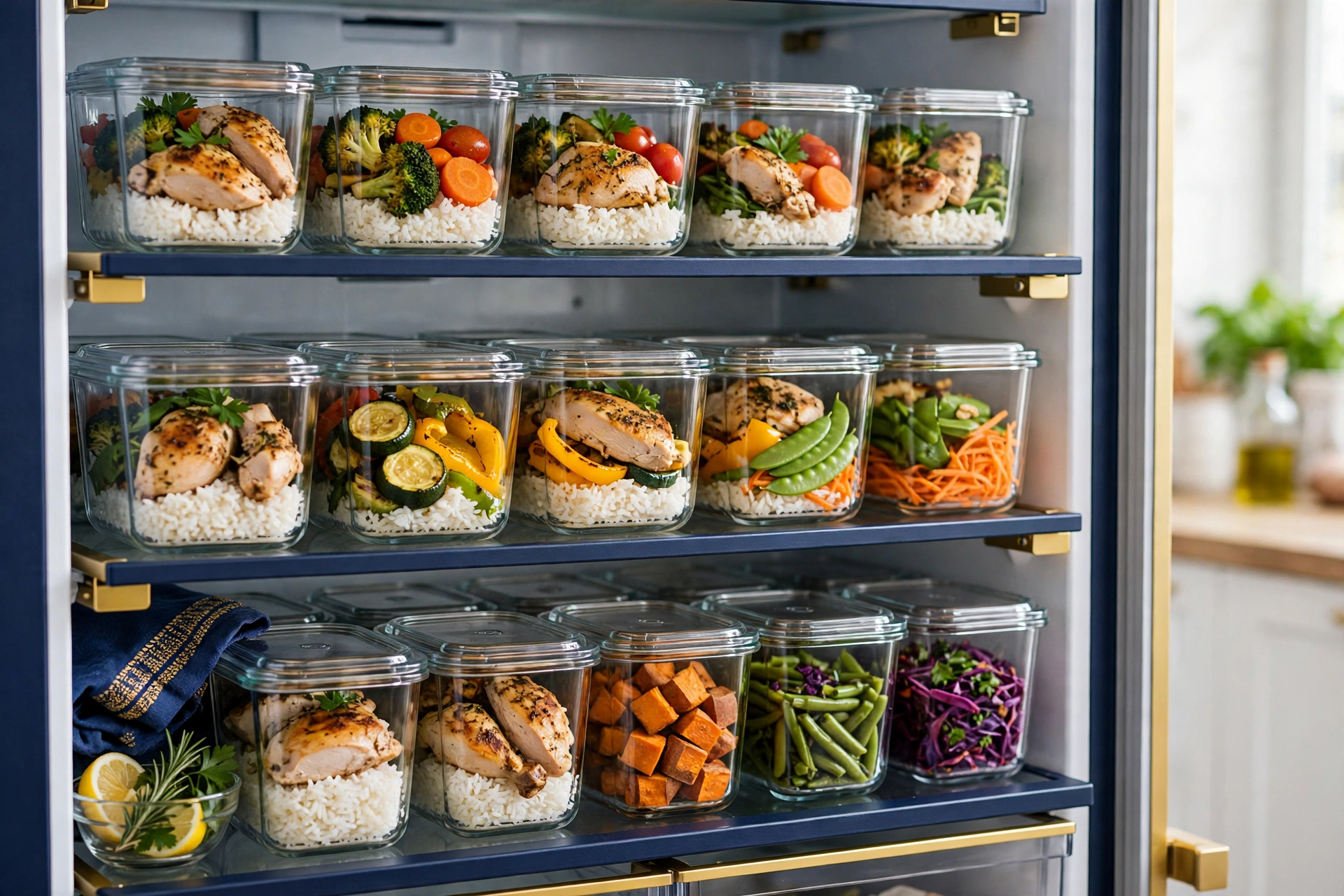
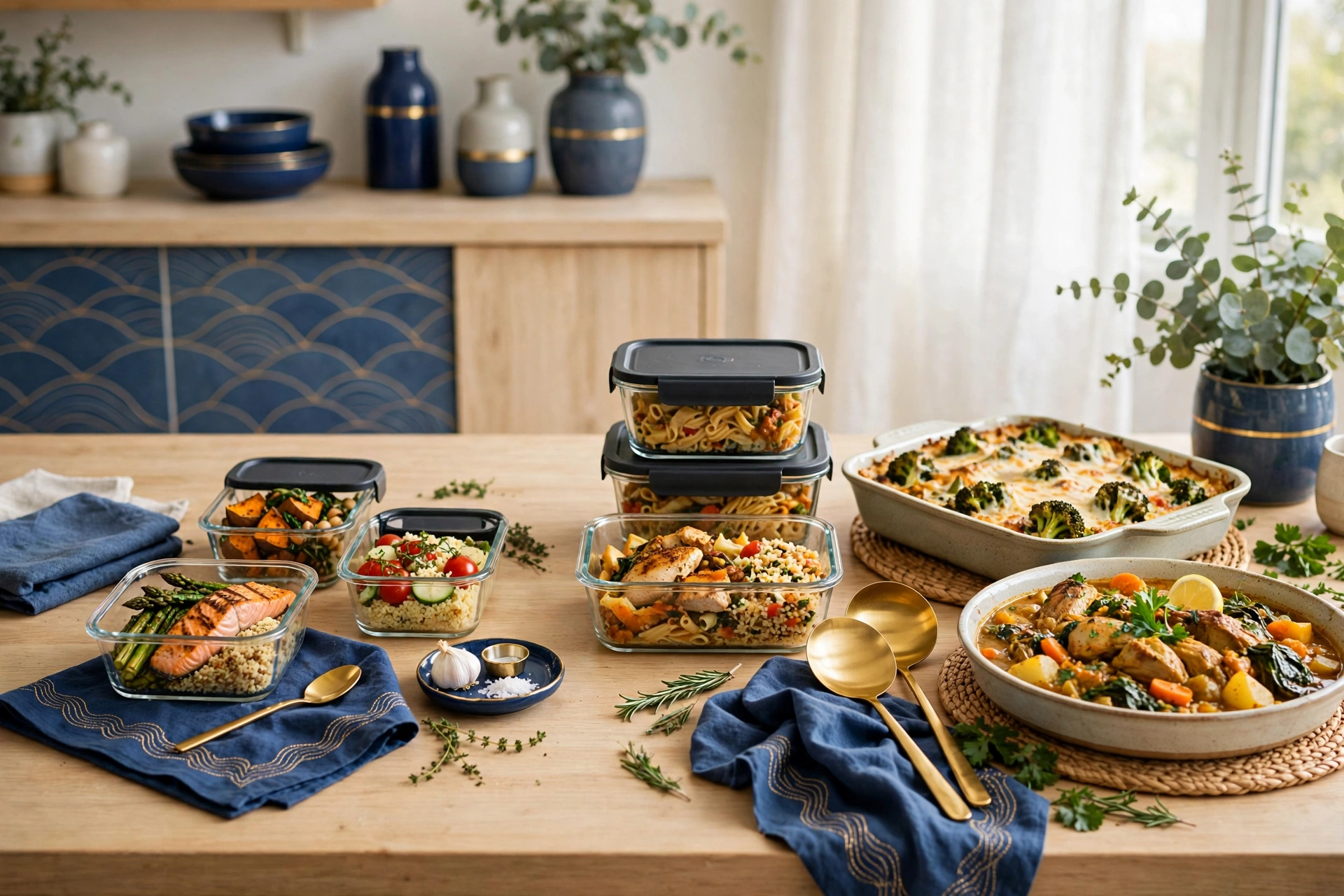
To start meal prep, pick one meal, choose 2 or 3 recipes that reheat well, shop from a written list, cook the parts in one session, and store the portions in labeled containers. Meal prep for beginners has 4 main styles. Batch cooking makes a large pot of one dish, such as chili or soup, and portions it for several days. Ingredient prep cooks separate parts, such as rice, chicken, roasted vegetables, and a sauce, so you can build different meals from the same parts. Portioned meals pack full meals into single containers for grab-and-go lunches. Freezer prep cooks double batches and freezes half for later weeks. Most beginners do best with a mix: one or two ready meals plus flexible parts that become bowls, wraps, salads, or stir-fries.
Why Meal Prep Saves Time and Money
Meal prep saves time and money because one cooking session replaces 5 separate weeknight cooking sessions, and home cooking costs less per serving than restaurant food. Meal prep works through 3 savings. Time savings come from cooking once: a 60 to 90 minute session covers 3 to 4 days of lunches. Money savings come from buying ingredients in larger amounts and wasting less food, since planned portions match what you eat. Decision savings come from a set plan: you stop choosing a meal each night and stop ordering takeout when you feel tired. Restaurant food carries an average markup of around 300% (Source: Funding Circle, 2019, cited in meal preparation). The United States Bureau of Labor Statistics reported in its 2020 Consumer Expenditures Report that the average consumer saved about $1,151 from eating out less between 2019 and 2020 (Source: Bureau of Labor Statistics, 2020). Explore more Food guides for related kitchen routines and home cooking ideas.
How Do I Start Meal Prep as a Beginner?
To start meal prep as a beginner, cover one meal for 3 to 4 days, pick 2 recipes you already like, and run one 60-minute session. The 7 steps below take you from a blank week to packed containers.
- Check your calendar first. Note late nights, meals out, and busy evenings so you prep only the meals you will eat at home.
- Pick one meal to cover. Weekday lunch is the best first pick, since it is the meal most often skipped or bought near work.
- Choose 2 or 3 recipes that reheat well. Pick dishes you already like: roasted chicken, chili, lentil soup, grain bowls, or roasted vegetables with rice.
- Write the plan and the shopping list. List each portion and the day it will be eaten, then shop from that list only.
- Cook in the right order. Start the longest job first, such as grains or roasting vegetables, then chop and wash while it cooks.
- Cool, pack, and label. Move cooked food into shallow containers, refrigerate it within 2 hours, and write the contents and date on each lid.
- Review the week. Note which meals you finished and what to change next week.
What Equipment Do Beginners Need for Meal Prep?
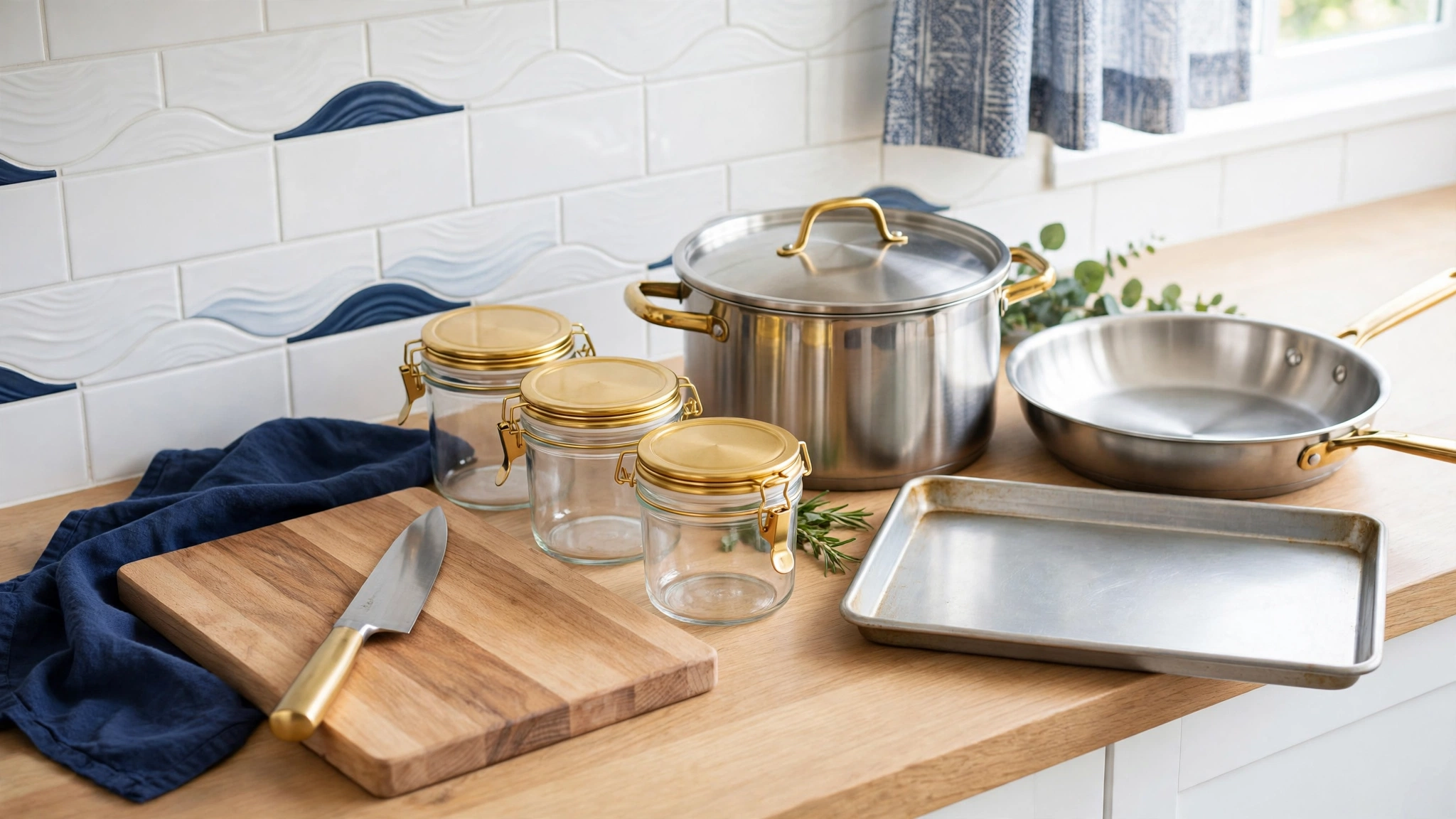
Beginners need 6 basic tools for meal prep: a sharp knife, a cutting board, a large pot, a sheet pan, a large pan, and a set of airtight containers. A sharp knife and a stable cutting board handle all chopping. A large pot cooks grains, soups, and beans. A sheet pan roasts vegetables and chicken in the oven with little attention. A large pan handles stir-fries and browning. Airtight containers in 2 or 3 sizes hold portions, and glass containers reheat better than thin plastic. A food thermometer is worth buying early, since color alone does not show whether meat is cooked through.
Meal Prep for Beginners: Batch Cooking vs Ingredient Prep
Batch cooking suits beginners who like routine and grab-and-go meals, while ingredient prep suits beginners who get bored fast or cook for people with different tastes. Batch cooking means one pot, one dish, and several identical portions. Ingredient prep means separate parts that combine into different meals each day. The table below compares the 2 methods on the points that matter most to a beginner.
| Factor | Batch Cooking | Ingredient Prep |
|---|---|---|
| Best for | People who like routine and grab-and-go lunches | People who get bored fast or cook for a household with different tastes |
| Prep time | 60 to 90 minutes for one large dish | 60 to 90 minutes for several parts at once |
| Variety | Low: the same dish repeats for days | High: the same parts become bowls, wraps, salads, or stir-fries |
| Storage | One large pot, then portion into containers | Parts stored in separate containers |
| Waste risk | Higher if you tire of the dish by day 3 | Lower, since parts can switch into a new meal |
| First-week pick | Chili, soup, curry, or a pasta bake | Rice, roasted chicken, roasted vegetables, and one sauce |
Most beginners do best with a hybrid week: one batch dish for lunches plus a set of parts for dinners. That mix gives you ready meals on busy days and choice on the days you feel like cooking.
How Long Does Meal Prep Last in the Fridge?
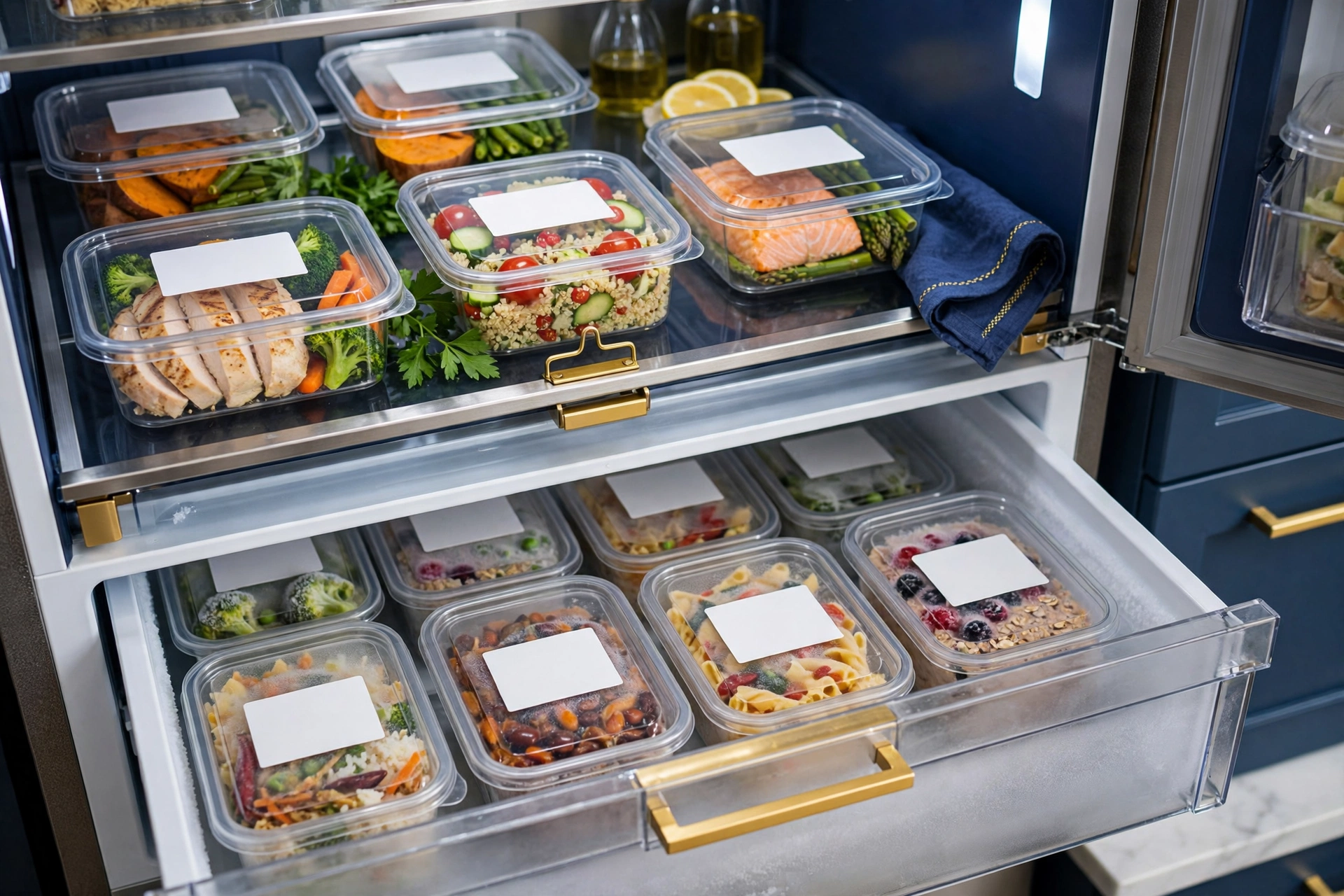
Cooked meal prep lasts 3 to 4 days in the fridge, and frozen portions last 2 to 3 months when packed in airtight containers. To store meal prep safely, follow the USDA FoodSafety.gov cold food storage chart. Cooked meat and poultry, cooked rice and pasta, and cooked vegetables keep 3 to 4 days refrigerated at 40°F (4°C) or below. Hard-boiled eggs keep about 7 days in the shell. Soups, stews, chili, and curries freeze well for 2 to 3 months. Raw chicken and raw ground meat keep only 1 to 2 days in the fridge, so cook them on prep day or freeze them. Bacteria grow fastest between 40°F and 140°F (4°C and 60°C), the range known as the danger zone, and cooked food should move through that range fast. Food safety guidance from the World Health Organization (WHO) lists 5 key rules: keep food clean, separate raw and cooked food, cook food fully, store food at safe temperatures, and use safe water and raw materials.
| Food | Fridge life | Freezer life |
|---|---|---|
| Cooked chicken, beef, or pork | 3 to 4 days | 2 to 6 months |
| Cooked rice, pasta, or quinoa | 3 to 4 days | 2 to 3 months |
| Roasted vegetables | 3 to 4 days | 2 to 3 months |
| Soups, stews, chili, and curries | 3 to 4 days | 2 to 3 months |
| Hard-boiled eggs (in shell) | About 7 days | Not advised |
| Cooked beans and lentils | 3 to 4 days | 2 to 3 months |
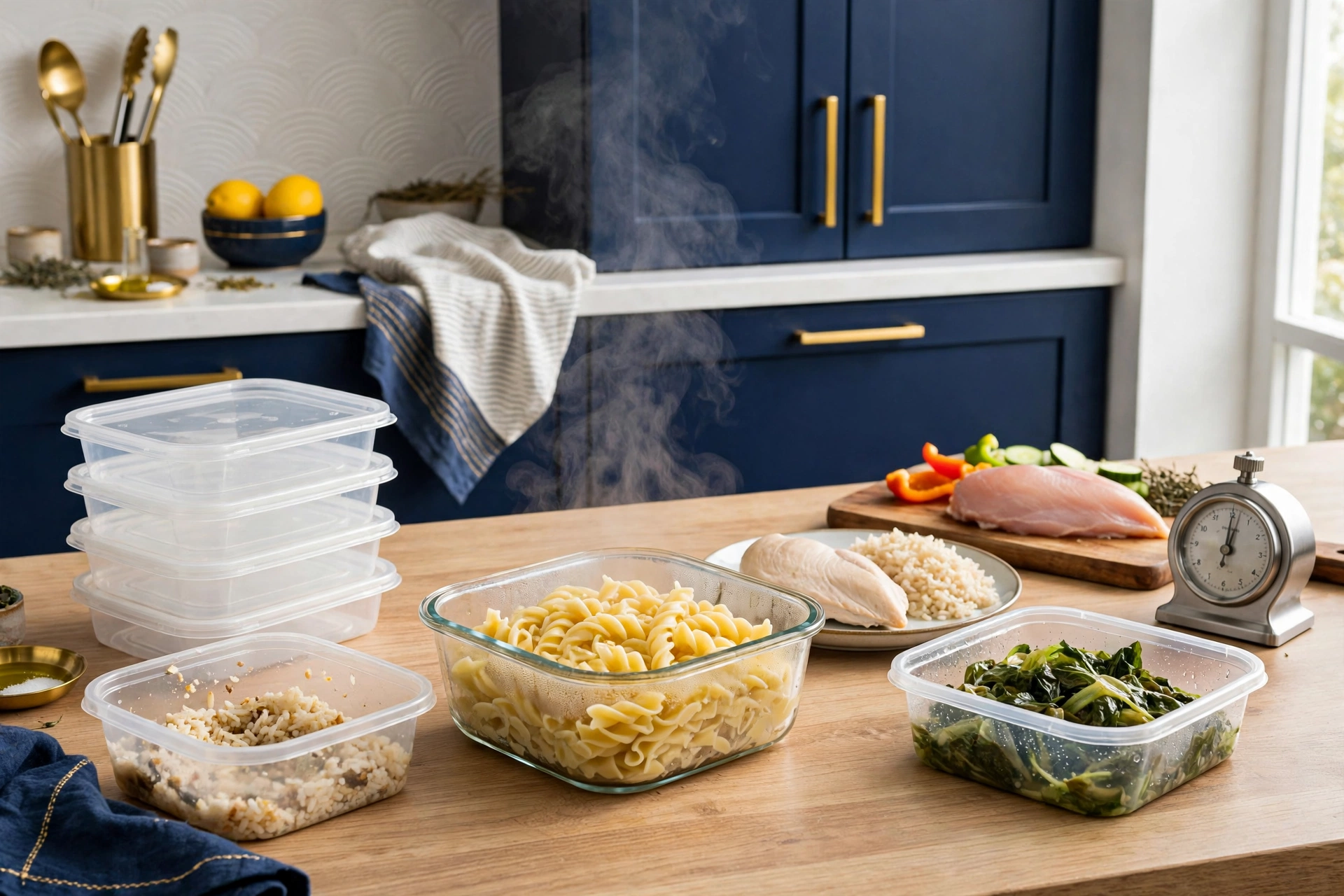
Cool cooked food fast: spread it in shallow containers so heat escapes, and put it in the fridge within 2 hours of cooking, or within 1 hour when the room is above 90°F (32°C). Reheat leftovers until they steam through the center and reach 165°F (74°C). Throw out any portion that smells off or has sat in the fridge past 4 days, even if it looks fine.
What Should a Beginner Meal Prep First?
A beginner should meal prep weekday lunches first, because lunch is the meal people skip most often and the easiest one to pack in portions. To pick your first meal prep foods, choose foods that hold up for 3 to 4 days and reheat well. Good first picks are overnight oats, egg muffins, grain bowls, roasted chicken with rice, lentil soup, chili, and roasted vegetables with a sauce. Weak first picks are fried foods, which turn soft, and salads with dressing already mixed in, which turn soggy. Start with 3 parts that work together: one grain, one protein, and one or two vegetables. Add one sauce, such as a lemon herb dressing, to keep the meals from tasting the same each day.
[INTERNAL LINK: suggested topic – healthy lunch ideas for busy workdays]
A Simple 60-Minute Meal Prep Plan for Your First Week
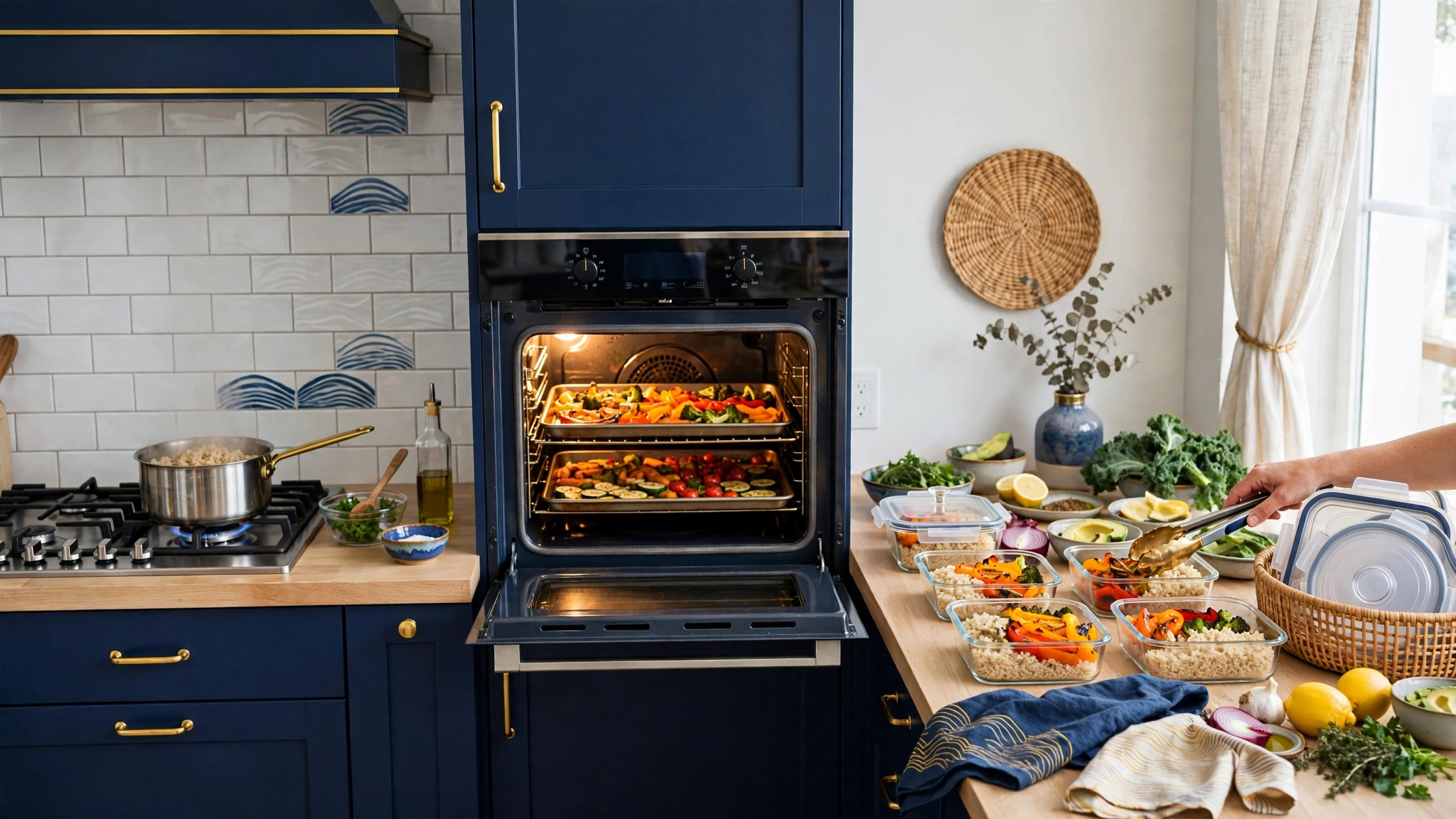
A 60-minute meal prep plan covers 4 weekday lunches with one grain, one protein, roasted vegetables, and one sauce. To run the plan, start the oven and the grain pot first, then work on the other jobs while they cook. The table below gives the timing for a first week of lunches for one person.
| Time | Job |
|---|---|
| 0 to 10 minutes | Heat the oven to 425°F (218°C). Start a pot of rice or quinoa. Chop vegetables for roasting. |
| 10 to 35 minutes | Roast vegetables and chicken (or tofu) on 2 sheet pans. Boil 4 eggs. |
| 35 to 50 minutes | Wash greens and herbs. Mix one sauce. Portion overnight oats for 2 breakfasts. |
| 50 to 60 minutes | Cool the food in shallow containers, then pack portions and label each lid. |
The plan gives 4 grain bowls for Monday to Thursday, plus overnight oats for 2 breakfasts. Change the sauce or the wrap each day to keep the meals fresh, and leave Friday open for fresh cooking or a meal out. In my own kitchen, the first run took 75 minutes and the second week took 55, once the order of jobs felt natural. Voice of Wave covers everyday guides like this one for readers who want plain, useful advice.
How Much Does Meal Prep Cost?
Meal prep costs less per serving than takeout because home-cooked ingredients cost a fraction of restaurant prices, and a planned shop stops impulse buys. To work out the cost, compare one week of packed lunches with one week of bought lunches. A home lunch of rice, chicken, vegetables, and sauce costs about $3 to $5 per portion in most United States grocery stores, while a bought lunch near work often costs $10 to $15. Over 4 lunches, that gap saves about $28 to $40 in one week. Track the grocery bill and the portions it made for 4 weeks, and note the takeout you skipped. Shop your pantry first, buy store brands for grains and beans, and pick vegetables in season. Frozen vegetables cost less than fresh out-of-season ones and work well in roasts, soups, and stir-fries.
7 Meal Prep Mistakes Beginners Make (and How to Fix Them)
The 7 meal prep mistakes beginners make are prepping too much, cooking new recipes, skipping labels, storing food wrong, repeating one dish, forgetting sauces, and leaving food out too long. To avoid each mistake, use the fix listed with it.
- Prepping a full week at once. Fix it by prepping 3 to 4 days of one meal first, then adding more once the habit holds.
- Cooking 5 new recipes in one session. Fix it by cooking dishes you already know, and adding only one new recipe per week.
- Skipping labels and dates. Fix it by writing the contents and date on every lid before the food goes in the fridge.
- Storing hot food in deep containers. Fix it by cooling food in shallow containers so it drops through the danger zone fast.
- Eating the same dish 5 days in a row. Fix it by prepping parts instead of finished dishes, and changing the sauce each day.
- Forgetting sauces and seasonings. Fix it by making one sauce and keeping salt, pepper, lemon, and hot sauce on hand.
- Leaving cooked food out for hours. Fix it by setting a timer: food goes in the fridge within 2 hours of cooking, no exceptions.
Meal Prep for One Person vs a Family
Meal prep for one person means small batches and freezer portions, while meal prep for a family means larger batches and a shared menu. To prep for one person, cook 3 to 4 portions of one meal, freeze half of any batch dish, and keep parts separate so you can change the meal each day. To prep for a family, cook 2 batch dishes that serve 4 to 6, keep sauces and toppings separate so each person can build their own plate, and list the week on the fridge. Families save the most time by doubling recipes they already cook and freezing the second half.
Conclusion
Meal prep for beginners is a simple system: plan one meal, shop from a list, cook the parts in one 60-minute session, and store the portions safely for 3 to 4 days. Meal prep for beginners works best when you start small, prep parts instead of full menus, and build the habit one week at a time. Cooked food keeps 3 to 4 days in the fridge and 2 to 3 months in the freezer, so label every container and reheat to 165°F (74°C).
Explore more guides: browse the latest articles on the Voice of Wave blog for plain, useful advice on food, home, health, and everyday life.
FAQs
How long does meal prep last in the fridge?
Cooked meal prep lasts 3 to 4 days in the fridge. The USDA FoodSafety.gov cold food storage chart gives 3 to 4 days for cooked meat, poultry, rice, pasta, and vegetables. Hard-boiled eggs keep about 7 days in the shell. Freeze any portion you will not eat within 4 days.
What is the easiest meal prep for beginners?
Overnight oats, grain bowls, and roasted chicken with rice are the easiest meal prep foods for beginners. These 3 options need few tools, reheat well, and use parts that mix into different meals. Start with one grain, one protein, and one sauce, and build from there.
How much time does meal prep take each week?
Meal prep takes 60 to 90 minutes in one weekly session for a beginner. A 60-minute session covers 4 weekday lunches. Two shorter sessions of 30 to 45 minutes, such as Sunday and Wednesday, work just as well for people who prefer fresher food midweek.
Is meal prep healthy?
Yes, meal prep is healthy when the meals use whole foods and balanced portions. Home-cooked meals use fresh ingredients and less salt, sugar, and fat than most takeout. Fill half the container with vegetables, a quarter with protein, and a quarter with whole grains for a balanced plate.
Can I meal prep for the whole week?
No, you should not meal prep a whole week of cooked food at once, since cooked food keeps only 3 to 4 days in the fridge. Prep for 3 to 4 days, then run a second short session midweek, or freeze half the batch and thaw it later in the week.
What containers are best for meal prep?
Airtight glass containers are the best choice for meal prep, with BPA-free plastic containers as a lighter option. Glass reheats well and does not stain or hold smells. Use 2 or 3 sizes, label every lid with contents and date, and keep lids separate when stacking.
—