
Introduction
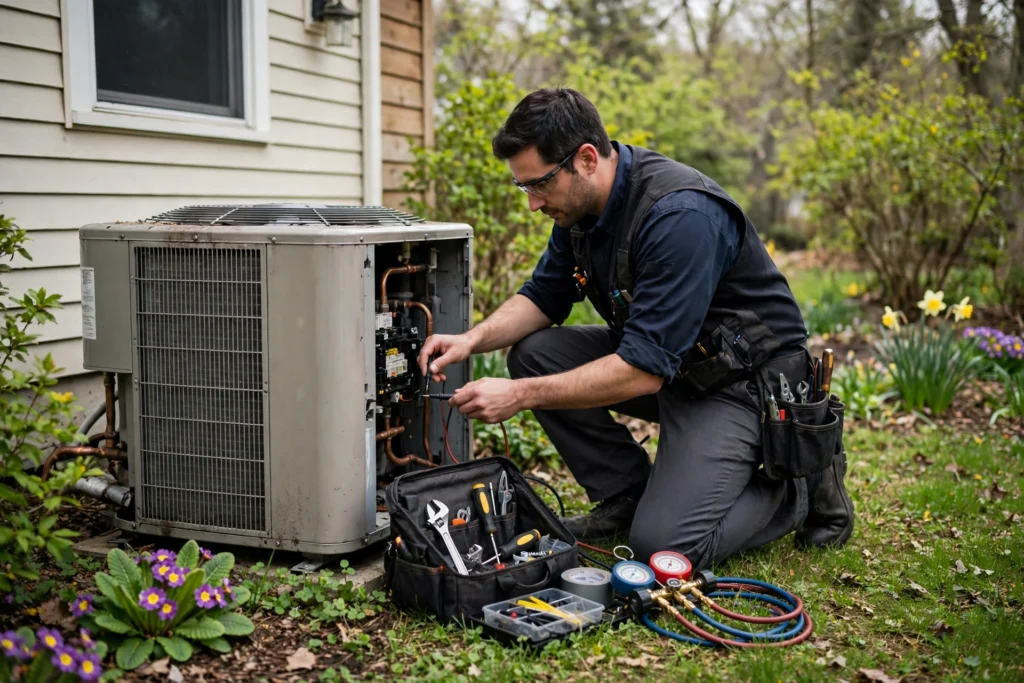
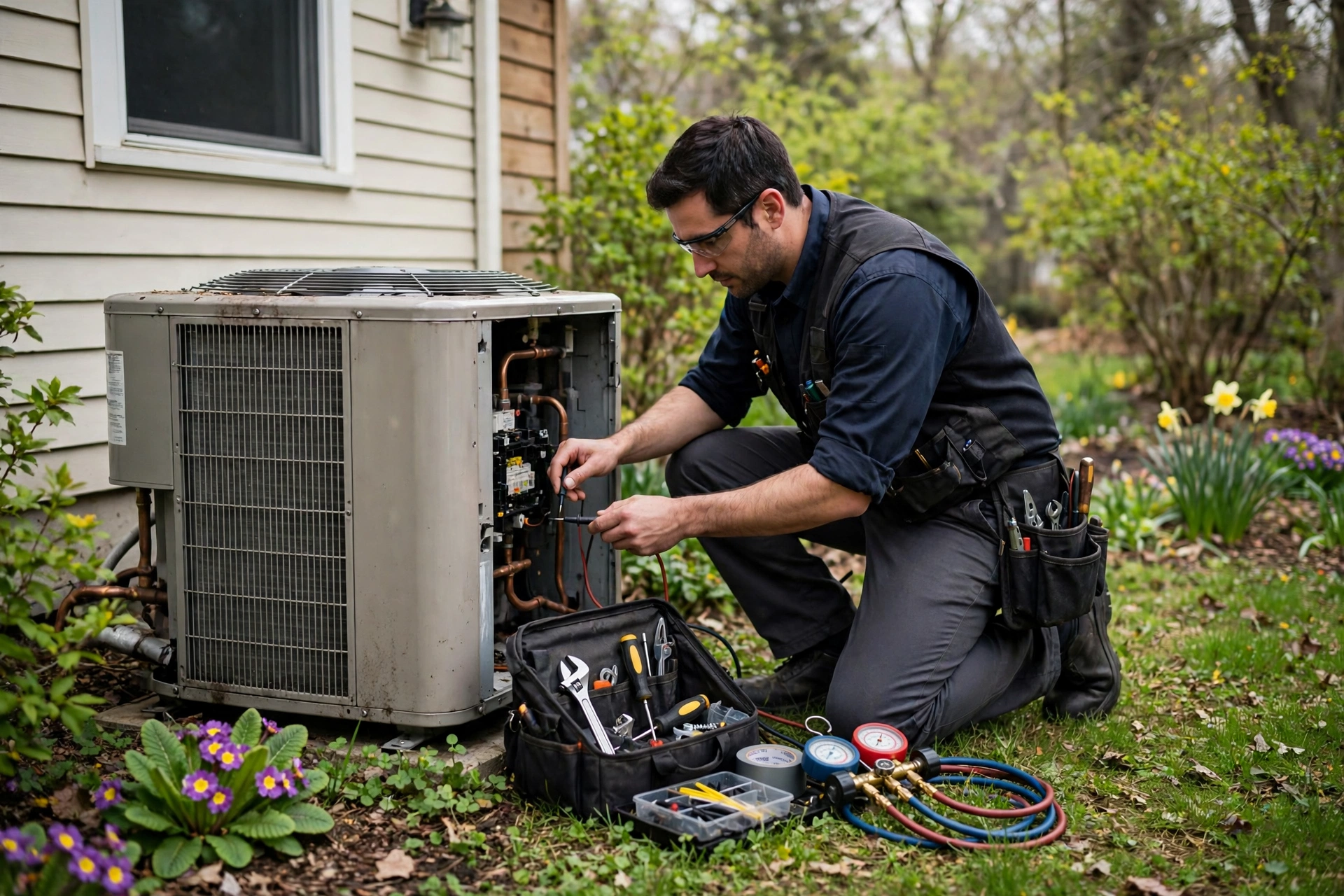
An AC tune up is a planned maintenance visit in which a technician inspects, cleans, tests, and adjusts an air conditioner so the air conditioner cools rooms at the set temperature with less strain on its parts, and the visit covers the thermostat, filters, coils, refrigerant charge, electrical parts, blower, and condensate drain. The visit ends with a cooling test and a written report, and the visit takes about 1 to 2 hours (Source: Angi, 2026).
An AC tune up suits central air systems, ductless mini splits, and heat pumps in cooling mode. The core value of an AC tune up is early fault detection: loose wires, weak capacitors, dirty coils, and low refrigerant show up during a calm visit rather than during a heat wave. Browse the Home Improvement category for more home care guides that pair with seasonal AC service.
- An AC tune up is a planned inspection, cleaning, testing, and adjustment visit for an air conditioner.
- Book an AC tune up once a year in spring, and twice a year for heat pumps, dusty sites, or heavy use.
- A standard AC tune up costs $75 to $200, and parts, refrigerant work, and extra cleaning cost more (Source: First American Home Warranty, 2026).
- Homeowners handle filters, debris clearing, and vent checks, and technicians handle refrigerant, electrical parts, and sealed components.
- Ask for a written report at the end of every AC tune up, with readings, findings, and recommended work listed.
What Is an AC Tune-Up?
An AC tune up is a preventive maintenance visit for an air conditioner, and the visit combines inspection, cleaning, testing, and adjustment in one appointment, so each part of the air conditioner gets checked against normal readings before summer heat raises daily use. A technician checks each part of the air conditioner against normal readings, cleans parts that collect dirt, tightens parts that loosen with vibration, and records results for the homeowner. An AC tune up is not a repair visit, and an AC tune up does not replace a repair when a part has already failed.
Air conditioning is the process of removing heat from an enclosed space to reach a comfortable indoor temperature, and an air conditioner moves heat from indoor air to outdoor air through a refrigeration cycle. The air conditioning cycle uses 4 main parts: an evaporator coil indoors, a compressor, a condenser coil outdoors, and an expansion device that controls refrigerant flow. A tune up keeps each part working near its design range, so the cycle moves heat with less energy and less wear.
An AC tune up also protects the warranty on many systems. Manufacturers often require proof of regular maintenance before they honor a warranty claim on a compressor or coil, so homeowners keep the visit report with the system manual. A practical note from real home care: keep the filter size written on the indoor unit with a marker on masking tape, because the size is hard to read once the filter slot label fades, and the wrong size leaves gaps that pass dust into the coil.
What Does an AC Tune-Up Include?
An AC tune up includes a thermostat check, filter check, coil cleaning, refrigerant check, electrical test, blower check, drain check, and a final cooling test, and the technician works through the list in order so a fault found early shapes the rest of the checks. The technician works through the list in order, from controls to airflow, so a fault found early in the visit shapes the rest of the checks. The table below lists each task and what the technician looks for.
| Tune-up task | What the technician checks |
|---|---|
| Thermostat check | Set temperature matches room temperature, modes switch correctly, batteries hold charge |
| Filter check | Filter fits the slot, filter is clean, filter type suits the system |
| Evaporator coil check | Indoor coil is clean, fins are straight, no ice forms during the test run |
| Condenser coil check | Outdoor coil is clean, fins are straight, airflow around the unit is clear |
| Refrigerant check | Charge matches the maker rating, no leak signs at joints and valves |
| Electrical test | Connections are tight, capacitors hold charge, contactor closes cleanly |
| Blower and fan check | Motors run smoothly, belts show no cracks, airflow reaches each vent |
| Condensate drain check | Drain line is clear, drain pan is dry outside the pan, float switch trips correctly |
| Safety control test | Safety switches stop the system when a fault condition appears |
| Cooling test | Supply air runs cooler than return air by the expected split, system cycles normally |
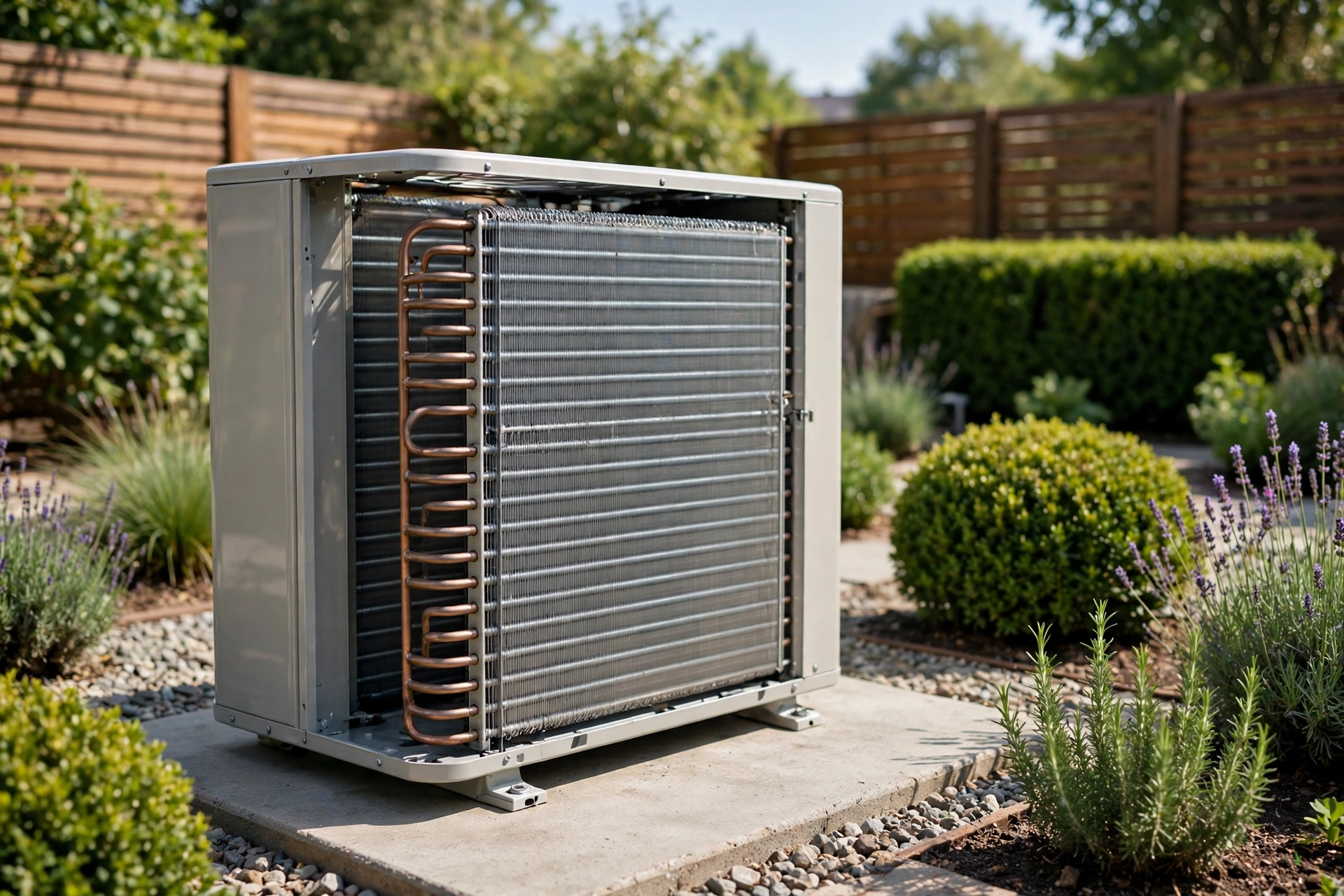
Coil cleaning deserves a plain note. Dirt on coils acts as insulation, so heat moves slowly through a dirty coil, and the compressor runs longer to reach the set temperature. The technician rinses the outdoor coil with water at low pressure and brushes loose dirt from fins, and the technician cleans the indoor coil with methods that suit its access panel. High pressure water bends fins, so a careful rinse matters more than force.
The refrigerant check also needs a plain note. Refrigerant is the fluid that carries heat through the cycle, and a system holds a fixed charge from installation. Low refrigerant points to a leak, and a top-up without a leak repair repeats the same loss. A technician who finds low refrigerant must report the leak search as separate work, with its own price, before adding refrigerant.
How Much Does an AC Tune-Up Cost?
A standard AC tune up costs $75 to $200, and the price varies by location, system type, system condition, and the tasks included in the visit, so homeowners compare quotes by the task list rather than by the headline price alone (Source: First American Home Warranty, 2026). A basic visit at the low end covers inspection and a filter change, while a comprehensive visit at the high end covers coil cleaning, refrigerant testing, airflow testing, and a full electrical review. Homeowners compare quotes by the task list, not by the headline price alone, because a low price with a thin task list costs more in missed faults.
| Cost item | Typical range | Notes |
|---|---|---|
| Standard AC tune up visit | $75 to $200 | Inspection, cleaning, testing, and a written report (Source: First American Home Warranty, 2026) |
| Annual maintenance plan | $150 to $400 per year | Two seasonal visits plus priority booking and repair discounts on many plans |
| Refrigerant recharge | $100 to $320 | Price varies by refrigerant type and amount added, and leak repair costs extra |
| Capacitor replacement | $150 to $300 | Common wear part, often found during the electrical test |
| Extra coil cleaning | Varies by access | Deep indoor coil cleaning costs more when panels or duct sections block access |
For a related home safety guide that pairs with seasonal maintenance checks, read Home Security Systems: Cost, Types and Buying Guide.
Replacement cost puts the tune-up fee in context. The national average cost to replace a heating, ventilation, and air conditioning (HVAC) system is between $8,300 and $12,500 (Source: First American Home Warranty, 2026). A tune up does not promise a longer system life on its own, and a tune up does catch wear before wear turns into a failed compressor, a burned motor, or a flooded drain pan. Budget planning treats the tune up as a fixed yearly cost, and treats parts and refrigerant work as variable costs that the visit report makes visible.
How Often Should You Get an AC Tune-Up?
A homeowner needs an AC tune up once a year for a standard central air conditioner, and the best time for the visit is spring, before cooling season starts, while heat pumps and heavy use systems need a second visit each year. ENERGY STAR recommends a pre-season contractor checkup, with cooling systems checked in spring and heating systems checked in fall. Spring booking also avoids the summer rush, when technicians book out and emergency calls take priority over maintenance visits.
| System or home condition | Recommended frequency | Best timing |
|---|---|---|
| Central air conditioner, normal use | Once a year | Spring |
| Heat pump used for heating and cooling | Twice a year | Spring and fall |
| Home with pets or heavy dust | Once a year, plus monthly filter checks | Spring, with filter checks year round |
| Coastal, dusty road, or high pollen site | Twice a year | Spring and mid-summer coil check |
| Older system with past repairs | Twice a year | Spring and early summer |
| Light use vacation home | Once a year | Before the first long stay of summer |

Frequency rises with use, not with system age alone. A system that runs 8 months a year in a hot climate collects more coil dirt and more motor wear than a system that runs 3 months a year in a mild climate. A system near cottonwood trees, construction dust, or a busy road needs coil checks more often, because airborne debris coats the outdoor coil fast. A heat pump needs two visits because the heat pump cools in summer and heats in winter, so both modes need a check before their season.
A simple booking rule helps: tie the AC tune up to a fixed spring date, such as the first week of a chosen spring month, and tie the heating check to a fixed fall date. A calendar reminder beats memory, and a maintenance plan from a local firm holds the same slot each year when the homeowner renews the plan.
What Are the Signs Your AC Needs a Tune-Up?
An AC needs a tune up when airflow weakens, rooms cool unevenly, bills rise without a usage change, noises appear, odors appear, water appears near the indoor unit, or the system cycles on and off too often, and each sign points to a specific check. Each sign points to a specific tune-up task, and the table below maps signs to likely checks. A sign does not diagnose a fault on its own, and a sign tells the homeowner to book the visit soon rather than wait for spring.
| Sign | Likely tune-up check |
|---|---|
| Weak airflow from vents | Filter, blower motor, duct blockage |
| Warm air from vents | Refrigerant charge, compressor, coil condition |
| Uneven room temperatures | Airflow balance, duct leaks, thermostat placement |
| Higher energy bills | Dirty coils, weak capacitor, low refrigerant |
| Short cycling (frequent on and off) | Thermostat calibration, refrigerant charge, electrical controls |
| Grinding, squealing, or banging | Motor bearings, belt wear, loose panels |
| Musty odor from vents | Condensate drain blockage, coil dirt, duct moisture |
| Water near the indoor unit | Condensate drain clog, cracked drain pan |
| Ice on indoor coil or lines | Low refrigerant, blocked airflow, dirty filter |

Short cycling needs a clear note. Short cycling is a pattern in which the system starts, runs for a few minutes, stops, and starts again, and short cycling wears the compressor and contactor through repeated starts. Causes include an oversized system, a miscalibrated thermostat, low refrigerant, or a faulty control, and the tune-up test run shows the cycle pattern plainly. A homeowner who counts cycles during one hot afternoon gains a useful fact for the technician: cycle count per hour and run length in minutes.
Water near the indoor unit also needs fast action. A clogged condensate drain sends water into the drain pan, and a full pan trips the float switch or overflows onto floors and ceilings. The homeowner turns the system off, checks the visible drain line for a clog, and books service when water keeps appearing. Water damage grows fast in warm rooms, so a wet indoor unit never waits for a routine slot.
AC Tune-Up vs Repair: What Is the Difference?
An AC tune up is planned maintenance on a working system, and an AC repair is corrective work on a failed or faulty part, so a tune up follows a fixed checklist while a repair follows a diagnosis of one fault, and the two visits often happen in sequence. A tune up follows a fixed checklist, while a repair follows a diagnosis of one fault. A tune up visit finds faults, and a repair visit fixes faults, and the two visits often happen in sequence when the tune up report lists a failed part.
| Feature | AC tune up | AC repair |
|---|---|---|
| Purpose | Prevent faults, keep efficiency steady | Fix a fault that already exists |
| Timing | Planned, usually spring | Unplanned, when a fault appears |
| Duration | About 1 to 2 hours (Source: Angi, 2026) | Varies by fault, from 1 hour to a full day |
| Cost shape | Fixed visit fee plus listed extras | Diagnosis fee plus parts and labor |
| Outcome | Written report with readings | Working part plus a repair note |
| Booking | Weeks ahead in spring | Often urgent, same day or next day |
A tune up report that lists a weak capacitor shows the boundary in practice. The tune up finds the weak capacitor during the electrical test, and the repair replaces the capacitor, either during the same visit with homeowner approval or at a booked follow-up visit. The homeowner asks for the old part reading and the new part reading in the report, so the repair has a measured before and after, not a verbal claim.
Warranty claims follow the same boundary. A tune up report proves regular maintenance, and a repair invoice proves the fix. Homeowners file both papers together when a warranty claim needs maintenance history, and homeowners keep both papers for the life of the system.
What Can You Do Yourself Between Tune-Ups?
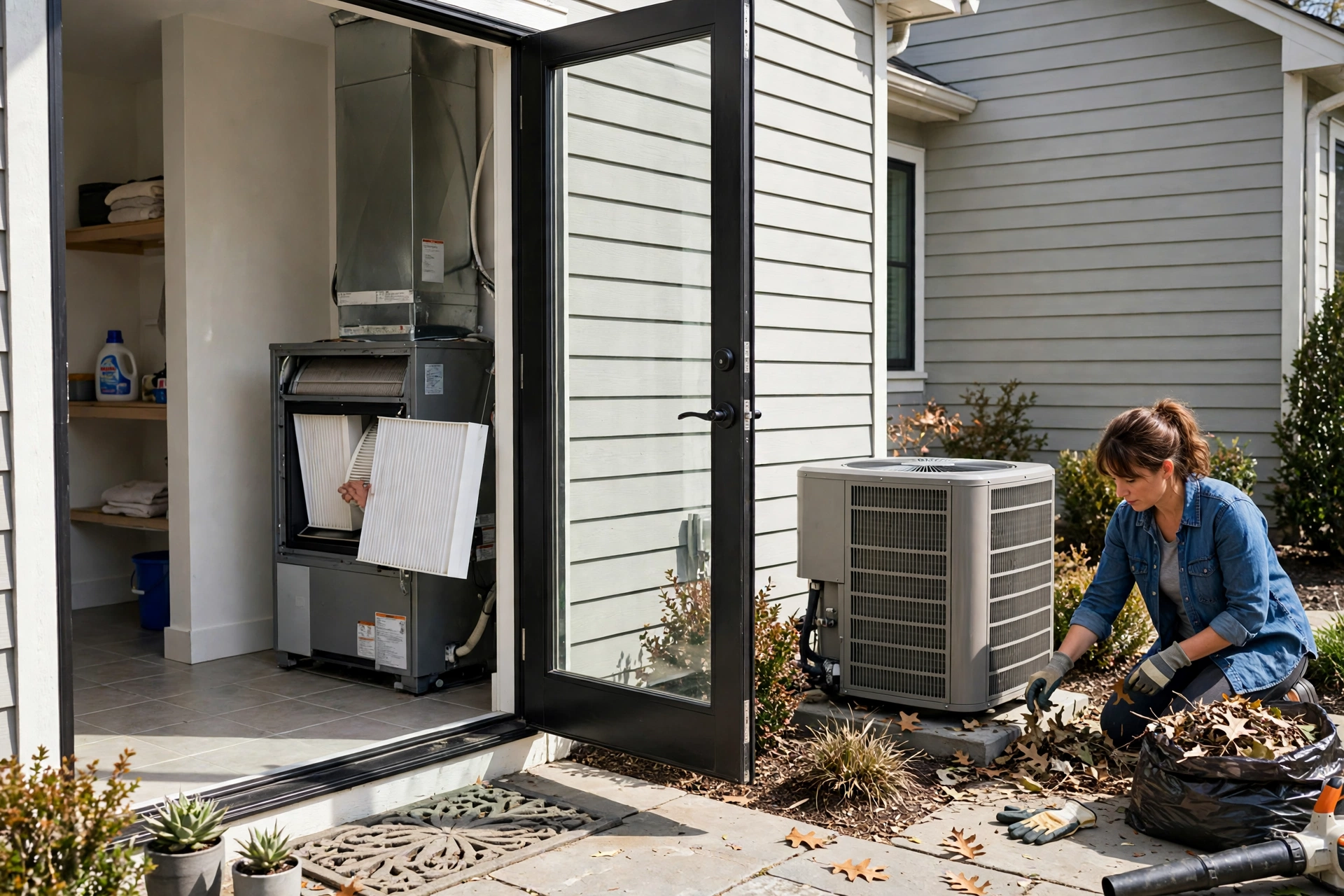
Homeowners handle 6 safe tasks between AC tune ups: filter changes, debris clearing, vent checks, thermostat checks, drain line flushing, and gentle outdoor coil rinsing where the system manual allows each method, and each task takes minutes and keeps the system clean between professional visits. Each task takes minutes, and each task keeps the system clean between professional visits. Homeowners leave refrigerant work, electrical repairs, sealed coil work, and gas work to licensed technicians, because those jobs carry injury risk and warranty risk.
- Replace the air filter every 1 to 3 months, and every month in homes with pets or heavy dust.
- Clear leaves, grass, and debris from around the outdoor unit, and keep 2 feet of clear space on all sides.
- Check that supply vents stay open and unblocked by furniture, rugs, or curtains.
- Check thermostat settings each season, and replace thermostat batteries once a year.
- Flush the condensate drain line with a cup of white vinegar once a year, when the system manual allows the method.
- Rinse the outdoor coil gently with a garden hose at low pressure during cooling season.
Safety stops matter as much as the task list. Stop work and call a technician when a burning smell appears, when a gas smell appears, when the breaker trips repeatedly, when water pools near electrical parts, or when the outdoor unit hums without starting. Stop work and call a technician when wires look burned, melted, or chewed, and never open sealed refrigerant lines or electrical panels beyond the homeowner access points shown in the manual. Voice of Wave covers home care in plain language, and the Voice of Wave home guides follow the same rule: homeowner tasks stay simple, and skilled work stays with licensed technicians.
A monthly routine keeps the list short. Check the filter on the first day of each month, clear outdoor debris after storms and mowing, and glance at the indoor unit for water stains during the same check. A phone reminder on the first of the month turns the routine into habit, and the habit keeps the spring tune up short because the technician finds a clean filter and a clear outdoor unit.
How Do You Choose a Technician for an AC Tune-Up?
A homeowner chooses an AC tune up technician by checking license, insurance, written pricing, a published checklist, and a written report policy before booking, because a firm that publishes its checklist lets the homeowner compare visits fairly and a firm that hides its checklist leaves the homeowner guessing. A firm that publishes its checklist lets the homeowner compare visits fairly, and a firm that hides its checklist leaves the homeowner guessing about what the fee covers. Ask the 6 questions below before booking, and book the firm with clear answers.
- What tasks does the tune up include, and will the firm send the checklist in writing?
- What is the total visit fee, and which extras cost more, such as refrigerant work and parts?
- Does the technician measure refrigerant charge, capacitor strength, and temperature split, and record each reading?
- Is the firm licensed and insured for HVAC work in this area, and does the firm carry worker injury cover?
- Will the visit end with a written report, and will the report list findings, readings, and recommended work?
- What happens when the tune up finds a failed part: same day repair, booked follow-up, or referral?

Red flags also guide the choice. A quote far below the local range with no task list often means a visual check only, with no coil cleaning, no refrigerant test, and no electrical test. Pressure to replace a working system during a maintenance visit, without readings to support the claim, calls for a second opinion. A firm that refuses a written report, or a firm that charges a diagnosis fee on top of a tune-up fee without warning, earns no repeat booking.
Booking timing closes the choice. Book in early spring, confirm the visit window in writing, and ask the firm to note the system type, age, and past repairs on the booking form. The note helps the technician bring the right parts, such as common capacitor sizes for the system brand, and the note shortens the visit because the technician arrives prepared.
Conclusion
An AC tune up is a planned yearly visit that inspects, cleans, tests, and adjusts an air conditioner before summer heat raises daily use. The visit covers the thermostat, filters, coils, refrigerant charge, electrical parts, blower, and condensate drain, and the visit ends with a cooling test and a written report. A standard AC tune up costs $75 to $200 (Source: First American Home Warranty, 2026), and parts and refrigerant work cost extra when the report lists them.
Homeowners book the AC tune up in spring, handle filters and debris clearing between visits, and leave refrigerant and electrical work to licensed technicians. The written report turns the visit into a record: readings from this year compare with readings from next year, and the comparison shows wear before wear becomes failure. Book the visit early, ask for the checklist in writing, and keep the report with the system manual for warranty claims and future service.
For more home care guides, visit the Voice of Wave blog and browse the latest articles.
FAQs
How long does an AC tune-up take?
An AC tune up takes about 1 to 2 hours for a standard central air system (Source: Angi, 2026). Dirty coils, hard to reach indoor units, and extra repairs extend the visit, so homeowners allow half a day when the system has past faults. The technician explains any extra time before starting extra work.
Is an AC tune-up worth it every year?
Yes, a yearly AC tune up is worth the visit for most homes, because the visit finds wear, dirt, and weak parts before summer heat raises daily use. The visit also creates a written record that supports warranty claims on many systems, and light use homes still benefit from one yearly check.
What happens if I skip an AC tune-up?
Skipping an AC tune up leaves dirt on coils, weak capacitors, and low refrigerant unnoticed, and each fault raises energy use and wear on the compressor. A skipped visit also leaves the homeowner without a maintenance record for warranty claims. One missed year rarely breaks a healthy system, and repeated missed years raise breakdown risk during heat waves.
Does an AC tune-up include refrigerant refill?
No, a standard AC tune up includes a refrigerant charge check, and a refill counts as separate work with its own price. Low refrigerant points to a leak, so a responsible technician reports the leak search before adding refrigerant. Homeowners ask for the charge reading and the leak plan in writing before approving a refill.
Can I do an AC tune-up myself?
No, a full AC tune up needs a licensed technician, because refrigerant handling and electrical testing need training, tools, and legal cover. Homeowners safely handle filters, debris clearing, vent checks, and gentle outdoor coil rinsing between visits. A homeowner who opens sealed lines or electrical panels risks injury and voids warranty cover on the system.
When is the best month for an AC tune-up?
Spring is the best season for an AC tune up, and early spring booking beats late spring booking because technicians book out as temperatures rise. ENERGY STAR recommends a pre-season contractor checkup for cooling systems in spring. Homeowners in hot climates book the visit before the first long hot spell, not during the spell.