


Written by James Carter for Voice of Wave.
Last updated: October 2026
Introduction
Pet health tips are practical steps that keep dogs and cats healthy inside the home, and a safer home is the base for all of them. Pet health tips work through 5 daily habits: safe food and water, daily movement, regular veterinary care, parasite prevention, and a home free of toxic items.
This guide covers each habit in order: how to pet-proof each room, what dogs and cats should eat, how much exercise they need, which foods and household items are toxic, how often pets need a veterinarian, whether indoor or outdoor living is healthier, and a daily routine that ties the habits together. Dogs and cats that live in a safe home with steady food, movement, and veterinary care gain longer, healthier lives with fewer emergencies, and owners spend less time and money on preventable illness.
Key Takeaways
- Pet health tips rest on 5 habits: safe food and water, daily movement, veterinary care, parasite prevention, and a toxic-free home.
- Pet-proof each room: kitchen, bathroom, laundry area, living room, and yard hold different hazards.
- Feed measured meals for the pet’s age, size, and activity level, and check body condition monthly.
- Dogs need 30 minutes to 2 hours of activity per day; cats need 2 play sessions of 10 to 15 minutes per day.
- Book a veterinary wellness exam once a year for healthy adults and twice a year for senior pets.
- Chocolate, grapes, onions, garlic, lilies, and many cleaning products are toxic to dogs and cats.
Table of Contents
- How Do You Pet-Proof Each Room?
- What Should Dogs and Cats Eat for Good Health?
- How Much Exercise Do Dogs and Cats Need Each Day?
- Which Foods and Household Items Are Toxic to Pets?
- How Often Should Pets See a Veterinarian?
- Indoor vs Outdoor: Which Setting Keeps Pets Healthier?
- What Daily Routine Keeps a Pet Healthy?
- Pet Health Tips: Frequently Asked Questions
- Conclusion
How Do You Pet-Proof Each Room?
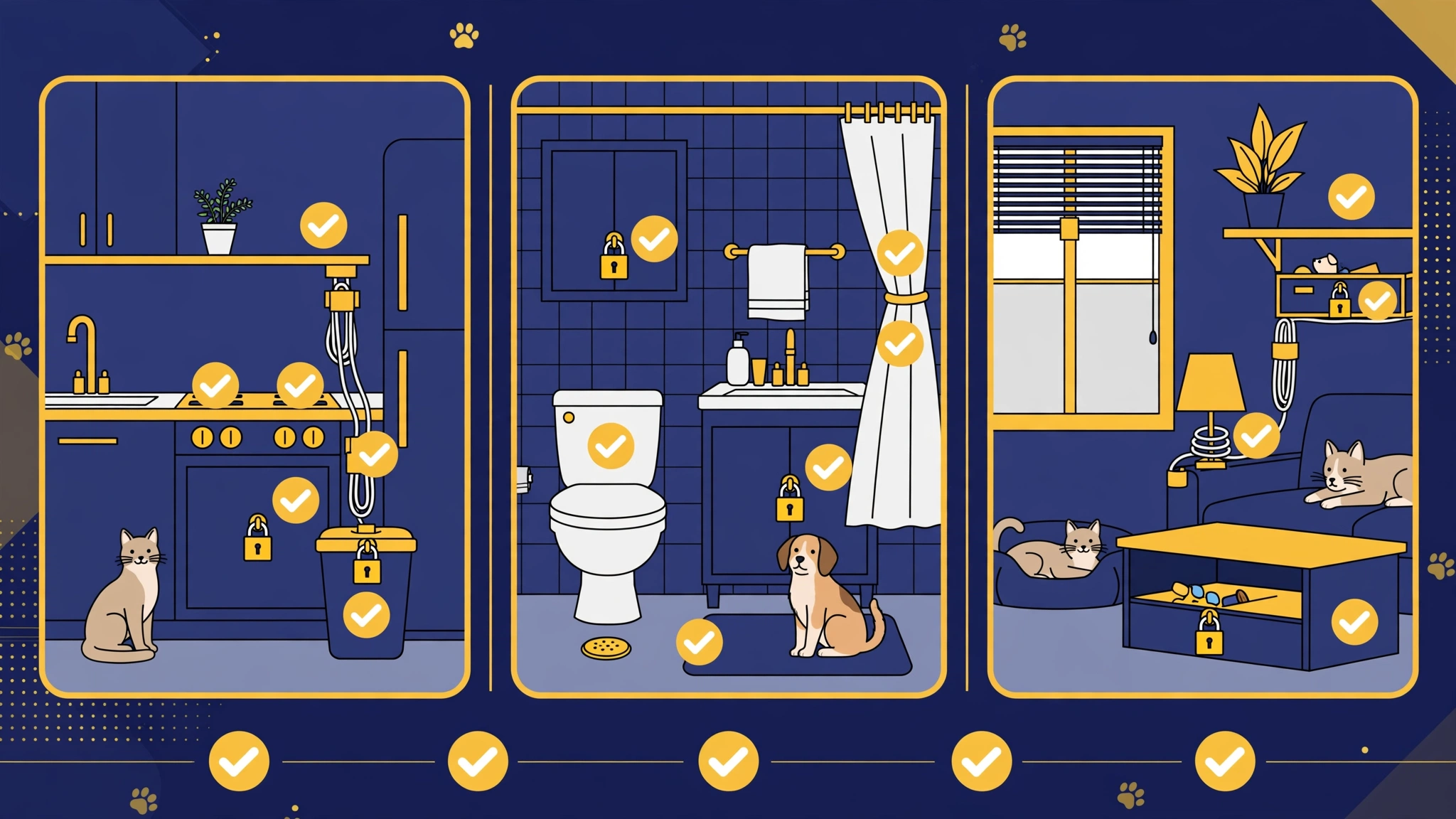
To pet-proof a home, work room by room: secure toxic items in the kitchen and bathroom, remove swallow hazards in the living room, lock chemicals in the laundry area, and fence or supervise the yard. Pet-proofing takes one focused hour for most homes, then a short weekly check keeps it in place.
| Room | Main hazards | Fix |
|---|---|---|
| Kitchen | Toxic foods, trash, sharp tools, hot stove | Lidded trash bin, food stored above counter height, stove guards, no food left on counters |
| Bathroom | Medicines, toiletries, razors, cleaning sprays | Latched medicine cabinet, closed toilet lid, razors in drawers, sprays in high cabinets |
| Laundry area | Detergent pods, dryer sheets, open washer | Detergent in closed containers, washer and dryer doors kept shut |
| Living room | Electrical cords, small objects, toxic plants, candles | Cord covers, small items in drawers, toxic plants out of reach, flameless candles |
| Yard | Toxic plants, standing water, gaps in fencing, pesticides | Fence checked monthly, standing water emptied, pesticides applied only in pet-free zones |
For more home and lifestyle guides in this lane, browse the Lifestyle category on Voice of Wave.
From my own home: moving the trash bin behind a latched cabinet door stopped weekly bin raids in one day.
What Should Dogs and Cats Eat for Good Health?
Dogs and cats should eat measured meals of complete pet food matched to their age, size, and activity level, with fresh water available at all times. Dogs and cats need 2 measured meals per day as adults, and puppies and kittens need 3 to 4 smaller meals per day until about 6 months of age.
Complete pet food carries a nutritional adequacy statement on the label, which states that the food meets the nutrient profile for a life stage, such as growth, adult maintenance, or all life stages. Pick food for the pet’s current life stage. Senior pets, overweight pets, and pets with kidney, joint, or urinary conditions need food matched to that condition, and a veterinarian sets the choice.
Measure food with a cup or scale, not by eye. Treats stay under 10 percent of daily calories. Table scraps cause weight gain and stomach upset, and fatty scraps can trigger pancreatitis in dogs. Weigh the pet every month and score body condition on the 9-point body condition score (BCS) system, where scores 4 and 5 are ideal, 6 is above ideal, 7 is overweight, and 8 and 9 are obese (Source: Wikipedia, 2026). In the United States, the share of overweight or obese adult dogs runs 23 to 53 percent, and the share for adult cats is 55 percent (Source: Wikipedia, 2026). Read the clinical overview of obesity in pets for the scoring scale and linked diseases.
How Much Exercise Do Dogs and Cats Need Each Day?
Dogs need 30 minutes to 2 hours of activity per day depending on breed, age, and health, and cats need 2 play sessions of 10 to 15 minutes per day. Dogs need daily walks plus play, and cats need interactive play that mimics hunting, such as wand toys, feather toys, and puzzle feeders.
Exercise protects weight, joints, heart health, and behavior. Dogs that miss daily walks gain weight faster and develop boredom behaviors such as chewing and barking. Cats that never play develop the same weight problem, plus stress behaviors such as over-grooming. Puppies need short play bursts of 5 minutes per month of age, twice a day, because long runs strain growing joints. Senior pets need 2 to 3 short walks per day instead of one long walk.
Follow 4 exercise rules:
- Walk dogs before meals in hot weather, not after, to lower bloat risk in large breeds.
- Check pavement heat with your hand for 5 seconds; hot pavement burns paw pads.
- Carry water on walks longer than 20 minutes and offer it at every stop.
- Stop play if the pet pants heavily, lags, or lies down, and rest in shade.
Mental exercise counts too. Puzzle feeders, snuffle mats, training sessions of 5 to 10 minutes, and rotating toys keep dogs and cats engaged without extra calories.
Which Foods and Household Items Are Toxic to Pets?
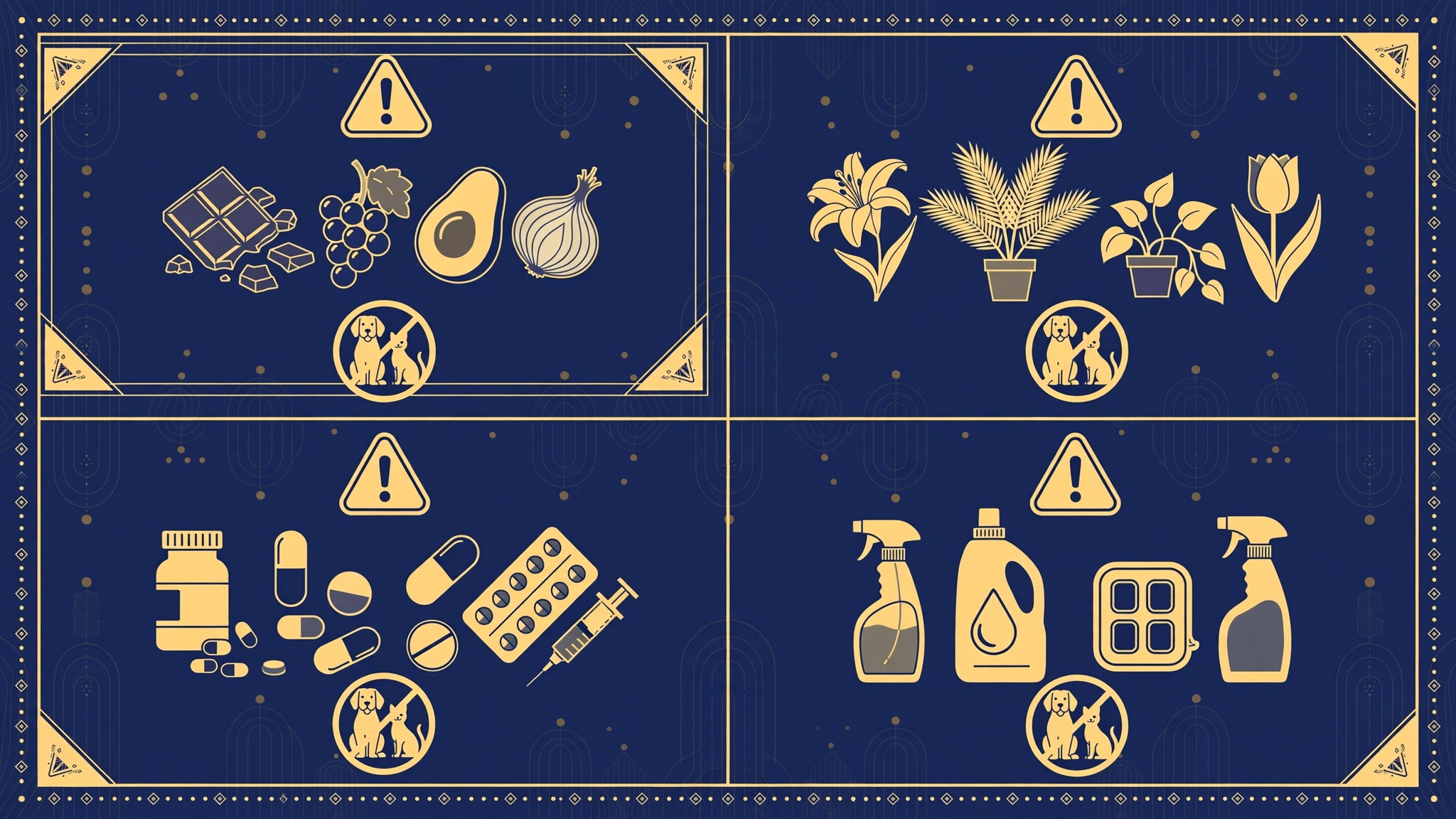
Toxic foods and household items for pets include chocolate, grapes, raisins, onions, garlic, xylitol, lilies, many cleaning products, human medicines, and some scented oils. Toxic items cause vomiting, diarrhea, kidney damage, liver damage, or seizures, and the dose decides the danger, so any exposure deserves a call to a veterinarian or poison helpline.
Chocolate and grapes can be fatal to dogs, onions and garlic can cause anemia in dogs, and lilies can cause severe kidney damage in cats (Source: Wikipedia, 2026). Xylitol, a sweetener in sugar-free gum, candy, and some peanut butter brands, causes a fast blood sugar crash and liver failure in dogs, even in small amounts.
Household items carry equal risk. Common toxic plants include lilies, philodendron, poinsettia, aloe vera, and sago palm. Cleaning products such as bleach, oven cleaner, and toilet bowl cleaner burn mouths and stomachs. Human medicines are a top poisoning cause: ibuprofen, acetaminophen, antidepressants, and ADHD medicines are all dangerous to pets.
| Toxic item | Pets at risk | Main danger |
|---|---|---|
| Chocolate | Dogs | Vomiting, seizures, heart problems |
| Grapes and raisins | Dogs | Kidney failure |
| Onions and garlic | Dogs and cats | Anemia |
| Xylitol | Dogs | Blood sugar crash, liver failure |
| Lilies | Cats | Kidney failure |
| Ibuprofen and acetaminophen | Dogs and cats | Stomach ulcers, liver and kidney damage |
| Bleach and oven cleaner | Dogs and cats | Mouth and stomach burns |
| Sago palm | Dogs and cats | Liver failure |
Read the overview of pets and household hazards for the full list of foods, plants, and substances that harm companion animals.
For seasonal home updates, see our fall decor ideas guide for a room-by-room refresh.
How Often Should Pets See a Veterinarian?
Healthy adult dogs and cats need a veterinary wellness exam once a year, puppies and kittens need exams every 3 to 4 weeks until 16 weeks of age, and senior pets need exams twice a year. A wellness exam covers weight, teeth, skin, coat, eyes, ears, heart, lungs, abdomen, and joints, plus vaccine updates and parasite prevention.
Vaccines split into core and lifestyle vaccines. Core vaccines for dogs cover rabies, distemper, parvovirus, and adenovirus. Core vaccines for cats cover rabies, feline panleukopenia, feline herpesvirus, and calicivirus. Lifestyle vaccines, such as Bordetella for dogs and feline leukemia for outdoor cats, depend on exposure risk, and the veterinarian decides them.
Parasite prevention runs year-round in most climates. Fleas cause itching, hair loss, hot spots, and tapeworms. Ticks carry Lyme disease and other infections. Heartworm, spread by mosquitoes, is fatal without treatment and preventable with monthly medicine. Ask the veterinarian for one product plan that covers fleas, ticks, heartworm, and intestinal worms together, because dog products can be fatal to cats.
Dental care belongs in every exam. Dental disease is the most common clinical condition in adult dogs and cats, and it starts with plaque on teeth. Brush teeth 3 to 4 times per week with pet toothpaste, or daily for best results. Dental chews and water additives help, but they do not replace brushing.
Call the veterinarian the same day for: vomiting or diarrhea lasting more than 24 hours, refusal to eat for more than 24 hours, difficulty breathing, swelling, collapse, uncontrolled bleeding, straining to urinate, or sudden hiding, aggression, or withdrawal.
Indoor vs Outdoor: Which Setting Keeps Pets Healthier?
Indoor living keeps most dogs and cats healthier than unsupervised outdoor living, because indoor pets avoid traffic, fights, parasites, extreme weather, and toxic plants. Indoor living with daily play and supervised outdoor time gives pets the safety of indoors plus the stimulation of outdoors.
| Factor | Indoor living | Unsupervised outdoor living |
|---|---|---|
| Lifespan risk | Lower: no traffic, fights, or predators | Higher: traffic, fights, predators, theft |
| Parasite exposure | Lower, controlled with prevention | Higher: fleas, ticks, worms from soil and prey |
| Exercise | Needs planned play and walks | Self-directed but uneven |
| Mental stimulation | Needs toys, training, and play | High from sights and smells, but risky |
| Weather risk | Controlled temperature indoors | Heatstroke, cold, storms |
| Best for | Most cats, small dogs, senior pets | Farm dogs with fenced land and shelter |
Outdoor cats face the highest risk: traffic and fights shorten outdoor cat lives sharply versus indoor cats. Dogs that live outdoors need insulated shelter, shade, fresh water, fencing, and daily human contact. A fenced yard is not a substitute for walks and play.
What Daily Routine Keeps a Pet Healthy?

A healthy daily pet routine runs in 5 blocks: morning feeding and walk, midday play and water check, evening feeding and walk, grooming check, and a quiet rest period before bed. A healthy routine repeats at the same times each day, because pets gain security from predictable feeding, walks, and rest.
| When | Task | Time needed |
|---|---|---|
| Morning | Measured breakfast, fresh water, walk or play | 20 to 40 minutes |
| Midday | Water refresh, short play, litter box scoop | 10 to 15 minutes |
| Evening | Measured dinner, walk or play, training | 20 to 40 minutes |
| Daily | Teeth check, coat brush, bowl wash | 5 to 10 minutes |
| Weekly | Full grooming, weight check, bedding wash | 20 to 30 minutes |
| Monthly | Body condition score, flea check, parasite medicine | 10 minutes |
| Yearly | Veterinary wellness exam, vaccine review | 1 visit |
Keep a simple health file: vaccine dates, medicine names and doses, weight log, and the veterinarian’s phone number. Note changes in appetite, thirst, energy, stool, or behavior between visits. Tripping over pets causes more than 86,000 emergency room visits per year in the United States (Source: Wikipedia, 2026), so keep beds and toys out of walkways.
Pet Health Tips: Frequently Asked Questions
How often should I take my pet to the veterinarian?
Healthy adult dogs and cats need a veterinary wellness exam once a year. Puppies and kittens need exams every 3 to 4 weeks until 16 weeks of age. Senior pets need exams twice a year, because age-related conditions progress fast. Bring vaccine records, medicine names, and notes on appetite, energy, and behavior changes to every visit.
What foods are toxic to dogs and cats?
Chocolate, grapes, raisins, onions, garlic, and xylitol are toxic to dogs, and lilies are toxic to cats. Human medicines such as ibuprofen and acetaminophen are toxic to both. Any exposure deserves a call to a veterinarian or poison helpline right away, because the dose decides the danger.
How much exercise does a dog need each day?
Dogs need 30 minutes to 2 hours of activity per day depending on breed, age, and health. Small and senior dogs sit near the low end, and active breeds sit near the high end. Split activity into walks plus play, not one exhausting session. Stop if the dog pants heavily, lags, or lies down, and rest in shade with water.
How do I know if my pet is overweight?
Use the 9-point body condition score: ribs should be easy to feel under a thin fat layer, the waist should taper from above, and the belly should tuck from the side. Scores 4 and 5 are ideal, 7 is overweight, and 8 and 9 are obese. Weigh the pet monthly.
How often should I brush my pet’s teeth?
Brush your pet’s teeth 3 to 4 times per week at minimum, or daily for best results, using pet toothpaste and a pet toothbrush. Human toothpaste is unsafe for pets. Dental chews and water additives help but do not replace brushing. Book professional cleaning when the veterinarian finds tartar or gum disease.
Is it safe to keep a cat indoors all the time?
Yes, indoor living is safe for cats and lowers their risk of traffic injuries, fights, parasites, and disease. Indoor cats still need daily play, climbing posts, scratching posts, window views, and puzzle feeders for mental stimulation. Outdoor time stays safe when supervised, such as leashed walks or an enclosed catio.
Conclusion
Pet health tips work best as a daily system, not as one-time fixes: measured food, fresh water, daily movement, regular veterinary care, parasite prevention, and a home free of toxic items. Pet-proof each room once, then keep the routine steady with morning and evening walks, weekly grooming, monthly weight checks, and yearly vet exams. Voice of Wave covers practical home and lifestyle guides for everyday living.
Explore more: Browse the latest guides on the Voice of Wave blog.