
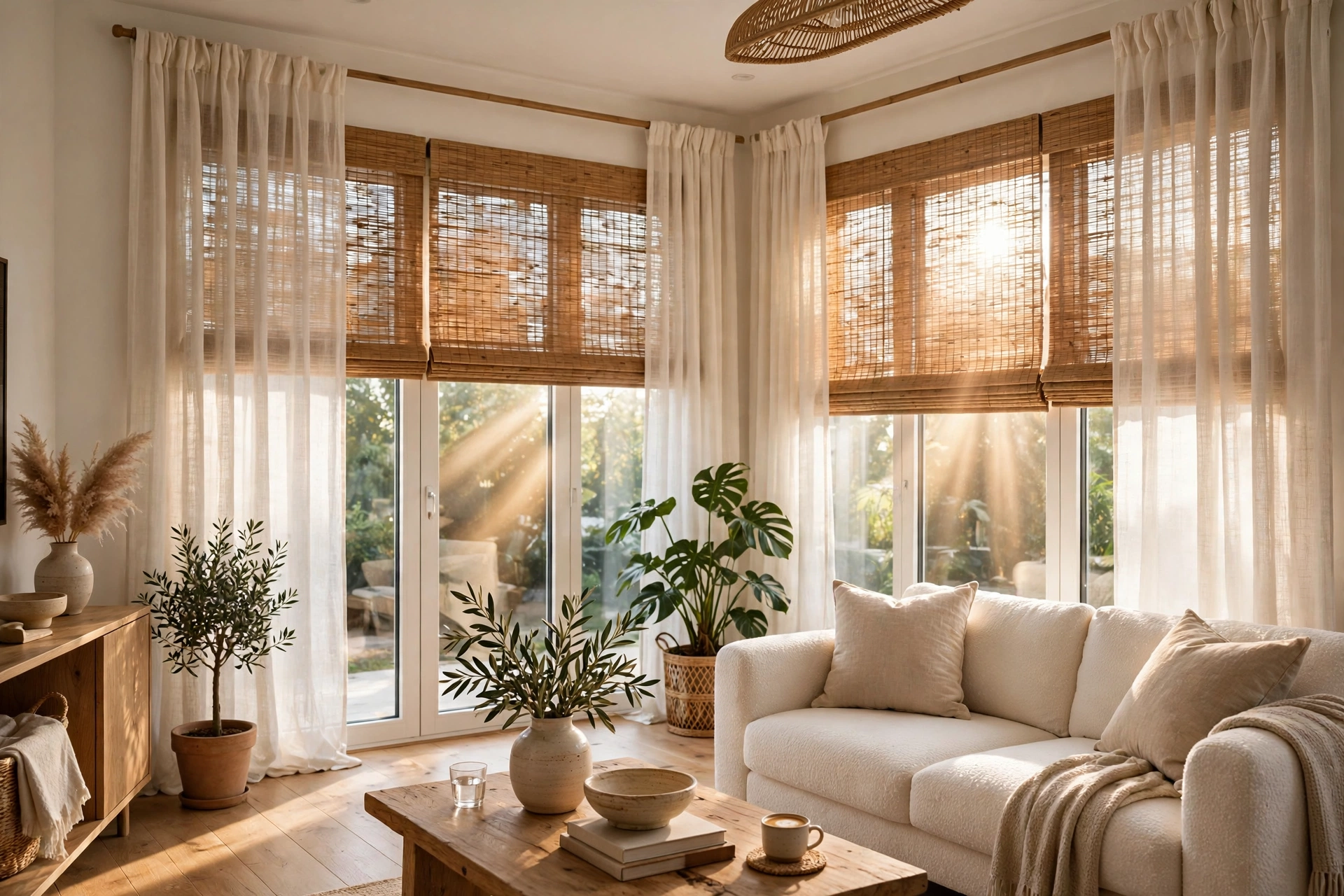
Window treatments are the coverings you install on or around your windows, and they do far more work than most people realize. Blinds, shades, shutters, curtains, and drapery shape how a room looks, how much light enters, how private you feel, and even how hard your heating and cooling work.
Here is the short answer: window treatments are any coverings (blinds, shades, shutters, curtains, drapes, or combinations) installed at a window to control light, privacy, insulation, and style. List what each room needs most (sleep darkness, glare control, or looks), match a type to that need, measure correctly, then decide between DIY and professional installation.
This guide covers every type, room-by-room picks, a measuring walkthrough, budget tiers, installation choices, cleaning routines, and the most-asked questions.
Key Takeaways
- Window treatments fall into five families: blinds, shades, shutters, curtains and drapes, and decorative toppers, plus layered combinations.
- Blinds give the most precise light control through tiltable slats; shades give a cleaner, softer surface; curtains add the most softness and texture.
- Always measure before buying: inside-mount and outside-mount need different measurements and deductions.
- Bedrooms need blackout or room-darkening; living rooms need glare control plus daylight; kitchens and bathrooms need humidity-resistant materials.
- Cellular (honeycomb) shades are the strongest energy-efficiency pick for most homes.
- Cordless or motorized options are the safest choice in homes with small children or pets.
- Renters are not stuck: tension rods, adhesive hooks, and temporary shades work without drilling.
Table of Contents
- What Are Window Treatments, Exactly?
- How Do Window Treatments Work?
- What Are the Main Types of Window Treatments?
- Which Window Treatment Is Best for Each Room?
- How Do You Measure Windows for Treatments?
- How Much Do Window Treatments Cost?
- How Do Window Treatments Affect Energy Use and Comfort?
- Are Corded Blinds Safe Around Children and Pets?
- Should You Install Window Treatments Yourself or Hire a Pro?
- What Options Work for Renters?
- How Do You Clean and Maintain Window Treatments?
- FAQ
- Conclusion
What Are Window Treatments, Exactly?
Window treatments is the umbrella term for everything you put on, in, or around a window to manage light, privacy, insulation, and decoration. A window covering covers the window itself for privacy and light control (blinds, shades, shutters). A window treatment is the broader category, also covering decorative elements like valances and layered drapery (see the window blind and curtain entries on Wikipedia).
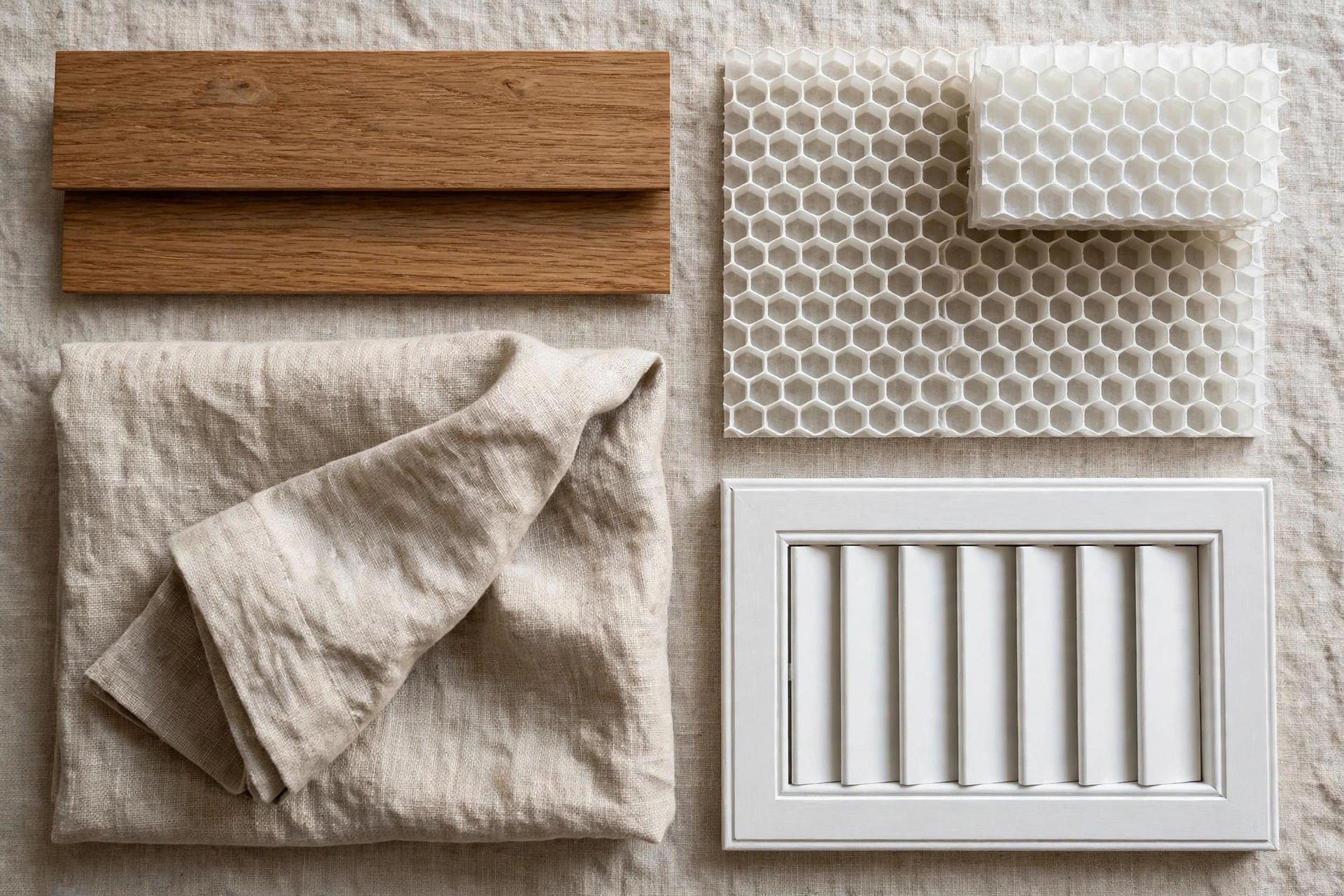
The five main families: blinds (tilting slats in wood, faux wood, aluminum, vinyl, or composite); shades (a single panel that rolls, folds, or lifts: roller, Roman, cellular, pleated, woven wood, solar); shutters (fixed frames with adjustable louvers, permanently mounted); curtains and drapes (fabric panels on a rod, casual to formal); and toppers (valances and cornices that hide hardware).
Layering (a functional shade plus curtains, for example) gives flexibility no single product can match.
Why the distinction matters when you shop
Stores use “treatments,” “coverings,” and “blinds” loosely. Confirm which family each quote covers before comparing prices.
How Do Window Treatments Work?
Every window treatment works through one or more of four mechanisms: blocking (covering the glass), filtering (diffusing sunlight through sheer fabric), redirecting (angling light with tilted slats), and insulating (trapping still air between fabric and glass).
Control options:
- Corded: lift cord or tilt wand. Cheapest, but the least safe around children and pets.
- Cordless: push or pull the bottom rail. Safe, clean look, slightly higher price.
- Motorized: remote, app, or voice control. Best for tall or hard-to-reach windows and smart-home scenes.
Light control follows an opacity scale: sheer, light-filtering, room-darkening, and blackout. One catch: sheers that look private by day turn see-through at night when interior lights are on, so pair street-facing sheers with a shade or drape.
What Are the Main Types of Window Treatments?
Blinds: the precision option
Blinds use slats that tilt to fine-tune light and sight lines. Horizontal blinds suit most windows; vertical blinds suit sliding doors and wide openings. Wood adds warmth but can warp in humidity; faux wood and composite resist moisture and cost less; aluminum mini-blinds are the budget workhorse but dent easily. Choose blinds to redirect light rather than fully block it.
Shades: the clean-surface option
Shades are one continuous panel, giving a soft, uncluttered look: roller (flat panel on a tube, minimalist, sheer to blackout), Roman (fabric folding into soft pleats, the most decorative), cellular/honeycomb (air-trapping cells, the top insulation pick), woven wood (bamboo or grasscloth texture; add a blackout liner for bedrooms), solar (cuts glare and UV while preserving the view), and pleated (cheaper than cellular, less insulating).
Shutters: the permanent option
Plantation shutters mount into the window frame and stay with the house, a noted selling point with buyers. They give excellent light control and privacy, wipe clean easily, and suit kitchens and bathrooms where fabric suffers. Trade-offs: higher upfront cost, professional installation, and a chunky look on small windows.
Curtains, drapes, and toppers
Curtains (lighter, casual) and drapes (heavier, lined, formal) add more texture than any other option and are the easiest to change when you redecorate. Mount the rod high and wide so windows look larger; let panels just kiss the floor. Keep heavy fabric in drier rooms. Valances and cornices (toppers) sit above, hiding hardware and adding a band of color: a cheap way to make stock blinds look intentional.
Which Window Treatment Is Best for Each Room?
Match the room’s job to the product’s strengths:
- Bedroom: prioritize blackout or room-darkening. Blackout roller shades plus blackout-lined drapes is the classic maximum-darkness combo; add cellular shades if the room runs hot or cold. For tight layouts, the wall bed installation guide helps plan blackout coverage around fold-down beds.
- Living room: solar shades cut glare and UV without killing the view; light-filtering Roman shades soften strong sun; drapery over a shade adds evening warmth. This is where layering pays off most.
- Kitchen: grease and steam rule out most fabrics. Faux wood blinds, aluminum blinds, or wipeable roller shades work best; cafe curtains keep the upper window open.
- Bathroom: choose humidity-proof options: faux wood or vinyl shutters, vinyl roller shades, or moisture-resistant blinds. Avoid real wood and unlined fabric.
- Home office: solar or light-filtering shades positioned to cut direct sun on the monitor.
- Formal spaces: floor-length lined drapery, possibly over sheers.
- Sliding doors and wide openings: vertical blinds, panel-track shades, or sliding shutters.
How Do You Measure Windows for Treatments?
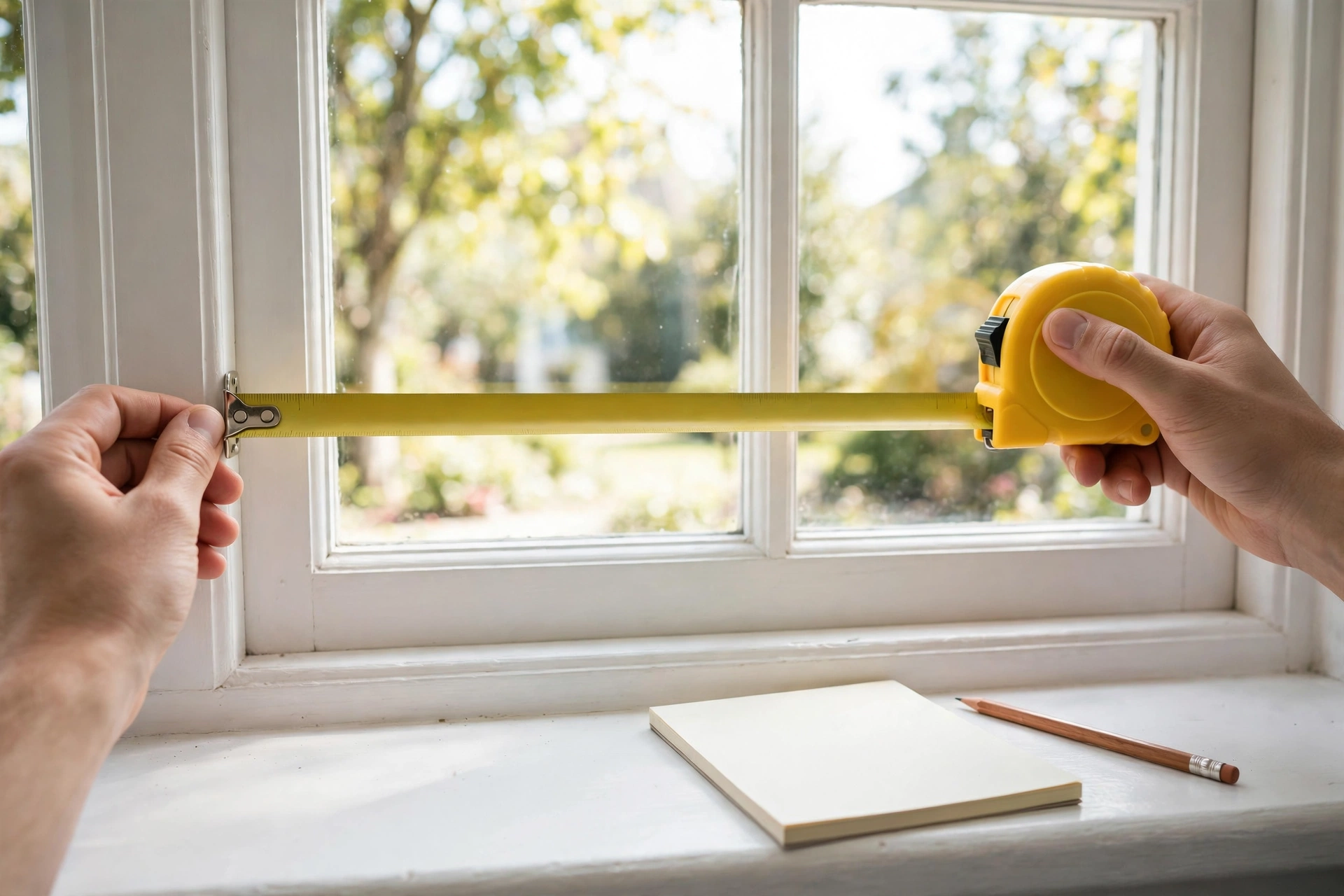
This is the step most guides skip and most buyers get wrong. Measure twice, order once. Measure every window individually: same-house windows are often slightly different sizes.
Inside mount (treatment sits within the frame)
- Measure the width at the top, middle, and bottom of the inside frame. Record the narrowest.
- Measure the height at the left, center, and right. Record the longest.
- Measure the depth. You need enough for the product’s headrail; manufacturers list a minimum.
- Order with your recorded numbers. Manufacturers take a small automatic deduction (usually 1/8 to 1/4 inch) so the shade clears the frame; do not subtract extra yourself.
Outside mount (treatment covers the frame and wall)
Measure the full area to cover, including 2 to 4 inches of overlap past each side of the frame, and confirm solid wall or trim exists for the brackets.
Tips that prevent the common failures
- For curtains, mount the rod 4 to 6 inches above the frame and 3 to 6 inches past each side so panels stack off the glass.
- Bay windows and arches usually need custom orders and professional measuring.
- Photograph each window with its measurements on a sticky note in the frame.
Refreshing several rooms at once? Plan it like any home upgrade; see the home improvement articles on Voice of Wave for broader renovation ideas.
How Much Do Window Treatments Cost?
Think in tiers rather than fixed prices:
- Budget ($20 to $100 per window): ready-made curtain panels, basic mini-blinds, temporary paper shades, basic roller shades. Fine for rentals and quick fixes.
- Mid-range ($100 to $400 per window): semi-custom cellular, Roman, or woven wood shades, faux wood blinds, lined curtain panels. The sweet spot for most homeowners.
- Premium ($400 to $1,000+ per window): custom drapery, plantation shutters, motorized shades, designer fabrics, usually with professional measuring and installation.
Oversized windows, motorization (roughly $100 to $300 per window), and custom fabrics inflate costs; standard sizes, cordless manual operation, and DIY installation keep them down. Get two or three quotes for custom work and confirm what is included.
How Do Window Treatments Affect Energy Use and Comfort?
Windows are a major source of summer heat gain and winter heat loss, and the right treatment changes that. The mechanism is simple: trapped air insulates, so products that create still-air pockets between fabric and glass perform best.
- Cellular (honeycomb) shades are the efficiency leader: their cells trap air in a way flat fabrics cannot.
- Thermal curtains (drapes with thermal lining, hung close to the wall and past the frame) cut drafts, especially on older single-pane windows.
- Solar shades reduce heat gain while keeping the view, which matters most on west- and south-facing glass.
- Exterior options (awnings, exterior solar screens) outperform interior products by stopping sunlight before it enters the glass.
Habits multiply the effect: close treatments on sun-facing windows during hot afternoons, open south-facing treatments on sunny winter days for free heat, and close everything at night in winter. The U.S. Department of Energy counts window attachments as a legitimate part of a home’s energy strategy.
Are Corded Blinds Safe Around Children and Pets?
No, exposed cords are a genuine hazard. Loose lift cords and cord loops can strangle a small child or pet, and safety agencies have documented injuries and deaths from corded window coverings over decades. The U.S. Consumer Product Safety Commission has pushed the industry toward cordless designs for years.
What to do:
- Choose cordless or motorized in any room a child or pet uses; this removes the hazard at the source.
- Retrofit older blinds when replacement is not in the budget: cut looped cords, fit cord cleats high on the wall, and move cribs and climbable furniture away from the windows.
- Buy to current standards and register new products for recall notices.
The cordless price premium has shrunk enough that safety should win the argument in most family homes.
Should You Install Window Treatments Yourself or Hire a Pro?
DIY it when: hanging ready-made curtain panels, installing basic blinds or shades on standard rectangular windows, or putting up temporary paper shades. You need a drill, a level, and a tape measure; one window takes 20 to 45 minutes once you have done one.
Hire a pro when: windows are oversized, arched, bay, or skylight shapes; you are ordering plantation shutters, which need precise fitting; you want motorized shades tied into a smart-home system; or you are doing a whole house at once. Many custom dealers bundle measuring and installation, removing the biggest source of expensive mistakes.
A middle path: order made-to-measure products online using the guide above, then hire a local handyperson for installation only. The roof replacement guide on Voice of Wave covers vetting contractors and comparing quotes, principles that apply here too.
What Options Work for Renters?
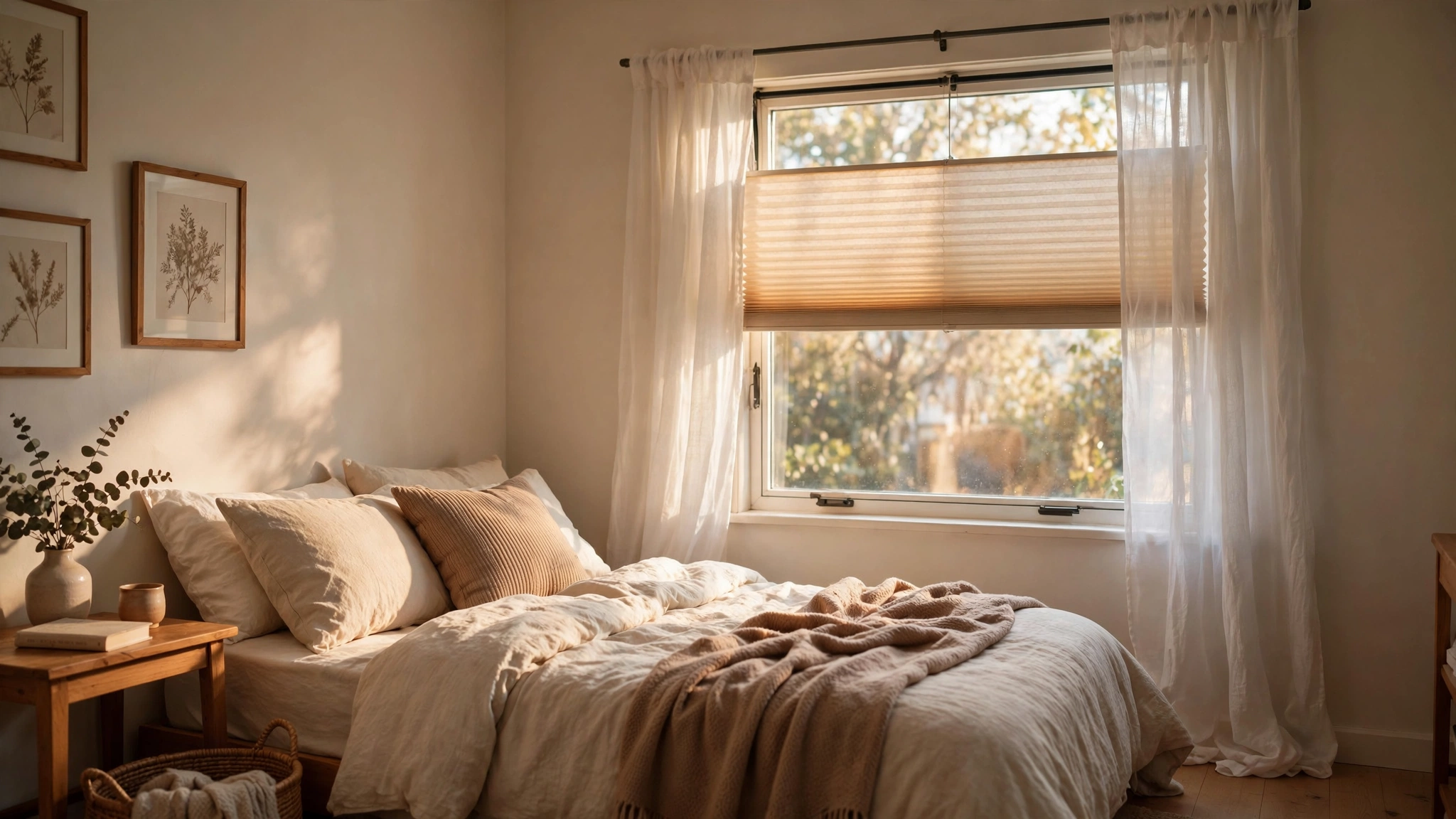
No drilling required:
- Tension rods fit inside the frame with spring pressure, hold light or cafe curtains, and remove without a mark.
- Adhesive hooks and strips above the frame can hold a lightweight rod for sheers. Check the weight rating first.
- Temporary paper shades stick inside the frame, cut to width with scissors, and peel off at move-out.
- Removable window film gives daytime privacy or a frosted bathroom window with zero hardware.
Check your lease before drilling: many landlords allow small filled-and-painted holes, but some charge for any wall damage. Store original blinds and reinstall them before you leave.
How Do You Clean and Maintain Window Treatments?
- Blinds (wood, faux wood, aluminum, vinyl): dust weekly with a microfiber cloth; wipe slats with a damp cloth for deeper cleaning. Never soak real wood.
- Shades (cellular, Roman, roller, woven wood): vacuum with a brush attachment; spot-clean fabric with a barely damp cloth and mild soap, checking the care tag first.
- Curtains and drapes: machine-washable panels go in on gentle; lined, silk, or velvet panels usually need dry cleaning. Wash every 6 to 12 months and vacuum between washes.
- Shutters: wipe with a damp microfiber cloth; a soft brush clears dust from louvers.
Lifespan: budget blinds last 3 to 5 years; quality shades and faux wood blinds last 7 to 10; plantation shutters and good hardware can last 15 to 25 years. Replace when mechanisms keep failing or fabric yellows beyond cleaning. Humidity and direct sun age treatments fastest, so check bathrooms and south-facing windows yearly. Dirty glass dulls even the best treatments, so pair new coverings with a regular exterior cleaning routine.
FAQ
What is the difference between blinds and shades? Blinds use adjustable slats that tilt for precise light and privacy control; shades are a single panel that rolls, folds, or lifts. Blinds give finer control, shades a softer, cleaner look.
What are the most popular window treatments right now? Cellular, roller, and woven wood shades lead for their clean look and versatility, with motorized options growing through smart-home adoption. Roman shades and floor-length drapery remain timeless for softness.
How do I choose window treatments for a bedroom? Prioritize blackout or room-darkening: blackout roller or cellular shades, or blackout-lined drapes. Layering a shade under drapes blocks edge light gaps; go cordless or motorized for safety.
Can I install window treatments myself? Yes for ready-made curtains, basic blinds, and shades on standard windows: a drill, level, and tape measure are enough, at 20 to 45 minutes per window. Hire a pro for shutters, motorized systems, and shaped windows.
What window treatments are safest for kids and pets? Cordless and motorized treatments, which remove looped and loose cords entirely. With older corded blinds, cut the loops, fit cord cleats high on the wall, and move cribs and climbable furniture away.
Conclusion
Window treatments are one of the highest-impact upgrades a home can get for the money. They control light, protect privacy, soften rooms, and affect comfort and energy use, and few upgrades change how a home feels day to day.
The winning formula is simple: list what each room needs, pick the product family that matches, measure carefully (inside versus outside mount makes all the difference), choose cordless where children or pets are around, and decide honestly whether the job is DIY or pro territory. Start with the most-used room, and your windows will look intentional, work properly, and last for years.