
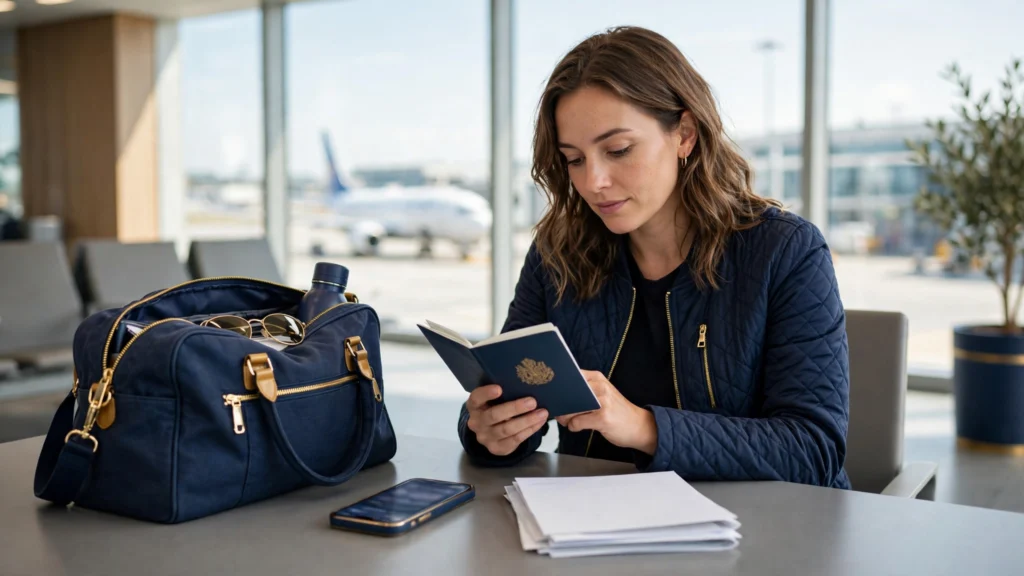
Travel safety tips for 2026 start with 5 habits: check the official travel advisory for your destination twice, keep copies of your passport in 2 places, split your money across 3 places, buy travel insurance before you leave, and save the local emergency number in your phone. These 5 habits stop most trip problems before they start.
Most trips pass without a problem, and most problems come from 4 causes: lost documents, stolen phones, bad money habits, and skipped health steps. This guide covers the top tips for 2026, destination research, documents, money, digital safety, transport, hotels, health, solo travel, scams, and emergencies. Browse the Travel guides for more trip planning topics in the same series.
Key Takeaways
- Travel safety tips for 2026 rest on 5 habits: advisory checks, document copies, split money, travel insurance, and a saved emergency number.
- Check the official travel advisory when you book and again 3 days before you leave, because advice can change fast.
- Carry 1 card and 1 day of cash, and keep a backup card and cash in 2 other places.
- U.S. travelers spent $5.56 billion on travel insurance in 2024, and 86.97 million people were protected by 54.87 million plans (Source: U.S. Travel Insurance Association, 2024).
- Save 112 for the EU, 911 for North America, and 000 for Australia, plus your insurer emergency line, before you land.
Table of Contents
- The Top Travel Safety Tips for 2026
- How Do You Research a Destination Before You Travel?
- What Documents and Copies Should You Carry?
- How Do You Protect Your Money and Cards Abroad?
- How Do You Stay Safe on Public Wi-Fi and With Your Phone?
- How Do You Choose Safe Transport and Accommodation?
- How Do You Stay Healthy While You Travel?
- What Should Solo Travellers Do Differently?
- What Are the Most Common Travel Scams and How Do You Avoid Them?
- What Do You Do in an Emergency Abroad?
- Travel Safety Checklist: Before, During, and After
- Conclusion
- FAQs
What Are the Top Travel Safety Tips for 2026?
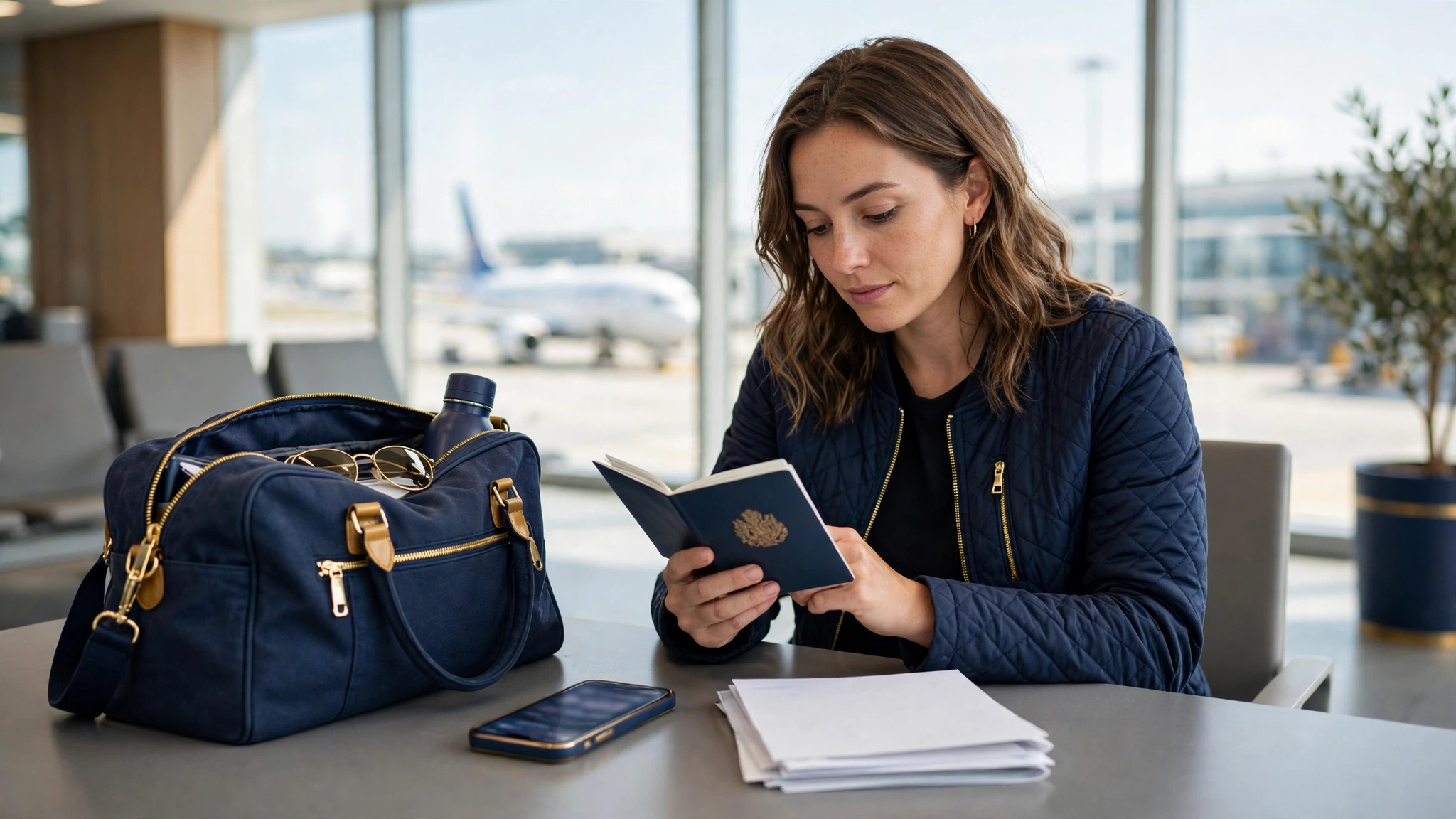
The top travel safety tips for 2026 are: check the official travel advisory twice, keep passport copies in 2 places, split money across 3 places, buy travel insurance before departure, turn on two-factor authentication, download offline maps, and save the local emergency number before you land.
Phones now hold passports, tickets, maps, and bank access, so a lost phone can hurt more than a lost wallet. Keep a paper list of 5 numbers: local emergency services, your insurer, your bank, your hotel, and one person at home.
Book the first transfer before you land, and arrive in daylight when you can. On a night train in Europe, I kept my passport, one card, and my phone in a small pouch under my jacket, and the rest of my cash locked in my bag, and that split meant one bag check never took all my money.
How Do You Research a Destination Before You Travel?
You research a destination before you travel by reading the official travel advisory for that country, checking visa and entry rules, learning the 5 main scams at that place, and saving the local emergency number, the nearest hospital, and the nearest embassy address.
A travel advisory is an official warning statement issued by a government agency about the safety of travel to a foreign country. Read the advisory from your own government first, because it lists the risk level and the areas to avoid. Check it when you book and again 3 days before you leave.
Entry rules change from year to year, so confirm them in 2026, not from an old trip. Check the visa type, the passport validity rule, and any new border system, such as the EU Entry/Exit System or the UK ETA.
What Documents and Copies Should You Carry?
You should carry your passport, visa, travel insurance card, and booking confirmations in your carry-on, and keep a paper copy and a digital copy of each one in a second place.
Travel safety tips for documents follow one rule: the original stays on your body, and a copy stays somewhere else. Keep the passport in a front pocket or a pouch under your clothes. Keep a paper copy in your main bag, and keep a scan in your email and on your phone, protected by a passcode.
A lost passport costs a day if you have a copy, and 3 days if you have none, because the copy gives the embassy the number, photo, and issue date. Report it to the local police first, then to your embassy.
Add a card with your name, blood group, allergies, and 2 emergency contacts inside your bag, in case your phone dies.
How Do You Protect Your Money and Cards Abroad?
You protect your money and cards abroad by splitting them across 3 places: carry 1 card and 1 day of cash in your wallet, keep a backup card and cash in your hotel safe or locked bag, and keep a small emergency cash stash in a third place, such as a money belt.
Travel safety tips for money start with the daily carry rule. Take out only the cash you need for one day, and leave the rest locked away. Use ATMs inside banks during the day, and cover the keypad with your free hand. Tell your bank the travel dates before you leave, so a card used abroad does not trigger a block.
Cards beat cash for most payments, because a card can be frozen in minutes. Carry 2 cards from 2 banks when you can, and keep them apart, with the bank phone number saved in your phone and on paper.
Keep an emergency reserve of 100 dollars or the same value in local cash, apart from the daily wallet, and change money at a bank or a licensed exchange.
How Do You Stay Safe on Public Wi-Fi and With Your Phone?
You stay safe on public Wi-Fi and with your phone by turning on two-factor authentication before you leave, avoiding bank logins on public Wi-Fi, using mobile data or a VPN for money tasks, and keeping your phone locked, backed up, and out of sight in crowds.
Travel safety tips for digital safety start before the trip. Turn on two-factor authentication for email and banking, update the phone software, and back up photos and contacts to the cloud. A backed-up phone can be wiped and restored, and a phone with no backup loses the trip photos and the contact list with it.
Public Wi-Fi in airports, cafes, and hotels is open to strangers. Use it for maps and messages, and use mobile data or a VPN for bank logins and card payments. Avoid public USB charging ports, and carry a power bank and your own cable instead.
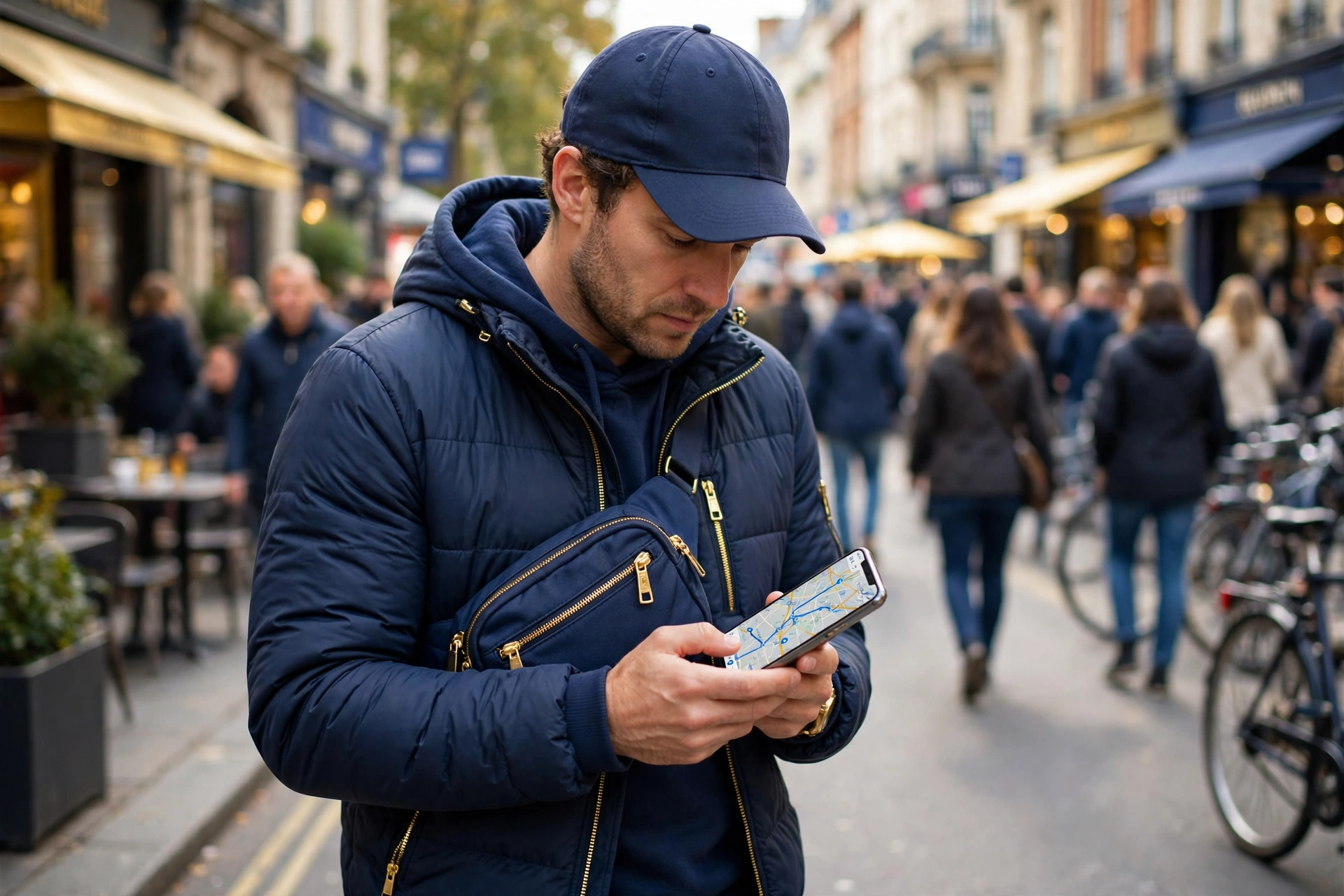
Phone theft is now the top street crime in many tourist cities. Keep the phone in a front pocket or a zipped bag in crowds, and download offline maps before you leave. If the phone is stolen, lock it from another device, freeze the cards, and block the SIM the same day.
How Do You Choose Safe Transport and Accommodation?
You choose safe transport and accommodation by booking licensed taxis or hotel transfers, checking that the hotel door locks from the inside, and reading recent reviews for safety notes before you pay.
Travel safety tips for transport start at the airport. Use the official taxi stand or a pre-booked transfer, and refuse drivers who approach you inside the terminal with a cheap offer. Check the car plate and the driver name against the booking before you get in, and share the trip details with one person at home. On buses and trains, keep your bag on your lap or between your feet, not on the rack behind you.
Hotel safety starts at the door. Ask to see the room, check that the door has a peephole and a lock that works from the inside, and lock it each night. Keep the room number private.
Keep the hotel address card in your pocket, so a taxi driver can take you back even when your phone has no signal.
Packing for the same trip? Read Packing Tips for International Travel for the full packing plan.
How Do You Stay Healthy While You Travel?
You stay healthy while you travel by seeing a travel health clinic 4 to 6 weeks before departure, carrying your prescription medicine in its original bottles in your carry-on, drinking bottled or treated water where the tap water is unsafe, and eating food that is cooked and served hot.
Travel safety tips for health start early, because some vaccines need 2 doses over several weeks. A travel clinic checks the vaccine list for your destination, the malaria risk, and the altitude notes, and it gives a written list to carry. Pack the prescription list with the drug name, the dose, and the doctor contact, and carry twice the medicine you need for the trip, split across 2 bags.
Food and water cause most travel illness. Drink bottled water with a sealed cap, eat food that is cooked and served hot, and wash your hands before each meal. Carry oral rehydration salts, basic pain relief, and any allergy medicine in your day bag.
Drink one cup of water per hour in hot weather, wear a hat and sunscreen, and swim only where locals swim.

What Should Solo Travellers Do Differently?
Solo travellers should share the full itinerary with one person at home, check in each day at a fixed time, arrive in daylight, and post trip photos after they leave each place, not while they are there.
Travel safety tips for solo travel add one layer to the general plan: someone else must know where you are. Share the flight times, the hotel names, and the daily plan with one trusted person, and send a short check-in message each evening. Share your live location with that person for the first day in a new city, and agree on what they should do if you miss 2 check-ins in a row.
Blend in and keep details back. Dress like the locals, skip flashy jewellery, and keep the camera and phone out of sight on busy streets. Tell new friends the city you visit, not the hotel name or the room number.

What Are the Most Common Travel Scams and How Do You Avoid Them?
The most common travel scams are the fake taxi, the broken meter, the friendly helper at the ATM, the closed hotel trick, and the free bracelet or photo trick, and you avoid each one by refusing the first offer, using official stands and meters, and walking away when a stranger rushes you.
A scam needs speed and trust, and a slow no breaks both. Learn the 5 scams for your city before you arrive, and agree on the reply for each one.
| Scam | Where it happens | The sign | The reply |
|---|---|---|---|
| Fake taxi | Airport, station | Driver approaches you inside the terminal | Walk to the official taxi stand |
| Broken meter | Taxi, tuk-tuk | Driver says the meter is broken | Agree the price before you get in, or take the next car |
| ATM helper | ATM, bank | Stranger offers help with the machine | Say no, cancel the transaction, and use an ATM inside a bank |
| Closed hotel | Street near hotel | Stranger says your hotel is closed or full | Ignore the claim and walk to the hotel desk |
| Free gift trick | Tourist square | Stranger ties a bracelet or takes your photo, then demands payment | Do not take the item, and walk to a busy shop |
What Do You Do in an Emergency Abroad?
You deal with an emergency abroad by following 4 steps in order: get to a safe place, call the local emergency number, call your insurer emergency line, and then call your embassy, and keep the police report number and the case number for every claim.
Travel safety tips for emergencies work when the numbers are saved before the trip, not searched during it. Save 112 for the EU and many other regions, 911 for North America, and 000 for Australia, plus your insurer emergency line, your bank, and your embassy. Keep the list on paper in your bag, because a dead phone cannot show a saved contact.
A lost passport needs 3 steps: report it to the police, take the report to your embassy, and use the passport copy to speed the replacement. A stolen phone needs 4 steps: lock and wipe it, freeze the cards, block the SIM, and change the email password. For a hospital visit, call the insurer first when you can, and keep every receipt for the claim.
Travel insurance is an insurance product that covers unexpected losses while travelling, and basic policies cover emergency medical expenses overseas. U.S. travelers spent $5.56 billion on travel insurance in 2024, and 86.97 million people were protected by 54.87 million plans (Source: U.S. Travel Insurance Association, 2024). Buy the policy before you leave, and carry the policy number in your phone and on paper.

Travel Safety Checklist: Before, During, and After
The travel safety checklist has 3 parts: before you leave, check the advisory, insurance, documents, money split, and phone backup; during the trip, lock the room, split the money, and check in daily; after the trip, check the bank statement and back up the photos.
Print this table, tick each line as you finish it, and keep the paper copy in your carry-on.
| When | Task | Done |
|---|---|---|
| 4 weeks before | Check travel advisory, visa, vaccines, and insurance | |
| 1 week before | Copy documents, split money plan, offline maps, phone backup | |
| 1 day before | Pack carry-on with passport, medicine, charger, and 1 day of cash | |
| Arrival day | Booked transfer, hotel address card, emergency numbers saved | |
| Each day | 1 card and 1 day of cash only, room locked, evening check-in | |
| After the trip | Check bank statement, file claims, back up photos |
Conclusion
Travel safety tips for 2026 come down to one plan: research the destination, copy the documents, split the money, lock the phone, buy insurance, and save the emergency number before you land. The 5 habits in the Key Takeaways cover most trips, and the checklist turns them into a routine you can repeat on every journey. Start tonight with the advisory check and the document copies, then book the insurance and the first transfer, and travel with a clear head. Voice of Wave covers travel guides in this plain style.
Read more travel guides on the Voice of Wave blog.
FAQs
What are the top travel safety tips for 2026?
The top travel safety tips for 2026 are to check the official travel advisory twice, keep passport copies in 2 places, split money across 3 places, buy travel insurance before you leave, turn on two-factor authentication, download offline maps, and save the local emergency number before you land.
Do I need travel insurance for a short trip?
Yes, you need travel insurance even for a short trip, because one hospital visit abroad can cost more than the whole holiday. Buy a policy that covers emergency medical care, evacuation, trip cancellation, and lost luggage, and read the exclusions before you pay.
What should I do if my passport is stolen abroad?
If your passport is stolen abroad, report it to the local police first, then take the police report to your embassy with a copy of your passport. The copy gives the embassy your number, photo, and issue date, and it speeds the replacement. Keep the report number for your insurance claim.
Is public Wi-Fi safe to use while traveling?
No, public Wi-Fi is not safe for bank logins or card payments, because open networks can be read by strangers. Use public Wi-Fi for maps and messages only, and use mobile data or a VPN for money tasks. Avoid public USB charging ports and carry a power bank instead.
How much cash should I carry while traveling?
You should carry only 1 day of cash while traveling, plus 1 card in your wallet. Keep a backup card and cash in your hotel safe or locked bag, and keep a small emergency cash stash in a third place. Use ATMs inside banks during the day.
What is the emergency number in Europe?
The emergency number in Europe is 112, and it works across the EU and many other regions from any phone. In North America the number is 911, and in Australia it is 000. Save the local number, your insurer emergency line, and your embassy number before you land.