
Introduction
Packing tips for international travel cover documents, luggage, clothes, liquids, tech, and medicine in one clear order. Packing tips for international travel help you board with the right bag, pass security without delay, and arrive with clothes and supplies that fit the weather, the culture, and the length of your trip. This guide gives a short answer under each heading, a capsule wardrobe plan, and a liquids plan.
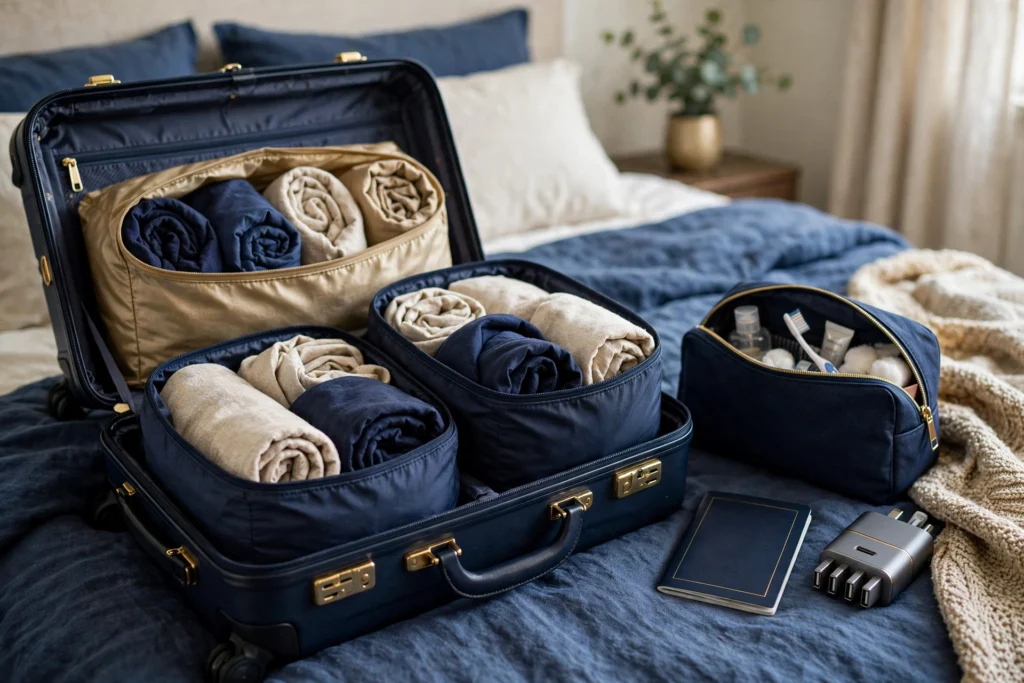
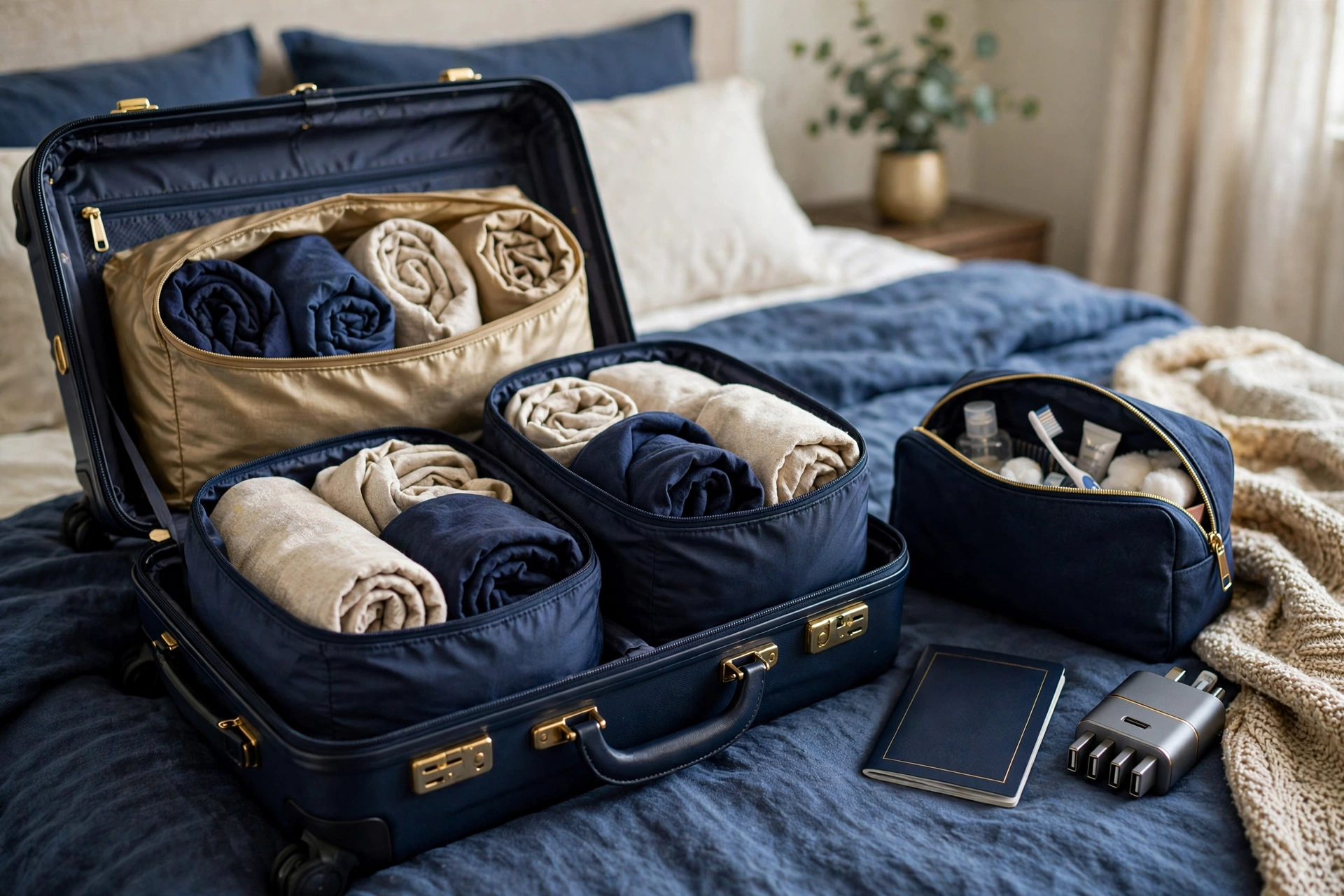
Good packing starts with a list, not with a suitcase. You check the passport, visa, airline bag rules, weather, and power plugs first. Then you pick clothes that mix and match, roll them, and pack them in cubes. You keep documents, medicine, and one change of clothes in your carry-on.
Key Takeaways
- Start with documents: passport, visa, and copies come before clothes.
- Choose one capsule wardrobe in two base colors so 9 to 12 pieces make 15 or more outfits.
- Keep documents, medicine, chargers, and one change of clothes in your carry-on.
- Liquids in carry-on go in containers of 100 ml or less, inside one bag.
- Weigh each bag at home and leave 10 to 15 percent of space free.
- Plan laundry on trips longer than one week instead of packing more clothes.
Table of Contents
- What Are the Best Packing Tips for International Travel?
- How Do I Choose the Right Luggage for International Travel?
- What Documents Do I Need for International Travel?
- How Many Clothes Should I Pack for a Week Abroad?
- How Do I Pack Toiletries and Liquids for International Flights?
- What Tech and Power Gear Should I Pack?
- How Do I Pack Medicine and Health Supplies?
- Carry-On vs Checked Bag: Which Packing Plan Fits Your Trip?
- How Do I Pack for Different Climates and Cultures?
- What Are the Most Common Packing Mistakes to Avoid?
- How Do I Pack for the Return Trip and Souvenirs?
- Conclusion
- Frequently Asked Questions
What Are the Best Packing Tips for International Travel?
The best packing tips for international travel are: make a written list, check passport and visa rules, learn your airline bag limits, pack a capsule wardrobe, keep documents and medicine in your carry-on, and weigh the bag before you leave.
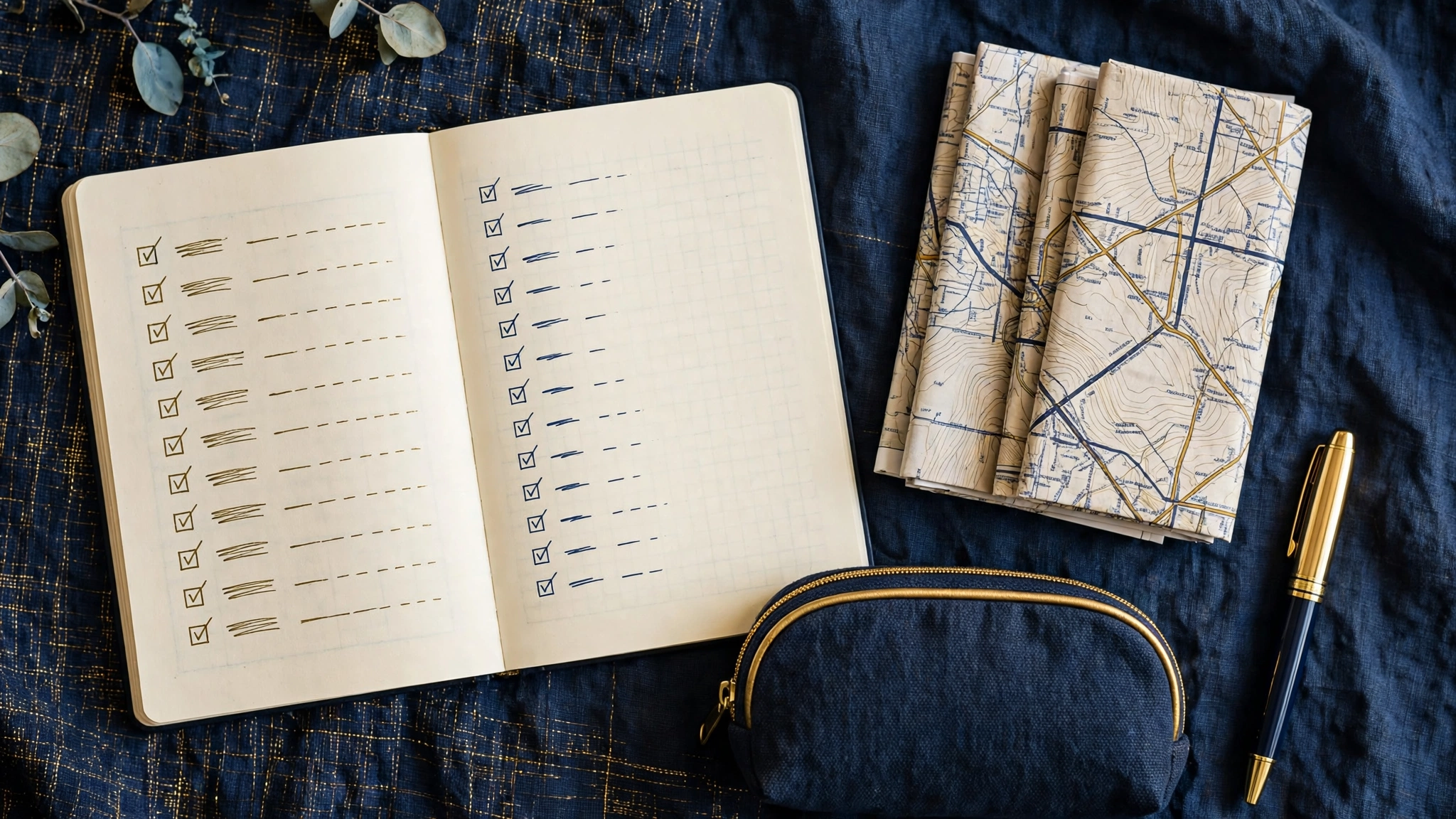
Start with a list 3 to 5 days before departure. A written list stops last-minute panic and stops you from packing the same item twice. Write the list by group: documents, clothes, toiletries, tech, medicine, and money.
Research the destination before you pack a single item. Check the weather for your exact travel dates, the dress code for religious sites, the power plug type, and the entry rules for your nationality. Pack in layers of need: airport items on top, plane items in your personal item, and hotel items in the main bag. Use the travel guides in the Travel section on Voice of Wave to plan the destination side of your trip.
How Do I Choose the Right Luggage for International Travel?
Choose the right luggage for international travel by matching the bag to the trip length, the airline limits, and the way you move between places.
A carry-on roller suits trips of 3 to 7 days, city trips, and trips with many flights. A checked suitcase suits trips of 8 days or more and cold-weather trips. A travel backpack suits trips with trains, stairs, and cobbled streets. Pick one main bag and one personal item.
Check the size and weight limits before you pack. The International Air Transport Association (IATA) guideline for cabin baggage is 56 cm by 45 cm by 25 cm, or 22.0 in by 17.7 in by 9.8 in, as of 2022 (Source: IATA via Wikipedia, 2022). The IATA guideline is voluntary, so each airline sets its own limits, and many add a weight limit of 7 to 10 kg, or 15 to 22 lbs. Hand luggage is the bag you keep in the cabin. Measure the bag with wheels and handles included.
What Documents Do I Need for International Travel?
You need a valid passport, a visa or entry approval where your destination requires one, flight and hotel bookings, travel insurance details, and printed plus digital copies of each document.
Check the passport first. Many countries refuse entry if the passport expires within 6 months of your return date. Check the blank pages too, since some countries need 1 to 2 blank pages for stamps. Keep the passport in your personal item, not in checked luggage.
Check visa rules for your nationality and your destination. A travel visa is a conditional authorization that lets a foreign visitor enter, remain in, or leave a country, and the rules depend on citizenship, trip length, and trip purpose. Some countries give visa-free entry, some give a visa on arrival, and some need an online application weeks before travel. Make a document folder with paper and digital copies of the passport, visa approval, bookings, and insurance card. Tell your bank the travel dates, carry 2 payment cards from different networks, and keep one card in a separate bag.
How Many Clothes Should I Pack for a Week Abroad?
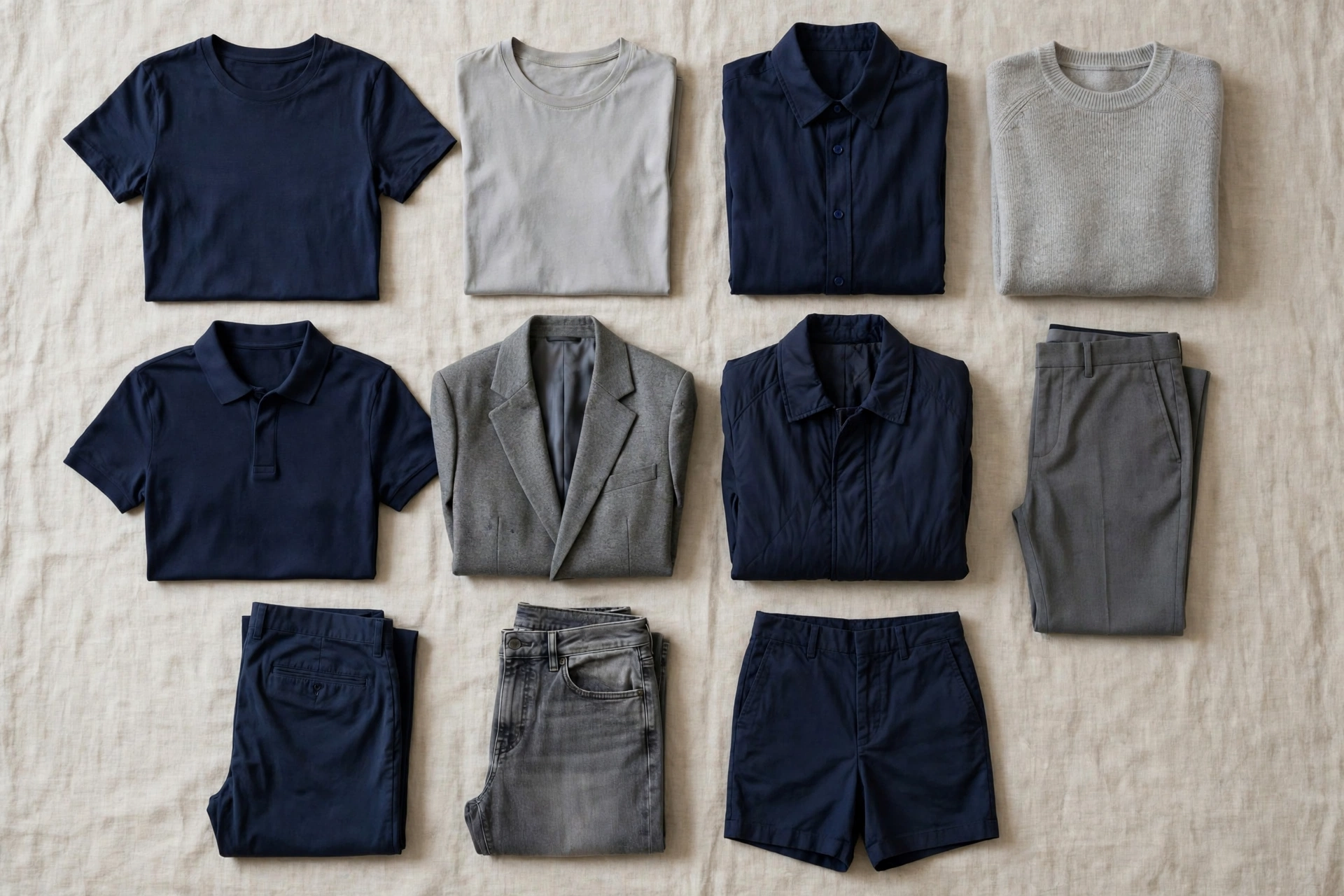
Pack 5 tops, 4 bottoms, 2 layers, 3 pairs of shoes at most, and 7 sets of underwear and socks for one week abroad, then plan one laundry wash for longer trips.
The 5-4-3-2-1 method gives a clear base for one week: 5 tops, 4 bottoms, 3 pairs of shoes, 2 layers, and 1 smarter outfit. The 1-2-3-4-5-6 rule gives a similar base: 1 hat, 2 pairs of shoes, 3 bottoms, 4 tops, 5 pairs of socks, and 6 sets of underwear.
Build a capsule wardrobe in two base colors, such as navy and grey, or black and white. Every top must match every bottom, and every layer must work over every top. Roll soft clothes, fold stiff clothes, and place them in packing cubes by type. Wear the bulkiest clothes on the plane.
How Do I Pack Toiletries and Liquids for International Flights?
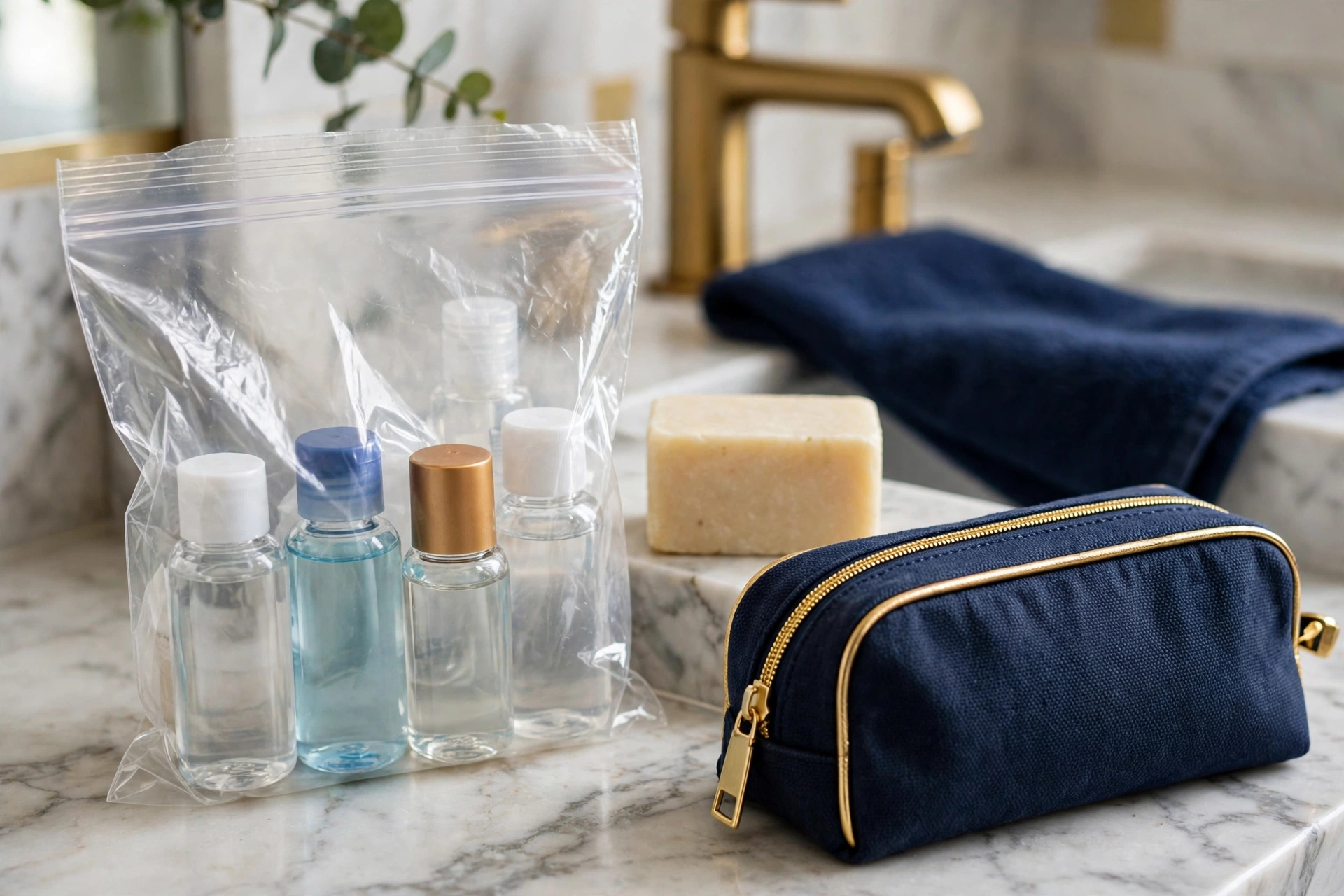
Pack toiletries and liquids for international flights in containers of 100 ml or less, inside one clear quart-size bag, in your carry-on, with full-size liquids in checked luggage.
The 3-1-1 rule still applies on United States flights in 2026: containers of 3.4 oz (100 ml) or less, all in one quart-size bag, one bag per traveler (Source: Transportation Security Administration (TSA) via Wikipedia, 2006). The European Union rule matches it: liquids of 100 ml or less per container, in one clear bag of 1 litre, one bag per passenger (Source: European Union via Wikipedia, 2006). The 100 ml rule still works at every airport, so pack to that rule.
Use solid toiletries to cut the liquids bag in half. Solid shampoo bars, stick deodorant, and toothpaste tablets do not count as liquids. Transfer shampoo and body wash into small reusable silicone bottles of 100 ml or less. Put the liquids bag at the top of your carry-on so you can lift it out at security in 5 seconds.
What Tech and Power Gear Should I Pack?
Pack a phone, chargers, a power bank, a plug adapter, and offline maps and bookings, with all lithium batteries in your carry-on.
Start with the power plan. Check the plug type and voltage for each country on the trip. Some use 220 to 240 volts while others use 100 to 120 volts. Pack a universal adapter for your route, plus a small multi-port charger so one wall socket charges a phone, a watch, and a power bank at the same time. Pack 2 charging cables, since one cable can fail mid-trip.
Keep all power banks and spare lithium batteries in your carry-on, since airlines ban spare lithium batteries in checked luggage. A power bank of 10,000 to 20,000 mAh charges a phone 2 to 4 times and fits in a jacket pocket. Set up the phone plan before you fly: buy an eSIM, a local SIM plan, or an international add-on. Download offline maps for each city, plus the airline app and hotel bookings.
How Do I Pack Medicine and Health Supplies?
Pack all medicine in your carry-on, in original labeled containers, with enough supply for the trip plus 3 extra days, plus a written list of each drug, dose, and time.
Medicine is the one packing group that must never go in checked luggage. A delayed bag can leave you without a daily drug for 24 to 48 hours. Keep medicine in original containers with the labels intact, and keep a copy of each prescription in the document folder.
Pack for time zones. Write down the dose times in home time and in destination time for the first 2 days, and set phone alarms for each dose. Pack pain relief, allergy tablets, motion sickness tablets, and plasters. The Centers for Disease Control and Prevention (CDC) advises travelers to prepare a travel health kit for international trips, with medicine, first-aid supplies, and health documents (Source: CDC, 2026).
Planning a longer stay in Italy after your trip? Read the guide to buying a home in Venice, Italy for costs, taxes, and the five-step buying process.
Carry-On vs Checked Bag: Which Packing Plan Fits Your Trip?
A carry-on plan fits trips of 7 days or less, trips with many flights, and trips where a bag delay would cause real harm, while a checked bag fits longer trips, cold-weather trips, and trips with formal clothes or liquids over 100 ml.
| Factor | Carry-on only | Checked bag |
|---|---|---|
| Best trip length | 3 to 7 days | 8 days or more |
| Bag-delay risk | Low: bag stays with you | Higher: bag can arrive late |
| Liquids | 100 ml or less per container | Full-size liquids allowed |
| Shoes and layers | 2 pairs of shoes, 2 layers | 3 pairs of shoes, 3 or more layers |
| Cost | No checked-bag fee on most fares | Fee on many fares, check the ticket |
| Airport time | Faster exit, no bag belt wait | 20 to 40 minutes at the bag belt |
| Best for | City trips, many flights, short trips | Family trips, cold trips, formal trips |
SITA Baggage IT Insights 2023 reports a mishandled-bag rate of about 7.6 bags per 1,000 passengers (Source: SITA, 2023). A carry-on plan removes that risk. A checked-bag plan needs a carry-on backup: one change of clothes, medicine, chargers, and documents in the cabin bag, so a 24-hour delay does not stop the trip. Most airlines set a checked-bag limit of 50 lbs, or 23 kg, for economy travel.
How Do I Pack for Different Climates and Cultures?
Pack for different climates and cultures by checking the forecast for your exact dates, packing layers you can add or remove, and choosing clothes that respect local dress codes.
Hot climates need light, loose clothes in pale colors, a hat, sunglasses, and sun protection. Pack 3 to 4 light tops, 2 pairs of shorts or light pants, and sandals plus walking shoes. Cold climates need 3 layers: a base layer, a middle layer, and an outer layer that blocks wind and rain. Pack thermal tops, a fleece, a waterproof jacket, warm socks, gloves, and a hat.
Rainy climates need a waterproof jacket, waterproof shoes, and a dry bag for electronics and documents. Pack clothes that dry fast, plus a compact umbrella and a spare pair of socks in your day bag. Culture shapes the packing list as much as weather. Many religious sites need covered shoulders and knees. Pack one scarf for a temple, mosque, or church, and one smarter outfit for dinners.
What Are the Most Common Packing Mistakes to Avoid?
The most common packing mistakes are overpacking, packing valuables in checked luggage, forgetting the liquids rule, ignoring airline weight limits, and leaving no space for the return trip.
Overpacking is the top mistake. Travelers pack for every possible event instead of the real plan. Lay out every item on the bed before it goes in the bag. Remove 3 items, then remove 1 more. If an item works for only one outfit, leave it at home. Packing valuables in checked luggage is the second mistake. Passports, medicine, laptops, cameras, and chargers belong in the carry-on, since checked bags can delay or arrive damaged.
Forgetting the liquids rule causes delays at security. A full-size bottle in a carry-on goes in the bin, so check every bottle before the bag closes. Ignoring weight limits costs money at the airport, so weigh the bag on a bathroom scale at home. Leaving no return space is the last mistake: leave 10 to 15 percent of the bag empty for souvenirs.
How Do I Pack for the Return Trip and Souvenirs?
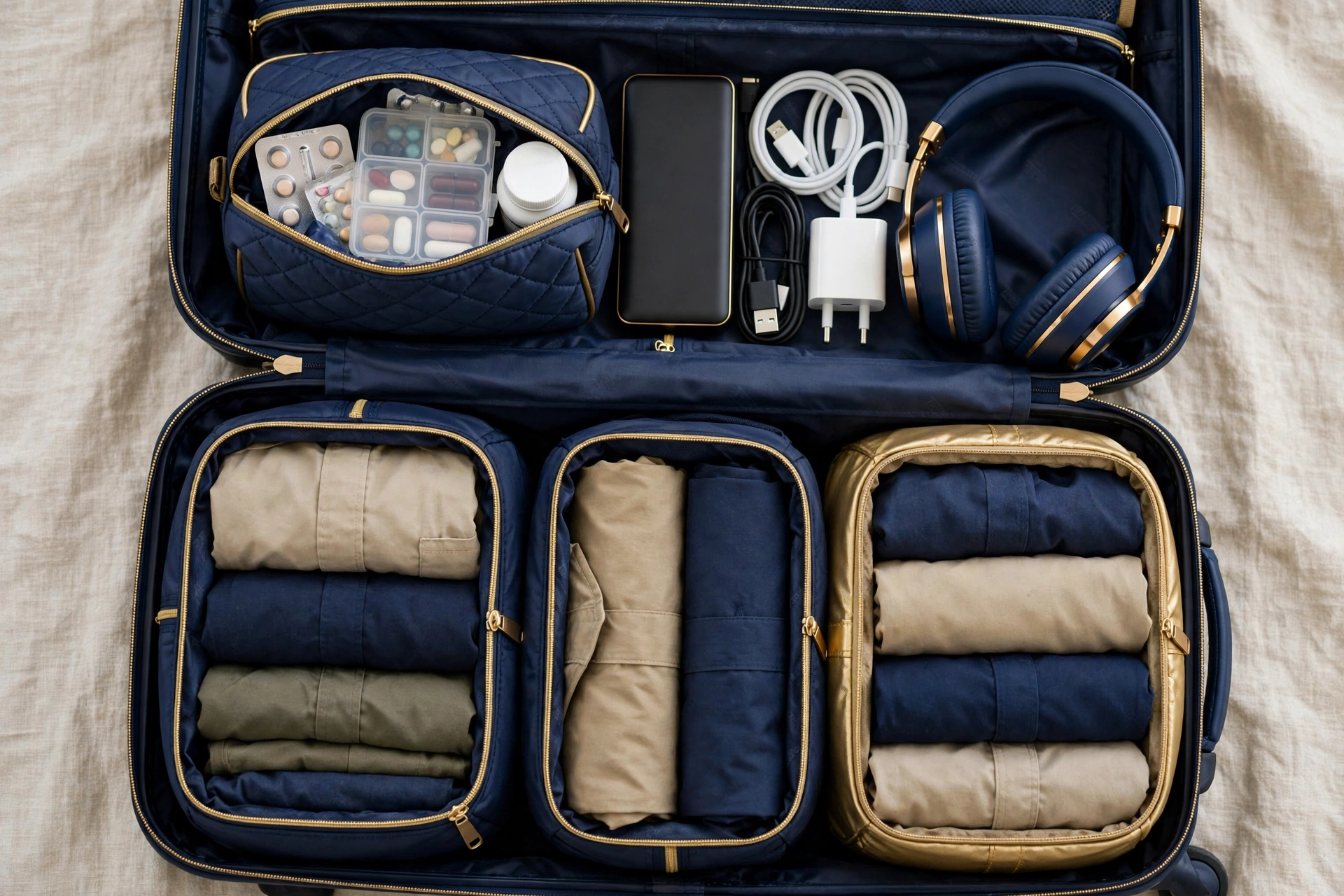
Pack for the return trip by washing clothes before the last day, repacking with the same cube system, and leaving space and weight for souvenirs, gifts, and local products.
Wash clothes 2 days before departure, not on the last night. Hotel laundry, a laundromat, or a sink wash covers a full load in one evening. Pack clean clothes in one cube and worn clothes in a separate laundry bag.
Repack with the same order as the outbound trip. Heavy items go near the wheels. Fragile souvenirs go in the middle, wrapped in soft clothes. Liquids bought abroad go in sealed bags in the checked bag. Keep the same carry-on backup in the cabin bag. Check customs rules before you shop, since many countries limit alcohol, tobacco, food, and cash. Weigh the bag again before you leave the hotel.
Conclusion
Packing tips for international travel work when you follow one order: documents first, then clothes, then liquids, then tech, then medicine, with a weigh-in at the end. Packing tips for international travel give you a capsule wardrobe, a carry-on backup, a liquids plan, and a return-trip plan in one system. The system fits a 3-day city trip and a 3-week tour.
Start the list 3 to 5 days before departure. Check the passport, visa, airline limits, weather, and power plugs. Pack 5 tops, 4 bottoms, 2 layers, and a laundry plan. Keep documents, medicine, and one change of clothes in your carry-on. Follow the 100 ml liquids rule. Weigh each bag at home and leave 10 to 15 percent of space free. Voice of Wave covers travel planning in the same practical style.
Looking for more travel guides like this one? Browse the latest articles on Voice of Wave: https://www.voiceofwave.com/blog/
Frequently Asked Questions
What should I pack first for international travel?
Pack documents first for international travel. Check the passport, visa or entry approval, flight and hotel bookings, travel insurance, and copies of each document. Put the passport and the document folder in your personal item. Add money cards and a small amount of local cash. Once the documents are set, pack clothes, liquids, tech, and medicine in that order.
How many clothes do I need for a 7-day international trip?
You need 5 tops, 4 bottoms, 2 layers, 3 pairs of shoes at most, and 7 sets of underwear and socks for a 7-day international trip. Build the clothes in two base colors so every top matches every bottom. Add 1 smarter outfit. Plan one laundry wash if the trip runs longer than 7 days.
What liquids can I take in hand luggage on an international flight?
You can take liquids in containers of 100 ml or less in hand luggage on an international flight, all inside one clear quart-size bag, with one bag per traveler. The rule covers gels, creams, and aerosols. Medicine, baby food, and baby milk have separate allowances, so declare them at security. Full-size liquids go in checked luggage.
Should I take a carry-on only or a checked bag for international travel?
Take a carry-on only for trips of 7 days or less, trips with many flights, and trips where a bag delay would cause real harm. Take a checked bag for trips of 8 days or more, cold-weather trips, and trips with formal clothes or full-size liquids. Pack a carry-on backup with clothes, medicine, and chargers in either plan.
How do I keep my passport and valuables safe while traveling?
Keep your passport and valuables in your personal item or a zipped inner pocket. Keep one payment card separate from the other card. Keep copies of the passport, cards, and bookings in a document folder and on your phone. Use the hotel safe, and share your itinerary with a trusted person at home.
What power adapter do I need for international travel?
You need a universal adapter that covers the plug types for each country on your trip, plus a multi-port charger for your phone, watch, and power bank. Check the plug type and voltage before you fly, since many countries use different plugs and voltages. Pack 2 charging cables and keep all power banks and spare lithium batteries in your carry-on.
How much space should I leave in my suitcase for souvenirs?
Leave 10 to 15 percent of your suitcase empty for souvenirs. Pack a foldable tote bag inside the main bag for overflow items on the return trip. Check customs limits for food, alcohol, and tobacco before you buy. Wrap fragile souvenirs in soft clothes in the middle of the bag, and keep receipts in your document folder.