
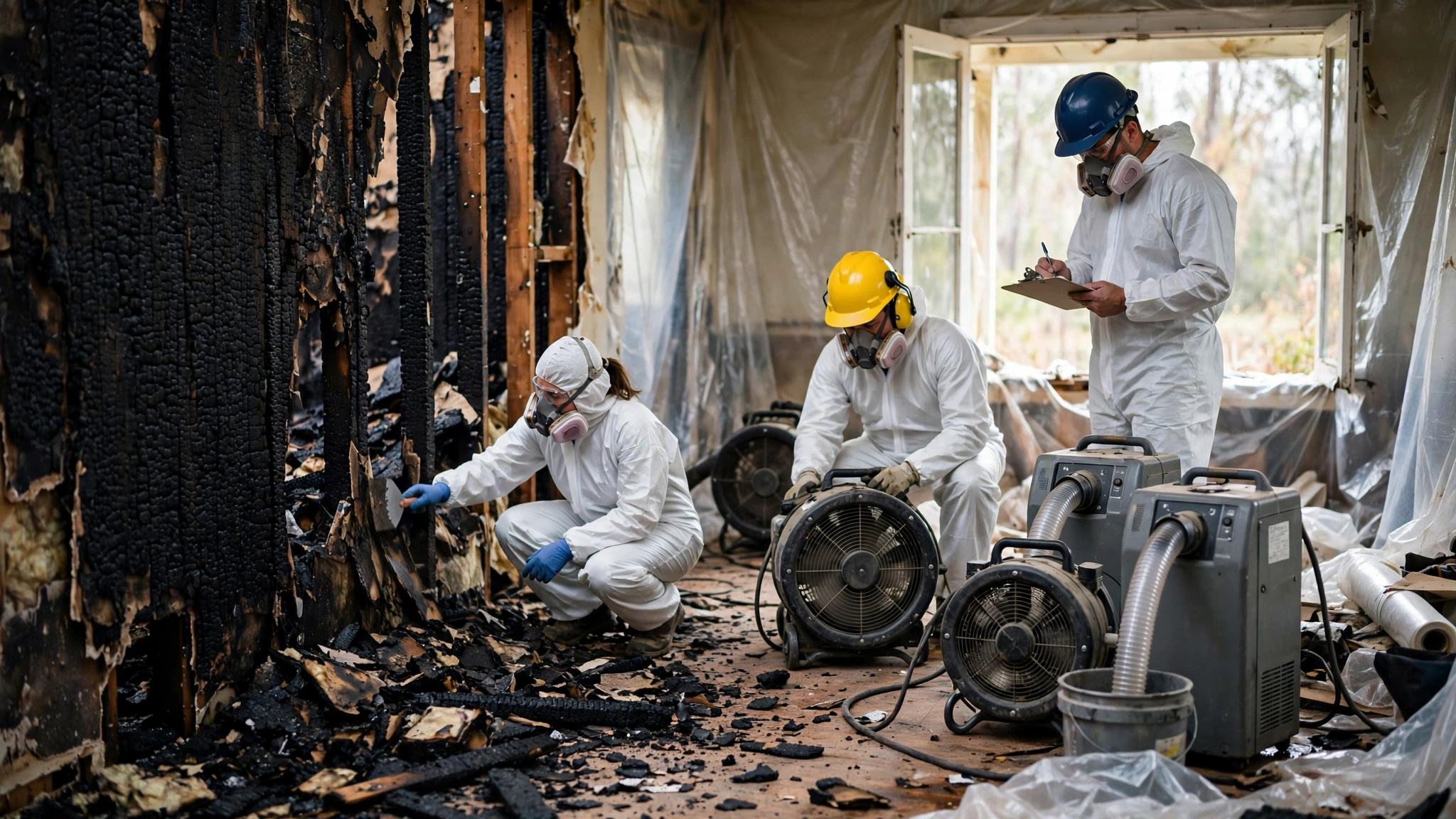
Fire and water damage restoration is the professional process of returning a home to safe, livable condition after a fire, water intrusion, or both. A complete fire and water damage restoration project moves through five ordered phases: emergency response and assessment, water extraction and structural drying, smoke and soot removal, cleaning and deodorization, and final reconstruction. Most projects take between three days and several months depending on severity and rebuild scope. Homeowners insurance typically covers fire damage and the water used to extinguish it, though separate flood coverage applies to flooding events. This guide walks you through every phase, the real costs, the insurance process, and the hidden dangers most guides leave out.
Key Takeaways
- Fire and water damage almost always occur together, because extinguishing water creates its own damage. Restoration must address both in the right order.
- Mold can start growing within 24 to 48 hours of water intrusion, so water extraction and industrial drying cannot wait for fire cleanup to finish.
- Restoration follows five ordered phases: assessment, water extraction and drying, soot removal, cleaning and deodorization, and reconstruction.
- Fire restoration costs commonly fall between $10,000 and $30,000, with full projects ranging from $3,100 to over $51,200 depending on severity and rebuild scope.
- Document everything with photos and notes before cleanup begins, because thorough documentation speeds up and strengthens your insurance claim.
- Hidden hazards such as acidic soot, asbestos in older homes, and contaminated HVAC systems are the main reasons restoration is not a DIY job.
Table of Contents
- What Is Fire and Water Damage Restoration?
- What Are the First Steps to Take After Fire or Water Damage?
- What Does the Fire and Water Damage Restoration Process Look Like?
- How Much Does Fire and Water Damage Restoration Cost?
- How Can You Prevent Mold After Water Damage?
- What Are the Hidden Dangers Most Guides Miss?
- What Can You Do Yourself and What Should You Leave to the Pros?
- How Do You Choose a Restoration Company?
- Frequently Asked Questions
- Conclusion
What Is Fire and Water Damage Restoration?
Fire and water damage restoration is the coordinated cleanup, drying, decontamination, and rebuilding of a property damaged by fire, smoke, water, or any combination of the three. The goal is to return the property to its pre-loss condition, meaning safe, structurally sound, and free of contaminants.
Why fire and water damage almost always occur together
When firefighters respond to a house fire, water is their primary weapon, and a single house fire can involve nearly 3,000 gallons of water from high-pressure hoses, according to ServiceMaster. That water soaks into drywall, insulation, flooring, and framing while it puts out the flames. So a homeowner rarely faces “just” fire damage: soot and char arrive together with standing water and humidity that can double overnight. Wet soot, for example, is harder to clean than dry soot, and water-soaked materials covered in soot residue can be ruined if either problem is addressed in the wrong order. The damage comes in three layers: fire damage to structure and framing, smoke and soot residue on every surface including rooms the fire never reached, and water damage from standing water and trapped moisture. Water extraction must come first, because mold and material rot are time-critical; soot cleaning follows once surfaces are dry.
What Are the First Steps to Take After Fire or Water Damage?
The first 24 to 48 hours set the trajectory of the entire project. Act fast, and document carefully for your claim.
Step 1: Confirm safety before entering
Do not enter the property until fire officials declare it safe. Structural elements and electrical systems may be compromised, and water can hide electrical hazards. Avoid rooms with sagging ceilings and standing water if the power is still on.
Step 2: Document everything for your claim
Photograph and video every affected room before moving or cleaning anything, capturing wide shots and close-ups of damaged items. Keep a written inventory of belongings with approximate values. This documentation is the foundation of your insurance claim, and well-documented claims are processed the fastest.
Step 3: Contact your insurance company
Report the loss promptly; most policies require timely notification. Your insurer will assign an adjuster and explain your coverage limits and deductible. Ask specifically whether your policy covers water damage from firefighting efforts, and whether you need separate flood coverage (standard homeowner policies typically exclude flooding).
Step 4: Arrange emergency mitigation
Emergency mitigation stops damage from getting worse while you wait for the full restoration: boarding up broken windows and doors, tarping damaged roofs, and beginning water extraction. Professional restoration companies offer 24/7 emergency response, and many coordinate directly with your insurer. If roof tarps or boards are needed, plan the lasting fix as well: our roof-replacement guide walks through materials, costs, and contractor questions.
What Does the Fire and Water Damage Restoration Process Look Like?
A combined restoration follows a strict sequence. Skipping or reordering phases creates worse damage: clean soot before drying, and residue becomes harder to remove; deodorize before all moisture is gone, and odors return within weeks. The five phases, in order:
Phase 1: Assessment and emergency response
Certified technicians inspect structure, contents, and hidden cavities to map the damage, checking warped materials, staining, odor, and saturation depth. This produces the scope of work and the line-item estimate your insurer uses to approve the project. Emergency board-up, roof tarping, and debris removal happen in this phase.
Phase 2: Water extraction and structural drying
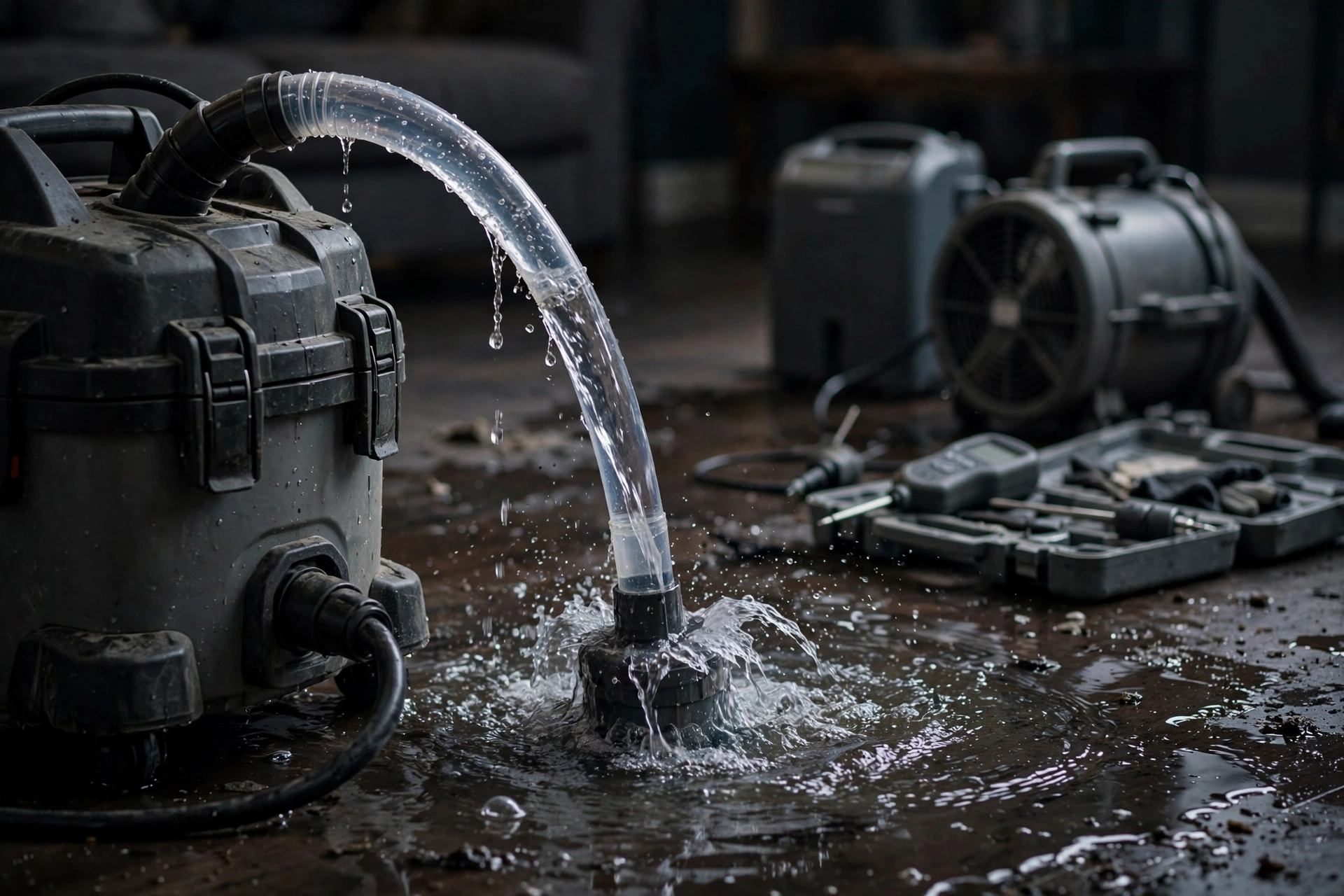
Standing water is removed with submersible pumps and industrial wet vacuums, then trapped moisture is pulled from walls, floors, and framing with air movers and commercial dehumidifiers. Technicians verify dryness with moisture meters throughout. This phase typically takes 3 to 7 days, and its priority is simple: mold can begin forming within 24 to 48 hours of water intrusion, and wet building materials deteriorate fast.
Phase 3: Smoke and soot removal
Once surfaces are dry, technicians clean soot from every affected surface using HEPA-filtered vacuums, dry chemical sponges, and residue-matched cleaning solutions, working top to bottom so contamination is not spread. Soot is acidic and will permanently etch glass, corrode metals, and stain porous materials if left sitting, which is why professionals clean quickly rather than using household cleaners.
Phase 4: Cleaning, deodorizing, and contents restoration
Personal belongings are cleaned, treated, and deodorized, often in a dedicated facility. Textiles may be laundered with smoke-specific processes; documents can sometimes be salvaged through freeze-drying; electronics may need professional evaluation. Odor neutralization uses thermal fogging or ozone treatment rather than masking scents. For homes with rental units, turnover-grade deep cleaning standards (like those in our vacation-rental-cleaning guide) show the level of cleanliness restored contents should reach.
Phase 5: Reconstruction
Whatever was removed or destroyed is rebuilt: drywall, flooring, cabinetry, roofing, and finishes. Single-room projects can take one to two weeks; whole-floor or structural rebuilds take several weeks to a few months depending on permits and material availability.
How Much Does Fire and Water Damage Restoration Cost?

Cost depends on severity, square footage, finishes, and rebuild scope. Angi reports a national average of about $27,200 for professional fire restoration, with most homeowners paying between $3,100 and $51,200. National First Response places most projects between $10,000 and $30,000, with extreme structural cases topping $100,000.
Typical cost bands by service
| Service | Typical range |
|---|---|
| Emergency board-up and roof tarping | $500 to $2,000 |
| Debris removal and cleanup | $1,000 to $5,000 |
| Smoke and soot cleanup | $2,000 to $8,000 |
| Odor removal | $500 to $5,000 |
| Water damage mitigation | $1,000 to $10,000 |
| Contents cleaning and restoration | $1,000 to $10,000 |
| Structural repairs and reconstruction | $5,000 to $100,000+ |
What drives costs up
Structural damage requiring demolition and rebuilding is the largest cost driver, followed by heavy smoke migration that multiplies cleaning scope, and hidden moisture or mold behind walls, which is often more expensive to fix than the original fire damage. Older homes may also need asbestos or lead abatement.
Understanding your insurance claim: RCV vs ACV
Restoration contractors typically build estimates in Xactimate, the industry-standard line-item software your adjuster uses to approve the scope. Two values matter. Replacement Cost Value (RCV) is the cost to replace a damaged item with a new one of similar quality at current prices. Actual Cash Value (ACV) is RCV minus depreciation for age and wear. Under an RCV policy, the insurer pays the ACV amount first, then releases the withheld depreciation after repairs are complete and receipts are submitted. You pay your deductible first.
How Can You Prevent Mold After Water Damage?
The 24 to 48 hour mold window
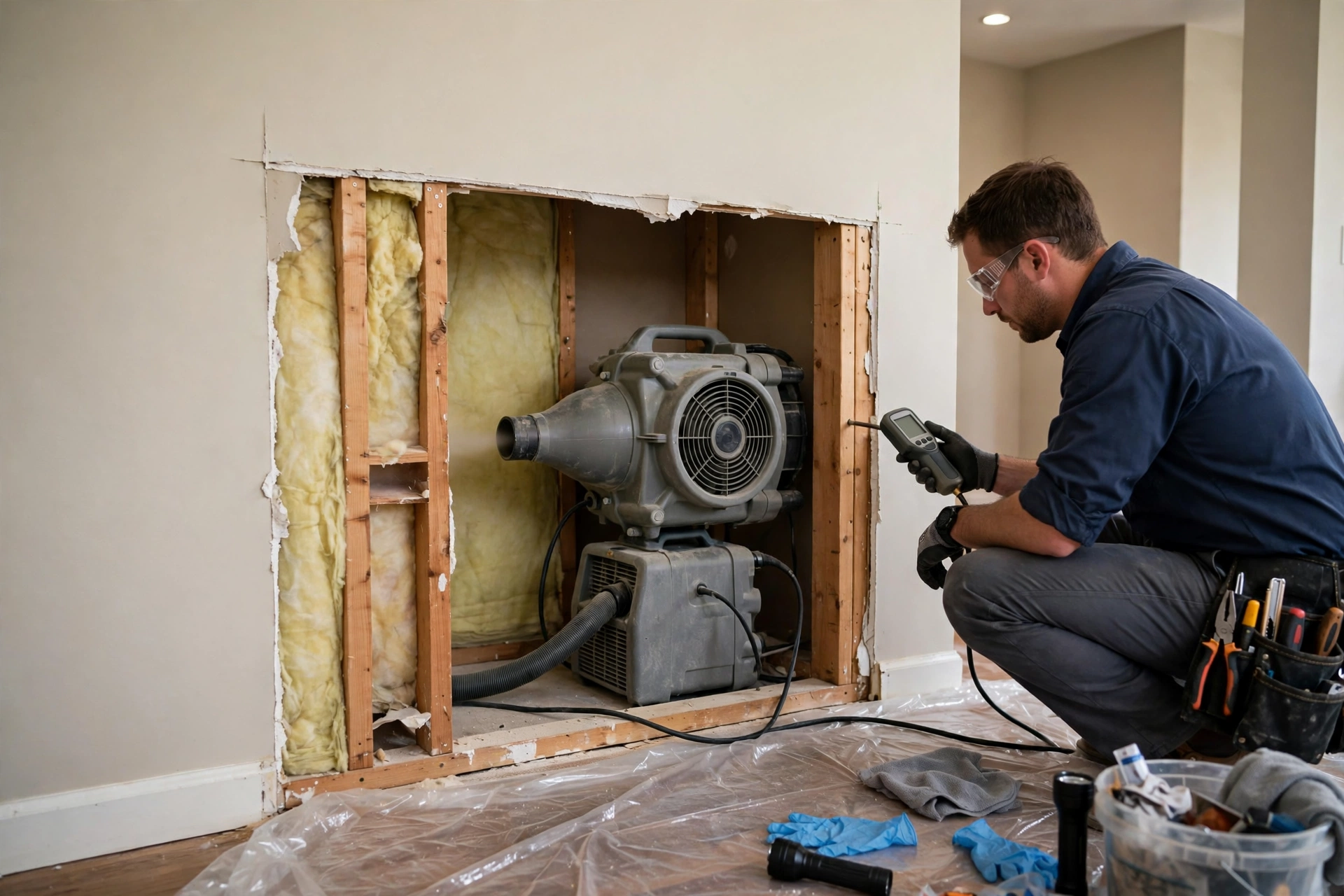
Mold spores need only moisture to grow, and industry guidance places the danger window at 24 to 48 hours after water intrusion. Within that window, spores settle into wet drywall, insulation, and wood and begin colonizing. This is why water extraction starts immediately after assessment, before soot cleaning and before any reconstruction. If damage stood for days, ask the restoration company to check wall cavities; surface-dry walls can hide active growth inside.
Drying equipment professionals use
Industrial air movers push air across wet surfaces to accelerate evaporation, while commercial dehumidifiers pull that moisture out of the air so it does not resettle. HEPA-filtered air scrubbers remove airborne mold spores and soot particles during drying. Technicians verify dryness with pin and pinless moisture meters against dry standards for each material. Household fans help only for minor, localized leaks caught immediately.
What Are the Hidden Dangers Most Guides Miss?
Soot is acidic, not just dirty
Soot from a house fire has an acidic pH and a corrosive effect on surfaces. Left in place, it etches glass, pits chrome and aluminum, tarnishes metals, and permanently stains porous materials. Protein-based soot from kitchen fires is especially stubborn and produces a pungent odor that embeds deep. This is why soot must be cleaned before repair materials go back up: residue behind framing will keep corroding and off-gassing odor for years.
Asbestos and lead in older homes
Homes built before the 1980s may contain asbestos in insulation, flooring, and ceiling materials, and homes built before 1978 may contain lead paint. Fire damage can disturb these materials, turning restoration into a regulated abatement project. Read more about asbestos on Wikipedia. Your restoration company should test for these hazards before demolition begins in any older home.
HVAC contamination
Smoke and soot travel through ductwork to rooms the fire never touched. If the HVAC system was running during or after the fire, ducts, coils, and filters are likely contaminated, and running the system spreads soot and odor through the whole house. Duct cleaning and HVAC inspection belong in every combined restoration plan, and the system should stay off until inspected.
What Can You Do Yourself and What Should You Leave to the Pros?
Safe DIY tasks
Once the property is declared safe to enter, open windows and prop open cabinet doors to circulate air, remove wet area rugs and upholstered furniture from standing water, and wrap furniture legs in foil to prevent moisture from creeping upward. Photograph and inventory all damage early, and move undamaged valuables to a safe location.
Leave these to certified professionals
Water extraction beyond mopping, structural drying, soot and smoke cleanup, odor neutralization, and mold remediation all require industrial equipment and trained handling. Homes built before the 1980s should be tested for asbestos and lead before you disturb damaged materials, and improper DIY work can complicate your insurance claim. For the broader picture of keeping your home’s exterior in good shape after a disaster, see our exterior-cleaning guide.
How Do You Choose a Restoration Company?
Certifications that matter
Look for IICRC certification, general liability and workers’ compensation insurance, 24/7 emergency response, and detailed written estimates, preferably built in Xactimate or equivalent line-item software. Ask whether they handle both mitigation and reconstruction, so you deal with one accountable team.
Red flags
Be cautious of companies that demand large upfront payments, pressure you to sign immediately, or refuse to provide a written scope of work. Avoid any contractor who discourages you from contacting your insurer.
Frequently Asked Questions
How long does fire and water damage restoration take?
Timelines depend on severity. Water extraction and drying take 3 to 7 days. Smoke cleanup adds several more days. Minor projects finish within two weeks, while extensive structural rebuilds can take several months. Permits, material availability, and insurance approvals are the most common sources of delay.
Will homeowners insurance cover both fire and water damage?
Most homeowner policies cover fire damage restoration, including the water used to extinguish the fire. However, standard policies typically exclude flood damage, which requires separate flood insurance. Review your policy limits, deductible, and any exclusions before work begins, and confirm coverage with your adjuster in writing.
Can mold really grow within 24 hours of water damage?
Yes. Mold spores can begin colonizing wet materials within 24 to 48 hours of water intrusion, according to industry guidance referenced by PuroClean and other restoration firms. Immediate water extraction and industrial drying are the only reliable prevention, which is why drying precedes soot cleaning in the restoration sequence.
What should I do with my belongings after a fire?
Have contents professionally assessed before discarding anything. Many items, including textiles, documents, and furniture, can be restored through specialized cleaning. Inventory everything for your insurance claim, and keep damaged items until the adjuster has reviewed them, since premature disposal can reduce your settlement.
Is it safe to stay in my home during restoration?
It depends on scope. Localized work in one room usually allows you to remain. Whole-floor or structural restoration may require temporary relocation, especially when asbestos testing, demolition, or heavy odor treatment is involved. Some policies cover temporary living expenses under “loss of use” coverage. If you need to move out, our stress-free-move guide covers packing, storage, and mover selection.
How do I know the restoration is really finished?
Ask for documented moisture readings showing all materials meet dry standards, a final walkthrough inspection, and written confirmation that cleaning and odor treatment are complete. For significant projects, independent clearance testing for air quality and mold gives objective proof the home is safe to reoccupy.
Conclusion
Fire and water damage restoration is a demanding but well-understood process. When you know the five phases, assessment, water extraction and drying, soot removal, cleaning and deodorization, and reconstruction, you can follow the work intelligently instead of feeling swept along by it. Move fast in the first 48 hours to beat mold, document everything for your insurer, understand your RCV and ACV coverage, and hire a certified company that handles both mitigation and rebuilding. With the right sequence and the right team, a damaged home can come back fully: safe, clean, and ready to live in again. For more practical home care reading, browse the home improvement library on Voice of Wave.