
Drain maintenance is the routine care of household drains through strainers, hot water flushes and trap cleaning, and drain maintenance prevents clogs, odors and backups before they form. Drain maintenance covers kitchen sinks, bathroom sinks, tubs, showers, toilets, floor drains and the main line, and drain maintenance uses simple weekly habits plus monthly cleaning and an annual professional check.
Drain maintenance protects the full drainage system, from the fixture trap under each sink to the main line that carries waste to the street sewer or septic tank. Drain maintenance also protects health and comfort, because standing water and sewer gas enter a home when traps dry out or lines block. This guide gives a complete schedule, room-by-room cleaning steps, safe methods, a tool list, outdoor drain care and clear warning signs.
Key Takeaways
- Drain maintenance runs on a schedule: daily strainer care, weekly hot water flushes, monthly deep cleaning, quarterly trap checks, and an annual professional inspection.
- Keep grease, hair and wipes out: grease coats pipes, hair binds with soap scum, and wipes do not break down in water.
- Match the method to the clog: a plunger clears shallow clogs, a snake clears hair clogs, and enzyme cleaners suit maintenance only.
- Clean the P-trap and stopper: most slow sink drains clear when the trap and stopper are cleaned by hand.
- Watch for multi-fixture signs: several fixtures backing up at once means a main line problem, and that problem needs a professional.
Table of Contents
- What Is Drain Maintenance?
- What Causes Most Drain Clogs?
- How Often Should You Maintain Your Drains?
- What Daily Habits Keep Drains Clear?
- How Do You Clean Kitchen Drains?
- How Do You Clean Bathroom Drains?
- How Do You Maintain the P-Trap and Stopper?
- Drain Maintenance Methods Compared
- What Tools Do You Need for Drain Maintenance?
- How Do You Maintain Outdoor Drains and Floor Drains?
- What Are the Warning Signs That Drain Maintenance Is No Longer Enough?
- When Should You Call a Professional for Drain Maintenance?
- Conclusion
- FAQs
What Is Drain Maintenance?
Drain maintenance is the planned care of every drain in a home, and drain maintenance includes daily strainer emptying, weekly hot water flushes, monthly cleaning, quarterly trap checks and an annual professional inspection. Drain maintenance keeps water flowing at full speed, and drain maintenance stops grease, hair, soap scum and food waste from building into a blockage.
A home drainage system has 5 parts. The fixture trap sits under each sink, tub and shower, and the trap holds water that blocks sewer gas. The branch line carries waste from one fixture or a small group of fixtures. The soil stack is the vertical pipe that collects branch lines and vents through the roof. The building drain is the horizontal run at the base of the house. The main line, also called the sewer lateral, carries all waste from the house to the street sewer or septic tank. A drain is the pipe and opening that carries unwanted water away from a fixture, and a drain in plumbing connects each fixture to the sewer or stormwater system. For more practical home care guides in this area, browse the Home Improvement guides on this site.
What Causes Most Drain Clogs?
Most drain clogs come from 4 causes: kitchen grease and food waste, bathroom hair and soap scum, foreign objects flushed or washed down drains, and main line tree roots and mineral scale. Kitchen drains clog from grease, bathroom drains clog from hair, and main lines clog from roots and scale.
Kitchen clogs start with grease. Hot grease flows down the drain as a liquid, cools inside the pipe, and coats the pipe wall as a solid layer. Food scraps, coffee grounds and starchy paste stick to that grease layer, and the layer narrows the pipe until water drains slowly.
Bathroom clogs start with hair and soap scum. Hair catches on the drain stopper, the trap and rough pipe joints, and soap scum binds the hair into a dense mat.
Foreign objects cause sudden full blockages. Wipes labeled flushable do not break down in water in the same way as toilet paper, and wipes snag on pipe joints and roots. Cotton swabs, cotton pads, dental floss, paper towels and hygiene products belong in the trash, not in a toilet or sink.
Main line clogs start outside the fixture. Tree roots enter sewer lines through joints and small cracks, and roots grow into a mass that catches paper and waste. Mineral scale narrows old cast iron and galvanized lines. These main line causes do not respond to sink-level cleaning, and these causes need camera inspection and professional tools.
How Often Should You Maintain Your Drains?
You should maintain your drains weekly, monthly, quarterly and annually, and drain maintenance on that schedule keeps pipes clear: strainers emptied weekly, a hot water flush weekly, a deep clean monthly, trap and stopper checks quarterly, and a professional inspection once a year. Drain maintenance frequency rises with heavy cooking, long hair, hard water and large households.
Use the schedule below as a starting point, then adjust it to your home.
| Interval | Task | Drains covered |
|---|---|---|
| Daily | Empty strainers, wipe grease from pans, run water after sink use | Kitchen sink, bathroom sinks, tubs, showers |
| Weekly | Hot water flush, clear visible hair, run water in unused fixtures | All sinks, tubs, showers, floor drains |
| Monthly | Baking soda and vinegar flush or enzyme cleaner | Kitchen sink, bathroom sinks, tubs, showers |
| Quarterly | Clean P-trap opening, stoppers and covers | All sinks, tubs, showers |
| Seasonally | Clear outdoor drains, check gutters, test sump pump | Yard drains, area drains, floor drains |
| Annually | Professional drain cleaning and inspection | Full system, branch lines, main line |
| Every 3 to 5 years | Camera inspection of the main line | Main line |
What Daily Habits Keep Drains Clear?
Daily habits that keep drains clear are 5 actions: fit a strainer on every drain, empty the strainer into the trash, wipe grease from pans before washing, scrape food into the trash before rinsing, and flush only toilet paper and human waste. Daily habits that keep drains clear stop debris at the source.
Fit a mesh strainer on every sink, tub and shower drain. Empty each strainer into the trash after use, and never rinse the collected debris back into the drain.
Wipe grease from pans with a paper towel before washing, and pour cooled cooking oil into a sealed container for the trash. Run hot tap water for 30 seconds after using the kitchen sink, because hot water carries fresh grease and soap residue past the trap. Run cold water before, during and after garbage disposal use, and feed the disposal in small amounts. Avoid fibrous foods such as celery and onion skins, because fibrous foods wrap around disposal parts.
Scrape plates into the trash before rinsing, and keep flour, rice and pasta out of the sink. Clear visible hair from the drain cover every 2 to 3 days. Flush only toilet paper and human waste, and keep a small bin beside each toilet for wipes and cotton products, so no one flushes them by habit.
How Do You Clean Kitchen Drains?
To clean kitchen drains, run a weekly hot water flush, run a monthly baking soda and vinegar flush, clean the strainer and stopper each month, and clean the garbage disposal each month. To clean kitchen drains safely, use hot tap water, not boiling water, on plastic pipes and porcelain fixtures.
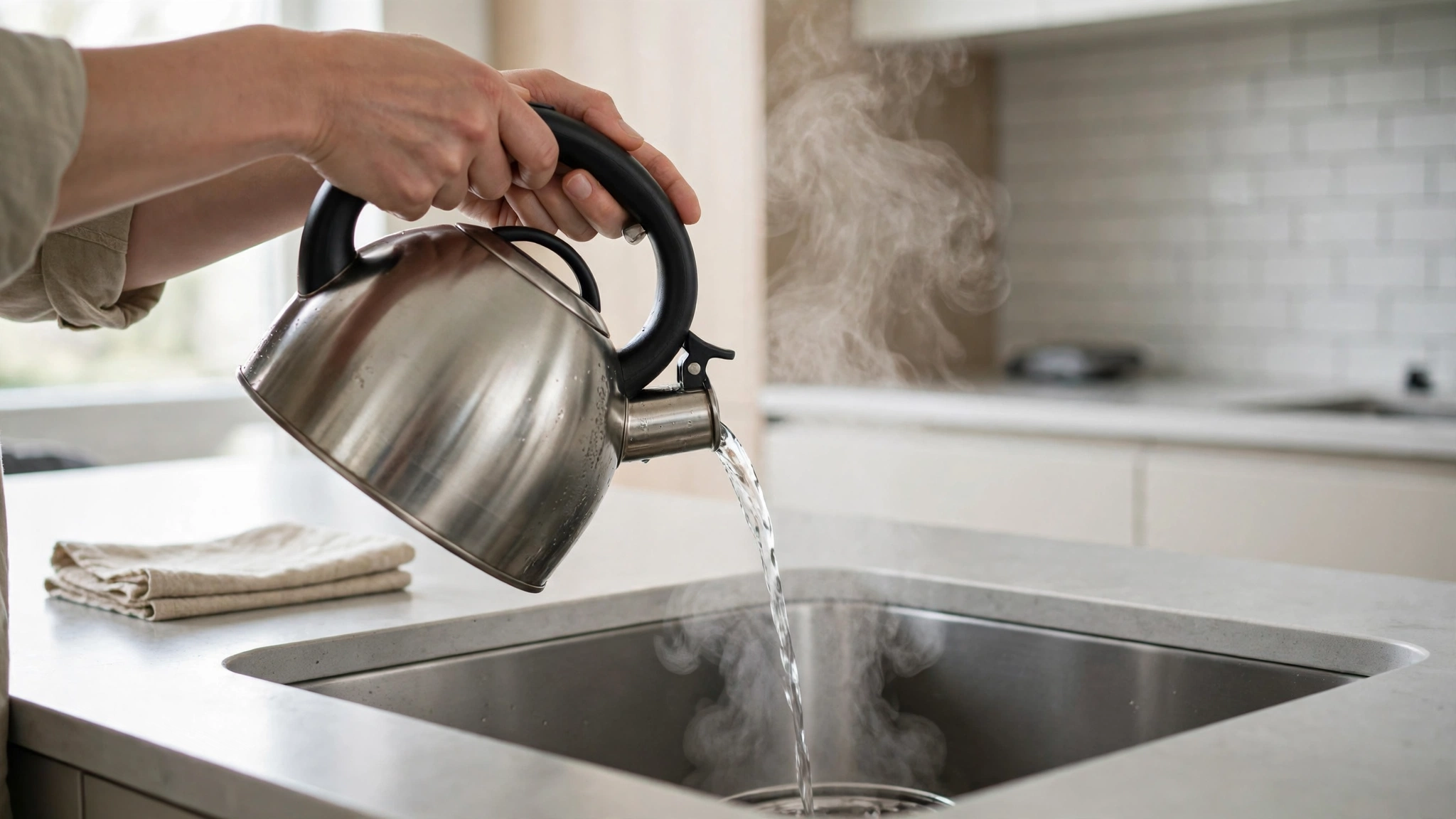
Start with the weekly hot water flush. Run the hot tap for 60 seconds, or pour a kettle of very hot water down the drain in 2 or 3 small pours. Use very hot water, not a rolling boil, on PVC pipes, because boiling water can soften PVC joints.
Run the monthly baking soda and vinegar flush on a drain that flows slowly or smells stale. Follow these steps:
- Run hot tap water for 30 seconds to warm the line.
- Pour half a cup of baking soda into the drain.
- Pour half a cup to 1 cup of white vinegar after the baking soda.
- Cover the drain with a plug or damp cloth for 10 to 15 minutes.
- Flush with hot tap water for 1 to 2 minutes.
Baking soda and vinegar loosen light organic film near the drain opening and the P-trap. Baking soda and vinegar do not dissolve hair, and baking soda and vinegar do not clear thick grease or a solid clog. Stop repeating the flush if flow stays slow, because a slow drain after 2 flushes needs a plunger or a trap cleaning.
Clean the garbage disposal once a month. Grind a tray of ice cubes with a tablespoon of coarse salt to scour the chamber, then run cold water for 30 to 60 seconds. Scrub the rubber splash guard on both sides, because residue collects under the guard and causes odor. Never put drain cleaner, bleach or hot grease in the disposal.
For a deeper kitchen drain clean that suits this routine, read how to clean drains with proven methods.
How Do You Clean Bathroom Drains?
To clean bathroom drains, clear hair from the stopper and cover every few days, run a weekly hot water flush, run a monthly baking soda and vinegar flush, and clean the stopper and trap opening each quarter. To clean bathroom drains safely, remove hair by hand or with a plastic drain stick before using any liquid method.
Hair causes most bathroom clogs, so hair removal comes first. Lift the stopper or drain cover, and pull out visible hair with gloved hands or tweezers. Use a plastic drain stick with small barbs for hair below the stopper, and push the stick in slowly, twist it once, and pull it out with the hair attached.
Run the weekly hot water flush in each bathroom sink, tub and shower. Pour very hot tap water down the drain for 60 seconds. Run the monthly baking soda and vinegar flush in the same way as the kitchen drain. Use an enzyme cleaner once a month as an alternative on slow bathroom drains, and pour it in at night, leave it for 8 to 12 hours, then flush with warm water in the morning.
Clean the tub and shower drain cover each month. Remove the cover, clear hair and soap film from the cover and the drain rim, and rinse it with hot water before refitting it. Keep a hair catcher in the shower, and clean the hair catcher every 2 days, because a full hair catcher blocks flow as fast as a clog.
How Do You Maintain the P-Trap and Stopper?
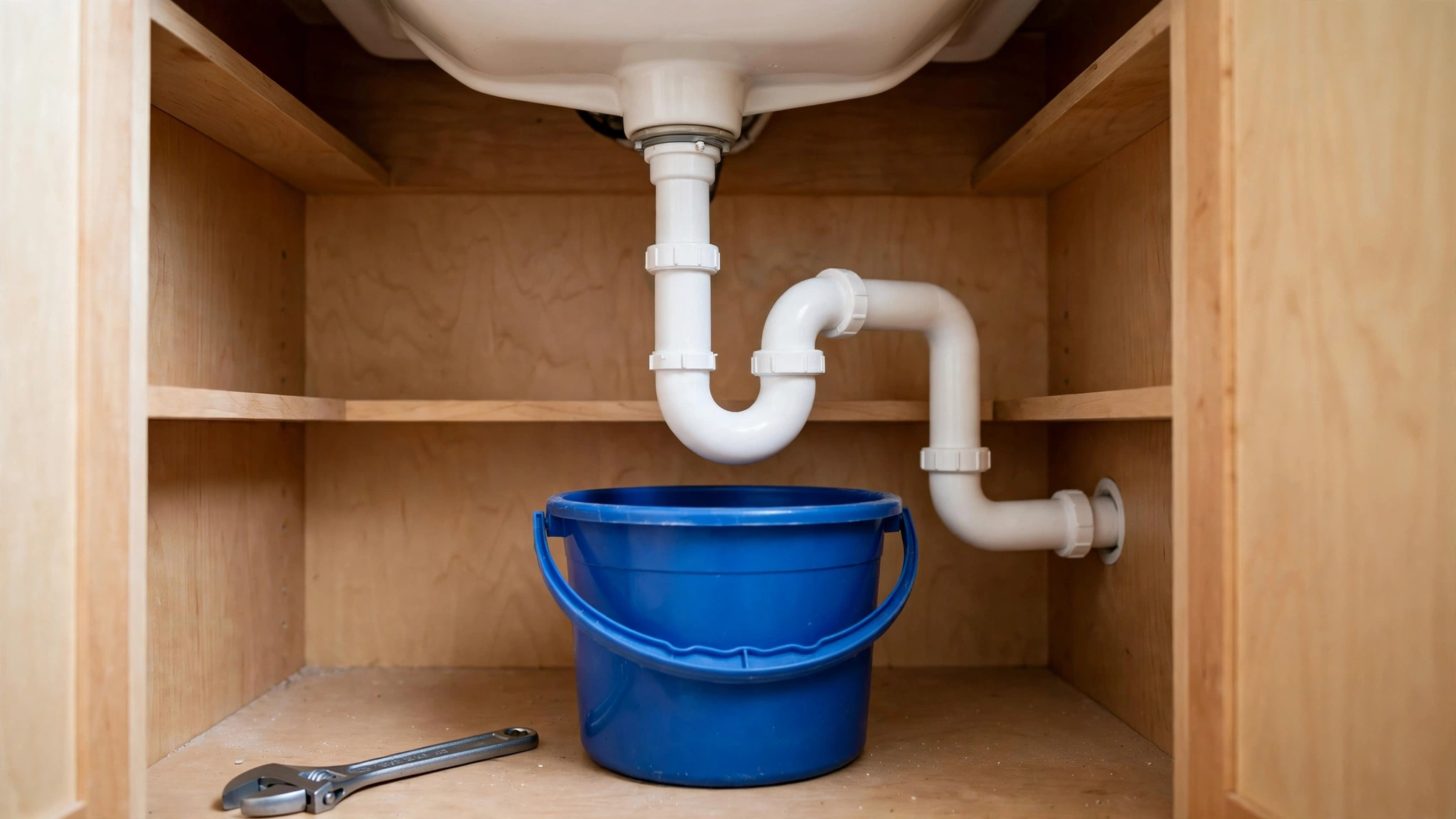
To maintain the P-trap and stopper, clean the stopper each month, clear the trap opening by hand each quarter, and remove and clean the full P-trap once a year or when a drain stays slow after a flush and a plunge. To maintain the P-trap safely, place a bucket under the trap and loosen the slip nuts by hand.
The P-trap is the U-shaped pipe section under a sink, and the P-trap holds a water seal that blocks sewer gas from entering the home. A plumbing trap also catches hair, sand, food waste and small objects before they reach the branch line. The World Health Organization and UNICEF reported in 2019 that about two-thirds of the world population have access to traps (Source: WHO and UNICEF, 2019).
Clean the stopper first, because stopper buildup causes many slow drains. Lift the stopper out, remove hair and soap film, scrub it with hot water and dish soap, and clean the drain rim with an old toothbrush.
Remove and clean the P-trap when the stopper clean and a plunger do not restore flow. Follow these steps:
- Place a bucket under the trap to catch standing water and debris.
- Loosen the 2 slip nuts by hand, or with a wrench if the nuts stick.
- Remove the trap and empty it into the bucket.
- Clear hair, grease and sludge from the trap with an old toothbrush.
- Rinse the trap with hot water and check the washers for cracks.
- Refit the trap, tighten the slip nuts by hand, and run water to check for leaks.
Keep the trap water seal full. Run water for 10 seconds in any fixture that has not been used for a week, because a dry trap lets sewer gas into the room.
Drain Maintenance Methods Compared
Drain maintenance methods compare by clog type: a plunger suits shallow clogs, a drain snake suits hair clogs, baking soda and vinegar suit light film, enzyme cleaners suit monthly maintenance, and hydro jetting suits grease, scale and roots in main lines. Drain maintenance methods fail when used on the wrong clog, so drain maintenance starts with diagnosis.
| Method | Best for | How it works | Limits |
|---|---|---|---|
| Hot water flush | Fresh grease and soap film | Heat melts fresh film | Fails on solid clogs and hair |
| Baking soda and vinegar | Light buildup and odor | Fizz loosens light organic film | Fails on hair, thick grease and solid clogs |
| Enzyme cleaner | Monthly maintenance | Bacteria digest organic matter slowly | Slow, fails on grease, scale and roots |
| Plunger | Shallow fixture clogs | Pressure and suction move the clog | Fails on deep or hard clogs |
| Drain snake | Hair and debris clogs | Rotating cable breaks up or hooks the clog | Leaves grease and scale on pipe walls |
| P-trap cleaning | Trap clogs | Manual removal of trapped debris | Fails on clogs past the trap |
| Hydro jetting | Grease, scale, roots, main lines | High-pressure water scours the pipe wall | Needs sound pipes, needs a professional |
Use the gentlest method that fits the clog. A slow sink with no standing water suits a hot water flush or a trap cleaning. A tub that drains slowly after every shower suits a snake, because hair sits below the stopper. A kitchen line that clogs every few months suits hydro jetting, because grease coats the full pipe wall.
Avoid chemical drain cleaners for routine drain maintenance. Caustic cleaners use sodium hydroxide or potassium hydroxide, acid cleaners use sulfuric acid or hydrochloric acid, and both types generate heat that weakens joints, gaskets and fixture finishes. Never mix drain cleaners with each other or with vinegar, bleach or ammonia, because some combinations release toxic gas.
What Tools Do You Need for Drain Maintenance?
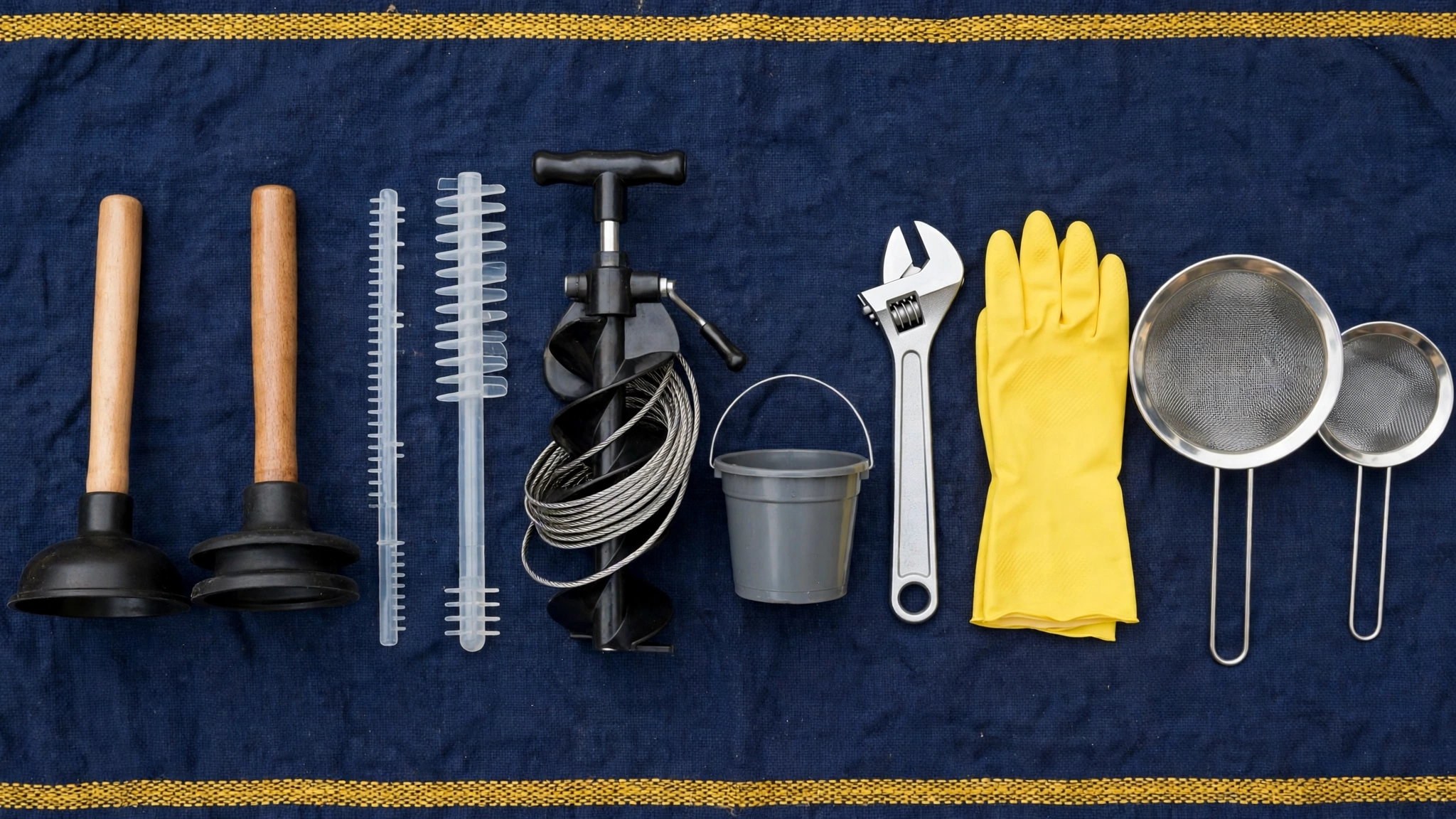
You need 8 tools for drain maintenance: a cup plunger, a flange plunger, a plastic drain stick, a hand auger, a bucket, a wrench, gloves and a drain strainer set. You need 8 tools for drain maintenance, and you need those tools before a clog forms, because a clog at night needs a tool on hand, not a shop trip.
| Tool | Use | Notes |
|---|---|---|
| Cup plunger | Sinks and tubs | Needs water over the cup |
| Flange plunger | Toilets | Flange seals the toilet outlet |
| Plastic drain stick | Hair below the stopper | Barbs hook hair |
| Hand auger | Hair and debris past the trap | Reaches 5 to 8 metres |
| Bucket | Trap cleaning | Catches water and debris |
| Adjustable wrench | Slip nuts | Use when hand loosening fails |
| Rubber gloves | All cleaning | Protect skin |
| Drain strainer set | Prevention | Fit one on every sink, tub and shower |
Use a cup plunger on sinks and tubs. Cover the overflow opening with a damp rag, place the cup flat over the drain, and push and pull with firm, even strokes for 15 to 20 seconds, then lift the cup and check flow. Water must cover the cup, because water carries the pressure to the clog. Use a flange plunger on toilets, and pull up sharply on the last stroke.
Use a hand auger for hair clogs past the trap. Feed 30 to 60 centimetres of cable into the drain before cranking, turn the handle clockwise while feeding forward slowly, stop when the cable meets firm resistance, crank in short bursts, then pull the cable back slowly. Never use a standard snake in a toilet, because a standard snake scratches porcelain, and use a closet auger with a guard sleeve for toilets.
How Do You Maintain Outdoor Drains and Floor Drains?
To maintain outdoor drains and floor drains, clear leaves and debris each season, flush yard drains and area drains with water each quarter, and add water to floor drain traps each month. To maintain outdoor drains and floor drains, check them before heavy rain, because a blocked outdoor drain floods a yard, a basement or a garage.
Clear yard drains, area drains and driveway channel drains in autumn and spring. Lift the grate, remove leaves, silt and debris by hand, rinse the grate with a hose, and check that water flows away fast. Clear leaves from gutters and downspouts each season. Confirm that downspouts discharge to storm drainage, a dry well or daylight, not into the sanitary sewer.
Flush outdoor drains with a hose each quarter. Run water into the drain for 60 seconds and watch the flow, and clear the grate again if water pools. Keep soil and mulch away from drain grates.
Maintain basement and laundry floor drains each month. Remove the grate, clear debris, and pour 2 litres of water into the drain to refill the trap seal. A dry floor drain trap lets sewer gas into the basement.
What Are the Warning Signs That Drain Maintenance Is No Longer Enough?
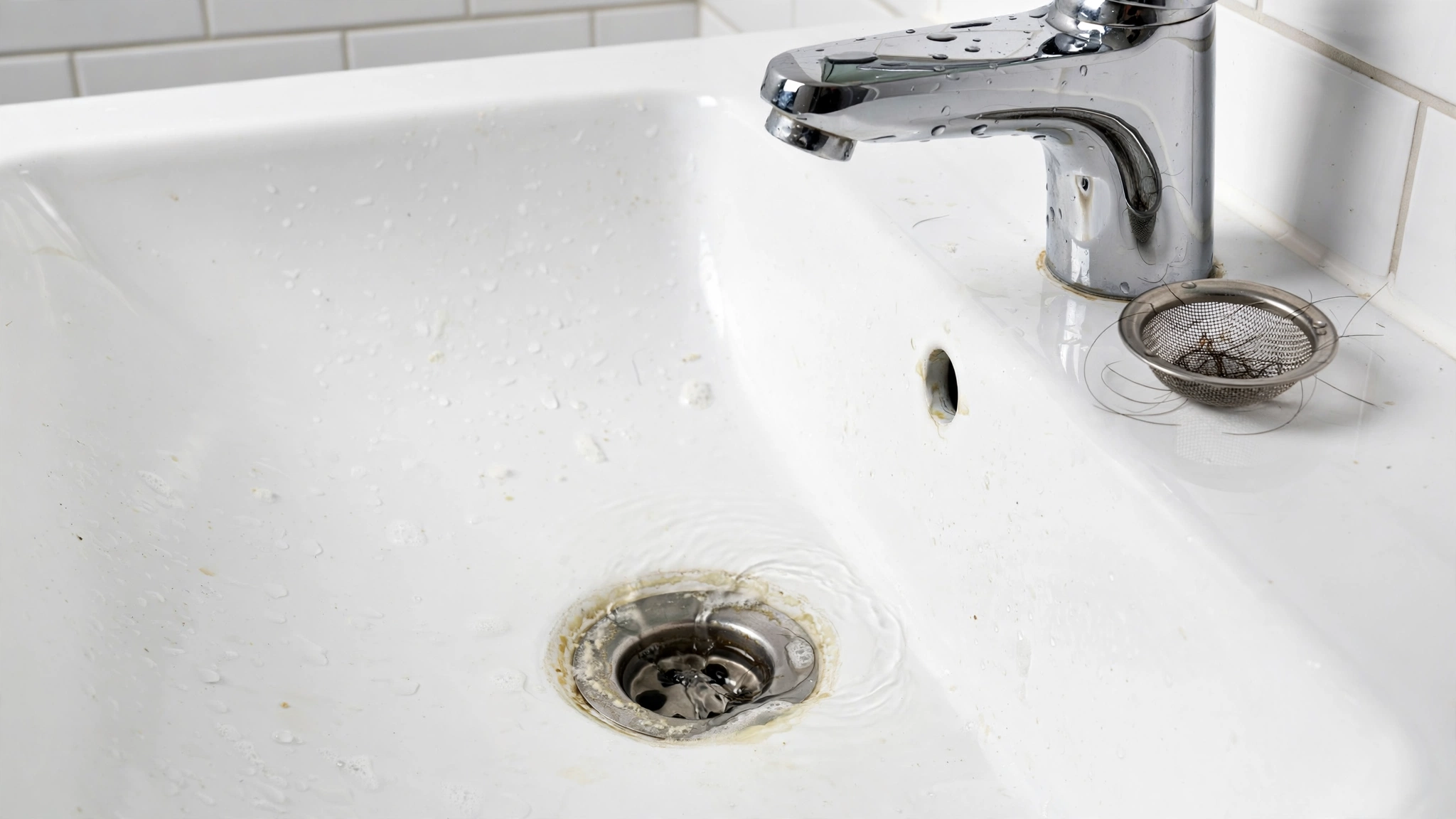
The warning signs that drain maintenance is no longer enough include slow drainage in several fixtures, water backing up into another fixture, gurgling across fixtures, sewage smell that returns after cleaning, and recurring clogs in one fixture. The warning signs that drain maintenance is no longer enough sort into 3 groups: keep maintaining, clean now, or call a professional today.
| Sign | Group | Action |
|---|---|---|
| One slow sink or tub | Keep maintaining | Clean the stopper, trap and strainer, then flush |
| Drain smell in an unused fixture | Keep maintaining | Run water for 10 seconds to refill the trap |
| Gurgling in one fixture | Clean now | Plunge, snake or clean the trap within a day |
| Odor that returns days after cleaning | Clean now | Snake the line, clean the trap |
| Same fixture clogs again within weeks | Clean now | Camera check or professional clean |
| Several fixtures slow at once | Call a professional today | Main line problem |
| Water backs up into a tub or floor drain | Call a professional today | Main line backup |
| Sewage in a low fixture | Call a professional today | Sewage backup, call for same-day help |
| Wet or green patches over the lateral path | Call a professional today | Possible leak |
A slow drain is the first warning sign that buildup is starting, and a slow drain needs action within a week. A gurgling drain means trapped air fights past a forming obstruction, and a gurgling drain needs a plunge or a snake within a day. A foul odor that returns days after cleaning means the clog sits deeper than the trap. Stop using water when sewage appears in a tub or floor drain, and call a professional at once.
When Should You Call a Professional for Drain Maintenance?
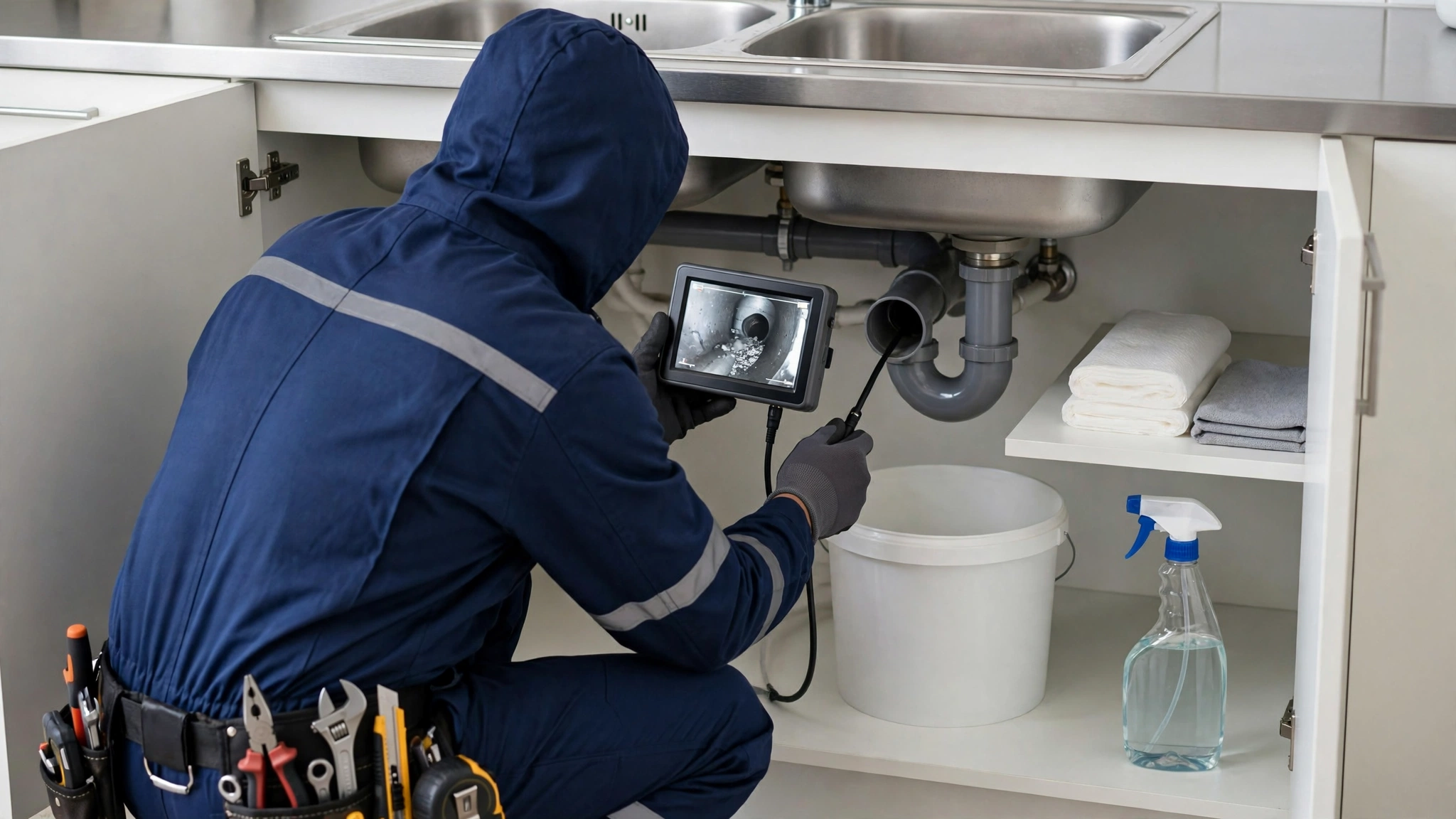
Call a professional for drain maintenance when several fixtures back up at once, when sewage appears in a tub or floor drain, or when a clog returns within weeks of clearing. Call a professional for drain maintenance when the problem sits in the main line, because main line work needs camera inspection and jetting equipment.
Ask the professional 3 questions before work starts: what caused the clog, what method fits the pipe material, and whether a camera inspection comes first. Ask for the camera footage or a written summary after the job. Voice of Wave covers home care guides like this one.
Conclusion
Drain maintenance works best as a schedule, not a single product: strainers stop debris, weekly hot water flushes clear fresh film, monthly cleaning keeps traps and stoppers clear, and an annual professional check protects the main line. Drain maintenance starts with diagnosis: one slow fixture means a fixture clog, and several backed-up fixtures mean a main line problem.
Drain maintenance needs 10 minutes a week and 20 minutes a month, and drain maintenance prevents most clogs before they form. Keep grease out of the kitchen drain, keep hair out of the bathroom drain, keep wipes out of every toilet, and keep the P-trap water seal full. Call a professional when several fixtures fail at once, when sewage appears, or when a clog returns within weeks.
Visit the Voice of Wave blog for more home care guides and the latest articles.
FAQs
How often should you clean your drains?
You should clean your drains weekly, monthly and annually: a hot water flush each week, a baking soda and vinegar flush or enzyme cleaner each month, and a professional cleaning once a year. You should clean your drains more often with heavy cooking, long hair, hard water or a large household.
What should you never put down a drain?
You should never put grease, coffee grounds, flour, rice, pasta, wipes, cotton products, paper towels or hygiene products down a drain. You should never put grease down a drain, because grease coats pipes, and you should never flush wipes, because wipes do not break down in water.
Does baking soda and vinegar unclog drains?
No, baking soda and vinegar do not unclog drains, because the fizz loosens only light organic film near the drain opening and the P-trap. Baking soda and vinegar do not dissolve hair, and baking soda and vinegar do not clear thick grease or a solid clog.
How do you get rid of a smelly drain?
To get rid of a smelly drain, run water for 10 seconds to refill a dry trap, clean the stopper and strainer, and run a baking soda and vinegar flush followed by hot water. To get rid of a smelly drain that returns after cleaning, snake the line or call a professional, because the clog sits deeper than the trap.
Why does my drain gurgle?
Your drain gurgles because trapped air fights past a forming obstruction or a vent problem, and your drain gurgles most often when a partial blockage narrows the pipe. Your drain gurgles across several fixtures when the problem sits in a branch or main line, and that pattern needs a professional check.
Are chemical drain cleaners safe for pipes?
No, chemical drain cleaners are not safe for pipes, because caustic and acid cleaners corrode metal pipes, soften plastic fittings, damage porcelain and release heat and fumes. Chemical drain cleaners suit no routine use, and chemical drain cleaners fail on most solid clogs.
When should you call a plumber for a slow drain?
You should call a plumber for a slow drain when several fixtures slow at once, when water backs up into another fixture, when sewage appears, or when a clog returns within weeks of clearing. You should call a plumber for a slow drain when a snake meets fixed resistance at the same depth, because that points to a structural problem.