
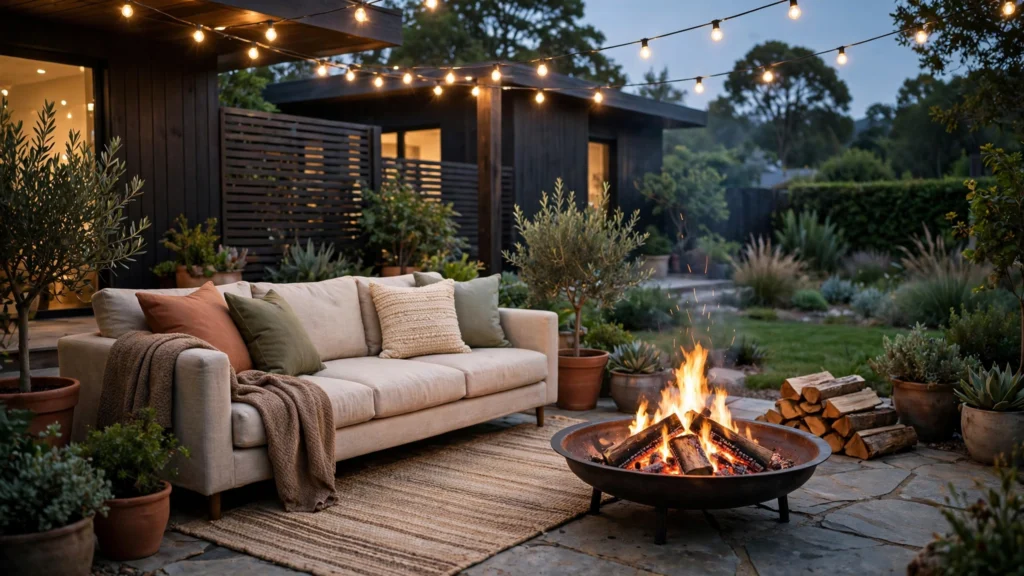
Outdoor living space ideas turn a plain backyard into a stylish outdoor room for relaxing, dining, and entertaining. The best outdoor living space ideas start with a clear plan: divide the yard into zones for lounging, dining, and cooking, pick weatherproof furniture, add shade, and layer lighting so the space works after dark. A stylish backyard needs 5 parts: a defined floor, comfortable seating, shade, a focal point such as a fire pit, and lighting. This guide covers planning, small yard layouts, lounge zones, dining areas, outdoor kitchens, fire pits, shade and privacy, furniture, lighting, costs, and care. Each section opens with a direct answer, then gives steps and cost ranges. Read the plan first, then pick one zone to build this month. Start with the lounge zone.
Key Takeaways
- Plan in zones: split the yard into lounge, dining, and cooking zones before you buy furniture.
- Pick one focal point: a fire pit, fireplace, or outdoor kitchen anchors the seating.
- Choose weatherproof materials: aluminum, teak, and solution-dyed acrylic.
- Layer the light: string lights, path lights, and one task light keep the space usable after dark.
Table of Contents
- What Is an Outdoor Living Space?
- Planning Your Backyard
- Small Backyard Ideas
- Outdoor Lounge Zone
- Outdoor Dining Area
- Outdoor Kitchen vs Fire Pit
- Shade and Privacy
- Outdoor Furniture That Lasts
- Outdoor Lighting
- Costs
- Care and Upkeep
- Frequently Asked Questions
What Is an Outdoor Living Space?
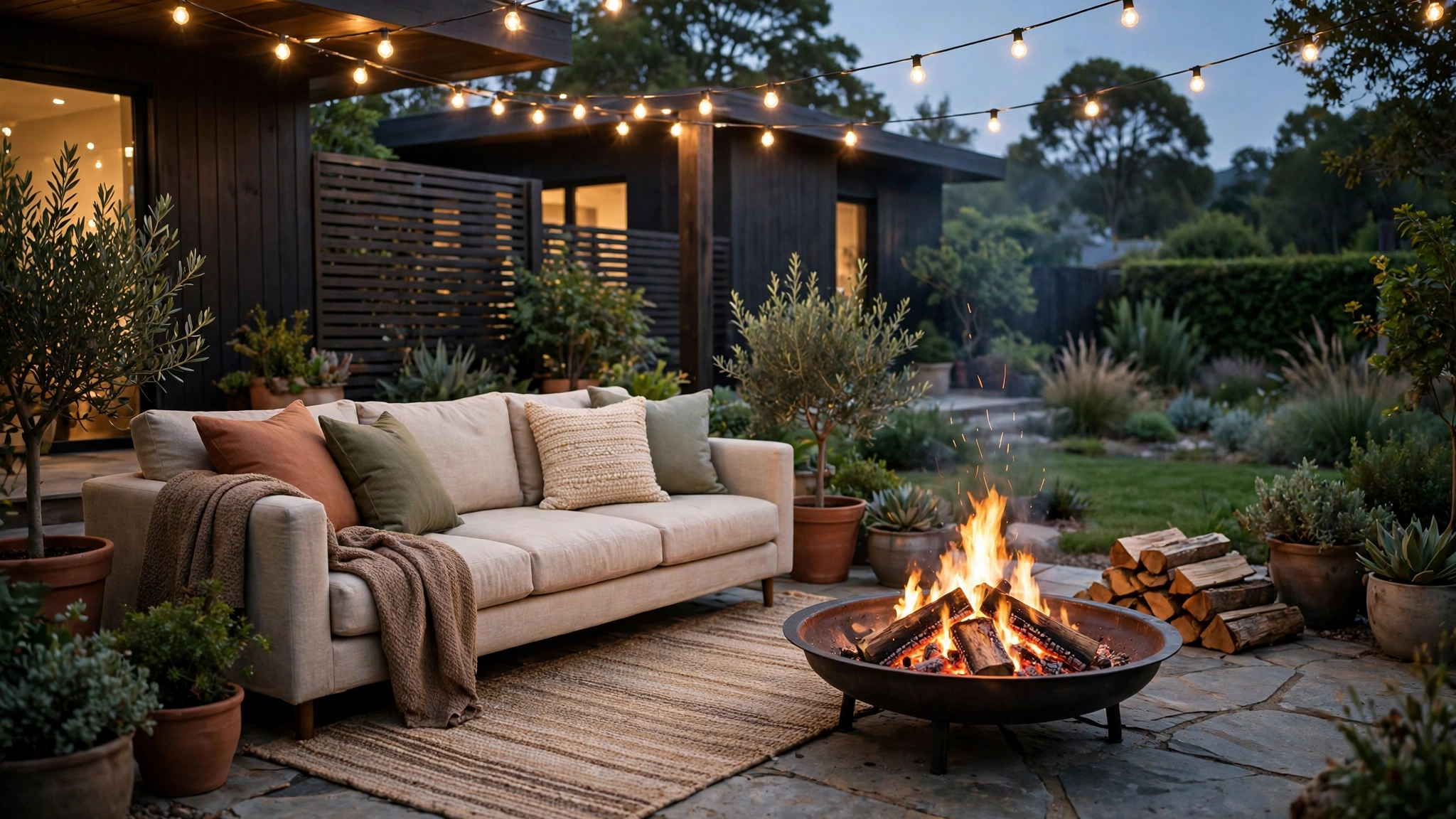
An outdoor living space is a defined area in a backyard that works like an indoor room for relaxing, dining, and entertaining. An outdoor living space has a floor, seating, shade, and lighting, plus a focal point such as a fire pit. The space sits close to the house for easy movement indoors and outdoors.
Outdoor living space ideas work for yards of any size. A small patio with two chairs and a rug counts, and a large yard with a kitchen, a dining table, and a lounge counts too. Size changes the budget, not the plan: define the floor, place the seating, add shade, and add light.
Most homeowners start with the patio or deck they already own. A concrete slab, a wood deck, or a paver patio gives the room a floor on day one.
Voice of Wave covers practical home projects for general readers. To see more projects in the same category, explore more Home Improvement ideas on the site.
How Do You Plan Outdoor Living Space Ideas for Your Backyard?
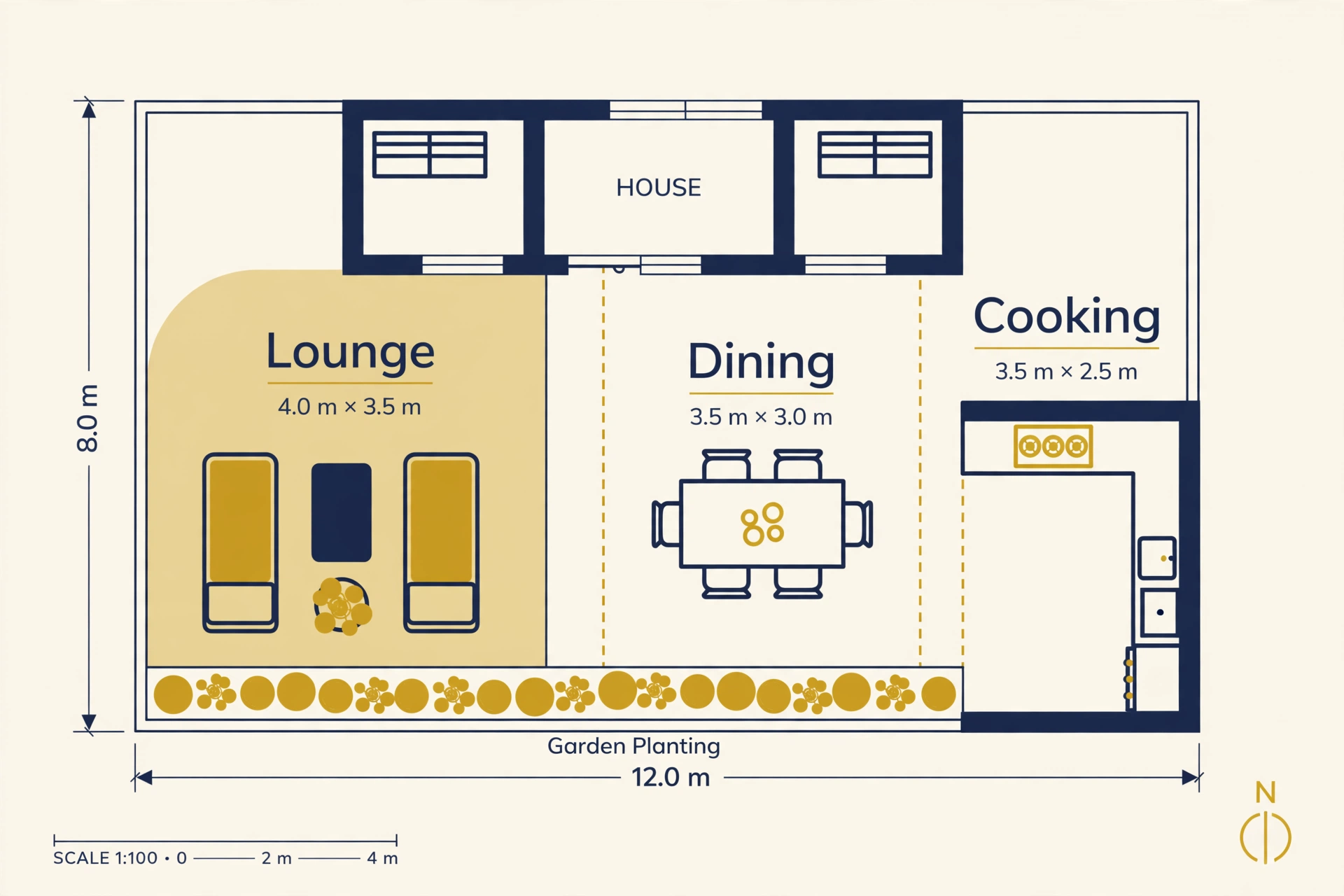
To plan outdoor living space ideas, measure the yard, list how you will use the space, divide it into zones, and set a budget before you buy anything. A plan stops random purchases, and a plan keeps the lounge, dining, and cooking zones from crowding each other. Measure first, sketch the zones on paper, then buy furniture that fits the sketch.
- Measure the yard and mark doors, windows, trees, and slopes.
- List 3 uses, such as morning coffee, family dinners, and weekend guests.
- Draw 2 or 3 zones on paper: lounge, dining, and cooking.
- Leave 90 cm (3 feet) of walking space around tables.
- Set a budget for each zone, lounge zone first.
- Test the layout with chairs for one week before you build.
A sketch saves money. A sofa that looks right in a store can block a door at home, and a dining table can leave no room for chairs to pull out. Chalk lines on the patio show the true size of each zone.
What Are the Best Outdoor Living Space Ideas for a Small Backyard?
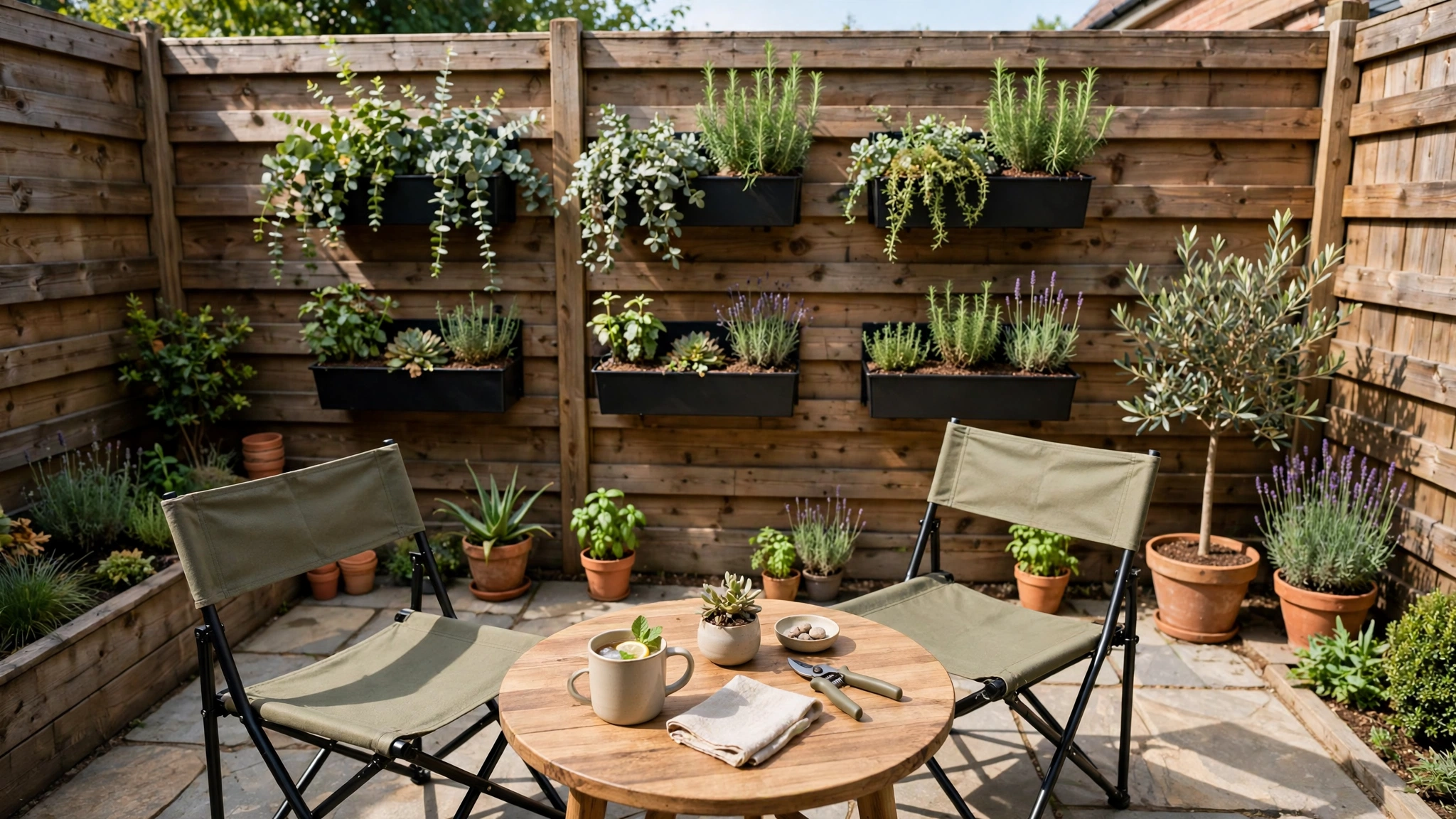
The best outdoor living space ideas for a small backyard use foldable furniture, vertical planting, and one multi-use zone. A small backyard works best as one room with 2 uses, such as a lounge that doubles as a dining spot. Foldable chairs, a wall-mounted table, and a small fire bowl add 3 functions.
Vertical planting frees floor space. Wall planters and hanging pots hold herbs and flowers at eye level, and the floor stays clear for chairs. A narrow bench with storage under the seat holds cushions. These backyard patio ideas suit small yards and renters, since planters and benches move with ease.
Light colors make a small yard feel larger. Pale cushions, a light rug, and white planters reflect daylight. Keep the plant count low: 5 large pots look calmer than 15 small pots.
How Do You Create an Outdoor Lounge Zone?
To create an outdoor lounge zone, place a weatherproof sofa or 2 lounge chairs around a low table on a rug, and add a fire pit as the focal point. The lounge zone needs 3 parts: seating for the group, a surface for drinks, and shade or warmth. Face the seats toward each other.
Pick seating depth first. Lounge chairs with a seat depth of 55 to 60 cm (22 to 24 inches) suit most adults, and a seat height near 45 cm (18 inches) makes standing up easy. Sit for 5 minutes before you buy. These outdoor lounge ideas suit groups of 2 to 8 people.
Place the rug under the front legs of every seat so the chairs and the table form one clear group. I placed a rug under my own patio chairs last spring, and the chairs stopped sliding on the pavers.
What Makes a Good Outdoor Dining Area?
A good outdoor dining area has a table sized for the usual group, chairs with room to slide out, and shade over the table. A dining table needs 60 cm (24 inches) per person and 90 cm (3 feet) behind each chair. Shade matters most at midday, so place the table where a tree or umbrella blocks the noon sun.
A table for 6 needs a top near 180 cm (6 feet) long and 90 cm (3 feet) wide. A round table near 120 cm (4 feet) across suits 4 people, and a bench on one side slides under the table when the meal ends.
Keep the grill or serving table within 3 steps of the dining table. Short trips keep food hot and keep the cook near the guests. A rolling cart holds plates and glasses. These outdoor dining ideas suit weeknight meals and weekend guests alike.
Outdoor Kitchen vs Fire Pit: Which Fits Your Backyard?
An outdoor kitchen fits a backyard built for cooking and hosting meals, while a fire pit fits a backyard built for evening talks. An outdoor kitchen needs water, gas or power, and a cover, and a fire pit needs open sky. Pick the kitchen if you cook outside twice a week, and pick the fire pit if you gather after dark.
| Feature | Outdoor kitchen | Fire pit |
|---|---|---|
| Build cost | High, built in | Low to mid |
| Best use | Cooking and meals | Evening talks |
| Needs | Water, gas, power | Open sky |
| Upkeep | Weekly cleaning | Ash removal |
| Season | Spring to fall | Spring to fall |
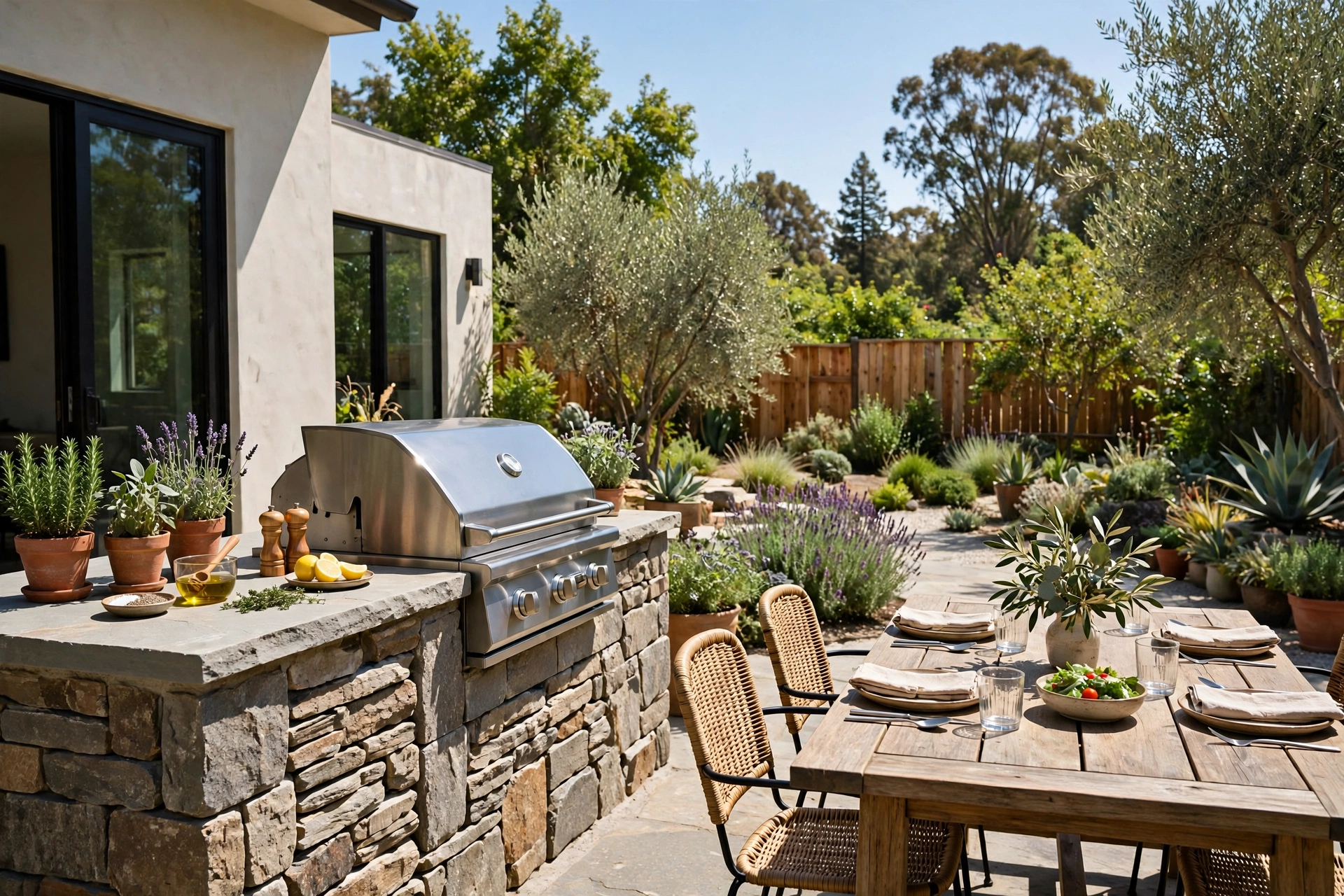
The global outdoor kitchen market reached $24.45 billion in 2024. Source: Grand View Research (2024). A basic kitchen starts with a built-in grill, a counter, and storage, and a full kitchen adds a fridge, a sink, and a pizza oven. These outdoor kitchen ideas start small and grow as the budget grows.
Fire pit types range from a metal bowl to a gas fire table to a built-in stone ring. A fire pit is a structure built to contain fire and stop it from spreading, and a wood-burning fire pit needs at least 10 feet (3 meters) of clear space from structures. Source: Wikipedia (2026). These backyard fire pit ideas suit patios and decks, if the clearances allow.
How Do You Add Shade and Privacy to a Backyard?
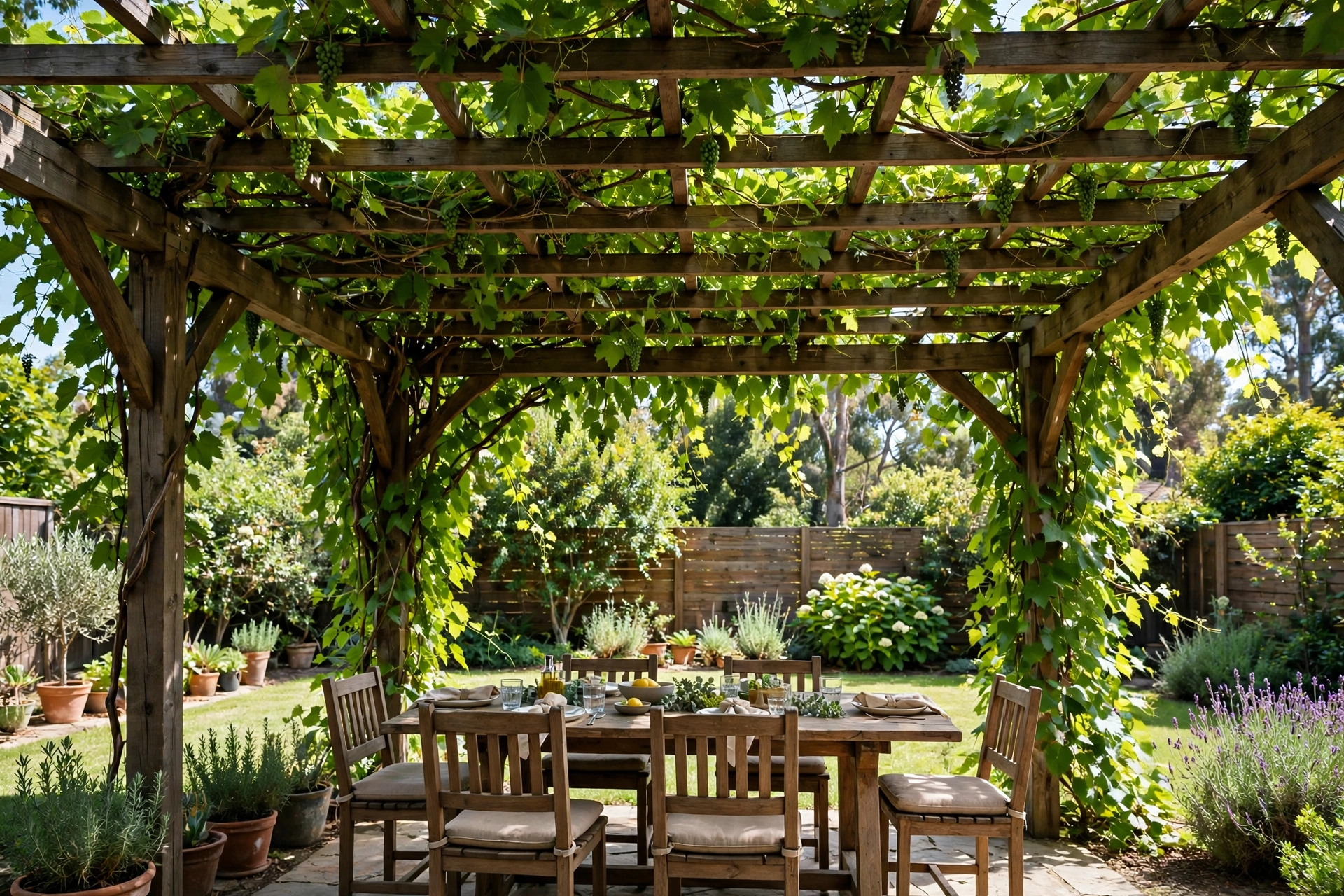
To add shade and privacy to a backyard, pair a structure such as a pergola with soft screening such as tall plants or bamboo screens. A pergola blocks part of the sun and defines the seating zone, and plants block the view from neighbors. Layer 2 types of shade: a canopy for midday sun and a screen for evening sun.
A pergola is an outdoor garden feature of vertical posts that support crossbeams and an open lattice, often with vines trained over the top. Pergola posts need firm footings, and a pergola over a dining table needs a top near 3 meters (10 feet) high.
Shade sails cost less than a pergola and suit renters, and a retractable awning gives shade on demand. For privacy, plant evergreen shrubs in a row along the fence line. These pergola ideas suit dining tables and lounge zones alike.
How Do You Choose Outdoor Furniture That Lasts?
To choose outdoor furniture that lasts, pick powder-coated aluminum or teak frames, solution-dyed acrylic cushions, and quick-dry foam, then check the warranty and the weight of each piece. Heavy frames stay put in wind. Cushions with solution-dyed acrylic resist sun fade, and quick-dry foam drains rain in hours instead of days.
Teak turns silver-gray in sun and rain, and the color change is normal for teak. Oil teak once a year if you want the brown tone, and leave teak bare if you accept the gray tone. Wicker made from resin resists rain, and natural rattan suits covered porches only.
Store cushions in a deck box or a dry shed during storms. A deck box near the seating keeps cushions within reach. Wash cushion covers twice a season with mild soap.
What Lighting Works Best for Outdoor Living Spaces?
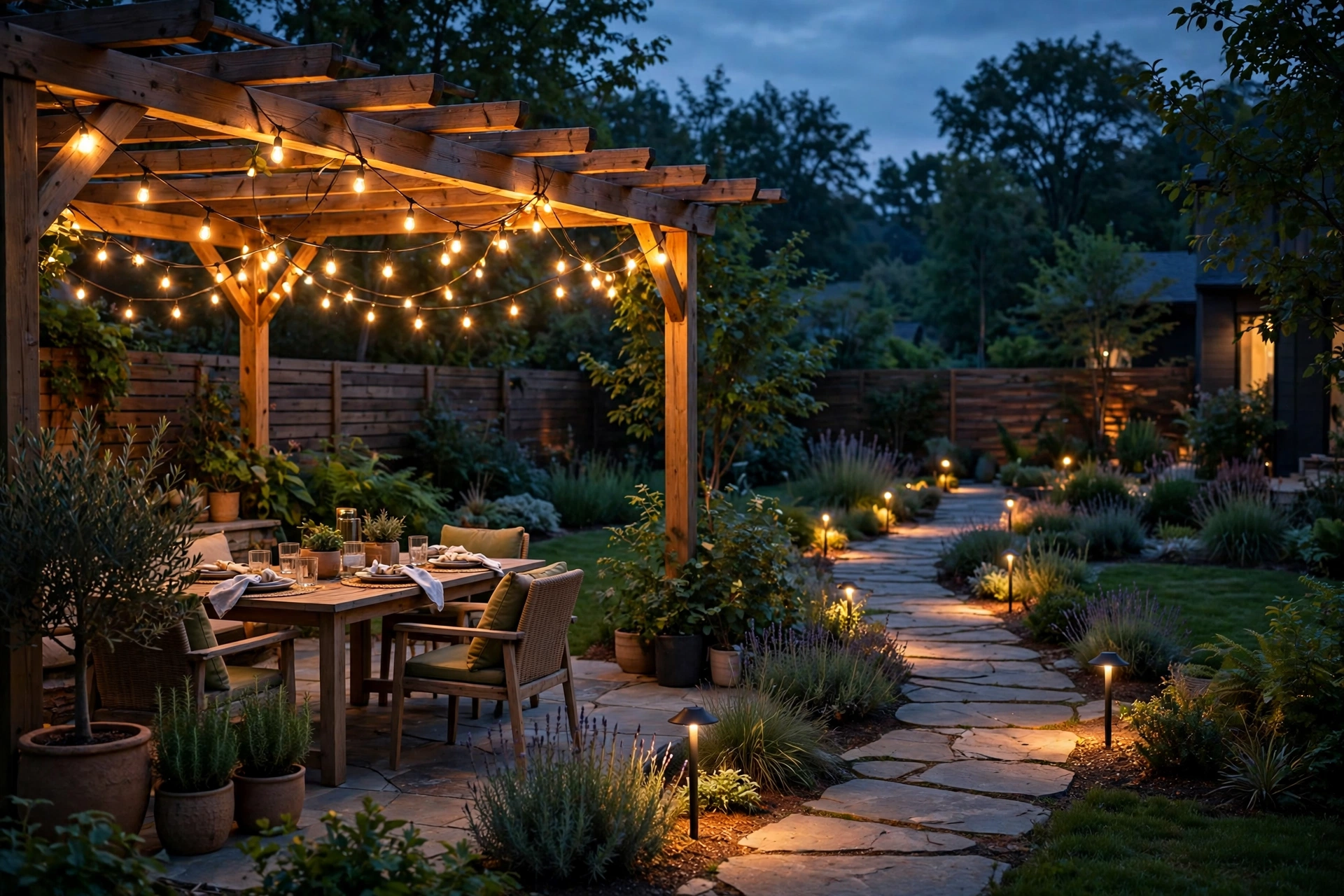
The best lighting for outdoor living spaces layers 3 types: string lights or lanterns for mood, path lights for safe walking, and one bright task light over the grill or dining table. Layered light keeps the space usable after dark, and layered light marks steps and edges. Warm bulbs near 2700K (Kelvin) suit evening talks, and cool bulbs suit task work.
Hang string lights over the seating zone, and keep the lowest bulb 2.1 meters (7 feet) above the floor so tall guests walk under with ease. Solar path lights mark the walk from the door to the seating.
Light the grill with a clip-on task light, place one light at each step, and use a timer for the evening hours.
How Much Does an Outdoor Living Space Cost?
An outdoor living space costs under $500 for a basic refresh, $500 to $2,000 for a mid-range build, and $5,000 or more for a full build. The 2026 backyard guides group projects into $500, $2,000, and $5,000+ tiers. Source: HomeDesigns.ai (2026). The floor and the shade take the largest share of the budget.
| Budget tier | What it buys | Best for |
|---|---|---|
| Under $500 | Rug, lights, 2 chairs, planters | Renters |
| $500 to $2,000 | Lounge set, umbrella, fire bowl | Small patios |
| $2,000 to $5,000 | Pergola, dining set, fire pit | Family yards |
| $5,000 or more | Outdoor kitchen, stone patio | Long term |
Spend first on the floor and the shade. A rug and a shade sail change the feel of a yard for under $500, and a pergola changes the structure of a yard for $2,000 or more. Buy furniture last, so it fits the finished zones.
Save money with staged builds. Build the lounge zone this season, add the dining zone next season, and add the kitchen when the budget allows. Staged builds spread the cost and let you test each zone first.
How Do You Keep an Outdoor Living Space in Good Shape?
To keep an outdoor living space in good shape, clean the furniture each month, seal wood and stone once a year, and check the deck each spring. A short monthly clean stops mold and mildew, and a yearly seal stops water damage. Check screws and boards after winter, and replace cracked boards before summer.
Sweep leaves off the patio each week so wet leaves do not stain pavers. Wash the grill grates after each use.
Keep your deck safe for guests with our guide to deck repair and maintenance.
Outdoor living space ideas work best as a plan, not a shopping list. Measure the yard, divide it into lounge, dining, and cooking zones, pick weatherproof furniture, add shade, and layer the light. Start with one zone and add the next when the budget allows. Voice of Wave covers home projects like this one, so check back for more guides.
Explore more ideas: Browse the latest articles for more home and garden guides.
Frequently Asked Questions
What is the cheapest way to create an outdoor living space?
The cheapest way to create an outdoor living space is to start with a rug, string lights, and 2 chairs on the patio you already own. A weatherproof rug defines the room, and 2 chairs with a small table give the space a use. Add shade and a fire bowl later.
How do I make a small backyard look bigger?
To make a small backyard look bigger, use one multi-use zone, light colors, vertical planting, and a round table. One zone with 2 uses keeps the floor open, and wall planters hold greenery without taking floor space. A round table seats 4 and leaves more walking room.
What furniture lasts longest outdoors?
Powder-coated aluminum and teak furniture last longest outdoors, with solution-dyed acrylic cushions and quick-dry foam. Aluminum resists rust, teak resists rot and insects, and solution-dyed acrylic resists sun fade. Steel frames rust at joints, and natural rattan suits covered porches only.
How far should a fire pit sit from the house?
A wood-burning fire pit should sit at least 10 feet (3 meters) from structures. The gap keeps sparks and heat away from walls, fences, and low branches. Gas fire tables need the clearances in the product manual. Check local fire rules first.
What is the best flooring for an outdoor living space?
The best flooring for an outdoor living space suits your budget and climate: pavers for a ground-level patio, composite decking for a raised deck, and a rug over either one. Pavers drain rain well, and composite boards resist rot. Slope the floor 2 percent away from the house.
How do I light an outdoor living space at night?
To light an outdoor living space at night, layer string lights for mood, path lights for safe walking, and one task light over the grill or dining table. Hang string lights at least 2.1 meters (7 feet) high, and mark each step with a light. A timer turns the lights off.