
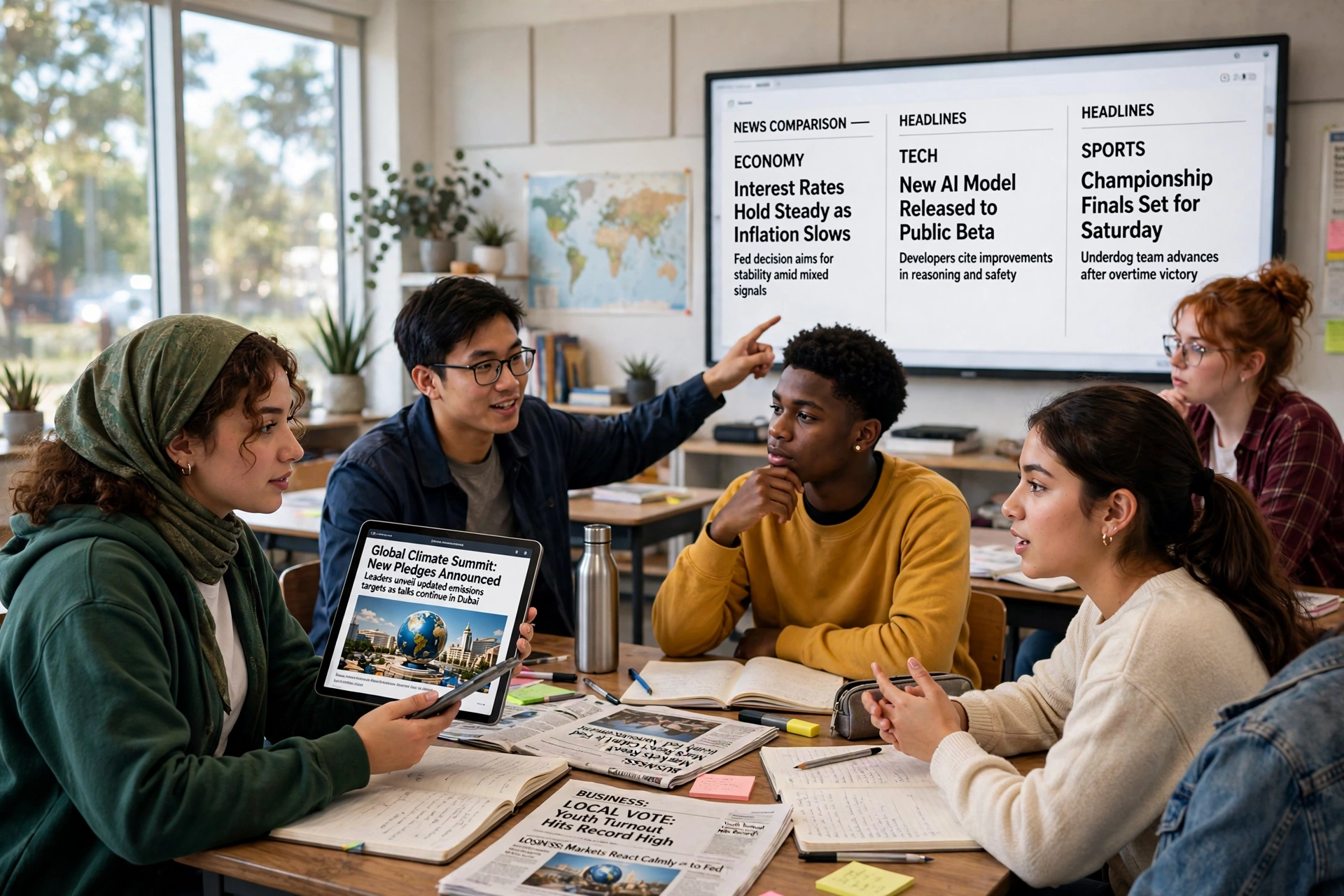
Every day, students scroll past hundreds of headlines, videos, and viral claims before their first class even begins. Some of it is solid journalism, some is opinion dressed as fact, and some is simply false. News literacy and critical thinking are deeply connected: news literacy teaches students to judge the reliability of news reports, and the daily practice of evaluating sources, spotting bias, and verifying claims builds the exact critical thinking skills used in academic writing and research. This guide explains what news literacy means, how it sharpens thinking, and how teachers and parents can build it with practical strategies. At Voice of Wave, we believe understanding the news is one of the most useful skills a student can develop.
Key Takeaways
- News literacy is the ability to use critical thinking to judge whether news reports are reliable and credible.
- Students who regularly evaluate news sources become stronger at analysis, argument, and academic writing.
- Core skills include separating fact from opinion, detecting bias, reading laterally, and verifying claims before sharing.
- Teachers can build these habits through current events: comparing coverage, tracing sources, and debating evidence.
- The payoff extends beyond school into research habits, stronger essays, and real resistance to misinformation.
Table of Contents
- What Is News Literacy?
- Why Is News Literacy Important for Students?
- How Do News Literacy and Critical Thinking Work Together?
- What Are the Core Components of News Literacy?
- How Can Students Learn to Evaluate News Sources?
- How Can Teachers Use Current Events in the Classroom?
- How Does News Literacy Strengthen Academic Writing?
- News Literacy vs. Media Literacy vs. Information Literacy: What Is the Difference?
- What Are the Challenges and Limitations?
- Real-World Examples
- Frequently Asked Questions
- Conclusion
What Is News Literacy?
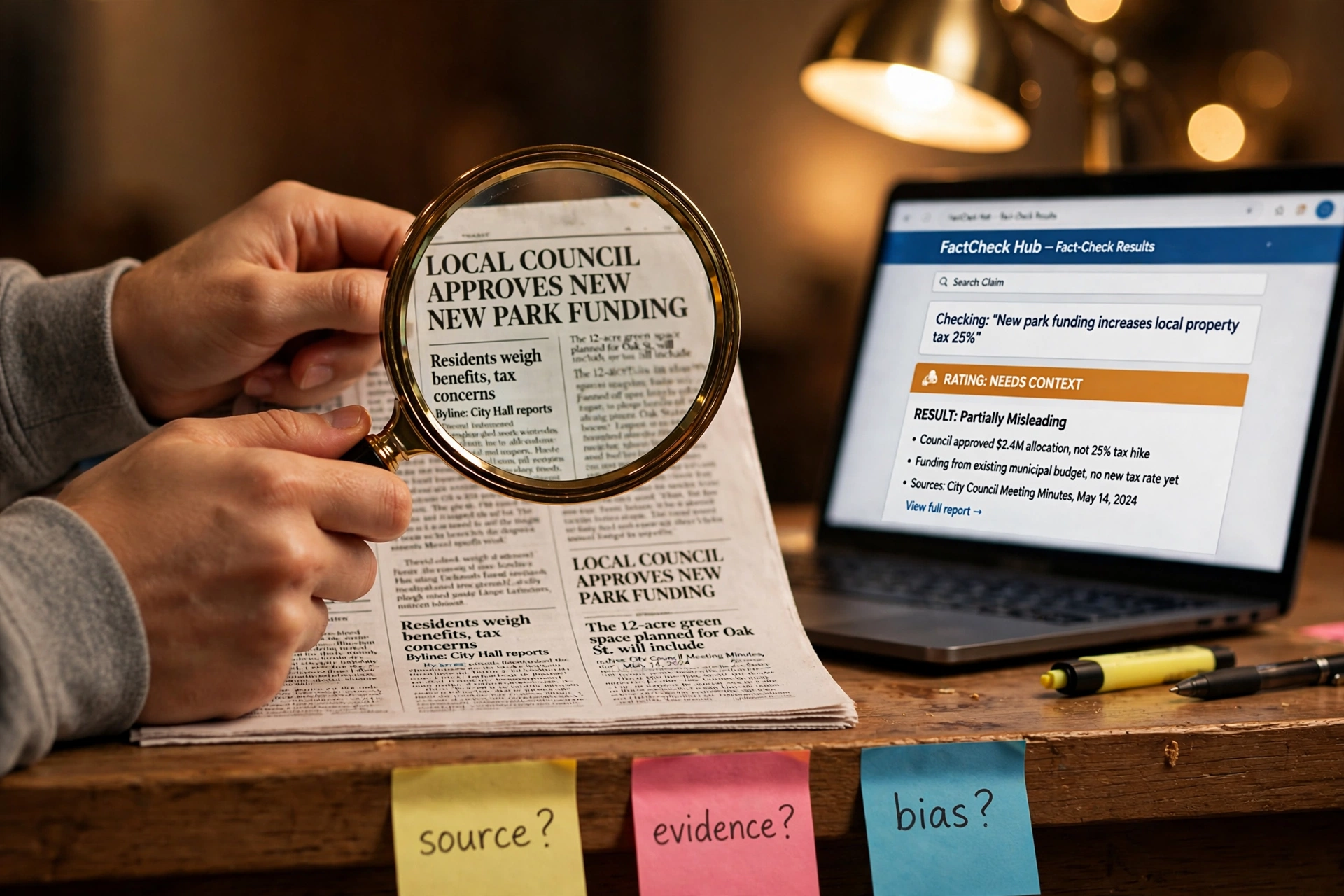
News literacy is the ability to use critical thinking skills to judge the reliability and credibility of news reports, whether they arrive through print, television, or the internet. That definition comes from the Center for News Literacy at Stony Brook University, home of the first university course on the subject, and it remains the standard description today. For background, see the news literacy and critical thinking overviews on Wikipedia.
The concept emerged because the information environment outran our habits. A century ago, a few professional outlets with visible editors served most readers. Today anyone with a phone can publish globally, algorithms choose what each person sees, and AI can fabricate convincing images and articles in seconds. Deciding what is true has shifted from publisher to reader, and news literacy is the skill set that makes readers equal to that task.
News literacy is not a list of “good” and “bad” outlets. Outlets change and even strong newsrooms err. It is a method: understanding how journalism should work, so students can judge when content meets those standards. That method-first mindset is what makes news literacy and critical thinking inseparable.
Why Is News Literacy Important for Students?
It matters because students already live inside the news cycle. They meet breaking stories on feeds, hear classmates repeat viral claims, and need trustworthy material for assignments. Without guidance, they judge credibility by surface signals: slick layout, confident tone, share counts. None reliably indicate truth, which is why news literacy is important for students as learners, not just future citizens.
The academic stakes are direct. Essays, research projects, and presentations all stand or fall on source quality. A student who cannot tell a reported investigation from a sponsored post will build arguments on sand. A student who can will find stronger evidence and write with more confidence.
Civic and personal stakes matter too. Young people will vote, make health decisions, and manage money, all depending on reliable information. Common Sense Media reports many children feel overwhelmed by the news, so evaluation skills bring a sense of control that makes news less frightening. Employers also prize 21st century skills like analysis and judgment. In short, news literacy and critical thinking are core academic equipment, not extras.
How Do News Literacy and Critical Thinking Work Together?
News literacy and critical thinking reinforce each other in a loop. News literacy gives critical thinking a daily workout, and stronger critical thinking makes a student more news literate. Every news story is a small reasoning puzzle: identify the claim, examine the evidence, consider what is missing, and weigh alternative explanations. Those four moves map directly onto the classic components of critical thinking: analysis, evaluation, inference, and explanation.
This matters because critical thinking is often taught abstractly, through textbook exercises divorced from real life. News supplies endless authentic material: a disputed statistic becomes a lesson in checking numbers, clashing framings become a lesson in perspective, an unsourced viral video becomes a lesson in verification. Real stakes turn exercises into lasting habits.
That habit transfers directly to academic work, which is where news literacy and critical thinking pay their most visible dividends. The routine is identical: encounter a claim, ask for evidence, check the source, consider objections, then decide. A student who runs that routine on the morning news will run it instinctively when drafting a research paper.
What Are the Core Components of News Literacy?
Four teachable skills form the toolkit at the heart of news literacy and critical thinking, applicable to any story on any platform in minutes once learned.
Evaluating News Sources
First: who published this, and why trust them? Students look for named authors with relevant expertise, clear dates, and outlets that issue corrections. They distinguish staff reporting from wire rewrites, opinion columns, and sponsored content disguised as news. Checking the About page and author name already puts a student ahead of most adults.
Separating Fact From Opinion
Facts check against evidence; opinions express judgment. Modern publishing blurs the line: analysis mixes facts with interpretation, headlines compress nuance, feeds strip context. A revealing exercise is highlighting verifiable statements and judgments in different colors within a single article. Spotting framing choices is the start of independent judgment.
Recognizing Bias and Perspective
Every report comes from people with perspectives inside organizations with priorities. The Stony Brook model separates newsroom bias (story selection, framing) from audience bias (the reader’s own expectations). Students spot loaded language, note quoted versus missing voices, and ask whose interests a framing serves. The goal is calibration, not cynicism: no single story is ever the whole picture.
Lateral Reading and the SIFT Method
Fact-checkers rarely read a suspicious page top to bottom. They read laterally, opening tabs to check what others say about the claim and its publisher. Stanford History Education Group research found this habit separates experts from everyone else. The student version is Mike Caughan’s SIFT method: Stop, Investigate the source, Find better coverage, Trace claims to their original context. Five minutes of lateral reading resolves most doubts and builds lasting misinformation awareness.
How Can Students Learn to Evaluate News Sources?
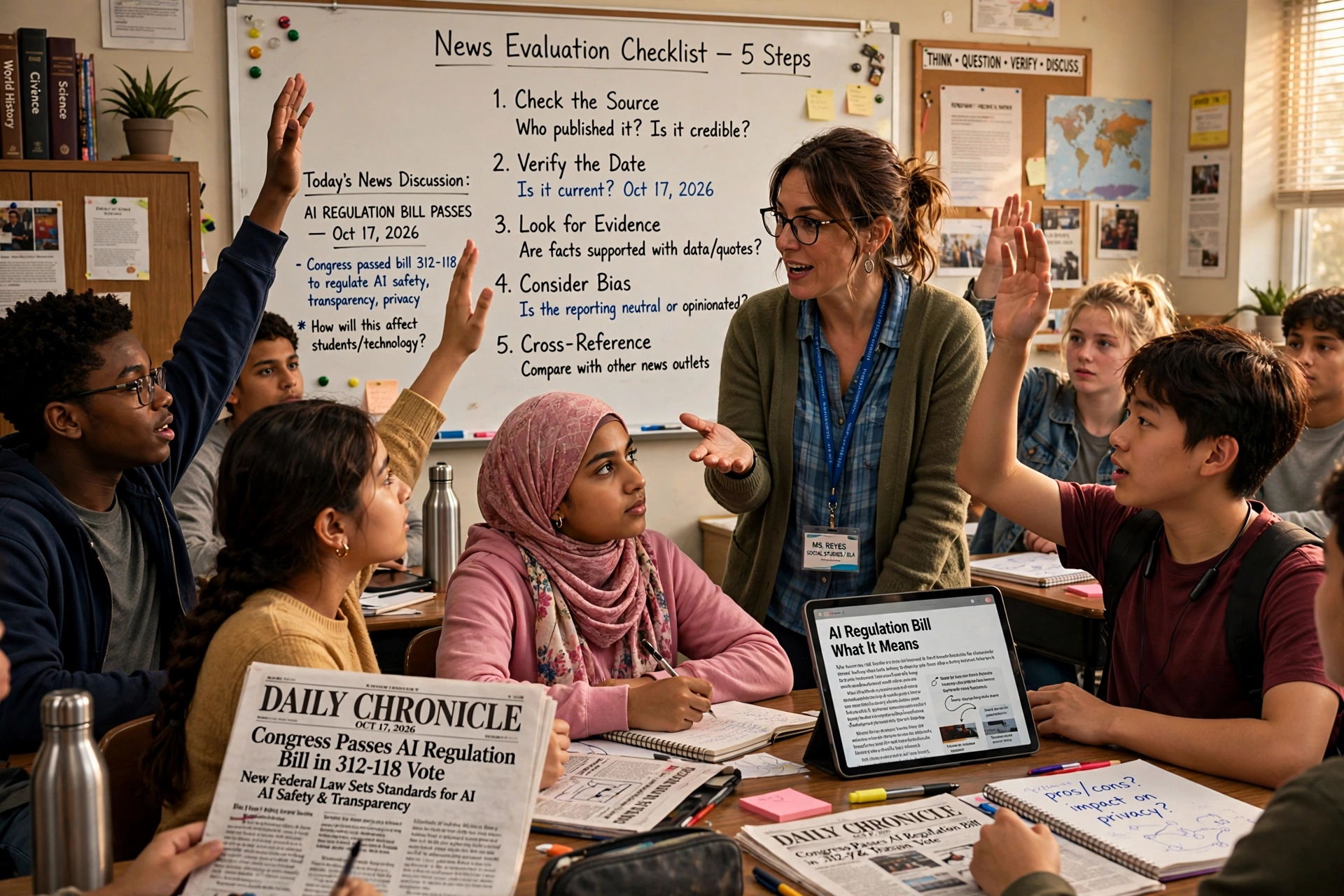
If you are wondering how to teach students to evaluate news sources, start with this five-step routine. It works from middle school through college, and it takes only minutes per story once learned.
1. Inspect the container. Note outlet, author, and date before reading. Real author with a track record? Current story or recycled old news? Published corrections policy?
2. Read laterally. Open a new tab and search the outlet’s name plus the story’s central claim. If no other credible outlet reports it, treat that as a warning sign and keep digging.
3. Follow the evidence. Strong stories link to primary material: studies, documents, named officials. Vague “experts warn” attribution, with no names, deserves skepticism on dramatic claims.
4. Watch for manipulation. Emotional language built to provoke outrage, ALL-CAPS headlines, images stripped of context, and claims that flatter what you already believe are classic red flags. Misinformation spreads fastest when it tells people what they want to hear.
5. Compare coverage. Find the same event in two or three outlets with different audiences. The facts they agree on form the reliable core; what each emphasizes or omits reveals perspective.
Turn the routine into a one-page checklist. Grade practice with student-chosen stories: personal investment sharpens attention and makes news literacy and critical thinking feel relevant.
How Can Teachers Use Current Events in the Classroom?
Using current events in the classroom works best when news becomes raw material for thinking, not a lecture topic. Go short and frequent: ten to fifteen minutes, two or three times weekly, beats an occasional unit that never fits.
Teaching Critical Thinking Skills Through News Analysis
Start with comparison: the same event from two outlets, mapping shared facts, unique facts, quoted voices, and headline framing. Then source tracing: students document each lateral-reading step back to a viral claim’s origin. Finish with structured debates scored on cited evidence and fairly stated counterarguments. Teaching critical thinking skills this way works because students argue from verified sources, building news literacy and critical thinking together while strengthening information literacy across subjects.
Using Current Events in the Classroom: Practical Formats
A weekly news log is simplest: one story, its source, and a verdict with reasons per student. Assess with a compact rubric: source quality, evidence use, reasoning, reflection on assumptions. What gets graded gets learned. Ground rules: evaluate reporting methods, not teams; changing your mind on evidence is a strength. [INTERNAL LINK: how to spot misinformation on social media]
How Does News Literacy Strengthen Academic Writing?
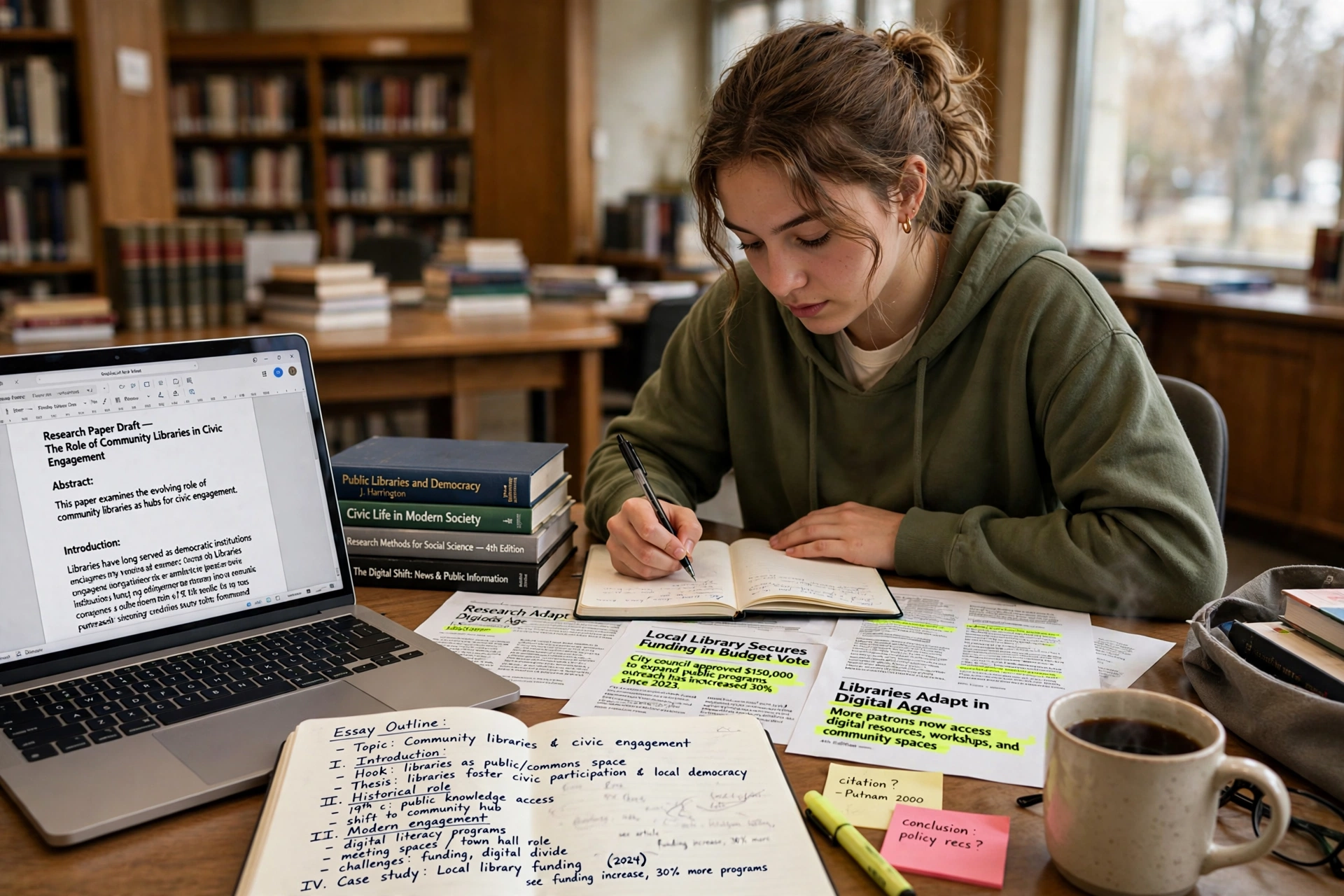
The moves separating reliable news from noise are the moves separating strong academic writing from weak writing. Asking “what is the claim, and what would prove it?” yields sharper, more arguable theses. Habitually checking a study’s publisher, date, and funding yields stronger, more precise citations. Practicing steel-manning, restating opposing views fairly, yields more persuasive essays. This is news literacy and critical thinking operating as one skill.
Critical reading skills grow in parallel: the student who highlights facts versus judgments in news will do the same with journal articles, producing better summaries and fewer misrepresentations. Writing instructors find the biggest essay upgrades come from source habits, not grammar drills. News literacy is source-habit training disguised as current events. [INTERNAL LINK: effective study habits for college students]
News Literacy vs. Media Literacy vs. Information Literacy: What Is the Difference?
The terms overlap but describe different scopes. News literacy asks whether a specific report is reliable. Media literacy asks how any message is constructed and what it wants its audience to feel or do. Information literacy asks whether a person can find, evaluate, and use information well for research. Keeping them straight sharpens both the teaching and learning of news literacy and critical thinking.
| Dimension | News literacy | Media literacy | Information literacy |
|---|---|---|---|
| Core question | Is this report reliable? | How does this message work on me? | Can I find and use good information? |
| Material | News articles, broadcasts | Ads, films, social posts, news | Databases, sources, research |
| Key skills | Verification, bias detection, lateral reading | Purpose, technique, audience analysis | Search strategy, evaluation, ethical use |
Media Literacy for Students: The Bigger Picture
Media literacy for students is the wider frame: noticing product placement, recognizing emotional manipulation in ads, understanding how algorithms shape feeds. News literacy sits inside it as the journalism toolkit. Since students meet news and entertainment in the same scroll, schools should teach both together. [INTERNAL LINK: digital literacy skills every student needs]
What Are the Challenges and Limitations?
Teaching news literacy and critical thinking faces real obstacles. Classrooms are politically diverse, so evaluate methods rather than conclusions and rotate examples across perspectives. Time is scarce, which is why short routines beat separate units.
A subtler risk is sliding from skepticism into cynicism, concluding nothing can be trusted. Model the alternative: verification produces justified confidence, and transparent outlets that correct errors earn trust. The AI era adds difficulty, as synthetic media fools even careful readers, and paywalls block access to top reporting. Libraries and public broadcasters help, but the gap is real.
Real-World Examples
In a common exercise, students compare three outlets covering a school board decision: a newspaper, a TV site, and a community Facebook page. The post omits the vote count, the TV story leads with the most dramatic quote, only the newspaper links the full agenda. The lesson lands without a lecture.
Some school newspapers assign a fact-checking editor to verify claims with lateral reading; those students become the strongest evaluators in class, because teaching cements skill. A college freshman writing about social media and mental health traced a viral infographic to its source study, found it misrepresented, and rebuilt her paper on the original. Better inputs, better thinking, better writing: news literacy and critical thinking in action.
Frequently Asked Questions
What is news literacy in simple terms?
News literacy is the skill of judging whether news you encounter is trustworthy. It means checking who published a story, what evidence it offers, whether it separates fact from opinion, and whether other reliable sources confirm it, before you believe or share it.
Why is news literacy important for students?
Students meet news constantly on social media and need it for school research. Without news literacy and critical thinking habits, they risk building essays on false claims and sharing misinformation. With them, they research better, argue more persuasively, and join civic life with confidence.
How does news literacy improve academic writing skills?
It trains the exact habits strong writing requires: questioning claims, demanding evidence, choosing credible sources, and answering counterarguments fairly. Students who evaluate news daily transfer those routines to research papers, producing sharper theses, stronger source integration, and more persuasive arguments overall.
What is the difference between news literacy and media literacy?
News literacy focuses on judging the reliability of journalism specifically. Media literacy is broader: analyzing all media messages, including ads, entertainment, and social content, for purpose, technique, and audience effect. Think of news literacy and critical thinking as the specialized core operating inside the wider media literacy frame.
How can parents support news literacy at home?
Discuss the news at the dinner table. Ask your child where they heard a claim and what makes them trust it. Look things up together to model verification, and praise changing minds when evidence warrants it. Curiosity builds the habit far better than lectures.
When should students start learning news literacy?
Foundations can begin in elementary school with simple ideas like telling ads apart from shows. Structured evaluation fits best from middle school onward, when students use social media independently. College is not too late: first-year research instruction is an ideal moment.
Conclusion
News literacy and critical thinking grow together, each strengthening the other. Students who learn to judge news reports gain more than protection from misinformation. They build the analytical habits behind strong academic writing: questioning claims, weighing evidence, detecting bias, and revising conclusions when better information arrives. Teachers can develop these habits with short, regular current-events routines, and parents can reinforce them in everyday conversation. The news will not get simpler, but students can get sharper. Pick one story this week, run it through the five-step routine, and notice how differently you read. That small practice, repeated, is how critical thinkers are made.