
Written by Michael Brooks for Voice of Wave.
Last updated: October 2026
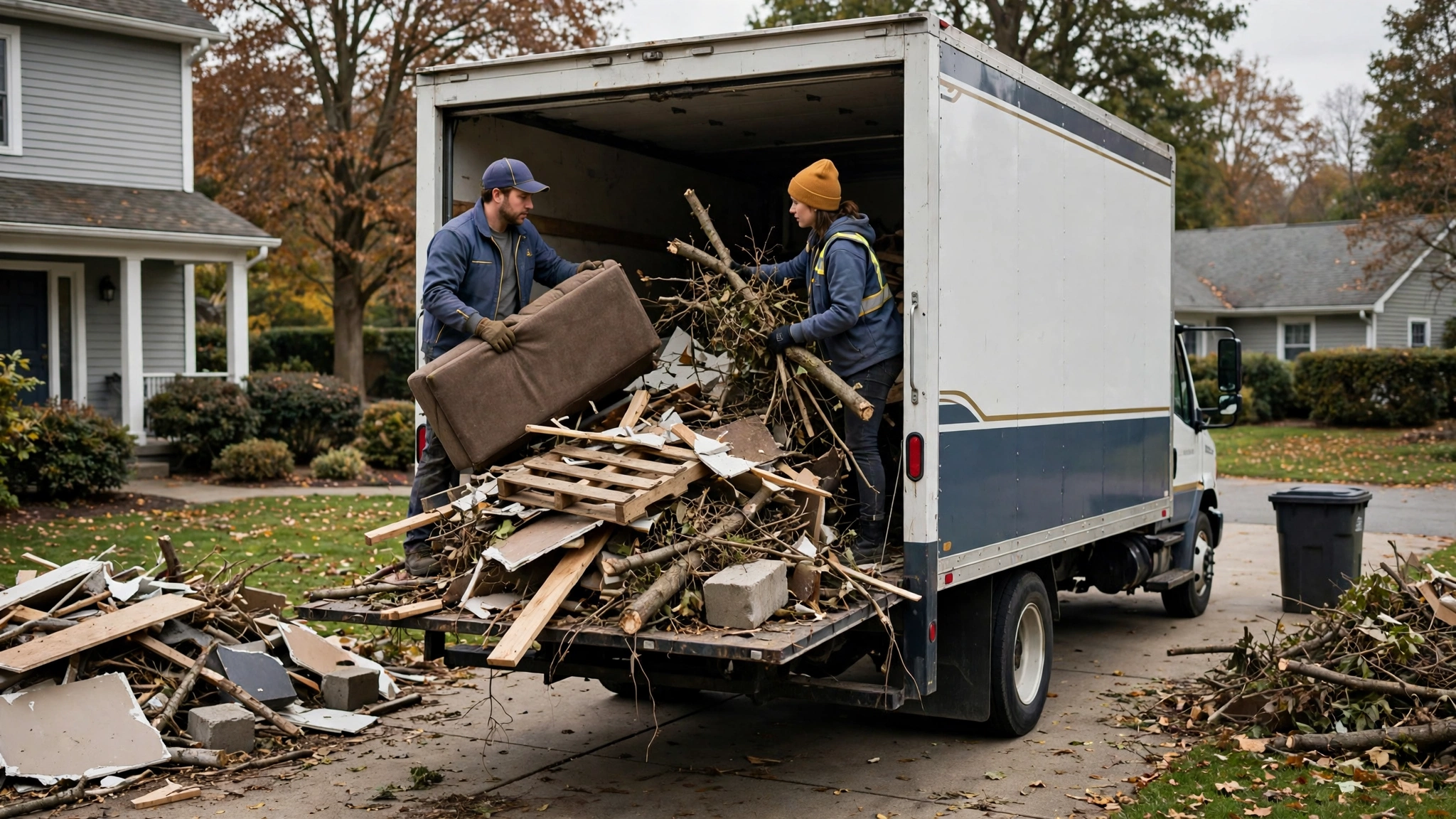
Debris removal is the professional service that collects, hauls, and disposes of unwanted materials from homes, yards, and job sites. In short: you point at the pile, the crew loads it, and the debris leaves your property the same day. This guide covers what debris removal includes, the four main debris types services accept, how the service works step by step, real 2026 cost ranges, a side-by-side comparison of debris removal vs dumpster rental vs DIY, items crews will not take, how to prepare for a pickup, and how to choose a reliable company. You will also find a pre-pickup checklist and answers to the seven most common questions. Debris removal saves homeowners hours of labor and multiple dump trips, keeps job sites clear and safe, and routes recyclable material away from landfills when handled by responsible haulers.
Key Takeaways
- Debris removal is a paid service where a trained crew collects, loads, and hauls bulky or heavy waste off your property, usually in one visit.
- Services accept four main categories: construction waste, yard debris, storm debris, and bulky household items. Hazardous materials are always excluded.
- Costs run $95 to $450 or more, set by volume, weight, access, and material type. Written estimates protect you from surprise charges.
- Full-service removal beats dumpster rental on speed and zero labor; dumpsters win on large multi-day projects; DIY wins on tiny loads.
- Prepare by stacking debris in one accessible pile, clearing truck access, separating materials, and confirming the price before loading starts.
Table of Contents
- What Is Debris Removal?
- What Types of Debris Do Removal Services Take?
- How Does a Debris Removal Service Work?
- How Much Does Debris Removal Cost?
- Debris Removal vs Dumpster Rental vs DIY: Which Should You Choose?
- What Will a Debris Removal Company NOT Take?
- How Do You Prepare for a Debris Removal Pickup?
- How Do You Choose a Debris Removal Company?
- Frequently Asked Questions
- Conclusion
What Is Debris Removal?
Debris removal is a paid service in which a trained crew collects unwanted materials from your property, loads them onto trucks, and delivers them to recycling centers, donation sites, or landfills. It covers materials that curbside trash programs reject: renovation waste, heavy furniture, yard piles, and storm-felled branches. Most jobs finish in one visit lasting one to three hours.
Debris removal is a property cleanup service that moves bulk waste off your property in a single visit. Debris removal crews bring the truck, the labor, and the knowledge of where each material goes, because standard trash programs cap volume and reject heavy or oversized items.
Debris removal differs from junk removal mainly in the material handled. Debris means bulky, heavy, or project-related waste such as drywall, lumber, branches, and broken concrete. Junk removal more often targets household clutter such as old sofas, boxes, and unused electronics, though many companies offer both services.
Homeowners book debris removal after renovations, landscaping overhauls, storm damage, and property cleanouts. Contractors use it to keep job sites clear between phases. Landlords use it for turnovers where large volumes must leave fast.
What Types of Debris Do Removal Services Take?

Debris removal services accept four main categories: construction and renovation waste, yard and landscaping debris, storm-damaged material, and bulky household items. Most crews take anything non-hazardous that fits on a truck. Paint, chemicals, batteries, and asbestos fall outside the standard scope and need special disposal.
Construction debris
Construction debris includes drywall, lumber, flooring, tile, shingles, siding, and broken concrete. It is the heaviest category, and disposal fees scale with weight, which makes it the most expensive to haul. The EPA defines construction and demolition (C&D) materials as debris generated during the construction, renovation, and demolition of buildings, roads, and bridges, and reported 600 million tons of C&D debris generated in the United States in 2018 (EPA, 2018). Read Wikipedia’s overview of construction waste for the full classification: Wikipedia’s overview of construction waste.
Yard debris
Yard debris covers branches, leaves, stumps, sod, soil, and fencing from landscaping projects. Municipal programs reject stumps, soil, and large limbs. Removal crews take the full pile without bagging, and many route green waste to composting or mulching facilities. Voice of Wave covers practical home topics like this each week at Voice of Wave.
Storm debris
Storm debris includes fallen trees, snapped limbs, torn roofing, damaged fencing, and scattered building material. Blocked driveways and damaged roofs cannot wait for weekly trash routes. After major storms, some municipalities run special curbside programs, but private crews handle what the city program skips.
Household and bulky debris
This category covers furniture, mattresses, appliances, exercise equipment, hot tubs, sheds, and general cleanout waste. It overlaps with junk removal, and most debris removal companies price it the same way: by the truck volume it occupies. When the pile comes from a renovation, plan the rest of the project too: browse our Home Improvement archive for more project guides.
How Does a Debris Removal Service Work?
A debris removal service runs in six steps: booking, estimate, arrival, loading, cleanup, and payment. You describe or photograph the pile, the company quotes a volume-based price, the crew arrives in a scheduled window, loads everything from wherever it sits, sweeps the area, and hauls the material to the right facility. Most visits take one to three hours.
- Book online or by phone with photos and a short description of the pile.
- Receive a volume-based estimate, confirmed by the crew on arrival.
- The crew arrives in the scheduled window and walks the pile with you.
- The crew carries and loads all debris from yards, garages, or basements.
- The crew sweeps the cleared area before leaving.
- You pay after loading is complete; cards and digital payment are standard.
How Much Does Debris Removal Cost?
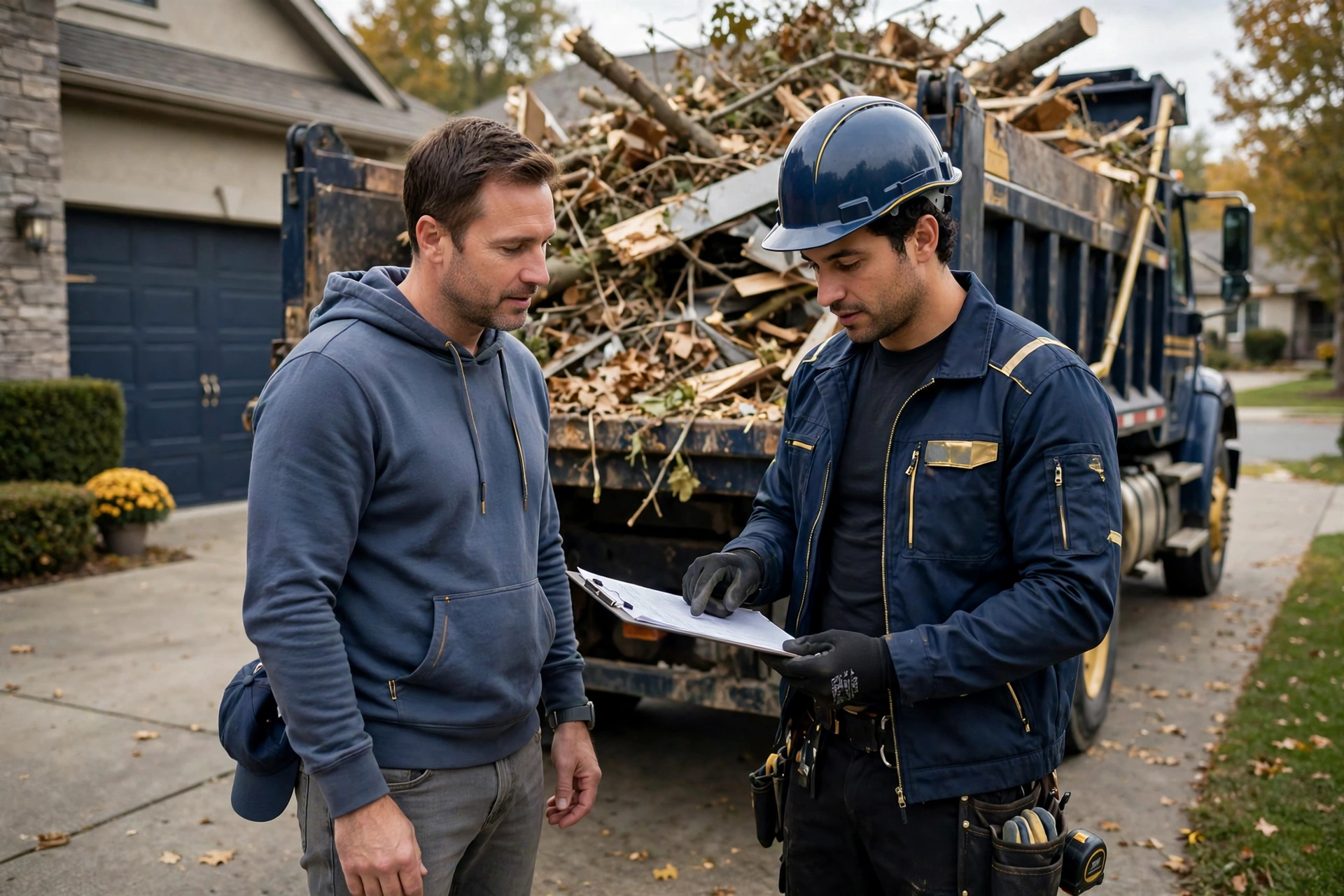
Debris removal costs $95 to $450 or more depending on volume, weight, and material type. Small curbside pickups start near $100, average yard cleanups run about $360, and full truckloads reach $400 or more. Dumpster rentals cost $300 to $800 per week but require you to load everything yourself.
| Job type | Typical price range | Source |
|---|---|---|
| Minimum curbside pickup | $95 to $110 | LoadUp (2026) |
| Yard debris pickup | From $100 | LoadUp (2026) |
| Yard cleanup with disposal | About $360 average | HomeAdvisor (2026) |
| Junk and debris hauling | $130 to $375 | HomeAdvisor (2026) |
| Tree debris removal | $25 to $50 per hour | Angi (2026) |
| Dumpster rental, per week | $300 to $500 | HomeAdvisor (2026) |
| Dumpster rental, per week (larger sizes) | $300 to $800 | ConstructionPlacements (2026) |
| Full-service removal, per truckload | $150 to $450+ | ConstructionPlacements (2026) |
Five factors move the price: volume, weight (concrete and soil cost more to dump), access (stairs and long carries add labor), material type (mixed loads cost more than sorted ones), and timing (same-day service adds a premium). Tipping fees also vary by county, so quotes differ by location.
After a fire or flood, debris is only the first step: read our fire and water damage restoration guide for the full recovery process.
Debris Removal vs Dumpster Rental vs DIY: Which Should You Choose?
Debris removal suits small to medium jobs where you want zero labor; dumpster rental suits multi-day projects with large volumes; DIY suits tiny loads you can fit in a car. The right choice depends on volume, timeline, and how much lifting you want to do.
| Factor | Debris removal service | Dumpster rental | DIY hauling |
|---|---|---|---|
| Best for | 1 to 8 cubic yards, fast results | 10+ cubic yards, multi-day projects | Under 1 cubic yard, nearby facility |
| Typical cost | $100 to $450+ | $300 to $800 per week | $0 to $75 in fees and fuel |
| Your labor | None | All loading | All loading and driving |
| Timeline | Same day or next day | 3 to 7 days on site | Your schedule, multiple trips |
| Permits | Rarely needed | Often needed for street placement | Not needed |
Full-service debris removal costs roughly two to three times the price of an equivalent dumpster rental, but it includes all labor and same-day completion (ConstructionPlacements, 2026).
What Will a Debris Removal Company NOT Take?
Debris removal companies will not take hazardous materials: wet paint, solvents, motor oil, batteries, asbestos, chemicals, pesticides, and refrigerants. These items need licensed hazardous waste handlers or municipal collection events. Always ask about a specific item before booking.
Common rejections and where they go instead:
- Wet paint and solvents: dry out latex paint with kitty litter or take it to a household hazardous waste event.
- Batteries and electronics: use retailer take-back or municipal e-waste programs.
- Asbestos and lead materials: hire licensed abatement contractors only; never mix these into a standard load.
- Fuels, oils, and pesticides: use municipal hazardous waste collection days.
- Tires and mattresses: some crews take them for a surcharge, so ask first.
Wikipedia explains how hazardous waste is classified, covering toxicity, reactivity, and corrosivity: Wikipedia’s overview of hazardous waste. The EPA asks disaster-area homeowners to separate debris into six curb categories: household garbage, construction debris, vegetative debris, household hazardous waste, large appliances, and electronics (EPA, epa.gov). Sorting this way speeds any pickup, private or municipal.
How Do You Prepare for a Debris Removal Pickup?
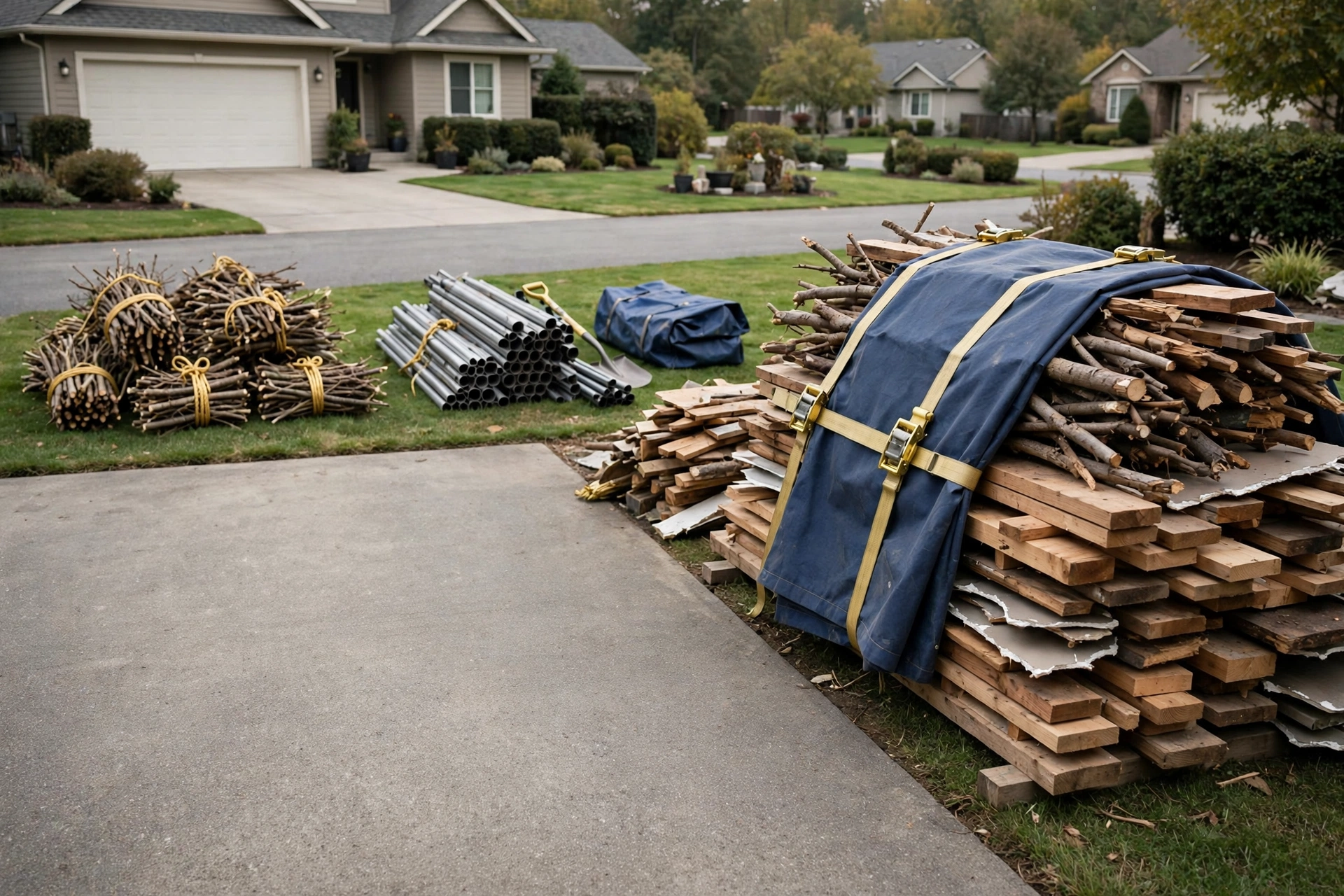
Prepare for a debris removal pickup by consolidating material into accessible piles, clearing truck access, and confirming the price before loading starts. Ten minutes of preparation prevents most delays and surprise charges. The checklist below covers everything worth doing the day before the crew arrives.
- Stack debris in one accessible pile near the driveway or curb.
- Move cars and clear a wide path for the truck to reach the pile.
- Separate materials by type when the company prices sorted loads lower.
- Photograph the pile for your records and for the written estimate.
- Confirm parking space and check whether your HOA needs advance notice.
- Remove items you want to keep from the work area.
- Be present at arrival or leave clear access instructions for the crew.
I have watched crews finish noticeably faster on jobs where the homeowner pre-stacked everything in one pile, because loading starts immediately instead of sorting.
How Do You Choose a Debris Removal Company?
Choose a debris removal company that is licensed and insured, gives written volume-based estimates, publishes real reviews, and explains where your debris goes. Avoid companies that demand large upfront payments or refuse to put the price in writing.
What to verify before booking:
- License and general liability insurance are current.
- The estimate is written and states the volume or load terms.
- Reviews mention on-time arrival and final price matching the quote.
- The company states its recycling or donation policy.
- Payment is due after loading, not before.
Red flags that should stop you:
- Cash-only demands or large deposits before any work.
- A firm price quoted without seeing the pile or photos.
- No business address or verifiable company name.
- Pressure to sign or decide immediately.
- Vague answers about where the debris will be dumped.
Frequently Asked Questions
Q: How much does debris removal cost? A: Debris removal costs $95 to $450 or more. Small curbside pickups start near $100 (LoadUp, 2026), average yard cleanups run about $360 (HomeAdvisor, 2026), and full truckloads reach $400 or more. Volume, weight, access difficulty, and material type set the final price. Always get the estimate in writing before the crew loads.
Q: Can a debris removal service take hazardous materials? A: No. Debris removal companies do not take hazardous materials such as wet paint, solvents, motor oil, batteries, asbestos, chemicals, or pesticides. These items require licensed hazardous waste handlers or municipal collection events. Mixing them into a standard load can trigger fines and rejected dump tickets, so separate them before booking.
Q: Is a dumpster rental cheaper than debris removal? A: Usually yes for large projects. Dumpster rentals cost $300 to $800 per week (ConstructionPlacements, 2026), while full-service removal costs $150 to $450 or more per truckload, roughly two to three times the equivalent dumpster price. Dumpsters win on projects over 10 cubic yards where you can do the loading yourself over several days.
Q: How fast can debris removal be scheduled? A: Most companies offer next-day service, and many provide same-day pickup when you book before noon. Storm seasons and post-holiday weeks book up faster, so schedule early during those periods. The job itself usually takes one to three hours on site depending on volume and access.
Q: What should I do before the crew arrives? A: Stack debris in one accessible pile, move vehicles, clear a wide path for the truck, separate materials by type, and photograph the pile for your records. Confirm the price in writing and make sure someone is present at arrival or has left clear access instructions. Ten minutes of preparation prevents most delays.
Q: Does homeowners insurance cover debris removal after a storm? A: Sometimes. Many homeowners policies include debris removal coverage with limits, often capped around $10,000, and some require the debris to come from a covered peril such as wind or fallen trees (RallyBacks debris removal tradeoffs guide, 2026). Document damage with photos before cleanup and confirm your limit with your adjuster in writing.
Q: What is the difference between debris removal and junk removal? A: The terms overlap, but debris usually means bulky, heavy, or project-related waste such as drywall, lumber, branches, and concrete, while junk usually means household clutter such as furniture, boxes, and old electronics. Most companies handle both and price by truck volume. Ask whether your specific materials count as debris or junk when you request a quote.
Conclusion
Debris removal turns a large pile into an empty driveway in a single visit. The service covers four main waste types: construction debris, yard debris, storm debris, and bulky household items. Costs run $95 to $450 or more, set by volume, weight, access, and material. Compare full-service removal against dumpster rental and DIY hauling before you book: removal wins on speed and zero labor, dumpsters win on large multi-day projects, and DIY wins on tiny loads. Keep hazardous materials out of the pile, prepare with the checklist above, and choose a licensed, insured company with written estimates. Done right, debris removal saves hours of labor and keeps recyclable material out of landfills.
Keep exploring: visit our blog for more home guides, project checklists, and practical ideas every week.