
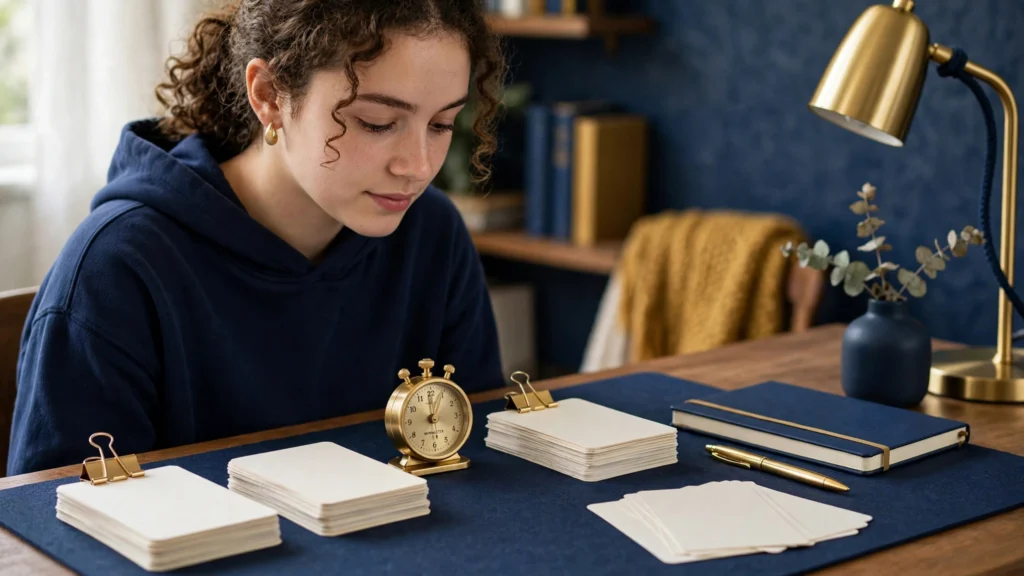
The best study techniques for students are active recall, spaced repetition, interleaving, the Feynman technique, the Pomodoro technique, and Cornell notes. These methods work because they ask students to pull facts from memory, review material at growing gaps, mix problem types, explain ideas in plain words, study in timed blocks, and turn notes into quiz material.
This guide explains each method in order, shows how to use it in a real study session, and ends with a weekly study plan that joins all 6 methods into one routine. Students in school, college, and exam preparation can use every method here with a notebook, a pen, a timer, and paper flashcards. Browse the Education guides for more student topics in the same series.
Key Takeaways
- The best study techniques are active recall and spaced repetition, the only 2 methods rated high utility in the Dunlosky et al. (2013) review of 10 techniques.
- Active recall means closing the book and writing the answer from memory, then checking what was missed.
- Spaced repetition means reviewing the same material after 1 day, 3 days, 1 week, and 2 weeks.
- The Pomodoro technique uses 25 minute focus blocks with 5 minute breaks, and Cornell notes turn class notes into self quiz material.
- A weekly study plan beats cramming, because short spaced sessions build memory that lasts to test day.
Table of Contents
- What Are the Best Study Techniques for Students?
- How Does Active Recall Work?
- How Does Spaced Repetition Work?
- What Is the Feynman Technique?
- How Does Interleaving Help Students Learn?
- How Do Students Use the Pomodoro Technique to Focus?
- How Do Cornell Notes Turn Notes Into a Study Tool?
- How Do Students Build a Weekly Study Plan?
- Active Recall vs Rereading: Which One Works Better?
- What Mistakes Hurt Student Grades?
- Conclusion
- FAQs
What Are the Best Study Techniques for Students?
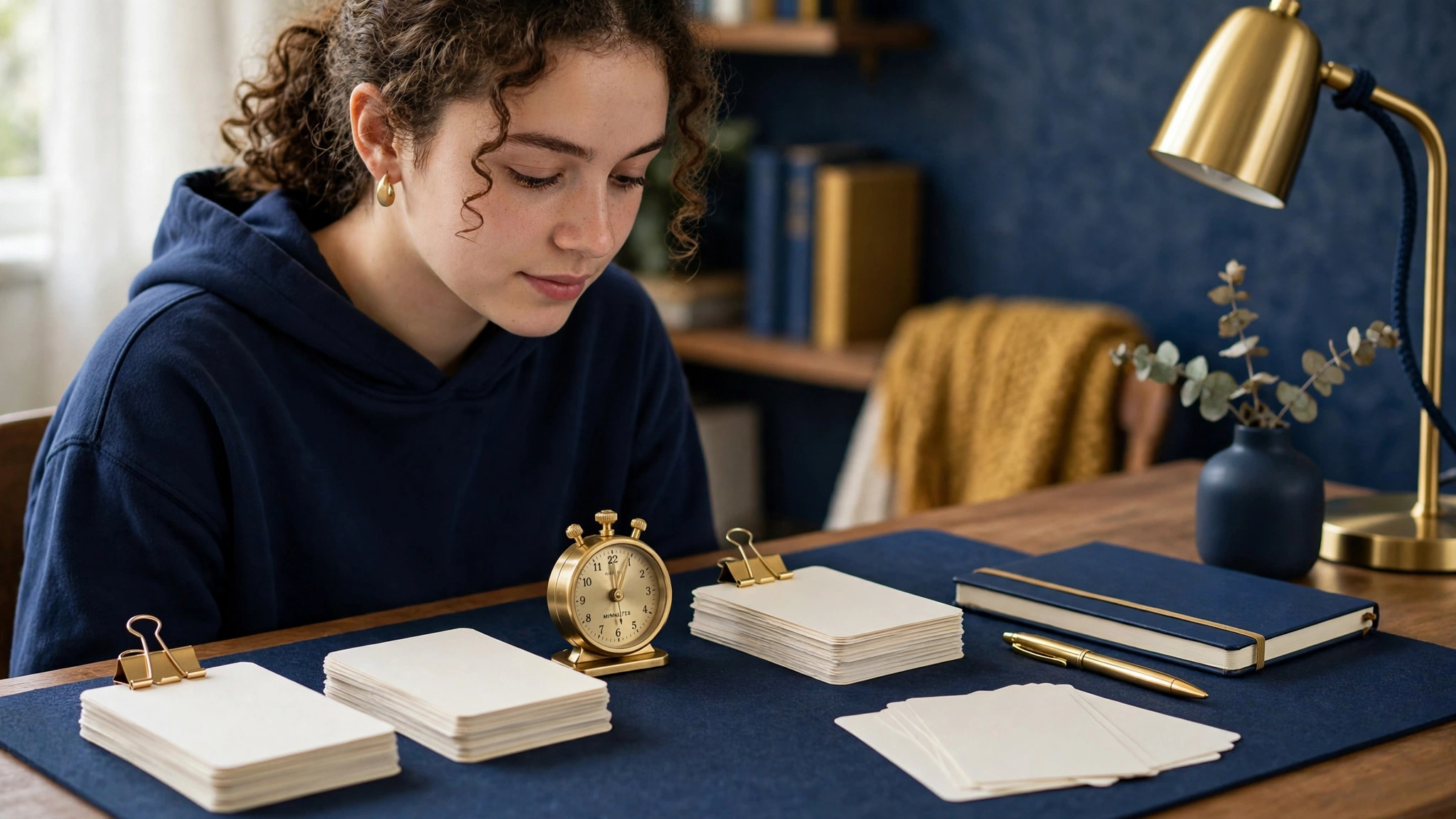
The best study techniques for students are active recall, spaced repetition, interleaving, the Feynman technique, the Pomodoro technique, and Cornell notes. Active recall and spaced repetition carry the strongest research support, and the other 4 methods add focus, depth, and order to a study routine. Students pick 2 methods to start with, then add the rest over 2 weeks.
A 2013 review by John Dunlosky and colleagues tested 10 popular study techniques and rated only 2 as high utility: practice testing and distributed practice (Source: Dunlosky et al., 2013). Practice testing is active recall, and distributed practice is spaced repetition. Rereading, highlighting, and summarizing scored low, because their gains were small or uneven across students and subjects.
How Does Active Recall Work?
Active recall works by closing the book and pulling the answer from memory before checking it. A student reads a topic once, closes the notes, writes down all facts remembered, then opens the notes and marks the gaps. The effort of recall makes the memory stronger, and the check shows exactly what needs more work.
The testing effect is the name for this result in learning research. The testing effect page on Wikipedia explains how retrieval practice builds long term memory. In a 2006 study, Henry Roediger and Jeffrey Karpicke asked students to learn short passages. Some reread the passages, and others read once and then wrote down all they could remember. The rereading group scored higher after 5 minutes, but the recall group scored higher after 2 days and after 1 week (Source: Roediger and Karpicke, 2006).
Students use active recall in 5 steps: read one topic once for 10 to 15 minutes; close the book and write the main facts from memory on a blank page; open the book, tick each correct fact, and mark each gap in red; say the missed facts aloud once, then close the book again; repeat the recall on the same topic the next day.

How Does Spaced Repetition Work?
Spaced repetition works by reviewing the same material at growing gaps, such as after 1 day, 3 days, 1 week, and 2 weeks. Each review happens just as the memory starts to fade, so the recall effort is real but the answer is still reachable. The next gap grows longer after each correct recall, and a missed answer moves the card back to a short gap.
The method rests on the forgetting curve, first described by Hermann Ebbinghaus in the 1880s. Ebbinghaus found that new facts fade fast in the first day, then fade more slowly over the following days. A review on day 1 slows the fade, and each later review slows it more. The spaced repetition page on Wikipedia traces this history from Ebbinghaus to the Leitner system and modern flashcard software.
A meta analysis by Nicholas Cepeda and colleagues pooled 839 assessments of distributed practice from 317 experiments and found that spacing beat massed study in most cases (Source: Cepeda et al., 2006). The Leitner system gives students a paper version: flashcards sit in 5 boxes, a correct recall moves a card forward, and a wrong answer sends it back to box 1.
| Review | When | What to do |
|---|---|---|
| Review 1 | Same day | Recall the main facts from memory |
| Review 2 | Next day | Recall again, fix the gaps from day 1 |
| Review 3 | After 3 days | Mix the topic with 1 older topic |
| Review 4 | After 1 week | Test with past questions or flashcards |
| Review 5 | After 2 weeks | Final check before the exam |

What Is the Feynman Technique?
The Feynman technique is a method where a student explains a concept in plain words, as if teaching it to a 12 year old, then fixes the gaps that appear in the explanation. The technique is named after physicist Richard Feynman, who was known for clear explanations. A student picks one concept, explains it aloud in simple language, notes where the words stop or turn vague, returns to the source, and explains it again in simpler words.
The Feynman technique works because it exposes fake understanding. A student can reread a definition 5 times and still fail to explain it. Teaching forces the student to link facts in order, choose plain words, and spot missing steps. Each gap points to one exact fact to relearn, so study time goes to the weak spot, not to the whole chapter.
How Does Interleaving Help Students Learn?
Interleaving helps students learn by mixing different types of problems or topics in one study session, instead of practising one type at a time. A math student solves 2 algebra problems, then 2 geometry problems, then 2 algebra problems again. A science student mixes questions on cells, energy, and forces in one set. The mix forces the student to pick the right method for each question, which is the same skill a test demands.
Blocked practice feels easier, because the same method repeats and the student repeats the same steps. Interleaving feels harder, because each question asks for a fresh choice. Research by Doug Rohrer and colleagues on math practice found that mixed practice often led to better test results than blocked practice, even though students rated blocked practice as easier during study.
How Do Students Use the Pomodoro Technique to Focus?
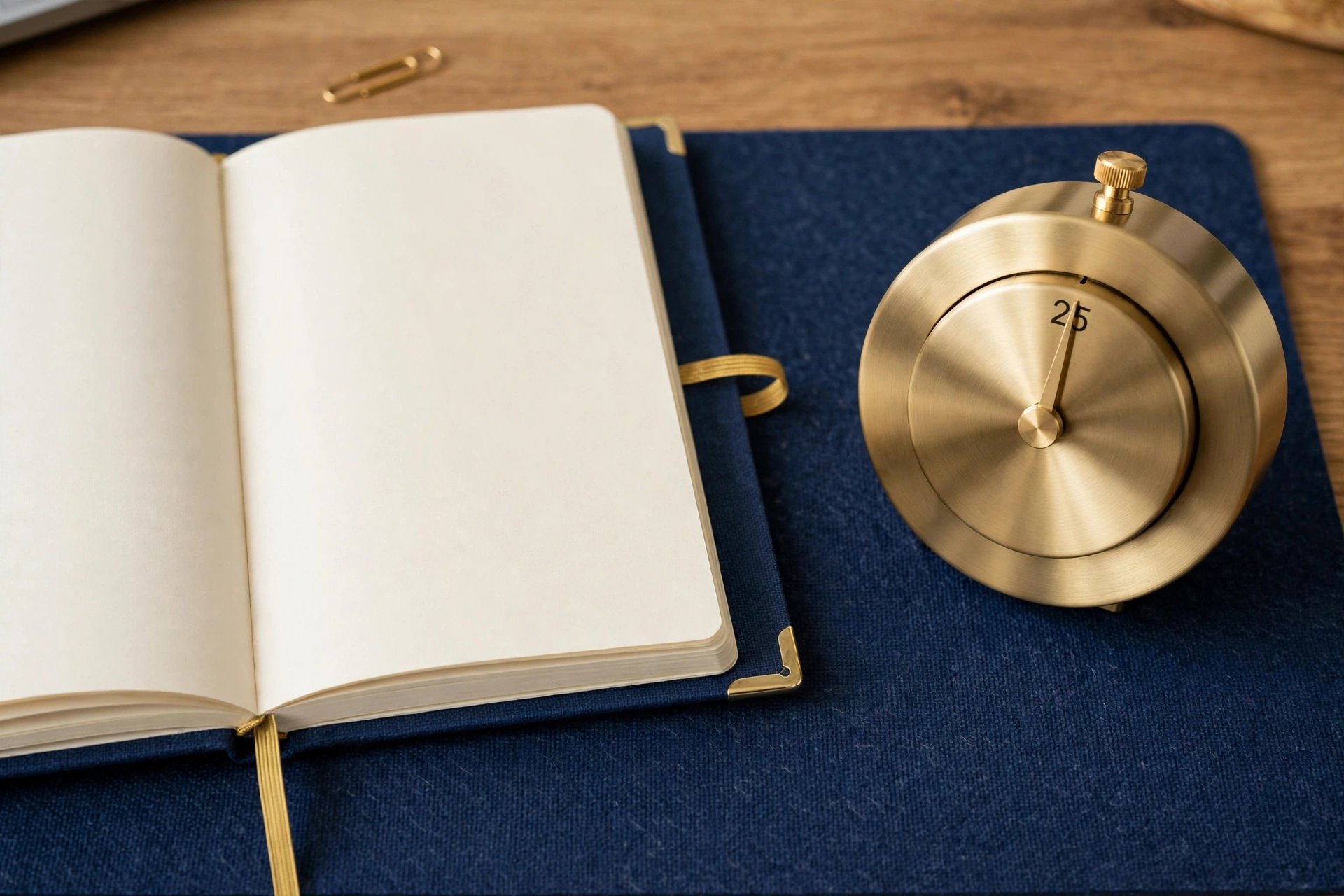
Students use the Pomodoro technique by studying in 25 minute focus blocks, with a 5 minute break after each block, and a longer 15 to 30 minute break after 4 blocks. The technique was developed by Francesco Cirillo in the late 1980s, using a tomato shaped kitchen timer. One block holds one task only. The phone stays in another room, the desk holds only the task at hand, and the timer decides when to stop and when to rest.
The Pomodoro technique works because it matches the way attention fades. Most students hold full focus for about 25 to 45 minutes, then attention drops and errors rise. A short block with a clear end keeps effort high, and the break restores attention before the next block. Students pick one task, set a timer for 25 minutes, work with no switching, take a 5 minute break, and repeat the cycle 3 more times before a longer break. They use the last 2 minutes of each block for a quick recall of what was learned. For more classroom habits that pair with focused study blocks, read our guide to Classroom Success Skills: 10 Habits That Work.
How Do Cornell Notes Turn Notes Into a Study Tool?
Cornell notes turn class notes into a study tool by splitting each page into 3 parts: a wide notes column on the right, a narrow cue column on the left, and a summary strip at the bottom. A student takes notes on the right during class, writes questions and cue words on the left after class, and writes a 2 sentence summary at the bottom the same day. The layout was developed by Walter Pauk at Cornell University, and it turns a passive record into a self quiz.
The cue column is the key part. After class, the student reads the notes on the right and writes a question for each main point on the left. “What are the 3 causes of the war?” sits on the left, and the answer sits on the right. At review time, the student covers the right column, reads the cue on the left, and answers from memory. Cornell notes pair well with active recall and spaced repetition. The cue column gives the recall prompts, and the summary gives a quick review before the next class. Students who write the summary within 24 hours keep far more of the lesson than students who leave notes untouched for a week.

How Do Students Build a Weekly Study Plan?
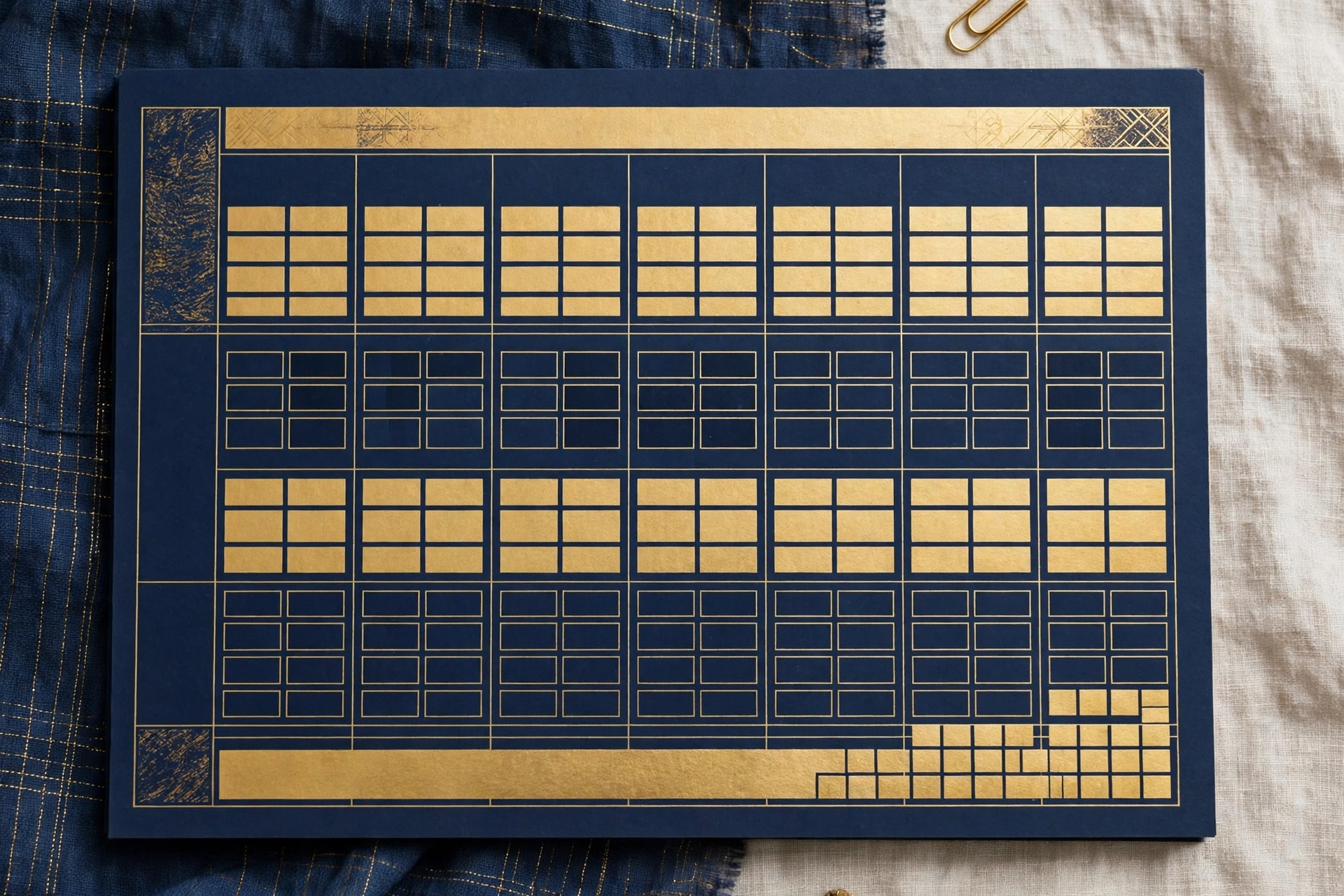
Students build a weekly study plan by fixing study blocks in a planner, assigning one subject to each block, and placing a recall review on day 1, day 3, and day 7 for each new topic. The plan lists the task for each block before the week starts, so no time is lost choosing what to study. A good weekly plan has 5 parts: fixed study times, one subject per block, a recall step in each block, a spacing date for each topic, and a weekly review on Sunday. A student with 4 subjects and 90 minutes per day can cover each subject 3 times per week.
| Day | Block 1 (45 minutes) | Block 2 (45 minutes) | Review step |
|---|---|---|---|
| Monday | Math: new topic, active recall | Science: new topic, active recall | Write cue questions |
| Tuesday | History: new topic, Feynman explain | English: new topic, Cornell notes | Recall Monday topics |
| Wednesday | Math: spaced review, mixed problems | Science: spaced review, flashcards | Mix old and new problems |
| Thursday | History: spaced review, past questions | English: spaced review, writing | Test with past paper questions |
| Friday | Weakest subject: extra recall | Second weakest subject: extra recall | Mark gaps, plan weekend fix |
| Saturday | Mixed review of all 4 subjects | Free choice: catch up or rest | 1 hour mixed quiz, then rest |
| Sunday | Weekly review: 30 minutes | Plan next week: 15 minutes | Rate each subject 1 to 5 |
Active Recall vs Rereading: Which One Works Better?
Active recall works better than rereading for long term memory, because recall builds the path to the fact while rereading only builds recognition of the fact. Rereading feels smooth and fast, which tricks students into thinking they know the material. Recall feels slow and hard, which is the effort that makes the memory last. The choice is between comfort now and recall on test day.
| Factor | Active recall | Rereading |
|---|---|---|
| What the student does | Closes the book and writes the answer from memory | Reads the same notes again with the book open |
| Effort during study | High, the answer must be pulled from memory | Low, the eyes move over known words |
| Feeling during study | Hard, with gaps that show clearly | Smooth, with a false sense of knowing |
| Result after 1 week | More facts kept, per Roediger and Karpicke (2006) | Fewer facts kept, despite more reading time |
| Best use | Learning, review, and exam preparation | First read of new material, and only once |
What Mistakes Hurt Student Grades?
The mistakes that hurt student grades most are cramming the night before, multitasking during study, rereading without recall, skipping review within 24 hours, and cutting sleep before exams. Each mistake trades short term comfort for long term loss. Cramming fades fast, multitasking slows learning, rereading hides gaps, late review wastes the lesson, and short sleep weakens memory. Replacing one bad habit at a time works better than a full overhaul.
Cramming is the most common trap. Spacing the same 6 hours across a week would build lasting memory, so the fix is to start review 3 to 5 days before every test, with a recall session each day. Multitasking is the second trap: studying with videos playing or chats open slows learning and raises errors, because the brain switches tasks and each switch costs focus. Skipping review within 24 hours is the third trap, and cutting sleep is the fourth: sleep helps the brain store new facts, so students should protect 8 hours of sleep in exam week and place the last review in the early evening, not at midnight.
Conclusion
The best study techniques for students are active recall, spaced repetition, interleaving, the Feynman technique, the Pomodoro technique, and Cornell notes. Active recall and spaced repetition build memory, interleaving and the Feynman technique build understanding, and the Pomodoro technique and Cornell notes build focus and order. Students who start with active recall and one spacing schedule, then add a focus block and a cue column, build a routine that lasts the whole school year.
Students should start tonight, not next week. Pick one topic, read it once, close the book, write all remembered facts, then check the gaps. Set a timer for 25 minutes tomorrow, and review the same topic after 1 day. Voice of Wave covers student guides in this plain style, and the weekly plan in this guide gives students a clear first week to follow.
Read more student guides on the Voice of Wave blog.
FAQs
What is the best study technique for students?
The best study technique for students is active recall, paired with spaced repetition. Active recall means testing yourself from memory instead of rereading notes. Spaced repetition means reviewing the same material after 1 day, 3 days, 1 week, and 2 weeks. Together, they build memory that lasts to test day, per Dunlosky et al. (2013).
How long should students study each day?
Students should study in focused blocks of 25 to 50 minutes, with short breaks between blocks. Three focused blocks per day, about 90 minutes in total, suit most school students. The total time matters less than the method used. Active recall and spaced review in 90 minutes beat 3 hours of rereading with a phone nearby.
How does spaced repetition work for exams?
Spaced repetition works by reviewing material at growing gaps before an exam. A student reviews new material after 1 day, then after 3 days, 1 week, and 2 weeks. Each review happens as the memory starts to fade, so recall takes effort. The effort makes the memory stronger, and the facts stay ready for test day.
What is the Pomodoro technique?
The Pomodoro technique is a focus method that uses 25 minute work blocks and 5 minute breaks. After 4 blocks, a student takes a longer break of 15 to 30 minutes. Each block holds one task only, and the phone stays out of reach. The short blocks keep attention high and make long study sessions easier to start.
Are Cornell notes better than normal notes?
Yes, Cornell notes work better than normal notes for review and self testing. Normal notes store facts in long lines, while Cornell notes add a cue column and a summary strip. A student covers the notes column, reads a cue question, and answers from memory. The layout turns every page into a quiz.
How can students focus while studying?
Students focus by removing distractions before each study block starts. The phone goes in another room, the desk holds only the task at hand, and a timer sets a clear end time. A fixed study place and a fixed start time help too. Short 25 minute blocks with real breaks keep attention steady through the session.