
Milk thistle benefits include liver support, blood sugar control, and skin care, and these effects come from silymarin, a group of plant compounds found in the seeds of the milk thistle plant, and the strongest evidence covers liver enzyme levels in people with fatty liver disease and blood sugar markers in people with type 2 diabetes.
Milk thistle has been used for more than 2,000 years to treat liver and gallbladder problems, and modern trials now test those old uses. This guide explains what milk thistle is, how silymarin works, the 6 main benefits researchers have studied, the safe dosage range used in trials, and the side effects and drug interactions to watch, plus a comparison with other liver supplements and a label checklist. Browse more Health guides for related topics.
Key Takeaways
- Milk thistle seeds contain silymarin, a group of plant compounds studied for liver health.
- Liver support has the most research behind it, and results for fatty liver disease and blood sugar look promising but mixed.
- Trials used 120 to 600 mg of silymarin per day, and no standard dose exists.
- Milk thistle is usually well tolerated, and mild stomach upset, headache, and allergy are the most common side effects.
- Pregnant people, people with hormone-sensitive conditions, and people allergic to ragweed or daisies should ask a clinician first.
- Milk thistle is a supplement, not a treatment, and it does not replace medical care for liver disease or diabetes.
Table of Contents
- What Is Milk Thistle?
- How Does Milk Thistle Work?
- What Are the Main Milk Thistle Benefits?
- Does Milk Thistle Help Fatty Liver Disease?
- Can Milk Thistle Lower Blood Sugar?
- Milk Thistle vs Other Liver Supplements
- How Much Milk Thistle Should You Take?
- What Are the Side Effects of Milk Thistle?
- Who Should Avoid Milk Thistle?
- How to Choose a Good Milk Thistle Supplement
- Conclusion
- Frequently Asked Questions
What Is Milk Thistle?
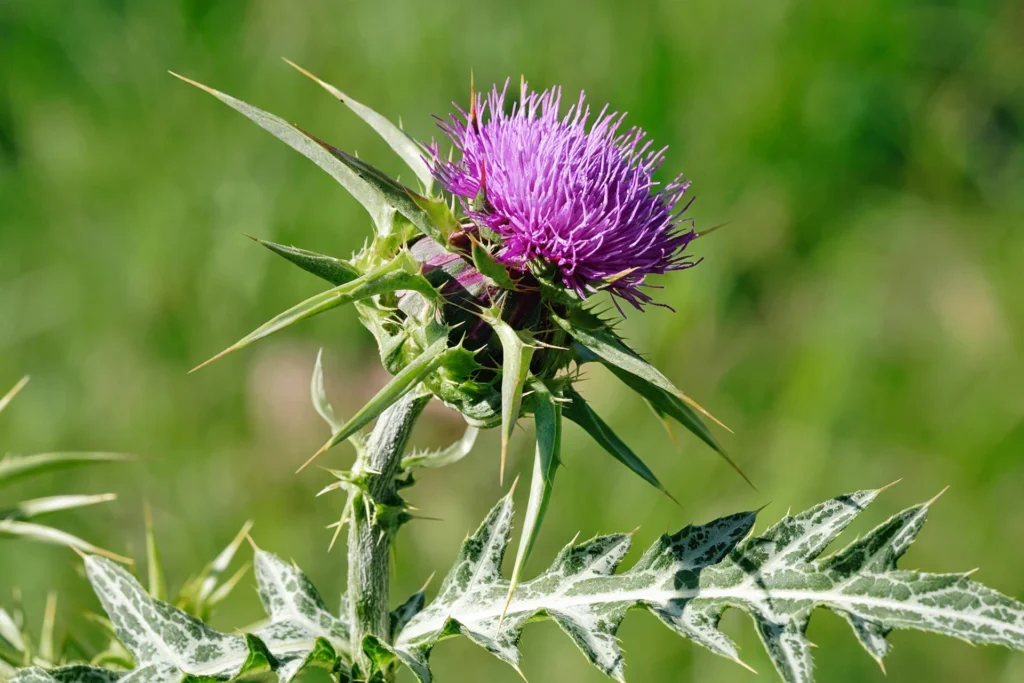
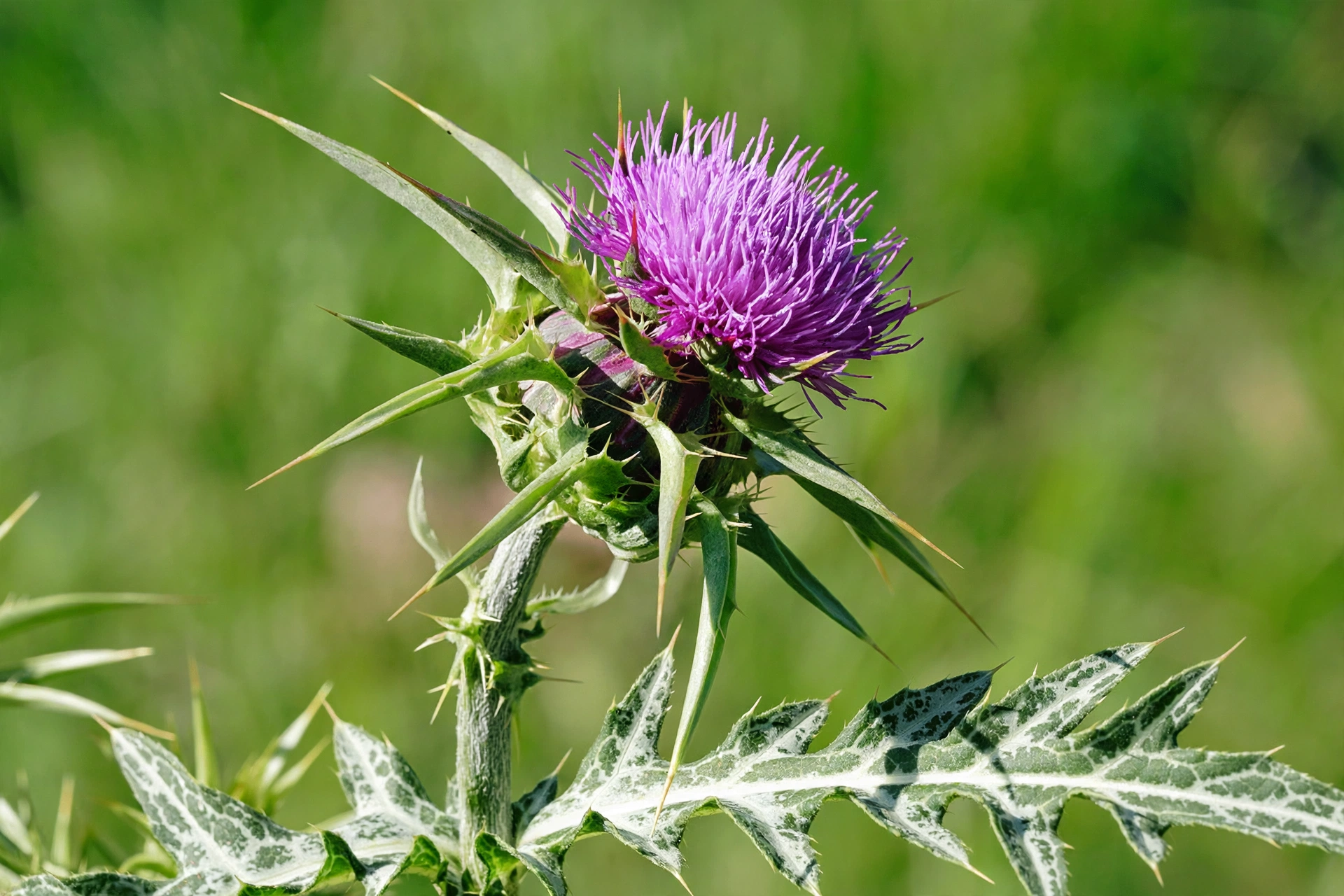
Milk thistle is a flowering plant in the daisy family, and its scientific name is Silybum marianum. Milk thistle grows around the Mediterranean, and its tall stems, spiny green leaves with white veins, and purple flower heads make it easy to spot. The seeds hold the active compounds used in extracts and supplements.
Milk thistle also goes by Mary thistle, holy thistle, blessed thistle, and Saint Mary’s thistle. Herbalists have used it for hundreds of years to treat liver and gallbladder problems, and young leaves served as food after the spines were removed. The plant grows 30 to 200 cm tall, and its leaves run 15 to 60 cm long. Milk thistle now grows in North America, Australia, and New Zealand, and Washington state lists it as a noxious weed and limits growing it (Source: WebMD, 2024).
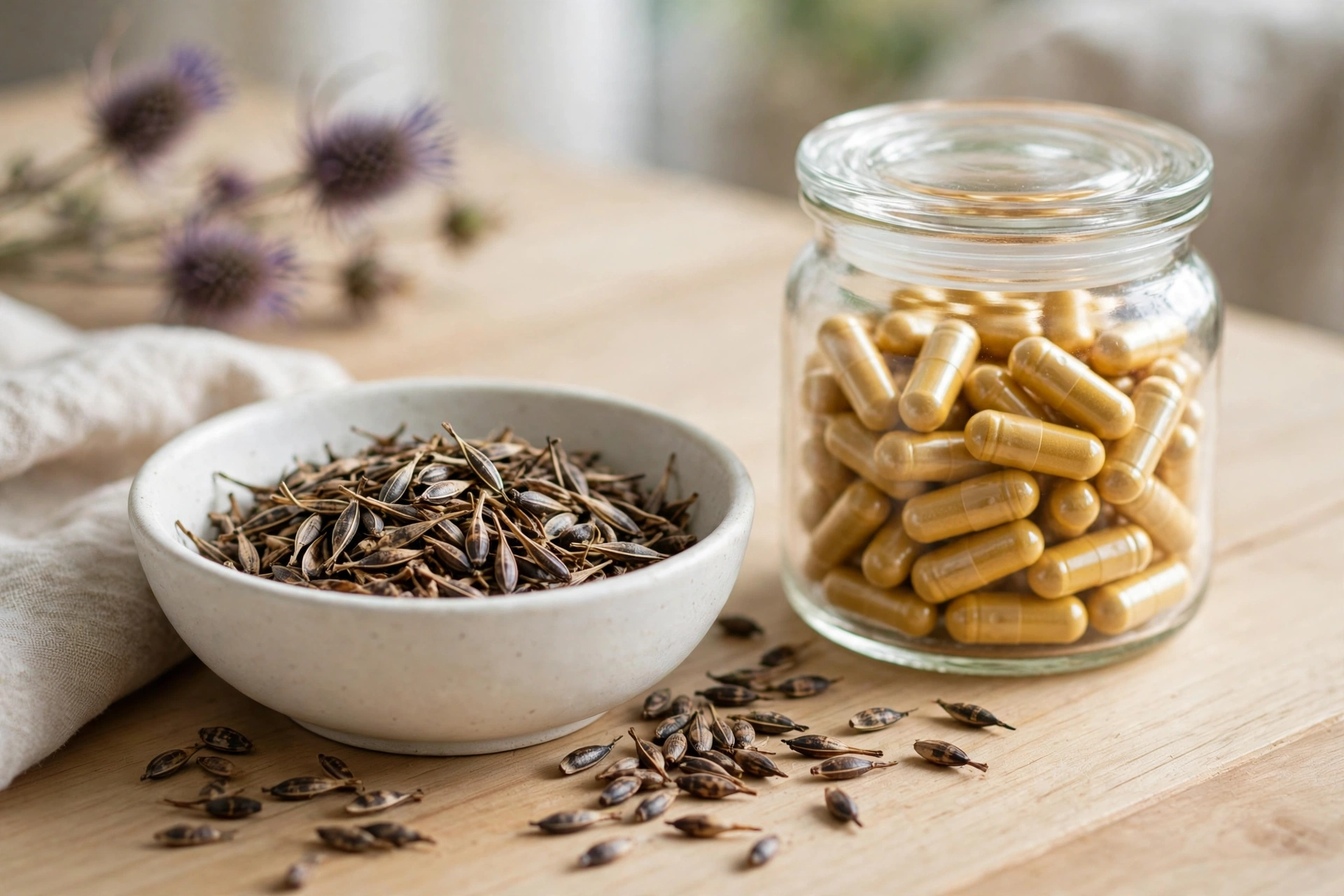
The seeds contain about 4 to 6 percent silymarin, and standard extracts hold 65 to 80 percent silymarin with 20 to 35 percent fatty acids (Source: Wikipedia, Silybum marianum, 2026). Silymarin is a mix of flavonolignans: silybin A, silybin B, isosilybin, silychristin, isosilychristin, silydianin, and taxifolin. Silibinin is the main flavonolignan in the mix, and it makes up about 50 to 70 percent of silymarin. Supplement labels list silymarin content, and that number is the figure to check first.
How Does Milk Thistle Work?
Silymarin works as an antioxidant and anti-inflammatory mix that protects liver cells from damage and helps the liver repair itself. Silymarin blocks toxins from binding to liver cells, clears free radicals inside cells, and supports the growth of new liver cells. Silibinin, the main flavonolignan in silymarin, carries this activity.
Silymarin acts on the liver in 3 ways. First, silymarin binds to liver cell membranes, and that binding blocks toxins from entering the cells. Second, silymarin clears free radicals, unstable molecules that damage cells during illness, alcohol use, and drug use. Third, silymarin supports protein synthesis in liver cells, and that process helps the liver build new cells after damage. The silibinin compound is the most studied part of silymarin, and intravenous silibinin is approved in some European countries for death cap mushroom poisoning.
One limit shapes every result: silymarin dissolves poorly in water, and the body absorbs only a small share of a plain oral dose. Makers pair silymarin with phosphatidylcholine to raise absorption, and one such complex is about 10 times more bioavailable than plain silymarin (Source: Wikipedia, Silibinin, 2026). Capsules, tablets, and liquid extracts carry the doses used in trials.
What Are the Main Milk Thistle Benefits?
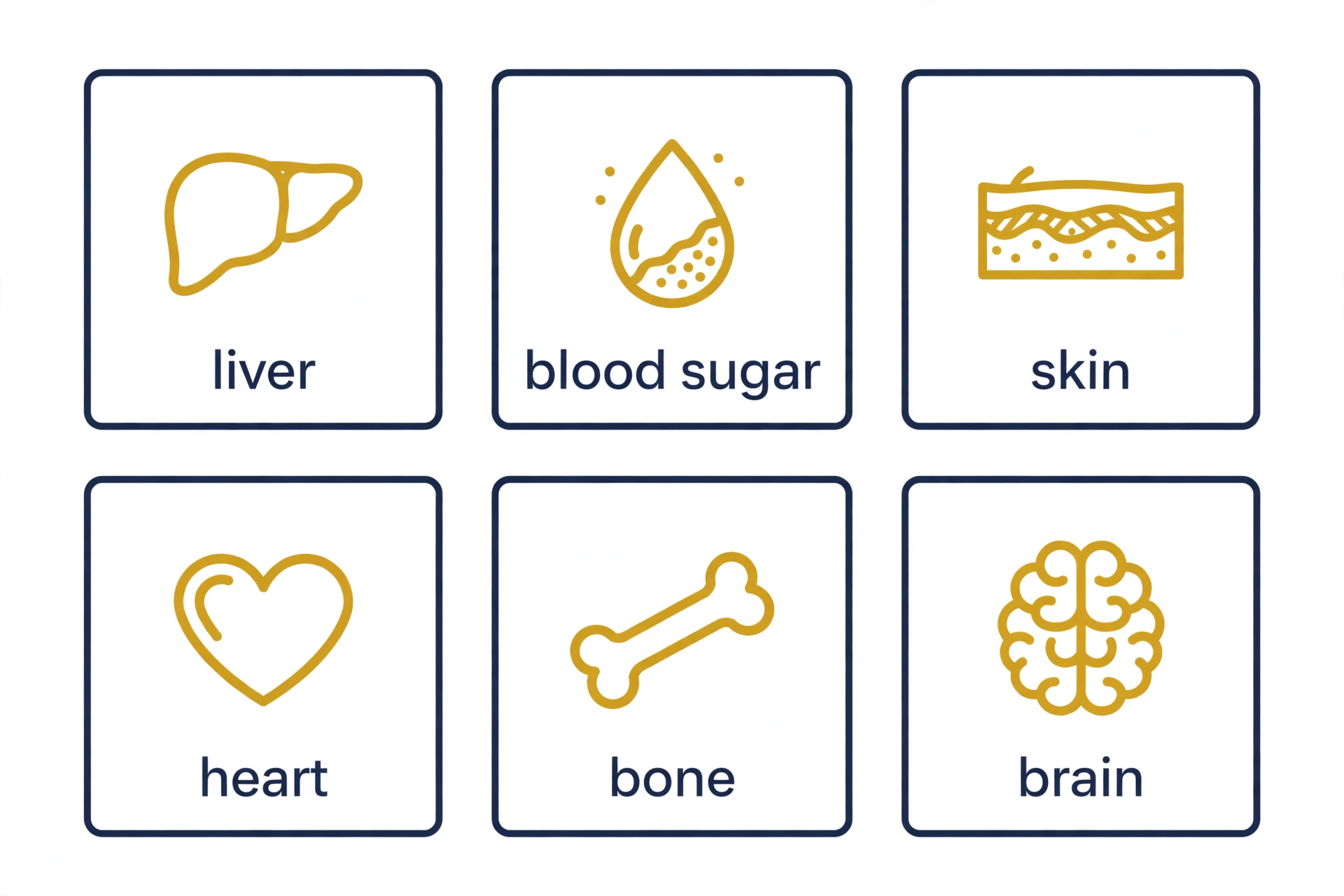
The main milk thistle benefits are liver support, blood sugar control, skin care, heart health, bone support, and brain protection, and liver support has the most research behind it. Studies show the clearest results for liver enzyme levels and blood sugar markers, while skin, heart, bone, and brain benefits rest on smaller trials and animal studies.
1. Liver Health
Liver health is the best studied milk thistle benefit. A 2020 review in Advances in Therapy found silymarin useful as supportive treatment in liver diseases, covering alcoholic liver disease, non-alcoholic fatty liver disease, and drug-induced liver injury (Source: Gillessen and Schmidt, 2020). A separate 2020 review linked silymarin with lower mortality rates in cirrhosis and liver disease patients (Source: Verywell Health, 2026). The same evidence has a clear limit: a Cochrane review of 13 randomized trials with 915 patients found no clear effect on mortality, complications, or liver tissue changes (Source: Cochrane review, cited 2026). Milk thistle supports liver function, and it does not cure liver disease.
2. Blood Sugar Control
Blood sugar control is the second best studied benefit. A 2016 systematic review and meta-analysis found silymarin lowered fasting blood glucose and HbA1c levels in people with type 2 diabetes, and the review authors noted poor study quality and called for more research (Source: Voroneanu et al., 2016). A 2020 meta-analysis of 16 randomized trials with 1,358 patients found lower fasting glucose, insulin resistance scores, and HbA1c after silymarin use (Source: 2020 meta-analysis, cited 2026). One 45-day trial found a silymarin course raised antioxidant capacity and lowered inflammation markers in adults with type 2 diabetes (Source: Phytomedicine, 2015). Milk thistle may help blood sugar control beside standard diabetes care, not in place of it.
3. Skin Health
Skin health rests on smaller and earlier evidence. One small study found people who took milk thistle for 8 weeks had 53 percent less acne (Source: study reported 2026). Milk thistle also shows use for mild psoriasis and for skin damaged by radiation during breast cancer treatment (Source: Verywell Health, 2026). Lab work shows silibinin protects skin cells from sun damage, and human trials are few.
4. Heart Health
Heart health evidence is early but growing. A 2022 research review found growing evidence that silymarin has anti-inflammatory, blood pressure lowering, and cholesterol lowering properties (Source: Kadoglou et al., 2022). By lowering LDL cholesterol, milk thistle may lower the chance of heart disease (Source: WebMD, 2026). No large human trial has tested milk thistle for heart attacks or strokes, so heart claims stay at marker level.
5. Bone Health
Bone health has the least human evidence of the 6 benefits. Some researchers suggest milk thistle helps with osteoporosis after menopause, and the evidence is limited (Source: Verywell Health, 2026). One research line looks at silymarin effects on bone marrow in multiple myeloma, a blood cancer that affects bones. No trial has shown milk thistle raises bone density in people, so bone health stays a research topic.
6. Brain Health
Brain health rests almost fully on animal work. Rodent studies show silibinin protects brain cells from oxidative stress, and one 2022 study found it reduced formaldehyde induced cognitive damage in rodents (Source: Oxidative Medicine and Cellular Longevity, 2022). Researchers study silibinin for Alzheimer disease and Parkinson disease. Human trials are absent, so no brain benefit is proven in people.
For more everyday wellness ideas, read our guide to the types of massage and how each one works.
Does Milk Thistle Help Fatty Liver Disease?
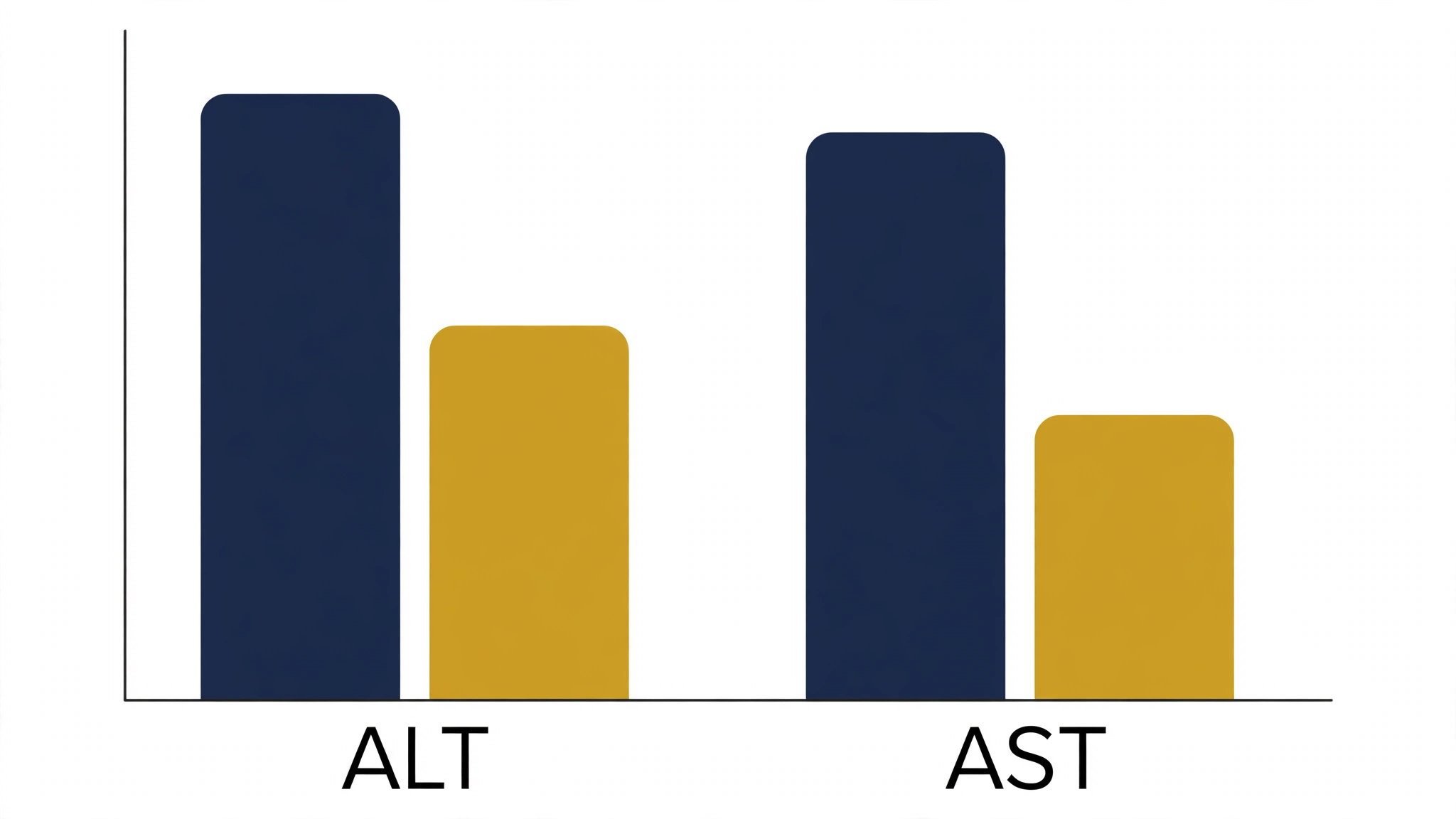
Milk thistle may help fatty liver disease by lowering liver enzyme levels and reducing liver fat, and the evidence is mixed but leans positive. A 2017 meta-analysis of 8 randomized trials with 587 patients found ALT down by 9.16 IU/L and AST down by 6.57 IU/L against control groups (Source: 2017 meta-analysis, cited 2026). A 2024 systematic review of 26 randomized trials with 2,375 patients found lower ALT, AST, and cholesterol markers plus better liver tissue scores (Source: 2024 systematic review, cited 2026).
The strongest single trial tells a more careful story: a biopsy controlled trial with 99 NASH patients ran for 48 weeks at 700 mg three times daily, and it missed its primary endpoint of a 30 percent or greater improvement in the NAFLD Activity Score (Source: trial reported 2026). A 2024 rabbit study found milk thistle raised antioxidant enzymes and lowered inflammatory markers in non-alcoholic fatty liver disease (Source: Heliyon, 2024). Milk thistle looks helpful for fatty liver markers, and it is not a proven treatment for the disease itself. People with fatty liver disease should pair supplement use with weight control, alcohol limits, and clinician care.
Can Milk Thistle Lower Blood Sugar?
Yes, milk thistle may lower blood sugar in people with type 2 diabetes, and the effect is modest and needs more trials to confirm. The 2016 review by Voroneanu and colleagues found silymarin lowered fasting blood glucose and HbA1c, and the same review flagged poor study quality (Source: Voroneanu et al., 2016). The 2020 meta-analysis of 16 randomized trials with 1,358 patients found lower fasting glucose with a standardized mean difference of minus 1.27, lower insulin resistance with a score of minus 0.41, and lower HbA1c with a score of minus 1.88 (Source: 2020 meta-analysis, cited 2026).
Milk thistle lowers blood sugar through the liver, and the liver controls glucose release into the blood. Silymarin supports fat, protein, and carbohydrate metabolism, and that support steadies glucose levels. Early studies used 200 mg of silymarin 3 times per day for 4 months with standard diabetes treatment, and those studies reported lower fasting glucose, HbA1c, and cholesterol (Source: Overlake Hospital Health Library, 2025). People with diabetes should use milk thistle with care, since it may lower blood sugar and change diabetes drug needs. Blood sugar checks and a clinician talk come first.
Milk Thistle vs Other Liver Supplements
Milk thistle is the most studied liver supplement, and turmeric and NAC match it on specific uses. The table below compares 5 common liver supplements on active compound, best evidence, and limits, and milk thistle leads the group on trial count.
| Supplement | Active compound | Best evidence | Main limits |
|---|---|---|---|
| Milk thistle | Silymarin, mainly silibinin | Liver enzyme levels in fatty liver disease; blood sugar markers in type 2 diabetes | Mixed trial results; poor absorption; no standard dose |
| Turmeric, curcumin | Curcumin | Pilot trial found 1,000 mg per day for 3 months lowered cirrhosis severity scores | Poor absorption; few large trials |
| NAC, N-acetylcysteine | N-acetylcysteine | Hospital use for acetaminophen overdose; strong antioxidant action | Oral supplement evidence for daily liver care is thin |
| Dandelion root | Taraxacin, inulin | Traditional use for liver and digestion; animal studies show liver protection | Almost no human trials |
| Artichoke leaf | Cynarin, luteolin | Small trials show lower cholesterol and better digestion | Few liver specific trials; effect size is small |
Milk thistle leads on trial count, and turmeric leads on cirrhosis pilot data. NAC has the strongest hospital record, and that record covers overdose care, not daily supplements. Dandelion root and artichoke leaf rest on tradition and animal work, and human proof is thin for both.
How Much Milk Thistle Should You Take?
No standard milk thistle dose exists, and trials used 120 to 600 mg of silymarin per day, so a clinician should set the dose. Milk thistle is considered safe at 420 mg per day in divided doses for up to 41 months (Source: Drugs.com, 2026). Studies on liver disease used silymarin doses from 120 mg per day to 560 mg per day (Source: Verywell Health, 2026). Health Canada lists 140 to 600 mg of silymarin per day, with no single dose above 200 mg, and notes use for at least 3 weeks to see benefits (Source: Health Canada, 2026). One rigorous NASH trial used 700 mg three times a day for 24 weeks, and that dose is a trial dose, not a label dose.
Milk thistle comes in 4 forms: capsules, tablets, liquid extracts, and tea. Capsules and tablets carry the doses used in trials, and liquid extracts suit people who cannot swallow pills. Tea has minimal medicinal value, since silymarin dissolves poorly in water (Source: WebMD, 2024). Some labels list whole herb weight in grams, and others list standardized silymarin in milligrams, so buyers should read the silymarin figure. A clinician visit comes before the first dose for anyone on prescription drugs.
What Are the Side Effects of Milk Thistle?
Milk thistle side effects are usually mild, and the most common ones are stomach upset, headache, and itchy skin. Oral use of milk thistle in proper doses appears safe, and side effects stay rare even after years of use (Source: Mayo Clinic, 2025). Common side effects in studies are nausea, diarrhea, gas, bloating, abdominal pain, bowel changes, headache, and skin rash or itching (Source: Drugs.com, 2026). Side effects usually stop after the supplement stops.
Allergy is the main serious risk. Milk thistle belongs to the daisy family, and people allergic to ragweed, chrysanthemums, marigolds, or daisies face a higher risk of reacting, up to rare anaphylaxis (Source: Mayo Clinic, 2025). One documented case involved a worker who handled ground milk thistle fruit and developed allergy symptoms years later (Source: Wikipedia, Silybum marianum, 2026). Stop use and seek care fast if breathing trouble, face swelling, or a spreading rash appears.
Milk thistle may lower blood sugar, and that effect matters for people on diabetes drugs. Milk thistle may change how the liver breaks down blood thinners like warfarin, and that change may raise bleeding risk. Milk thistle may interfere with HIV drugs such as indinavir and saquinavir, and with chemotherapy drugs, calcium channel blockers, and some antibiotics (Source: Verywell Health, 2026). Milk thistle may also raise blood levels of the hepatitis C drug simeprevir. A pharmacist can run a full drug list check, and that check is the safest step before starting milk thistle.
Who Should Avoid Milk Thistle?
Pregnant people, breastfeeding people, children, and people with hormone-sensitive conditions should avoid milk thistle or ask a clinician first. Not enough is known about milk thistle safety in pregnancy and breastfeeding, and safety in children is also unknown (Source: Verywell Health, 2026). Health Canada advises asking a clinician before use in pregnancy (Source: Health Canada, 2026). The safe choice in these groups is to skip milk thistle until a clinician gives a clear yes.
Hormone-sensitive conditions need care. Milk thistle may affect estrogen levels, and people with breast cancer, uterine cancer, ovarian cancer, endometriosis, or uterine fibroids should consider avoiding it (Source: Mayo Clinic, 2025). Silibinin shows estrogen-like effects in some studies. People with diabetes should use milk thistle with care, since the supplement may lower blood sugar and change drug needs. People allergic to daisy family plants should avoid milk thistle, and that family covers ragweed, daisies, chrysanthemums, and marigolds. The US Food and Drug Administration has not approved milk thistle or its extracts as a treatment for any medical condition (Source: WebMD, 2024).
How to Choose a Good Milk Thistle Supplement
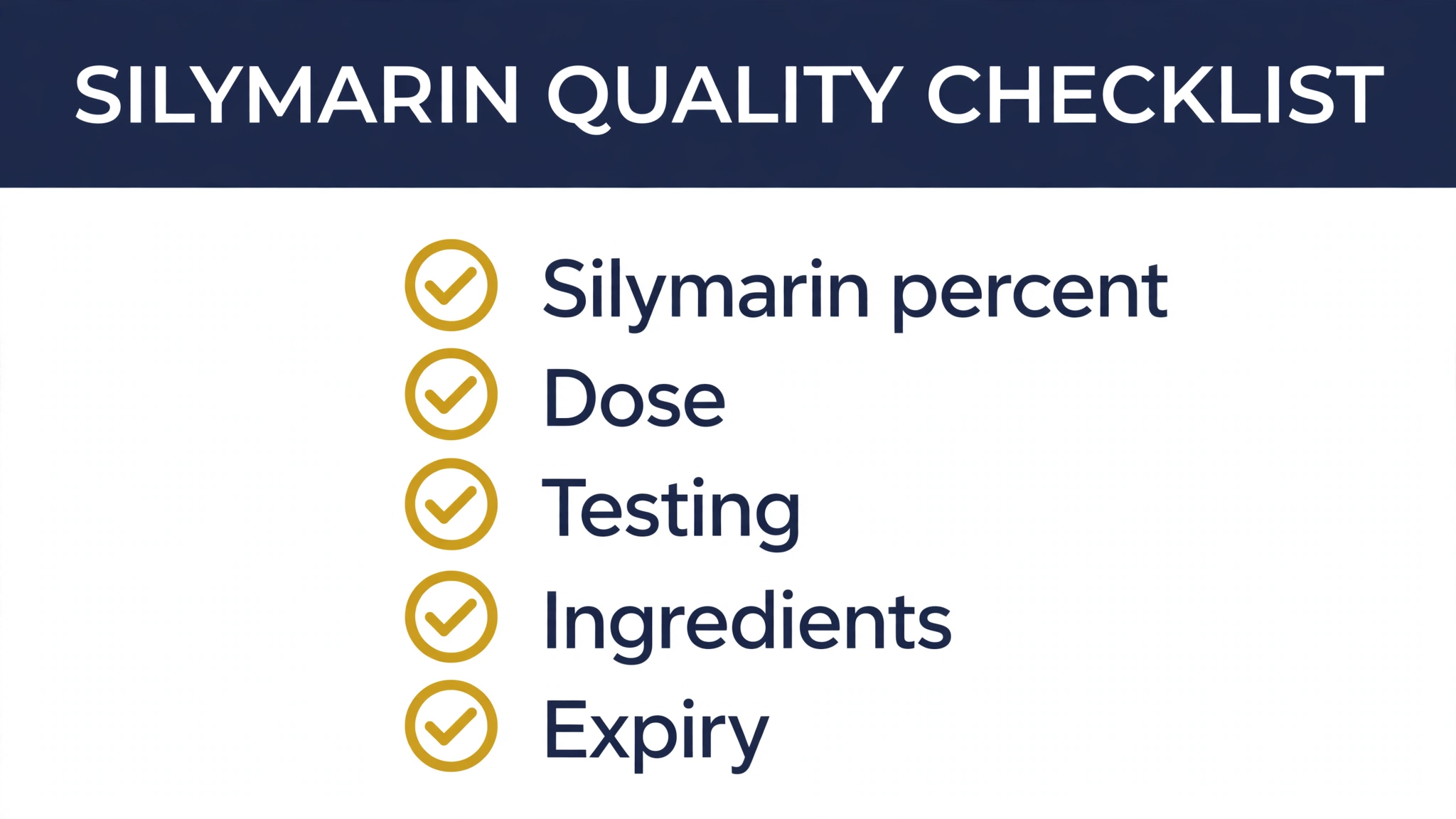
To choose a good milk thistle supplement, pick a standardized extract with 70 to 80 percent silymarin, a clear dose per serving, and third-party testing on the label. The checklist below covers the 5 points that matter most for buyers.
- Check the silymarin percentage on the label, and pick 70 to 80 percent standardized extract.
- Check the silymarin dose per serving in milligrams, and match it to the 140 to 600 mg trial range.
- Look for third-party testing marks, and skip products with no testing note.
- Read the full ingredient list, and skip products that hide the silymarin dose.
- Check the expiry date and the maker name, and pick a maker with a full contact address.
Voice of Wave covers practical health topics like this one, and the aim is clear facts a reader can act on. Price is a weak guide, and the cheapest bottle often hides a low silymarin dose.
Conclusion
Milk thistle benefits center on liver support, and blood sugar control and skin care follow with weaker proof. Silymarin protects liver cells, clears free radicals, and supports liver repair, and trials show the clearest gains in liver enzyme levels and blood sugar markers. Fatty liver results look promising, and the strongest trial missed its main goal. Doses in trials ran from 120 to 600 mg of silymarin per day, and no standard dose exists. Side effects stay mild for most users, and allergy and drug interactions are the real risks to check. Pregnant people, children, and people with hormone-sensitive conditions should skip milk thistle or ask a clinician first. At Voice of Wave, we cover practical health topics with sourced facts: strong claims need strong proof, and early claims get an honest label.
Keep exploring: visit the Voice of Wave blog for more health guides, home guides, and everyday explainers.
Frequently Asked Questions
Is milk thistle good for your liver?
Yes, milk thistle supports liver function, and the evidence is mixed but real. Trials show lower liver enzyme levels in fatty liver disease, and a 2020 review backs silymarin as a liver treatment aid. A Cochrane review of 13 trials with 915 patients found no clear effect on mortality or liver tissue, so milk thistle is support, not a cure.
How much milk thistle should I take daily?
No standard daily dose exists, and trials used 120 to 600 mg of silymarin per day. Milk thistle is considered safe at 420 mg per day in divided doses for up to 41 months. Health Canada lists 140 to 600 mg of silymarin per day, with no single dose above 200 mg. A clinician should set the dose.
Can milk thistle lower blood sugar?
Yes, milk thistle may lower blood sugar in people with type 2 diabetes, and the effect is modest. A 2016 review found silymarin lowered fasting blood glucose and HbA1c, and a 2020 meta-analysis of 16 trials with 1,358 patients found the same pattern. People on diabetes drugs should check blood sugar often and talk to a clinician first.
What are the side effects of milk thistle?
Milk thistle side effects are usually mild, and stomach upset, headache, and itchy skin are the most common ones. Studies also report nausea, diarrhea, gas, bloating, and skin rash. Allergy is the main serious risk, and people allergic to ragweed, daisies, or chrysanthemums face a higher risk, up to rare anaphylaxis. Stop use and seek care if breathing trouble appears.
Who should not take milk thistle?
Pregnant people, breastfeeding people, children, and people with hormone-sensitive conditions should not take milk thistle without clinician advice. Safety in pregnancy, breastfeeding, and childhood is unknown. People with breast, uterine, or ovarian cancer, endometriosis, or fibroids should consider avoiding it, since silibinin shows estrogen-like effects in some studies.
How long does milk thistle take to work?
Milk thistle needs at least 3 weeks of use to show benefits, and most trials ran for 4 weeks or longer. Health Canada notes use for at least 3 weeks to see beneficial effects. Liver enzyme and blood sugar changes appear over weeks, not days, and a clinician can check blood tests after 1 to 3 months of use.